
How Much Does It Cost to Import a Toyota Hilux to the U.s.?

Importing a Toyota Hilux to the U.S. is a complex, expensive process governed by the 25-year rule. Total costs typically range from $5,000 to over $15,000+ on top of the vehicle’s purchase price, covering shipping, bonds, broker fees, and mandatory federal modifications. It’s a project for patient enthusiasts, not a cheap alternative to a domestic truck.
Key Takeaways
- The 25-Year Rule is Non-Negotiable: You can only legally import a Toyota Hilux that is at least 25 years old, as newer models fail to meet U.S. EPA and DOT safety/emissions standards.
- Total Cost Far Exceeds the Sticker Price: Expect to pay 50-100% or more of the vehicle’s purchase price in fees, shipping, bonds, and compliance work.
- You Must Use a Registered Importer: The EPA and DOT require modifications done by a certified Registered Importer (RI) to bring the vehicle into compliance, which is a mandatory and regulated cost.
- State Laws Add Another Layer: After federal compliance, you must still meet your specific state’s emissions and safety inspection requirements to register and title the vehicle.
- Patience and Paperwork are Key: The process takes 3-6 months from purchase to getting plates, involving meticulous documentation, inspections, and potential delays at ports.
- Hidden Costs Abound: Budget for unexpected expenses like pre-shipment inspections, port storage fees, detailing, and post-import repairs or upgrades.
- Consider the “Tacoma Factor”: A used Toyota Tacoma offers similar size and reliability without the import hassle, though it lacks the Hilux’s global legend status.
📑 Table of Contents
- The Allure of the Toyota Hilux: Why Bother With the Hassle?
- Understanding U.S. Import Laws: The 25-Year Rule & More
- Step-by-Step: The Import Process Demystified
- Breaking Down the Costs: From Purchase to Plate
- Common Pitfalls & How to Avoid Them
- Alternatives to Importing: Is There an Easier Way?
- Conclusion: Is It Worth It?
The Allure of the Toyota Hilux: Why Bother With the Hassle?
Let’s be real. If you’re reading this, you’ve probably already stared longingly at photos of a Toyota Hilux. You’ve seen the documentaries about its legendary, tank-like reliability. You’ve watched YouTube videos of these things being driven to the literal ends of the earth and back with nothing but a basic service. It’s the truck the world loves but America never got. While we got the excellent Tacoma, the Hilux is a different beast—often simpler, more rugged, and in many global markets, available with diesel engines and configurations that make gearheads swoon.
So, you think, “Why can’t I just buy one and bring it here?” The short answer is: you absolutely can, but it’s a marathon, not a sprint, and it’s a expensive one at that. The dream of that indestructible, no-frills workhorse is powerful, but the reality of U.S. import laws is a formidable wall. This guide isn’t here to sugarcoat it. We’re going to break down exactly what you’re in for, from the cold hard numbers to the emotional rollercoaster of paperwork. By the end, you’ll know if you’re ready to embark on this adventure or if a domestic alternative might save your sanity and your savings.
Understanding U.S. Import Laws: The 25-Year Rule & More
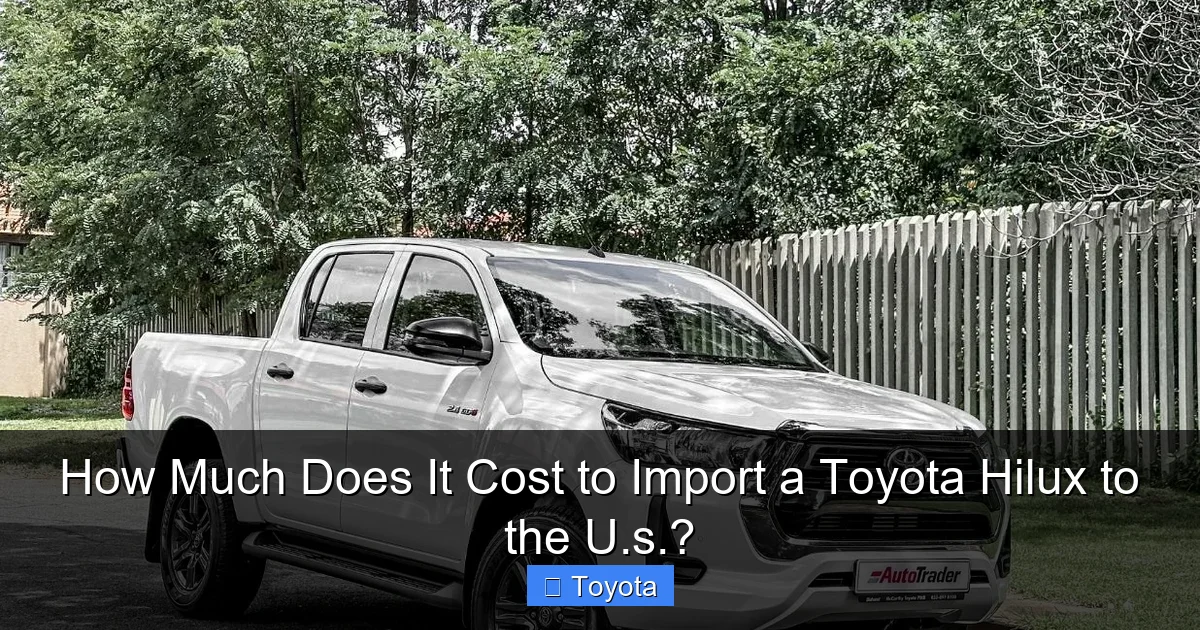
Before we talk dollars, we have to talk rules. The U.S. has some of the strictest vehicle import regulations in the world, and they are the single biggest reason importing a relatively new Hilux is impossible. There are two primary federal agencies you need to make happy: the Environmental Protection Agency (EPA) and the National Highway Traffic Safety Administration (NHTSA).
Visual guide about How Much Does It Cost to Import a Toyota Hilux to the U.s.?
Image source: img.autotrader.co.za
The 25-Year Import Rule Explained
This is the golden rule. A vehicle must be at least 25 years old to be exempt from federal safety and emissions standards. The clock starts on the date the vehicle was first produced, not the model year. So, a 1999 model year Hilux built in late 1998 becomes eligible on its 25th birthday. This means the pool of eligible Hiluxes is constantly growing but is always for older models. You cannot legally import a 2010, 2005, or even a 2000 Hilux for on-road use in the U.S. Period. There are extremely rare exceptions for vehicles that were originally certified for the U.S. market (which the Hilux was not), but those are not applicable here. This rule alone dictates your entire buying strategy: you’re hunting for a well-preserved example from the late 1990s or earlier.
EPA and DOT Compliance: The Hurdles
For vehicles under 25 years, the EPA requires that they meet current emissions standards. The Hilux, sold with different engines worldwide, was never certified under U.S. EPA rules. The NHTSA requires vehicles to meet Federal Motor Vehicle Safety Standards (FMVSS) for things like crash structure, lighting, bumpers, and seatbelts. The Hilux does not comply. To get an eligible (25+ year old) Hilux on the road, you must prove it meets the safety standards that were in effect when it was manufactured. For EPA, you typically need a letter from the manufacturer stating the vehicle’s original emissions standard, which is often a formality for old vehicles. The bigger work is ensuring it has the correct original equipment (like the right seatbelts and lighting) or making approved modifications.
Step-by-Step: The Import Process Demystified
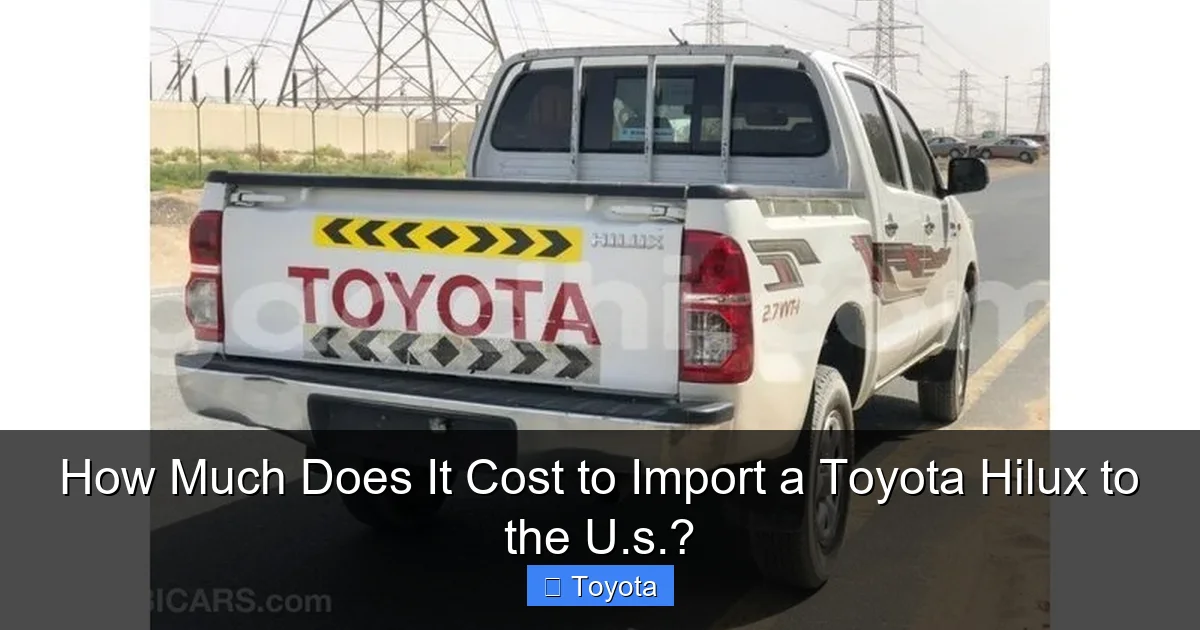
Okay, you’ve found a 1998 Hilux in Japan that looks perfect. Now what? The process is a chain of events where one missed step can cause major delays and costs. Here is the typical, simplified journey.
Visual guide about How Much Does It Cost to Import a Toyota Hilux to the U.s.?
Image source: gaadhi.s3.amazonaws.com
1. Purchase and Export from the Source Country
You buy the vehicle from a Japanese auction, a dealer, or a private seller. You will almost certainly use an exporting agent in that country. They handle the local paperwork, de-registration, and getting the vehicle to the port. Get a thorough pre-purchase inspection (PPI) done by a trusted third party on the ground. This is crucial. You’re buying sight unseen, and a PPI will tell you about rust, mechanical condition, and accident history. Cost for a good PPI: $200-$400. The agent’s fees for handling export paperwork are typically $300-$600.
2. Ocean Freight and U.S. Port Arrival
The exporter books the vehicle onto a Roll-On/Roll-Off (RoRo) ship or into a container. RoRo is usually cheaper ($1,200-$2,500 from Japan to a West Coast port). Container shipping is more expensive ($2,000-$4,000) but offers more protection from the elements and potential theft. You’ll pay the freight cost directly to the shipping line. The vehicle arrives at a U.S. port (most commonly Los Angeles, Long Beach, or Tacoma for West Coast arrivals). You must hire a customs broker at the port to handle the U.S. Customs and Border Protection (CBP) entry. Their fee is typically $300-$600 plus any disbursements (like port fees).
3. The Critical Bond: EPA & DOT Paperwork
This is where many get tripped up. Before the vehicle can be released from the port, you must post a bond with the EPA and NHTSA. This bond guarantees that you will bring the vehicle into compliance. You cannot clear customs without proof of these bonds. You can get these bonds through your customs broker or a specialized surety company. The cost is usually a small percentage of the bond amount (often 1-3%), but the bond itself must be in place. For a standard import, the bond amount is based on the vehicle’s value. More importantly, you must designate a Registered Importer (RI) on these bond forms. The RI is a company certified by the EPA and NHTSA to perform or oversee the compliance modifications and final inspection.
4. Compliance Work by the Registered Importer
Once the vehicle is released from the port and transported to the RI’s facility (you pay for this transport), the real work begins. The RI will perform a detailed inspection to verify the vehicle matches its original specification and is in a safe, operational condition. They will check for: correct and working seatbelts (often a point of failure on old JDM vehicles), proper lighting (turn signals, headlights), glass (should be DOT-certified), and structural integrity. If anything is missing or non-compliant, they will source and install the correct parts. This could mean finding a specific vintage seatbelt or replacing a non-DOT headlight with a period-correct DOT-approved unit. This labor and parts cost is the biggest variable. A straightforward, well-equipped vehicle might cost $1,000-$3,000. A rusted-out, modified, or parts-missing vehicle could cost $5,000+. The RI will then complete the necessary EPA and DOT forms (EPA Form 3520-21 and DOT HS-7) certifying compliance and mail them to the respective agencies.
5. State Titling and Registration
With the federal bonds released and compliance certified, you now have a “legally imported” vehicle. But you’re not done. You must now title and register it in your state. This involves taking the federal paperwork (the bond release letters, the RI’s compliance certification, the original Japanese title, and the bill of sale) to your local Department of Motor Vehicles (DMV) or equivalent. State requirements vary wildly. Some states (like California) have their own, stricter emissions programs (Smog Check) that your 25-year-old vehicle may be exempt from, but you must prove the exemption. Others may require a separate VIN inspection. You will pay state sales tax on the vehicle’s value (as declared by you, sometimes based on purchase price) and registration fees. This can add $500-$2,000+ to your cost depending on your state’s tax rate.
Breaking Down the Costs: From Purchase to Plate
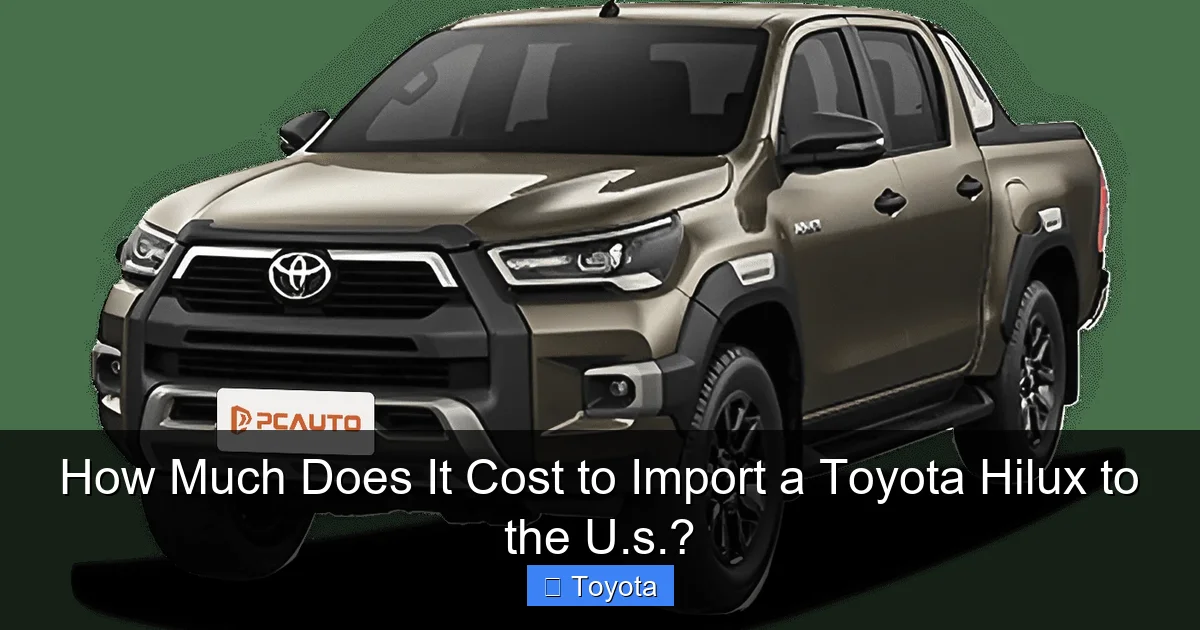
Now, the moment of truth. Let’s build a hypothetical cost sheet for importing a clean, 1998 Toyota Hilux 2.4L diesel (a popular JDM model) in good condition, purchased in Japan for $8,000. This is a best-case scenario estimate. Costs can be higher.
Visual guide about How Much Does It Cost to Import a Toyota Hilux to the U.s.?
Image source: img.pcauto.com
Vehicle Purchase Price
This is your baseline. For a decent, running Hilux from the late 1990s, you’re looking at $5,000 – $12,000 USD from Japanese auctions or dealers. Rust-free, low-mileage examples command a premium. Add a 10% buyer’s premium if using an auction house. Budget: $6,000 – $13,000.
Export Agent & Pre-Shipment Inspection
As mentioned, the agent handles export logistics. The PPI is non-negotiable. Budget: $500 – $1,000 total.
Ocean Freight (RoRo)
Shipping from Yokohama to Los Angeles is the most common route. Budget: $1,500 – $2,200.
U.S. Port Fees, Customs Broker, and Customs Duty
Port handling, documentation, and the broker’s service fee. The good news: vehicles over 25 years old are exempt from the 2.5% customs duty that normally applies. But you still pay the broker and port fees. Budget: $800 – $1,500.
EPA & DOT Bonds
The bonds themselves are a guarantee, not a cost you lose if you comply. The fee to secure them is small. Budget: $150 – $300.
Registered Importer (RI) Compliance Work
This is the major wild card. A simple, stock vehicle with all original equipment will be at the low end. A vehicle missing parts, with modifications, or significant rust will be at the high end. This includes the RI’s labor, sourcing parts, and their certification fee. Budget: $1,500 – $5,000+.
Transport from Port to RI and Then to You
You’ll pay to have the truck moved from the port to the RI’s shop, and then from the RI’s shop to your home or a local shop for final work/registration. Budget: $400 – $1,200 (depending on distance).
State Titling, Registration, and Sales Tax
This is a direct payment to your state government. Sales tax is based on the vehicle’s value, which you declare. Be prepared for the DMV to potentially challenge a very low declared value. Budget: $500 – $3,000+ (highly state-dependent).
Post-Import Repairs and Upgrades
You will find things that need fixing after it arrives. Fluids, belts, hoses, brakes—these are old. You might also want to modify it. Budget: $500 – $3,000+ (essential repairs first).
TOTAL PROJECTED COST (Hypothetical Example)
Vehicle ($8,000) + Export/PPI ($800) + Freight ($1,800) + Port/Broker ($1,200) + Bonds ($200) + RI ($2,500) + Transport ($600) + State Fees ($1,000) + Repairs ($1,000) = $16,100.
That’s a vehicle that cost $8,000 in Japan now costing over $16,000 in the U.S. A more complex vehicle or one from Europe (higher freight) could easily push past $20,000. You must go in with this full financial picture.
Common Pitfalls & How to Avoid Them
The path is littered with landmines. Here’s how to sidestep the most common ones.
The “Too Good to Be True” Auction Win
You see a pristine 1997 Hilux with low mileage at an auction for $3,500. It’s probably a salvage, a flood car, or has a mismatched VIN. Always, always get a PPI from a reputable, local inspector. The cost of the inspection is tiny compared to buying a rolling chassis with a terminal engine or severe frame rust.
Underestimating the RI’s Role and Cost
Some people think they can do the compliance work themselves or with a local mechanic. You cannot. The EPA and DOT require the work be overseen and certified by a Registered Importer. Contact several RIs early in the process, get detailed quotes for your specific vehicle’s VIN, and understand exactly what their fee covers. A vague quote is a red flag.
Ignoring State-Specific Rules
You clear federal hurdles and celebrate, only to get to your DMV and be told your vehicle fails state inspection because your windshield has a crack or your tires are too old. Research your state’s specific titling and inspection process for “25-year-old imports” before you even buy the truck. Some states are notoriously difficult (looking at you, New York and California for certain aspects).
Forgetting the Ongoing Ownership Realities
Parts. Finding parts for a 25-year-old Japanese-market truck in the U.S. is an adventure. It’s not impossible—the Hilux shares some components with the Tacoma of the same era—but you will be hunting on international forums, eBay Japan, and junkyards. Insurance can also be trickier; not all standard insurers will cover a vehicle with a VIN they don’t recognize. You may need to go through a specialty insurer. Maintenance requires mechanical skill or a great local shop willing to work on an unusual import.
Alternatives to Importing: Is There an Easier Way?
Given the cost and hassle, you’re right to ask if there’s a better way. For most people, there is.
The Domestic Twin: Toyota Tacoma (Pre-2004)
This is the most obvious and practical alternative. The second-generation Tacoma (1995-2004) shares the same basic rugged DNA, many mechanical components, and the same Toyota reliability as the contemporary Hilux. It was sold in the U.S., so it meets all federal and state standards out of the gate. You can find clean examples for similar or less money than an imported Hilux’s final cost. You lose the specific JDM engine options (like some diesels) and perhaps some ultra-simple configurations, but you gain a massive aftermarket parts network, straightforward insurance, and hassle-free titling. For a cost comparison, check out our analysis on how much it costs to paint a Toyota Tacoma—because with a domestic truck, you can spend your savings on cool custom paint instead of import bonds.
The “New” Old Truck: Clean Title, Domestic Models
What you likely love about the Hilux is its simplicity and capability. There are dozens of domestic and imported trucks from the 1990s and early 2000s that offer this. A Ford Ranger, Chevrolet S-10, or Nissan Frontier of the same era can be bought, titled, and driven with a fraction of the headache and cost. The money you save on import fees could be spent on a comprehensive suspension lift, new wheels and tires, or a full drivetrain refresh—mods that might actually increase the vehicle’s capability beyond a stock Hilux.
The Project Car Route
If your heart is set on the Hilux badge and the specific JDM model, consider buying one that’s already in the U.S. Someone else has already done the import legwork. These are rare, but they pop up. The seller should have all the EPA and DOT paperwork, a clean title showing the vehicle as “imported,” and state registration. You pay a premium for their effort, but you avoid the 6-month wait and process uncertainty. Always verify the paperwork meticulously before buying.
Conclusion: Is It Worth It?
Importing a Toyota Hilux to the U.S. is not a transaction; it’s a project. It’s for the enthusiast who values the journey as much as the destination, who wants a story to tell with every scratch on the fender. The financial cost is high, often doubling the purchase price. The time cost is significant, spanning half a year of coordination and waiting. The knowledge cost is steep—you will become an expert in federal import regulations.
For the right person, the reward is unparalleled: a genuinely rare, legendary vehicle that turns heads everywhere it goes and delivers an ownership experience unlike any domestic truck. For the practical person who simply wants a reliable, capable, used truck, the path of least resistance—a domestic Tacoma or similar—is almost always the smarter choice. If you decide to proceed, arm yourself with patience, a meticulous budget that includes a 30% contingency fund, and partnerships with a reputable exporting agent and Registered Importer. Do your homework, get everything in writing, and prepare for a bumpy but potentially rewarding ride. The Hilux is worth it for some, but only if you go in with your eyes wide open to the real cost, both financial and logistical.
Frequently Asked Questions
Is it legal to import any Toyota Hilux to the United States?
No. It is only legal to import a Toyota Hilux that is at least 25 years old to the month of its manufacture, due to federal EPA and DOT safety/emissions regulations. Newer models cannot be made compliant for on-road use.
How long does the entire import process take?
From the moment you purchase the vehicle in Japan to the moment you have license plates in your hand, you should budget for a minimum of 3 to 6 months. Delays at port, slow paperwork processing, or compliance issues can extend this timeline.
What is the best model year Toyota Hilux to import for a U.S. buyer?
The most popular and practical choices are the late 1990s models, specifically the 1998-1999 Hilux Surf (4Runner) or the standard pickup. These are just over the 25-year threshold, are in good supply in Japan, and share many components with the U.S.-market Tacoma of the same era, making parts slightly easier to find.
What are the mandatory modifications for EPA and DOT compliance?
Modifications are not about “upgrading” but about restoring original, compliant equipment. This typically means ensuring the vehicle has the correct, working seatbelts (often 3-point), DOT-certified headlights and side markers, an intact catalytic converter (if originally equipped), and sometimes specific glass. The Registered Importer verifies and sources these parts.
What is the total estimated cost for a successful import?
For a clean, straightforward example, the all-in cost (purchase price plus all fees, shipping, compliance, and titling) will typically be 50% to 100% higher than the initial vehicle purchase price. A realistic range is $12,000 to $25,000+ depending on the vehicle’s starting cost and your location’s fees.
What is the biggest risk or pitfall in this process?
The biggest risk is buying a vehicle with hidden problems (severe rust, flood damage, salvage history) that either fails the Registered Importer’s inspection or becomes a money pit for repairs. A thorough, independent pre-purchase inspection on the ground in the source country is the single most important investment you can make to mitigate this risk.
