
How Often Should Spark Plugs Be Changed on a Toyota Corolla

For most Toyota Corollas, spark plugs should be changed every 30,000 to 120,000 miles, depending on the type used. Modern iridium or platinum plugs in newer models can last up to 120,000 miles, while older copper plugs typically need replacement around 30,000 miles. Always consult your owner’s manual for the definitive interval specific to your model year and engine.
Key Takeaways
- Interval Varies by Plug Material: Copper plugs last ~30k miles, platinum ~60k, and iridium up to 120k miles.
- Your Owner’s Manual is Law: The factory recommendation for your specific Corolla model year is the most reliable source.
- Driving Conditions Matter: Severe driving (stop-and-go, extreme temps, dusty roads) can shorten plug life by up to 50%.
- Watch for Performance Symptoms: Misfires, rough idle, poor fuel economy, and hard starts are classic signs of worn plugs.
- All Corollas Have One Plug Per Cylinder: Most modern Corollas have 4 cylinders, meaning 4 spark plugs. Confirm yours with our guide on how many spark plugs are in a Toyota Corolla.
- Replace All Plugs at Once: Always change the entire set simultaneously with the same type/model for balanced engine performance.
- DIY is Feasible but Requires Care: With basic tools and the right procedure (like safely opening the hood first), it’s a manageable weekend project for many owners.
[FEATURED_IMAGE_PLACEHOLDER]
📑 Table of Contents
- Introduction: The Little Parts That Keep Your Corolla Roaring
- Official Recommendations: What Does Toyota Say?
- The “Why” Behind the Intervals: Material Science Matters
- Severe vs. Normal Driving: How Your Habits Affect Plug Life
- How to Tell Your Spark Plugs Are Failing: The Tell-Tale Signs
- The DIY Path: Can You Change Them Yourself?
- Professional Service: When to Call the Experts
- Conclusion: A Simple Job for Big Returns
Introduction: The Little Parts That Keep Your Corolla Roaring
Your Toyota Corolla is famous for its reliability, and a huge part of that legendary reputation comes from its simple, efficient engine. At the heart of that combustion process are the spark plugs—tiny but mighty components that create the electrical spark to ignite the air-fuel mixture in each cylinder. When they’re working right, you barely notice them. But when they fail, your smooth, fuel-efficient Corolla can quickly become a sputtering, frustrating mess.
So, the big question every Corolla owner eventually asks is: how often should spark plugs be changed on a Toyota Corolla? There’s no single answer that fits every single model on the road, which is why we’re breaking it down. This guide will walk you through the official recommendations, explain why the intervals differ, teach you how to spot failing plugs, and give you the confidence to tackle the job yourself or have a informed discussion with your mechanic.
Official Recommendations: What Does Toyota Say?
The first and most important place to look for your spark plug replacement interval is the official Toyota maintenance schedule for your specific vehicle. This schedule is meticulously designed based on extensive engineering testing for your exact engine and model year. It’s found in your owner’s manual or maintenance booklet.

Visual guide about How Often Should Spark Plugs Be Changed on a Toyota Corolla
Image source: autodeal.com.ph
General Guidelines by Model Era
While your manual is king, we can outline general trends. The interval depends almost entirely on the material technology of the spark plug itself.
- Pre-2000s Models (Copper/Nickel Alloy): These models typically used standard copper-core spark plugs. They are excellent conductors but wear out faster. The standard recommendation was every 30,000 miles (or 24 months).
- 2000s to Early 2010s Models (Platinum): As technology advanced, Toyota began using platinum-tipped spark plugs in many Corollas. Platinum is much harder and more resistant to wear, extending the service life to approximately 60,000 miles (or 48 months).
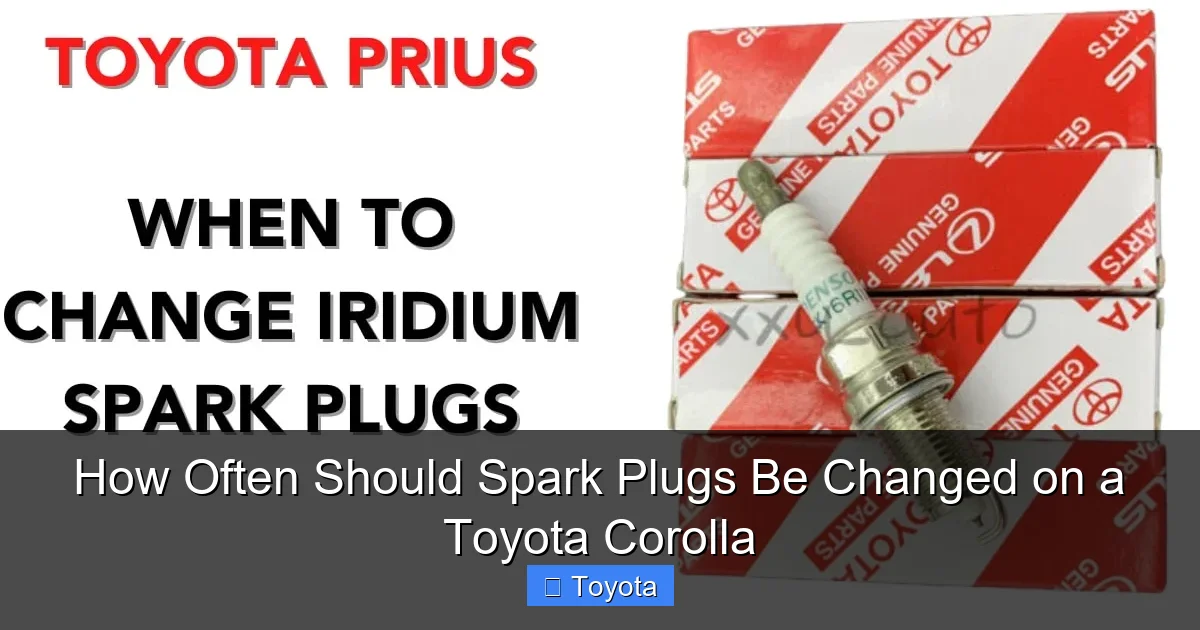
- Mid-2010s to Present (Iridium & Double Iridium): Modern Corollas, especially those with the 1.8L and 2.0L engines, are almost universally equipped with iridium spark plugs. Iridium is one of the hardest metals used, allowing for an incredibly fine electrode tip that lasts a very long time. The recommended interval for these is typically 120,000 miles (or 120 months).
Important: For the current generation (2018+), Toyota specifies a 120,000-mile interval for the engine’s original iridium plugs. For a 2014-2017 Corolla with the 1.8L engine, the interval is also 120,000 miles. Always verify for your specific VIN.
The “Why” Behind the Intervals: Material Science Matters
Understanding why the intervals differ helps you make sense of recommendations and avoid unnecessary changes. It all comes down to what the spark plug’s electrode is made of.
Visual guide about How Often Should Spark Plugs Be Changed on a Toyota Corolla
Image source: torquenews.com
Copper Spark Plugs: The Workhorse
Copper has the best thermal conductivity of any metal used in spark plugs. This means it transfers heat away from the firing tip quickly, reducing the risk of pre-ignition (knock). However, copper is relatively soft. The constant explosive force inside the combustion chamber erodes the electrode over time, making the gap wider. A wider gap requires more voltage to create a spark, which the ignition system eventually can’t provide, leading to misfires. Hence the 30k-mile rule.
Platinum Spark Plugs: The Longevity Upgrade
Platinum is welded to the tip of the center electrode. It’s significantly harder than copper and has a much higher melting point. This erosion resistance means the electrode gap stays within spec for much longer, roughly doubling the service life of a copper plug. Some designs use a platinum disc on the ground electrode as well (“double platinum”).
Iridium Spark Plugs: The Modern Standard
Iridium is the hardest and most corrosion-resistant of the three. Modern iridium plugs use a very thin (0.4mm-0.7mm) iridium laser-welded tip. This fine tip creates an exceptionally concentrated spark, improving ignition efficiency and fuel burn. The extreme durability of iridium allows for the 120,000-mile service interval. If your Corolla came with iridium plugs from the factory, you should not downgrade to copper or platinum when replacing them.
For a deep dive into selecting the absolute best replacement plug for your year and engine, check out our expert-tested lists, like the one for 2020-2026 Corollas or 2015-2019 models.
Severe vs. Normal Driving: How Your Habits Affect Plug Life
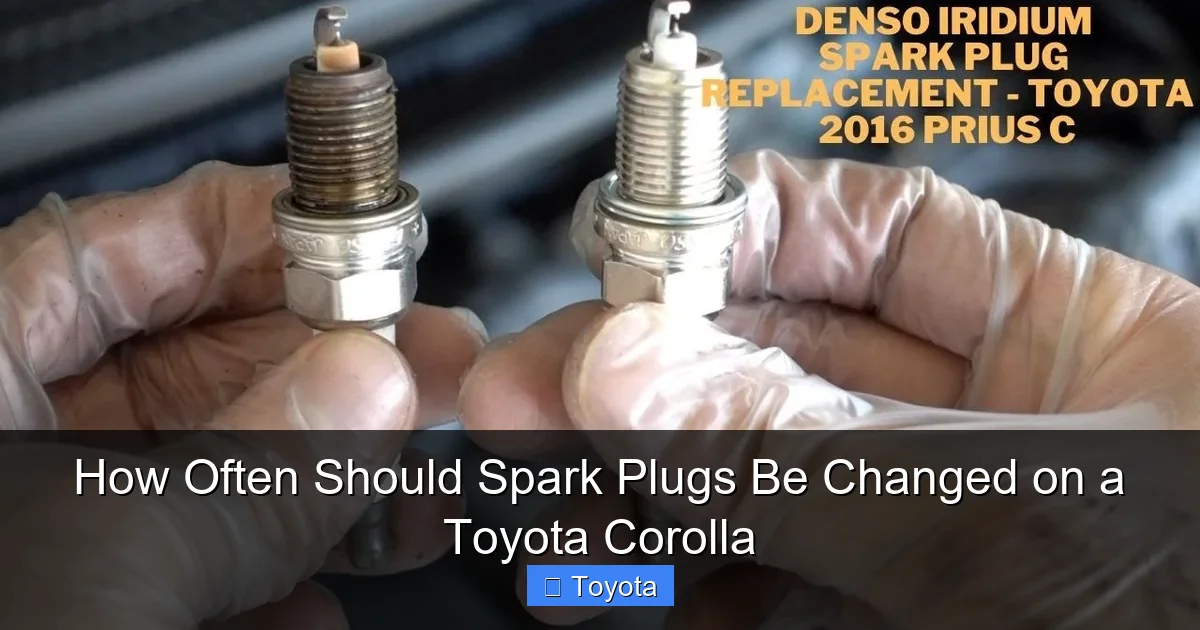
Your driving style and environment can dramatically impact the real-world lifespan of your spark plugs. Toyota’s “normal” schedule assumes relatively gentle, highway-oriented driving. If your driving pattern fits the “severe” category, you should consider replacing plugs at about 50-75% of the recommended interval.
Visual guide about How Often Should Spark Plugs Be Changed on a Toyota Corolla
Image source: i.ytimg.com
What Constitutes “Severe” Driving for a Corolla?
- Frequent Short Trips: Driving less than 5-10 miles in cold weather doesn’t allow the engine to reach full operating temperature. This leads to fuel dilution in the oil and incomplete combustion, which can foul plugs.
- Heavy Stop-and-Go Traffic: Constant idling and low-speed operation causes plugs to run cooler and can lead to carbon buildup.
- Extreme Temperatures: Consistently driving in very hot (>100°F) or very cold (<0°F) climates stresses plug materials.
- Dusty or Sandy Conditions: Inhaled abrasive particles can accelerate electrode wear.
- High Altitude: While modern engines compensate, the leaner air-fuel mixture can slightly affect combustion temperatures.
A Practical Example: If you have a 2020 Corolla with 120k-mile iridium plugs but you’re a rideshare driver doing 12-hour city shifts, consider inspecting them at 80,000 miles and likely replacing them by 90,000-100,000 miles. For a commuter with a 20-mile highway drive each way, the full 120k-mile interval is very achievable.
How to Tell Your Spark Plugs Are Failing: The Tell-Tale Signs
You don’t have to wait for the mileage to hit the exact number. Your Corolla will give you clear warning signs that the spark plugs are worn out or fouled. Catching these early can prevent more expensive damage to the ignition coils or catalytic converter.
The Classic Symptoms
- Rough Idle / Engine Misfire: The most common sign. The engine may shake, vibrate, or feel lumpy when stopped or at low speeds. You might hear a distinct “miss” sound. A persistent misfire will trigger the check engine light, often with codes like P0300 (random/multiple cylinder misfire) or P0301-P0304 (misfire on specific cylinder).
- Hard Starting: Especially in the morning or after the car has sat. A weak spark makes it harder for the engine to fire up.
- Lack of Acceleration / Hesitation: When you press the gas, the car feels sluggish or stumbles before picking up speed. This is a misfire under load.
- Poor Fuel Economy: Worn plugs don’t ignite fuel efficiently, leading to unburned gasoline being washed down the cylinders and out the exhaust. You’ll notice you’re filling up more often.
- Engine “Surge” or Hesitation at Steady Throttle: The RPM may fluctuate slightly while cruising.
If you experience a combination of these, especially a check engine light with a misfire code, spark plugs should be at the top of your diagnostic list. Sometimes, the issue is the ignition coil or boot, but plugs are the most common and least expensive culprit to check first.
The DIY Path: Can You Change Them Yourself?
For many Corolla owners, changing spark plugs is a perfect first foray into DIY car maintenance. It’s a straightforward job that requires minimal tools and offers a great sense of accomplishment. However, it requires patience and care to avoid common pitfalls.
Essential Tools and Preparation
You’ll need: a socket set (typically 14mm or 16mm deep socket for the plug hex), a ratchet, extensions, a torque wrench (crucial), dielectric grease, and the new spark plugs. Before starting, ensure the engine is cool. A critical first step is learning how to properly open and secure the hood on your specific Corolla year for safe access.
The Step-by-Step Process (General Overview)
- Disconnect the Battery: Always disconnect the negative terminal first for safety.
- Access the Plugs: On most Corollas, you’ll need to remove the engine’s plastic cover. Then, for each cylinder, you’ll see an ignition coil (or a wire if it’s an older model) bolted to the valve cover.
- Remove the Coil/ Wire: Unplug the electrical connector and unbolt the coil. Gently pull the coil straight up and out to expose the spark plug well.
- Remove the Old Plug: Blow any debris out of the well with compressed air or a brush to prevent it falling into the cylinder. Use the socket and ratchet to carefully unscrew the old plug. Do not force it. If it’s stuck, a little penetrating oil and patience is needed.
- Check and Set the Gap (If Needed): Most modern pre-gapped plugs (like iridium) should not be re-gapped. If you must, use a feeler gauge and be extremely gentle. Consult your plug’s specifications.
- Install the New Plug: Hand-thread the new plug carefully to avoid cross-threading. Once seated, use the torque wrench to tighten it to the exact specification in your service manual (usually in the range of 13-18 lb-ft). Over-tightening can crack the cylinder head; under-tightening can cause a leak or a plug to blow out.
- Reinstall the Coil: Apply a small dab of dielectric grease to the inside of the coil boot (prevents arcing and eases future removal). Rebolt the coil and reconnect the electrical plug.
- Reconnect the Battery and Test: Reconnect the negative terminal. Start the engine and listen for a smooth idle.
Pro Tip: Take a photo of each plug’s position and the wiring before you start. This ensures you put everything back exactly as it was. Also, consider replacing the ignition coil boots or the entire coil if they look old, cracked, or oily, as they are a common failure point.
Professional Service: When to Call the Experts
While DIY is rewarding, there are times when professional service is the smarter, safer choice.
Scenarios for Professional Help
- Seized Spark Plugs: On high-mileage engines, especially those that have sat with the same plugs for a very long time, the threads can fuse to the aluminum cylinder head. A mechanic has impact tools, heat guns, and extraction kits to handle this without damaging the head, which is an expensive repair.
- Lack of Confidence or Tools: If you’re not comfortable with basic wrenching or don’t have a torque wrench, it’s a small investment to have a pro do it correctly.
- Other Codes Present: If your check engine light indicates issues beyond a simple misfire (e.g., fuel trim codes, oxygen sensor codes), a diagnostic scan is wise before just changing plugs.
- Your Corolla Has a Turbocharger: While rare, some international Corolla models have been turbocharged. Turbo engines run hotter and under more stress, and the plug access might be more complicated.
A professional spark plug service at a reputable shop or dealership will typically cost $150-$300 for parts and labor on a 4-cylinder Corolla. The DIY cost for a set of quality iridium plugs is $25-$60. The decision often comes down to your personal skill, time value, and the perceived risk of a seized plug.
Conclusion: A Simple Job for Big Returns
Keeping your Toyota Corolla’s spark plugs fresh is one of the most fundamental and impactful pieces of maintenance you can perform. It’s not just about preventing a rough idle; it’s about preserving your car’s renowned fuel efficiency, protecting the expensive catalytic converter from unburned fuel, and ensuring that legendary Corolla reliability keeps you on the road. The interval is no longer a guessing game—it’s defined by the plug material in your engine. Start with your owner’s manual, adjust for your driving habits, and stay alert for symptoms.
Whether you choose the satisfying DIY route with a torque wrench and a little patience, or you hand it off to a trusted professional, making this maintenance a priority is a direct investment in your car’s health and your peace of mind. A set of fresh spark plugs is a small price to pay for another 60,000 to 120,000 miles of smooth, efficient, and confident driving in your trusty Corolla.
Frequently Asked Questions
Can I use a different type of spark plug than what came in my Corolla?
You should always replace your spark plugs with the exact type, heat range, and gap specified for your specific engine in your owner’s manual or a reputable parts catalog. Using a different material (like copper in an engine designed for iridium) or an incorrect heat range can cause poor performance, pre-ignition, or engine damage.
What happens if I never change my spark plugs?
Worn plugs cause progressively worse misfires. This leads to poor fuel economy, sluggish acceleration, rough idling, and eventually, a check engine light. Unburned fuel washes oil from cylinder walls, increasing wear. Most critically, it can overheat and permanently damage the catalytic converter, leading to a $1,000+ repair.
Do I need to replace the ignition coils at the same time as the spark plugs?
Not necessarily. Coils are more reliable than plugs but do wear out. It’s a good practice to inspect them. If a coil boot is cracked, oily, or old (over 100k miles), consider replacing it. Many mechanics will recommend replacing all coils if you’re at high mileage and changing plugs as a preventive measure, but it’s not required if they test good.
Is there a “break-in” period for new spark plugs?
No. Modern spark plugs, especially iridium and platinum, are pre-gapped and ready to install. Once correctly torqued and the engine is started, they are immediately functional. Just avoid aggressive acceleration for the first 100 miles to allow the new plug seats to seal properly.
Can bad spark plugs cause a Toyota Corolla to fail an emissions test?
Absolutely. Faulty plugs that cause misfires lead to high hydrocarbon (HC) and carbon monoxide (CO) readings in the exhaust. A car with a persistent misfire, indicated by a check engine light, will automatically fail an emissions test in most states. Replacing worn plugs is often the fix.
My Corolla has 150,000 miles on the original plugs. Is it safe to drive?
It’s not recommended. Even if the car seems to run fine, the plugs are far beyond any recommended service interval. The risk of sudden failure is high, and you are likely already suffering from reduced fuel economy and increased emissions. Replace them as soon as possible to avoid a breakdown or catalytic converter damage.
