
Can I Drive My Toyota Tacoma Without a Catalytic Converter?

No, you should not and legally cannot drive your Toyota Tacoma without a catalytic converter. It violates federal emissions laws, will trigger a check engine light, cause poor engine performance, and significantlyreduce fuel economy. The loud, raspy exhaust note is a clear signal of a problem. If your converter is stolen, you must replace it immediately to avoid fines, failed inspections, and potential long-term engine damage from improper oxygen sensor readings.
Key Takeaways
- It is illegal: Federal law (the Clean Air Act) prohibits removing or tampering with a functioning catalytic converter on any registered vehicle. Driving without one will cause you to fail emissions tests and incur substantial fines.
- It damages your engine: The catalytic converter works with your truck’s oxygen sensors. Without it, the engine computer receives faulty data, leading to a poor air-fuel mixture, which can cause overheating, catalyst damage to other components, and long-term engine wear.
- Performance and fuel economy plummet: You will experience a noticeable loss of power, sluggish acceleration, and a significant drop in miles per gallon (MPG), costing you more money at the pump.
- It creates a public nuisance: Your Tacoma will become extremely loud with a harsh, raspy exhaust sound, disturbing neighbors and drawing unwanted attention from law enforcement.
- It voids warranty and insurance: Tampering with emissions equipment typically voids your vehicle’s warranty. An insurance claim for a stolen converter may be denied if you drove the vehicle without replacing it promptly.
- Resale value disappears: A vehicle without its catalytic converter is virtually unsellable through legitimate channels. Potential buyers will refuse it due to illegality and the massive repair cost.
- Replacement is the only solution: The correct action is to file a police report for theft and an insurance claim, then have a professional install a new, OEM or high-quality aftermarket catalytic converter.
📑 Table of Contents
- So, Your Catalytic Converter Is Gone. Now What?
- The Unmistakable Legality: It’s a Federal Crime
- The Mechanical Mayhem: What Happens Inside Your Engine
- The Tacoma-Specific Theft Epidemic
- The Audible and Performance Nightmare
- The Resale and Insurance Reality Check
- Your Immediate Action Plan: What To Do Instead
- Conclusion: Don’t Gamble With Your Truck or Your Freedom
So, Your Catalytic Converter Is Gone. Now What?
You wake up one morning, start your Toyota Tacoma, and a sound like a shotgun blast echoes through the neighborhood. You look under the truck and see it—the gaping hole where your expensive catalytic converter used to be. The thief was quick and efficient. Your first, frantic thought might be: “Can I just drive it like this to the shop?” It’s an understandable impulse. You have work, family obligations, and a truck you rely on. The short, blunt answer is a hard no. Driving your Toyota Tacoma without a catalytic converter is a bad idea on every front—legal, mechanical, financial, and social. This article will break down exactly why you cannot and should not operate your Tacoma without this critical emissions component, and what your immediate next steps should be.
The catalytic converter is not just a silencer; it’s a sophisticated emissions control device that transforms harmful pollutants like carbon monoxide, hydrocarbons, and nitrogen oxides into less harmful gases. It’s a mandatory piece of equipment on every gasoline-powered vehicle sold in the United States since 1975. Your Tacoma’s engine control unit (ECU) is programmed to work in tandem with the oxygen sensors located before and after the converter. Removing it throws the entire system into chaos. Let’s dive into the specifics.
The Unmistakable Legality: It’s a Federal Crime
This is the most critical and non-negotiable point. The Clean Air Act, enforced by the Environmental Protection Agency (EPA), explicitly prohibits the removal or tampering with any emissions control device on a vehicle that is operated on public roads. The catalytic converter is at the top of that list. State and local laws mirror and enforce these federal regulations.
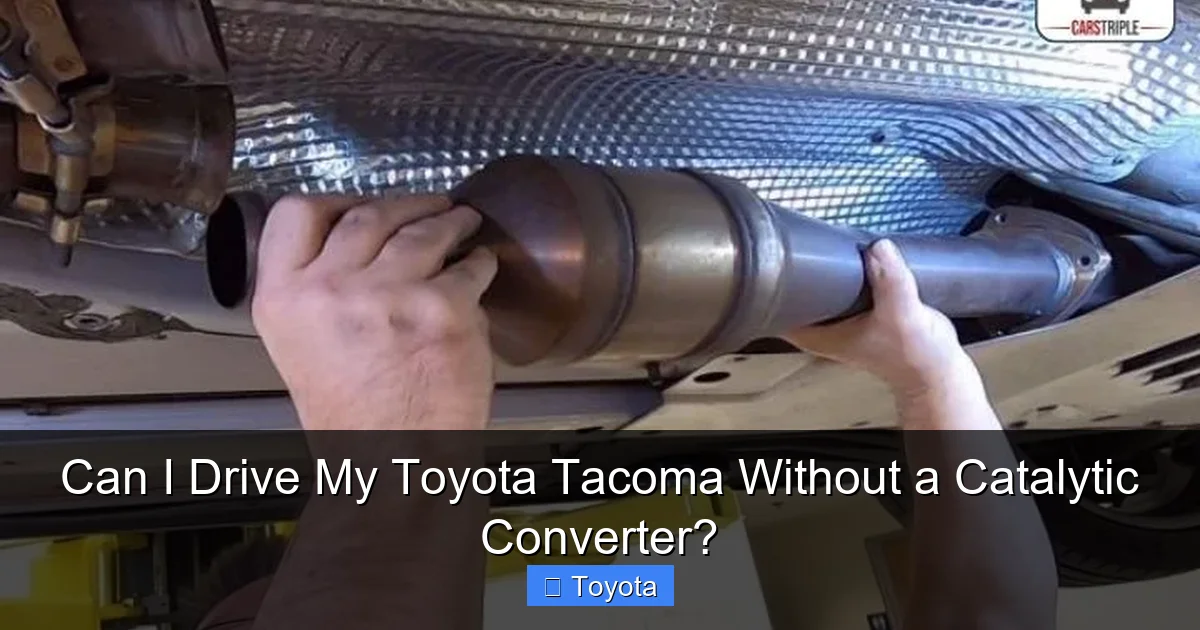
Visual guide about Can I Drive My Toyota Tacoma Without a Catalytic Converter?
Image source: carstriple.com
What Happens If You Get Caught?
Driving your Tacoma without its catalytic converter makes you an immediate target for law enforcement. The obnoxiously loud exhaust is probable cause for a traffic stop. An officer can visually confirm the missing component. The consequences are severe:
- Hefty Fines: Federal penalties can reach thousands of dollars per violation. State emissions violation fines add to this burden.
- Failed Emissions Inspection: Your vehicle will instantly fail any state-mandated smog or emissions check. Without a passing certificate, you cannot renew your registration. Your vehicle will be deemed “unregisterable” until the converter is replaced with a legally compliant unit.
- Failed Safety Inspection: In many states, a missing catalytic converter is also a direct fail item on the safety inspection due to exhaust leaks and improper system function.
- Insurance Implications: If you are in an accident while driving a non-compliant vehicle, your insurance company may deny coverage, citing illegal operation of the vehicle.
It’s not a minor ticket; it’s a serious violation that can strand you with an illegal, unregisterable truck. You can learn more about the general legal landscape of driving without emissions equipment in our detailed guide on driving any car without a catalytic converter.
The Mechanical Mayhem: What Happens Inside Your Engine
Beyond the law, your Tacoma’s engine is screaming for help. The engine computer (ECU) constantly monitors oxygen levels from the upstream O2 sensor (before the cat) and the downstream O2 sensor (after the cat). This data is used to precisely meter fuel injection for optimal combustion and to monitor the catalytic converter’s efficiency.
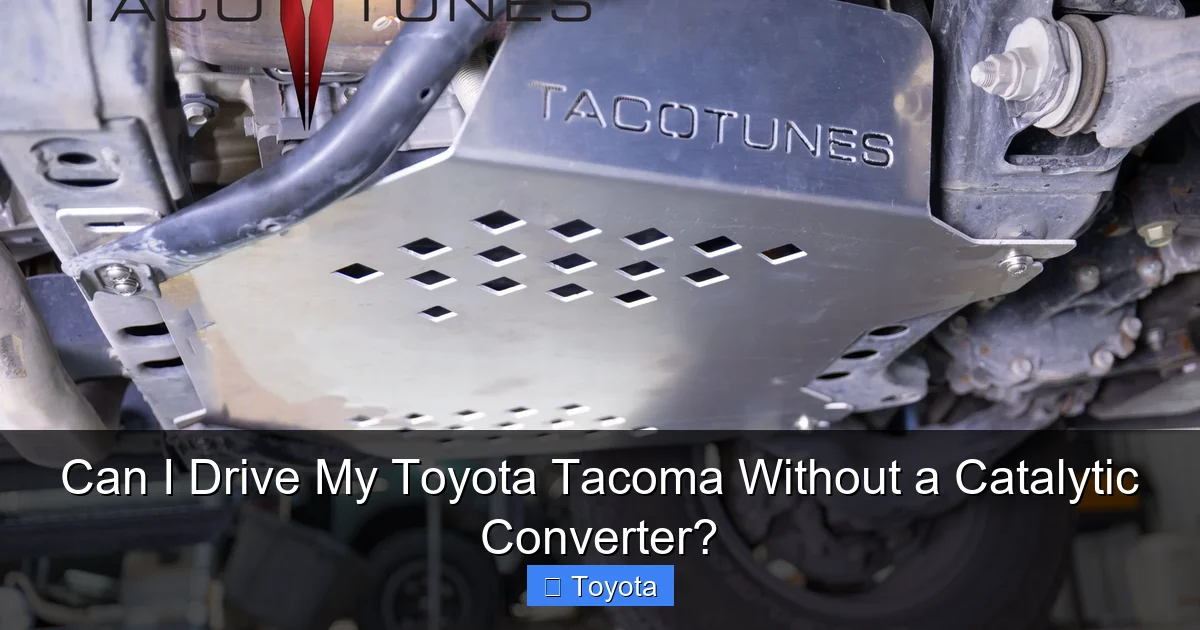
Visual guide about Can I Drive My Toyota Tacoma Without a Catalytic Converter?
Image source: tacotunes.com
The “Check Engine Light” Apocalypse
The moment you start the engine without the converter, the ECU will detect that the downstream O2 sensor is either reading wildly incorrect values or is disconnected. It will log multiple diagnostic trouble codes (DTCs), most commonly P0420 (Catalyst System Efficiency Below Threshold) and various O2 sensor codes. The check engine light will blaze on, and your truck will likely enter “limp mode” or suffer from poor driveability. The ECU cannot properly adjust the air-fuel ratio, leading to a rich or lean condition.
Long-Term Engine Damage Risks
Running with a constantly rich fuel mixture (too much gas, not enough air) has devastating effects:
- Fouled Spark Plugs & Injectors: Excess fuel washes away cylinder wall lubrication and coats plugs with carbon, causing misfires.
- Catalytic Converter Damage to the Exhaust Manifold: The unburned fuel ignites in the hot exhaust manifold or pipes, causing extreme heat that can warp components, crack welds, and damage the precious metal-coated oxygen sensors themselves.
- Oxygen Sensor Failure: The downstream O2 sensor is now exposed to raw, unfiltered exhaust gases, which can poison and destroy it rapidly, leading to more expensive repairs.
- Potential Internal Engine Damage: Prolonged operation with a severe lean or rich condition can increase cylinder temperatures and pressures, risking damage to piston rings, valves, and the head.
In essence, you trade a $1,500-$3,000 catalytic converter repair for a potential $5,000+ engine rebuild. It’s a catastrophic financial decision.
The Tacoma-Specific Theft Epidemic
You are not alone. Toyota Tacomas, along with other trucks and SUVs, have been the #1 target for catalytic converter thieves for years. Why? Several factors make the Tacoma a prime target:
- High Ground Clearance: Thieves can easily slide under the truck with a reciprocating saw without needing a lift.
- Valuable Precious Metals: Catalytic converters contain platinum, palladium, and rhodium. The converters in many Tacoma models, especially those from the 2005-2015 era with 4WD, contain a higher concentration of these valuable metals, making them worth $150-$300 to a scrapyard.
- Common and Popular: There are millions of Tacomas on the road, ensuring a steady supply of targets and making the stolen parts easy to sell.
The theft is often completed in under 90 seconds. The damage extends far beyond the missing converter; thieves often cut through wiring harnesses, damage the exhaust pipes, and shear off oxygen sensor connectors, multiplying your repair bill. If your Tacoma has been targeted, you must act swiftly. Driving it even a short distance with the exhaust system breached can allow exhaust fumes to enter the cabin, a serious health hazard, and will cause the engine to run so poorly it may stall.
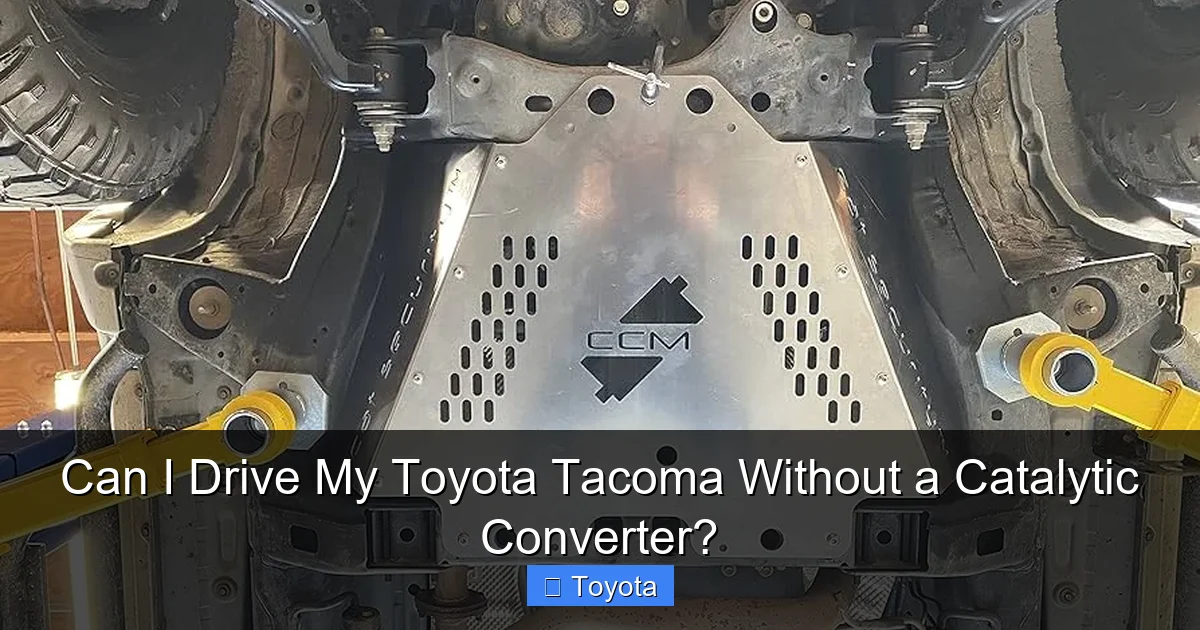
Visual guide about Can I Drive My Toyota Tacoma Without a Catalytic Converter?
Image source: m.media-amazon.com
The Audible and Performance Nightmare
Let’s talk about what you’ll actually experience if you try to drive it. The sound is the first and most obvious clue. Without the catalytic converter’s sound-dampening honeycomb structure and its role in the muffler system, your Tacoma’s exhaust note transforms from a mild truck rumble into a jarring, raspy, and incredibly loud roar. It sounds broken because it is. Expect constant stares, noise complaints, and police visits.
Power Loss and Horrendous Fuel Economy
Your Tacoma’s engine is finely tuned. The backpressure created by the exhaust system, including the catalytic converter, is a calculated variable. Removing it creates an exhaust “leak” before the oxygen sensors, which:
- Disrupts Scavenging: The timing of exhaust pulse withdrawal from the cylinder is altered, reducing volumetric efficiency. You lose low-end torque and overall horsepower.
- Confuses the ECU: As mentioned, the O2 sensor data is garbage. The ECU will default to a “safe” fuel map that is overly rich to protect the engine, dumping excessive fuel into each cylinder. This does two things: it kills performance and destroys your MPG. You could see a drop of 3-6 miles per gallon, or even more.
- Triggers Faulty Shifts: On automatic Tacomas, the transmission control module may also receive erroneous data, leading to harsh, premature, or delayed shifts.
Driving your “catless” Tacoma is an expensive, noisy, and powerless experience. The cost in wasted fuel alone over a few weeks could approach the cost of a down payment on a new converter.
The Resale and Insurance Reality Check
Perhaps you’re thinking, “I’ll just sell the truck as-is.” This is a fantasy. A vehicle without a catalytic converter has effectively zero legitimate resale value.
No Dealer or Private Buyer Will Touch It
Any reputable dealership will refuse to take it on trade. A private buyer, even an unsophisticated one, will hear the exhaust and likely know something is wrong. If they don’t, a simple smog test will reveal the issue. You cannot sell a non-compliant vehicle in any state that requires emissions testing. Attempting to do so is fraud.
Insurance and Theft Claims
If your converter was stolen, you must file a police report. Your insurance company (comprehensive coverage typically covers theft) will require this report to process your claim. They will also expect you to take reasonable steps to secure the vehicle and repair the damage. Driving the vehicle without the converter before filing a claim or while the claim is open could be considered negligence or failure to mitigate damages, giving the insurer grounds to deny the claim. For specific advice on navigating a sale in this condition, you can review the challenges of selling a car without its catalytic converter.
Your Immediate Action Plan: What To Do Instead
So, you’ve confirmed the converter is gone. Do not start the engine beyond cranking it to listen. Do not move the vehicle. Here is your step-by-step plan:
- Call the Police: File a report immediately. Get the report number. This is crucial for insurance and for documenting the crime in your area.
- Contact Your Insurance Agent: File a comprehensive claim for theft. Provide the police report number. Your deductible will apply, but this is the financial mechanism designed for this exact scenario.
- Get it Towed: Do not drive it. Call a tow truck and have your Tacoma taken directly to a trusted muffler/exhaust shop or your mechanic. Explain it’s a catalytic converter theft. They will assess all collateral damage to oxygen sensors and exhaust pipes.
- Replace with a Legal Converter: You have two main options:
- OEM (Original Equipment Manufacturer): The dealer part. This is the most expensive option (often $2,500-$4,000+ for parts and labor) but guarantees perfect fit, function, and compliance.
- Aftermarket Catalytic Converter: Many reputable brands (like MagnaFlow, Walker, etc.) make direct-fit or universal converters that are EPA-compliant. Ensure the shop installs one that is certified for use in your specific state (California requires CARB-compliant parts). This is usually less expensive than OEM.
- Invest in Anti-Theft Measures: Once replaced, have the shop weld the converter in place, install a catalytic converter anti-theft plate/cage, or etch your VIN onto the converter. These are proven deterrents.
Remember, the goal is to return your truck to a legal, safe, and reliable state as quickly as possible. The short-term cost is an investment in avoiding massive long-term costs and legal trouble.
Conclusion: Don’t Gamble With Your Truck or Your Freedom
The temptation to “just drive it to the shop” after a catalytic converter theft is strong, but it’s a gamble with terrible odds. The risks—federal fines, engine destruction, astronomical fuel costs, noise complaints, and a worthless truck—far outweigh the inconvenience of a tow bill. Your Toyota Tacoma is a robust and valuable asset. Treating it like a legal, compliant machine is non-negotiable. The catalytic converter is a linchpin of that compliance. If it’s gone, the only correct answer is to stop, report, claim, and replace. Protect your investment, your driving record, and your peace of mind by doing the right thing the first time. Your future self, your engine, and your wallet will thank you.
Frequently Asked Questions
Can I drive my Toyota Tacoma to a repair shop without a catalytic converter?
No. Even a short drive is illegal and will cause engine damage. The truck should be towed directly to a repair facility. Driving risks immediate fines, failed inspections, and can foul spark plugs or damage oxygen sensors from the rich fuel mixture.
Will a missing catalytic converter ruin my Tacoma’s engine long-term?
Yes, potentially. The engine will run with an improper air-fuel ratio, leading to excessive carbon buildup, overheated exhaust components, and failed oxygen sensors. Prolonged operation can cause internal engine damage, leading to costly repairs far beyond the converter’s cost.
How much does it cost to replace a stolen catalytic converter on a Tacoma?
Costs vary widely by model year and engine type. For a standard replacement, expect $1,800 to $3,500 for parts and labor. OEM dealer parts can push the total to $4,000 or more. California models (CARB compliant) are on the higher end.
What are the best anti-theft devices for a Toyota Tacoma catalytic converter?
The most effective are professional-grade solutions: having the converter welded to the exhaust system, installing a certified catalytic converter anti-theft plate or cage (like from Cat Security or Miller), and etching your VIN onto the converter itself. These create significant work for a thief, deterring most opportunistic thefts.
My check engine light is on after the theft. Can I just clear the codes and drive?
No. Clearing the codes will only temporarily turn off the light. The underlying problem—the missing converter and likely damaged O2 sensors—will immediately trigger new codes and a rich-running condition. The light is a symptom, not the disease. The root cause must be fixed.
Is there any situation where driving without a catalytic converter is legal?
Only in very limited circumstances, such as driving a pre-1975 vehicle on private property or certain off-highway vehicles. For any registered, street-legal Toyota Tacoma on public roads, it is always illegal to remove or operate without a functioning catalytic converter. There are no “grandfathered” exceptions for modern vehicles.
