
Why Is My Traction Control Light on in My Toyota Corolla?

A lit Traction Control (TRAC) light in your Toyota Corolla is a critical safety alert, indicating the system has detected wheel slip or a malfunction that could compromise stability. This warning often activates on slick surfaces but can also signal issues like faulty wheel speed sensors, a bad steering angle sensor, or low system voltage. For safe driving, you should diagnose the specific fault code promptly, as ignoring it may disable essential stability control and point to underlying problems needing immediate attention.
Key Takeaways
- Inspect Wheel Speed Sensors: Faulty sensors are the most common cause and require professional diagnosis.
- Check Tire Pressure & Tread: Underinflated or worn tires can falsely trigger the traction control system.
- Assess Driving Conditions: The light may activate temporarily on slippery roads; it should turn off when traction is regained.
- Scan for Related Codes: A problem with your ABS system often illuminates the traction control light; get a full diagnostic scan.
- Do Not Ignore the Light: Driving with it on means your traction control is disabled, reducing safety in poor conditions.
- Consider a System Reset: Sometimes a simple disconnect of the battery can reset the system, but this is often temporary.
- Consult a Certified Technician: For persistent lights, a professional has the tools to pinpoint the exact Corolla-specific issue.
📑 Table of Contents
- What Exactly Is Traction Control and Why Does It Matter?
- The Usual Suspects: Why Your Traction Control Light Might Be On
- When the Traction Control Light Teams Up with Other Warning Lights
- What Should You Do When That Light Pops On?
- Can You Still Drive with the Traction Control Light Illuminated?
- How to Reset the Traction Control Light (And When Not To)
- Conclusion: Your Safety Net Needs Attention
What Exactly Is Traction Control and Why Does It Matter?
Let’s set the scene. You’re driving your trusty Toyota Corolla on a rainy afternoon, or maybe you’re heading out early one morning and hit a patch of black ice. You gently press the accelerator, and instead of smoothly pulling away, you feel the wheels start to spin. The car feels a little loose, a little unsure. Then, a small icon—a car with squiggly lines underneath—lights up on your dashboard. That’s your traction control light, and it’s not just a random nuisance. It’s your car’s way of saying, “Hey, I’m working hard to keep you safe, but something might be wrong with my safety net.”
Traction control is one of those modern marvels we often take for granted until it alerts us. It’s a sophisticated electronic system designed to prevent wheel spin during acceleration. It does this by automatically reducing engine power and/or applying the brakes to individual wheels that are slipping. Think of it as an incredibly fast, digital co-pilot that intervenes the moment it detects a loss of traction, helping you maintain steering control and stability. In your Corolla, this system is tightly integrated with the anti-lock braking system (ABS) and often the vehicle stability control (VSC) system. It’s a critical safety feature, especially for everyday drivers facing wet roads, gravel, or sudden acceleration.
How Traction Control Works in Your Toyota Corolla
Under the hood (or rather, under the dashboard), your Corolla’s traction control system is a network of sensors and computers. The key players are the wheel speed sensors, which are the same ones used by your ABS. These sensors constantly monitor how fast each wheel is spinning. The system’s brain, the ABS/TCS control module, compares this data. If it detects that one wheel is spinning significantly faster than the others—a clear sign of slip—it jumps into action.
The intervention is instantaneous and usually subtle. It might:
- Reduce engine power by adjusting the throttle or fuel injection.
- Pulse the brake on the slipping wheel, transferring torque to wheels with better grip.
You might feel a slight judder or hear a brief noise from the brakes when it activates, especially on slippery surfaces. That’s normal! It’s the system doing its job. The traction control light on your dash will often illuminate briefly when the system is actively intervening, which is perfectly normal. It’s a steady, persistent light that signals a problem.
The Role of ABS and Stability Control
It’s impossible to talk about traction control without mentioning its close cousins: ABS and VSC. In most modern Corollas, these systems share hardware and software. The wheel speed sensors feed all three systems. Because of this deep integration, a fault in one area can trigger warnings in another. This is why you often see the traction control light come on alongside the ABS light or even the check engine light. They’re all part of the same electronic safety family. If one member has a problem, the whole group gets a little anxious.
The Usual Suspects: Why Your Traction Control Light Might Be On
So, that little light is on, and it’s not going away. Before you panic and imagine the worst, know that the cause can range from incredibly simple to more complex. Let’s walk through the most common culprits, starting with the easiest to fix.
Visual guide about Why Is My Traction Control Light on in My Toyota Corolla?
Image source: autoily.com
Wheel Speed Sensor Issues: The Prime Suspect
If your traction control light has a favorite cause, it’s a faulty wheel speed sensor. These sensors live near each wheel brake assembly and are exposed to the elements—road salt, grime, water, and constant vibration. Over time, they can get dirty, corroded, or simply fail. A bad sensor sends garbage data to the control module, which gets confused and throws a tantrum (in the form of a warning light). A failing sensor might cause intermittent light activation or a steady glow. Diagnosing which sensor is the problem requires a professional scan tool that reads the specific sensor data.
Faulty Steering Angle Sensor
This sensor tells the car’s computer the angle of your steering wheel. It’s crucial for systems like traction control and VSC, which need to know which direction you’re trying to go to correct the car’s path. If the steering angle sensor loses calibration or fails, the system can’t determine if the car is responding correctly to your steering inputs. This often happens after a steering wheel alignment or if the sensor gets knocked out of whack. A common symptom is a traction control light that comes on after you’ve had an alignment or if the steering wheel feels slightly off-center when driving straight.
Problems with the ABS Module
The ABS module is the sophisticated computer that processes all the sensor data. Like any computer, it can develop faults—corroded connections, internal circuitry issues, or software glitches. This is less common than sensor failures but is a more serious and expensive repair. If the module itself fails, it will likely disable both your ABS and traction control systems, illuminating both warning lights.
Low Tire Pressure or Uneven Tires
Yes, something as simple as low air pressure can trigger your traction control light. The system relies on the wheel speed sensors to compare rotational speeds. If one tire is significantly lower on pressure, it has a slightly smaller effective diameter and will spin faster than the others, mimicking a slip condition. The system gets triggered and lights up. Similarly, if you have mismatched tires (different sizes, tread depths, or brands) or uneven tire wear, it can cause false signals. Always start your diagnosis by checking your tire pressure with a good gauge and ensuring all tires match your manufacturer’s specifications.
Electrical and Wiring Problems
All those sensors and the ABS module communicate via a network of wires. These wires can get chafed, corroded at connectors, or damaged from road debris or even during other repairs. A broken or shorted wire can interrupt the signal, causing the system to deactivate and warn you. This can be tricky to diagnose, as the break might not be visible and could be anywhere along the wiring harness.
When the Traction Control Light Teams Up with Other Warning Lights
Seeing more than one warning light on your dash is like your car sending a clearer, more urgent message. It tells you the problem is likely in a shared system rather than an isolated, single-component fault. Let’s decode the common combinations.
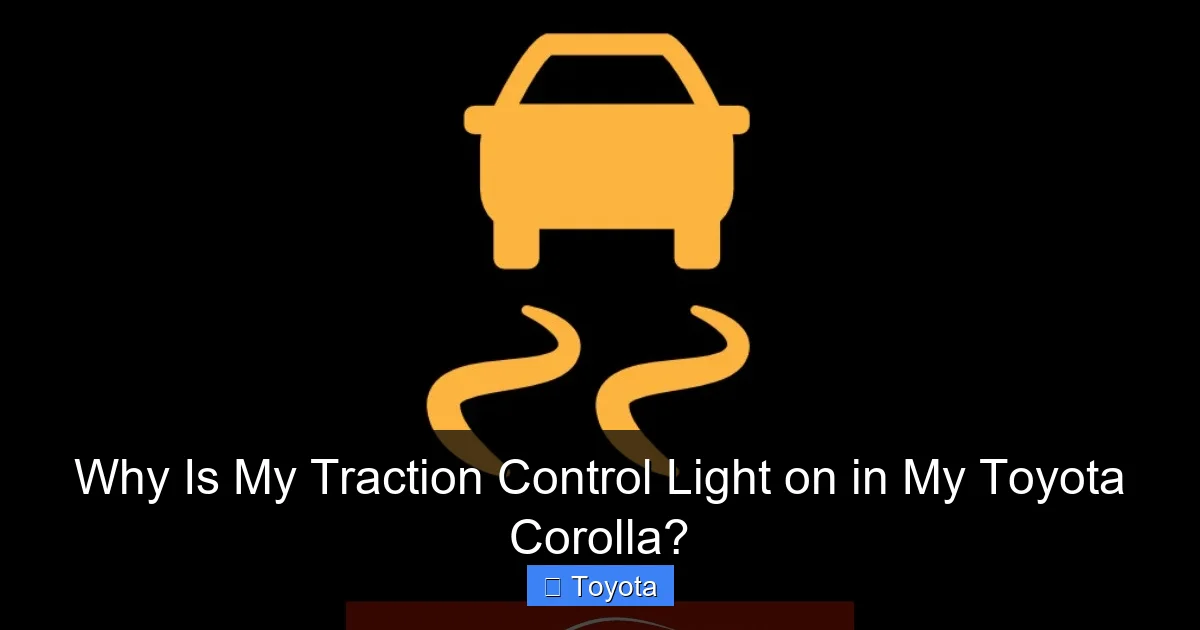
Visual guide about Why Is My Traction Control Light on in My Toyota Corolla?
Image source: cardeeply.com
Check Engine Light Companion
This is a frequent pairing. The traction control system and engine management system are deeply linked. The engine control unit (ECU) provides data like engine RPM and torque output to the traction control system. Conversely, when traction control intervenes, it often signals the ECU to reduce power. A major engine problem—like a misfire, faulty oxygen sensor, or issue with the throttle body—can disrupt this communication. The ECU might set a diagnostic trouble code (DTC) and illuminate the check engine light, and the traction control system, losing reliable data, will disable itself and turn on its own light as a precaution. If both lights are on, the check engine light is usually the place to start. A mechanic can scan for codes that point to the root cause. You might notice this pairing after driving through deep water that affected electrical connectors or during a severe engine misfire.
ABS Light On Too?
As mentioned, traction control and ABS are siblings. They share the same wheel speed sensors and often the same control module. If the ABS light comes on along with the traction control light, it’s a very strong indicator that the problem lies in the shared wheel speed sensor circuit or the ABS/TCS control module itself. It’s highly unlikely to be two separate, coincidental failures. This combination means your anti-lock braking system is also compromised, which is a significant safety concern, especially in slippery conditions. You should address this combination immediately.
Other Dashboard Warnings
In some cases, particularly with severe electrical issues like a weak or failing battery or a bad alternator, you might see multiple lights—including the battery light, brake light, or even the airbag light—illuminate simultaneously. This can happen because low voltage can cause sensitive electronic control modules to malfunction or reset. If your battery light is also on, it’s wise to check your charging system first. A weak battery can cause all sorts of phantom electronic gremlins. For more on battery-related warnings, you can read about why the battery light comes on in your car.
What Should You Do When That Light Pops On?
So, the light is on. Now what? Don’t just ignore it and hope it goes away. Here’s a practical, step-by-step approach to diagnosing and addressing the issue.
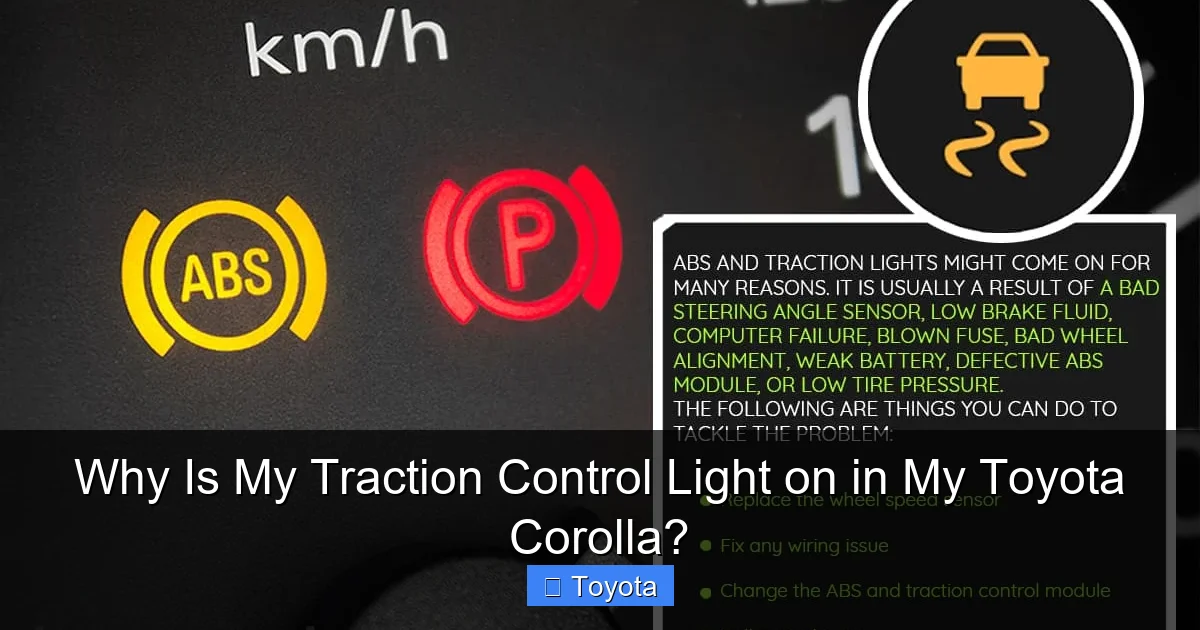
Visual guide about Why Is My Traction Control Light on in My Toyota Corolla?
Image source: veasks.com
Immediate Safety Steps
First, don’t panic. Your primary braking system (the regular brake pedal) is almost always still functional, even if ABS is disabled. However, your ability to stop quickly on slippery surfaces is reduced. Adjust your driving accordingly:
- Avoid sudden acceleration on wet, icy, or loose surfaces.
- Allow for longer stopping distances.
- Drive defensively and be extra aware of road conditions.
The light itself is not an emergency that requires you to pull over immediately, but it does mean your car’s electronic safety nets are offline. Plan to get it diagnosed soon.
Basic DIY Checks You Can Do Right Now
Before you call a mechanic, there are a few simple, free checks you can perform:
- Check Your Tire Pressure: This is the easiest and most common fix. Use a reliable tire pressure gauge and inflate all tires to the pressure listed on the sticker inside your driver’s door jamb. Don’t use the number on the tire sidewall. Reset the light after inflating? Sometimes it goes off after a short drive; sometimes you need a manual reset (see below).
- Visual Tire Inspection: Look for obvious damage, uneven wear, or if one tire is significantly more worn than the others. Also, ensure all tires are the same size and model.
- Check for Obvious Wiring Damage: Look under the car near each wheel for any obviously loose, broken, or corroded wires leading to the wheel speed sensors. Be careful if you do this on a lift or jack stands.
- Scan for Codes: If you have an OBD-II scanner (not just a basic code reader, but one that can access ABS/TCS codes), plug it in and see what it says. Many auto parts stores will scan your check engine light for free, but they often won’t scan the ABS/TCS system without a more advanced tool. A professional scan is best.
When to See a Mechanic
If the basic checks don’t solve the problem, it’s time to call in the pros. Specifically, you need a technician with the proper diagnostic equipment for your Toyota’s ABS/TCS system. They will:
- Read the specific diagnostic trouble codes (DTCs) from the ABS/TCS module.
- Monitor live data from all wheel speed sensors to spot a faulty one.
- Inspect the steering angle sensor and potentially recalibrate it.
- Check wiring and connector integrity.
- Test the ABS/TCS control module if all else fails.
This is not typically a DIY repair for most people, as it requires specialized knowledge and tools. Misdiagnosis can lead to replacing expensive parts that aren’t actually broken.
Can You Still Drive with the Traction Control Light Illuminated?
This is the big question on everyone’s mind. The short answer is: yes, you can usually drive the car, but with important caveats and reduced safety margins.
Risks of Ignoring It
Driving with the traction control light on means your electronic traction and stability aids are offline. This increases your risk of:
- Wheel spin and loss of forward momentum on wet, snowy, or gravelly roads.
- Reduced cornering stability, making the car more prone to understeer or oversteer.
- Longer stopping distances on slippery surfaces, since ABS is often also disabled.
- Potential for a cascading failure. A minor sensor issue might be a precursor to a larger electrical problem.
In dry, ideal conditions on paved roads, you might not notice a huge difference in day-to-day driving. But the moment conditions get slick, you’ll be missing a key layer of safety.
Temporary vs. Permanent Issues
Sometimes, the light can come on temporarily and then go off on its own. This can happen after:
- Hitting a deep puddle that momentarily splashes a sensor connector.
- A very brief, intense wheel spin that the system corrected.
- A temporary voltage drop from the battery.
If the light comes on, stays on for a few drives, and then goes off by itself and doesn’t return, it might have been a one-time glitch. However, if it’s a persistent, steady light that never goes away, it indicates a permanent fault that needs diagnosis. Don’t assume a temporary illumination means the problem is gone; keep an eye on it.
How to Reset the Traction Control Light (And When Not To)
Many drivers wonder if they can simply “reset” the light themselves. The answer is nuanced.
Simple Reset Methods
The system is designed to reset itself once the underlying fault is cleared and the vehicle is driven under normal conditions for a few cycles (key on/off, drive cycles). However, you can sometimes force a reset:
- The “Pull-Over” Method: Safely pull over, turn off the engine, open the driver’s door (this often resets some systems), wait 30 seconds, restart the car. Sometimes this clears a transient error.
- Disconnecting the Battery: Disconnecting the negative battery terminal for about 10 minutes can reset many vehicle computers, including the ABS/TCS module. CAUTION: This will also reset your radio presets, clock, and any other memory settings. On some newer cars, it may require a radio code to reactivate. This is a broader reset and might not fix the problem if the fault persists; the light will likely come back on as soon as the system re-detects the issue.
Why Resets Might Not Last (And Why You Shouldn’t Rely on Them)
Resetting the light without fixing the root cause is like turning off a smoke alarm without putting out the fire. The light is a symptom, not the disease. If a wheel speed sensor is broken, disconnecting the battery won’t fix the sensor. The moment you start driving and the system tries to communicate with that faulty sensor, it will detect the fault again and illuminate the light. A persistent light after multiple resets is a clear sign that a physical repair is needed. Using a scan tool to clear codes is also temporary if the fault remains.
For specific reset procedures on your Corolla model year, your owner’s manual is the best resource. Some models have a dedicated reset procedure involving the ignition and the TRAC OFF button. However, these are only for when the fault has been repaired.
Conclusion: Your Safety Net Needs Attention
That traction control light in your Toyota Corolla is more than just an annoying dashboard icon. It’s a vital communication tool from one of your car’s most important safety systems. It’s telling you that the network of sensors and computers working tirelessly to prevent you from spinning out or losing control has detected a problem.
While the causes are varied—from a simple tire pressure issue to a faulty wheel speed sensor or a deeper electrical fault—the approach should always be methodical. Start with the easiest, free checks: your tires. Then, be prepared to seek professional diagnosis with the proper scan tools. Remember, this light often travels with its friends, the ABS light and check engine light, which can provide crucial clues.
Driving with the system disabled is possible, but it reduces your safety margin, especially in poor weather. It’s not a warning to ignore. Think of it as your car asking for a quick health check. Addressing it promptly ensures your Corolla’s electronic guardians are back online, watching your back on every journey, whether it’s a sunny commute or a slippery winter drive. A well-functioning traction control system is a silent partner in your safety—keep it in the loop by listening when it speaks.
Frequently Asked Questions
Why is my traction control light on in my Toyota Corolla?
The traction control light illuminates when your Corolla’s system detects wheel slip and intervenes to maintain stability. It can also come on due to a fault in the system itself, such as a bad sensor or module, and will stay on until the issue is diagnosed and repaired.
What causes a traction control light to come on and stay on?
A persistent light often points to a faulty wheel speed sensor, which tells the system how fast each wheel is turning. Other common causes include damaged wiring to these sensors, a failed ABS pump or module, or low battery voltage affecting the computer.
Can low tire pressure cause the traction control light to come on?
Yes, significantly low or uneven tire pressure can trigger the traction control light. Different tire sizes or pressures cause the wheel speed sensors to report mismatched data, making the system think one wheel is spinning faster than the others.
Is it safe to drive my Corolla with the traction control light on?
It is generally safe to drive carefully, but you must understand that your traction and stability control systems are disabled. This means you have less help preventing wheel spin in slippery conditions or during sudden maneuvers, so drive with extra caution, especially in rain or snow.
How do I reset or turn off the traction control light?
You can often reset the light by turning your Corolla off and back on. If the light returns immediately, there is an active fault code. A permanent reset requires a mechanic to diagnose and fix the underlying problem, then clear the trouble code with a scan tool.
Could bad weather cause the traction control light to flash?
A flashing traction control light during normal driving in rain, snow, or on ice is usually normal. It indicates the system is actively working to prevent wheel spin. However, if the light stays solidly on after driving on dry pavement, it signifies a system malfunction that needs service.
