
How to Reset the Low Tire Pressure Light on a 2010 Toyota Corolla

If your 2010 Toyota Corolla’s low tire pressure light is on, first ensure all tires are properly inflated to the recommended PSI. Most models use an indirect TPMS that resets automatically after a driving cycle, but some have a dedicated reset button. If the light persists after resetting, it may indicate a faulty sensor or other issue requiring professional diagnosis.
Key Takeaways
- Always check tire pressure first: Inflate tires to the manufacturer’s recommended PSI before any reset attempt; the system won’t reset if pressure is incorrect.
- Understand your TPMS type: The 2010 Corolla typically uses an indirect TPMS that relies on wheel speed sensors, not direct pressure monitors.
- Driving cycle is the primary method: For indirect systems, a consistent drive at highway speeds for 10-15 minutes usually resets the light automatically.
- Some trims have a reset button: Certain 2010 Corolla models feature a TPMS reset button located behind the steering wheel; consult your owner’s manual.
- Persistent lights need diagnosis: If the light remains on after correct inflation and a proper driving cycle, a faulty sensor or ABS issue may be the cause.
- Seasonal changes affect pressure: Cold weather naturally lowers tire pressure, often triggering the light; recheck and adjust PSI with temperature drops.
- Regular maintenance prevents false alerts: Monthly pressure checks and tire rotations keep your TPMS functioning accurately and extend sensor life.
📑 Table of Contents
- Introduction: That Annoying Dashboard Light
- Understanding Your 2010 Toyota Corolla’s TPMS
- Preparation Before Resetting: The Critical First Step
- Method 1: The Driving Cycle Reset (The Most Common Method)
- Method 2: Using the TPMS Reset Button (If Equipped)
- Troubleshooting: When the Light Won’t Turn Off
- Proactive Tire Maintenance to Avoid Future Alerts
- Conclusion: Knowledge is Power (and a Clear Dashboard)
Introduction: That Annoying Dashboard Light
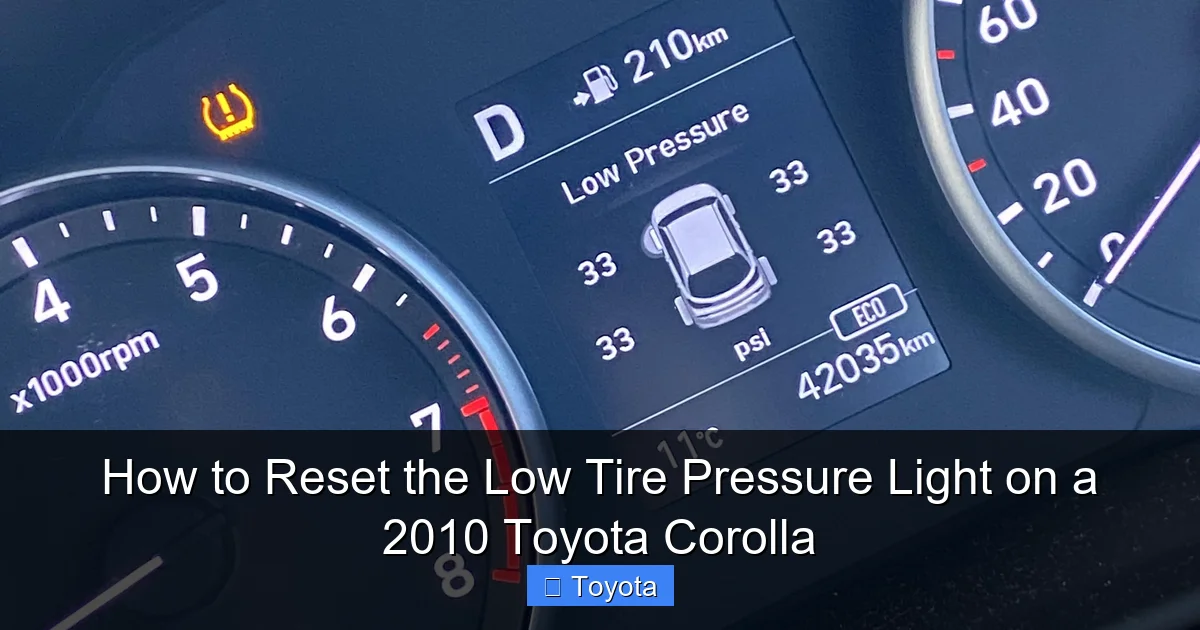
You’re driving your trusty 2010 Toyota Corolla when suddenly, a small yellow symbol shaped like an exclamation mark inside a tire cross-section illuminates on your dashboard. It’s the low tire pressure warning light, part of your vehicle’s Tire Pressure Monitoring System (TPMS). While it’s a crucial safety feature, it can be a real nuisance, especially if you’ve already checked and inflated your tires. You might be thinking, “I just put air in them! Why is it still on, and how do I turn it off?”
This guide is here to help. We’ll walk you through everything you need to know about your 2010 Corolla’s TPMS, why that light comes on, and exactly how to reset it. The process is simpler than you might think, often requiring nothing more than a short drive. However, understanding the “why” behind the warning is just as important as the reset itself to ensure your safety and your car’s longevity.
So, let’s pop the hood, check the tires, and get that light extinguished. Whether you’re a complete beginner or have some car knowledge, we’ve got you covered with clear, step-by-step instructions.
Understanding Your 2010 Toyota Corolla’s TPMS
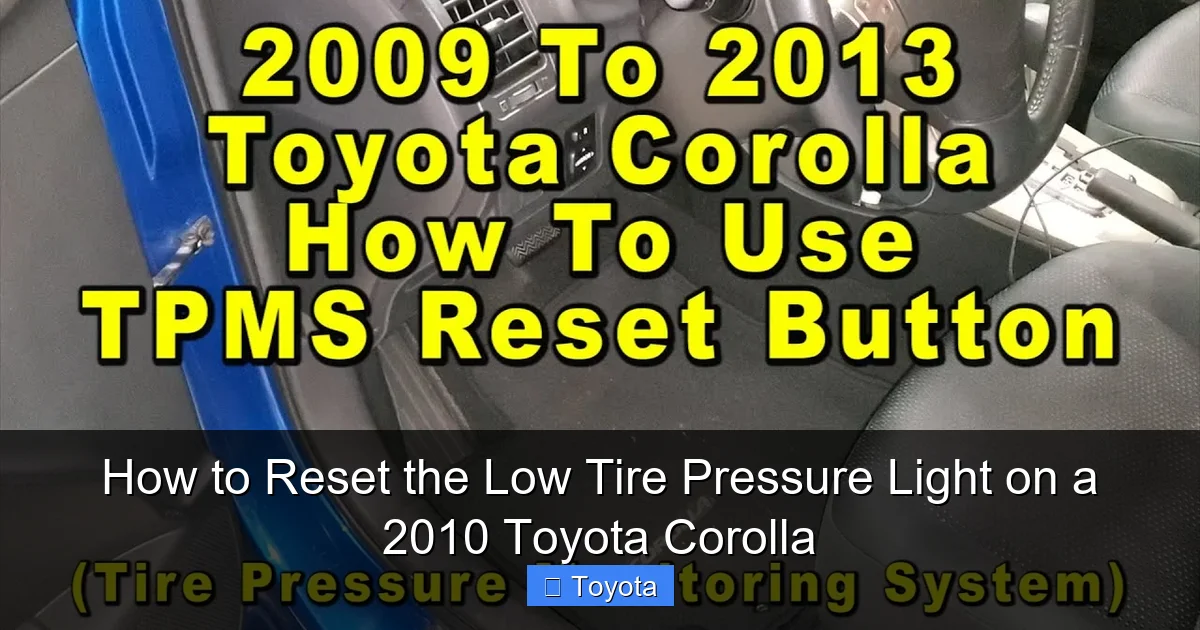
Before we reset anything, it’s vital to understand what system we’re dealing with. The 2010 Toyota Corolla does not use the newer, more common direct TPMS with individual pressure sensors in each wheel. Instead, it employs an indirect TPMS. This is a key distinction that changes how we diagnose and reset the warning light.
Visual guide about How to Reset the Low Tire Pressure Light on a 2010 Toyota Corolla
Image source: i.ytimg.com
How Indirect TPMS Works
An indirect TPMS doesn’t measure air pressure directly. Instead, it uses the existing Anti-lock Braking System (ABS) wheel speed sensors. Here’s the simple science: an underinflated tire has a slightly smaller rolling diameter. This causes it to rotate at a marginally different speed than the properly inflated tires. The car’s computer constantly monitors these wheel speeds. When it detects a significant difference between one wheel and the others, it interprets this as a loss of pressure and triggers the low tire pressure warning light on your dash.
Because it piggybacks on the ABS system, there are no separate, battery-powered pressure sensors in the wheels to fail or need battery replacements. This makes the system generally more reliable and less expensive to maintain. However, it also means the warning can sometimes be triggered by other issues affecting wheel speed, like uneven tire wear or a faulty ABS sensor.
Why the Light Comes On: Beyond Low Pressure
While the primary reason is, of course, low tire pressure, the light can activate for other related reasons. Understanding these helps you troubleshoot if a simple reset doesn’t work.
- Genuine Low Pressure: This is the most common cause. Air slowly leaks from tires through the valve stem or tiny punctures, or pressure drops with colder weather (about 1 PSI for every 10°F drop).
- Tire Rotation or Replacement: After rotating tires or installing a new spare, the system’s “learned” wheel speed data is thrown off. The light will come on until the system re-calibrates during a driving cycle.
- Faulty ABS Wheel Speed Sensor: Since the TPMS uses ABS data, a bad wheel speed sensor can send erroneous signals, fooling the TPMS into thinking a tire is low.
- Mismatched Tires: Using a temporary spare tire (which is smaller and rotates faster) or significantly different tire sizes on the same axle will trigger the warning.
- System Needs Re-initialization: After certain repairs or a dead battery, the system’s memory may need to be refreshed.
Preparation Before Resetting: The Critical First Step
Here is the golden rule of TPMS: You must fix the problem before you reset the light. Resetting the warning without addressing the underlying cause is like turning off a smoke alarm while a fire is still burning—it’s dangerous and pointless. The light is your car’s way of telling you something is wrong. So, our first step is always verification and correction.
Visual guide about How to Reset the Low Tire Pressure Light on a 2010 Toyota Corolla
Image source: i.ytimg.com
Tools You’ll Need
You don’t need any special tools for the basic reset process. However, for the preparation phase, you will need:
- A reliable tire pressure gauge (digital is easiest). The ones on gas station air pumps are often inaccurate.
- An air compressor (at a gas station, a home compressor, or a portable 12V unit).
- Your vehicle’s owner’s manual (for the exact recommended PSI and to confirm if your model has a reset button).
Checking and Adjusting Tire Pressure Correctly
This step is non-negotiable. Follow these steps meticulously:
- Check Pressure When Cold: “Cold” means the car hasn’t been driven for at least three hours or has been driven less than a mile. Driving heats the tires and increases pressure, giving a falsely high reading.
- Find the Recommended PSI: The correct pressure for your 2010 Corolla is listed on a yellow and white sticker located on the driver’s side door jamb (the edge of the door frame when you open the door). It is NOT on the tire sidewall. For most base model 2010 Corollas, it’s typically 32 PSI for all four tires, but always use the number on your sticker. The spare tire has a different, higher pressure (often 60 PSI) and should not be used for the reset procedure.
- Remove the Valve Cap: Unscrew the small cap on the tire valve stem.
- Check All Four Tires: Press the gauge firmly onto the valve stem. Note the reading. Do this for all four tires.
- Adjust as Needed: If any tire is below the recommended PSI, add air in short bursts, rechecking frequently to avoid overinflation. If a tire is overinflated, you can let some air out by pressing the center of the valve stem briefly.
- Replace Valve Caps: Securely screw the caps back on. They keep dirt and moisture out.
For a more detailed look at proper inflation and the specific numbers for newer Corolla models, you can reference our guide on how to check tire pressure on a 2021 Toyota Corolla. While the year is different, the principles of cold pressure and finding the sticker are identical.
Safety First
Never attempt to adjust a tire that is hot from recent driving. The pressure will be higher, and letting air out from a hot tire can lead to underinflation once it cools. Also, ensure your vehicle is parked on a level surface, the parking brake is set, and the engine is off. If you need to use a gas station air pump, be mindful of traffic and park safely away from the pumps.
Method 1: The Driving Cycle Reset (The Most Common Method)
For your 2010 Toyota Corolla’s indirect TPMS, this is the standard and most frequent reset method. After you have confirmed and corrected the tire pressure, the system needs to “relearn” the normal rotation patterns of your now-properly-inflated tires. It does this by driving. The onboard computer compares wheel speeds during a specific driving pattern and, when they match within expected parameters, it turns the warning light off.
Visual guide about How to Reset the Low Tire Pressure Light on a 2010 Toyota Corolla
Image source: i.redd.it
Step-by-Step Driving Procedure
Follow these steps precisely for the best chance of a successful reset:
- Ensure All Tires are Correctly Inflated: Double-check your work from the previous section.
- Start Your Vehicle: Turn the ignition to the “ON” position (dashboard lights on) but do not start the engine. Wait about 5 seconds, then start the engine. This initializes the system.
- Drive Consistently: You need to drive at a steady speed. The general rule is to maintain a speed of 50 mph (80 km/h) or higher for a continuous period.
- Duration: Drive at this speed for approximately 10 to 15 minutes. You can do this on a highway or a long, clear stretch of road. The system needs enough time and consistent data to complete its recalibration.
- Vary Your Speed Slightly: While maintaining highway speeds, it’s okay to gently slow down and speed up again within a reasonable range (e.g., 50-65 mph). Avoid heavy braking or aggressive acceleration during this cycle.
- Complete the Cycle: After 10-15 minutes of steady driving, you can return to normal driving conditions. The light should extinguish within a few minutes of completing the cycle. If it does not, continue driving for another 5-10 minutes.
What to Expect During the Cycle
It’s normal for the light to flash briefly when you first start driving after inflating the tires. This indicates the system is actively checking and recalibrating. Do not be alarmed by this. The goal is for it to stop flashing and go completely solid off. Sometimes, the light may not turn off until you turn the car off and restart it after the driving cycle is complete. If after a thorough driving cycle the light is still on, proceed to the next method or troubleshooting section.
Method 2: Using the TPMS Reset Button (If Equipped)
While the driving cycle is the primary method for the 2010 Corolla’s indirect system, some specific trims or markets may have been equipped with a manual TPMS reset button. This is more common on vehicles with direct TPMS, but it’s worth checking for. The button allows you to manually tell the computer to forget the old wheel speed data and start a new learning cycle immediately.
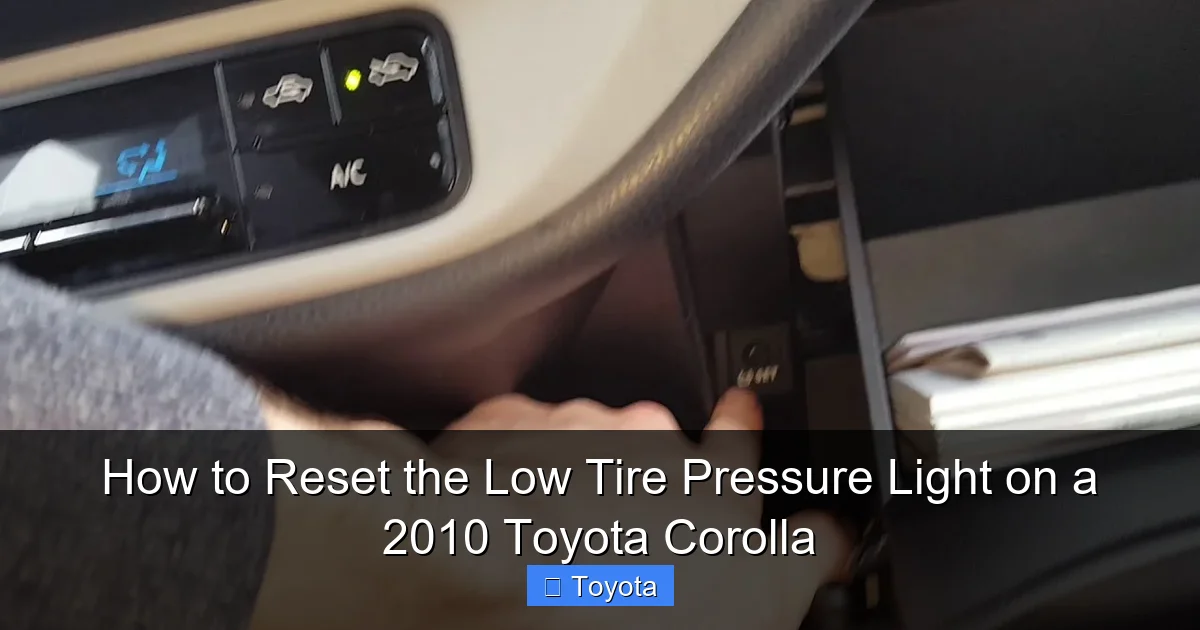
Locating the Reset Button
If your Corolla has one, the TPMS reset button is typically located:
- Under the dashboard, to the left of the steering column (near the driver’s knee area).
- Inside the fuse panel cover on the lower end of the dashboard (driver’s side). You may need to open the fuse box cover to access it.
- Consult your owner’s manual for the exact location and appearance. It is usually a small, red or black button, sometimes labeled “TPMS” or with a tire symbol.
Important: Many 2010 Corolla models do not have this button. If you cannot find one after a thorough search, your vehicle likely relies solely on the driving cycle method described above.
Executing the Reset Sequence
If you have located the button, here is the standard procedure:
- Turn Ignition to “ON”: Place the key in the ignition and turn it to the “ON” position (dashboard lights on), but do not start the engine.
- Press and Hold the Button: Locate the TPMS reset button and press it firmly. You will need to hold it down for about 3 seconds. You should hear a short beep, and the TPMS warning light on the dashboard should blink three times and then turn off. If it doesn’t blink, release and press again.
- Start the Engine: After releasing the button, start the engine.
- Drive the Vehicle: Even after a button press, the system still needs to complete a learning cycle. Drive the car at highway speeds (50+ mph) for 5-10 minutes to allow the sensors to confirm the new pressure baseline. The light should remain off.
If the light comes back on after using the button, it means the system detected a discrepancy again during the drive, pointing to an unresolved issue like a slow leak or a faulty sensor.
Troubleshooting: When the Light Won’t Turn Off
You’ve inflated the tires to the perfect PSI. You’ve driven for 20 minutes on the highway. You may have even pressed a reset button. Yet, that stubborn little light remains illuminated. Don’t panic. This means there’s an issue the system cannot automatically correct. Let’s diagnose the most common culprits.
Common Reasons for Persistent Alerts
- Slow Tire Leak: The most likely reason. A nail, a damaged valve stem, or a flawed bead seal can cause a tire to lose pressure slowly. The light may go off temporarily after inflation but return as the pressure drops again. To test, recheck the pressure in all four tires the next morning (when cold). If any are low again, you have a leak that needs repair at a tire shop.
- Faulty or Damaged ABS Wheel Speed Sensor: Remember, your TPMS uses the ABS sensors. If one of these sensors is dirty, damaged, or has failed, it will send a bad signal. The TPMS interprets this as a slow-spinning (low-pressure) wheel. This often triggers other warnings too, like the ABS or Traction Control lights.
- Damaged or Clogged Valve Stem: The valve stem itself can degrade or get clogged with dirt, preventing an accurate seal or causing a slow leak.
- Mismatched Spare Tire in Use: If you are currently driving on your temporary spare tire (the small “donut”), the system will detect the size difference and turn the light on. This is normal and expected. The light should go off once you re-mount your regular full-size tire and complete a driving cycle.
- Recent Tire Service Not Logged: After a tire rotation, the system’s “memory” of which wheel position has which characteristic is wrong. A driving cycle should fix this, but if it doesn’t, a professional may need to use a scan tool to reinitialize the system.
When to Seek Professional Help
If you’ve meticulously followed all the steps—verified cold pressure, completed multiple driving cycles, and checked for obvious issues—and the light still glows, it’s time to visit a mechanic or tire professional. They have advanced diagnostic tools that can read the specific TPMS and ABS codes from your car’s computer. This will pinpoint whether it’s a sensor issue, an electrical problem, or something else.
Additionally, if the low tire pressure light is accompanied by other dashboard warnings, such as the check engine light or an ABS warning, it strongly suggests a more complex electrical or sensor network problem that requires professional attention. Don’t ignore multiple warning lights—they often indicate interconnected systems.
Proactive Tire Maintenance to Avoid Future Alerts
The best way to deal with a TPMS light is to prevent it from coming on unnecessarily. A little regular maintenance goes a long way.
Seasonal Tire Pressure Checks
Make it a habit to check your tire pressure at least once a month and whenever there’s a significant temperature change (10°F or more). As mentioned, cold weather reduces pressure. In summer, heat can increase it. Your 2010 Corolla’s recommended PSI is for cold tires. Adjust accordingly. Proper inflation not only prevents TPMS alerts but also improves fuel efficiency, tire wear, and handling.
TPMS Sensor Longevity and Replacement
While your indirect system doesn’t have internal battery-powered sensors, it’s still dependent on the health of the ABS wheel speed sensors. These are durable but can be damaged by road debris, corrosion, or during brake work. Have them inspected if you suspect issues. For future reference, if you ever upgrade to a car with a direct TPMS, each sensor has a battery that lasts 7-10 years. When it dies, the sensor must be replaced, often as part of a tire service.
Think of your TPMS as an early warning system. Treating its alerts seriously by checking your tires immediately is a simple habit that enhances safety and saves you from potential blowouts or uneven wear. For other essential maintenance reminders, like the maintenance light on a Toyota Corolla, be sure to address the required service before resetting the indicator.
Conclusion: Knowledge is Power (and a Clear Dashboard)
Resetting the low tire pressure light on your 2010 Toyota Corolla is usually a straightforward two-part process: 1) Correctly inflate all tires to the door jamb sticker’s PSI, and 2) Complete a 10-15 minute driving cycle at highway speeds. For some models, a manual reset button may be an additional option. The key is understanding that your indirect TPMS is a smart but simple system that relies on wheel speed data.
If the light persists after these steps, don’t just keep resetting it. Investigate for slow leaks, faulty ABS components, or other issues. Your tires are your only connection to the road, and proper inflation is critical for safe braking, cornering, and fuel economy. By making monthly pressure checks a habit and responding promptly to the TPMS warning, you’ll keep your Corolla running safely, efficiently, and with a dashboard free of annoying lights.
Now you’re equipped with the knowledge to handle this common issue. Go ahead, check those pressures, take a nice drive, and enjoy the peace of mind that comes with a properly maintained vehicle.
Frequently Asked Questions
Why does the low tire pressure light stay on after I’ve inflated the tires?
The most common reason is a slow leak in one of the tires. The pressure may be correct initially but drops again quickly. Another possibility is that the system needs a complete driving cycle to recalibrate, or a faulty ABS wheel speed sensor is sending incorrect data.
Can I reset the tire pressure light without a reset button?
Yes, absolutely. The 2010 Toyota Corolla primarily uses an indirect TPMS, which is reset through a driving cycle. After inflating the tires, drive at 50+ mph for 10-15 minutes. The system will automatically detect the correct tire rotations and turn the light off.
How long do I need to drive to reset the TPMS on a 2010 Corolla?
You should drive at a steady speed of 50 mph (80 km/h) or higher for approximately 10 to 15 minutes. This gives the car’s computer enough consistent wheel speed data to recognize that all tires are now rolling at the correct rate and extinguish the warning light.
How much does it cost to replace a TPMS sensor on a Toyota Corolla?
While the 2010 Corolla uses an indirect system without wheel-mounted sensors, if you ever need to replace an ABS wheel speed sensor (which the TPMS uses), the cost typically ranges from $100 to $300 per sensor for parts and labor, depending on the shop and whether you use OEM or aftermarket parts.
Does cold weather cause the tire pressure light to come on?
Yes, cold weather is a very common cause. For every 10°F drop in temperature, tire pressure decreases by about 1 PSI. This can trigger the TPMS light on cold mornings. The light will often turn off on its own as you drive and the tires warm up, but you should still check and adjust the pressure to the recommended cold inflation level.
Which reset method should I use for my 2010 Corolla?
Start with the driving cycle method. Ensure your tires are properly inflated, then drive at highway speeds for 15 minutes. If your specific model has a TPMS reset button (check your owner’s manual or under the dash), you can use that before driving. The driving cycle is almost always necessary to complete the reset process, even after pressing the button.