
How Often Should I Change the Cabin Air Filter on My Toyota Rav4?

Changing your Toyota RAV4’s cabin air filter is a critical, often overlooked, maintenance task. The general rule is every 15,000 to 30,000 miles, but your driving environment plays a huge role. Neglecting it reduces HVAC efficiency, strains the system, and allows pollutants into your cabin. This guide details exactly when and how to change it for optimal air quality and performance.
Ever hop into your Toyota RAV4, turn on the fan, and feel like the airflow is a pathetic whisper? Or maybe you catch a persistent, musty smell that air fresheners can’t beat? Before you blame the entire heating, ventilation, and air conditioning (HVAC) system, there’s one incredibly common—and inexpensive—culprit: the cabin air filter. This little component is your vehicle’s first line of defense against the outside world, and knowing how often to change the cabin air filter on a Toyota RAV4 is key to your comfort, your health, and your car’s long-term wellbeing.
Think of the cabin air filter as the lungs of your RAV4’s interior. It sits in the ductwork that pulls outside air into your dashboard vents, trapping dust, pollen, soot, spores, and even some exhaust fumes before they reach you and your passengers. Over time, it gets saturated and clogged, like a vacuum cleaner bag packed full. When that happens, everything suffers. In this complete guide, we’ll cut through the confusion. We’ll give you a clear schedule, explain the “why” behind it, show you how to check it yourself, and help you decide whether to DIY or call a pro. Let’s get into the nitty-gritty of keeping the air in your Toyota RAV4 fresh and clean.
Key Takeaways
- Standard Interval: Toyota recommends changing the cabin air filter every 15,000 to 30,000 miles under normal conditions.
- Environment is Key: If you drive in heavy traffic, dusty areas, or high-pollen zones, change it annually or every 10,000-15,000 miles.
- Signs It’s Time: Look for reduced airflow, musty odors, foggy windows, or increased allergies—all signal a clogged filter.
- DIY vs. Pro: It’s a simple, inexpensive DIY task for most RAV4 models, saving you labor costs. Professional service is quick if you prefer.
- Filter Type Matters: Use a high-quality OEM-style or premium filter with activated carbon for odor and gas filtration.
- Location Varies: The filter is usually behind the glovebox or under the hood (cowl area). Consult your manual for your specific model year.
- Neglect Has Costs: A clogged filter makes your HVAC blower motor work harder, potentially leading to expensive repairs and poor cabin air quality.
📑 Table of Contents
- Understanding Your RAV4’s Cabin Air Filter
- The Golden Rule: Official Recommendations & The “It Depends” Factor
- Symptom Checklist: Your RAV4 Is Begging for a New Filter
- DIY vs. Professional Replacement: Which Route for Your RAV4?
- The Cost of Neglect: Beyond Just Bad Air
- Pro Tips for Maximum Filter Life and Performance
- Conclusion: Breathe Easy with a Simple Habit
Understanding Your RAV4’s Cabin Air Filter
Before we talk schedule, let’s understand what we’re dealing with. The cabin air filter (sometimes called a pollen filter or HVAC filter) is not the same as your engine’s air filter. Your engine air filter protects the motor. The cabin air filter protects you.
The Two Main Types You’ll Encounter
For Toyota RAV4s, you’ll typically find two types of replacement filters:
- Standard Particulate Filter: Made from pleated paper or fabric. Its primary job is to trap solid particles like dust, dirt, pollen, and brake dust. This is the most common and affordable option.
- Activated Carbon Filter (or Combination Filter): This is a step up. It has a layer of activated carbon granules embedded in the filter media. This carbon layer adsorbs (not just traps) gaseous pollutants, odors, and harmful gases like nitrogen dioxide and ozone. It’s excellent for city drivers dealing with exhaust fumes and general urban smells.
Many RAV4 models, especially newer ones, come from the factory with a combination filter. Check your owner’s manual or the old filter you remove to see what type you have. Using the correct type ensures you get the filtration performance your vehicle’s system was designed for.
The Golden Rule: Official Recommendations & The “It Depends” Factor
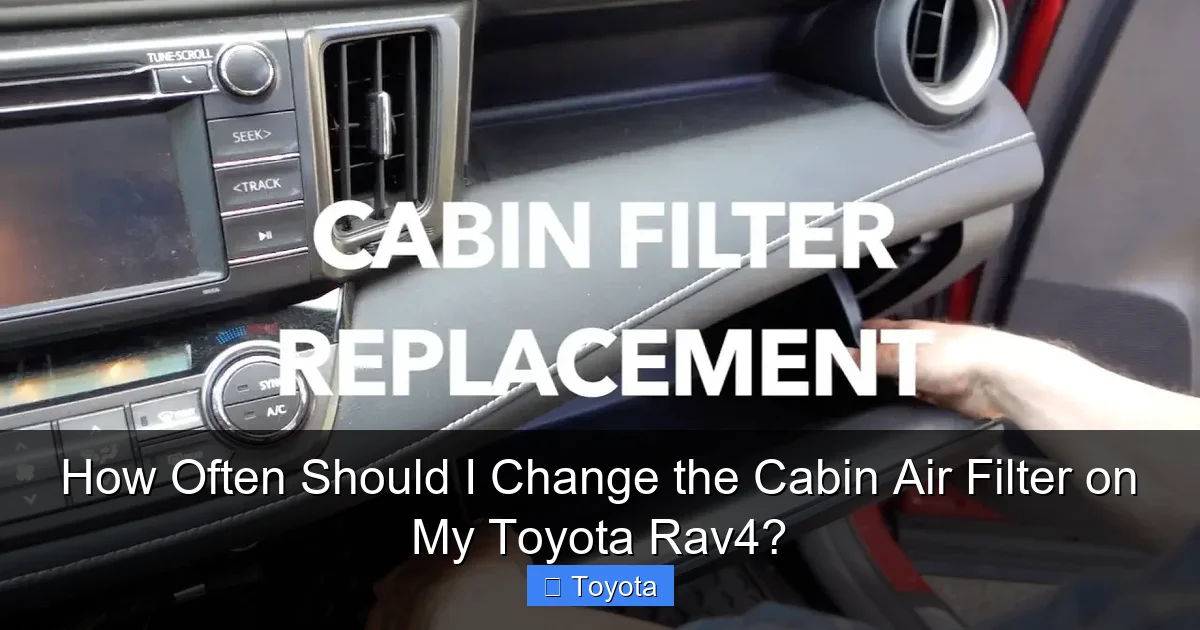
So, what does Toyota say? The official maintenance schedule for your RAV4, found in the owner’s manual, provides the baseline. For most model years, Toyota recommends inspecting the cabin air filter every 15,000 miles and replacing it every 30,000 miles under “normal” driving conditions.
Visual guide about How Often Should I Change the Cabin Air Filter on My Toyota Rav4?
Image source: diycarexpert.com
But here’s the critical part: “normal” is a tricky word. Toyota’s definition of normal likely assumes moderate climates and primarily highway driving. If your RAV4’s life is more “adventurous,” that 30,000-mile interval can shrink dramatically. Your driving environment is the single biggest factor in determining your cabin air filter replacement frequency.
How Your Environment Changes the Timeline
Let’s break down real-world scenarios that call for more frequent changes:
- Urban & Heavy Traffic: Stop-and-go city driving means constant exposure to exhaust fumes, brake dust, and soot. The carbon filter works overtime. Change every 15,000-20,000 miles or annually.
- Dusty/Rural Roads: Dirt roads, construction zones, farmland, or areas with high wind-blown dust will clog a particulate filter in no time. Change every 10,000-15,000 miles.
- High Pollen Areas: If you live where trees and grasses produce massive pollen counts (think spring in the Midwest or mountain regions), the filter will become a thick, greenish mat. Change annually, before pollen season hits.
- Extreme Climates: Very dry, sandy areas (desert Southwest) or areas with heavy snow and road salt treatment can introduce unique particulates that accelerate filter loading.
- Pet Owners: Pet hair and dander are excellent at clogging filters. If your RAV4 is the family car for dogs and cats, lean toward the 15,000-mile mark.
Pro Tip: When in doubt, inspect it. It’s a 5-minute job. Pull the filter out. If you can’t see light through it, or if it’s dark gray and gritty, it’s done. Don’t wait for symptoms.
Symptom Checklist: Your RAV4 Is Begging for a New Filter
Sometimes, you don’t need to track miles. Your RAV4 will give you clear signs. Pay attention to these red flags:
Visual guide about How Often Should I Change the Cabin Air Filter on My Toyota Rav4?
Image source: cimg3.ibsrv.net
1. Weak or No Airflow from Vents
This is the most obvious. The blower motor is fine, but the air can’t push through the clogged filter. You’ll notice it especially on higher fan speeds. The air feels feeble, like a gentle breeze instead of a blast. This puts extra strain on the blower motor, potentially shortening its life.
2. Unpleasant Musty or “Sock” Smell
A clogged filter holds moisture and organic material (pollen, spores), creating a perfect breeding ground for mold and mildew. When the system runs, you get a stale, musty odor. Even if you replace the filter, you may need to run the HVAC on fresh air mode with the fan on high for a while to clear the vents of residual spores.
3. Foggy Windows (Despite Defroster)
The cabin air filter also affects the system’s ability to dehumidify the air. A clogged filter reduces airflow over the evaporator coils, making them less effective at pulling moisture from the air. Your defroster will struggle to clear the windshield, which is a major safety issue.
4. Increased Allergy or Asthma Symptoms
If you or your passengers start sneezing, coughing, or getting itchy eyes more while in the car, the filter has likely failed its primary mission. Allergens are bypassing the clogged media and flooding the cabin.
5. HVAC System Making Noises
A struggling blower motor working against a solid wall of debris can start to make whirring, straining, or squealing noises. Don’t ignore this—it’s a sign of impending failure.
DIY vs. Professional Replacement: Which Route for Your RAV4?
For the vast majority of Toyota RAV4 models (especially 2015-present), replacing the cabin air filter is one of the easiest DIY maintenance tasks you can do. It typically requires no tools and takes 10-20 minutes. The cost? Just the price of the filter itself, usually $15-$40 for a decent quality one.
Visual guide about How Often Should I Change the Cabin Air Filter on My Toyota Rav4?
Image source: i.ytimg.com
The DIY Advantage: Simple and Satisfying
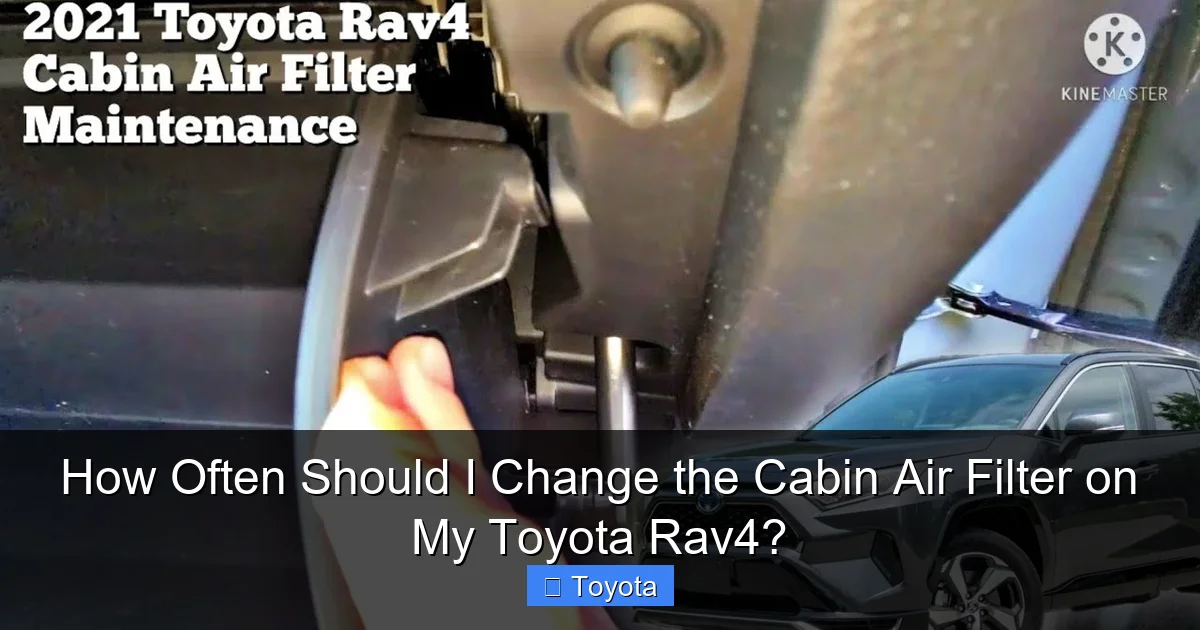
On most RAV4s, the filter is located behind the glovebox. The process usually involves:
- Opening the glovebox and removing the contents.
- Pushing in the glovebox stops (small plastic tabs on the sides) to let it sag downward.
- Locating the rectangular filter cover (often white or black plastic).
- Unclipping or unscrewing the cover.
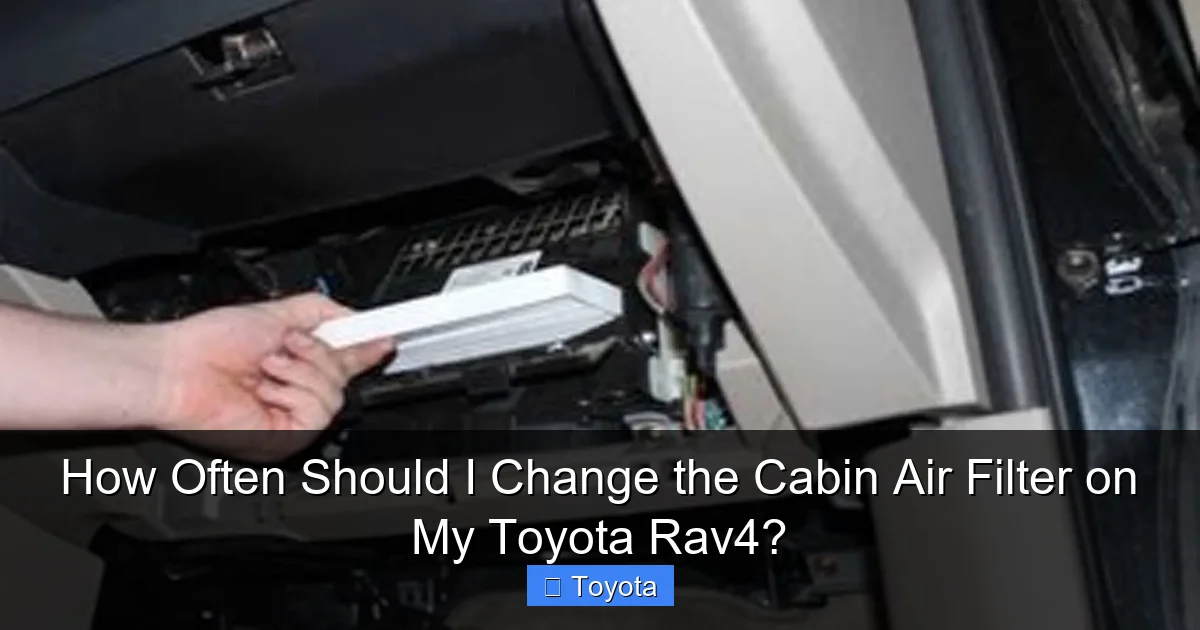
- Sliding the old filter out (note the airflow direction arrow!).
- Cleaning the housing with a vacuum.
- Sliding the new filter in with the arrow pointing the same way as the old one.
- Replacing the cover and closing the glovebox.
Some older models (pre-2015) or certain trims might have the filter under the hood, in the cowl area near the windshield wipers. This is still a simple job, just a different location. For a model-specific, step-by-step visual guide, you can follow a dedicated tutorial like our article on how to change the cabin air filter on a Toyota RAV4. This is highly recommended for your first time to see the exact clips and orientation for your model year.
When to Consider a Professional
Go to a dealer or mechanic if:
- You’re uncomfortable with basic DIY tasks.
- Your RAV4 has a complex filter location that requires disassembling other components (rare).
- You want the service included as part of a larger maintenance visit.
- You replace the filter and the musty smell persists, indicating mold in the ducts/evaporator that needs professional cleaning.
Professional service will typically run $70-$120 in labor plus the filter cost. It’s a quick service for a shop, so it’s not a huge expense if you prefer to outsource it.
The Cost of Neglect: Beyond Just Bad Air
You might be thinking, “It’s just a filter. How bad can it be?” The consequences of neglecting your cabin air filter go far beyond a slight smell.
Strain on Your HVAC System
The blower motor is designed to push air through a certain amount of resistance. A clogged filter drastically increases this resistance, forcing the motor to work much harder. This leads to premature wear, higher electrical draw (which can affect your battery), and ultimately, blower motor failure. Replacing a blower motor can cost $300-$800 in parts and labor—a bill that could have been avoided with a $20 filter change.
Reduced Efficiency of Your Air Conditioner
Less airflow over the evaporator coils (the cold part inside your dash) means two things: 1) your A/C takes longer to cool the cabin, burning more fuel, and 2) the evaporator can get too cold and freeze over, completely blocking airflow until it thaws. Your A/C will blow warm air.
Health Implications
For anyone with respiratory issues, allergies, or asthma, a failed cabin filter is a direct health hazard. It allows unfiltered pollutants, allergens, and particulate matter into your breathing space. In heavy traffic, it can even allow higher levels of carbon monoxide and other exhaust gases to seep in. For families with children or elderly passengers, this is a significant quality-of-life issue.
Pro Tips for Maximum Filter Life and Performance
Want to get the most out of your filter and your HVAC system? Adopt these habits:
- Use the Right Filter: Always buy a filter that meets or exceeds OEM specifications. Stick with reputable brands like Toyota OEM, Denso, Fram, or Bosch. If you have odor issues, upgrade to an activated carbon filter.
- Set a Calendar Reminder: Don’t just rely on mileage. If your driving is mixed—lots of short trips and city driving—set an annual reminder to check it. Time degrades the filter media too.
- Inspect During Seasonal Changes: Make it a habit to check the filter when you swap between summer and winter tires, or when you do a spring cleaning. It’s an easy visual check.
- Vacuum the Housing: When you change the filter, use a shop vac to clean out the filter housing. This removes loose debris that could fall onto the new filter or get drawn into the fan.
- Check Your Cabin Air Quality: If you have a newer RAV4 with a cabin air quality sensor (some Hybrids and higher trims), pay attention to its alerts. It’s a direct indicator of filter performance.
- Consider a Cabin Air Filter Subscription: Some online auto parts stores offer subscription services that mail you a new filter at your recommended interval. It takes the guesswork out.
One final note on maintenance: staying on top of your cabin air filter is part of a holistic approach to vehicle care. If you’re resetting maintenance lights for other services, like an oil change, it’s all connected to your car’s overall health. For instance, knowing how to reset the maintenance light on a 2021 Toyota RAV4 after an oil change is useful, but don’t let that light distract you from this equally important, often more frequent, filter service.
Conclusion: Breathe Easy with a Simple Habit
The answer to “how often should I change the cabin air filter on my Toyota RAV4?” isn’t a one-size-fits-all number. The official 15,000-30,000-mile guideline is a starting point. Your personal answer depends on where you drive and what you drive through. For the average driver in a moderate environment, every 20,000-25,000 miles is a safe target. For the rest of us battling city grime, pollen, or dust, plan on an annual change or every 15,000 miles.
This is car maintenance that genuinely impacts your daily life. It’s the difference between a fresh, clean cabin and a stuffy, allergenic one. It’s the difference between a whisper and a gust from your vents. It’s a $15-$40 investment that protects a $500+ HVAC component and safeguards your family’s health. Make checking and replacing your RAV4’s cabin air filter a non-negotiable part of your routine. Your nose, your lungs, and your car’s HVAC system will thank you for it.
Frequently Asked Questions
Can I just clean my cabin air filter instead of replacing it?
Generally, no. Cabin air filters are made of pleated paper or fabric with a fine matrix. While you can *gently* vacuum loose debris off the surface, you cannot clean the deep-down embedded particles, pollen, or carbon media. Washing can damage the filter’s structure and promote mildew growth. Replacement is always recommended.
Will a clogged cabin air filter affect my gas mileage?
Indirectly, yes. A severely clogged filter forces your HVAC blower motor to work harder, which draws more power from the engine via the alternator. This creates a small but measurable parasitic drain, potentially reducing fuel efficiency by a fraction of a percent. The bigger impact is on A/C performance, which uses more fuel when struggling.
Where exactly is the cabin air filter located in a Toyota RAV4?
For most RAV4 models from 2015 onward, it’s located behind the glovebox. You’ll need to open the glovebox, release the stopper tabs on each side to let it hang down, and you’ll see a rectangular plastic cover on the passenger side of the dash. For some older models (pre-2015) and certain trims, it may be under the hood in the cowl area near the base of the windshield wipers. Your owner’s manual will have the exact location and procedure.
Does my RAV4 have a cabin air filter reset light or indicator?
No, the Toyota RAV4 does not have a dedicated dashboard warning light for a clogged cabin air filter. The maintenance reminder system (which you can reset) typically only covers engine oil, tire rotation, and other major services. You must track the replacement interval yourself based on mileage/time or symptoms.
I changed the filter but still have a musty smell. What now?
A new filter won’t fix mold that’s already growing on the evaporator coils inside your HVAC housing (a common issue). To eliminate the smell, you need to clean the evaporator. This can be done with a professional-grade aerosol foam cleaner (like a product from CRC or Gunk) sprayed into the specific drain or access port, or by a mechanic using specialized equipment. Running the fan on fresh air mode with the A/C on after a filter change can also help dry out the system.
Is there a difference between the cabin air filter and the engine air filter?
Absolutely. They are two completely different filters with two completely different jobs. The engine air filter is under the hood in a large black box. It filters the air going into your engine for combustion. The cabin air filter is inside the dashboard or under the hood cowl. It filters the air you breathe inside the car. They have different replacement schedules and locations. Don’t confuse them! If you’re looking for engine air filter information for your RAV4, that’s a separate service item with its own interval.
