
Does the Toyota Camry Have a Tire Pressure Monitoring System?

Yes, every Toyota Camry model year from 2007 onward is federally required to have a Tire Pressure Monitoring System (TPMS). This system uses sensors in each wheel to monitor air pressure and alert you via a dashboard warning light if pressure drops too low. Understanding your Camry’s TPMS is crucial for safety, fuel efficiency, and tire longevity. It’s a passive safety feature that requires minimal driver intervention but occasional maintenance, like sensor battery replacement or system resets after tire service.
Key Takeaways
- Standard Feature Since 2007: All Toyota Camry models sold in the U.S. from the 2007 model year include a direct TPMS as mandated by federal law.
- Direct vs. Indirect: The Camry uses a direct TPMS, meaning a physical sensor in each wheel measures pressure, not the car’s ABS system.
- Warning Light, Not a Gauge: The system provides a low-pressure warning light (a cross-section of a tire with an exclamation point) but does not display exact PSI readings on the dash.
- Spare Tires Usually Lack Sensors: The factory spare tire (if equipped) almost never has a TPMS sensor, so it won’t trigger a warning. This is a common point of confusion.
- Resets Are Manual: After adjusting tire pressure or rotating tires, you must manually reset the TPMS using the button located under the steering wheel, often near the hood release.
- Sensors Have Limited Battery Life: TPMS sensor batteries typically last 7-10 years. When they fail, the sensor must be replaced, often during a tire service.
- Aftermarket Sensors Work: Replacement TPMS sensors can be generic or OEM-spec. Proper programming to the vehicle is required for them to function with the Camry’s system.
📑 Table of Contents
- Introduction: Your Silent Safety Guardian on the Road
- A Brief History: Why TPMS Became Mandatory
- How the Toyota Camry’s TPMS Actually Works
- Generational Differences: What Changes Over the Years?
- Troubleshooting Common TPMS Warnings and Issues
- Maintenance and Best Practices for Your Camry’s TPMS
- The Future of TPMS and Connected Car Features
- Conclusion: A Critical, Unseen Guardian
Introduction: Your Silent Safety Guardian on the Road
Imagine you’re driving your trusty Toyota Camry down the highway, enjoying the smooth, quiet ride it’s known for. Suddenly, a small but persistent yellow light illuminates your instrument cluster—a cross-section of a tire with an exclamation point in the center. That’s your Tire Pressure Monitoring System (TPMS) talking. But does the Toyota Camry even have one? The short answer is an emphatic yes. In fact, if you own a Camry from the 2007 model year or newer, it’s not just a feature—it’s a federally mandated safety system. This little light is your car’s way of whispering (or sometimes shouting) about your tire pressure, a critical factor for safe handling, braking, fuel economy, and tire wear. In this deep dive, we’ll unpack everything you need to know about the Camry’s TPMS, from its inner workings and generational changes to troubleshooting, maintenance, and why paying attention to it is one of the simplest yet most important things you can do for your car.
A Brief History: Why TPMS Became Mandatory
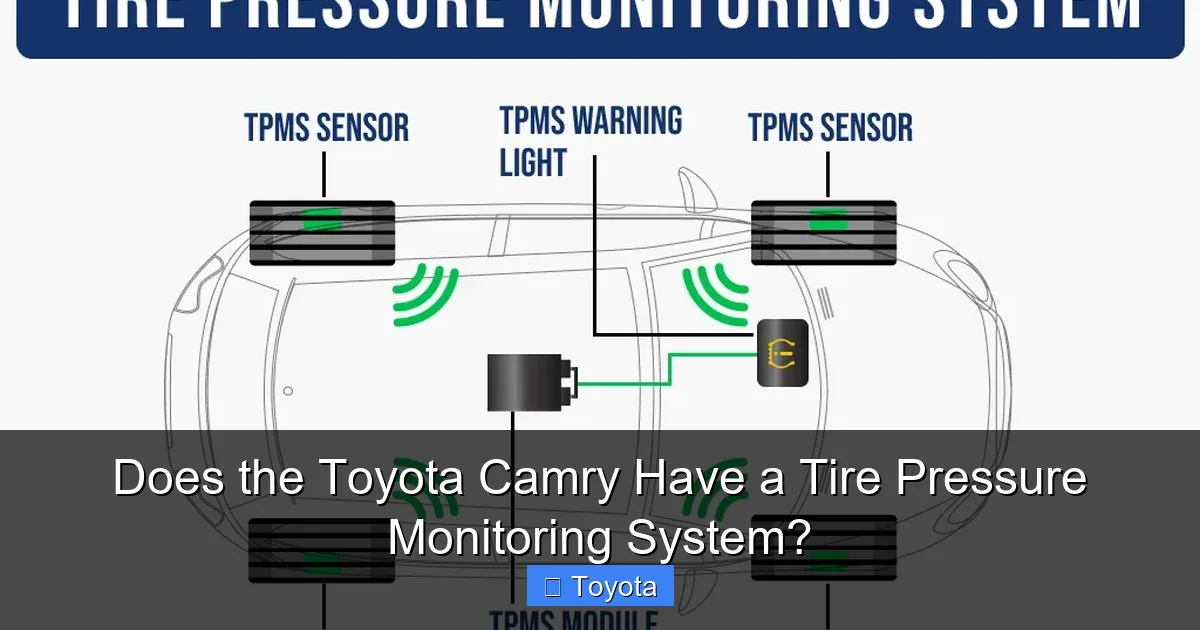
To understand the Camry’s system, it helps to know the “why.” The push for TPMS came from a landmark law: the TREAD Act (Transportation Recall Enhancement, Accountability and Documentation Act) passed by the U.S. Congress in 2000. This act was a response to high-profile tire failures, most notably the Firestone tire recalls on Ford Explorers. The law required the National Highway Traffic Safety Administration (NHTSA) to mandate that all new passenger vehicles under 10,000 lbs. be equipped with a TPMS that could alert the driver when a tire is 25% or more under-inflated.
Visual guide about Does the Toyota Camry Have a Tire Pressure Monitoring System?
Image source: gotire.com
The Implementation Timeline
The requirement phased in starting with the 2006 model year for some vehicles, but the 2007 model year was the first where virtually every new vehicle, including the Toyota Camry, had to have a compliant system. This is why you can confidently say any Camry you see on the road today from 2007 onward has TPMS. Toyota, known for its reliability, met this mandate by installing direct sensor-based systems across its lineup, including the popular Camry sedan.
How the Toyota Camry’s TPMS Actually Works
The Camry utilizes what is known as a “direct” TPMS. This is the most common and accurate type on modern vehicles. Here’s the breakdown:
Visual guide about Does the Toyota Camry Have a Tire Pressure Monitoring System?
Image source: artsautomotive.com
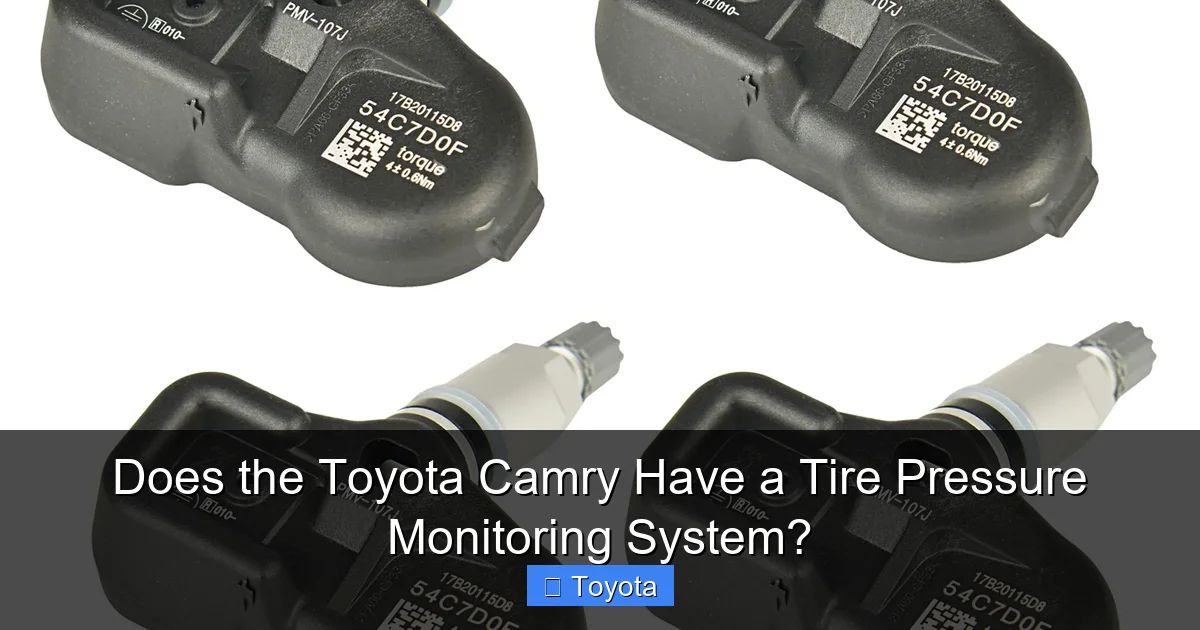
- The Sensors: A small, battery-powered electronic sensor is mounted inside each wheel (typically on the valve stem). It continuously measures the tire’s internal pressure and, in many cases, its temperature.
- The Transmission: The sensor wirelessly transmits this data via a unique radio frequency (RF) signal to the vehicle’s TPMS control module, usually located near the receiver antenna.
- The Computer: The Camry’s onboard computer receives and decodes these signals. It knows the “normal” pressure range for your specific vehicle and tire size.
- The Alert: When the pressure in any tire drops 25% or more below the manufacturer’s recommended cold inflation pressure (found on the driver’s door jamb placard), the system triggers the warning light on your dash. The light will stay on until you correct the pressure and, in most cases, manually reset the system.
Direct vs. Indirect TPMS: Why the Camry Uses Direct
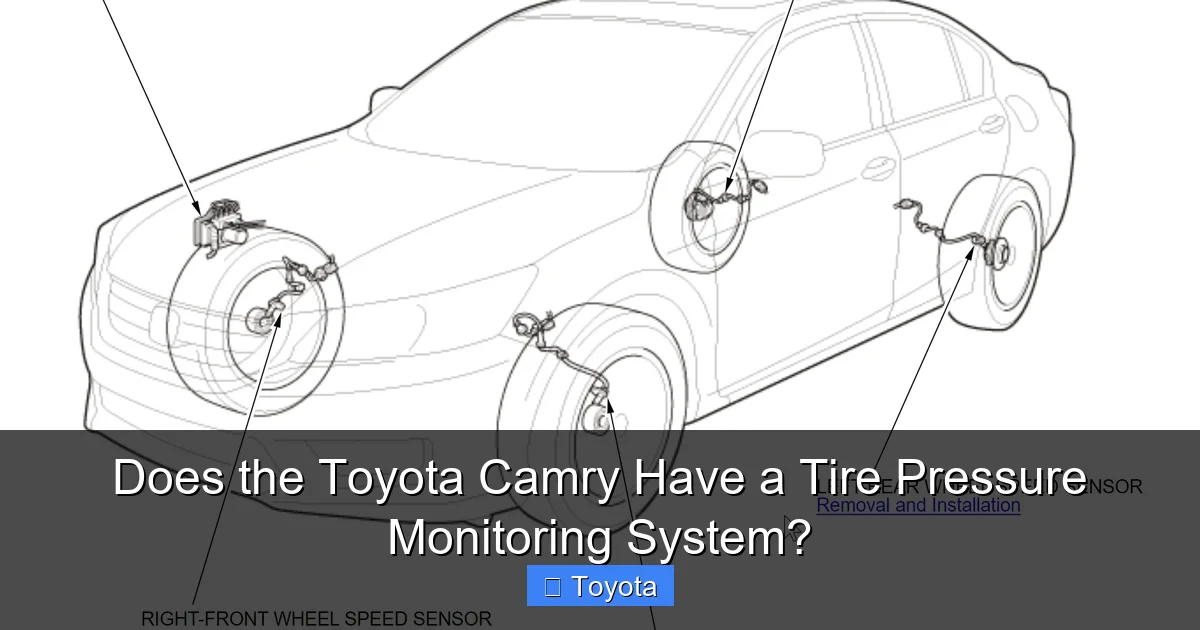
You might hear about “indirect” TPMS, which uses the car’s Antilock Braking System (ABS) wheel speed sensors to detect differences in rotational speed. A significantly under-inflated tire rolls slightly slower. While cheaper, this system is less accurate and can be fooled by different tire tread depths or aftermarket tires. The Toyota Camry has consistently used the more reliable direct system because it provides an actual pressure reading from inside the tire. This precision is key for safety and compliance with the TREAD Act.
Generational Differences: What Changes Over the Years?
While the core function has remained the same since 2007, there are subtle differences across Camry generations that owners should know:
Visual guide about Does the Toyota Camry Have a Tire Pressure Monitoring System?
Image source: m.media-amazon.com
2007-2011 (XV40 Generation)
This was the first mandatory year. These models feature a basic TPMS with a simple warning light. There is no driver-selectable display for individual tire pressures on the base instrument clusters. The reset procedure involves turning the ignition on and pressing the TPMS button (located under the steering wheel) until the light blinks three times.
2012-2017 (XV50 Generation)
The system’s logic remained the same, but Toyota introduced more advanced multi-information displays (MID) on higher trims. Some Camrys with a full-color MID could now show individual tire pressure readings when you scrolled through the display menus using steering wheel controls. This was a significant usability upgrade, allowing drivers to see which tire was low without physically checking all four. The reset process was similar.
2018-Present (XV70 & Current Generation)
The latest Camrys continue with the direct sensor system. The display integration is even more seamless on models with a full digital gauge cluster or large central screen. The reset procedure is standardized: with the vehicle on, in “Park,” and all tires inflated to the correct pressure, press and hold the TPMS reset button (usually near the hood release under the dash) until the warning light blinks slowly, then drive the car for about 20-30 minutes at speeds above 15 mph to allow the system to relearn the sensor positions. It’s also on these models where you might notice a link to other tech features; for instance, while the Camry’s TPMS doesn’t send alerts to your phone, its integration with connected services like Apple CarPlay or Android Auto is part of its overall digital ecosystem.
Troubleshooting Common TPMS Warnings and Issues
That warning light can mean several things. Here’s your diagnostic guide:
“It’s Just Cold Outside!”
This is the #1 cause of TPMS alerts. For every 10°F drop in temperature, tire pressure decreases by about 1-2 PSI. If you set your tires correctly in the summer, a cold winter morning can easily trigger the light. The fix is simple: Check the pressure when the tires are cold (driven less than 3 miles) and inflate them to the placard’s recommended PSI. The light should go off after a short drive once the system registers the correct pressure. If it doesn’t, you’ll need to perform the manual reset.
A Slow Leak or Puncture
If the light comes on and you notice one tire is significantly lower than the others, you likely have a puncture or a failing valve stem. You must repair or replace the tire/tire/wheel assembly. Important: If the tire is repaired, the TPMS sensor must be removed, serviced (the seal and nut are often replaced), and reinstalled. If the sensor itself is damaged, it needs replacement.
Sensor Battery Failure
TPMS sensor batteries are not serviceable; they are sealed inside the sensor. With a typical lifespan of 7-10 years, a dead battery will cause the system to flag that wheel as “unresponsive.” The symptom is often a steady warning light that won’t reset, and a diagnostic scan tool will show a “sensor not found” code for a specific wheel location. The solution is to replace the sensor.
System Needs Relearning After Tire Service
If you rotate your tires, replace a sensor, or even change a flat, the TPMS control module may not automatically recognize the sensors in their new wheel positions. This triggers a warning light. This is why the manual reset/relearn procedure is critical. Forgetting this step is a common reason for a persistent light after tire work. You can find the exact procedure in your owner’s manual, which often points to the location of the reset button. For specific Camry models, knowing where the TPMS reset button is located is half the battle.
The Spare Tire Confusion
This is a huge source of frustration. Your Camry’s factory spare tire (the little “donut” or full-size spare in the trunk) almost certainly does NOT have a TPMS sensor. If you install the spare, the system will notice one sensor is missing and will illuminate the TPMS warning light. This is normal and expected. The light will remain on until you remount the original wheel with its sensor. Do not try to reset the system with the spare on—it won’t work. This is a key distinction from your primary tires.
Maintenance and Best Practices for Your Camry’s TPMS
Your TPMS is largely “set it and forget it,” but a few practices will keep it happy:
Regular Manual Pressure Checks
Never rely solely on the TPMS warning light. It only alerts you when pressure is already critically low (25% below). Check your tire pressures monthly with a good-quality handheld gauge and adjust them to the PSI number on your driver’s door jamb sticker, not the tire sidewall. This proactive approach prevents unnecessary wear and false alerts.
Be Mindful During Tire Services
When you get tires rotated, balanced, or repaired, remind the technician. They must handle the sensors with care. Over-tightening the lug nuts can damage a sensor. After any work involving the wheels, you must perform the TPMS reset/relearn procedure yourself (or have the shop do it with a scan tool). Don’t assume they did it automatically.
Understanding Sensor Replacement Costs
When a sensor fails, replacement is necessary. A single OEM Toyota TPMS sensor can cost $80-$150, plus installation and a new valve stem seal. Some shops may recommend replacing all four at once if they are old, as labor is done once. Aftermarket sensors are often cheaper but must be compatible and programmable to your Camry. Always ask if a new sensor needs programming or if it’s a “plug-and-play” clone of the original.
Don’t Ignore the Light
A persistent TPMS light isn’t just an annoyance; it’s a safety issue. Driving on significantly under-inflated tires causes excessive heat buildup, leading to premature tire failure (a blowout). It also causes uneven, rapid tire wear and reduces your fuel efficiency. Address the alert promptly.
The Future of TPMS and Connected Car Features
While today’s Camry TPMS is a closed system, the future points toward greater integration. Some newer vehicles from various brands are beginning to offer Remote TPMS features through their connected apps, allowing you to check tire pressures from your smartphone. Toyota’s current connected services (like those found in the Toyota app) are evolving, and this is a logical next step. Furthermore, as vehicles move toward full autonomy, precise, real-time data from all tire sensors will be even more critical for stability and safety systems. For now, the Camry’s system is a robust, standalone safety net that does its job quietly and effectively.
Conclusion: A Critical, Unseen Guardian
So, does the Toyota Camry have a Tire Pressure Monitoring System? Without a doubt, yes. Since 2007, it has been a standard, integral part of the car’s safety architecture. It’s a system born from a national safety mandate but perfected by Toyota’s engineering for reliability. While it can be a source of minor confusion—especially regarding resets and the spare tire—its purpose is noble: to prevent accidents caused by tire failure and to promote efficiency. The best way to treat your Camry’s TPMS is with informed respect. Check your pressures manually, reset the system after any tire work, and never ignore its warning. By understanding this simple yet vital system, you’re not just maintaining a car; you’re actively participating in the safe, efficient operation of one of the world’s most trusted sedans. That little yellow light isn’t an inconvenience; it’s your car looking out for you.
Frequently Asked Questions
Does the Toyota Camry’s spare tire have a TPMS sensor?
No. The factory spare tire (compact or full-size) that comes with your Camry is almost never equipped with a TPMS sensor. If you install the spare, the TPMS warning light will illuminate because the system detects a missing sensor. The light will stay on until you remount the original wheel with its sensor.
How do I reset the TPMS light on my Toyota Camry?
First, ensure all four tires are inflated to the correct cold pressure listed on the driver’s door jamb placard. Turn the ignition to the “ON” position (do not start the engine). Locate the TPMS reset button, typically found under the steering wheel near the hood release. Press and hold the button until the TPMS warning light blinks three times, then release. Drive the car for 20-30 minutes at speeds above 15 mph; the light should go off as the system relearns the sensor positions.
Why does my Camry’s TPMS light keep coming back on after I’ve reset it?
This usually indicates a persistent issue that wasn’t resolved. Common causes include: a slow leak in one of the tires (have them inspected for nails/punctures), a faulty or dead TPMS sensor (batteries last 7-10 years), or a damaged valve stem. If the light returns immediately after a reset, you need a professional diagnosis with a TPMS scan tool to identify the faulty wheel sensor.
Can I disable or turn off the TPMS warning light?
Legally and safely, you should not disable the TPMS. It is a federally mandated safety feature. Tampering with or disabling the system is illegal in all 50 states and will cause your vehicle to fail safety inspections. The proper solution is to fix the underlying problem causing the alert.
Do I need to reset the TPMS after rotating my tires?
Yes, absolutely. Rotating tires moves the sensors to different wheel positions. The TPMS control module must learn the new location of each sensor. If you don’t perform the manual reset procedure after a rotation, the system will not know which tire has low pressure and the warning light will likely stay on.
How much does it cost to replace a TPMS sensor on a Camry?
Replacing a single TPMS sensor on a Toyota Camry typically costs between $150 and $300 total. This includes the part (an OEM sensor can be $80-$150) and labor for removal and installation. If the valve stem core or nut is corroded, additional parts may be needed. Replacing all four sensors at once can be more cost-effective on labor.
