
What Is the Most Common Problem with the Toyota Camry Hybrid?

The most common and significant problem with the Toyota Camry Hybrid is the eventual degradation and failure of its high-voltage hybrid (HV) battery, typically occurring after 10-15 years or 150,000+ miles. This failure leads to a complete loss of hybrid functionality, reduced power, and dashboard warning lights, with replacement costs often exceeding $2,000. While the Camry Hybrid is otherwise renowned for reliability, proactive maintenance and understanding this single-point failure are crucial for long-term ownership.
Let’s be honest. When you think of a Toyota Camry Hybrid, words like “reliable,” “fuel-efficient,” and “boringly competent” probably come to mind. And for the most part, that reputation is earned. For over two decades, the Camry Hybrid has been the gold standard for a worry-free, gas-saving family sedan. It’s the car you buy when you’re done with unexpected repair bills and just want your vehicle to work. But here’s the thing about being so reliable for so long: eventually, even the most over-engineered component meets its match. And for the Toyota Camry Hybrid, that match is almost always its high-voltage hybrid battery. So, if you’re asking, “What is the most common problem with the Toyota Camry Hybrid?” the answer is a single, expensive, and inevitable one: the hybrid battery will degrade and, in time, fail.
Key Takeaways
- The HV battery is the primary weak link: Unlike engine or transmission issues common in other cars, the hybrid battery’s finite charge cycles make it the most likely major component to fail on an aging Camry Hybrid.
- Failure is age and mileage-related: Problems typically surface after a decade or 150,000 miles, not due to defects but the natural end of the battery’s useful lifespan.
- Replacement is costly but often the only fix: A complete HV battery replacement from a dealer or certified shop ranges from $2,000 to $3,500+, making it a significant financial consideration for older models.
- Warning signs are clear and specific: Look for a red/amber “Check Hybrid System” light, reduced engine power, erratic fuel economy, and the car refusing to start in EV mode.
- Proper maintenance can extend life: Avoiding deep discharges, extreme temperatures, and ensuring the 12V battery is healthy can prolong the HV battery’s service life.
- Overall reliability remains excellent: Outside of the HV battery, the Camry Hybrid’s powertrain and components are exceptionally robust, often outlasting the battery itself.
📑 Table of Contents
- The Unbeatable Reputation and Its One Achilles’ Heel
- Symptoms of a Dying Hybrid Battery: It’s Not Always a Dead Giveaway
- The Sticker Shock: Understanding Replacement Costs
- Other, Less Common Issues: Putting Things in Perspective
- Proactive Care: Can You Extend Your Hybrid Battery’s Life?
- The Bottom Line: Should This Scare You Away?
- Conclusion: A Predictable End to an Impressive Run
The Unbeatable Reputation and Its One Achilles’ Heel
Toyota built its hybrid empire on the principle of bulletproof reliability. The synergy between the gasoline engine and the electric motor system in the Camry Hybrid is a marvel of engineering simplicity. There’s no complex multi-clutch transmission to break; it uses a famously durable e-CVT. The engine, a variant of the legendary 2AR-FE or later A25A-FXS, is a workhorse designed for longevity. For the first 8-10 years of a Camry Hybrid’s life, the owner’s manual might as well be a short story. Change the oil, rotate the tires, replace the cabin air filter. That’s often it. This stellar track record creates a powerful trust. But that trust can lull owners into a false sense of security, making the eventual hybrid battery issue feel like a betrayal rather than a predictable endpoint of a consumable component.
It’s crucial to understand the difference between a “problem” and a “wear item.” The timing chain in the engine isn’t expected to last forever; it’s a wear item. The hybrid battery pack, while a complex piece of tech, is also fundamentally a wear item. It’s a collection of nickel-metal hydride (NiMH) or, in later models, lithium-ion (Li-ion) cells. These cells go through charge and discharge cycles every time you drive. With each cycle, their ability to hold a full charge diminishes ever so slightly. This is a chemical process, not a mechanical failure. The most common “problem” isn’t a sudden, catastrophic explosion of parts; it’s the quiet, inexorable loss of energy storage capacity until the system can no longer function as designed.
Why the Hybrid Battery, Specifically?
You might wonder, why not the inverter, the motor generators, or the complex software? Those components are incredibly robust. The inverter, which converts DC battery power to AC for the motors, is over-engineered and typically lasts the vehicle’s lifetime. The motor generators (MG1 and MG2) are simple, brushless devices with minimal wear points. The software is Toyota’s, famously conservative and stable. The battery, however, is a repository of finite chemistry. It’s subjected to constant thermal stress (it has its own cooling system, often using cabin air or a dedicated coolant loop), high current flows, and the simple passage of time. As the cells age, their internal resistance rises. The battery management system (BMS) tries to compensate, but eventually, the pack’s total capacity falls below a threshold where it can’t support the vehicle’s demands, triggering a fault.
Think of it like your smartphone. After two years, it doesn’t hold a charge like it used to. Now imagine that phone has to power a 4,000-pound sedan and has no option to be replaced for $50. The scale is different, but the principle is identical. This makes the HV battery the single most common and costly repair specific to the hybrid version of the Camry. A non-hybrid Camry might see a timing chain or water pump issue, but those are far less frequent and less expensive than a hybrid battery replacement on an out-of-warranty vehicle.
Symptoms of a Dying Hybrid Battery: It’s Not Always a Dead Giveaway
The beauty—and frustration—of the Camry Hybrid’s system is its ability to compensate. The BMS is smart. It will try to work around weak cells, using the stronger ones more, which can mask problems for a while. However, as degradation progresses, symptoms become noticeable. The most definitive sign is the illumination of a red or amber warning light on the dashboard that says “Check Hybrid System” or displays a hybrid system icon. This is the car’s computer saying, “I’ve detected a fundamental fault in the high-voltage system, and I’m going into a safe, limp-home mode.”
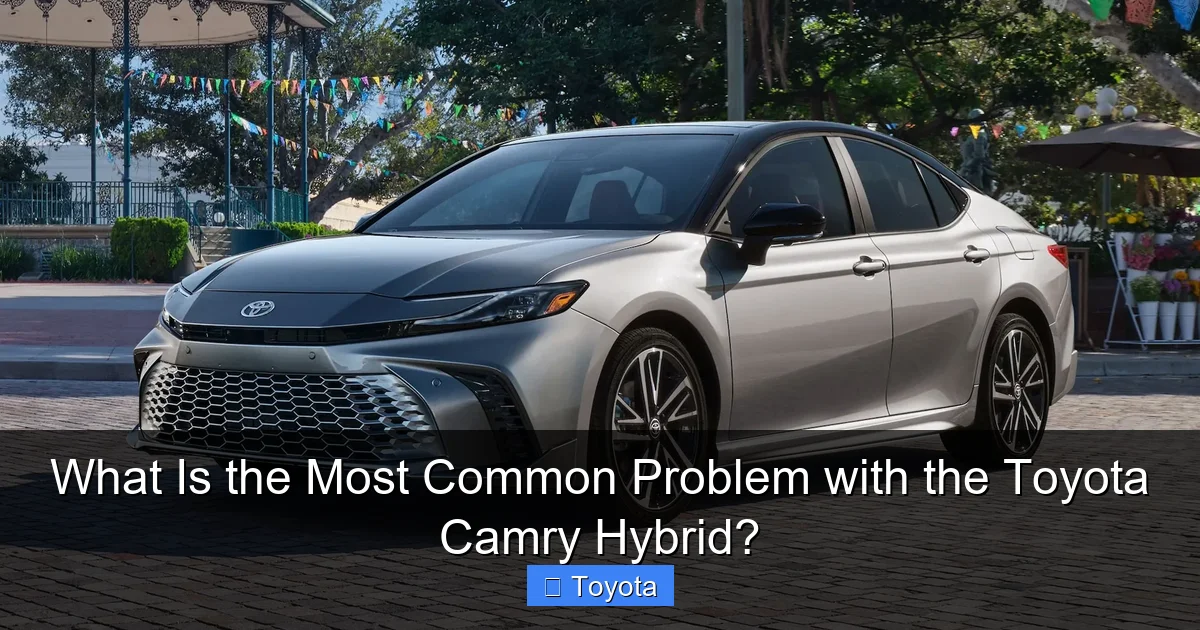
Visual guide about What Is the Most Common Problem with the Toyota Camry Hybrid?
Image source: thedrive.com
But there are subtler clues long before that light comes on, which is why paying attention is key. You might notice a significant drop in fuel economy, say from 45 MPG down to 35 MPG or lower, without any change in driving habits. The car might feel sluggish, especially when trying to accelerate from a stop using just electric power (EV mode). The gasoline engine may kick in more frequently and loudly, even during gentle driving, because the battery can’t hold enough charge to assist. In some cases, the car may struggle to start or show a 12V battery warning, as a failing HV battery can struggle to properly charge the auxiliary battery. It’s also worth noting that extreme temperatures can exacerbate these symptoms; a marginally weak battery might function fine in moderate weather but fail completely in a summer heatwave or winter cold snap as the system’s demands change.
The Diagnostic Process: Beyond the Simple Code Scan
If you suspect a battery issue, a visit to a mechanic is inevitable. However, not all scans are created equal. A generic OBD-II scanner might pull a code like P0A80—”Replace Hybrid Battery Pack.” While alarming, this code is often the BMS’s final conclusion after exhausting other diagnostics. A more thorough diagnosis by a technician familiar with hybrids, ideally at a Toyota dealer or a specialist, involves checking the individual cell block voltages and resistances. The battery pack in a Camry Hybrid is made up of several smaller modules, each containing multiple cells. A good technician can perform a “battery balance” test, which can sometimes revive a weak pack by equalizing cell charges, but this is usually a temporary fix for a pack on its last legs. They can also identify if a single module is bad, which sometimes allows for a cheaper repair than a full pack replacement, though this is less common as the system ages. For those interested in the technical details of how these systems communicate, understanding the DCM (Data Communication Module) in your Toyota can provide insight into how the vehicle’s computers monitor and report on hybrid system health.
The Sticker Shock: Understanding Replacement Costs
Here’s where the “most common problem” becomes a major financial event. Replacing the hybrid battery is not a DIY job for 99.9% of people. It involves high-voltage components that can be lethal if mishandled. You must go to a professional. The cost breaks down into two main parts: the battery itself and the labor.
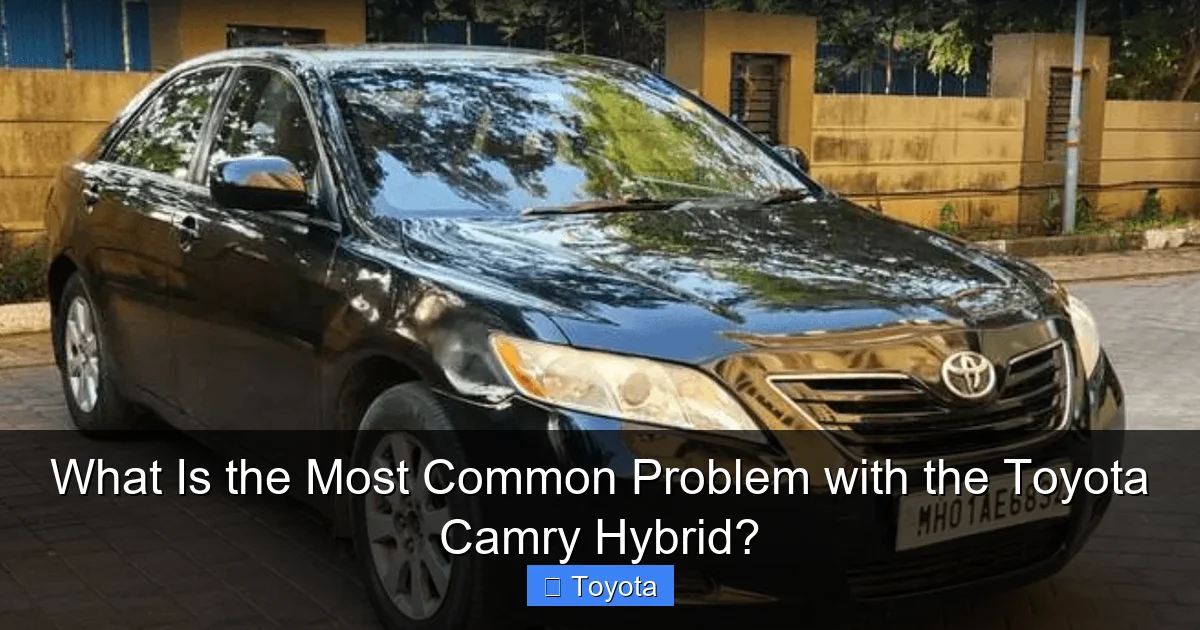
Visual guide about What Is the Most Common Problem with the Toyota Camry Hybrid?
Image source: carsfromthepast.com
The Battery: You have three primary sources:
- Dealer/Original Equipment (OE): This is a brand-new, OEM Toyota battery pack. It’s the most expensive option, typically ranging from $2,500 to $3,500 for the part alone, depending on the model year. It comes with a full Toyota warranty (often 8 years/100,000 miles for the hybrid components, but the battery replacement itself may have a shorter warranty). This is the “peace of mind” choice.
- Remanufactured/Refurbished: Companies take used core batteries, test all the modules, replace the weak or failed ones, and rebuild the pack to a like-new standard. They usually offer a solid warranty (e.g., 3 years/36,000 miles). The cost here is often $1,500 to $2,500. Quality varies wildly by rebuilder, so research is critical. A good remanufactured pack can be an excellent value.
- Used/Salvage: Pulling a battery from a donor vehicle at a junkyard. This is the cheapest upfront cost, maybe $800-$1,500, but it’s a gamble. You have no idea about the remaining life of that battery, it likely has no warranty, and the labor to install it is the same as the other options. This is generally not recommended for a primary vehicle.
Labor: This is significant. The battery is heavy (100+ lbs) and located under the rear seat or in the trunk area, requiring disconnection of the high-voltage system (which must be done with special tools and procedures), removal of heavy components, and careful installation. Labor at a dealer or specialist shop can easily add $800 to $1,500 to the total bill. So, a dealer replacement can easily hit $4,000-$5,000 total. A remanufactured pack with reputable labor might land in the $2,500-$3,500 range.
Is There a Cheaper Alternative?
Sometimes. For specific, earlier model years (like 2007-2011), there were reports of individual module failures. A skilled shop might be able to test and replace just the bad module(s) within the pack, which can cost a few hundred dollars in parts plus labor. However, as the vehicle ages and all cells degrade somewhat, this is less of a “fix” and more of a temporary band-aid. The most cost-effective long-term strategy for a high-mileage Camry Hybrid is often to get a quote for a remanufactured pack with a good warranty from a reputable national company. It’s also worth checking if any extended warranties or recalls apply. While there hasn’t been a widespread recall for hybrid battery failure in Camrys, it never hurts to call a dealer with your VIN to check for any outstanding service campaigns.
Other, Less Common Issues: Putting Things in Perspective
It’s important to provide balance. Calling the hybrid battery the “most common” problem doesn’t mean the Camry Hybrid is a unreliable money pit. It means that when a problem does occur on a high-mileage example, it’s disproportionately likely to be the battery. The rest of the car is famously durable. However, no vehicle is perfect. Here are some other issues that can arise, though they are far less frequent:
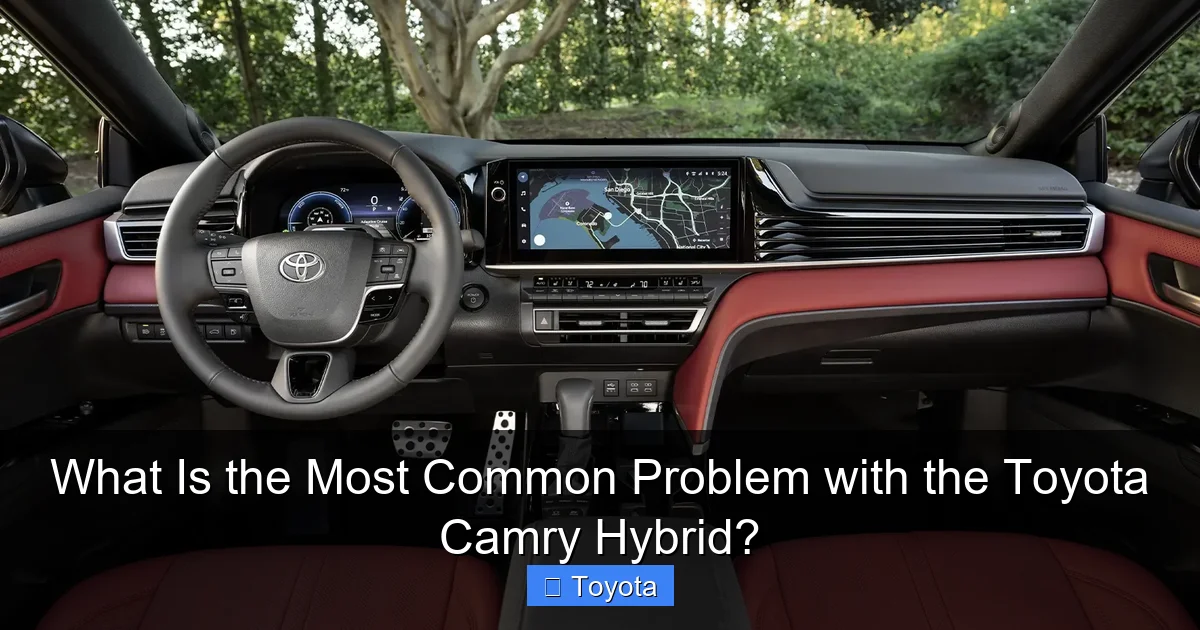
Visual guide about What Is the Most Common Problem with the Toyota Camry Hybrid?
Image source: cdn.prod.website-files.com
- 12V Auxiliary Battery: This is the regular car battery that powers the electronics. It can fail like any other car battery, and a weak 12V battery can sometimes cause hybrid system errors because the BMS doesn’t have a stable power source. This is a cheap and easy fix ($150-$250).
- Brake System Quirks: The regenerative braking system is excellent but can lead to a “mushy” pedal feel. Some owners report occasional false alarms or warnings related to the brake booster or hydraulic system, which may require software updates or, rarely, component replacement.
- Infotainment Glitches: The touchscreen and audio system can freeze, reboot, or have Bluetooth connectivity issues. These are usually solved with a software update or a simple reset. Knowing how to perform a system reboot is useful, and sometimes consulting resources on features like the Hold button can clarify if a setting is causing an issue.
- Exhaust System: On some earlier V6-based hybrid models, the exhaust manifold or catalytic converter can develop cracks due to thermal stress. This is a noise issue more than a drivability one.
- Water Ingress: Like many cars, a clogged sunroof drain can lead to water leaking into the cabin, potentially soaking the carpet or even the hybrid battery’s cooling system intake if severe.
The key takeaway is that these other issues are typically minor, inexpensive, or rare compared to the certainty of the HV battery’s finite lifespan. A well-maintained Camry Hybrid will likely see its engine and transmission easily surpass 200,000 miles; the hybrid battery is the component that defines the upper limit of its hybrid-only operation.
Proactive Care: Can You Extend Your Hybrid Battery’s Life?
Since you can’t stop time, can you slow the clock on your battery? You can’t reverse degradation, but you can avoid accelerating it. The biggest enemies of the hybrid battery are heat and deep, frequent discharges.
1. Manage Thermal Stress: The battery has its own cooling system. On most Camry Hybrids, it uses cabin air drawn through a filter. Regularly replacing this cabin air filter (often overlooked) is critical. A clogged filter restricts airflow, causing the battery to run hotter. If you live in an extremely hot climate, try to park in shade or a garage when possible. The less the cooling system has to work, the better.
2. Avoid Deep Discharges: While normal driving constantly cycles the battery, letting it sit for long periods with a very low state of charge (e.g., an empty hybrid battery indicator) is stressful. If you won’t drive the car for more than a few weeks, consider putting it on a trickle charger for the 12V battery and, if possible, starting it and letting it run for 15-20 minutes every couple of weeks to allow the hybrid system to cycle and maintain battery health.
3. Drive It Regularly and Moderately: Short, constant-speed highway trips are actually less ideal than a mix of city and highway driving. The hybrid system thrives on the charge/discharge cycles of stop-and-go traffic. Occasional aggressive driving isn’t a problem, but consistently flooring it and deep, hard braking can increase stress. Gentle, predictable driving is best.
4. Maintain the 12V Battery: A failing 12V battery puts extra strain on the hybrid system’s DC-DC converter, which charges the 12V battery from the HV pack. Keep the 12V battery terminals clean and replace it at the first sign of weakness. A healthy 12V system supports a healthy HV system.
Beyond this, there’s not much more an owner can do. Some aftermarket companies offer “battery reconditioning” services or devices that claim to balance cells, but their long-term efficacy is debated. The most reliable path is simply to drive the car and plan for the battery’s eventual replacement as a known, scheduled expense much like you would a set of tires, just with a much larger price tag.
The Bottom Line: Should This Scare You Away?
Absolutely not. The Toyota Camry Hybrid’s reputation is built on a mountain of real-world data showing extraordinary longevity. The fact that the most common major repair is a single, predictable component that often lasts 10-15 years is a testament to its design. For context, many non-hybrid cars of similar vintage are facing transmission rebuilds, head gasket failures, or rusted-out frames at similar mileages—repairs that can cost just as much or more, with less warning.
The intelligent way to view a used Camry Hybrid is this: you are buying a car with a known, finite lifespan on its hybrid system. If you buy a 2012 model with 180,000 miles, you are buying a fantastic, fuel-efficient sedan that is one major component away from being a non-hybrid Camry (it will still drive on the gas engine alone, albeit poorly). The question is: do you have a plan for that $2,500-$3,500 expense in the next 2-5 years? If yes, you’re getting a phenomenal car for the money. If no, you might be better off with a lower-mileage example or a conventional gasoline model.
For new buyers, the warranty is your friend. All Camry Hybrids come with an 8-year/100,000-mile warranty on the hybrid components (which includes the battery). For the vast majority of first owners, the battery will outlive their ownership and the warranty. The problem primarily surfaces for second, third, or fourth owners buying high-mileage examples on the used market. This makes the fuel economy savings over a conventional car even more critical to justify the potential long-term cost.
Conclusion: A Predictable End to an Impressive Run
So, what is the most common problem with the Toyota Camry Hybrid? It’s the quiet, chemical sunset of its high-voltage battery pack. It’s not a design flaw; it’s a material reality. This problem is so common precisely because everything else is so uncommon. The engine, transmission, and majority of the drivetrain are built to such a high standard that they rarely fail, shining a spotlight on the one component with a predetermined expiration date. For owners, the lesson is clear: enjoy the decades of near-flawless, cheap motoring. Savor the 45+ MPG. But do so with eyes wide open, treating the hybrid battery not as a mysterious “part” but as a consumable resource with a calculable lifespan. Factor its eventual replacement into your total cost of ownership calculations, especially when shopping for used models. By doing so, you’ll continue to appreciate the Camry Hybrid for what it is: perhaps the most sensible, reliable, and economical family sedan ever made, with one very well-understood and manageable caveat.
Frequently Asked Questions
How long does a Toyota Camry Hybrid battery typically last?
With proper care and under normal driving conditions, the hybrid battery in a Camry Hybrid commonly lasts between 10 to 15 years or 150,000 to 200,000 miles. The 8-year/100,000-mile factory warranty covers premature failures, but degradation is a natural process that occurs after the warranty period for many vehicles.
How much does it cost to replace a Camry Hybrid battery?
The total cost for a professional replacement ranges from $2,500 to over $4,500. A remanufactured battery pack with labor is often the best value at $2,500-$3,500. A brand-new dealer battery can push the total to $4,000-$5,500. Prices vary by model year and region.
Can I drive my Camry Hybrid with a bad hybrid battery?
Once the battery fails completely, the car will not start in hybrid mode and will likely enter a “limp mode” with very limited power, relying only on the gasoline engine. It is not safe or practical to drive long distances in this state, as you will have no power steering or brake assist boost and extremely poor performance. It should be towed to a repair facility.
What are the first signs of hybrid battery failure?
Early signs include a noticeable drop in fuel economy, the gasoline engine running more frequently (even at low speeds), reduced electric-only driving range, and a sluggish feel when accelerating from a stop. The definitive sign is the illumination of a “Check Hybrid System” warning light on the dashboard.
Is the Toyota Camry Hybrid reliable despite the battery issue?
Yes, overwhelmingly so. Outside of the hybrid battery, the Camry Hybrid has one of the best reliability records in the industry. The engine, transmission, and other major components are exceptionally durable. The battery issue is a known, predictable, and often post-warranty expense that does not negate the car’s overall stellar reputation for low-cost, trouble-free ownership over the long term.
Should I buy a used Toyota Camry Hybrid with high mileage?
You can, but you must budget for a potential hybrid battery replacement. A high-mileage (150k+ miles) Camry Hybrid can be an excellent value if priced appropriately—typically thousands less than a lower-mileage example. The purchase price should reflect the remaining life of the hybrid battery. Always get a pre-purchase inspection that specifically checks the hybrid battery’s health and state of charge.
