
What Is the Top Speed of a Dodge Charger

The top speed of a Dodge Charger varies by model and engine, ranging from 130 mph to an impressive 204 mph in the high-performance SRT Hellcat Redeye. This full-size sedan blends power, style, and everyday usability, making it a favorite among muscle car enthusiasts.
Key Takeaways
- Top speed varies by trim: The Dodge Charger’s top speed depends on the engine and trim level, from the base V6 to the supercharged V8 in the SRT models.
- SRT Hellcat Redeye leads the pack: With a top speed of 204 mph, the Charger SRT Hellcat Redeye is the fastest production Charger ever made.
- Electronic limiters are common: Most Chargers have speed limiters for safety, tire durability, and fuel efficiency, even if the engine could go faster.
- Aerodynamics and weight matter: The Charger’s boxy design and heavy build affect top speed compared to lighter sports cars.
- Real-world conditions impact performance: Altitude, temperature, road surface, and driver skill all influence how fast a Charger can safely go.
- Legal and safety considerations: Driving at top speed is illegal on public roads and should only be done on closed tracks with proper safety gear.
- Regular maintenance boosts performance: Keeping the engine, tires, and transmission in top shape helps maintain peak speed and handling.
📑 Table of Contents
- Introduction: The Dodge Charger – Power Meets Practicality
- Understanding Top Speed: What It Means and Why It Matters
- Dodge Charger Trim Levels and Their Top Speeds
- Factors That Affect the Top Speed of a Dodge Charger
- How to Safely Experience the Top Speed of a Dodge Charger
- Conclusion: The Dodge Charger – Speed, Style, and Substance
Introduction: The Dodge Charger – Power Meets Practicality
When you think of American muscle, the Dodge Charger likely comes to mind. It’s bold, aggressive, and built for speed. But beyond its intimidating stance and roaring engine, one question often pops up: What is the top speed of a Dodge Charger? Whether you’re a car enthusiast, a potential buyer, or just curious, understanding how fast this iconic sedan can go gives you a deeper appreciation for its engineering and legacy.
The Dodge Charger isn’t just about straight-line speed. It’s a full-size four-door that blends performance with everyday usability. Unlike many sports cars that sacrifice comfort for power, the Charger offers a spacious interior, modern tech, and a ride that’s surprisingly smooth for a muscle car. But make no mistake—under that long hood lies serious horsepower, especially in the high-performance trims.
So, how fast can it really go? The answer isn’t one-size-fits-all. The top speed of a Dodge Charger depends on several factors, including the engine, drivetrain, aerodynamics, and even the tires. From the efficient V6 in the base model to the earth-shaking supercharged V8 in the SRT Hellcat Redeye, the Charger lineup offers a wide range of performance levels. In this article, we’ll break down the top speeds across different models, explore what affects performance, and share tips for getting the most out of your Charger—safely and legally.
Understanding Top Speed: What It Means and Why It Matters
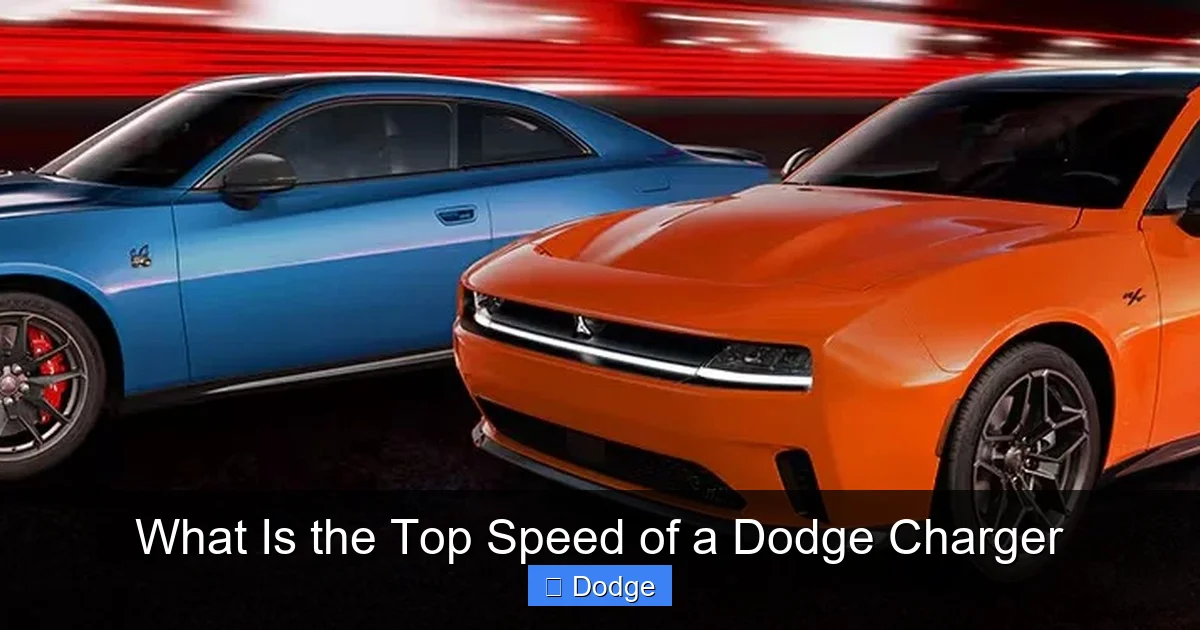
Visual guide about What Is the Top Speed of a Dodge Charger
Image source: dealerimages.dealereprocess.com
Before diving into numbers, it’s important to understand what “top speed” actually means. Top speed is the maximum velocity a vehicle can reach under ideal conditions. It’s not just about how fast the engine can spin—it’s the point where power, aerodynamics, traction, and resistance balance out.
For the Dodge Charger, top speed is a key performance metric, but it’s not the only one. Acceleration, handling, braking, and drivetrain efficiency all play roles in how a car performs on the road. Still, top speed gives us a benchmark for comparing different models and understanding the engineering behind each trim.
One thing to keep in mind is that most production cars, including the Charger, have electronic speed limiters. These are set by the manufacturer for safety, tire durability, and fuel efficiency. Even if the engine could theoretically go faster, the car’s computer will cap the speed to protect components and ensure longevity.
For example, a Charger with summer performance tires might be limited to 155 mph, not because the engine can’t go faster, but because the tires aren’t rated for higher speeds. This is why tire choice matters—especially if you’re pushing your car near its limits.
Another factor is aerodynamics. The Charger has a boxy, muscular design that looks great but creates more drag than a sleek sports car. At high speeds, air resistance increases exponentially, making it harder for the engine to push the car forward. That’s why lighter, more aerodynamic cars often have higher top speeds, even with similar horsepower.
Finally, real-world conditions play a big role. Altitude, temperature, road surface, and even wind can affect how fast a car can go. A Charger might hit 180 mph on a cool, dry day at sea level, but struggle to reach 170 mph on a hot day in the mountains. That’s why manufacturers test top speeds in controlled environments, like wind tunnels and closed tracks.
Dodge Charger Trim Levels and Their Top Speeds
Visual guide about What Is the Top Speed of a Dodge Charger
Image source: dodgeabout.net
Now let’s get to the numbers. The Dodge Charger comes in several trim levels, each with different engines and performance capabilities. Here’s a breakdown of the top speeds for the most popular models, based on manufacturer specs and independent testing.
Charger SXT and GT (V6 Engine)
The base models of the Charger—SXT and GT—come with a 3.6-liter Pentastar V6 engine. This engine produces around 292 to 300 horsepower, depending on the year and configuration. It’s paired with an 8-speed automatic transmission and available in rear-wheel drive (RWD) or all-wheel drive (AWD).
The top speed for these models is electronically limited to **130 mph**. While that might not sound blistering compared to the high-end trims, it’s more than enough for highway driving and daily commuting. The V6 Charger is designed for balance—offering decent power, good fuel economy (around 19 mpg city / 30 mpg highway), and a smooth ride.
These models are ideal for buyers who want the Charger’s aggressive look and spacious interior without the high cost of ownership that comes with a V8. They’re also great for families or commuters who prioritize comfort and efficiency over raw speed.
Charger R/T (5.7L HEMI V8)
Step up to the R/T trim, and you get the classic American V8 experience. The 5.7-liter HEMI V8 engine delivers 370 horsepower and 395 lb-ft of torque. It’s a naturally aspirated engine, meaning no turbo or supercharger, but it still provides strong acceleration and a satisfying exhaust note.
The top speed for the Charger R/T is **150 mph**. That’s a significant jump from the V6 models and puts it firmly in muscle car territory. The R/T also includes performance upgrades like a sport-tuned suspension, larger brakes, and a more aggressive exhaust system.
This trim is perfect for drivers who want a balance of power and practicality. It’s fast enough to feel thrilling on the highway, but not so extreme that it’s impractical for daily use. Plus, it still gets reasonable fuel economy for a V8—around 16 mpg city / 25 mpg highway.
Charger Scat Pack (6.4L HEMI V8)
If you’re looking for serious power, the Scat Pack is where things start to get exciting. This trim features a 6.4-liter HEMI V8 engine that produces 485 horsepower and 475 lb-ft of torque. It’s the same engine used in the Challenger Scat Pack and offers near-SRT levels of performance at a lower price point.
The top speed for the Charger Scat Pack is **165 mph**. That’s fast enough to outpace many sports cars and puts it in the same league as European performance sedans. The Scat Pack also includes performance features like Brembo brakes, a limited-slip differential, and an adaptive suspension system.
One of the best things about the Scat Pack is its value. You get SRT-level power and handling without the premium price tag. It’s a great choice for enthusiasts who want a daily driver that can also tear up the track on weekends.
Charger SRT 392 (6.4L HEMI V8)
The SRT 392 is the first step into Dodge’s high-performance SRT (Street and Racing Technology) lineup. It shares the same 6.4-liter HEMI V8 as the Scat Pack but includes additional performance upgrades and a more track-focused setup.
With 485 horsepower and 475 lb-ft of torque, the SRT 392 has the same power output as the Scat Pack, but it’s tuned for better responsiveness and handling. The top speed is **165 mph**, matching the Scat Pack, but the driving experience feels more refined and aggressive.
The SRT 392 comes with features like adaptive damping suspension, performance-tuned steering, and larger Brembo brakes. It also has a more aggressive exterior design, with a unique front fascia, hood vents, and SRT badging.
This trim is ideal for drivers who want the ultimate Charger experience without stepping into the supercharged realm. It’s powerful, stylish, and capable of handling both daily driving and spirited backroad runs.
Charger SRT Hellcat (6.2L Supercharged V8)
Now we’re getting into serious performance territory. The Charger SRT Hellcat features a 6.2-liter supercharged HEMI V8 engine that produces a staggering **717 horsepower** and 650 lb-ft of torque. That’s more power than many supercars, and it’s all delivered through the rear wheels.
The top speed for the SRT Hellcat is **199 mph**. That’s incredibly fast for a four-door sedan and puts it in the same category as high-end sports cars like the Porsche 911 Turbo and Chevrolet Corvette Z06. The Hellcat can go from 0 to 60 mph in just 3.6 seconds, making it one of the quickest production sedans ever made.
To handle all that power, the Hellcat comes with heavy-duty components, including a reinforced transmission, upgraded cooling systems, and high-performance tires. It also has launch control, track modes, and a customizable digital dashboard.
Driving a Hellcat is an experience unlike any other. The supercharger whine, the instant torque, and the sheer acceleration make it feel like you’re piloting a race car. But it’s still a practical sedan—you can fit four adults comfortably and even use it for road trips.
Charger SRT Hellcat Redeye (6.2L Supercharged V8)
At the top of the Charger lineup is the SRT Hellcat Redeye. This is the most powerful production Charger ever made, with a tuned version of the 6.2-liter supercharged V8 that produces **797 horsepower** and 707 lb-ft of torque. That’s an increase of 80 horsepower over the standard Hellcat.
The top speed for the Hellcat Redeye is **204 mph**, making it the fastest Charger ever built. It can accelerate from 0 to 60 mph in just 3.4 seconds and complete the quarter-mile in under 11 seconds. These numbers rival those of exotic supercars, but in a full-size, four-door package.
The Redeye includes additional performance upgrades, such as a higher-flow supercharger, improved cooling, and a more aggressive suspension setup. It also has a “Redeye” mode that unleashes the full 797 horsepower for maximum performance.
This trim is for serious enthusiasts who want the ultimate in speed and power. It’s not just a car—it’s a statement. Whether you’re cruising on the highway or hitting the track, the Hellcat Redeye delivers an unforgettable driving experience.
Factors That Affect the Top Speed of a Dodge Charger
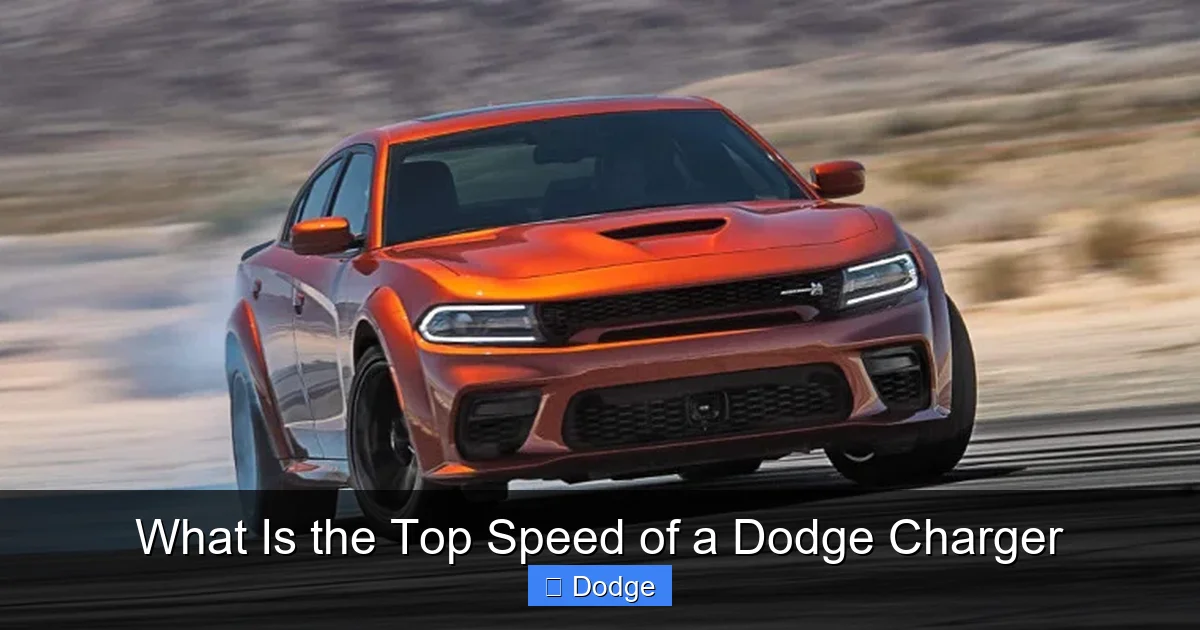
Visual guide about What Is the Top Speed of a Dodge Charger
Image source: dealerinspire-image-library-prod.s3.us-east-1.amazonaws.com
While the numbers above give you a good idea of what each Charger can do, real-world performance can vary. Several factors influence how fast your Charger can actually go, even if it’s capable of higher speeds on paper.
Engine and Drivetrain
The engine is the heart of any performance car, and the Charger is no exception. The more horsepower and torque an engine produces, the faster it can accelerate and the higher its top speed potential. That’s why the V6 models top out at 130 mph, while the Hellcat Redeye can reach over 200 mph.
The drivetrain also plays a role. All Chargers are rear-wheel drive, which provides better weight distribution and traction for acceleration. However, RWD can be more challenging in wet or slippery conditions, which can affect performance.
Aerodynamics
The Charger’s design is iconic, but it’s not the most aerodynamic. The boxy shape and large frontal area create drag, especially at high speeds. As speed increases, air resistance grows exponentially, requiring more power to maintain acceleration.
That’s why sports cars with sleeker designs often have higher top speeds, even with similar horsepower. Some Charger owners add aerodynamic modifications—like front splitters, rear spoilers, or underbody panels—to reduce drag and improve stability at high speeds.
Weight
The Charger is a heavy car. Even the base model weighs over 4,000 pounds, and the SRT models can exceed 4,500 pounds. More weight means more inertia, which requires more power to accelerate and maintain speed.
Lighter cars can often achieve higher top speeds with less power because they have less mass to move. That’s why many high-performance vehicles use lightweight materials like carbon fiber and aluminum.
Tires
Tires are a critical factor in top speed. Most production cars are limited by their tire ratings. For example, a Charger with H-rated tires (good for up to 130 mph) won’t be able to safely exceed that speed, even if the engine could.
The SRT Hellcat and Redeye come with ZR-rated tires, which are designed for speeds over 149 mph. These tires have stronger construction and better heat resistance, allowing them to handle the extreme forces at high speeds.
If you’re planning to push your Charger near its limits, make sure your tires are in good condition and rated for the speeds you intend to reach.
Electronic Limiters
As mentioned earlier, most Chargers have electronic speed limiters. These are set by Dodge for safety, tire durability, and fuel efficiency. Even if the engine could go faster, the car’s computer will cut fuel or ignition to prevent exceeding the limit.
Some owners choose to remove or modify these limiters through aftermarket tuning. While this can increase top speed, it also voids the warranty and may compromise safety. It’s important to weigh the risks before making any modifications.
Environmental Conditions
Finally, real-world conditions can affect performance. High altitude reduces air density, which means less oxygen for the engine to burn fuel. This can reduce horsepower and top speed, especially in naturally aspirated engines like the V6 and 5.7L V8.
Temperature also plays a role. Cold air is denser, which can improve engine performance. Hot weather, on the other hand, can reduce power and increase the risk of overheating.
Road surface and wind conditions also matter. A smooth, flat road with little wind is ideal for reaching top speed. Bumpy roads, hills, or strong headwinds can slow you down.
How to Safely Experience the Top Speed of a Dodge Charger
Reaching the top speed of a Dodge Charger is an exciting prospect, but it should never be done on public roads. Speed limits exist for a reason, and driving at 200 mph on a highway is extremely dangerous and illegal.
The only safe and legal way to experience your Charger’s top speed is on a closed track. Many race tracks offer high-speed sessions where you can push your car to its limits in a controlled environment. These tracks have safety barriers, medical support, and experienced staff to ensure everyone’s safety.
Before hitting the track, make sure your car is in top condition. Check the tires, brakes, fluids, and suspension. Consider upgrading to performance brake pads and high-temperature fluids if you plan to drive aggressively.
It’s also a good idea to take a high-performance driving course. These courses teach you how to handle a powerful car at high speeds, including braking techniques, cornering, and emergency maneuvers. They’re offered by organizations like the Skip Barber Racing School and local track day groups.
Finally, always wear proper safety gear. A helmet, fire-resistant suit, and harness can make a big difference in the event of an accident. And never drive alone—bring a co-driver or instructor for added safety.
Conclusion: The Dodge Charger – Speed, Style, and Substance
So, what is the top speed of a Dodge Charger? The answer depends on which model you’re talking about. From 130 mph in the base V6 to an astonishing 204 mph in the SRT Hellcat Redeye, the Charger offers a wide range of performance levels to suit different needs and budgets.
But top speed is just one part of the story. The Charger is more than just a fast car—it’s a symbol of American muscle, blending power, style, and practicality in a way few other vehicles can match. Whether you’re commuting to work, taking a road trip, or hitting the track on weekends, the Charger delivers an unforgettable driving experience.
If you’re considering a Charger, think about how you’ll use it. The V6 models are great for daily driving, while the V8 trims offer more excitement. The SRT models are for serious enthusiasts who want the ultimate in performance.
No matter which Charger you choose, remember that speed comes with responsibility. Always drive safely, respect the limits, and enjoy the ride.
Frequently Asked Questions
What is the fastest Dodge Charger model?
The fastest Dodge Charger is the SRT Hellcat Redeye, with a top speed of 204 mph. It features a 6.2-liter supercharged V8 engine producing 797 horsepower.
Can a Dodge Charger go 200 mph?
Yes, the SRT Hellcat Redeye can reach 204 mph, making it the only production Charger capable of exceeding 200 mph. The standard Hellcat tops out at 199 mph.
Why is the Dodge Charger’s top speed limited?
Top speeds are limited by electronic controls for safety, tire durability, and fuel efficiency. Even if the engine could go faster, the car’s computer restricts speed to protect components.
Is it safe to drive a Charger at top speed?
Driving at top speed is unsafe on public roads and should only be done on closed tracks with proper safety gear and training. High speeds increase the risk of accidents and mechanical failure.
Do all Dodge Chargers have the same top speed?
No, top speed varies by trim. The base V6 models top out at 130 mph, while the SRT Hellcat Redeye reaches 204 mph. Engine power, aerodynamics, and tires all affect performance.
Can I increase my Charger’s top speed with modifications?
Yes, aftermarket tuning, engine upgrades, and aerodynamic modifications can increase top speed. However, this may void your warranty and requires careful consideration of safety and legality.