
Will Dodge 5-lug Wheels Fit Chevy 5-lug?

Will Dodge 5-lug wheels fit Chevy 5-lug? Not always—despite both using 5-lug patterns, differences in bolt circle, center bore, and offset can prevent a safe fit. This guide breaks down the critical measurements, real-world examples, and expert tips to help you determine compatibility and avoid costly mistakes.
Key Takeaways
- Bolt pattern alone isn’t enough: Even if both Dodge and Chevy use a 5×139.7mm (5×5.5″) bolt pattern, other factors like center bore and offset matter.
- Center bore mismatch is common: Dodge wheels often have a smaller center bore than Chevy hubs, which can cause vibration or unsafe mounting.
- Offset and backspacing affect handling: Dodge wheels may have different offsets, leading to rubbing, poor steering, or premature wear.
- Hub-centric rings can help: These adapters fill the gap between a smaller wheel center bore and larger hub, improving safety and ride quality.
- Always test-fit before driving: Even with matching specs, physical clearance issues can arise—check for brake caliper or suspension interference.
- Year and model matter: Not all Dodge or Chevy trucks share the same specs—always verify your exact vehicle’s requirements.
- When in doubt, consult a professional: A wheel specialist or mechanic can confirm fitment and recommend safe solutions.
📑 Table of Contents
- Will Dodge 5-Lug Wheels Fit Chevy 5-Lug? The Real Answer
- Understanding Bolt Patterns: The Foundation of Wheel Fitment
- Center Bore: The Hidden Culprit in Wheel Fitment
- Offset and Backspacing: The Balance of Fit and Function
- Year, Model, and Trim Matter: Not All 5-Lug Wheels Are Created Equal
- When Dodge 5-Lug Wheels Will Fit Chevy 5-Lug
- Conclusion: Proceed with Caution and Confidence
Will Dodge 5-Lug Wheels Fit Chevy 5-Lug? The Real Answer
So you’ve got a set of Dodge 5-lug wheels lying around—or maybe you found a killer deal on a used set online—and you’re wondering if they’ll bolt right onto your Chevy truck or SUV. It’s a common question, especially among DIY enthusiasts and budget-minded gearheads who love swapping parts across brands. After all, both Dodge (now Ram) and Chevrolet have used 5-lug bolt patterns for decades on their trucks and SUVs. But here’s the catch: just because two wheels share the same number of lugs doesn’t mean they’ll fit.
Let’s cut through the confusion. The short answer? Sometimes. But it’s not as simple as lining up the bolts. There are several critical factors—bolt pattern, center bore, offset, backspacing, and hub compatibility—that determine whether a Dodge wheel will safely and properly fit your Chevy. Getting it wrong can lead to vibrations, poor handling, premature tire wear, or even dangerous wheel separation while driving.
In this guide, we’ll walk you through everything you need to know to make an informed decision. Whether you’re upgrading your Silverado with some aggressive Ram wheels or just trying to save money on a wheel swap, we’ve got you covered. We’ll break down the technical specs, share real-world examples, and give you practical tips to ensure a safe and successful fit. So grab your tape measure, fire up that caliper, and let’s dive in.
Understanding Bolt Patterns: The Foundation of Wheel Fitment
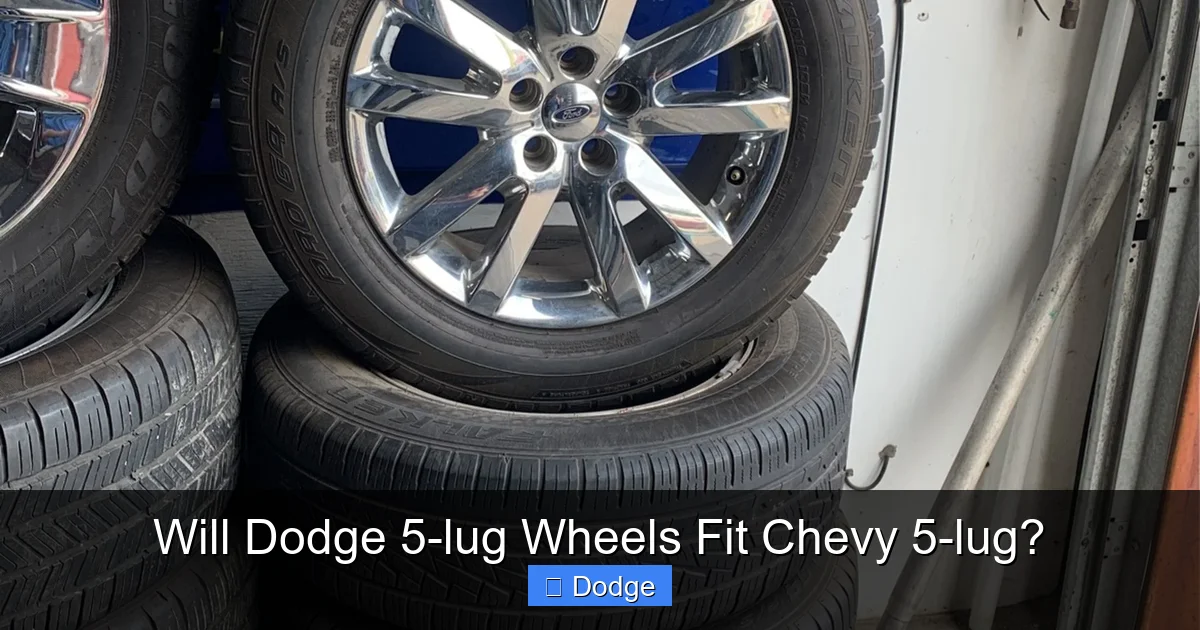
Visual guide about Will Dodge 5-lug Wheels Fit Chevy 5-lug?
Image source: images.offerup.com
When it comes to wheel compatibility, the bolt pattern is the first thing people check—and for good reason. It’s the most visible and measurable aspect of a wheel’s design. But what exactly is a bolt pattern, and why does it matter so much?
A bolt pattern, also known as the lug pattern or PCD (Pitch Circle Diameter), describes two things: the number of lug nuts or bolts and the diameter of the circle they form. For example, a 5×139.7mm bolt pattern means the wheel has five lug holes arranged in a circle with a diameter of 139.7 millimeters. This is often expressed in inches as 5×5.5″, since 139.7mm converts to approximately 5.5 inches.
Now, here’s where things get interesting: both Dodge (Ram) and many Chevrolet trucks and SUVs—like the Silverado, Tahoe, Suburban, and older S-10s—use a 5×139.7mm (5×5.5″) bolt pattern. On paper, that sounds like a perfect match. And in some cases, it is. But bolt pattern alone doesn’t guarantee compatibility.
Why? Because wheels are complex components designed to work with specific vehicles. Even if the lugs line up, other dimensions—like the center bore and offset—can prevent a safe or functional fit. Think of it like trying to wear a shoe that’s the right length but the wrong width. It might go on, but it won’t feel right—and it could cause problems down the road.
Common 5-Lug Bolt Patterns in Dodge and Chevy
Let’s look at some real-world examples to see how these patterns overlap.
Dodge (Ram) trucks from the late 1990s through the 2010s—like the Ram 1500, 2500, and 3500—typically use a 5×139.7mm bolt pattern. This includes models from 1994 to 2018, with some variations in later years. The same pattern is also found on Dodge Durango and Ram Chassis Cab models.
On the Chevy side, the 5×139.7mm pattern is common on full-size trucks and SUVs. The Chevrolet Silverado 1500 (1999–2018), Tahoe, Suburban, and Avalanche all use this pattern. Even some older S-10 Blazers and pickups share it.
So, at first glance, a 2005 Ram 1500 wheel might seem like a direct fit for a 2007 Chevy Silverado. And in some cases, it will bolt on—but that doesn’t mean it’s safe or optimal.
Why Bolt Pattern Isn’t the Whole Story
Imagine you’re trying to fit a square peg into a round hole. The bolt pattern is like the shape of the hole—it needs to match. But the size of the peg, how deep it goes, and how it sits in the hole also matter. That’s where center bore, offset, and backspacing come in.
For example, a Dodge wheel might have a center bore of 77.8mm, while your Chevy hub measures 78.1mm. That 0.3mm difference might seem tiny, but it can cause the wheel to sit off-center, leading to vibrations at high speeds. Over time, this can wear out wheel bearings and damage suspension components.
Similarly, if the offset is too aggressive (more negative), the wheel might stick out too far and rub against the fender or suspension. If it’s too positive, the wheel could sit too far inward, affecting steering and stability.
So while the bolt pattern is a necessary starting point, it’s only the first step in determining compatibility.
Center Bore: The Hidden Culprit in Wheel Fitment
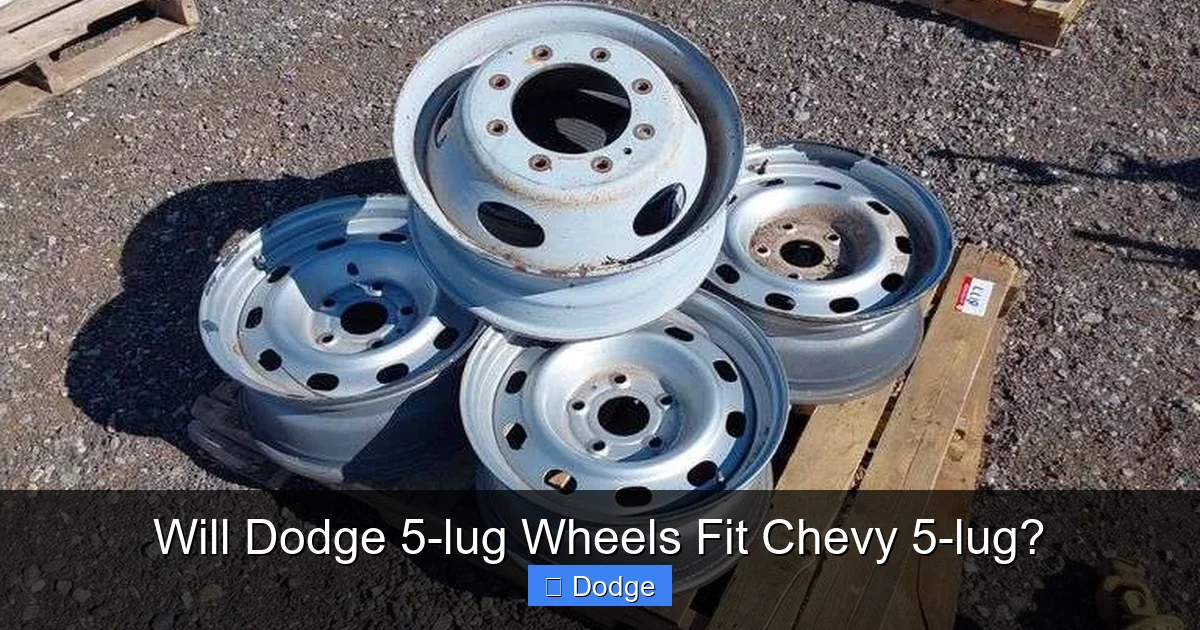
Visual guide about Will Dodge 5-lug Wheels Fit Chevy 5-lug?
Image source: d3j17a2r8lnfte.cloudfront.net
If bolt pattern is the first checkpoint, center bore is the second—and often the most overlooked. The center bore is the large hole in the back of the wheel that fits over the hub of your vehicle. Its job is to ensure the wheel is perfectly centered on the axle, which is critical for smooth operation and safety.
Here’s the problem: Dodge and Chevy hubs are not always the same size. In fact, they’re often different enough to cause issues.
Most Dodge (Ram) trucks have a hub diameter of around 77.8mm. Chevy trucks, on the other hand, typically use a slightly larger hub—around 78.1mm. That 0.3mm difference might not sound like much, but it’s enough to prevent proper centering.
When a wheel’s center bore is smaller than the hub, it can’t seat properly. This forces the lug nuts to do all the work of centering the wheel, which they’re not designed to do. The result? The wheel may wobble, causing vibrations that get worse as speed increases. You might feel it in the steering wheel at highway speeds or notice uneven tire wear over time.
Hub-Centric vs. Lug-Centric Wheels
There are two ways wheels are centered on a hub: hub-centric and lug-centric.
Hub-centric wheels rely on the center bore to align perfectly with the hub. This is the ideal setup because it distributes the load evenly and reduces stress on the lug nuts. Most OEM wheels are designed this way.
Lug-centric wheels, in contrast, depend entirely on the lug nuts to center the wheel. This is less precise and can lead to imbalance and vibration, especially at high speeds.
When you mix a Dodge wheel with a Chevy hub, you’re often forcing a lug-centric fit, even if the wheel was originally hub-centric. That’s why center bore compatibility is so important.
How to Fix a Center Bore Mismatch
If your Dodge wheel has a smaller center bore than your Chevy hub, don’t panic—there’s a solution. Hub-centric rings can bridge the gap.
These are small, precision-machined rings made of aluminum or plastic that fit inside the wheel’s center bore. They have an inner diameter that matches your Chevy hub (e.g., 78.1mm) and an outer diameter that matches the Dodge wheel’s center bore (e.g., 77.8mm). When installed, they allow the wheel to sit perfectly centered on the hub.
Hub-centric rings are inexpensive—usually under $20 for a set—and easy to install. Just slide them into the wheel before mounting, and you’re good to go. They’re widely available online and at auto parts stores.
But here’s a word of caution: only use hub-centric rings if the wheel’s center bore is smaller than the hub. If the wheel’s center bore is larger, the ring won’t help—and could even make things worse. In that case, you’d need a different solution, like a wheel spacer with the correct bore.
Offset and Backspacing: The Balance of Fit and Function
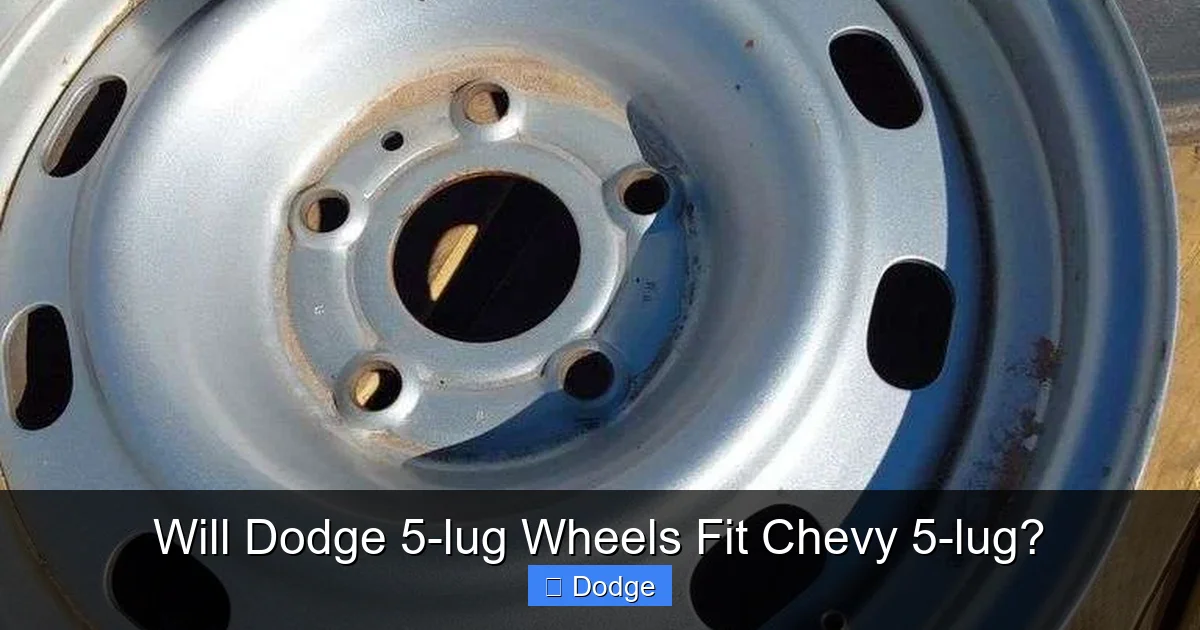
Visual guide about Will Dodge 5-lug Wheels Fit Chevy 5-lug?
Image source: d3j17a2r8lnfte.cloudfront.net
Even if the bolt pattern and center bore match, offset and backspacing can still prevent a proper fit. These two measurements determine how the wheel sits in relation to your vehicle’s suspension and body.
Offset is the distance between the wheel’s mounting surface and its centerline. It’s measured in millimeters and can be positive, negative, or zero.
– Positive offset means the mounting surface is toward the front (street side) of the wheel. This pushes the wheel inward.
– Negative offset means the mounting surface is toward the back (brake side) of the wheel. This pushes the wheel outward.
– Zero offset means the mounting surface is exactly in the center.
Backspacing, on the other hand, is the distance from the mounting surface to the inner edge of the wheel. It’s a more traditional measurement, often used by off-roaders and custom wheel builders.
Both offset and backspacing affect how the wheel clears your brakes, suspension, and fenders. A mismatch can cause rubbing, poor handling, or even damage to components.
How Dodge and Chevy Offsets Compare
Dodge (Ram) wheels tend to have more aggressive (negative) offsets, especially on lifted or off-road models. This gives them a wider stance and a more aggressive look. For example, a stock Ram 1500 might have an offset of +15mm to +25mm, while a lifted version could go as low as -12mm.
Chevy wheels, by comparison, often have more conservative offsets. A stock Silverado 1500 might use a +20mm to +30mm offset. That means a Dodge wheel with a -12mm offset would sit 32mm farther out than a stock Chevy wheel—potentially causing it to rub against the fender or suspension.
Real-World Example: Ram Wheel on a Silverado
Let’s say you’re putting 2008 Ram 1500 wheels on a 2010 Chevy Silverado 1500. The bolt pattern matches (5×139.7mm), and you’ve used hub-centric rings to fix the center bore. But the Ram wheels have a -12mm offset, while your Silverado’s stock wheels are +25mm.
That’s a 37mm difference in how far the wheel sticks out. At full suspension travel, especially during turns or off-roading, the tire could rub against the inner fender or suspension components. You might also notice increased steering effort or uneven tire wear.
In this case, you’d need to either:
– Choose Dodge wheels with a closer offset (closer to +25mm),
– Use wheel spacers to push the wheels out slightly (though this adds stress to wheel bearings),
– Or modify the fenders or suspension to create more clearance.
None of these are ideal. The safest route is to match offset as closely as possible.
Year, Model, and Trim Matter: Not All 5-Lug Wheels Are Created Equal
Here’s a hard truth: not all Dodge or Chevy trucks are the same—even within the same model year. Trim levels, drivetrain configurations, and factory options can all affect wheel specs.
For example, a 2005 Ram 1500 SLT might use a different wheel than a Ram 1500 Laramie or a Ram 2500. The same goes for Chevy: a base Silverado WT might have different brakes and suspension than a High Country, which could affect wheel clearance.
Brake Caliper Clearance
One of the most common issues when swapping wheels is brake caliper interference. Larger brakes—like those found on performance trims or heavy-duty models—require more space behind the wheel.
Dodge trucks, especially Ram 2500 and 3500 models, often have larger brake calipers than their Chevy counterparts. If you’re putting Ram 2500 wheels on a Chevy 1500, the calipers might not fit. Conversely, if you’re putting Chevy wheels on a Ram with big brakes, the wheels might not clear.
Always check the back of the wheel for adequate clearance. If the wheel sits too close to the caliper, it can cause rubbing, overheating, or even brake failure.
Suspension and Steering Components
Wheels also need to clear suspension parts like control arms, shocks, and steering linkages. A wheel with the wrong offset or diameter might interfere with these components, especially during full suspension travel or sharp turns.
For example, a 20-inch Dodge wheel might look great on your Chevy, but if it’s designed for a lifted Ram, it could hit the upper control arm when you turn the wheel fully to the left or right.
How to Check for Clearance
The best way to ensure compatibility is to test-fit the wheels before driving. Here’s how:
1. Mount the wheel on the hub using the correct lug nuts.
2. Spin the wheel to check for any rubbing or interference.
3. Turn the steering wheel fully left and right while the vehicle is on the ground.
4. Compress the suspension (have someone push down on the fender) to simulate full travel.
5. Look for any contact between the wheel and brake calipers, suspension, or body.
If everything clears, you’re in good shape. If not, you may need to adjust the offset, use spacers, or choose different wheels.
When Dodge 5-Lug Wheels Will Fit Chevy 5-Lug
Despite the challenges, there are situations where Dodge 5-lug wheels will fit Chevy 5-lug vehicles—sometimes even perfectly.
Direct Fit Examples
– **2002–2008 Dodge Ram 1500 wheels on 2007–2013 Chevy Silverado 1500:** These models share nearly identical specs—5×139.7mm bolt pattern, similar center bores, and compatible offsets. With hub-centric rings, they often fit without issues.
– **Dodge Durango wheels on Chevy Tahoe:** Both are based on the same GMT platform and share many components. Wheels from a 2004–2009 Durango often bolt right onto a Tahoe of the same era.
– **Aftermarket wheels designed for both brands:** Some manufacturers make wheels that fit both Dodge and Chevy trucks. These are usually labeled as “5×5.5” and have a center bore large enough to accommodate both hub sizes.
Tips for a Successful Swap
– Always verify the exact specs of your wheels and vehicle. Don’t rely on generalizations.
– Use a wheel fitment guide or online calculator (like those from Tire Rack or Wheel-Size.com).
– When in doubt, consult a professional wheel shop or mechanic.
– Consider buying wheels with a hub bore of 78.3mm or larger—this will fit both Dodge and Chevy hubs with the help of rings.
– Avoid extreme offsets unless you’re prepared to modify your suspension or fenders.
Conclusion: Proceed with Caution and Confidence
So, will Dodge 5-lug wheels fit Chevy 5-lug? The answer is: it depends. While the bolt pattern often matches, other critical factors—center bore, offset, backspacing, and clearance—can make or break the fit.
With the right preparation and attention to detail, you can successfully swap Dodge wheels onto your Chevy truck. But cutting corners or ignoring key specs can lead to unsafe driving conditions and costly repairs.
The key is to do your homework. Measure everything. Use hub-centric rings when needed. Test-fit before you drive. And when in doubt, ask for help.
At the end of the day, wheel fitment isn’t just about looks—it’s about safety, performance, and peace of mind. Whether you’re upgrading for style or saving money on a swap, taking the time to get it right is always worth it.
Frequently Asked Questions
Can I put Dodge Ram wheels on a Chevy Silverado?
Yes, in many cases—especially with 2002–2008 Ram 1500 wheels on 2007–2013 Silverado 1500s. Both use a 5×139.7mm bolt pattern and similar offsets. Just check center bore and use hub-centric rings if needed.
What size hub bore do Chevy trucks have?
Most full-size Chevy trucks and SUVs have a hub bore of 78.1mm. Some newer models may vary, so always double-check your specific vehicle.
Do I need hub-centric rings when swapping wheels?
Yes, if the wheel’s center bore is smaller than your hub. They ensure proper centering and reduce vibration. Skip them only if the wheel is already hub-centric to your vehicle.
Can I use wheel spacers to fix offset issues?
You can, but spacers add stress to wheel bearings and suspension. Use them sparingly and only with high-quality, hub-centric spacers designed for your vehicle.
Will 20-inch Dodge wheels fit my Chevy truck?
Possibly—but check brake caliper clearance, suspension travel, and fender clearance. Larger wheels often require more space and may not fit without modifications.
Are all 5×5.5″ wheels interchangeable?
No. While the bolt pattern matches, center bore, offset, and backspacing vary by brand and model. Always verify all specs before installing.
