
Is the Nissan Maxima All-wheel Drive?

The Nissan Maxima is not available with all-wheel drive (AWD)—it has always been a front-wheel-drive (FWD) vehicle. Despite its sporty design and powerful engine, the Maxima lacks AWD, which may affect traction in snowy or wet conditions. However, its FWD setup still delivers a smooth, responsive driving experience for most drivers.
Key Takeaways
- The Nissan Maxima does not offer all-wheel drive: All model years and trims are front-wheel drive only, with no factory AWD option available.
- FWD provides balanced performance for most climates: While not ideal for heavy snow or off-roading, FWD offers good traction in rain and light winter conditions.
- Power comes from a strong V6 engine: The Maxima’s 3.5L V6 delivers 300 horsepower, making it one of the most powerful sedans in its class.
- Advanced traction control systems help compensate: Features like Vehicle Dynamic Control (VDC) and Traction Control System (TCS) improve stability on slippery roads.
- Competitors like the Honda Accord and Toyota Camry offer AWD: If AWD is a priority, buyers may want to consider alternatives with available all-wheel drive.
- The Maxima excels in comfort and style: With premium interiors, sport-tuned suspension, and aggressive styling, it stands out as a luxury-performance sedan.
- Discontinued after 2023 model year: Nissan ended Maxima production, so current models are among the last available.
📑 Table of Contents
- Is the Nissan Maxima All-Wheel Drive? The Straight Answer
- Understanding Front-Wheel Drive vs. All-Wheel Drive
- How the Nissan Maxima Handles in Real-World Conditions
- Why Nissan Chose Not to Offer AWD on the Maxima
- Comparing the Maxima to AWD Competitors
- Tips for Driving a FWD Maxima in Winter
- The Maxima’s Legacy and Final Model Year
- Should You Buy a Nissan Maxima?
- Conclusion
Is the Nissan Maxima All-Wheel Drive? The Straight Answer
If you’re considering the Nissan Maxima and wondering whether it comes with all-wheel drive (AWD), you’re not alone. With its bold styling, powerful engine, and sporty demeanor, the Maxima often gets compared to performance sedans that do offer AWD. But the truth is simple: **the Nissan Maxima is not available with all-wheel drive**. Every model, from its introduction in the early 1980s to its final production year in 2023, has been built exclusively with front-wheel drive (FWD).
This might come as a surprise to some, especially since the Maxima has long been marketed as a “four-door sports car.” It boasts a robust 3.5-liter V6 engine, sharp handling, and a luxurious interior that rivals more expensive European sedans. Yet, despite its performance credentials, Nissan never equipped the Maxima with an AWD system. Whether you’re looking at a 2023 Maxima Platinum or a 2010 Maxima 3.5 SV, the drivetrain remains consistent—front-wheel drive only.
So why does this matter? For drivers in regions with heavy snow, frequent rain, or mountainous terrain, AWD can provide better traction and confidence behind the wheel. While the Maxima handles well in most conditions, its FWD layout means it doesn’t have the added grip that AWD systems offer. That said, Nissan has included advanced electronic stability and traction control systems to help compensate, making the Maxima more capable than a basic FWD car in slippery situations.
Understanding Front-Wheel Drive vs. All-Wheel Drive
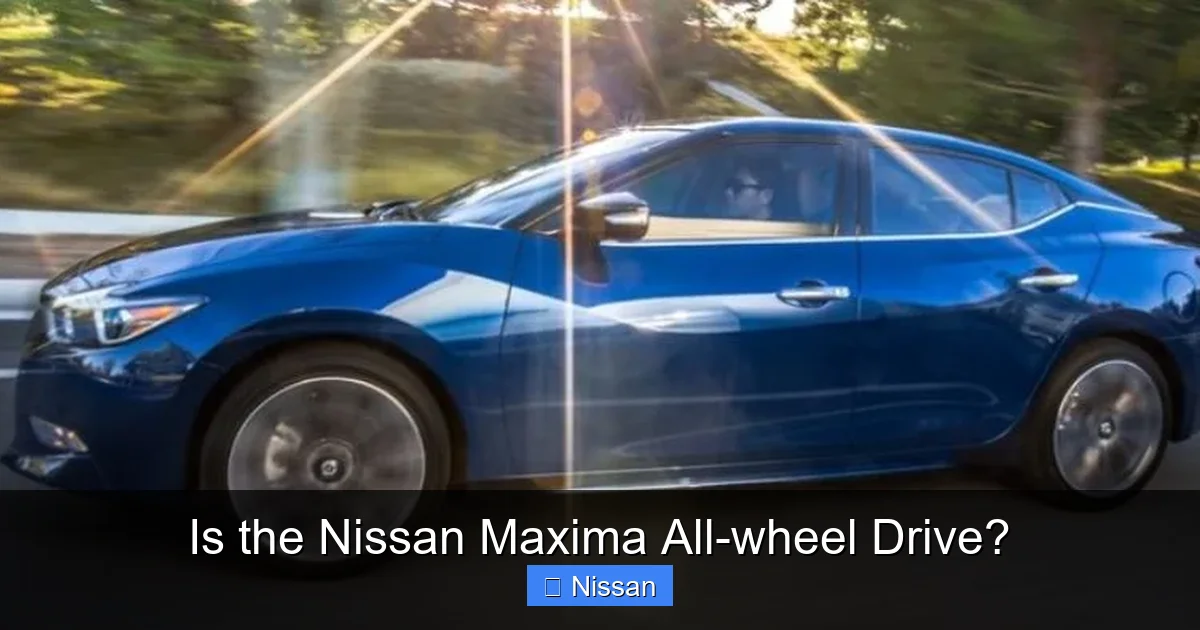
Visual guide about Is the Nissan Maxima All-wheel Drive?
Image source: cdn-ds.com
To fully grasp why the Maxima’s lack of AWD matters—and whether it’s a dealbreaker for you—it helps to understand the differences between front-wheel drive and all-wheel drive.
Front-wheel drive means that the engine’s power is sent only to the front wheels. This setup is common in many sedans and offers several advantages: it’s typically more fuel-efficient, costs less to manufacture, and provides better interior space since there’s no driveshaft tunnel for rear-wheel power. FWD also tends to perform well in light snow and rain because the weight of the engine sits directly over the driven wheels, improving traction.
On the other hand, all-wheel drive sends power to all four wheels, either full-time or on-demand. This improves grip in challenging conditions like snow, ice, mud, or wet roads. AWD systems can automatically detect wheel slip and redistribute power to the wheels with the most traction, which can be a lifesaver in winter driving or during sudden weather changes.
For example, imagine driving up a snowy hill in a Maxima. With FWD, the front wheels are doing all the work. If they lose grip, the car may struggle to climb. In an AWD vehicle like the Subaru Legacy or Audi A4, power would shift to the rear wheels, helping maintain momentum. That said, modern FWD cars like the Maxima use technology to minimize these issues.
How the Nissan Maxima Handles in Real-World Conditions
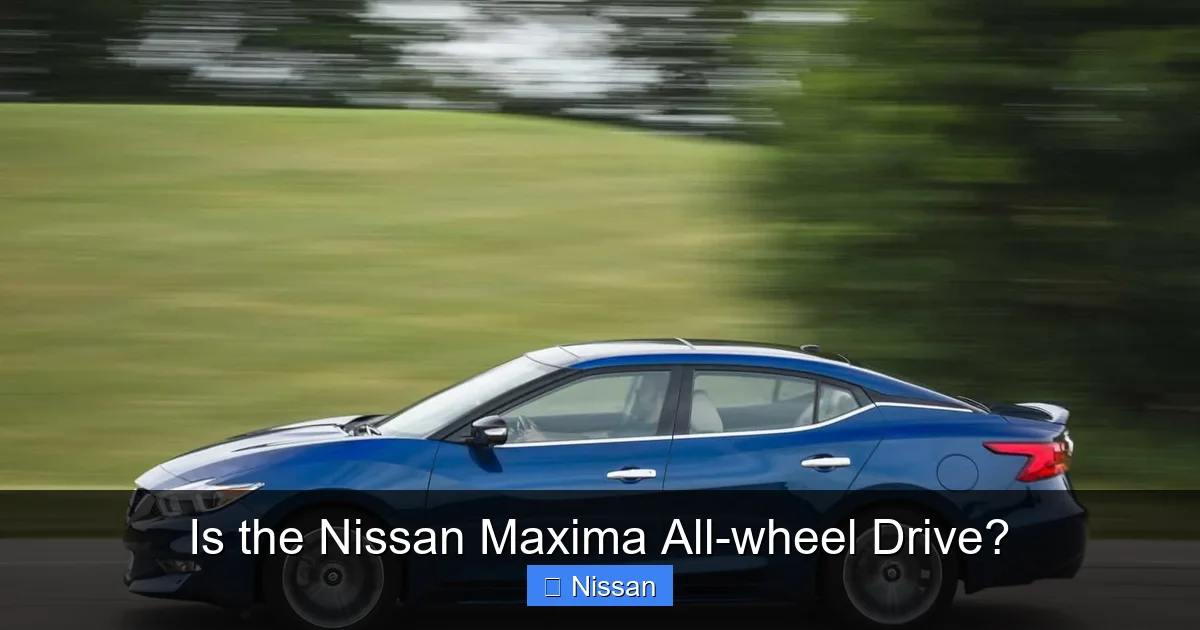
Visual guide about Is the Nissan Maxima All-wheel Drive?
Image source: cevpu.com
So, how does the Nissan Maxima actually perform on the road, especially in less-than-ideal weather? The answer depends on where you live and how you drive.
In dry conditions, the Maxima shines. Its 3.5-liter V6 engine produces 300 horsepower and 261 lb-ft of torque, paired with a smooth continuously variable transmission (CVT) that mimics traditional gear shifts. The suspension is tuned for sporty handling, and the steering feels responsive and direct. Whether you’re cruising on the highway or taking on winding backroads, the Maxima delivers a confident, engaging drive.
In rain, the Maxima remains stable thanks to its electronic stability systems. The Vehicle Dynamic Control (VDC) monitors wheel speed, steering angle, and lateral G-forces. If it detects skidding or loss of control, it can apply brakes to individual wheels and reduce engine power to help the driver regain stability. The Traction Control System (TCS) prevents wheel spin during acceleration, which is especially helpful on wet pavement.
But what about snow? This is where the lack of AWD becomes more apparent. In light snow or slush, the Maxima can manage just fine—especially with all-season or winter tires. The front-wheel-drive layout actually helps here, as the engine’s weight presses down on the driven wheels. However, in deep snow, icy roads, or steep inclines, the Maxima may struggle compared to an AWD vehicle.
For instance, a driver in Minnesota or Colorado might find the Maxima less capable during a heavy snowstorm than a Honda Accord with AWD or a Subaru Legacy. That doesn’t mean the Maxima is unsafe—just that it requires more cautious driving and proper tires in winter conditions.
Why Nissan Chose Not to Offer AWD on the Maxima
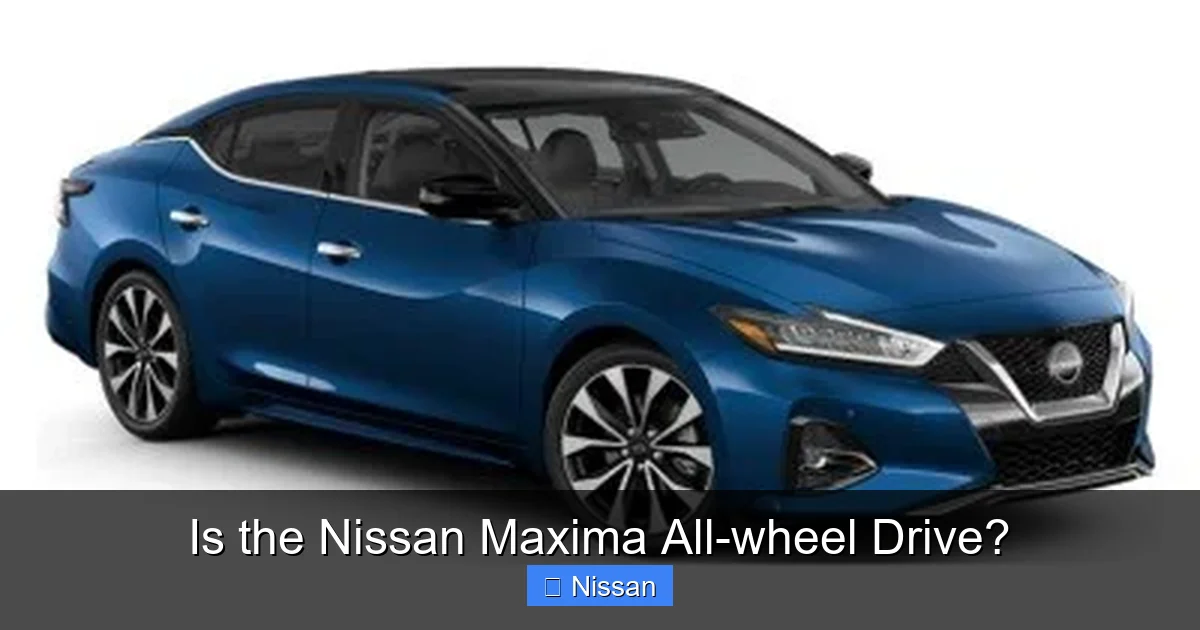
Visual guide about Is the Nissan Maxima All-wheel Drive?
Image source: motowag.com
You might wonder: with so many competitors offering AWD, why didn’t Nissan equip the Maxima with all-wheel drive? The answer lies in design philosophy, cost, and market positioning.
First, the Maxima was always intended to be a sporty, driver-focused sedan—not an all-weather utility vehicle. Nissan emphasized performance, style, and luxury over rugged capability. Adding AWD would have increased the car’s weight, reduced fuel economy, and raised the price. For a vehicle already positioned at the higher end of the midsize sedan market, these trade-offs may not have made sense.
Second, the Maxima shared its platform with other Nissan models like the Altima, which also lacks AWD in most trims. Developing a new AWD system specifically for the Maxima would have required significant engineering and investment. Given that the Maxima was a niche product with declining sales in recent years, Nissan likely prioritized resources elsewhere.
Third, the Maxima’s target audience—urban and suburban drivers in moderate climates—may not have demanded AWD as strongly as buyers in snowy regions. Many Maxima owners live in areas where FWD is sufficient for most driving conditions. Plus, the car’s advanced traction systems help bridge the gap.
Finally, Nissan has focused its AWD efforts on SUVs and crossovers like the Rogue, Murano, and Pathfinder, where all-wheel drive is a major selling point. Sedans, especially performance-oriented ones like the Maxima, have taken a backseat in terms of drivetrain innovation.
Comparing the Maxima to AWD Competitors
If all-wheel drive is a must-have for you, it’s worth comparing the Maxima to similar sedans that do offer AWD. While the Maxima stands out for its power and style, several competitors provide better traction in adverse weather.
The Honda Accord, for example, offers AWD on several trims, including the Sport and Touring models. It uses a 1.5-liter turbocharged four-cylinder or a 2.0-liter turbo engine, delivering up to 252 horsepower. While not as powerful as the Maxima’s V6, the Accord AWD provides excellent fuel economy and confident handling in snow and rain.
The Toyota Camry also offers AWD on select trims, paired with a 2.5-liter four-cylinder engine. It’s not as sporty as the Maxima, but it’s reliable, efficient, and capable in winter conditions. The Camry AWD system is lightweight and efficient, making it a smart choice for families in colder climates.
Then there’s the Subaru Legacy, which comes standard with AWD across all trims. With up to 260 horsepower from its turbocharged engine, the Legacy blends performance with all-weather capability. It’s a strong alternative for Maxima buyers who want more traction without sacrificing driving enjoyment.
Even luxury brands like Audi and Acura offer AWD on their midsize sedans. The Audi A4 quattro and Acura TLX SH-AWD provide high-end interiors, advanced tech, and superior grip in all conditions. However, they come at a higher price point than the Maxima.
So, while the Maxima wins on raw power and aggressive styling, it falls short in the AWD department. If you live in a region with harsh winters or frequently drive on unpaved roads, one of these alternatives might be a better fit.
Tips for Driving a FWD Maxima in Winter
Just because the Maxima doesn’t have AWD doesn’t mean you can’t drive it safely in winter. With the right preparation and driving habits, you can enjoy your Maxima year-round—even in snowy conditions.
First, invest in a good set of winter tires. All-season tires are fine for mild winters, but true winter tires (marked with the three-peak mountain snowflake symbol) provide significantly better grip on ice and snow. They’re made from softer rubber compounds that stay flexible in cold temperatures, improving traction and braking.
Second, keep your gas tank at least half full. This reduces the risk of fuel line freeze and adds weight over the front wheels, improving traction. It also ensures you have enough fuel if you get stuck in traffic or need to wait for help.
Third, drive smoothly and avoid sudden movements. Accelerate gently, brake early, and steer gradually. FWD cars can understeer (push wide in turns) when pushed too hard, especially on slippery surfaces. By driving conservatively, you reduce the risk of losing control.
Fourth, use the Maxima’s traction and stability systems to your advantage. Make sure VDC and TCS are enabled—they’re usually on by default, but some drivers disable them for performance driving. In winter, keep them active for maximum safety.
Finally, consider carrying emergency supplies: a snow shovel, ice scraper, jumper cables, blankets, and sand or kitty litter for traction. These simple items can make a big difference if you get stuck.
The Maxima’s Legacy and Final Model Year
After more than four decades on the market, the Nissan Maxima was discontinued after the 2023 model year. This marked the end of an era for one of Nissan’s most iconic sedans. While sales had declined in recent years due to the shift toward SUVs and crossovers, the Maxima remained a favorite among enthusiasts who appreciated its blend of power, style, and luxury.
The final 2023 Maxima came in four trims: S, SR, SL, and Platinum. All featured the same 3.5-liter V6 engine, FWD layout, and premium features like leather seats, a Bose audio system, and advanced safety tech. The Platinum trim offered the most luxury, with heated and ventilated front seats, a panoramic sunroof, and a 360-degree camera.
Despite its discontinuation, the Maxima leaves behind a strong legacy. It was one of the first Japanese sedans to challenge European performance cars, offering V6 power and sporty handling at a competitive price. Its bold design—especially the sharp lines and aggressive grille—set it apart from more conservative competitors.
For buyers today, the Maxima represents a great used car value. With its powerful engine, upscale interior, and strong reliability record, it’s a compelling option for those who want a sporty sedan without paying luxury brand prices. Just remember: it’s still front-wheel drive.
Should You Buy a Nissan Maxima?
So, is the Nissan Maxima the right car for you? That depends on your priorities.
If you value performance, style, and a luxurious ride, the Maxima is hard to beat. Its 300-horsepower V6 engine delivers thrilling acceleration, and the interior feels more upscale than most midsize sedans. The ride is smooth, the handling is sharp, and the cabin is quiet and well-appointed.
However, if all-wheel drive is essential for your lifestyle—especially if you live in a snowy or mountainous area—you may want to look elsewhere. While the Maxima handles well in most conditions, it doesn’t offer the added confidence of AWD.
Other factors to consider include fuel economy (the Maxima gets around 20 mpg city / 30 mpg highway), cargo space (14.7 cubic feet in the trunk), and long-term reliability. The Maxima has a solid reputation for durability, especially with regular maintenance.
Ultimately, the Maxima is a great choice for drivers who want a sporty, powerful sedan with a premium feel. But if AWD is non-negotiable, consider the Honda Accord AWD, Toyota Camry AWD, or Subaru Legacy.
Conclusion
The Nissan Maxima is not available with all-wheel drive—and never has been. It’s a front-wheel-drive sedan through and through, powered by a strong V6 engine and designed for performance and style. While this may be a drawback for drivers in harsh winter climates, the Maxima still offers a compelling package for those who prioritize power, comfort, and driving enjoyment.
Thanks to advanced traction and stability systems, the Maxima can handle rain and light snow with confidence. And with proper tires and cautious driving, it remains a safe and capable vehicle in most conditions. However, if you frequently face heavy snow, ice, or off-road terrain, an AWD sedan like the Honda Accord or Subaru Legacy might be a better fit.
With the Maxima now discontinued, current models represent some of the last chances to own this iconic sedan. Whether you’re drawn to its aggressive styling, powerful engine, or luxurious interior, the Maxima delivers a unique driving experience—even without all-wheel drive.
Frequently Asked Questions
Does the Nissan Maxima have all-wheel drive?
No, the Nissan Maxima does not have all-wheel drive. All model years and trims are front-wheel drive only. Nissan has never offered an AWD version of the Maxima.
Can I add all-wheel drive to a Nissan Maxima?
No, you cannot add all-wheel drive to a Nissan Maxima after purchase. The drivetrain is built into the vehicle’s design, and there are no factory or aftermarket AWD conversion kits available.
How does the Maxima perform in snow?
The Maxima can handle light snow with proper winter tires and cautious driving. However, it may struggle in deep snow or icy conditions compared to AWD vehicles. Its front-wheel-drive layout and traction control systems help, but it’s not ideal for severe winter weather.
What are some AWD alternatives to the Maxima?
Good AWD alternatives include the Honda Accord AWD, Toyota Camry AWD, Subaru Legacy, and Audi A4 quattro. These sedans offer similar size, performance, and features with the added benefit of all-wheel drive.
Why didn’t Nissan make the Maxima with AWD?
Nissan prioritized performance, cost, and market positioning. Adding AWD would have increased weight, reduced fuel economy, and raised the price. The Maxima was designed as a sporty FWD sedan, not an all-weather vehicle.
Is the Nissan Maxima still in production?
No, the Nissan Maxima was discontinued after the 2023 model year. It is no longer available as a new vehicle, but used models can still be found at dealerships and private sellers.
