
Which Dodge Dakota Years Should You Avoid?

Buying a used Dodge Dakota? Some model years are plagued by serious mechanical and electrical issues. This guide reveals the worst years to avoid, common problems, and how to spot a reliable truck—so you don’t end up with a money pit.
Thinking about buying a used Dodge Dakota? You’re not alone. This mid-size pickup has a loyal fan base thanks to its rugged styling, decent towing capacity, and availability of V8 power in a smaller package. But not all Dakotas are created equal. Some model years are far more trouble-prone than others—and buying the wrong one could leave you stranded, frustrated, and out thousands in repairs.
The Dodge Dakota was produced from 1987 to 2011, offering a unique blend of truck utility and car-like comfort. It stood out in its class by offering a V8 engine option when most competitors stuck with V6s. But over its 24-year run, the Dakota saw several redesigns, engine changes, and electrical upgrades—some successful, others less so. The key to finding a dependable used Dakota lies in knowing which years to avoid and what red flags to watch for.
In this guide, we’ll walk you through the worst Dodge Dakota years, highlight common problems, and help you make a smart, informed decision. Whether you’re looking for a work truck, a weekend hauler, or a project vehicle, understanding the Dakota’s reliability history is essential. Let’s dive in and uncover which years are best left on the lot.
Key Takeaways
- Avoid 2000–2004 Dakotas: These years suffer from chronic transmission failures, engine oil leaks, and faulty TIPM modules.
- 2005–2006 models improved but still risky: While better, they still have TIPM and electrical gremlins that can cause sudden stalling.
- 2007–2009 saw reliability gains: These are among the best Dakota years, with fewer major issues and stronger build quality.
- Check for rust and frame damage: Especially in northern climates, rust can compromise safety and longevity.
- Always inspect the TIPM: The Totally Integrated Power Module is a known failure point—test it before buying.
- Prefer V8 engines when possible: The 4.7L V8 is more reliable than the 3.7L V6 and offers better towing and longevity.
- Get a pre-purchase inspection: A mechanic can uncover hidden issues that aren’t obvious during a test drive.
📑 Table of Contents
- The Dodge Dakota’s Legacy and Why It Matters
- Worst Dodge Dakota Years: 2000–2004 – The Problematic Second Generation
- 2005–2006: Slight Improvements, But Still Risky
- 2007–2009: The Sweet Spot for Reliability
- 2010–2011: The Final Years – Proceed with Caution
- How to Spot a Good Dakota: Inspection Tips
- Conclusion: Make a Smart Choice
The Dodge Dakota’s Legacy and Why It Matters
The Dodge Dakota was a trailblazer in the mid-size truck segment. When it launched in 1987, it introduced features that were unheard of in smaller pickups—like a V8 engine and four-wheel drive. Over the years, it evolved through three generations, each bringing new engines, styling updates, and technology. But with innovation came complexity, and some of those changes introduced long-term reliability concerns.
The first generation (1987–1996) was simple and durable, but by today’s standards, it’s outdated. The second generation (1997–2004) brought a major redesign, including a new body style, improved interior, and more powerful engine options. This is where things started to get tricky. While the look was modern, under the surface, the Dakota began to develop a reputation for mechanical and electrical issues—especially in the early 2000s.
The third generation (2005–2011) aimed to fix many of these problems with a complete overhaul. It featured a stronger frame, updated suspension, and a new lineup of engines, including the 3.7L V6 and 4.7L V8. But even here, some model years struggled with electronic gremlins and component failures.
So why does this history matter? Because the Dakota’s reliability varies dramatically from year to year. A 2003 Dakota might cost you $3,000 in transmission repairs, while a 2008 model could run smoothly for another 100,000 miles. Knowing which years to avoid can save you time, money, and headaches down the road.
Worst Dodge Dakota Years: 2000–2004 – The Problematic Second Generation
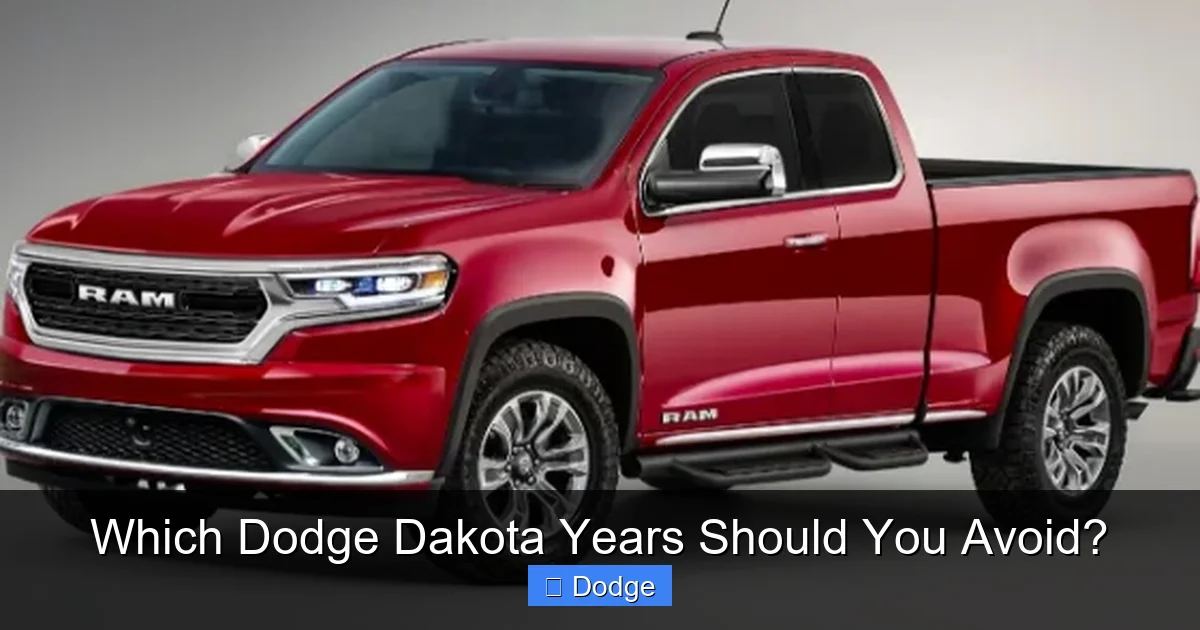
Visual guide about Which Dodge Dakota Years Should You Avoid?
Image source: dashboardwarning.com
If you’re shopping for a used Dakota, the 2000–2004 model years should raise a big red flag. These trucks represent the tail end of the second generation and are widely regarded as some of the least reliable Dakotas ever made. While they look good on the outside, they’re often plagued by a trio of serious issues: transmission failures, engine oil leaks, and electrical problems tied to the Totally Integrated Power Module (TIPM).
Let’s break down why these years are so problematic.
Transmission Troubles: The 42RLE Nightmare
One of the biggest headaches for 2000–2004 Dakota owners is the 4-speed automatic 42RLE transmission. This unit was used across most models and is notorious for premature failure. Common symptoms include harsh shifting, slipping gears, delayed engagement, and eventually, complete transmission failure.
The root cause? Poor design and inadequate cooling. The 42RLE wasn’t built to handle the torque of the V8 engines, especially when towing or hauling heavy loads. Over time, the clutch packs wear out, the valve body fails, and the torque converter can overheat. Many owners report needing a full transmission rebuild or replacement by 100,000 miles—sometimes even sooner.
For example, a 2002 Dakota with 90,000 miles might seem like a good deal, but if the transmission hasn’t been rebuilt, you could be looking at a $2,500 repair bill within the first year. And that’s if you’re lucky. Some owners have reported multiple transmission failures in the same truck.
Engine Oil Leaks: The 3.9L and 5.9L Achilles’ Heel
Another common issue in these years is oil leaks, particularly from the 3.9L V6 and 5.9L V8 engines. The problem often stems from degraded gaskets and seals, especially the valve cover gaskets, oil pan gasket, and rear main seal. Over time, heat and age cause these components to harden and crack, leading to slow but persistent oil leaks.
While a small leak might not seem like a big deal, it can lead to low oil levels, engine damage, and even fire hazards if oil drips onto hot exhaust components. Plus, fixing these leaks isn’t cheap. Replacing the rear main seal, for instance, requires dropping the transmission—a job that can cost $1,000 or more in labor alone.
Many owners also report oil consumption issues, where the engine burns oil between changes. This is often due to worn piston rings or valve seals, which are expensive to repair. If you’re test-driving a 2003 Dakota and notice a burning oil smell or oil spots in the driveway, walk away.
The TIPM Nightmare: Electrical Chaos
Perhaps the most infamous issue with 2000–2004 Dakotas is the Totally Integrated Power Module (TIPM). This small black box under the hood controls everything from the fuel pump and starter to the windshield wipers and door locks. When it fails—and it often does—your truck can become completely undriveable.
Symptoms of a failing TIPM include:
– Engine won’t start (even with a good battery and starter)
– Random stalling while driving
– Wipers turning on by themselves
– Doors locking/unlocking without input
– Lights flickering or staying on
The TIPM is sealed and not serviceable, so when it fails, the only fix is replacement—at a cost of $800 to $1,200. And even then, many owners report that new TIPMs fail within a few years. Some have resorted to aftermarket bypass modules or manual overrides, but these are temporary fixes at best.
The problem is so widespread that class-action lawsuits were filed against Chrysler, and the TIPM issue has become a defining flaw of this era. If you’re considering a 2001 Dakota, ask the owner if the TIPM has been replaced. If not, factor in the cost—and the risk.
2005–2006: Slight Improvements, But Still Risky
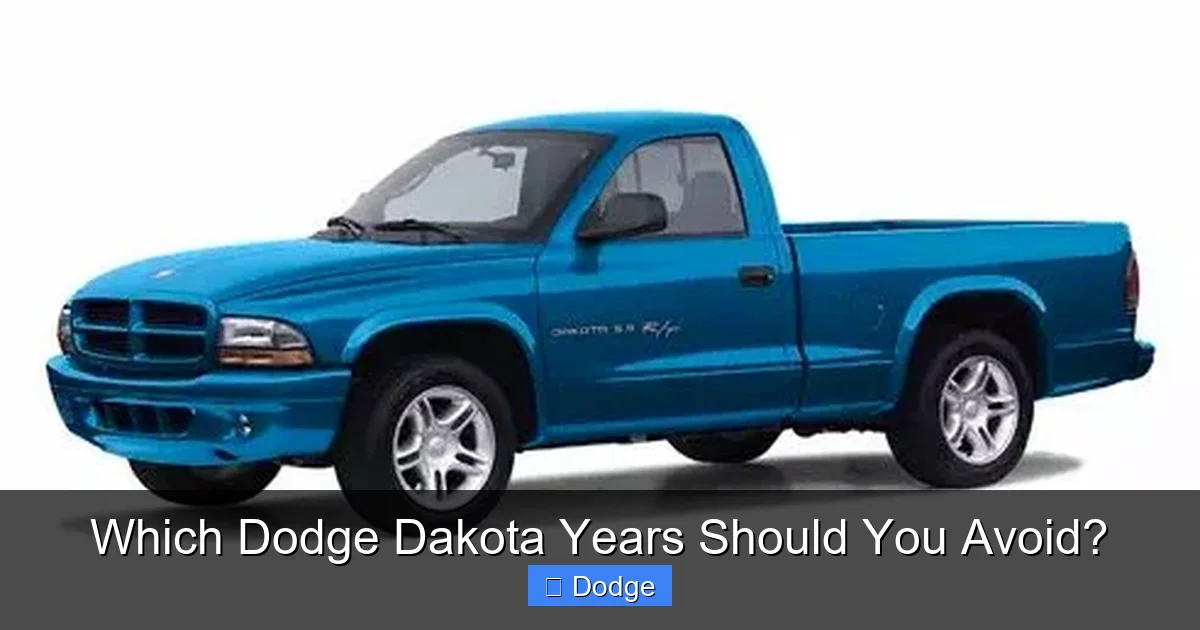
Visual guide about Which Dodge Dakota Years Should You Avoid?
Image source: dashboardwarning.com
The 2005 model year marked the start of the third-generation Dakota, and with it came a fresh start. The truck received a complete redesign: new body, new frame, new interior, and new engines. On paper, it was a major upgrade. In practice, it was a mixed bag.
While the 2005–2006 Dakotas are generally more reliable than their predecessors, they’re not without their own set of problems—especially when it comes to the TIPM and electrical systems.
Better Build, But TIPM Still a Threat
The third-gen Dakota introduced a stronger fully boxed frame, improved suspension, and better crash protection. The interior was more modern, with better materials and more storage. Under the hood, the new 3.7L V6 and 4.7L V8 engines offered more power and better fuel economy.
But the TIPM issue didn’t disappear—it just evolved. The 2005–2006 models still used a similar TIPM design, and failures remained common. Owners report the same symptoms: no-start conditions, random stalling, and erratic electrical behavior.
The difference is that the newer TIPMs are slightly more reliable, and some were updated under technical service bulletins (TSBs). Still, the risk is high. A 2006 Dakota with 120,000 miles might have a 30–40% chance of needing a TIPM replacement within the next few years.
Electrical Gremlins and Sensor Failures
Beyond the TIPM, 2005–2006 Dakotas are prone to other electrical issues. Common problems include:
– Faulty crankshaft position sensors (causing no-start or stalling)
– Malfunctioning camshaft position sensors
– Erratic instrument cluster behavior
– Intermittent ABS or brake warning lights
These issues are often intermittent and hard to diagnose. A mechanic might not find anything wrong during a quick scan, but the problem returns weeks later. This unpredictability makes these years risky for buyers who need a dependable daily driver.
Transmission Upgrades—But Not Perfect
The 2005–2006 Dakotas came with an updated 4-speed automatic (still the 42RLE) or an optional 5-speed automatic on V8 models. The 5-speed was a welcome improvement, offering better shift quality and durability. But the 4-speed still suffered from the same overheating and wear issues as earlier models.
If you’re looking at a V6 model from this era, be extra cautious. The 3.7L engine is adequate for light duty, but it’s not known for longevity. Many owners report timing chain issues, oil consumption, and head gasket failures by 150,000 miles.
2007–2009: The Sweet Spot for Reliability
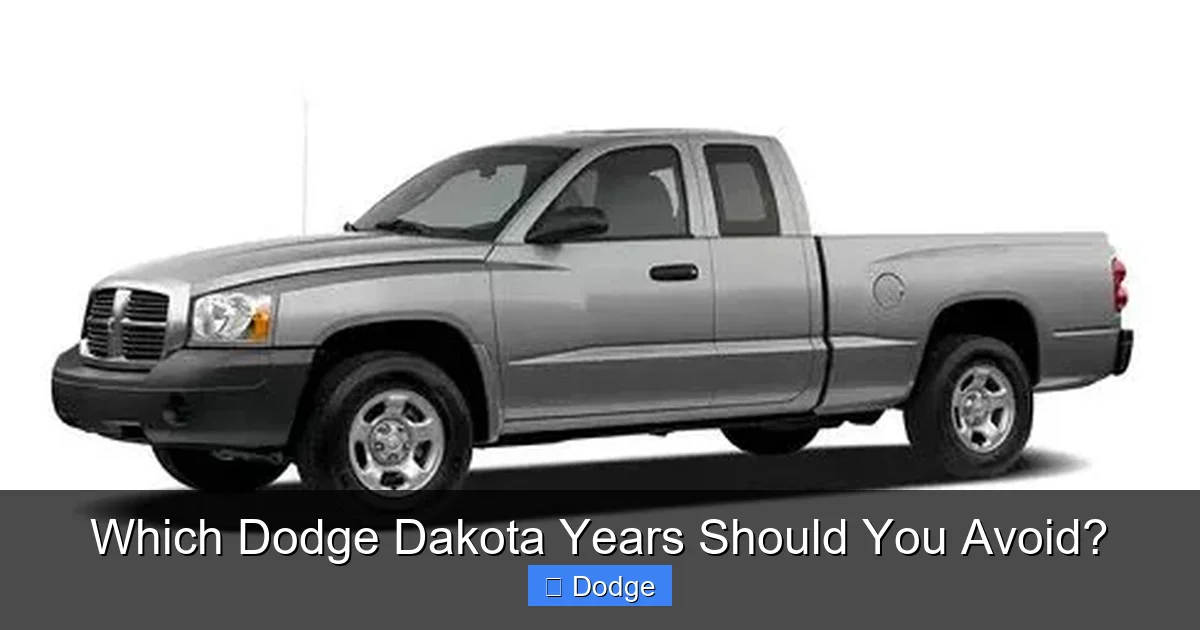
Visual guide about Which Dodge Dakota Years Should You Avoid?
Image source: dashboardwarning.com
If you’re serious about buying a used Dakota, the 2007–2009 model years are your best bet. These trucks represent the peak of Dakota reliability, with fewer major issues, better build quality, and stronger resale value.
Refined Engines and Smoother Transmissions
By 2007, Dodge had ironed out many of the early third-gen kinks. The 4.7L V8 became the standard engine on most trims, offering 310 horsepower and 330 lb-ft of torque—plenty for towing and hauling. The 3.7L V6 remained available but is best avoided if you plan to use the truck for work or recreation.
The 5-speed automatic transmission (standard on V8 models) was more robust and better suited to the engine’s power. While not perfect, it’s far more reliable than the 4-speed units in earlier years.
Improved Electrical System
The TIPM was still present, but Dodge made subtle improvements to its design and software. Failures still occur, but they’re less frequent than in 2005–2006 models. Many 2008 and 2009 Dakotas have gone 150,000+ miles without major electrical issues.
Additionally, the overall electrical architecture was more stable. Owners report fewer random glitches, better sensor reliability, and fewer false warning lights.
Better Rust Protection
One often-overlooked advantage of the 2007–2009 Dakotas is improved rust resistance. Dodge applied better undercoating and used more galvanized steel in critical areas. While no truck is immune to rust—especially in snowy, salt-heavy regions—these years hold up better than earlier models.
If you’re buying in the Midwest or Northeast, look for a truck that’s been garage-kept or regularly washed underneath. A little prevention goes a long way.
2010–2011: The Final Years – Proceed with Caution
The Dakota was discontinued after 2011, and the final two model years saw minimal changes. While they benefit from the refinements of the 2007–2009 models, they’re not without concerns—mainly due to age and limited parts availability.
Fewer Units, Higher Mileage
By 2010, Dakota sales had declined significantly. Most trucks on the road today have high mileage—150,000 miles or more. While that’s not necessarily a dealbreaker, it means more wear and tear on critical components like the transmission, suspension, and engine.
Limited Aftermarket Support
As the Dakota aged, parts availability became an issue. While common components like brakes and filters are still easy to find, specialized parts like TIPMs, control modules, and body panels can be hard to source—and expensive when you do.
Still a Solid Choice—If Inspected
That said, a well-maintained 2010 or 2011 Dakota can be a great buy. Look for one with service records, low mileage, and no signs of abuse. Avoid trucks that have been used for heavy towing or off-roading unless they’ve been properly maintained.
How to Spot a Good Dakota: Inspection Tips
No matter which year you’re considering, a thorough inspection is essential. Here’s what to check:
Check for Rust
Inspect the frame, wheel wells, rocker panels, and undercarriage. Surface rust is common, but structural rust is a dealbreaker.
Test the TIPM
Try starting the truck multiple times. Listen for unusual clicks or delays. Check if all electrical systems work—wipers, lights, locks, etc.
Listen to the Transmission
During a test drive, pay attention to shifting. Hard shifts, slipping, or delays are red flags.
Look for Oil Leaks
Check under the engine and transmission. Oil spots or wetness indicate leaks that could cost hundreds to fix.
Review Maintenance Records
A truck with regular oil changes, fluid flushes, and documented repairs is always a better bet.
Conclusion: Make a Smart Choice
The Dodge Dakota is a capable and stylish mid-size truck, but not all model years are worth your money. The 2000–2004 Dakotas are best avoided due to transmission, engine, and TIPM failures. The 2005–2006 models are better but still risky. Your best bet? A 2007–2009 Dakota with a V8 engine and clean history.
Take your time, do your research, and always get a pre-purchase inspection. With the right truck, the Dakota can be a reliable, fun, and practical vehicle for years to come.
Frequently Asked Questions
What is the most reliable Dodge Dakota year?
The 2007–2009 model years are considered the most reliable, with fewer mechanical and electrical issues. These trucks benefit from design improvements and stronger build quality.
Why are 2000–2004 Dakotas so problematic?
These years suffer from chronic transmission failures, engine oil leaks, and widespread TIPM malfunctions. The 42RLE transmission and faulty electrical module make them expensive to maintain.
Can a Dodge Dakota with a bad TIPM be driven?
Sometimes, but it’s unreliable. A failing TIPM can cause sudden stalling, no-start conditions, and erratic electrical behavior, making the truck unsafe to drive long-term.
Is the 3.7L V6 engine in the Dakota reliable?
The 3.7L V6 is adequate but not known for longevity. It’s prone to oil consumption, timing chain issues, and head gasket failures. The 4.7L V8 is a better choice for durability.
How much does it cost to replace a TIPM?
A new TIPM costs $800–$1,200, including parts and labor. Aftermarket or refurbished units may be cheaper but come with no guarantee.
Should I buy a high-mileage Dodge Dakota?
Only if it has a clean maintenance record and passes a pre-purchase inspection. High mileage isn’t a dealbreaker if the truck has been well cared for.
