
How Many Spark Plugs Are in a V6 Dodge Charger?

The V6 Dodge Charger uses six spark plugs—one for each cylinder. This setup ensures efficient combustion, smooth engine operation, and optimal fuel economy. Regular inspection and replacement of these spark plugs are essential for maintaining peak performance and avoiding costly repairs down the road.
If you’re a proud owner of a V6 Dodge Charger—or considering one—you’ve probably wondered about the inner workings of its engine. One of the most common questions we hear is: *How many spark plugs are in a V6 Dodge Charger?* The answer is straightforward, but the story behind it is anything but simple. Spark plugs may seem like small, insignificant components, but they play a massive role in your car’s performance, fuel efficiency, and overall reliability.
Understanding how many spark plugs your Charger has—and why that number matters—can help you maintain your vehicle better, avoid unexpected breakdowns, and even improve your driving experience. Whether you’re a weekend mechanic or just someone who likes to know what’s under the hood, this guide will walk you through everything you need to know about spark plugs in the V6 Dodge Charger. From the basics of engine design to step-by-step maintenance tips, we’ve got you covered.
Let’s start with the big picture. The Dodge Charger is a powerful, stylish sedan that has evolved significantly over the years. While many people associate the Charger with its roaring V8 engines, the V6 version offers a great balance of performance, fuel economy, and affordability. Under the hood of most modern V6 Chargers, you’ll find a 3.6-liter Pentastar V6 engine—a reliable and efficient powerplant developed by Chrysler. This engine has become a staple in many Dodge, Jeep, and Chrysler vehicles, and it’s known for its smooth operation and durability.
Now, back to the spark plugs. In a V6 engine, “V6” means there are six cylinders arranged in a “V” shape—three on each side. Each cylinder requires one spark plug to ignite the air-fuel mixture during the combustion process. So, logically, a V6 engine needs six spark plugs. This is true for the Dodge Charger V6 across multiple model years, from the LX platform introduced in 2006 to the current models rolling off the assembly line today.
But knowing the number is just the beginning. The real value comes from understanding how spark plugs function, when they need to be replaced, and how to do it properly. In this article, we’ll dive deep into the world of spark plugs in the V6 Dodge Charger. We’ll explore the engine layout, explain why spark plugs are so important, discuss maintenance best practices, and even walk you through a basic replacement procedure. By the end, you’ll not only know how many spark plugs your Charger has—you’ll know how to keep them in top shape for years to come.
Key Takeaways
- Six spark plugs total: The V6 engine in the Dodge Charger has one spark plug per cylinder, totaling six.
- Standard across model years: Most V6 Charger models from 2006 to present use six spark plugs, with few exceptions.
- Platinum or iridium recommended: Modern V6 Chargers benefit from long-life spark plugs made from premium materials.
- Replacement interval varies: Typically every 60,000 to 100,000 miles, depending on driving habits and plug type.
- DIY-friendly job: With basic tools, many owners can replace spark plugs themselves to save on labor costs.
- Signs of wear matter: Misfires, rough idling, or poor fuel economy often point to failing spark plugs.
- Use OEM or equivalent parts: Stick to manufacturer-recommended spark plugs for best performance and longevity.
📑 Table of Contents
Understanding the V6 Engine in the Dodge Charger
Before we get into the specifics of spark plugs, it helps to understand the engine they’re part of. The V6 engine in the Dodge Charger is more than just a collection of parts—it’s a finely tuned machine designed for performance and efficiency. Let’s break it down.
What Is a V6 Engine?
A V6 engine is a six-cylinder internal combustion engine with the cylinders arranged in two banks of three, forming a “V” shape when viewed from the front. This design allows for a compact engine block that fits well in front-wheel-drive and rear-wheel-drive vehicles alike. The “V” configuration also helps balance the engine, reducing vibrations and improving smoothness compared to inline-six engines.
In the case of the Dodge Charger, the V6 engine is typically the 3.6-liter Pentastar V6. Introduced in 2011, this engine replaced older V6 options and quickly became a favorite among drivers for its reliability and power output—around 292 to 300 horsepower, depending on the model year and tuning. It’s used in everything from the Charger and Challenger to the Jeep Grand Cherokee and Ram 1500.
How the V6 Layout Affects Spark Plug Placement
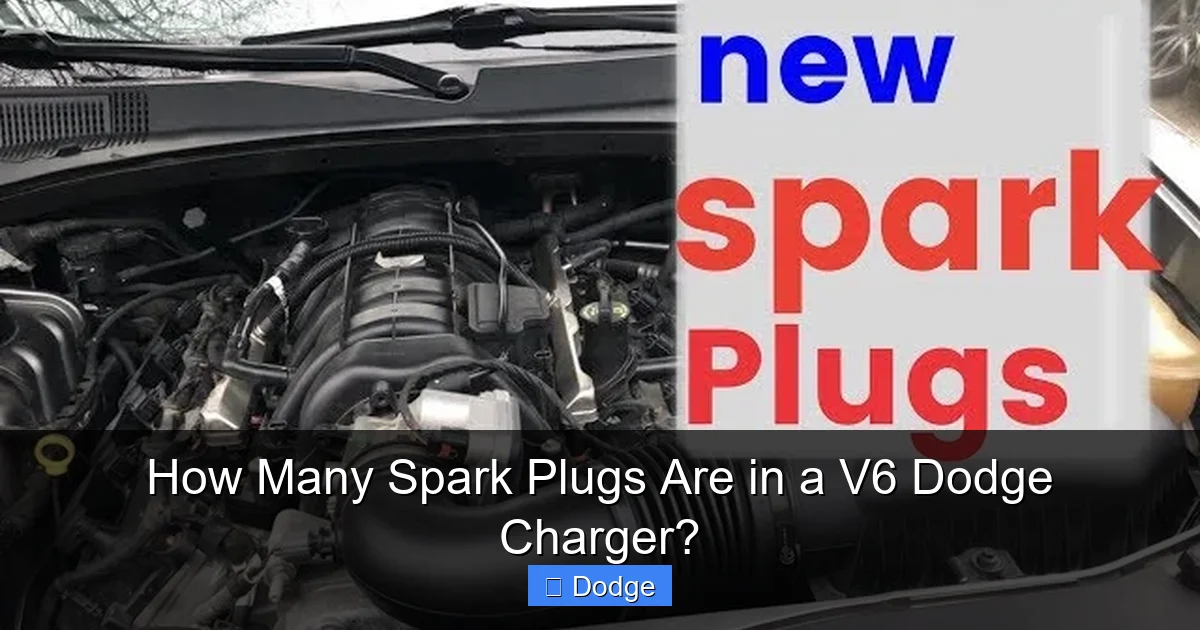
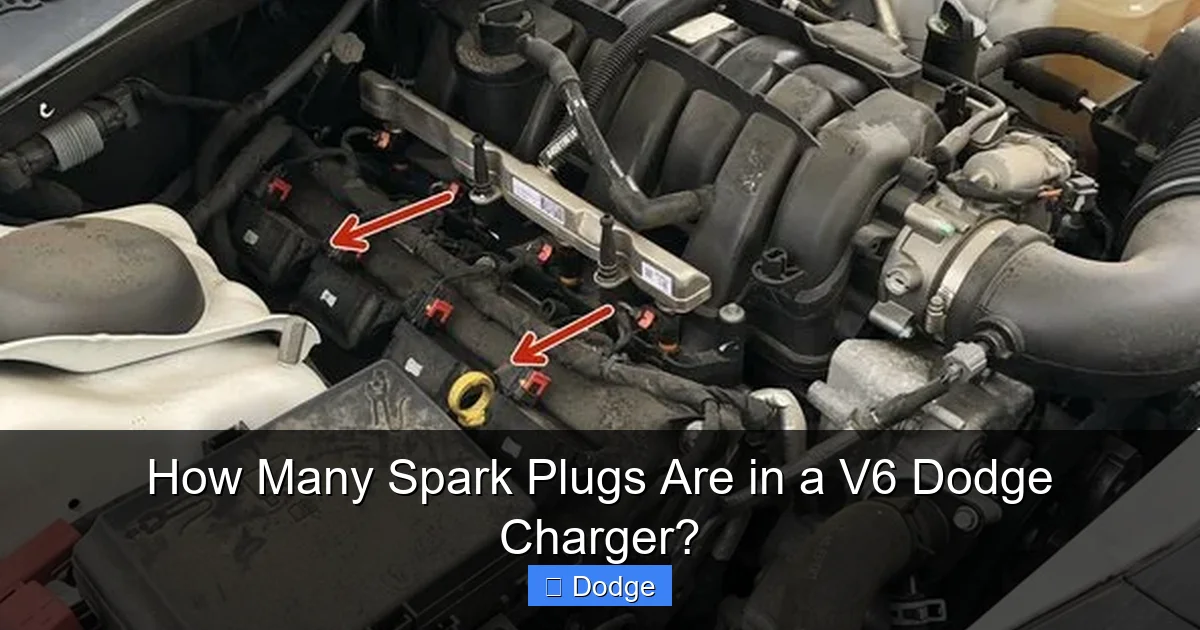
Because the V6 has six cylinders, it requires six spark plugs—one for each cylinder. These spark plugs are strategically placed at the top of each cylinder head, where they can deliver a precise spark at the right moment in the combustion cycle. In the Charger’s Pentastar V6, the spark plugs are located on the top of the engine, accessible once the engine cover and ignition coils are removed.
The “V” shape means the spark plugs are arranged in two rows of three, mirroring the cylinder banks. This layout can make access a bit trickier than in a straight-six or inline-four engine, but with the right tools and a little patience, it’s manageable for most DIYers.
Why the Number of Spark Plugs Matters
You might be thinking, “So what? It’s just six spark plugs.” But here’s the thing: each spark plug plays a critical role in engine performance. If even one fails, it can cause a misfire, reduce power, increase emissions, and hurt fuel economy. That’s why it’s essential to maintain all six spark plugs in good condition.
Think of spark plugs like the sparklers at a birthday party. If one doesn’t light, the show isn’t ruined—but if several fail, the whole celebration falls flat. The same logic applies to your engine. All six spark plugs need to fire consistently and at the right time for the engine to run smoothly.
The Role of Spark Plugs in Engine Performance
Visual guide about How Many Spark Plugs Are in a V6 Dodge Charger?
Image source: img.youtube.com
Now that we know how many spark plugs are in a V6 Dodge Charger, let’s talk about what they actually do. Spark plugs are small but mighty components that are essential to the combustion process. Without them, your engine simply wouldn’t run.
How Spark Plugs Work
Inside each cylinder, a mixture of air and fuel is compressed by the piston. At the peak of compression, the spark plug delivers a high-voltage electrical spark that ignites the mixture. This controlled explosion pushes the piston down, turning the crankshaft and ultimately powering your car.
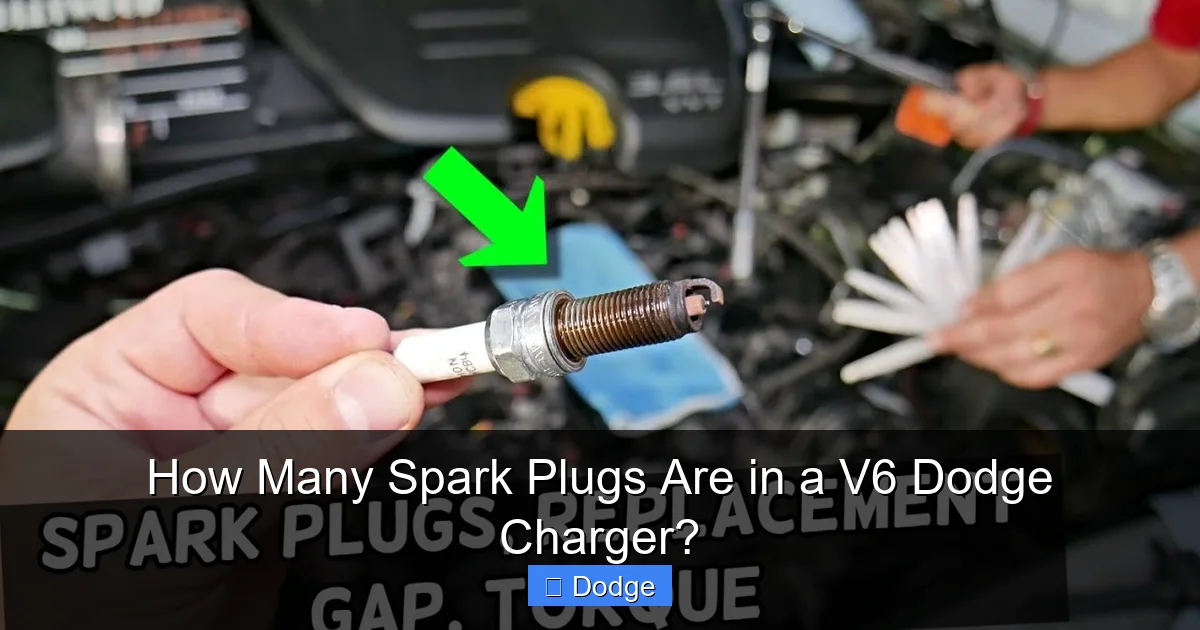
The spark plug sits at the top of the cylinder, threaded into the cylinder head. It has a central electrode and a ground electrode, with a small gap between them. When the ignition system sends a high-voltage current to the spark plug, it jumps the gap, creating a spark. This spark must be timed perfectly—too early or too late, and the engine won’t run efficiently.
Impact on Fuel Efficiency and Power
Worn or faulty spark plugs can’t deliver a strong, consistent spark. This leads to incomplete combustion, which means wasted fuel and reduced power. You might notice your Charger feeling sluggish, especially during acceleration, or your gas mileage dropping unexpectedly.
For example, if one spark plug is fouled or has a wide gap, that cylinder may not fire properly. The engine control unit (ECU) might compensate by reducing fuel to that cylinder, but the overall result is a loss of performance. In extreme cases, a misfiring cylinder can cause the engine to vibrate or even trigger the check engine light.
Emissions and Environmental Impact
Modern vehicles are designed to meet strict emissions standards, and spark plugs play a key role in that. Efficient combustion reduces the amount of unburned fuel and harmful gases released into the atmosphere. When spark plugs are worn, combustion becomes less efficient, leading to higher emissions of carbon monoxide, hydrocarbons, and nitrogen oxides.
Regular spark plug maintenance helps keep your Charger running clean and compliant with environmental regulations. It’s not just good for your car—it’s good for the planet.
Spark Plug Types and Recommendations for the V6 Charger
Visual guide about How Many Spark Plugs Are in a V6 Dodge Charger?
Image source: guide-images.cdn.ifixit.com
Not all spark plugs are created equal. The type of spark plug you use can affect performance, longevity, and even fuel economy. Let’s look at the options available for the V6 Dodge Charger.
Copper, Platinum, and Iridium Spark Plugs
There are three main types of spark plugs: copper, platinum, and iridium. Each has its own advantages and ideal use cases.
– **Copper spark plugs** are the most basic and affordable. They conduct electricity well but wear out faster—typically lasting 20,000 to 40,000 miles. They’re often used in older vehicles or as budget replacements.
– **Platinum spark plugs** have a platinum tip on the center electrode, which resists wear and corrosion. They last longer than copper—usually 60,000 to 100,000 miles—and provide more consistent performance.
– **Iridium spark plugs** are the top of the line. Iridium is harder and more durable than platinum, allowing for a finer electrode design that improves spark efficiency. These can last up to 100,000 miles or more and are often recommended for modern engines like the Pentastar V6.
OEM Recommendations
Dodge recommends using spark plugs that meet original equipment manufacturer (OEM) specifications. For the 3.6L V6 Charger, that typically means iridium or double-platinum plugs with a specific heat range and gap size.
For example, the factory-installed spark plugs in many 2011–2023 V6 Chargers are NGK Iridium IX or equivalent. These are designed to last the life of the vehicle under normal driving conditions—often up to 100,000 miles. Using the wrong type of spark plug can lead to poor performance, increased wear, or even engine damage.
Aftermarket Options
While OEM parts are always a safe bet, there are high-quality aftermarket spark plugs that offer similar or even better performance. Brands like Bosch, Denso, and Autolite offer iridium and platinum plugs compatible with the V6 Charger. Just make sure to check compatibility and follow the manufacturer’s gap specifications.
One tip: avoid cheap, low-quality spark plugs. They may save you a few dollars upfront, but they can cost you more in the long run through reduced fuel economy, frequent replacements, and potential engine issues.
When and How to Replace Spark Plugs in a V6 Charger
Visual guide about How Many Spark Plugs Are in a V6 Dodge Charger?
Image source: i.ytimg.com
Knowing how many spark plugs are in your V6 Dodge Charger is one thing—knowing when and how to replace them is another. Let’s walk through the process.
Replacement Interval
The recommended spark plug replacement interval for the V6 Charger varies by model year and driving conditions, but here’s a general guideline:
– **Copper plugs:** Every 30,000 to 40,000 miles
– **Platinum plugs:** Every 60,000 to 80,000 miles
– **Iridium plugs:** Every 80,000 to 100,000 miles
If you drive in severe conditions—frequent short trips, extreme temperatures, heavy traffic, or towing—you may need to replace them sooner. Always consult your owner’s manual for the manufacturer’s recommendation.
Signs You Need New Spark Plugs
Don’t wait until your spark plugs fail completely. Watch for these warning signs:
– Rough idling or engine hesitation
– Difficulty starting the engine
– Reduced fuel economy
– Engine misfires or stumbling during acceleration
– Check engine light with codes like P0300 (random misfire) or P0301–P0306 (cylinder-specific misfires)
If you notice any of these symptoms, it’s time to inspect or replace your spark plugs.
DIY Replacement: Step-by-Step Overview
Replacing spark plugs in a V6 Charger is a manageable DIY job if you have basic tools and some mechanical confidence. Here’s a simplified overview:
1. **Gather tools:** You’ll need a spark plug socket (usually 5/8” or 13/16”), ratchet, extension, torque wrench, and dielectric grease.
2. **Let the engine cool:** Never work on a hot engine.
3. **Remove the engine cover:** Unclip or unscrew the plastic cover on top of the engine.
4. **Disconnect ignition coils:** Unplug the electrical connectors and remove the coil bolts. Gently pull the coils out.
5. **Remove old spark plugs:** Use the spark plug socket to unscrew each plug. Note their condition—fouling, wear, or damage can indicate other issues.
6. **Install new spark plugs:** Check the gap (if adjustable), apply a small amount of anti-seize to the threads (optional), and hand-tighten before torquing to spec.
7. **Reinstall coils and cover:** Reattach the ignition coils, reconnect the electrical connectors, and replace the engine cover.
Always refer to a repair manual or online guide for your specific model year to ensure proper torque specs and procedures.
Common Myths and Misconceptions About Spark Plugs
There’s a lot of misinformation out there about spark plugs. Let’s clear up some common myths.
Myth: You Only Need to Replace Faulty Spark Plugs
Some people think they can replace just the spark plug that’s causing a problem. But spark plugs wear at similar rates, so if one is failing, the others are likely close behind. Replacing all six at once ensures balanced performance and prevents future issues.
Myth: All Spark Plugs Are the Same
While they may look similar, spark plugs vary in material, heat range, and design. Using the wrong type can lead to poor performance or engine damage. Always use the correct specification for your Charger.
Myth: Spark Plugs Last Forever
Even iridium plugs don’t last forever. Over time, electrodes wear down, gaps widen, and performance declines. Regular inspection and replacement are essential.
Conclusion
So, how many spark plugs are in a V6 Dodge Charger? The answer is six—one for each cylinder in the engine. But that simple number opens the door to a deeper understanding of your vehicle’s performance, maintenance needs, and longevity.
The V6 Charger’s 3.6L Pentastar engine relies on these six spark plugs to deliver smooth, efficient power. Whether you’re cruising down the highway or navigating city streets, well-maintained spark plugs ensure your engine runs at its best. By choosing the right type, replacing them at the right interval, and paying attention to warning signs, you can keep your Charger running strong for years to come.
Don’t overlook these small but critical components. A little attention to your spark plugs can go a long way in preventing breakdowns, improving fuel economy, and maintaining the thrilling driving experience the Dodge Charger is known for.
Frequently Asked Questions
How many spark plugs does a V6 Dodge Charger have?
The V6 Dodge Charger has six spark plugs—one for each of its six cylinders. This is standard across all V6 models from 2006 to the present.
Can I replace just one spark plug if it fails?
It’s not recommended. Spark plugs wear at similar rates, so replacing all six at once ensures balanced performance and prevents future misfires.
What type of spark plugs should I use in my V6 Charger?
Use iridium or double-platinum spark plugs that meet OEM specifications, such as NGK Iridium IX or equivalent. These offer the best longevity and performance.
How often should I replace spark plugs in my V6 Charger?
Typically every 80,000 to 100,000 miles for iridium plugs, or as specified in your owner’s manual. Severe driving conditions may require earlier replacement.
Can I replace spark plugs myself?
Yes, with basic tools and some mechanical knowledge, replacing spark plugs in a V6 Charger is a DIY-friendly job. Just follow proper procedures and torque specs.
What happens if I ignore worn spark plugs?
Ignoring worn spark plugs can lead to misfires, reduced fuel economy, poor acceleration, increased emissions, and potentially costly engine repairs.
