
How Many Pistons Does a Dodge Charger Sxt Have?

The Dodge Charger SXT is powered by a 3.6L Pentastar V6 engine, which features six pistons—one for each cylinder. This naturally aspirated engine delivers a balance of efficiency and performance, making the Charger SXT a standout in the full-size sedan category.
Key Takeaways
- Six Pistons in Total: The Dodge Charger SXT uses a 3.6-liter V6 engine with six pistons, one per cylinder, arranged in a V configuration.
- V6 Engine Layout: The V6 design offers a compact, efficient layout that balances power and fuel economy for daily driving and highway cruising.
- 292–300 Horsepower Output: Depending on the model year, the engine produces between 292 and 300 horsepower, providing strong acceleration and smooth performance.
- Sequential Fuel Injection: Advanced fuel delivery ensures each piston receives the optimal air-fuel mixture for efficient combustion and reduced emissions.
- Durability and Reliability: The Pentastar V6 is known for its long service life and low maintenance when properly cared for.
- Upgradable Platform: While the SXT is the base model, its engine bay and chassis support future performance upgrades like cold air intakes or ECU tuning.
- Front-Wheel Drive Standard: Most SXT models come with front-wheel drive, though all-wheel drive is available for improved traction in adverse weather.
📑 Table of Contents
How Many Pistons Does a Dodge Charger SXT Have?
If you’re considering buying a Dodge Charger SXT or just curious about what’s under the hood, one of the first questions that might pop into your mind is: *How many pistons does a Dodge Charger SXT have?* The answer is straightforward—**six pistons**. But understanding why that number matters, how those pistons work, and what they contribute to the car’s overall performance opens up a much deeper appreciation for this American sedan.
The Dodge Charger SXT is equipped with a 3.6-liter Pentastar V6 engine. This engine is built with six cylinders arranged in a “V” shape—three on each side—and each cylinder contains one piston. So, six cylinders mean six pistons. These pistons are the heart of the engine’s combustion process, moving up and down inside the cylinders to convert fuel into motion. While the SXT may not be the high-octane beast that the Hellcat or Scat Pack variants are, it still packs a respectable punch for a daily driver, offering a smooth blend of power, efficiency, and reliability.
What makes the Charger SXT appealing isn’t just its engine specs—it’s how those specs translate into real-world driving. Whether you’re commuting to work, taking a road trip, or just enjoying a weekend drive, the six-piston V6 delivers consistent performance without guzzling gas like a V8. And because the engine is well-engineered and widely used across the Chrysler, Dodge, and Jeep lineup, parts and service are easy to find, making ownership hassle-free.
Understanding the 3.6L Pentastar V6 Engine

Visual guide about How Many Pistons Does a Dodge Charger Sxt Have?
Image source: rvandplaya.com
Engine Design and Configuration
The 3.6-liter Pentastar V6 is one of the most popular engines in the FCA (now Stellantis) family. Introduced in 2011, it was designed to replace older, less efficient V6 engines and has since become a staple in vehicles ranging from the Jeep Grand Cherokee to the Ram 1500. In the Dodge Charger SXT, this engine is tuned for a balance of power and fuel economy, making it ideal for drivers who want performance without the high cost of ownership associated with larger engines.
The “V6” designation means the engine has six cylinders arranged in two banks of three, forming a “V” shape when viewed from the front. This design is more compact than an inline-six and offers better balance and smoother operation than a four-cylinder. Each cylinder houses a single piston, so the total number of pistons is six. These pistons are connected to the crankshaft via connecting rods, and their up-and-down motion is what ultimately turns the wheels.
Performance Specifications
The 3.6L V6 in the Charger SXT produces between 292 and 300 horsepower, depending on the model year and any optional equipment. Torque output is around 260 lb-ft, which provides strong low-end grunt for quick acceleration from a stop. While it won’t win any drag races against a Charger R/T or Hellcat, it’s more than capable of merging onto highways, passing slower traffic, and handling daily driving with ease.
One of the strengths of the Pentastar V6 is its responsiveness. Thanks to features like variable valve timing (VVT), the engine can adjust when the intake and exhaust valves open and close, optimizing performance across the RPM range. This means you get better fuel economy at cruising speeds and more power when you need it. The engine also uses sequential multi-port fuel injection, which delivers fuel to each cylinder at the right time and in the right amount, ensuring clean, efficient combustion.
Fuel Efficiency and Real-World MPG
Fuel economy is a major selling point for the Charger SXT. With the 3.6L V6, you can expect around 19 miles per gallon in the city and 30 mpg on the highway, depending on driving conditions and whether you have front-wheel drive (FWD) or all-wheel drive (AWD). These numbers are impressive for a full-size sedan that weighs over 4,000 pounds and offers this level of performance.
For comparison, the V8-powered Charger R/T gets around 16 mpg city and 25 mpg highway—noticeably less efficient. So if you’re looking for a Charger that doesn’t break the bank at the pump, the SXT is a smart choice. The six-piston engine strikes a great balance, giving you enough power to feel confident on the road without sacrificing too much fuel economy.
How Pistons Work in the Charger SXT Engine

Visual guide about How Many Pistons Does a Dodge Charger Sxt Have?
Image source: digitaltrends.com
The Role of Pistons in Combustion
To truly understand why the Dodge Charger SXT has six pistons, it helps to know what pistons actually do. In any internal combustion engine, pistons are the components that move up and down inside the cylinders. They’re connected to the crankshaft via connecting rods, and their motion is what converts the energy from burning fuel into rotational force that turns the wheels.
Here’s how it works: when you press the accelerator, fuel and air are injected into the cylinder. A spark plug ignites the mixture, causing a small explosion that forces the piston down. This downward motion turns the crankshaft. As the crankshaft rotates, it pushes the next piston up, expelling the exhaust gases. This cycle repeats hundreds of times per minute, creating the continuous motion needed to move the car.
In the Charger SXT’s V6 engine, all six pistons work in harmony. The firing order is carefully timed so that the power strokes are evenly spaced, resulting in smooth engine operation. This reduces vibration and noise, making the driving experience more comfortable—especially important in a luxury-oriented sedan like the Charger.
Piston Materials and Durability
The pistons in the 3.6L Pentastar V6 are typically made from aluminum alloy, which is lightweight yet strong enough to withstand high temperatures and pressures. Aluminum also helps with heat dissipation, keeping the engine cooler under load. Each piston is precision-machined to fit snugly inside its cylinder, with piston rings that create a tight seal to prevent combustion gases from escaping.
Over time, pistons can wear down due to heat, friction, and carbon buildup. However, the Pentastar V6 is known for its durability. With regular oil changes, proper maintenance, and quality fuel, the pistons and entire engine can last well over 200,000 miles. Many owners report even higher mileage with no major engine issues, which speaks to the reliability of the design.
Common Piston-Related Issues (and How to Avoid Them)
While the Charger SXT’s engine is reliable, no mechanical system is immune to problems. One issue that can affect pistons is carbon buildup, especially if the car is driven mostly in stop-and-go traffic or with low-quality fuel. Over time, carbon deposits can accumulate on the piston tops and in the combustion chamber, leading to reduced performance, knocking, or poor fuel economy.
Another potential issue is oil consumption. Some early Pentastar V6 engines had a tendency to burn a small amount of oil between changes. While this isn’t usually a sign of piston failure, it can lead to low oil levels, which increases wear on moving parts, including pistons. To avoid this, check your oil level regularly and use the recommended oil grade (usually 5W-20 or 0W-20 synthetic).
Using high-quality fuel and changing the oil every 5,000 to 7,500 miles (or as recommended in the owner’s manual) can go a long way in preserving piston health. Also, avoid “revving” the engine when it’s cold, as this can cause unnecessary stress on the pistons and cylinder walls.
Comparing the Charger SXT to Other Charger Models
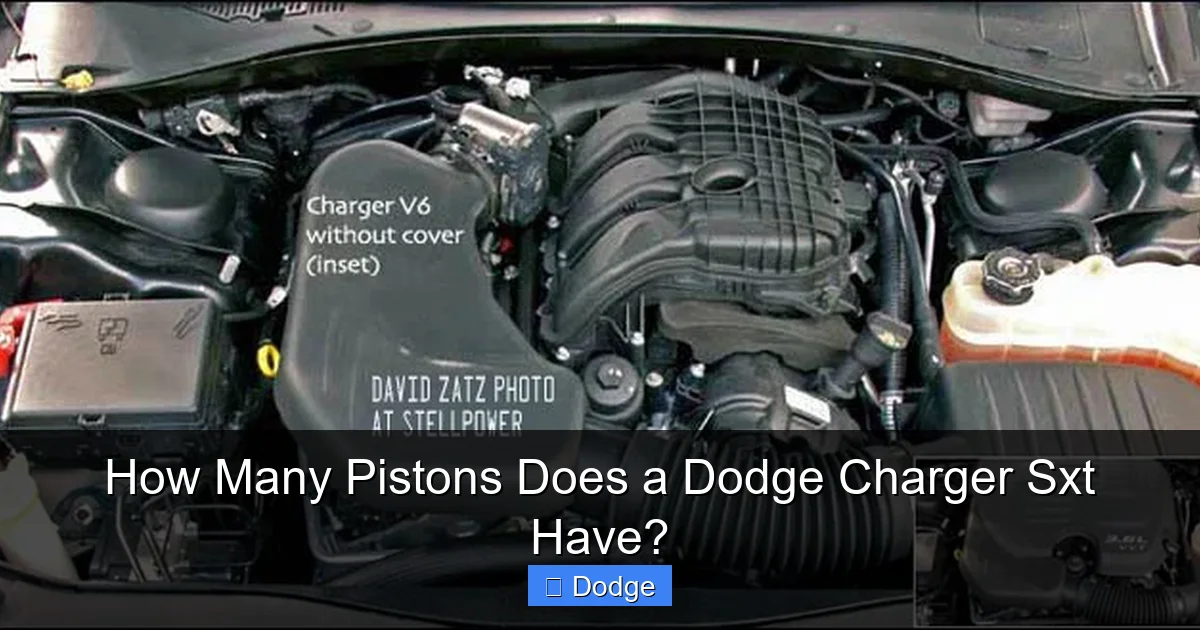
Visual guide about How Many Pistons Does a Dodge Charger Sxt Have?
Image source: stellpower.com
V6 vs. V8: Power and Performance Differences
Now that we’ve established that the Charger SXT has six pistons, it’s worth comparing it to other models in the Charger lineup, especially those with V8 engines. The Charger R/T, for example, comes with a 5.7L HEMI V8 that has eight pistons—two more than the SXT. This engine produces around 370 horsepower, significantly more than the SXT’s 292–300 hp.
The extra pistons in the V8 allow for larger displacement and more power, but they also come with trade-offs. The V8 is heavier, less fuel-efficient, and more expensive to maintain. It also requires premium fuel in some models, adding to the cost of ownership. For many drivers, the V6 in the SXT offers the perfect middle ground—enough power for spirited driving, but without the fuel and maintenance costs of a V8.
Charger SXT vs. Charger GT and SXT AWD
The Charger GT is essentially a more performance-oriented version of the SXT, also using the same 3.6L V6 engine. The main difference is that the GT comes standard with all-wheel drive (AWD), which improves traction in rain or snow. The SXT is typically front-wheel drive, though AWD is available as an option.
Both models have six pistons and similar horsepower, but the GT’s AWD system adds weight and slightly reduces fuel economy. However, if you live in an area with harsh winters, the added grip of AWD might be worth the trade-off. The GT also includes sport-tuned suspension and more aggressive styling, giving it a sportier feel than the base SXT.
Is the SXT Right for You?
Choosing between the SXT, GT, R/T, or higher trims depends on your priorities. If you want a comfortable, fuel-efficient full-size sedan with decent power and modern features, the SXT is an excellent choice. It’s perfect for families, commuters, or anyone who wants the Charger’s bold styling without the high cost of a V8.
But if you crave more power, the R/T or Scat Pack models with their eight-piston V8s might be more appealing. And if you need all-weather capability, the GT with AWD is a great upgrade over the base SXT. Ultimately, the six-piston V6 in the SXT strikes a smart balance for most drivers.
Maintaining the Engine and Pistons in Your Charger SXT
Regular Maintenance Tips
Keeping your Charger SXT’s engine—and its six pistons—in top condition starts with regular maintenance. Here are some key tips:
– **Change the oil regularly:** Use full synthetic oil and change it every 5,000 to 7,500 miles. Clean oil reduces friction and prevents sludge buildup that can damage pistons.
– **Use quality fuel:** Stick to top-tier gasoline with the recommended octane rating (usually 87). Avoid discount stations with lower-quality additives.
– **Replace air and fuel filters:** Clogged filters can reduce airflow and fuel delivery, forcing the engine to work harder and increasing wear on pistons.
– **Check spark plugs:** Worn spark plugs can cause misfires, leading to incomplete combustion and carbon buildup on pistons. Replace them every 60,000 to 100,000 miles.
– **Monitor engine temperature:** Overheating can warp pistons and cylinder heads. Make sure the cooling system is functioning properly and top off coolant as needed.
Signs of Piston or Engine Trouble
While the Pentastar V6 is reliable, it’s important to recognize early warning signs of engine problems. These include:
– **Excessive oil consumption:** If you’re adding more than a quart of oil between changes, it could indicate worn piston rings or valve seals.
– **Blue smoke from the exhaust:** This usually means oil is burning in the combustion chamber, often due to piston ring wear.
– **Loss of power or rough idle:** Could be caused by carbon buildup on pistons or faulty fuel injectors.
– **Knocking or pinging sounds:** Often related to poor fuel quality or carbon deposits causing pre-ignition.
If you notice any of these symptoms, have your vehicle inspected by a qualified mechanic. Catching issues early can prevent costly repairs down the road.
Performance Upgrades for the SXT
Even though the SXT isn’t a performance model, there are ways to enhance its six-piston engine. Popular upgrades include:
– **Cold air intake:** Improves airflow to the engine, potentially increasing horsepower and throttle response.
– **Performance exhaust:** Reduces backpressure, allowing the engine to breathe better and sound more aggressive.
– **ECU tuning:** A custom tune can optimize fuel and ignition timing for better performance and efficiency.
– **Lightweight pulleys:** Reduce rotational mass, freeing up a small amount of horsepower.
These mods are relatively affordable and can make the SXT feel more responsive without compromising reliability.
Why the Six-Piston V6 Is a Smart Choice
The Dodge Charger SXT’s six-piston 3.6L V6 engine might not grab headlines like the supercharged V8s in the Hellcat, but it’s a workhorse that delivers where it counts. It offers a great mix of power, efficiency, and dependability, making it one of the most practical choices in the Charger lineup.
For drivers who want a full-size sedan with muscle car styling but don’t need tire-shredding acceleration, the SXT is hard to beat. Its six pistons work efficiently and reliably, supported by modern engineering and proven technology. Whether you’re driving in the city, on the highway, or through the mountains, the Charger SXT handles it all with confidence.
And let’s not forget the value. The SXT typically costs less than its V8 siblings, both at purchase and over time. Lower fuel costs, cheaper insurance, and fewer maintenance expenses add up to real savings. Plus, with available features like Apple CarPlay, Android Auto, adaptive cruise control, and a premium sound system, the SXT feels anything but basic.
In the end, the number of pistons in your car matters—but so does how those pistons serve your lifestyle. For many, six is the perfect number.
Frequently Asked Questions
How many pistons does a Dodge Charger SXT have?
The Dodge Charger SXT has six pistons, one for each cylinder in its 3.6-liter V6 engine. This configuration provides a balance of power, efficiency, and smooth operation.
Is the Charger SXT engine reliable?
Yes, the 3.6L Pentastar V6 engine is known for its reliability and longevity. With proper maintenance, it can easily last over 200,000 miles without major issues.
Can I upgrade the engine in a Charger SXT?
Absolutely. While the SXT isn’t a performance model, it supports upgrades like cold air intakes, performance exhausts, and ECU tuning to boost power and responsiveness.
Does the Charger SXT come with all-wheel drive?
The base SXT comes with front-wheel drive, but all-wheel drive is available as an option. The Charger GT model includes AWD as standard.
What kind of fuel does the Charger SXT require?
The Charger SXT runs on regular unleaded gasoline with an octane rating of 87. Premium fuel is not required, though it may offer slight performance benefits.
How does the SXT compare to the Charger R/T?
The SXT has a 3.6L V6 with six pistons and 292–300 hp, while the R/T has a 5.7L V8 with eight pistons and around 370 hp. The R/T is faster but less fuel-efficient and more expensive to maintain.
