
What Is the Econ Button for in a Dodge Caravan?

The Econ button in a Dodge Caravan is designed to optimize fuel efficiency by adjusting engine performance, transmission shifts, and climate control. It’s ideal for highway driving and light loads but less effective during heavy acceleration or extreme weather.
[FEATURED_IMAGE_PLACEOLDER]
If you’ve ever driven a Dodge Caravan—or even just ridden in one—you’ve probably noticed a small button labeled “Econ” on the dashboard or center console. At first glance, it might seem like just another mysterious automotive feature, but this little button actually plays a big role in how your minivan performs and how much fuel it uses. Whether you’re a daily commuter, a weekend road-tripper, or a parent shuttling kids to soccer practice, understanding what the Econ button does can help you get the most out of your vehicle.
So, what exactly is the Econ button for in a Dodge Caravan? In simple terms, it’s a fuel-saving feature designed to help you use less gas by making subtle adjustments to the vehicle’s systems. When activated, the Econ mode tweaks the engine’s power delivery, changes how the transmission shifts gears, and even modifies the air conditioning system to reduce energy consumption. The goal? To help you go farther on a gallon of gas without sacrificing too much in terms of comfort or drivability.
But here’s the catch: while the Econ button can be a great tool for improving fuel economy, it’s not a magic switch that makes your Caravan a hybrid overnight. It works best under certain conditions and can actually work against you in others. For example, if you’re driving up a steep hill, towing a trailer, or stuck in stop-and-go traffic on a hot summer day, the Econ mode might make your van feel sluggish or struggle to keep the cabin cool. That’s why knowing when—and when not—to use it is just as important as knowing how it works.
Key Takeaways
- Fuel Efficiency Boost: The Econ button modifies engine and transmission behavior to reduce fuel consumption, especially during steady-speed driving.
- Climate Control Adjustments: It limits air conditioning compressor usage and reduces fan speed to save energy.
- Smoother Acceleration: Engine response is softened to prevent aggressive throttle input, promoting gentler driving habits.
- Best for Highway and Light Loads: Most effective during cruising, light traffic, or when carrying minimal passengers and cargo.
- Not Ideal for Performance or Extreme Conditions: Avoid using Econ mode during towing, steep hills, or very hot/cold weather for optimal comfort and safety.
- Easy to Toggle On/Off: The button is located on the dashboard or center console and can be switched at any time based on driving needs.
- Complements Eco-Driving Habits: Works best when combined with smooth acceleration, steady speeds, and reduced idling.
📑 Table of Contents
How the Econ Button Works in the Dodge Caravan
The Econ button in the Dodge Caravan is part of the vehicle’s broader fuel management system. When you press it, a light usually illuminates on the dashboard to confirm that Econ mode is active. Once engaged, the system makes several behind-the-scenes adjustments to help reduce fuel consumption. These changes are designed to be seamless and unobtrusive, so you might not even notice them at first—but over time, they can add up to real savings at the pump.
One of the primary ways the Econ button works is by altering the engine’s throttle response. Normally, when you press the accelerator, the engine responds quickly to give you immediate power. In Econ mode, that response is softened. The engine takes a bit longer to build power, which discourages aggressive acceleration. This doesn’t mean your Caravan becomes slow or unresponsive—it just means it encourages smoother, more gradual driving. Think of it like a gentle reminder to ease off the gas and avoid jackrabbit starts.
Another key function of the Econ button is its effect on the transmission. The Caravan’s automatic transmission is programmed to shift gears at certain engine speeds to balance performance and efficiency. In Econ mode, the transmission shifts earlier and holds lower RPMs for longer. This keeps the engine running in a more fuel-efficient range, especially during highway cruising. For example, instead of shifting up at 3,000 RPM, it might shift at 2,500 RPM. This reduces engine strain and helps save fuel, particularly when you’re maintaining a steady speed.
Climate Control Optimization
You might not think your air conditioning has much to do with fuel economy, but it actually plays a significant role. The AC compressor is powered by the engine, and when it’s running, it creates a noticeable load that can reduce fuel efficiency. In Econ mode, the Dodge Caravan reduces the workload on the AC system. It does this by limiting how often the compressor kicks on and by lowering the fan speed slightly. The result is a small but measurable drop in fuel consumption.
Now, this doesn’t mean your cabin will become uncomfortably warm. The system is smart enough to maintain a reasonable level of cooling, especially if you’ve set a specific temperature. But on very hot days, you might notice that the air isn’t as cold as it would be in normal mode. This is a trade-off: a little less cooling power in exchange for better gas mileage. If you’re driving in mild weather or don’t need maximum AC, this adjustment is barely noticeable. But if you’re in the middle of a heatwave, you might want to turn Econ mode off to keep everyone comfortable.
Impact on Driving Dynamics
Driving in Econ mode feels different—subtly, but noticeably. The Caravan becomes more relaxed. Acceleration is smoother, and the van seems to “coast” a bit more when you lift off the gas. This is partly due to the transmission holding gears longer and the engine running at lower RPMs. It’s designed to promote a more efficient driving style, one that avoids sudden bursts of speed and unnecessary braking.
For many drivers, this change is a good thing. It encourages a calmer, more mindful approach to driving, which not only saves fuel but can also reduce wear and tear on the vehicle. However, if you’re used to a more responsive feel—or if you’re merging onto a busy highway—you might find Econ mode a bit too tame. In those situations, it’s perfectly fine to switch it off. The button is there to serve you, not the other way around.
When to Use the Econ Button for Best Results
Knowing how the Econ button works is one thing—knowing when to use it is another. Like any fuel-saving feature, it’s most effective under the right conditions. Using it at the wrong time can actually hurt performance or make your drive less comfortable. So, let’s break down the best scenarios for activating Econ mode in your Dodge Caravan.
One of the ideal times to use the Econ button is during highway driving. When you’re cruising at a steady speed—say, 55 to 70 mph—the engine doesn’t need to work as hard, and the transmission can stay in higher gears. Econ mode enhances this by keeping RPMs low and reducing unnecessary power output. This is when you’ll see the biggest gains in fuel economy. For example, if you’re taking a long road trip or commuting on the interstate, turning on Econ mode can help you stretch your gas mileage by 5 to 10 percent.
Another great time to use Econ mode is during light city driving—especially when traffic is flowing smoothly. If you’re not constantly stopping and starting, and you’re able to maintain a steady pace, the Econ button can help reduce fuel consumption without compromising your ability to keep up with traffic. It’s perfect for suburban errands, school pickups, or driving through neighborhoods with moderate speed limits.
Light Loads and Minimal Passengers
The Econ button works best when the Caravan isn’t carrying a heavy load. If you’re driving alone or with just one or two passengers, and your cargo area isn’t packed to the ceiling, the van doesn’t need as much power to move. In this case, the reduced throttle response and earlier gear shifts won’t be a hindrance. In fact, they’ll help the engine operate more efficiently.
On the other hand, if you’re hauling a full crew—say, seven passengers plus luggage, sports gear, or camping equipment—the engine has to work harder. In that situation, Econ mode might make the van feel underpowered, especially when accelerating from a stop or climbing hills. The softer throttle response could lead to slower merges or longer times to reach highway speed, which isn’t ideal for safety or convenience.
Avoiding Econ Mode in Extreme Conditions
There are certain situations where it’s better to turn the Econ button off. One of the most important is during extreme weather—especially very hot or very cold days. As mentioned earlier, Econ mode reduces AC compressor usage, which can make it harder to cool the cabin quickly on a scorching summer afternoon. If you’re trying to get relief from the heat, you’ll want full AC power, not a fuel-saving compromise.
Similarly, in cold weather, the Caravan’s heating system relies on engine heat, and the Econ mode’s reduced engine load might slow down warm-up time. While this isn’t usually a major issue, it’s something to consider if you’re in a hurry to defrost the windshield or warm up the seats.
Another time to avoid Econ mode is when towing or driving on steep inclines. The Dodge Caravan isn’t primarily designed for heavy towing, but some models can handle small trailers or boats. When you’re pulling extra weight, the engine needs all the power it can get. Econ mode’s softened throttle and early shifts can make towing feel sluggish and unsafe. In these cases, it’s better to drive in normal mode for better control and responsiveness.
Real-World Fuel Savings: What to Expect
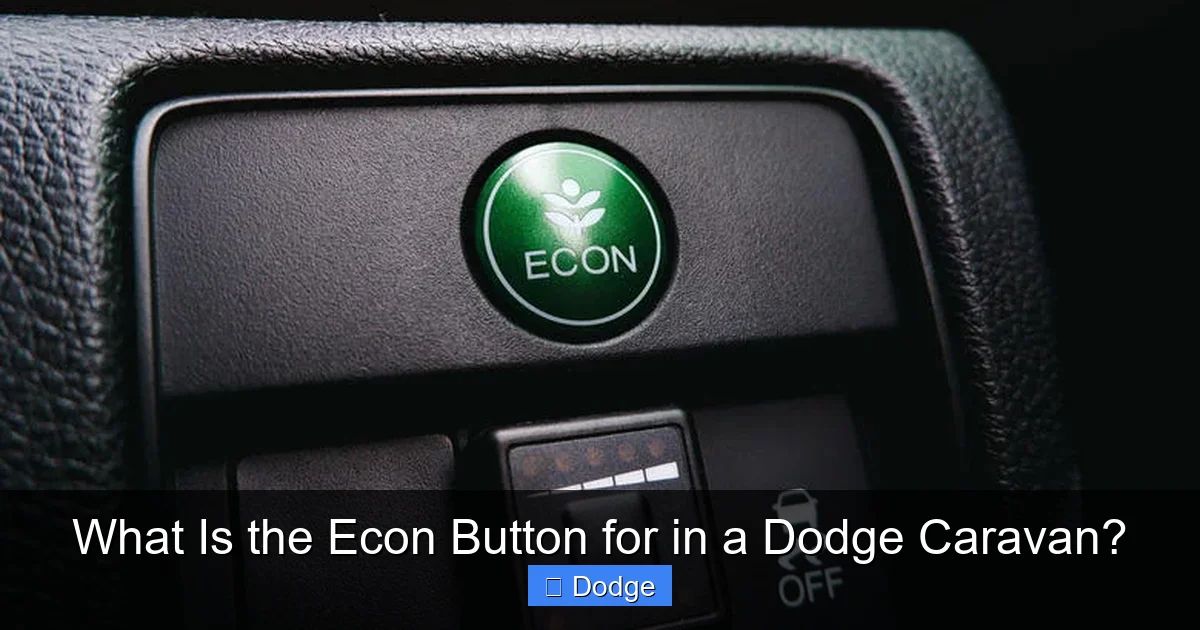
Visual guide about What Is the Econ Button for in a Dodge Caravan?
Image source: img-s-msn-com.akamaized.net
So, how much fuel can you actually save by using the Econ button? The answer depends on your driving habits, road conditions, and how consistently you use the feature. But according to Dodge and real-world user reports, drivers can expect a noticeable improvement in fuel economy—typically in the range of 5 to 10 percent.
Let’s put that into perspective. If your Caravan normally gets around 22 miles per gallon (mpg) on the highway, using Econ mode could bump that up to 24 or 25 mpg. Over the course of a year, that could mean saving several gallons of gas—and a few dollars at the pump. For someone who drives 15,000 miles annually, that could translate to $50 to $100 in savings, depending on gas prices.
Of course, these numbers aren’t guaranteed. If you’re constantly accelerating hard, driving in heavy traffic, or using the AC at full blast, the benefits will be smaller. But if you’re a steady, smooth driver who uses Econ mode during highway trips and light city driving, you’ll likely see a meaningful difference.
Tips to Maximize Econ Mode Efficiency
To get the most out of the Econ button, it helps to pair it with good driving habits. Here are a few practical tips:
– Accelerate gradually: Avoid slamming the gas pedal. Smooth, steady acceleration works better with Econ mode and saves fuel.
– Maintain a steady speed: Use cruise control on the highway to keep your speed consistent. This reduces the need for frequent acceleration and braking.
– Reduce idling: Turn off the engine if you’re stopped for more than a minute. Idling wastes fuel and doesn’t benefit from Econ mode.
– Keep tires properly inflated: Underinflated tires increase rolling resistance, which hurts fuel economy. Check your tire pressure monthly.
– Remove excess weight: Take out unnecessary items from the cargo area. Extra weight means the engine has to work harder.
By combining the Econ button with these habits, you’ll create a more efficient driving environment that maximizes fuel savings.
Common Misconceptions About the Econ Button
Despite its benefits, the Econ button is often misunderstood. Some drivers think it’s a performance booster, while others believe it’s only for hybrid or electric vehicles. Let’s clear up a few common myths.
One misconception is that the Econ button makes the Caravan slower or less safe. While it does soften throttle response, it doesn’t eliminate power entirely. The engine still has plenty of capability for merging, passing, and climbing hills—it just delivers that power more gradually. As long as you’re not towing or driving in extreme conditions, Econ mode won’t compromise safety.
Another myth is that the Econ button only works in cold weather or on long trips. In reality, it can help in a variety of situations, including short commutes and city driving—as long as traffic allows for steady speeds. It’s not limited to highways or specific seasons.
Some people also think that using the Econ button will damage the engine or transmission over time. This isn’t true. The system is designed by Dodge to operate safely in Econ mode. The adjustments it makes are well within the vehicle’s normal operating parameters. In fact, smoother driving can reduce wear and tear on components like the brakes and drivetrain.
How the Econ Button Compares to Other Fuel-Saving Features
The Econ button is just one of several fuel-saving technologies found in modern vehicles. Others include start-stop systems, aerodynamic designs, and low-rolling-resistance tires. So how does the Econ button stack up?
Compared to start-stop systems—which automatically shut off the engine at red lights—the Econ button is more proactive. It doesn’t just react to stops; it changes how the vehicle behaves while driving. This makes it more versatile, especially for drivers who don’t want to rely on automatic engine shutdowns.
In terms of aerodynamics and tire design, those are passive features that work all the time. The Econ button, on the other hand, is an active system you can control. This gives you the flexibility to turn it on when it’s helpful and off when it’s not.
Ultimately, the Econ button complements these other technologies rather than replacing them. When used together, they create a more fuel-efficient driving experience.
Conclusion: Is the Econ Button Worth Using?
So, is the Econ button in your Dodge Caravan worth using? The short answer is yes—especially if you’re looking to save fuel and drive more efficiently. It’s a simple, effective tool that can make a real difference in your gas mileage, particularly during highway driving and light loads.
But like any feature, it’s not a one-size-fits-all solution. You’ll get the best results by using it strategically—turning it on during steady-speed driving and turning it off when you need more power or comfort. Combine it with good driving habits, and you’ll not only save money at the pump but also extend the life of your vehicle.
At the end of the day, the Econ button is there to help you get the most out of your Caravan. It’s not a magic wand, but it’s a smart, thoughtful feature that reflects Dodge’s commitment to efficiency and driver control. So the next time you’re behind the wheel, give it a try—you might be surprised by how much farther your gas tank can take you.
Frequently Asked Questions
What does the Econ button do in a Dodge Caravan?
The Econ button adjusts the engine’s throttle response, transmission shift points, and air conditioning usage to improve fuel efficiency. It encourages smoother driving and reduces unnecessary power consumption.
Does the Econ button actually save gas?
Yes, it can improve fuel economy by 5 to 10 percent under the right conditions, such as highway driving or light city traffic with minimal stops.
Can I use the Econ button all the time?
It’s best used during steady-speed driving. Avoid using it when towing, driving in extreme heat or cold, or needing quick acceleration.
Does the Econ button affect air conditioning performance?
Yes, it reduces AC compressor usage and fan speed to save fuel. On very hot days, this may result in slightly less cooling power.
Will using the Econ button damage my engine?
No, the system is designed to operate safely in Econ mode. The adjustments are within normal parameters and won’t harm the engine or transmission.
Where is the Econ button located in the Dodge Caravan?
The Econ button is typically found on the dashboard or center console, often near the climate controls or gear shifter. Look for a button labeled “Econ” with a light indicator.
