
How Many Catalytic Converters Does a Dodge Ram 1500 Have?

The number of catalytic converters in a Dodge Ram 1500 depends on the engine size, model year, and emissions system design. Most models come with two to four catalytic converters, strategically placed to reduce harmful emissions and meet federal and state regulations. Understanding your truck’s setup helps with maintenance, repairs, and compliance.
[FEATURED_IMAGE_PLACEHODEL]
If you own a Dodge Ram 1500 or are thinking about buying one, you’ve probably wondered about its emissions system—especially the catalytic converters. These small but mighty components play a huge role in keeping your truck environmentally friendly and running smoothly. But how many catalytic converters does a Dodge Ram 1500 actually have?
The short answer? It depends. The number of catalytic converters in your Ram 1500 isn’t the same across all models. It varies based on the engine, model year, exhaust system design, and even where you live. Some trucks have just two, while others—especially newer or high-performance versions—can have up to four.
In this guide, we’ll break down everything you need to know about catalytic converters in the Dodge Ram 1500. Whether you’re troubleshooting a check engine light, planning maintenance, or just curious about your truck’s inner workings, we’ve got you covered. We’ll explore how these parts work, where they’re located, why the count varies, and what it means for your vehicle’s performance and compliance.
So, let’s dive in and demystify the catalytic converter setup in one of America’s favorite pickup trucks.
Key Takeaways
- Engine Type Matters: V6, V8, and EcoDiesel engines in the Ram 1500 use different numbers of catalytic converters based on exhaust configuration.
- Model Year Impacts Count: Older models (pre-2007) may have fewer converters, while newer trucks (2019+) often have more due to stricter emissions standards.
- Dual Exhaust Systems Use More: Trucks with dual exhaust setups typically have two catalytic converters—one per side—while single-exhaust systems may use one or two.
- Upstream and Downstream Placement: Most Ram 1500s feature both pre-cat (upstream) and post-cat (downstream) converters for maximum efficiency.
- Federal and State Regulations Influence Design: California and other CARB-compliant states require more robust emissions systems, often increasing converter count.
- Maintenance and Theft Prevention Are Key: Knowing your converter locations helps with inspection, repair, and anti-theft measures.
- Replacing a Converter Requires Professional Help: Due to complexity and emissions laws, catalytic converter replacement should be handled by certified technicians.
📑 Table of Contents
- What Is a Catalytic Converter and Why Does It Matter?
- How Many Catalytic Converters Does a Dodge Ram 1500 Have?
- Where Are the Catalytic Converters Located on a Dodge Ram 1500?
- Why Do Some Ram 1500s Have More Catalytic Converters Than Others?
- Common Issues and Maintenance Tips for Ram 1500 Catalytic Converters
- Conclusion: Understanding Your Ram 1500’s Catalytic Converter Setup
What Is a Catalytic Converter and Why Does It Matter?
Before we get into the nitty-gritty of how many catalytic converters a Dodge Ram 1500 has, it’s important to understand what these devices do—and why they’re so important.
A catalytic converter is an emissions control device located in your vehicle’s exhaust system. Its main job is to convert harmful pollutants in exhaust gases—like carbon monoxide, nitrogen oxides, and unburned hydrocarbons—into less harmful substances such as carbon dioxide, nitrogen, and water vapor. This process happens through a series of chemical reactions triggered by precious metals like platinum, palladium, and rhodium that coat the internal honeycomb structure of the converter.
Without catalytic converters, vehicles would release far more toxic gases into the atmosphere, contributing to smog, acid rain, and respiratory problems. Thanks to federal regulations like the Clean Air Act, catalytic converters have been mandatory in all gasoline-powered vehicles since the mid-1970s.
In modern trucks like the Dodge Ram 1500, catalytic converters are more advanced than ever. They’re designed to work efficiently under high temperatures and heavy loads, which is essential for a workhorse vehicle that might tow trailers, haul loads, or drive long distances.
But here’s the thing: the more complex the engine and exhaust system, the more catalytic converters may be needed to meet emissions standards. That’s why the number of converters in your Ram 1500 isn’t just a random number—it’s a carefully engineered part of your truck’s emissions strategy.
How Many Catalytic Converters Does a Dodge Ram 1500 Have?
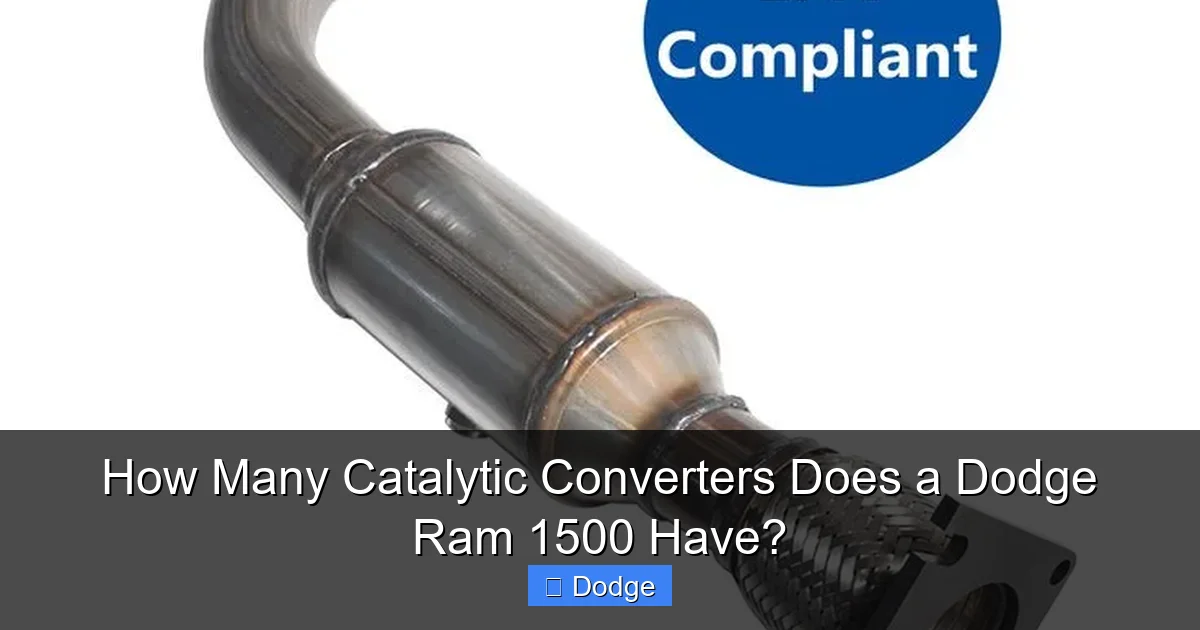
Visual guide about How Many Catalytic Converters Does a Dodge Ram 1500 Have?
Image source: i.pinimg.com
Now, let’s answer the big question: how many catalytic converters does a Dodge Ram 1500 have?
The most accurate answer is: it depends on the specific model, engine, and year of your truck. However, we can give you a clear breakdown based on common configurations.
Most Dodge Ram 1500 models come equipped with either two or four catalytic converters. Here’s how it typically breaks down:
– Single Exhaust Systems: Trucks with a single exhaust pipe usually have two catalytic converters—one close to the engine (upstream) and one further down the exhaust line (downstream).
– Dual Exhaust Systems: Models with dual exhausts—common on V8 and performance-oriented trims—often have four catalytic converters: two upstream and two downstream, one for each exhaust bank.
Let’s look at some real-world examples.
Ram 1500 with a 3.6L V6 Engine
The 3.6L Pentastar V6 is a popular engine in the Ram 1500, especially in base and mid-level trims. This engine typically uses a single exhaust system. As a result, most 3.6L models have two catalytic converters: one mounted near the exhaust manifold (upstream) and another further down the exhaust pipe (downstream).
For example, a 2020 Ram 1500 with the 3.6L V6 and 8-speed automatic transmission will usually have two converters. The upstream converter handles the initial conversion of pollutants right after combustion, while the downstream converter fine-tunes the process and helps monitor emissions for the vehicle’s onboard diagnostics (OBD-II) system.
Ram 1500 with a 5.7L V8 HEMI Engine
The 5.7L HEMI V8 is where things get more interesting. This engine often comes with a dual exhaust system, especially in higher trims like the Laramie, Rebel, or TRX (though the TRX has its own unique setup). With dual exhausts, each side of the engine has its own exhaust manifold and catalytic converter.
That means a typical 5.7L V8 Ram 1500 has four catalytic converters: two upstream (one per cylinder bank) and two downstream. This setup allows for better exhaust flow, improved performance, and more efficient emissions control.
For instance, a 2021 Ram 1500 Laramie with the 5.7L HEMI and dual exhaust will have four converters. This configuration helps the truck meet strict emissions standards while maintaining the power and sound that HEMI fans love.
Ram 1500 EcoDiesel (3.0L V6)
The EcoDiesel version of the Ram 1500 uses a 3.0L turbocharged V6 diesel engine. Diesel engines have different emissions requirements than gasoline engines, and they often use more complex after-treatment systems.
In the case of the EcoDiesel, you’ll typically find two catalytic converters, but they’re part of a larger system that includes a diesel oxidation catalyst (DOC) and a selective catalytic reduction (SCR) system with urea injection (DEF). The DOC acts like a traditional catalytic converter, while the SCR system further reduces nitrogen oxides.
So while the EcoDiesel may not have four physical converters like the V8, it still uses multiple emissions control devices to meet diesel-specific regulations.
Model Year Variations
It’s also important to note that the number of catalytic converters can vary by model year. Older Ram 1500s—say, from the early 2000s—may have only one or two converters, especially if they were built before stricter emissions standards took effect.
For example, a 2005 Ram 1500 with a 4.7L V8 might have just two catalytic converters. But by 2019, when the fifth-generation Ram 1500 was introduced, emissions systems became more advanced, and converter counts increased to meet new federal and state requirements.
California and other states that follow CARB (California Air Resources Board) standards often require more rigorous emissions controls, which can mean additional converters or more sophisticated systems—even if the physical count stays the same.
Where Are the Catalytic Converters Located on a Dodge Ram 1500?
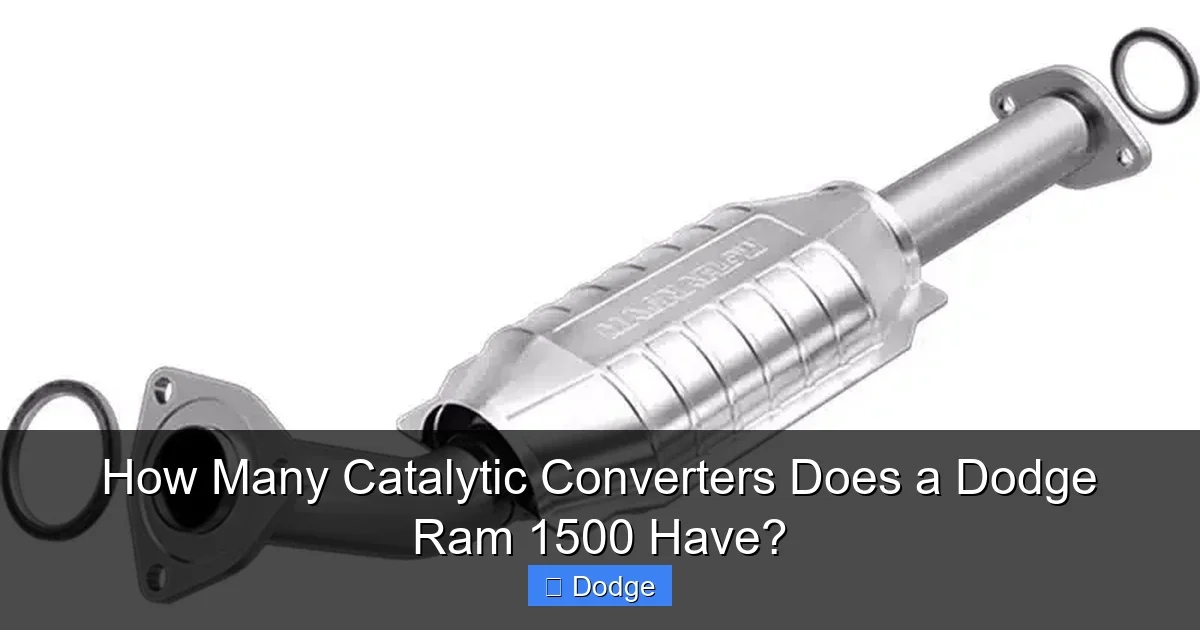
Visual guide about How Many Catalytic Converters Does a Dodge Ram 1500 Have?
Image source: realtruck.com
Knowing how many catalytic converters your Ram 1500 has is one thing—but where are they actually located? This is crucial for maintenance, inspection, and theft prevention.
In most Ram 1500 models, catalytic converters are positioned along the exhaust system, typically under the truck, between the engine and the muffler. Here’s a breakdown of common locations:
Upstream Catalytic Converters
The upstream (or pre-cat) converters are mounted close to the engine, usually right after the exhaust manifolds. On a V6 or V8 engine, you’ll find one upstream converter per cylinder bank.
– V6 Engine: One upstream converter, typically on the passenger side.
– V8 Engine with Dual Exhaust: Two upstream converters—one on the driver’s side and one on the passenger side.
These converters are exposed to the hottest exhaust gases and are critical for initial pollutant reduction. Because of their proximity to the engine, they’re also more vulnerable to heat damage and theft.
Downstream Catalytic Converters
The downstream (or post-cat) converters are located further down the exhaust pipe, usually just before the muffler or resonator. They serve as a secondary treatment stage and help the vehicle’s OBD-II system monitor emissions efficiency.
– Single Exhaust: One downstream converter.
– Dual Exhaust: Two downstream converters—one for each side.
Downstream converters are generally less prone to theft because they contain fewer precious metals and are harder to access. However, they can still fail due to age, contamination, or engine problems.
Visual Identification Tips
If you’re under your truck trying to locate the converters, here’s what to look for:
– They’re typically cylindrical or oval-shaped metal canisters.
– They’re connected to the exhaust pipe and often have oxygen sensors mounted before and after them.
– Upstream converters are usually closer to the engine and may have heat shields.
– Downstream converters are farther back and may be near the rear axle.
For example, on a 2022 Ram 1500 with a 5.7L V8, you’ll find two upstream converters near the engine block and two downstream converters under the truck, just ahead of the mufflers.
Why Do Some Ram 1500s Have More Catalytic Converters Than Others?
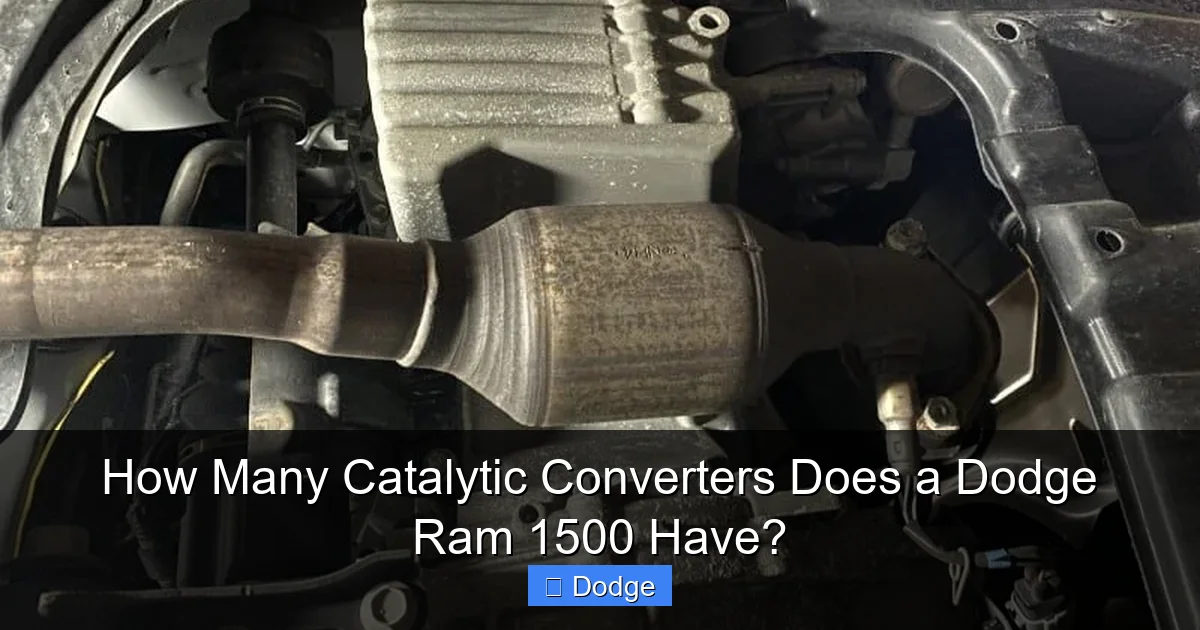
Visual guide about How Many Catalytic Converters Does a Dodge Ram 1500 Have?
Image source: rxmechanic.com
You might be wondering: why do some Dodge Ram 1500s have two catalytic converters while others have four? The answer lies in a combination of engineering, emissions regulations, and performance design.
Emissions Standards and Regulations
One of the biggest factors is emissions compliance. The U.S. Environmental Protection Agency (EPA) and state agencies like CARB set strict limits on vehicle emissions. To meet these standards, automakers must design exhaust systems that effectively reduce pollutants.
Newer vehicles, especially those sold in California or other CARB states, often require more advanced emissions systems. This can mean additional catalytic converters, better materials, or supplemental systems like exhaust gas recirculation (EGR) or selective catalytic reduction (SCR).
For example, a 2023 Ram 1500 sold in California might have a more complex emissions setup than the same model sold in Texas, even if they look identical on the outside.
Engine Configuration and Exhaust Design
The engine type and exhaust layout also play a major role. V6 engines usually have a simpler exhaust system with one exhaust manifold and one catalytic converter per side (or just one total). V8 engines, especially those with dual exhausts, have two separate exhaust paths—one for each cylinder bank.
Each path needs its own catalytic converter to ensure all exhaust gases are treated. That’s why a dual-exhaust V8 Ram 1500 typically has four converters: two upstream and two downstream.
Even within the same engine family, different trims can have different setups. For instance, a base-model Ram 1500 with a 5.7L V8 might have a single exhaust and two converters, while a high-end Limited trim with dual exhaust has four.
Performance and Efficiency Considerations
Performance-oriented trims, like the Ram 1500 TRX, take things a step further. The TRX, with its supercharged 6.2L HEMI V8, uses a high-flow exhaust system designed for maximum power and sound. This system includes multiple catalytic converters to handle the increased exhaust volume while still meeting emissions standards.
In the TRX, you’ll find four catalytic converters—two upstream and two downstream—plus additional components like resonators and mufflers tuned for performance.
Fuel Type and After-Treatment Systems
Diesel engines, like the 3.0L EcoDiesel, use different after-treatment systems. While they may not have four physical converters, they often include a diesel oxidation catalyst (DOC), a diesel particulate filter (DPF), and a selective catalytic reduction (SCR) system with DEF fluid.
These systems work together to reduce emissions, but they’re more complex than traditional catalytic converters. So even if the EcoDiesel doesn’t have four converters, it’s still doing a lot of emissions work under the hood.
Common Issues and Maintenance Tips for Ram 1500 Catalytic Converters
Catalytic converters are built to last, but they’re not indestructible. Over time, they can fail due to age, contamination, or engine problems. Here are some common issues and tips to keep your Ram 1500’s converters in good shape.
Signs of a Failing Catalytic Converter
Watch for these symptoms:
– Check Engine Light: Often triggered by oxygen sensor readings that indicate poor converter efficiency.
– Reduced Fuel Economy: A clogged converter can restrict exhaust flow, making the engine work harder.
– Loss of Power: Especially under acceleration, due to backpressure in the exhaust system.
– Rotten Egg Smell: A sulfur-like odor from the exhaust can indicate converter failure.
– Loud Rattling Noise: If the internal honeycomb structure breaks apart, you may hear a rattle from under the truck.
If you notice any of these signs, have your truck inspected by a professional. Continuing to drive with a failed converter can damage other components and lead to costly repairs.
Preventing Catalytic Converter Theft
Unfortunately, catalytic converters are a target for thieves because they contain valuable precious metals. The Dodge Ram 1500, especially models with dual converters, is a prime target.
To protect your truck:
– Park in well-lit, secure areas or a garage.
– Install a catalytic converter shield or anti-theft device.
– Engrave your VIN on the converter to deter resale.
– Consider etching or painting the converter with high-temperature paint.
Some owners also install motion-sensor lights or security cameras near their driveway for added protection.
Replacement and Repair Costs
Replacing a catalytic converter isn’t cheap. Costs vary based on the number of converters, labor, and whether you use OEM or aftermarket parts.
– Single Converter Replacement: $1,000–$2,500
– Dual or Quad System Replacement: $2,500–$5,000 or more
Labor can add $200–$500, and OEM parts are typically more expensive than aftermarket options. However, using non-OEM parts may affect emissions compliance and warranty coverage.
Always have the work done by a certified technician who can ensure proper installation and reset the OBD-II system.
Conclusion: Understanding Your Ram 1500’s Catalytic Converter Setup
So, how many catalytic converters does a Dodge Ram 1500 have? The answer isn’t one-size-fits-all. Most models have two to four converters, depending on the engine, exhaust system, and model year.
The 3.6L V6 typically uses two converters, while the 5.7L V8 with dual exhaust often has four. Diesel models use different after-treatment systems, and newer trucks are built to meet stricter emissions standards.
Knowing your truck’s setup helps you maintain it properly, spot issues early, and protect against theft. Whether you’re a DIY mechanic or just a proud Ram owner, understanding your catalytic converters is a smart move.
Remember: these small components play a big role in your truck’s performance, efficiency, and environmental impact. Treat them well, and they’ll keep your Ram 1500 running clean and strong for years to come.
Frequently Asked Questions
How many catalytic converters does a 2020 Dodge Ram 1500 have?
A 2020 Dodge Ram 1500 typically has two catalytic converters if it’s equipped with the 3.6L V6 engine and single exhaust. Models with the 5.7L V8 and dual exhaust usually have four catalytic converters—two upstream and two downstream.
Can a Dodge Ram 1500 run with a bad catalytic converter?
Technically, yes, but it’s not recommended. A failing converter can cause poor performance, reduced fuel economy, and increased emissions. It may also trigger the check engine light and cause your truck to fail emissions tests.
Are catalytic converters on a Ram 1500 easy to steal?
Yes, especially on models with dual converters. The Ram 1500’s ground clearance and valuable precious metals make it a target. Use anti-theft devices, park securely, and consider etching your VIN on the converters.
How long do catalytic converters last on a Dodge Ram 1500?
Most catalytic converters last 100,000 to 150,000 miles. However, they can fail earlier due to engine problems, contamination, or physical damage. Regular maintenance helps extend their life.
Can I replace a catalytic converter myself on a Ram 1500?
It’s not recommended. Catalytic converter replacement requires specialized tools, welding or clamping, and knowledge of emissions systems. A certified technician should handle the job to ensure compliance and proper function.
Does the Ram 1500 EcoDiesel have catalytic converters?
Yes, but it uses a diesel oxidation catalyst (DOC) as part of its emissions system. It also includes a diesel particulate filter (DPF) and selective catalytic reduction (SCR) with DEF fluid, which work together to reduce emissions.
