
Can a Subaru Crosstrek Tow?

Yes, the Subaru Crosstrek can tow—but not as much as larger SUVs. Depending on the model year and drivetrain, it can pull between 1,500 and 2,000 pounds. With proper equipment and smart loading, it’s great for small trailers, campers, or gear hauls.
If you’re a Subaru Crosstrek owner—or thinking about becoming one—you’ve probably asked yourself: *Can a Subaru Crosstrek tow?* It’s a fair question. The Crosstrek looks rugged, handles like a champ on dirt roads, and comes standard with all-wheel drive. But does that mean it can pull a trailer full of gear, a small camper, or even a couple of kayaks?
The short answer is yes—but with limits. Unlike full-size trucks or heavy-duty SUVs, the Crosstrek isn’t designed to haul massive loads. Instead, it’s built for light-duty towing that fits the lifestyle of adventurers, weekend warriors, and eco-conscious drivers who want capability without the bulk. Whether you’re planning a camping trip, moving furniture, or hauling a small boat, understanding your Crosstrek’s towing abilities is crucial for safety, performance, and peace of mind.
In this guide, we’ll break down everything you need to know about towing with a Subaru Crosstrek. From official towing capacities and required equipment to real-world tips and common mistakes, we’ll help you make smart decisions so you can tow confidently—without overloading your vehicle or risking damage.
Key Takeaways
- Towing capacity varies by model: Most Crosstreks (2013–2023) with the standard 2.0L engine and manual transmission tow up to 1,500 lbs; models with the optional towing package or CVT can reach 2,000 lbs.
- All-wheel drive helps stability: Subaru’s standard Symmetrical AWD improves traction and control when towing, especially on wet or uneven terrain.
- Use the right equipment: A factory or aftermarket hitch, brake controller (if needed), and proper wiring are essential for safe towing.
- Weight distribution matters: Keep tongue weight at 10–15% of total trailer weight to avoid swaying or loss of control.
- Fuel economy drops when towing: Expect a 20–30% decrease in MPG when pulling a load—plan fuel stops accordingly.
- Not for heavy loads: The Crosstrek isn’t built for large boats, RVs, or multiple ATVs—stick to lightweight pop-up campers, small utility trailers, or jet skis.
- Regular maintenance is key: Towing increases strain on brakes, transmission, and cooling systems—check fluids and tire pressure before every trip.
📑 Table of Contents
- Understanding the Subaru Crosstrek’s Towing Capacity
- What Can You Actually Tow with a Crosstrek?
- Required Equipment for Safe Towing
- Driving Tips for Towing with a Crosstrek
- Fuel Economy and Maintenance When Towing
- Real-World Examples and Owner Experiences
- Conclusion: Is the Crosstrek Right for Your Towing Needs?
Understanding the Subaru Crosstrek’s Towing Capacity
When it comes to towing, the first thing you need to know is your vehicle’s maximum towing capacity. This number tells you the heaviest load your Crosstrek can safely pull under ideal conditions. But here’s the catch: that number isn’t the same across all models.
The Subaru Crosstrek has been in production since 2013, and over the years, its towing capacity has evolved slightly depending on the engine, transmission, and optional packages. Let’s break it down by generation and configuration.
2013–2017 Subaru Crosstrek (First Generation)
The first-gen Crosstrek came with a 2.0-liter naturally aspirated flat-four engine producing around 148 horsepower. Most models were equipped with either a 5-speed manual transmission or a Continuously Variable Transmission (CVT).
– **Manual transmission models:** These can tow up to **1,500 pounds**.
– **CVT models (with optional towing package):** These can tow up to **2,000 pounds**.
The key difference? The optional towing package, which includes a factory-installed trailer hitch receiver and wiring harness. Without it, even CVT models are limited to 1,500 lbs.
2018–2023 Subaru Crosstrek (Second Generation)
The second-generation Crosstrek retained the same 2.0L engine but introduced minor updates to the CVT and added more standard safety features. Towing capacity remained consistent:
– **Manual transmission:** 1,500 lbs
– **CVT with towing package:** 2,000 lbs
In 2020, Subaru introduced a mild-hybrid version of the Crosstrek Hybrid, but it was discontinued after 2021. The hybrid model had the same 1,500-lb towing limit as the manual, due to battery and weight constraints.
2024 Subaru Crosstrek (Third Generation)
The latest Crosstrek (2024 model year) features a new 2.5-liter engine in higher trims (Premium, Limited, and Wilderness), offering 182 horsepower—a noticeable upgrade. However, towing capacity hasn’t increased dramatically.
– **Base 2.0L engine (manual or CVT):** 1,500 lbs (manual), 2,000 lbs (CVT with towing package)
– **2.5L engine (CVT only):** Still **2,000 lbs**
Even with more power, Subaru hasn’t raised the towing limit. Why? Because towing isn’t just about horsepower—it’s about cooling, braking, suspension, and overall vehicle design. The Crosstrek’s compact size and unibody construction mean it’s optimized for agility and efficiency, not heavy hauling.
Why the Limit Matters
You might wonder, “Why can’t it tow more if it has more power?” The answer lies in engineering. The Crosstrek’s transmission, cooling system, and braking components are designed for daily driving and light off-roading—not sustained heavy loads. Exceeding the towing capacity can lead to:
– Overheating (especially in hot weather or on long hills)
– Premature transmission wear
– Brake fade or failure
– Loss of control due to swaying or instability
So while the 2.5L engine feels peppier on the highway, it doesn’t mean you should push the towing limits. Stick to the manufacturer’s guidelines.
What Can You Actually Tow with a Crosstrek?
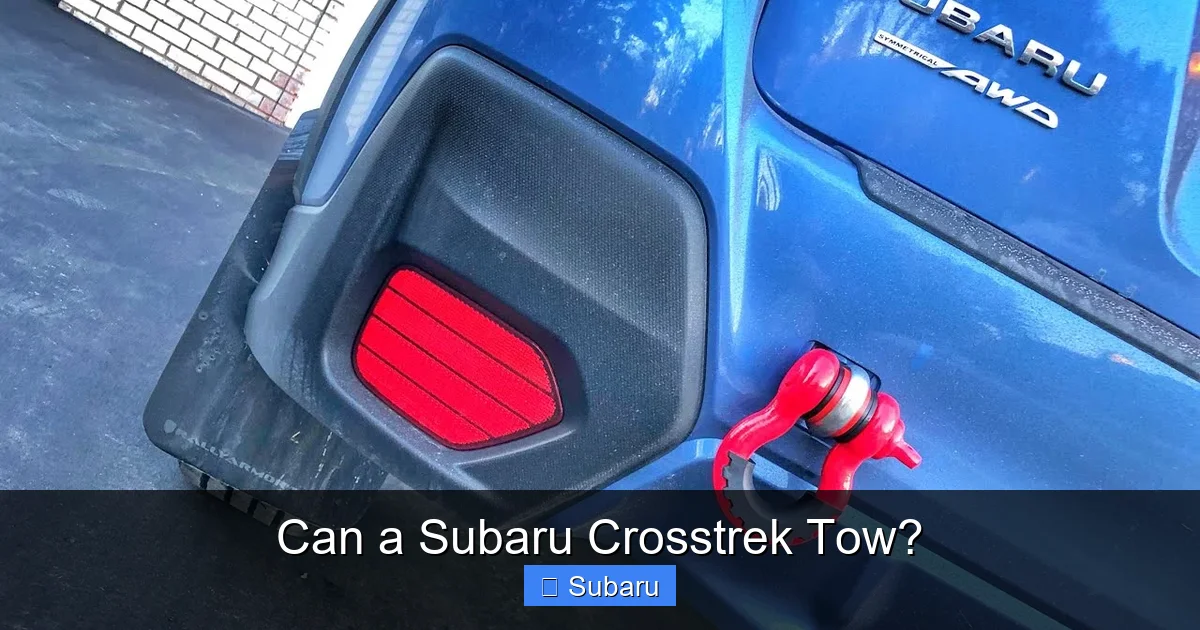
Visual guide about Can a Subaru Crosstrek Tow?
Image source: i.ytimg.com
Now that you know the numbers, let’s talk practicality. What kinds of trailers and loads are realistic for a Subaru Crosstrek?
The Crosstrek shines in light-duty towing scenarios. Think small, lightweight, and aerodynamic. Here are some common items you can tow safely:
Pop-Up Campers and Light Travel Trailers
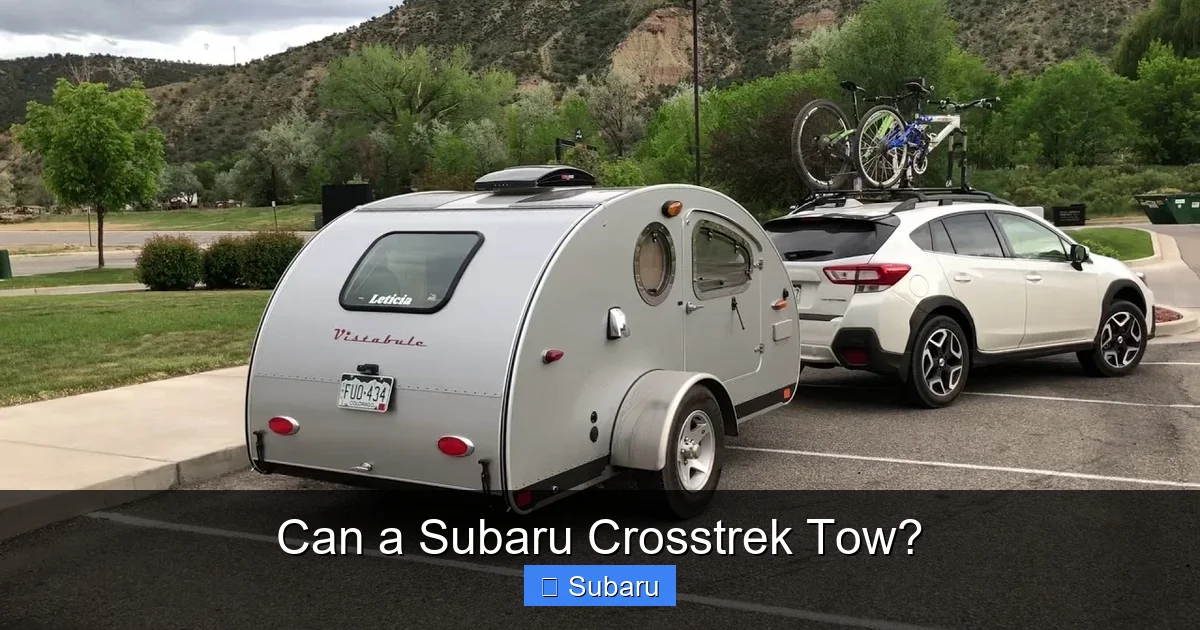
Many pop-up campers (also called tent trailers) weigh between 1,000 and 2,000 pounds when loaded. Brands like Jayco Jay Series, Forest River R-Pod, and Aliner offer models that fit within the Crosstrek’s range.
For example, the **Aliner Ascape** weighs around 1,200 lbs dry and can be loaded to about 1,600 lbs—well within the 2,000-lb limit. These campers fold down low, reducing wind resistance and improving stability.
Tip: Always check the *loaded* weight, not just the dry weight. Add water, gear, propane, and food, and you could easily add 300–500 lbs.
Small Utility Trailers
A standard 4×6 or 5×8 utility trailer weighs about 500–700 lbs empty. Load it with firewood, mulch, furniture, or a few bags of concrete, and you’re still under 1,500 lbs.
These are perfect for weekend projects, moving apartments, or hauling yard waste. Just make sure the load is balanced and secured.
Jet Skis and Small Watercraft
A single jet ski with a trailer typically weighs 800–1,200 lbs. Two jet skis might push 1,800 lbs—still within range if your Crosstrek has the 2,000-lb capacity.
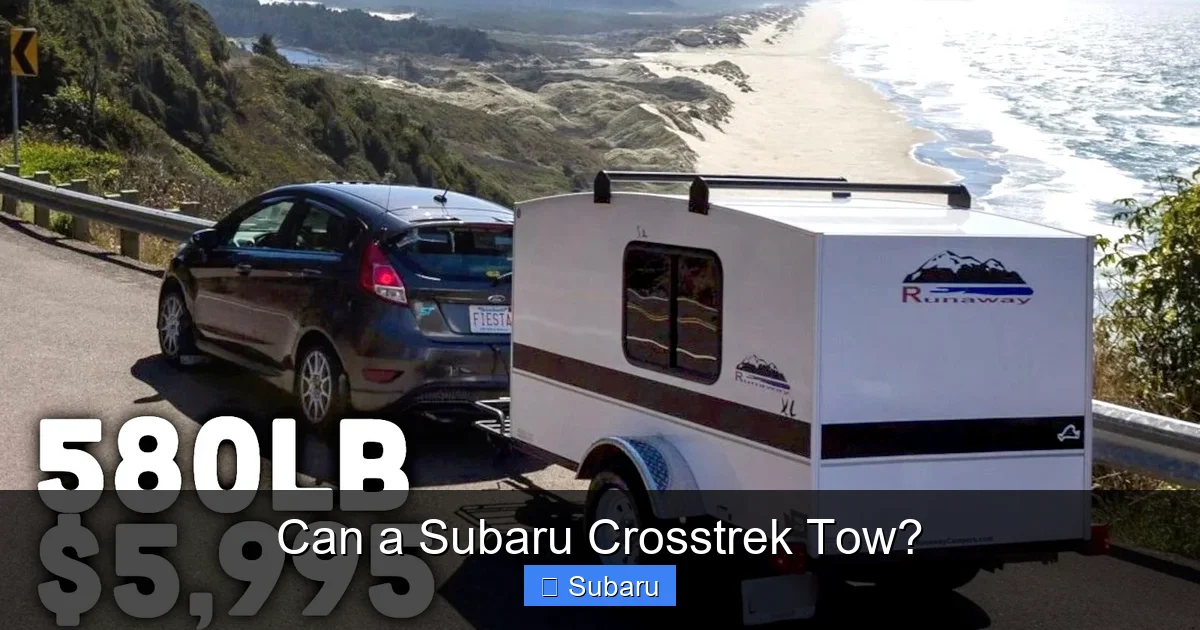
Avoid larger boats. Even a small fishing boat with motor and trailer can easily exceed 2,500 lbs.
ATVs and Dirt Bikes
One or two dirt bikes on a small trailer? Totally doable. A single ATV (like a Honda Rancher or Yamaha Grizzly) with trailer weighs around 1,000–1,300 lbs.
But don’t try to haul multiple ATVs or a side-by-side like a Polaris RZR—those setups often weigh 2,500+ lbs.
Kayaks, Canoes, and Bike Racks
While not technically “towing,” many Crosstrek owners use roof racks or hitch-mounted carriers for kayaks, bikes, or canoes. These don’t count toward towing capacity, but they do affect aerodynamics and fuel economy.
A hitch-mounted bike rack with 4 bikes adds about 60–80 lbs to the rear—well within the Crosstrek’s tongue weight limit.
What NOT to Tow
Avoid anything over 2,000 lbs or that creates significant wind resistance. This includes:
– Full-size travel trailers (even small ones like Airstream Basecamp can be tricky)
– Large boats or pontoon boats
– Cargo trailers loaded with heavy equipment
– Multiple ATVs or UTVs
Also, never tow a trailer that requires electric brakes unless your Crosstrek is equipped with a brake controller. Most small trailers under 1,500 lbs don’t need them, but anything over that should have brakes—and your vehicle must be able to control them.
Required Equipment for Safe Towing
Visual guide about Can a Subaru Crosstrek Tow?
Image source: i.ytimg.com
You can’t just hook up a trailer and hit the road. Safe towing requires the right gear. Here’s what you’ll need:
Trailer Hitch
The Crosstrek doesn’t come with a hitch standard. You’ll need to install one. Subaru offers a factory hitch receiver (Class I or II), or you can go with an aftermarket option from brands like Curt, Draw-Tite, or EcoHitch.
– **Class I hitch:** Rated for up to 2,000 lbs towing, 200 lbs tongue weight
– **Class II hitch:** Also rated for 3,500 lbs, but not recommended for the Crosstrek due to vehicle limitations
Stick with a Class I hitch designed for your specific model year.
Wiring Harness
You’ll need a 4-pin or 7-pin wiring harness to connect your trailer’s lights (brake, turn, tail). Subaru sells a plug-and-play harness that connects to the taillight assembly. Aftermarket options are also available.
Never splice wires directly—use a proper harness to avoid electrical issues.
Ball Mount and Trailer Ball
The ball mount slides into the hitch receiver and holds the trailer ball. Choose the right size:
– **1-7/8-inch ball:** For trailers under 2,000 lbs
– **2-inch ball:** For heavier loads (still under 2,000 lbs for Crosstrek)
Make sure the ball mount is rated for your load and has the correct drop/rise to keep the trailer level.
Safety Chains
Always cross the safety chains under the trailer tongue. This creates a cradle that can catch the trailer if it detaches.
Trailer Brake Controller (If Needed)
Most trailers under 1,500 lbs don’t require electric brakes. But if your trailer has them (common on heavier pop-ups or boat trailers), you’ll need a brake controller.
The Crosstrek doesn’t come with one factory-installed, but you can add an aftermarket unit like the Tekonsha Voyager or Redarc Tow-Pro. These plug into the OBD-II port and allow you to adjust brake pressure from the driver’s seat.
Weight Distribution Hitch (Rarely Needed)
For loads under 2,000 lbs, a weight distribution hitch is usually unnecessary. These are more common on larger SUVs and trucks towing near their max capacity.
Driving Tips for Towing with a Crosstrek
Visual guide about Can a Subaru Crosstrek Tow?
Image source: images-stag.jazelc.com
Towing changes how your car handles. Here’s how to drive safely:
Slow Down and Increase Following Distance
With a trailer, your Crosstrek will accelerate slower, brake later, and take longer to stop. Leave extra space—at least 4–6 seconds behind the vehicle in front.
Use Lower Gears on Hills
When climbing or descending steep grades, shift into a lower gear (use manual mode on the CVT). This reduces strain on the transmission and helps control speed.
Avoid riding the brakes downhill—use engine braking instead.
Watch for Trailer Sway
Sway happens when the trailer pushes the car sideways, often due to wind, uneven loads, or improper hitch setup.
If you feel sway:
– Don’t brake hard—this can make it worse
– Gently ease off the accelerator
– Use a sway control device (many hitches include one)
Check Tire Pressure
Both your Crosstrek and trailer tires should be inflated to the recommended PSI. Underinflated tires overheat and can fail.
Distribute Weight Properly
Load 60% of the weight in the front half of the trailer. This keeps the tongue weight at 10–15% of the total trailer weight.
Too little tongue weight? The trailer will sway.
Too much? It can lift the rear of your Crosstrek, reducing traction.
Test Before You Go
Before a long trip, do a short test drive. Check:
– Lights (brake, turn, tail)
– Hitch security
– Brake function (if equipped)
– Mirror visibility
Fuel Economy and Maintenance When Towing
Towing takes a toll—on your wallet and your car.
Fuel Economy Impact
Expect a 20–30% drop in fuel economy when towing. A Crosstrek that normally gets 30 MPG might drop to 21–24 MPG with a loaded trailer.
Why? More weight = more engine work. Plus, trailers create drag, especially boxy ones.
Tip: Remove the trailer when not in use to save fuel and reduce wear.
Increased Wear and Tear
Towing puts extra stress on:
– **Transmission:** The CVT works harder to maintain speed
– **Brakes:** More weight = longer stopping distances
– **Suspension:** Rear springs compress under load
– **Cooling system:** Risk of overheating in hot weather or on long climbs
Maintenance Tips
– Check engine oil and coolant before long trips
– Inspect brake pads and rotors regularly
– Rotate tires and check alignment
– Clean the hitch and lubricate moving parts
If you tow frequently, consider a transmission cooler (though not standard on Crosstrek).
Real-World Examples and Owner Experiences
Let’s hear from real Crosstrek owners:
> “I tow a 1,400-lb pop-up camper with my 2020 Crosstrek Limited. It handles great on highways and mountain roads. I added a Curt hitch and sway bar—no issues in two years.”
> — Sarah, Colorado
> “I tried towing a 2,200-lb boat once. It was slow, the brakes got hot, and I felt unsafe. Switched to a smaller kayak trailer. Lesson learned.”
> — Mike, Oregon
> “My 2016 Crosstrek with manual transmission tows my dirt bike trailer (900 lbs) without a problem. Just don’t expect to speed up fast.”
> — Jenna, Utah
These stories highlight a key point: the Crosstrek can tow—but only within its limits. Respect the numbers, and it’ll serve you well.
Conclusion: Is the Crosstrek Right for Your Towing Needs?
So, can a Subaru Crosstrek tow? Absolutely—if your needs are modest.
It’s not a workhorse, but it’s a reliable partner for light-duty adventures. Whether you’re hauling a pop-up camper to the mountains, a utility trailer full of mulch, or a couple of jet skis to the lake, the Crosstrek can handle it—with the right setup and smart driving.
Just remember:
– Check your model’s towing capacity (1,500–2,000 lbs)
– Use proper equipment (hitch, wiring, ball mount)
– Load wisely and distribute weight
– Drive cautiously and maintain your vehicle
The Crosstrek proves that you don’t need a giant SUV to enjoy the outdoors. With its standard AWD, fuel efficiency, and compact size, it’s perfect for drivers who want capability without compromise.
So go ahead—hook up that trailer, hit the road, and explore. Just don’t ask your Crosstrek to do more than it’s built for. It’ll thank you with years of reliable service.
Frequently Asked Questions
Can a Subaru Crosstrek tow a camper?
Yes, but only lightweight pop-up campers or small travel trailers under 2,000 pounds. Avoid larger RVs or teardrop campers that exceed the towing limit.
Do I need a special package to tow with my Crosstrek?
Yes, for models with a CVT, you’ll need the optional towing package (includes hitch and wiring). Manual models can tow 1,500 lbs without it, but a hitch is still required.
Can the Crosstrek tow a boat?
Only very small boats or jet skis under 2,000 pounds total (boat + trailer + motor). Larger fishing boats or pontoons are too heavy.
Does towing void the Subaru warranty?
No, as long as you stay within the recommended towing capacity and use proper equipment. Exceeding limits or improper setup could affect warranty claims.
Can I install a hitch myself?
Yes, many owners install aftermarket hitches themselves. However, professional installation is recommended for safety and proper alignment.
What’s the best year Crosstrek for towing?
All recent models (2018–2024) with the CVT and towing package can tow 2,000 lbs. The 2024 model with the 2.5L engine offers more power but the same towing limit.
