
What Color Is Subaru Coolant?

Subaru coolant is typically bright pink or magenta, a signature color used by Subaru since the early 2000s. This distinct hue helps differentiate it from other coolants and signals its long-life formula designed specifically for Subaru engines. Using the correct coolant ensures proper engine temperature regulation, prevents corrosion, and extends the life of your vehicle.
Key Takeaways
- Subaru coolant is usually bright pink or magenta: This unique color helps identify Subaru’s OEM long-life coolant and distinguishes it from other brands.
- It’s formulated for Subaru engines: The coolant contains additives tailored to protect Subaru’s aluminum engine components and cooling system parts.
- Never mix coolants without checking compatibility: Mixing different types can cause chemical reactions, reduce effectiveness, and damage the cooling system.
- Coolant should be replaced every 30,000 to 60,000 miles: Follow your owner’s manual for specific intervals to maintain optimal engine performance.
- Use only Subaru-approved or equivalent coolant: Aftermarket coolants must meet Subaru’s specifications (e.g., Subaru Super Coolant or equivalent HOAT formula).
- Check coolant level regularly: Low coolant can lead to overheating, engine damage, and costly repairs.
- Color can fade over time: Older coolant may appear darker or murky—this is a sign it needs replacement, not just a color change.
📑 Table of Contents
- What Color Is Subaru Coolant? A Complete Guide
- The Signature Color: Why Subaru Coolant Is Pink
- Why Coolant Color Matters for Subaru Owners
- Subaru Coolant Formula: What Makes It Special?
- How to Check and Maintain Subaru Coolant
- Can You Use Other Coolants in a Subaru?
- Signs Your Subaru Coolant Needs Attention
- Conclusion: Protect Your Subaru with the Right Coolant
What Color Is Subaru Coolant? A Complete Guide
If you’ve ever popped the hood of your Subaru and glanced into the coolant reservoir, you might have noticed a vivid, almost fluorescent pink or magenta fluid. That’s not a mistake—it’s by design. Subaru coolant is intentionally colored bright pink to help owners and technicians quickly identify it and ensure the right product is being used. But why does the color matter? And what happens if you use the wrong coolant?
In this guide, we’ll dive deep into everything you need to know about Subaru coolant: its color, formulation, why it’s unique, how to maintain it, and what to avoid. Whether you’re a longtime Subaru owner or new to the brand, understanding your vehicle’s cooling system is essential for long-term reliability and performance.
Subaru has built a reputation for building durable, all-wheel-drive vehicles that handle everything from daily commutes to off-road adventures. But like any car, Subarus rely on a properly functioning cooling system to keep the engine running at the right temperature. The coolant—also known as antifreeze—plays a critical role in this process. It circulates through the engine, absorbing heat and transferring it to the radiator, where it’s released into the air. Without the right coolant, your engine could overheat, suffer corrosion, or even fail prematurely.
So, let’s start with the most common question: What color is Subaru coolant?
The Signature Color: Why Subaru Coolant Is Pink
Visual guide about What Color Is Subaru Coolant?
Image source: roadsumo.com
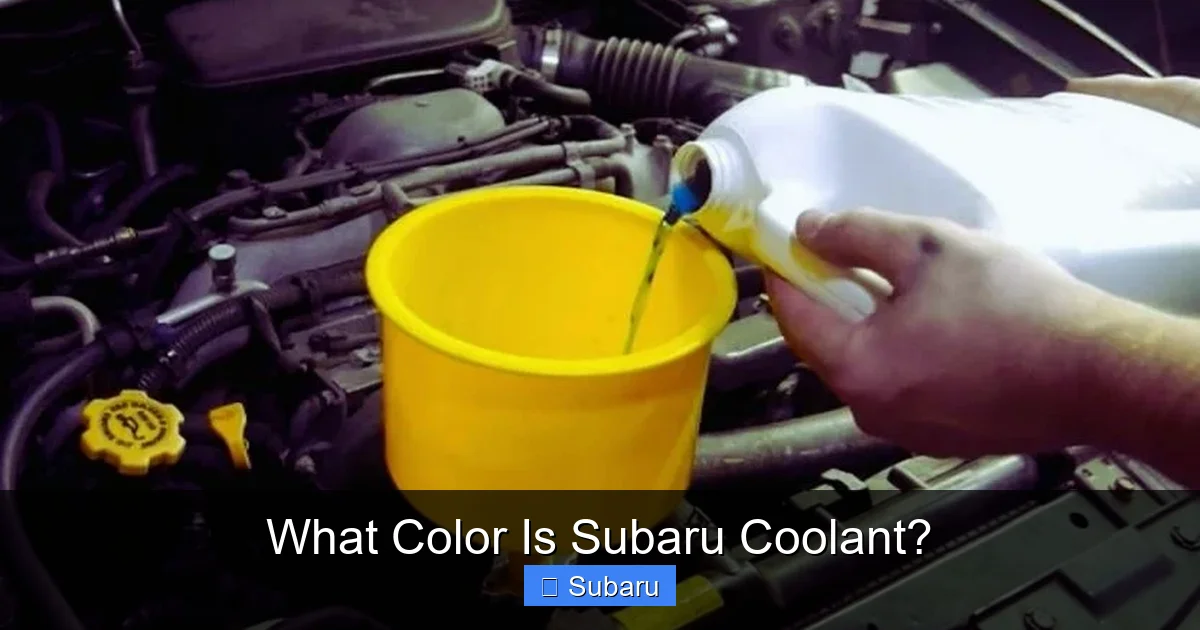
Subaru coolant is most commonly recognized by its bright pink or magenta color. This isn’t just for aesthetics—it’s a functional identifier. Since the early 2000s, Subaru has used this distinctive hue to differentiate its OEM (original equipment manufacturer) coolant from other brands and types. The pink color makes it easy to spot during maintenance, refills, or inspections.
But why pink? The color comes from dye added to the coolant base, which is typically a mixture of ethylene glycol and water, along with specialized additives. These additives are what make Subaru coolant unique. They’re formulated to protect Subaru’s specific engine materials, including aluminum cylinder heads, plastic intake manifolds, and rubber hoses.
It’s important to note that not all pink coolants are the same. While many aftermarket coolants may appear similar in color, they might not meet Subaru’s exact specifications. Subaru recommends using their proprietary “Subaru Super Coolant” or an equivalent HOAT (Hybrid Organic Acid Technology) coolant that meets their standards. Using the wrong type—even if it’s pink—can lead to problems down the road.
How to Identify Genuine Subaru Coolant
So how can you be sure you’re getting the real deal? Here are a few tips:
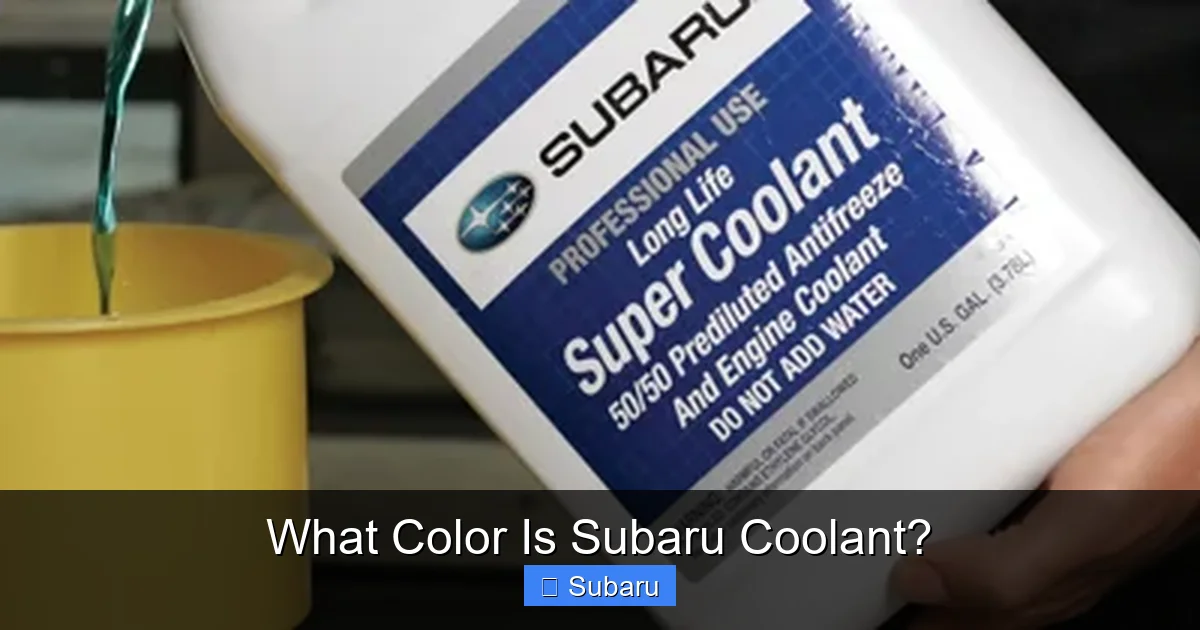
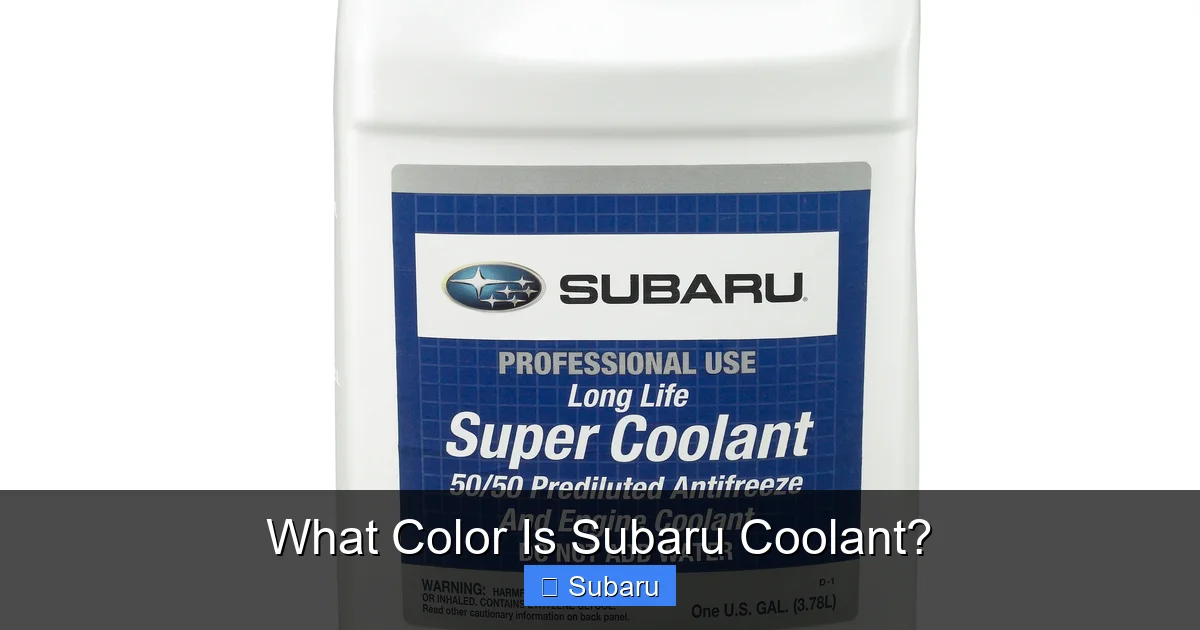
– Check the label: Genuine Subaru coolant will clearly state “Subaru Super Coolant” and include the Subaru logo. It’s usually sold in 1-gallon or 5-gallon containers at Subaru dealerships or authorized parts retailers.
– Look for the color: While color alone isn’t a guarantee, genuine Subaru coolant is consistently bright pink when new. If it looks faded, brown, or murky, it’s likely old or contaminated.
– Verify the specifications: Subaru coolant meets specific standards, such as Subaru’s own formulation or equivalent HOAT coolants that are phosphate-free and silicate-free. These properties help prevent scale buildup and protect aluminum components.
If you’re unsure, it’s always best to consult your owner’s manual or visit a Subaru service center. They can confirm the correct coolant type and even test your current coolant for degradation.
Why Coolant Color Matters for Subaru Owners
Visual guide about What Color Is Subaru Coolant?
Image source: s3.amazonaws.com
You might be thinking, “It’s just a color—how important can it really be?” The truth is, coolant color is a quick visual cue that helps prevent mistakes. With so many different coolants on the market—green, orange, blue, yellow, and pink—it’s easy to mix them up. But mixing incompatible coolants can cause serious damage.
For example, traditional green coolant (IAT—Inorganic Acid Technology) contains silicates and phosphates that can react with Subaru’s long-life HOAT formula. This reaction can form gels or sludge that clog the radiator, water pump, or heater core. Over time, this can lead to overheating, reduced coolant flow, and expensive repairs.
The pink color of Subaru coolant acts as a warning label. It tells you, “This is different. Don’t mix me with others.” It also helps technicians during service visits quickly identify whether the correct coolant is in the system.
Common Coolant Colors and What They Mean
To put Subaru’s pink coolant in context, here’s a quick rundown of common coolant colors and their typical uses:
– Green: Traditional IAT coolant, used in older vehicles (pre-2000s). Contains silicates and phosphates for fast-acting corrosion protection but requires more frequent changes.
– Orange: Dexcool coolant, used by GM. An OAT (Organic Acid Technology) formula that lasts longer but can cause issues in non-GM vehicles if mixed improperly.
– Blue/Purple: Often used in European vehicles (e.g., VW, BMW). May contain different additives and should not be mixed with HOAT coolants.
– Yellow: Typically used in Asian vehicles like Toyota and Honda. Some are HOAT-based, but formulations vary.
– Pink/Magenta: Subaru’s signature color, indicating a long-life HOAT coolant designed for Subaru engines.
As you can see, color is more than just a visual trait—it’s a shorthand for chemistry. Subaru’s pink coolant is part of a carefully engineered system, and using the wrong type can disrupt that balance.
Subaru Coolant Formula: What Makes It Special?
Visual guide about What Color Is Subaru Coolant?
Image source: images.simplepart.com
So, what’s actually inside Subaru coolant that makes it different? The answer lies in its chemical composition and additive package.
Subaru uses a Hybrid Organic Acid Technology (HOAT) formula. This means it combines organic acids (for long-term corrosion protection) with a small amount of inorganic inhibitors (for immediate protection). The result is a coolant that lasts longer than traditional green coolant but doesn’t have the potential compatibility issues of pure OAT formulas.
Key features of Subaru coolant include:
– Silicate-free and phosphate-free: This prevents scale buildup and protects aluminum components, which are common in Subaru engines.
– Long-life formulation: Designed to last up to 60,000 miles or 5 years, depending on driving conditions and maintenance.
– Compatible with Subaru materials: Tested to work with Subaru’s specific rubber hoses, gaskets, and plastic parts without causing degradation.
This tailored approach ensures that the coolant not only regulates temperature but also protects the entire cooling system from internal corrosion and wear.
Why Subaru Uses Aluminum in Engine Components
Subaru engines often feature aluminum cylinder heads and blocks, which are lighter and help improve fuel efficiency and performance. However, aluminum is more susceptible to corrosion than cast iron. That’s why Subaru’s coolant includes additives that form a protective layer on metal surfaces, preventing rust and pitting.
If you use a coolant with silicates (like traditional green coolant), those silicates can react with aluminum over time, causing pitting and leaks. Subaru’s silicate-free formula avoids this issue, extending the life of your engine.
How to Check and Maintain Subaru Coolant
Maintaining your Subaru’s coolant isn’t complicated, but it’s essential. Here’s a step-by-step guide to help you keep your cooling system in top shape.
Step 1: Check the Coolant Level
Start by locating the coolant reservoir under the hood. It’s usually a translucent plastic tank with “MIN” and “MAX” markings. With the engine cool, check that the fluid level is between these two lines.
If the level is low, top it off with the correct Subaru coolant or a 50/50 mix of coolant and distilled water. Never use tap water, as minerals can cause scale buildup.
Step 2: Inspect the Coolant Condition
Look at the color and clarity of the coolant. Fresh Subaru coolant should be bright pink and clear. If it’s dark, cloudy, or has particles floating in it, it’s time for a change.
You can also use a coolant test strip or take a sample to a Subaru service center for analysis. They can check the pH, freeze point, and additive levels to determine if the coolant is still effective.
Step 3: Follow the Replacement Schedule
Subaru recommends replacing the coolant every 30,000 to 60,000 miles, depending on your model and driving conditions. Check your owner’s manual for the exact interval.
For example:
– 2000–2012 Subaru models: Typically 30,000 miles or 3 years.
– 2013 and newer models: Often 60,000 miles or 5 years.
Severe driving conditions—like frequent short trips, towing, or extreme temperatures—may require more frequent changes.
Step 4: Flush the System When Needed
When replacing coolant, it’s best to perform a full system flush. This removes old coolant, rust, and debris that can accumulate over time. A Subaru service center can do this with specialized equipment, or you can do it yourself with a flush kit and distilled water.
After flushing, refill with the correct Subaru coolant mixture (usually 50% coolant, 50% distilled water).
Can You Use Other Coolants in a Subaru?
This is a common question, and the answer is: it depends.
While Subaru recommends using their OEM coolant, some aftermarket coolants are compatible—if they meet Subaru’s specifications. Look for coolants labeled as “HOAT,” “phosphate-free,” “silicate-free,” and “compatible with Subaru.”
Popular alternatives include:
– Zerex G-05 HOAT Coolant
– Peak Global Lifetime Antifreeze
– Prestone Max 50/50 Prediluted Antifreeze
Always check the product label and, if in doubt, consult your owner’s manual or a Subaru technician.
What Happens If You Mix Coolants?
Mixing incompatible coolants can cause:
– Gel formation that clogs the radiator
– Reduced heat transfer efficiency
– Corrosion of aluminum parts
– Premature water pump failure
If you accidentally mix coolants, it’s best to have the system flushed as soon as possible to prevent long-term damage.
Signs Your Subaru Coolant Needs Attention
Even with regular maintenance, coolant issues can arise. Watch for these warning signs:
– Overheating: The temperature gauge rises above normal. This could indicate low coolant, a faulty thermostat, or a clogged radiator.
– Sweet smell: A sugary odor inside the car may mean a coolant leak, often from the heater core.
– White smoke from the exhaust: Could indicate a blown head gasket, allowing coolant to enter the combustion chamber.
– Coolant leaks: Look for pink stains under the car or wet spots around hoses, the radiator, or the water pump.
– Low coolant level: If you’re frequently topping off, there’s likely a leak somewhere in the system.
If you notice any of these signs, have your Subaru inspected by a professional right away.
Conclusion: Protect Your Subaru with the Right Coolant
So, what color is Subaru coolant? Bright pink—and that color is more than just a visual trademark. It’s a sign of a carefully engineered fluid designed to protect Subaru’s unique engine components and ensure long-term reliability.
Using the correct coolant, checking levels regularly, and following the recommended replacement schedule are simple steps that can save you from costly repairs and keep your Subaru running smoothly for years to come.
Remember: not all pink coolants are created equal. Stick with Subaru Super Coolant or a verified equivalent, and avoid mixing different types. Your engine—and your wallet—will thank you.
Whether you’re cruising down the highway or tackling a mountain trail, your Subaru deserves the best care. And that starts with something as simple as the right pink coolant under the hood.
Frequently Asked Questions
Is all Subaru coolant pink?
Yes, genuine Subaru coolant is consistently bright pink or magenta. This color is used to identify Subaru’s long-life HOAT formula and differentiate it from other coolants.
Can I use green coolant in my Subaru?
No, green coolant (IAT) contains silicates and phosphates that can damage Subaru’s aluminum engine components. Always use a HOAT coolant that meets Subaru’s specifications.
How often should I change Subaru coolant?
Most Subaru models require a coolant change every 30,000 to 60,000 miles. Check your owner’s manual for the exact interval based on your vehicle and driving conditions.
Can I mix Subaru coolant with other brands?
Only if the other coolant is HOAT-based, phosphate-free, and silicate-free. When in doubt, avoid mixing and use only Subaru-approved coolant.
Why is my Subaru coolant dark or brown?
Dark or murky coolant indicates it’s old, contaminated, or has been mixed with incompatible fluids. This is a sign it needs to be flushed and replaced.
Can I top off with just water?
Only in emergencies. For long-term use, always use a 50/50 mix of Subaru coolant and distilled water to maintain proper freeze protection and corrosion resistance.
