
Do You Have to Use Subaru Coolant

Using Subaru coolant isn’t always mandatory, but it’s strongly recommended for optimal engine performance and longevity. While some aftermarket coolants may work in a pinch, Subaru-specific formulas are engineered to match your vehicle’s materials, operating temperatures, and corrosion protection needs.
Key Takeaways
- Subaru coolant is formulated specifically for Subaru engines: It contains additives that protect aluminum components, gaskets, and seals unique to Subaru’s design.
- Using the wrong coolant can cause corrosion and leaks: Generic or incompatible coolants may lack the right inhibitors, leading to premature wear or system failure.
- Mixing coolants can reduce effectiveness: Combining different types (e.g., OAT and HOAT) can neutralize additives and create sludge or deposits.
- Subaru recommends G013 coolant: Most modern Subarus (2000s–present) use Subaru Super Coolant (G013), a phosphate-free, long-life formula.
- Topping off is okay short-term, but full flushes should use OEM: You can add compatible coolant in emergencies, but a full system flush should use Subaru-approved coolant.
- Warranty considerations matter: Using non-approved coolant may void powertrain warranty claims if damage is linked to coolant issues.
- DIYers can save money with proper knowledge: With the right tools and understanding, you can safely maintain your cooling system without overpaying at the dealer.
📑 Table of Contents
- Do You Have to Use Subaru Coolant? A Complete Guide for Subaru Owners
- Why Subaru Recommends Its Own Coolant
- Can You Use Aftermarket Coolant in a Subaru?
- Understanding Subaru Coolant Types and Specifications
- How to Properly Maintain Your Subaru’s Cooling System
- Common Myths About Subaru Coolant
- Conclusion: Is Subaru Coolant Worth It?
Do You Have to Use Subaru Coolant? A Complete Guide for Subaru Owners
So, your Subaru’s temperature gauge is acting up, or you’re due for a coolant flush—and now you’re wondering: Do I really have to use Subaru coolant? It’s a fair question. After all, coolant is coolant, right? Not exactly. While it might seem like a simple fluid swap, the type of coolant you use can have a big impact on your engine’s health, performance, and longevity.
Subaru vehicles are engineered with precision, and that includes the cooling system. From the all-aluminum heads on many of their engines to the tight tolerances in the water pump and radiator, every component is designed to work with specific fluids. Using the wrong coolant—or mixing incompatible types—can lead to corrosion, overheating, leaks, and even costly repairs down the road. That’s why understanding whether you must use Subaru coolant isn’t just about brand loyalty—it’s about protecting your investment.
In this guide, we’ll break down everything you need to know about Subaru coolant: what makes it special, when you can get away with alternatives, how to identify the right type, and how to maintain your cooling system like a pro. Whether you’re a weekend mechanic or just trying to keep your Forester running smoothly, this article will give you the confidence to make the right choice.
Why Subaru Recommends Its Own Coolant
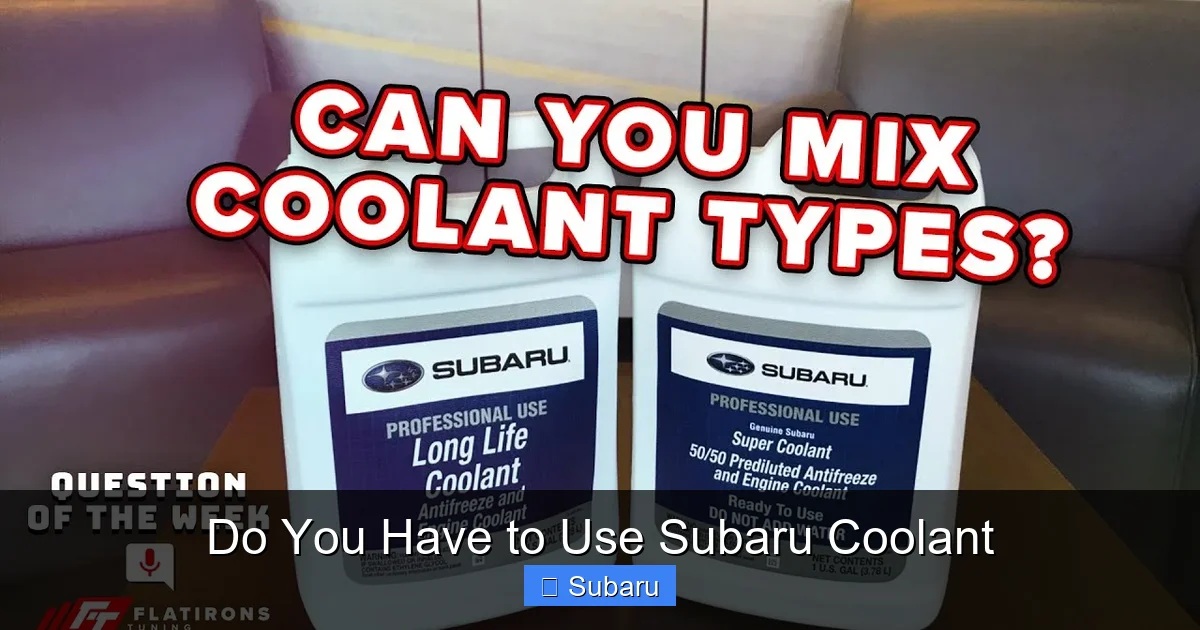
Subaru doesn’t just recommend its own coolant—it insists on it. And there’s a good reason. Modern Subaru engines, especially those with turbocharged variants like the WRX or the FA24 in the Outback, operate under high stress and high temperatures. The cooling system must manage heat efficiently while protecting delicate internal components from corrosion and wear.
Visual guide about Do You Have to Use Subaru Coolant
Image source: i.ytimg.com
Engine Design and Material Compatibility
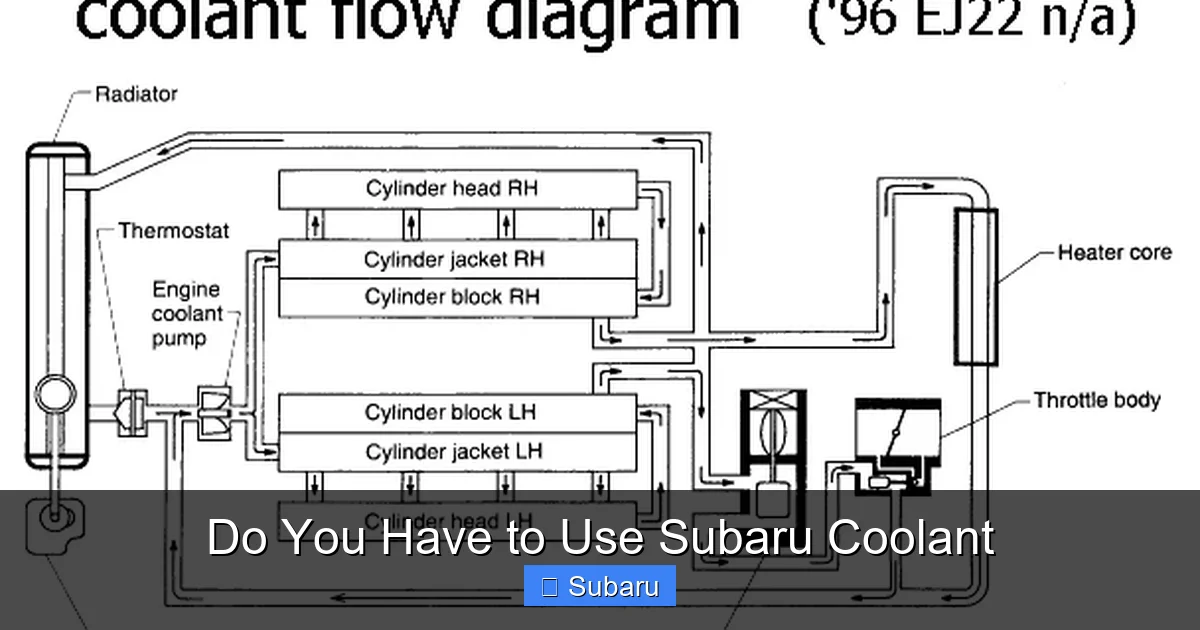
Most Subaru engines use aluminum cylinder heads and blocks, which are lighter and better at dissipating heat than cast iron—but they’re also more susceptible to corrosion if the wrong coolant is used. Subaru coolant is formulated with specific corrosion inhibitors that protect aluminum, as well as rubber hoses, gaskets, and plastic components found throughout the cooling system.
For example, older coolants often used silicates to protect aluminum, but these can form abrasive deposits over time. Subaru’s G013 Super Coolant is silicate-free and uses organic acid technology (OAT) to provide long-lasting protection without buildup. This means fewer deposits in the radiator and water pump, which helps maintain efficient heat transfer.
Long-Life Formulation
Subaru coolant is designed to last—up to 100,000 miles or 10 years in many models. This “long-life” formula reduces the frequency of flushes and minimizes downtime. But this longevity only works if the coolant isn’t diluted or contaminated by incompatible fluids.
Using a generic coolant with a different service interval (like the traditional 2-year/30,000-mile green coolant) can throw off the chemistry. Over time, the additives break down at different rates, leaving your system vulnerable. Subaru’s coolant is engineered to degrade predictably, ensuring consistent protection throughout its lifespan.
Warranty and Service Requirements
If your Subaru is still under warranty, using non-approved coolant could be risky. While manufacturers can’t legally void your entire warranty just because you used a different brand (thanks to the Magnuson-Moss Warranty Act), they can deny claims if they can prove the damage was caused by improper maintenance—including using the wrong coolant.
For instance, if a water pump fails due to corrosion from incompatible coolant, Subaru may refuse to cover the repair under warranty. That’s why dealerships always use OEM coolant during service—and why they’ll note it in your maintenance records.
Can You Use Aftermarket Coolant in a Subaru?
Now for the million-dollar question: Can you use aftermarket coolant in your Subaru? The short answer is: sometimes—but with major caveats.
Visual guide about Do You Have to Use Subaru Coolant
Image source: porcupine73.com
When Aftermarket Coolant Might Work
If you’re in a pinch and need to top off your coolant, a compatible aftermarket coolant might be acceptable—if it meets the same specifications as Subaru’s G013. Look for coolants labeled as “Phosphate-Free OAT” or “Hybrid OAT” that are compatible with Asian vehicles. Brands like Zerex G-05, Peak Global Lifetime, or Prestone Max offer formulations that are close matches.
However, “close” isn’t always good enough. Even small differences in additive packages can lead to incompatibility over time. For example, some aftermarket coolants contain phosphates, which Subaru explicitly warns against. Phosphates can react with aluminum and cause pitting or scaling, especially in high-heat areas like the cylinder head.
The Risks of Mixing Coolants
One of the biggest mistakes Subaru owners make is mixing different types of coolant. Let’s say your system has Subaru G013 (OAT), and you top it off with a traditional green IAT (Inorganic Additive Technology) coolant. The result? The additives can react, forming a gel-like sludge that clogs the radiator, heater core, or water pump.
This sludge not only reduces cooling efficiency but can also cause overheating and engine damage. In severe cases, the entire cooling system may need to be flushed and replaced—costing hundreds of dollars.
Even mixing two “compatible” OAT coolants can be risky. Different brands use different additive blends, and combining them can dilute or neutralize key inhibitors. The safest approach? Stick to one type—preferably Subaru’s own.
Real-World Example: The 2015 Outback Coolant Mix-Up
Consider this scenario: A 2015 Outback owner notices the coolant level is low. Instead of buying Subaru coolant, they grab a bottle of generic green coolant from the auto parts store. They top it off and drive away—problem solved, right?
Six months later, the heater stops working. The mechanic finds sludge in the heater core and traces it back to incompatible coolant mixing. The repair? A full cooling system flush, heater core replacement, and new coolant—total cost: over $800. All because of a $10 shortcut.
This isn’t an isolated case. Forum threads on SubaruOutback.org and Reddit’s r/Subaru are filled with similar stories. The lesson? Short-term savings can lead to long-term headaches.
Understanding Subaru Coolant Types and Specifications
Not all Subaru coolants are the same. Over the years, the manufacturer has updated its formulations to match evolving engine technology. Knowing which type your vehicle needs is crucial.
Visual guide about Do You Have to Use Subaru Coolant
Image source: m.media-amazon.com
Subaru Coolant Evolution: From Green to Pink
In the 1990s and early 2000s, Subaru used traditional ethylene glycol-based coolant with inorganic additives—the familiar green stuff. This type required changes every 2–3 years and offered limited corrosion protection.
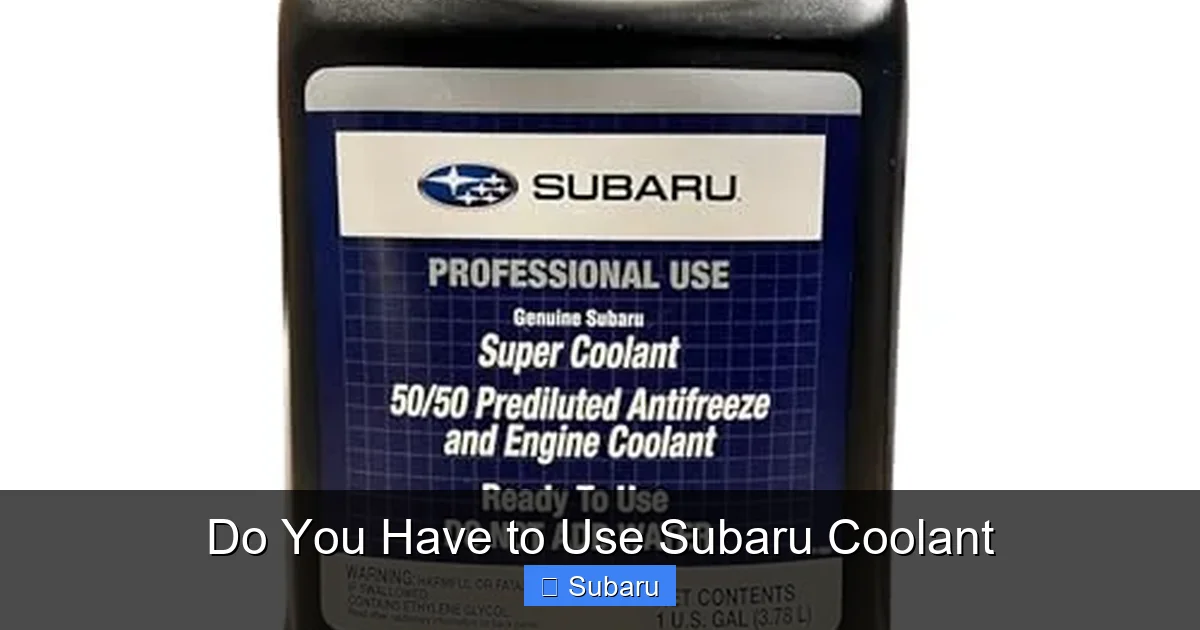
By the mid-2000s, Subaru transitioned to its current long-life formula: Subaru Super Coolant (G013). This pink or purple coolant is an organic acid technology (OAT) formula that’s phosphate-free and silicate-free. It’s designed to last up to 10 years or 100,000 miles, depending on the model.
Most Subarus from 2000 onward use G013, including popular models like the Impreza, Legacy, Outback, Forester, and WRX. Always check your owner’s manual or the coolant reservoir cap to confirm.
How to Identify Genuine Subaru Coolant
Authentic Subaru coolant is easy to spot. It comes in a distinctive pink or purple color (though color alone isn’t a guarantee—some aftermarket brands mimic it). The bottle will clearly state “Subaru Super Coolant” and include the G013 specification.
You can purchase it directly from a Subaru dealership or authorized parts retailer. While it’s more expensive than generic coolant (around $20–$25 per gallon), the peace of mind and protection are worth it.
Beware of counterfeit products, especially when buying online. Stick to reputable sellers and check for proper labeling, batch numbers, and Subaru branding.
Coolant Color vs. Chemistry: Don’t Be Fooled
Color is not a reliable indicator of coolant type. While Subaru coolant is typically pink or purple, some aftermarket OAT coolants are blue, yellow, or even green. Conversely, some counterfeit Subaru coolants may be dyed pink but lack the correct additives.
Always check the label for specifications like “Phosphate-Free OAT,” “Asian Vehicle Formula,” or “G013 Compatible.” When in doubt, consult your owner’s manual or a Subaru technician.
How to Properly Maintain Your Subaru’s Cooling System
Using the right coolant is only half the battle. Proper maintenance ensures your cooling system stays healthy for years to come.
When to Flush and Replace Coolant
Subaru recommends a coolant flush every 100,000 miles or 10 years for most models using G013 coolant. However, if you notice signs of contamination—like rust, sludge, or discoloration—don’t wait. Flush the system immediately.
Signs your coolant needs attention include:
- Overheating or erratic temperature gauge readings
- Coolant that looks rusty, cloudy, or has floating particles
- Sweet smell inside the cabin (indicating a heater core leak)
- Low coolant levels with no visible leaks
DIY Coolant Flush: Step-by-Step Tips
You don’t need to visit the dealer for a coolant flush. With the right tools and knowledge, you can do it yourself.
Here’s a simplified process:
- Let the engine cool completely.
- Place a drain pan under the radiator drain plug.
- Open the drain plug and radiator cap to allow coolant to flow out.
- Flush the system with distilled water until it runs clear.
- Close the drain plug and refill with a 50/50 mix of Subaru coolant and distilled water.
- Run the engine with the heater on high to circulate the new coolant.
- Check the level and top off as needed.
Always use distilled water—not tap water—to prevent mineral buildup. Tap water contains calcium and magnesium that can form scale in the radiator and engine.
Professional vs. DIY: Which Is Better?
A professional flush at a Subaru dealership ensures the job is done correctly, with proper disposal of old coolant and a system pressure test to check for leaks. It’s convenient and comes with a service record.
But DIY is cheaper and gives you full control. Just make sure you have the right tools: a coolant funnel, drain pan, and access to Subaru coolant. Many Subaru owners report saving $100–$150 by doing it themselves.
Either way, the key is consistency. Stick to the recommended schedule and use the correct coolant every time.
Common Myths About Subaru Coolant
There’s a lot of misinformation out there about coolant. Let’s clear up some common myths.
Myth 1: “All Pink Coolant Is the Same”
False. While many long-life coolants are pink, they’re not all compatible. Subaru’s G013 has a unique additive package. Using a different pink coolant—even if it’s OAT—can still cause issues.
Myth 2: “You Can Just Top Off with Water”
Never top off coolant with plain water. This dilutes the antifreeze, reduces corrosion protection, and lowers the boiling point. In cold climates, it can even cause the coolant to freeze. Always use a 50/50 mix of coolant and distilled water.
Myth 3: “Aftermarket Coolant Is Just as Good”
Not necessarily. While some high-quality aftermarket coolants meet Subaru’s specs, many don’t. The safest choice is always OEM coolant, especially for full system flushes.
Myth 4: “Coolant Lasts Forever”
Even long-life coolant breaks down over time. Heat, pressure, and contamination degrade the additives. Regular inspections and timely flushes are essential.
Conclusion: Is Subaru Coolant Worth It?
So, do you have to use Subaru coolant? Technically, no—but you should. The risks of using the wrong coolant far outweigh the small savings from buying a generic alternative. Subaru coolant is engineered specifically for your vehicle’s materials, operating conditions, and longevity goals.
From protecting aluminum components to maintaining warranty coverage, the benefits are clear. Whether you’re topping off or doing a full flush, choosing Subaru coolant is a smart, proactive step in caring for your vehicle.
Remember: your Subaru is more than just a car—it’s a trusted companion on road trips, mountain adventures, and daily commutes. Treat it right, and it’ll reward you with years of reliable performance. So next time you’re at the parts store, reach for that pink bottle. Your engine will thank you.
Frequently Asked Questions
Can I use Prestone coolant in my Subaru?
Prestone Max or Global Lifetime coolant may work if it’s labeled as phosphate-free OAT and compatible with Asian vehicles. However, Subaru recommends using only G013 coolant for optimal protection and warranty compliance.
What happens if I mix Subaru coolant with green coolant?
Mixing Subaru G013 (OAT) with traditional green coolant (IAT) can cause chemical reactions that form sludge. This sludge can clog the radiator, heater core, or water pump, leading to overheating and costly repairs.
How often should I change Subaru coolant?
Most modern Subarus using G013 coolant require a flush every 100,000 miles or 10 years. Check your owner’s manual for your specific model’s recommendation.
Can I top off with distilled water only?
No. Topping off with water dilutes the coolant, reduces corrosion protection, and can lead to freezing or boiling. Always use a 50/50 mix of coolant and distilled water.
Is Subaru coolant the same as Toyota or Honda coolant?
Not exactly. While many Asian manufacturers use similar OAT formulas, Subaru’s G013 has a unique additive package. Using coolant from another brand may not provide the same level of protection.
Where can I buy genuine Subaru coolant?
You can purchase authentic Subaru Super Coolant (G013) at any Subaru dealership or authorized parts retailer. Avoid unverified online sellers to prevent counterfeit products.
