
What Year Subaru Legacy to Avoid?

Choosing the right Subaru Legacy can save you thousands in repairs. While many model years are dependable, some have recurring mechanical and electrical problems. This guide reveals what year Subaru Legacy to avoid and why.
Key Takeaways
- 2005–2009 Subaru Legacy models are known for head gasket failures, leading to costly engine repairs.
- 2010–2014 models often suffer from excessive oil consumption, especially in the 2.5L naturally aspirated engines.
- 2015–2019 Legacy units may experience CVT transmission issues, including jerking, hesitation, and premature wear.
- Electrical gremlins plague several model years, particularly with infotainment systems and dashboard warning lights.
- Rust and corrosion are common in older models, especially in snowy regions with road salt exposure.
- Always check maintenance records and get a pre-purchase inspection before buying any used Legacy.
- Later models (2020–2024) are generally more reliable but still require regular upkeep to avoid issues.
📑 Table of Contents
What Year Subaru Legacy to Avoid? A Complete Buyer’s Guide
If you’re in the market for a used Subaru Legacy, you’re likely drawn to its reputation for all-wheel drive capability, comfortable ride, and long-term reliability. But not every model year lives up to that image. Some years have hidden flaws that can turn your dream car into a money pit.
The Subaru Legacy has been a staple in the midsize sedan segment since 1989, offering practicality, safety, and performance. Over the decades, it’s evolved with new engines, transmissions, and tech features. But with each redesign comes the risk of new problems. Knowing what year Subaru Legacy to avoid can save you from unexpected breakdowns, expensive repairs, and sleepless nights.
This guide dives deep into the Legacy’s history, highlighting the model years with the most reported issues. We’ll break down common problems, explain why they happen, and give you practical tips to make a smart purchase. Whether you’re a first-time buyer or upgrading from an older model, this information will help you choose a Legacy that lasts.
Why Some Subaru Legacy Years Are Riskier Than Others

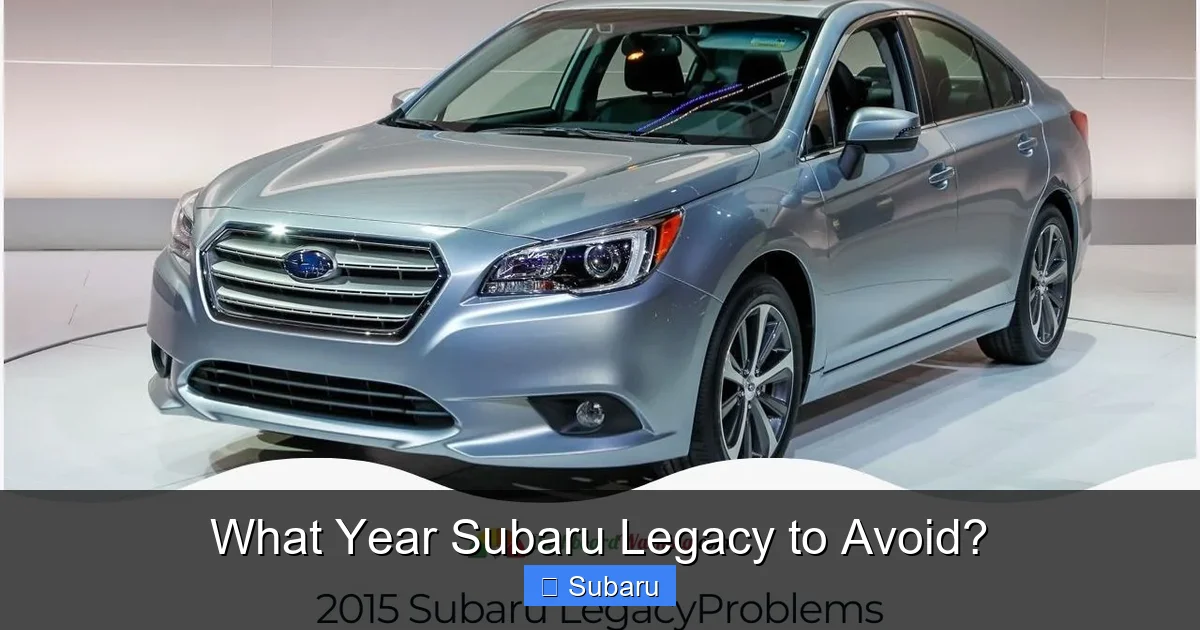
Visual guide about What Year Subaru Legacy to Avoid?
Image source: dashboardwarning.com
Every car model has its ups and downs, and the Subaru Legacy is no exception. While Subaru has built a loyal following thanks to its standard all-wheel drive and rugged engineering, certain model years have recurring flaws that make them less desirable.
These issues often stem from design choices, manufacturing shortcuts, or parts that weren’t tested long enough in real-world conditions. For example, Subaru switched to a new type of head gasket in the early 2000s that didn’t hold up well under stress. That single change led to widespread failures in several model years.
Other problems come from evolving technology. As Subaru added more electronics, infotainment systems, and continuously variable transmissions (CVTs), new failure points emerged. Some of these issues were fixed in later updates, but early adopters often paid the price.
The key is to understand which problems are common, how severe they are, and whether they can be prevented or repaired affordably. Let’s look at the specific years you should approach with caution.
Head Gasket Failures: The 2005–2009 Curse
One of the most infamous issues in Subaru history is the head gasket failure, and the 2005–2009 Subaru Legacy models are prime suspects. These years used a multi-layer steel (MLS) head gasket that, while more durable in theory, didn’t always perform well in practice.
The 2.5L flat-four engine in these models is particularly prone to head gasket leaks. Symptoms include white smoke from the exhaust, coolant loss with no visible leaks, overheating, and a sweet smell from the engine bay. In severe cases, the engine can suffer internal damage if the problem isn’t caught early.
Why did this happen? Subaru moved away from traditional composite gaskets to MLS designs to meet emissions and durability standards. But the new gaskets didn’t always seal properly under the stress of repeated heat cycles, especially in colder climates where engines don’t always reach full operating temperature.
Repairing a head gasket on a Subaru Legacy is no small task. It typically costs between $1,500 and $2,500, depending on labor rates and whether the engine needs additional work. In some cases, the repair isn’t worth the cost, especially if the car has high mileage.
Oil Consumption Woes: 2010–2014 Models
After Subaru addressed the head gasket issue in later models, a new problem emerged: excessive oil consumption. The 2010–2014 Subaru Legacy, especially those with the 2.5L FB-series engine, began burning oil at an alarming rate.
Owners reported needing to add a quart of oil every 1,000 to 1,500 miles. While Subaru initially dismissed the issue as “normal,” a class-action lawsuit eventually forced the company to extend warranties and offer reimbursements for affected vehicles.
The root cause? Piston ring design and cylinder wall finish. The rings didn’t seal properly, allowing oil to slip into the combustion chamber and burn off. This not only increases maintenance costs but can also lead to carbon buildup, reduced performance, and premature engine wear.
If you’re considering a 2010–2014 Legacy, check the oil level regularly and ask for maintenance records. A car that’s been diligently topped off might be fine, but one with a history of low oil levels could be a ticking time bomb.
CVT Transmission Troubles: 2015–2019 Legacy
Subaru embraced the continuously variable transmission (CVT) in the mid-2010s, and the 2015–2019 Legacy models came standard with this technology. While CVTs offer smoother acceleration and better fuel economy, they’ve also introduced new headaches.
Common complaints include jerking during acceleration, hesitation when shifting, delayed response, and a whining noise from the transmission. In some cases, the CVT would fail entirely, requiring a full replacement that can cost $4,000 or more.
The 2015 model year was especially problematic, with many owners reporting issues within the first 30,000 miles. Subaru issued technical service bulletins (TSBs) and extended the powertrain warranty to 10 years or 100,000 miles for CVT-related problems, but that doesn’t help if you’re buying out of warranty.
Later models (2017–2019) saw improvements, but the CVT still isn’t as robust as a traditional automatic. If you prefer a more engaging driving experience, consider a Legacy with a manual transmission—though those are rare in later years.
Electrical and Infotainment Glitches
As cars become more connected, electrical systems grow more complex—and more prone to failure. Several Subaru Legacy model years have reported issues with electronics, from flickering dash lights to complete infotainment system crashes.
The 2015–2019 models, in particular, have been criticized for their Starlink infotainment system. Owners complain of frozen screens, unresponsive touch controls, Bluetooth pairing failures, and navigation errors. In some cases, the system would reboot randomly while driving.
Other electrical issues include malfunctioning dashboard warning lights, faulty door locks, and problems with the rearview camera. These may seem minor, but they can be frustrating and costly to diagnose and repair.
Subaru has released software updates to address some of these bugs, but not all vehicles receive them automatically. If you’re buying a used Legacy, ask if the latest software has been installed and consider having a technician check the electrical system.
Rust and Corrosion: A Hidden Danger
While not unique to the Legacy, rust is a serious concern for older models, especially those from the 2000s and early 2010s. Subaru vehicles are popular in snowy regions where road salt is used heavily, accelerating corrosion.
Common rust spots include the wheel wells, rocker panels, undercarriage, and around the rear wheel arches. Left unchecked, rust can compromise structural integrity and lead to expensive bodywork.
The 2005–2009 models are especially vulnerable due to thinner body panels and less effective rustproofing. Even well-maintained cars can develop rust if they’ve spent years in harsh climates.
Before buying, inspect the car thoroughly. Look for bubbling paint, soft spots in the metal, and signs of previous repairs. A professional inspection can reveal hidden damage that isn’t visible to the untrained eye.
Which Subaru Legacy Years Are Actually Safe?
Visual guide about What Year Subaru Legacy to Avoid?
Image source: dashboardwarning.com
Now that we’ve covered what year Subaru Legacy to avoid, let’s talk about the safer bets. Not every model is a lemon—many years offer excellent reliability and value.
The 2020–2024 Subaru Legacy models are among the best in the lineup. They feature updated styling, improved safety tech (including Subaru’s EyeSight system), and a more refined ride. The 2.5L engine is proven, and the CVT has been refined for better durability.
The 2018–2019 models are also solid choices, especially if you find one with a manual transmission or a well-maintained CVT. These years benefit from Subaru’s warranty extensions and fewer reported issues than earlier CVT models.
Even some older years can be good buys if they’ve been properly maintained. A 2003–2004 Legacy with a manual transmission and a clean service history might be more reliable than a neglected 2015 model.
The key is to do your homework. Check the vehicle history report, review maintenance records, and have the car inspected by a trusted mechanic—preferably one familiar with Subarus.
How to Spot a Well-Maintained Legacy
A well-cared-for Legacy can last 200,000 miles or more. Here’s what to look for:
– **Service records:** Regular oil changes, timing belt replacements (if applicable), and transmission fluid flushes are signs of good care.
– **Clean engine bay:** A dirty or oily engine can indicate leaks or neglect.
– **Smooth operation:** Test drive the car and listen for unusual noises, hesitation, or rough shifting.
– **Interior condition:** Excessive wear on seats, pedals, or controls may suggest high mileage or poor maintenance.
– **Rust inspection:** Check under the car, especially in salt-prone areas.
Don’t be afraid to walk away if something feels off. There are plenty of Legacies on the market—find one that’s been loved, not abused.
Tips for Buying a Used Subaru Legacy

Visual guide about What Year Subaru Legacy to Avoid?
Image source: dashboardwarning.com
Buying a used car is always a gamble, but these tips can help you make a smarter choice:
1. **Research the specific year:** Use resources like Consumer Reports, NHTSA recalls, and Subaru forums to learn about common issues.
2. **Check for recalls:** Visit the NHTSA website and enter the VIN to see if the car has any open recalls.
3. **Get a pre-purchase inspection:** A mechanic can spot problems you might miss, especially with the engine, transmission, and suspension.
4. **Test drive in real conditions:** Drive on highways, hills, and stop-and-go traffic to test performance.
5. **Negotiate based on issues:** If the car has known problems, use that as leverage to lower the price.
6. **Consider certified pre-owned (CPO):** Subaru’s CPO program includes a warranty and thorough inspection, offering extra peace of mind.
Final Thoughts: Make an Informed Decision
So, what year Subaru Legacy to avoid? The short answer: be cautious with 2005–2009 (head gaskets), 2010–2014 (oil consumption), and 2015–2019 (CVT and electrical issues). These years have the most reported problems and the highest repair costs.
But that doesn’t mean all Legacies from those years are bad. Many have been well-maintained and remain reliable. The difference often comes down to care, climate, and driving habits.
The newer models (2020 and later) are generally the safest bet, with modern tech, better build quality, and fewer known flaws. However, even the best cars need regular maintenance.
Ultimately, the best Subaru Legacy for you is one that fits your budget, has a clean history, and passes a thorough inspection. Don’t rush the process. Take your time, ask questions, and trust your instincts.
With the right knowledge, you can find a Legacy that’s not just reliable—but a joy to drive for years to come.
Frequently Asked Questions
What year Subaru Legacy has the most problems?
The 2005–2009 models are widely considered the worst due to frequent head gasket failures. These issues often require expensive engine repairs and can leave owners stranded.
Is the 2015 Subaru Legacy reliable?
The 2015 Legacy has improved reliability over earlier models but is known for CVT transmission issues and infotainment glitches. Many problems were covered under warranty extensions.
Do Subaru Legacies burn oil?
Yes, especially the 2010–2014 models with the 2.5L engine. These cars can consume a quart of oil every 1,000–1,500 miles, leading to increased maintenance and potential engine damage.
How long do Subaru Legacy engines last?
With proper maintenance, a Subaru Legacy engine can last 200,000 miles or more. Regular oil changes, timing belt replacements, and avoiding overheating are key to longevity.
Should I avoid a used Subaru Legacy?
Not necessarily. Many used Legacies are reliable and offer great value. Just avoid high-risk model years and always get a pre-purchase inspection.
What’s better: a manual or CVT Subaru Legacy?
Manual transmissions are more durable and engaging but are rare in later models. CVTs offer better fuel economy but have had reliability issues in 2015–2019 models. Choose based on your driving preferences and maintenance habits.
