
What Years of Subaru Outback to Avoid?

Not every Subaru Outback model year is created equal. While the Outback is known for reliability and rugged capability, certain years have recurring mechanical problems that can cost you time and money. This guide highlights the specific model years to avoid—and why—so you can buy with confidence.
Key Takeaways
- 2000–2004 Subaru Outbacks suffer from head gasket failures: These early models are notorious for coolant leaks and overheating due to poorly designed head gaskets, often requiring expensive repairs.
- 2005–2009 models face CVT and automatic transmission issues: Many owners report shuddering, slipping, and premature failure in the 5-speed automatic and early CVT transmissions.
- 2010–2014 Outbacks have oil consumption and timing belt problems: The 3.6L H6 and 2.5L engines in these years burn excessive oil and may suffer from timing belt tensioner failures.
- 2015–2019 models deal with infotainment glitches and A/C compressor failures: The Starlink system is prone to freezing, while the air conditioning compressor can fail prematurely.
- 2020–2022 models show early signs of rear differential wear: Some AWD systems experience whining noises and fluid leaks, especially in high-mileage examples.
- Always check maintenance records and get a pre-purchase inspection: Even problematic years can be solid buys if well-maintained and repaired early.
- Best overall years: 2023–2024 offer improved reliability and tech: Newer models benefit from updated engineering, better materials, and stronger warranties.
📑 Table of Contents
- Introduction: The Subaru Outback’s Reputation—And Its Pitfalls
- Why Some Subaru Outback Years Are Riskier Than Others
- 2000–2004 Subaru Outback: The Head Gasket Nightmare
- 2005–2009 Subaru Outback: Transmission Troubles Take Center Stage
- 2010–2014 Subaru Outback: Oil Burners and Timing Belt Troubles
- 2015–2019 Subaru Outback: Tech Glitches and A/C Woes
- 2020–2022 Subaru Outback: New Model, New Problems
- Best Subaru Outback Years to Consider
- Conclusion: Knowledge Is Your Best Defense
Introduction: The Subaru Outback’s Reputation—And Its Pitfalls
The Subaru Outback has long been a favorite among outdoor enthusiasts, families, and commuters alike. With its standard all-wheel drive, generous ground clearance, and rugged yet refined design, it’s no surprise that the Outback has become one of Subaru’s best-selling vehicles. Over the decades, it’s earned a reputation for reliability, safety, and versatility—qualities that make it a top pick for used car shoppers.
But here’s the truth: not every Outback is built the same. Like any long-running vehicle line, the Outback has had its share of growing pains, engineering missteps, and component failures. While many model years are solid, dependable choices, others come with known issues that can lead to costly repairs, breakdowns, and headaches down the road. Whether you’re shopping for a used Outback or just curious about the model’s history, knowing which years to avoid can save you thousands of dollars and a lot of frustration.
Why Some Subaru Outback Years Are Riskier Than Others
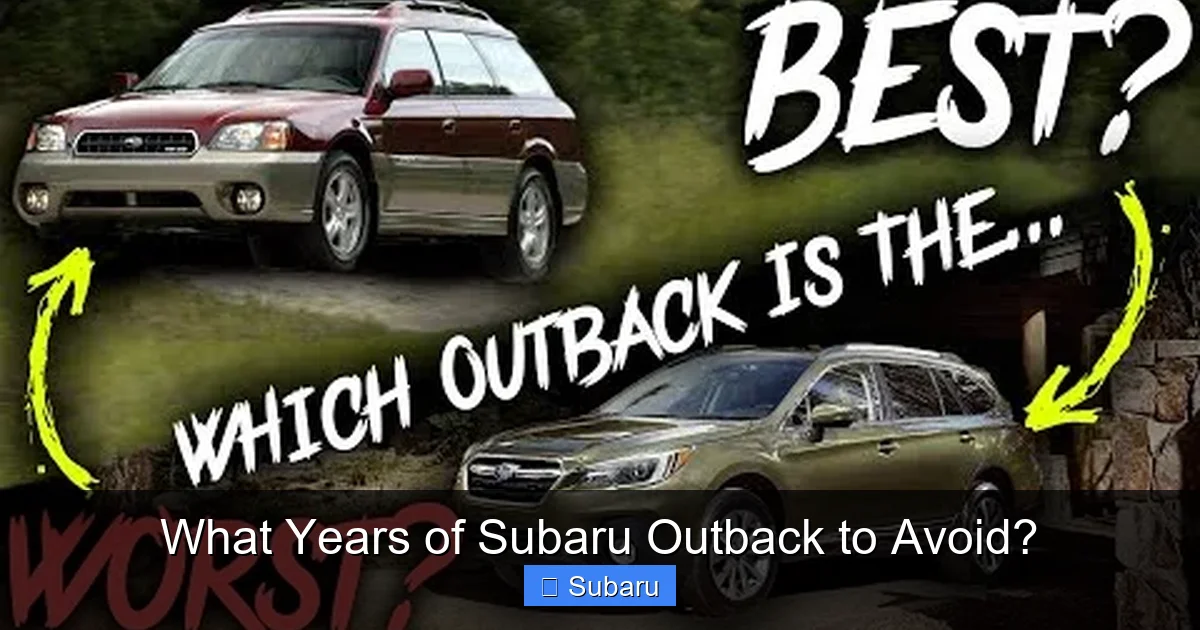
Visual guide about What Years of Subaru Outback to Avoid?
Image source: gmundcars.com
Every car model evolves over time. Engineers learn from past mistakes, manufacturers update parts, and new technologies are introduced. The Subaru Outback is no exception. However, during certain periods, Subaru rushed updates, used subpar components, or failed to address known flaws—leading to recurring problems in specific model years.
These issues often stem from a few key areas: engine design, transmission reliability, electrical systems, and suspension components. For example, early 2000s Outbacks used head gaskets that degraded quickly under heat stress. Later models introduced continuously variable transmissions (CVTs) that, while efficient, were prone to shuddering and failure if not properly maintained. Even newer models with advanced infotainment systems have faced software glitches and hardware malfunctions.
The good news? Many of these problems are well-documented by owners, mechanics, and consumer reports. By understanding the common failure points and knowing which years are most affected, you can make a smarter, more informed decision when buying a used Outback.
How to Use This Guide
This article breaks down the Subaru Outback model years from 2000 to 2024, highlighting the ones you should approach with caution. We’ll cover the most common issues, real-world examples, and tips for spotting trouble before you buy. We’ll also point out the best years to consider if you’re looking for a reliable, low-maintenance Outback.
Keep in mind that no car is perfect—even the best years can have isolated problems. But by avoiding the worst offenders, you dramatically increase your chances of getting a dependable vehicle that will last for years to come.
2000–2004 Subaru Outback: The Head Gasket Nightmare
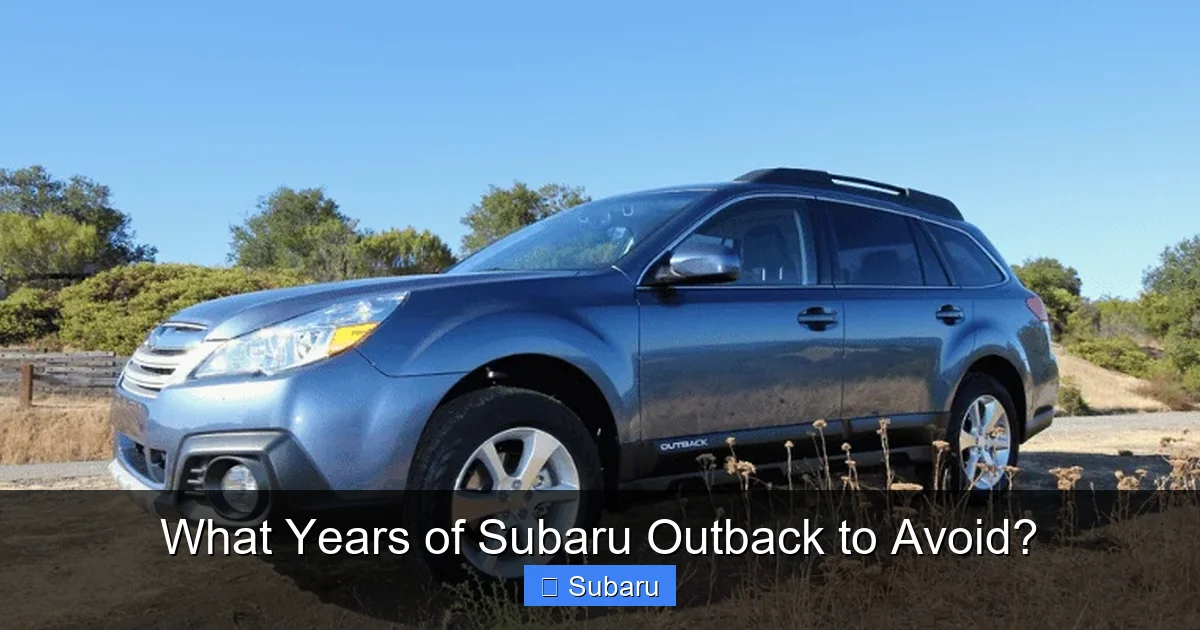
Visual guide about What Years of Subaru Outback to Avoid?
Image source: gmundcars.com
If you’re considering a first-generation Subaru Outback (2000–2004), proceed with extreme caution. These early models are infamous for one major flaw: head gasket failure. This issue isn’t just common—it’s practically expected if the car has over 100,000 miles and hasn’t been repaired.
The Root of the Problem
The 2.5L horizontally opposed (boxer) engine used in these Outbacks was prone to head gasket leaks due to a combination of poor gasket material and inadequate cooling system design. Over time, heat cycles cause the gaskets to degrade, leading to coolant leaks, oil contamination, and engine overheating. In severe cases, this can result in warped cylinder heads or even engine failure.
Symptoms include white smoke from the exhaust, coolant loss without visible leaks, overheating, and a sweet smell from the engine bay. Many owners report the problem appearing between 80,000 and 120,000 miles—right when you’d hope the car is hitting its stride.
Real-World Impact
A quick search on forums like SubaruOutback.org or Reddit’s r/Subaru reveals countless stories of owners facing $1,500–$2,500 repair bills for head gasket replacements. Some even opted to sell the car rather than fix it. While Subaru eventually extended warranties and issued technical service bulletins (TSBs), the damage was done—these years earned a lasting reputation for unreliability.
Can You Still Buy One?
It’s not impossible to find a well-maintained 2000–2004 Outback, but you must be diligent. Look for vehicles with documented head gasket repairs, a clean coolant system, and no signs of overheating. A pre-purchase inspection by a Subaru specialist is essential. Even then, consider setting aside $2,000 for potential repairs—just in case.
2005–2009 Subaru Outback: Transmission Troubles Take Center Stage
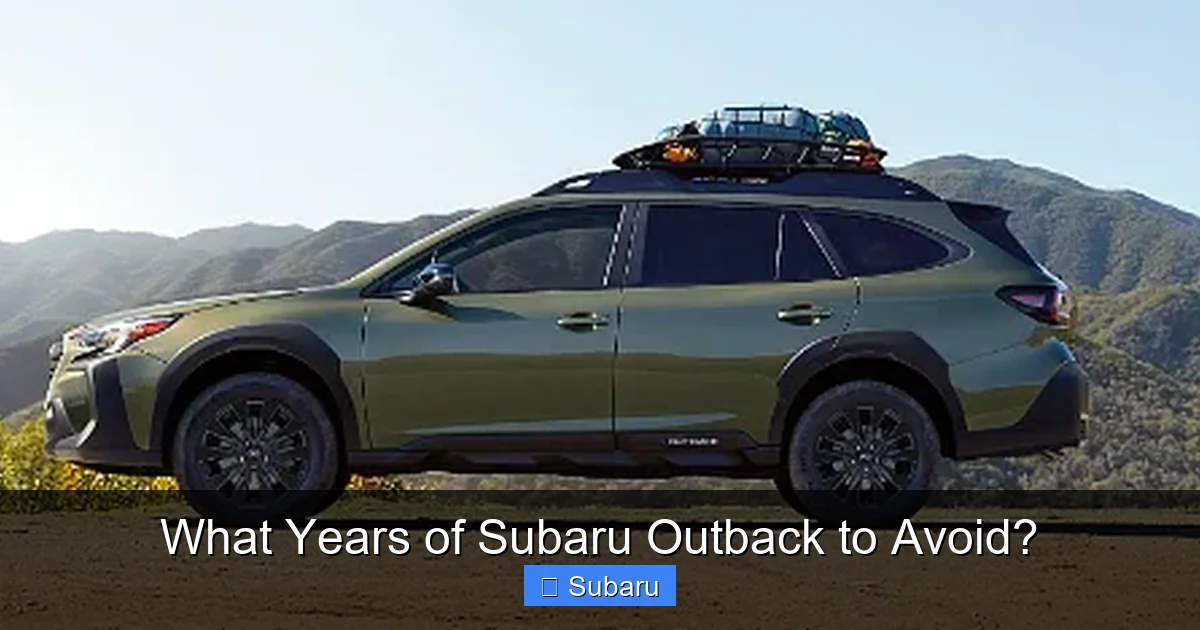
Visual guide about What Years of Subaru Outback to Avoid?
Image source: dashlights.net
The second-generation Outback (2005–2009) brought improvements in styling, safety, and interior space. But under the hood, new problems emerged—especially with the automatic transmissions.
5-Speed Automatic and Early CVT Issues
These years offered two transmission options: a 5-speed automatic and, starting in 2006, a continuously variable transmission (CVT). Both had their issues. The 5-speed automatic was prone to torque converter shudder, delayed shifting, and premature wear—especially in vehicles used for towing or mountain driving.
The CVT, introduced as a fuel-efficient alternative, was even more problematic. Early CVTs suffered from belt slippage, overheating, and sudden failure. Many owners reported the transmission “jerking” or “shuddering” during acceleration, especially in cold weather. Subaru issued multiple TSBs and extended warranties, but the reputation stuck.
Oil Consumption and Engine Wear
In addition to transmission woes, the 2.5L engine in these years was known for excessive oil consumption. Some owners had to add a quart of oil every 1,000 miles. While not always a sign of imminent failure, it indicates increased engine wear and the need for frequent monitoring.
What to Watch For
When test-driving a 2005–2009 Outback, pay close attention to transmission behavior. Does it shift smoothly? Any hesitation or jerking? Check the transmission fluid—it should be red or pink, not brown or burnt-smelling. Also, ask for maintenance records to see if the CVT fluid has been changed regularly (every 30,000–60,000 miles is recommended).
If the transmission has already been replaced or rebuilt, that’s a red flag—unless it was done under warranty and documented. Otherwise, you may be inheriting someone else’s problem.
2010–2014 Subaru Outback: Oil Burners and Timing Belt Troubles
The third-generation Outback (2010–2014) marked a significant redesign, with a more car-like ride, improved fuel economy, and a new 3.6L H6 engine option. But these advancements came with new challenges.
Excessive Oil Consumption
Both the 2.5L and 3.6L engines in these years were prone to burning oil. The 2.5L, in particular, was affected by piston ring design flaws that allowed oil to seep into the combustion chamber. Subaru acknowledged the issue and extended warranties for some vehicles, but many owners were left with the burden of frequent oil top-offs.
Drivers reported needing to add a quart of oil every 1,000 to 2,000 miles. While not immediately catastrophic, chronic oil consumption can lead to spark plug fouling, catalytic converter damage, and reduced engine performance over time.
Timing Belt Tensioner Failures
Another common issue was premature failure of the timing belt tensioner. The timing belt is a critical component—if it breaks, the engine can suffer severe internal damage. In these models, the tensioner would wear out early, causing the belt to slip or snap.
Symptoms include a rattling noise from the engine, especially at startup, and check engine lights related to camshaft timing. Subaru issued a TSB and extended the timing belt replacement interval, but many owners weren’t aware of the risk until it was too late.
Electrical and Suspension Quirks
These years also saw occasional complaints about electrical gremlins—flickering dash lights, faulty door locks, and malfunctioning power windows. The rear suspension, while improved, could develop noise and wear in the struts and bushings, especially in high-mileage examples.
Buying Tips
If you’re eyeing a 2010–2014 Outback, check the oil level before and after a test drive. Ask the owner how often they add oil. Also, verify that the timing belt and water pump have been replaced (recommended every 105,000 miles). A compression test can help assess engine health and oil consumption.
2015–2019 Subaru Outback: Tech Glitches and A/C Woes
The fourth-generation Outback (2015–2019) brought a modern interior, advanced safety features, and the introduction of Subaru’s Starlink infotainment system. But with new tech came new problems.
Starlink Infotainment System Failures
The Starlink system, while feature-rich, was plagued by software bugs. Common issues included freezing screens, unresponsive touch controls, Bluetooth pairing failures, and navigation errors. Some owners reported the system rebooting randomly while driving—a serious distraction.
Subaru released multiple software updates, but many problems persisted. In extreme cases, the entire head unit had to be replaced, costing $800–$1,500.
A/C Compressor Failures
Another widespread issue was premature failure of the air conditioning compressor. Owners reported the A/C blowing warm air, strange noises from the compressor, and complete system shutdowns. The problem was so common that class-action lawsuits were filed, and Subaru extended warranties for some vehicles.
The root cause? A faulty compressor clutch and poor refrigerant circulation. Repairs often required a full compressor replacement, costing $1,200–$2,000.
CVT and Engine Updates
On the positive side, Subaru improved the CVT in these years, reducing shuddering and improving responsiveness. The 2.5L and 3.6L engines were more refined, with better fuel economy and reduced oil consumption compared to earlier models.
What to Look For
Test the infotainment system thoroughly. Try pairing your phone, using navigation, and adjusting settings. Listen for A/C compressor noises and ensure the system cools effectively. Check for any warning lights related to the HVAC or electrical systems.
2020–2022 Subaru Outback: New Model, New Problems
The fifth-generation Outback (2020–2022) introduced a completely new platform, updated styling, and the latest EyeSight safety suite. But even with these improvements, early adopters reported some growing pains.
Rear Differential and AWD System Issues
Some owners of 2020–2022 Outbacks reported whining or grinding noises from the rear differential, especially during acceleration or cornering. In severe cases, the differential would leak fluid or fail entirely, requiring a costly rebuild or replacement.
Subaru issued a TSB and extended the warranty on the rear differential for affected vehicles, but the problem still appears in high-mileage or heavily used examples.
Transmission and Engine Software Glitches
Early software in the CVT and engine control units caused occasional hesitation, rough shifting, and false check engine lights. Subaru released updates to address these issues, but some owners experienced delays in getting repairs.
Build Quality Concerns
A few owners reported fit-and-finish issues, such as misaligned panels, rattling trim, and sunroof leaks. While not widespread, these problems suggest quality control inconsistencies during the initial production run.
Is It Still a Good Buy?
Despite these issues, the 2020–2022 Outback is generally reliable, especially if it’s been well-maintained and updated with the latest software. Look for vehicles with a clean service history and no signs of differential noise or leaks.
Best Subaru Outback Years to Consider
If you’re looking to avoid trouble altogether, focus on the 2023–2024 models. These latest Outbacks benefit from years of refinement, improved materials, and stronger warranties. They also come with the most advanced safety and tech features, including standard EyeSight, wireless Apple CarPlay, and a more intuitive infotainment system.
Other solid choices include:
– **2013–2014 (with timing belt replaced):** These years have fewer tech issues and strong engines—if maintained properly.
– **2017–2019 (with A/C compressor checked):** Great balance of features and reliability, especially if the compressor has been inspected.
Final Tips for Buying a Used Outback
No matter the year, always:
– Get a pre-purchase inspection by a Subaru specialist.
– Check the vehicle history report for accidents and repairs.
– Review maintenance records—especially for timing belts, CVT fluid, and head gaskets.
– Test drive in various conditions (highway, hills, cold start).
– Avoid high-mileage examples with no service history.
Conclusion: Knowledge Is Your Best Defense
The Subaru Outback is a fantastic vehicle—when you pick the right year. While models from 2000–2022 have their share of problems, being informed helps you avoid the worst offenders. By steering clear of known trouble spots and focusing on well-maintained examples, you can enjoy all the benefits of Subaru’s iconic wagon without the headaches.
Remember, no car is perfect, but some are definitely riskier than others. Use this guide as your roadmap, and you’ll be much more likely to find an Outback that’s as reliable as it is rugged.
Frequently Asked Questions
What is the most common problem with older Subaru Outbacks?
The most common issue in older Outbacks (2000–2004) is head gasket failure, often leading to coolant leaks and overheating. This problem is so widespread that many mechanics consider it a matter of “when,” not “if.”
Are Subaru Outbacks reliable after 100,000 miles?
Yes, many Outbacks are reliable past 100,000 miles—especially if they’ve been well-maintained. However, high-mileage examples from problematic years (like 2000–2004 or 2010–2014) may require expensive repairs if critical components haven’t been replaced.
Should I avoid a used Outback with a CVT transmission?
Not necessarily. CVTs in 2015 and newer models are much more reliable than earlier versions. Just ensure the CVT fluid has been changed regularly and watch for shuddering or hesitation during acceleration.
How often should I change the oil in a Subaru Outback?
Subaru recommends oil changes every 6,000 miles or 6 months for most models. However, if your Outback burns oil (common in 2010–2014 models), check the level weekly and top off as needed.
Can I fix a head gasket issue myself?
Head gasket replacement is a complex job requiring engine disassembly. Unless you’re an experienced mechanic, it’s best left to professionals. Costs typically range from $1,500 to $2,500.
Is the 2023 Subaru Outback worth the extra cost?
Yes, if you value the latest safety tech, improved reliability, and a smoother ride. The 2023–2024 models have fewer reported issues and come with stronger warranties, making them a smart long-term investment.
