
Is Subaru Starlink the Same as Starlink?

Subaru Starlink and Starlink by SpaceX are completely different technologies. Subaru Starlink is an in-vehicle infotainment and safety system, while Starlink delivers high-speed satellite internet globally. Understanding the distinction helps avoid confusion and ensures you choose the right tech for your needs.
Key Takeaways
- Subaru Starlink is not the same as Starlink by SpaceX. They share a name but serve entirely different purposes—one is for cars, the other for internet.
- Subaru Starlink focuses on vehicle connectivity, safety, and entertainment. It includes features like emergency assistance, remote start, navigation, and app integration.
- Starlink by SpaceX provides satellite-based internet service. It’s designed to bring high-speed internet to remote and rural areas using a constellation of low Earth orbit satellites.
- Subaru Starlink requires a subscription and works through cellular networks. It relies on 4G LTE or 5G signals, not satellites, to function.
- Starlink requires a satellite dish and clear sky view. Users must install hardware and have an unobstructed view of the sky for optimal performance.
- Both systems aim to improve connectivity but in very different environments. One enhances your driving experience; the other transforms your home internet access.
- Confusion arises from the shared name, but the technologies are unrelated. Always verify which “Starlink” you’re referring to based on context.
📑 Table of Contents
Introduction: Why the Confusion Exists
If you’ve ever searched online for “Starlink” and stumbled upon Subaru’s in-car system, you’re not alone. The name “Starlink” appears in two very different technological realms—one inside your car, the other orbiting Earth. This overlap has led to widespread confusion, especially as both systems gain popularity. But here’s the truth: Subaru Starlink and Starlink by SpaceX are not the same thing. They don’t share technology, ownership, or even a similar purpose.
Subaru Starlink is an integrated vehicle system designed to keep drivers connected, safe, and entertained. It’s built into many modern Subaru models and offers features like emergency crash response, remote vehicle controls, real-time traffic updates, and smartphone integration. On the other hand, Starlink—the one often associated with Elon Musk and SpaceX—is a global satellite internet service. It beams high-speed internet down from space to homes, businesses, and even vehicles in remote locations. Despite the similar branding, these are two distinct innovations serving entirely different needs.
What Is Subaru Starlink?
Visual guide about Is Subaru Starlink the Same as Starlink?
Image source: cooplalonja.com.ar
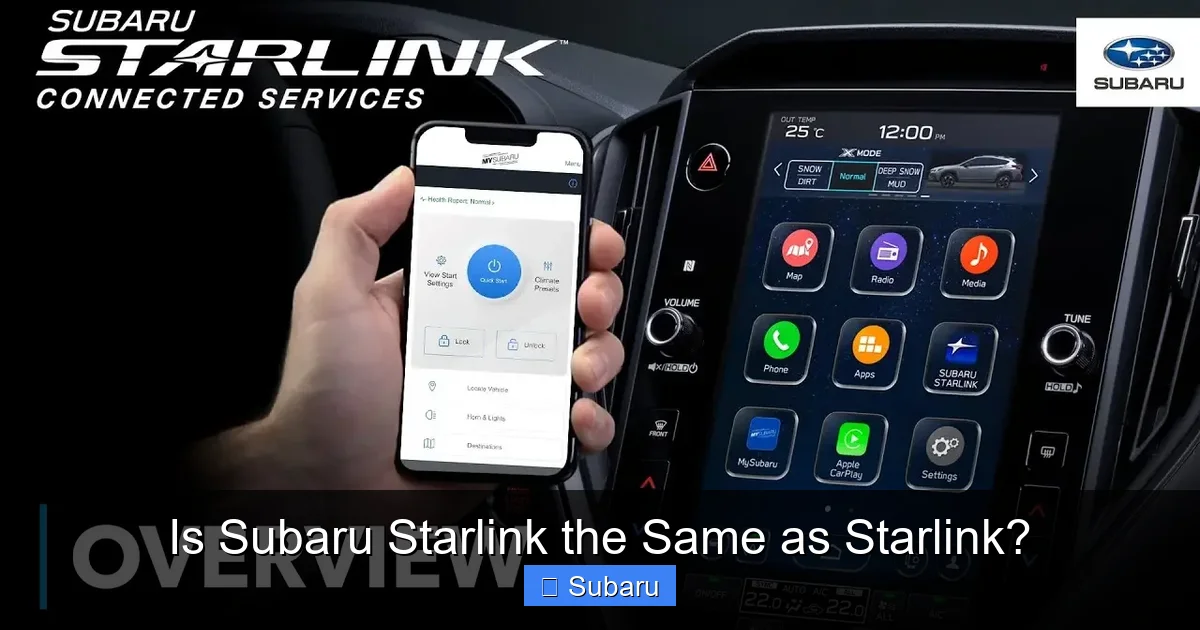
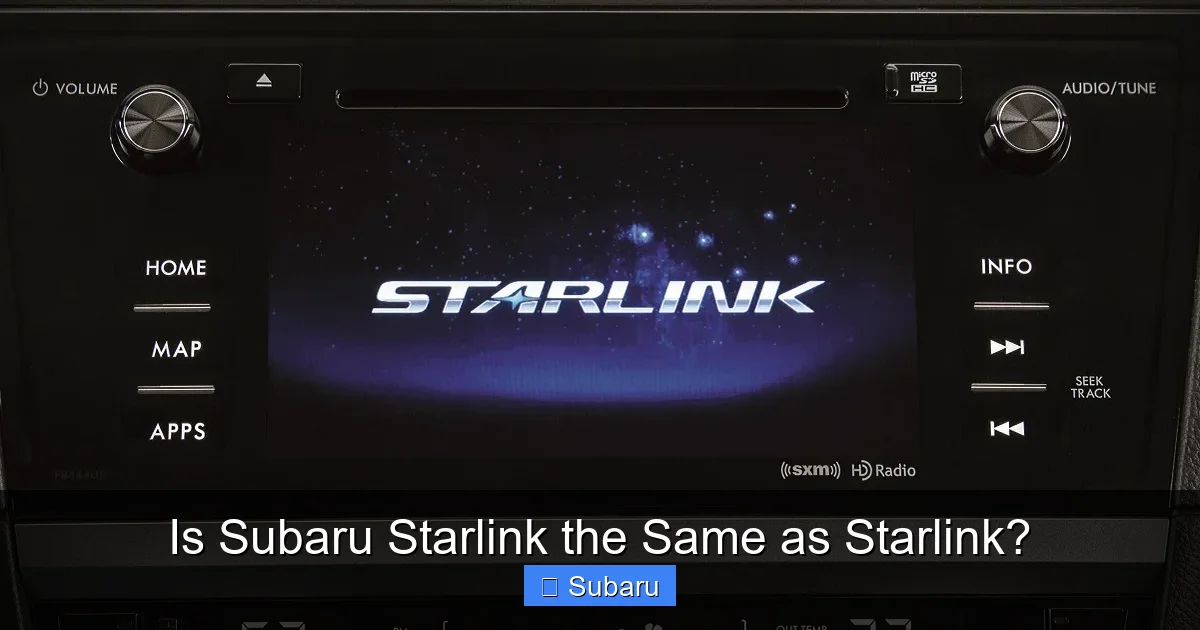
Subaru Starlink is the brand name for Subaru’s suite of connected vehicle services and infotainment technology. First introduced in 2015, it has evolved over the years to include a wide range of features that enhance safety, convenience, and entertainment for drivers and passengers. The system is embedded directly into Subaru vehicles and integrates with the car’s dashboard display, steering wheel controls, and audio system.
Core Features of Subaru Starlink
At its core, Subaru Starlink is designed to make driving safer and more convenient. One of its most important features is the Safety and Security package. This includes automatic collision notification, which detects when an accident has occurred and automatically contacts emergency services with your location. It also offers SOS emergency assistance, allowing drivers to press a button and connect directly to a response center in case of medical emergencies, breakdowns, or other urgent situations.
Another key component is Remote Services. Through the MySubaru mobile app, owners can remotely start their vehicle, lock or unlock doors, honk the horn, flash the lights, and even check the vehicle’s status—like fuel level or tire pressure—from anywhere with a cellular connection. This is especially useful in extreme weather, allowing you to warm up or cool down your car before getting in.
Entertainment and Connectivity
Subaru Starlink also includes a robust Multimedia and Infotainment system. Depending on the trim level and model year, it supports Apple CarPlay and Android Auto, enabling seamless smartphone integration. This means you can access your favorite music apps, navigation tools, and messaging services through the car’s touchscreen without touching your phone.
Some higher-end models come with built-in navigation powered by TomTom, offering real-time traffic updates, points of interest, and voice-guided directions. Additionally, Subaru Starlink supports over-the-air (OTA) software updates, meaning your system can receive improvements and new features without needing to visit a dealership.
Subscription Requirements and Limitations
It’s important to note that many Subaru Starlink features require an active subscription. Subaru typically offers a free trial period—usually 12 months—for new vehicle owners. After that, users must pay a monthly or annual fee to continue using services like remote start, emergency assistance, and navigation. The cost varies by package, but it generally ranges from $10 to $25 per month.
Another limitation is that Subaru Starlink relies on cellular networks (4G LTE or 5G) to function. This means that in areas with poor cell coverage, some features—like remote services or real-time traffic—may not work reliably. Unlike satellite-based systems, it cannot operate in truly remote or off-grid locations.
What Is Starlink by SpaceX?
Visual guide about Is Subaru Starlink the Same as Starlink?
Image source: ineaxmotors.com
Starlink, developed by SpaceX, is a satellite internet constellation designed to provide high-speed, low-latency internet access across the globe—especially in rural and underserved areas. Founded by Elon Musk, the project launched its first satellites in 2019 and has since deployed thousands into low Earth orbit (LEO). The goal is to create a global broadband network that bypasses traditional ground-based infrastructure like fiber cables or cell towers.
How Starlink Works
Starlink works by beaming internet signals from space to a user’s satellite dish, often called a “Dishy McFlatface” due to its flat, compact design. The dish connects to a router, which then distributes the internet signal via Wi-Fi throughout a home, office, or vehicle. Because the satellites orbit much closer to Earth than traditional geostationary satellites—around 550 kilometers versus 35,000 kilometers—the latency (or delay) is significantly reduced, making it suitable for video calls, online gaming, and streaming.
Users must install the dish in a location with a clear view of the sky, free from obstructions like trees or buildings. The system automatically aligns itself and connects to the nearest satellites in the constellation. As satellites move across the sky, the dish seamlessly hands off the connection to maintain a stable link.
Performance and Availability
Starlink offers download speeds ranging from 50 to 200+ Mbps, with latency between 20 to 50 milliseconds—comparable to or better than many terrestrial broadband services. This performance makes it a game-changer for people living in rural areas where cable or fiber internet is unavailable.
The service is available in over 70 countries and continues to expand. While it was initially targeted at residential users, Starlink has also launched specialized plans for RVs, maritime use, and aviation. For example, the Starlink RV plan allows travelers to stay connected while on the road, though speeds may be deprioritized during peak times compared to home users.
Cost and Equipment
To use Starlink, customers must purchase the hardware kit, which includes the satellite dish, router, cables, and mounting hardware. As of 2024, the upfront cost is around $599, with a monthly service fee of $120 for the standard residential plan. The RV plan costs $150 per month, and there are also business and high-performance options with higher prices and faster speeds.
Unlike Subaru Starlink, which is built into vehicles, Starlink requires separate equipment and installation. It’s not designed for in-car use unless you’re using the RV plan and have a compatible setup. Even then, it’s not integrated into the vehicle’s infotainment system like Subaru’s offering.
Key Differences Between Subaru Starlink and Starlink
Visual guide about Is Subaru Starlink the Same as Starlink?
Image source: ineaxmotors.com
Despite the similar names, Subaru Starlink and Starlink by SpaceX differ in nearly every aspect—from technology and purpose to cost and user experience. Understanding these differences is essential to avoid confusion and make informed decisions about which service best fits your needs.
Purpose and Function
The most fundamental difference is their purpose. Subaru Starlink is a vehicle-centric system focused on enhancing the driving experience through safety, convenience, and entertainment. It’s designed to keep you connected while on the road, help in emergencies, and integrate with your daily routines.
In contrast, Starlink by SpaceX is a broadband internet service aimed at providing reliable, high-speed internet to homes, businesses, and mobile users—especially in areas without traditional infrastructure. It’s not limited to vehicles and can be used anywhere with a clear sky view.
Technology and Infrastructure
Subaru Starlink relies on cellular networks (4G/5G) to transmit data. It uses the same towers and infrastructure as your smartphone, which means its performance depends on local cell coverage. If you’re in a remote area with no signal, many features—like remote start or real-time traffic—won’t work.
Starlink, on the other hand, uses a constellation of satellites in low Earth orbit. It doesn’t depend on ground-based towers or cables. Instead, it communicates directly with satellites passing overhead, making it ideal for rural, mountainous, or otherwise isolated locations.
Hardware and Installation
Subaru Starlink is factory-installed in compatible vehicles. There’s no additional hardware to buy or install—it’s part of the car’s built-in system. All you need is a subscription to activate the services.
Starlink requires a separate hardware kit that users must purchase and set up. This includes a satellite dish, router, and mounting equipment. Installation can take 30 minutes to an hour and requires a clear view of the sky. It’s not something you can simply plug into your car like a phone charger.
Cost Structure
Subaru Starlink typically comes with a free trial period (usually 12 months), after which users pay a monthly subscription fee. The cost is relatively low—around $10–$25 per month—depending on the package. Since it’s tied to the vehicle, you don’t pay extra for hardware.
Starlink has a higher upfront cost ($599 for the hardware) and a higher monthly fee ($120–$150). While the service is more expensive, it provides a full internet connection, not just vehicle features. For users in areas without broadband, the investment can be well worth it.
User Experience
With Subaru Starlink, the experience is integrated and seamless. Features like remote start, navigation, and emergency assistance are accessible through the car’s interface or a mobile app. It’s designed for everyday convenience and safety.
Starlink offers a standalone internet experience. Once set up, it functions like any other Wi-Fi network. You can connect laptops, phones, smart TVs, and other devices. It’s not tied to a vehicle unless you’re using the RV plan, and even then, it’s an add-on rather than a built-in feature.
Common Misconceptions and Clarifications
Due to the shared name, many people assume Subaru Starlink and Starlink are related or even the same product. This confusion is understandable, especially with the rise of both technologies in the 2020s. Let’s clear up some of the most common misconceptions.
“Subaru Starlink uses satellite internet like SpaceX.”
This is false. Subaru Starlink does not use satellite internet. It operates entirely on cellular networks. While it’s true that some vehicles may offer Wi-Fi hotspots (often powered by a built-in LTE modem), this is still ground-based connectivity, not satellite.
“You can get Starlink internet in your Subaru.”
Not directly. While you can use a Starlink RV dish to get internet while traveling, it’s not integrated into the car’s system like Subaru Starlink. You’d need to set up the dish outside the vehicle and connect via Wi-Fi. It’s an external solution, not a built-in feature.
“Both systems are made by the same company.”
No. Subaru Starlink is developed and branded by Subaru of America. Starlink is a product of SpaceX, a private aerospace company founded by Elon Musk. There is no corporate relationship between the two.
“Starlink is just a fancy name Subaru borrowed.”
While it’s possible Subaru chose the name for its futuristic appeal, there’s no evidence of collaboration or licensing. The similarity is coincidental, though it has undoubtedly caused confusion.
Practical Examples: When to Use Each System
To better understand the differences, let’s look at real-world scenarios where each system shines.
Scenario 1: Daily Commuting in the City
Imagine you drive a 2023 Subaru Outback with Starlink. During your morning commute, you use Apple CarPlay to listen to Spotify, get real-time traffic updates, and receive a notification that your car has been unlocked remotely because you forgot to lock it. If you get into a minor fender bender, the automatic collision notification system contacts emergency services and shares your location. This is Subaru Starlink in action—enhancing safety and convenience in everyday driving.
Scenario 2: Remote Work from a Cabin
Now picture yourself working remotely from a cabin in the mountains, far from any cell towers or fiber lines. You’ve installed a Starlink dish on your roof. Within minutes, you’re connected to high-speed internet, joining video calls, uploading large files, and streaming movies without interruption. This is Starlink by SpaceX—bringing reliable broadband to places traditional providers can’t reach.
Scenario 3: Road Trip with an RV
You’re on a cross-country RV trip and want to stay connected. You’ve subscribed to Starlink’s RV plan and mounted the dish on your vehicle. While driving, you use your phone’s hotspot for basic needs, but when you stop at a campsite, you deploy the Starlink dish for full internet access. Meanwhile, your Subaru Crosstrek (towed behind the RV) uses its built-in Starlink system for navigation and emergency assistance. Here, both systems complement each other—but serve different roles.
Conclusion: Two Stars, Different Orbits
In the end, Subaru Starlink and Starlink by SpaceX are like two stars in different galaxies—similar in name, but worlds apart in function and technology. Subaru Starlink is your car’s digital companion, designed to keep you safe, connected, and entertained on the road. Starlink, on the other hand, is a revolutionary internet service that beams connectivity from space to your home, RV, or remote outpost.
The confusion between the two is understandable, especially in an era where branding often overlaps across industries. But now you know the truth: they’re not the same. One lives in your dashboard; the other orbits Earth. One uses cell towers; the other uses satellites. One costs a few dollars a month; the other requires a significant upfront investment.
Whether you’re shopping for a new Subaru or considering satellite internet for your rural home, understanding these differences ensures you make the right choice. So the next time someone asks, “Is Subaru Starlink the same as Starlink?” you can confidently say: “No—and here’s why.”
Frequently Asked Questions
Is Subaru Starlink the same as Starlink by SpaceX?
No, they are completely different. Subaru Starlink is an in-car connectivity and safety system, while Starlink by SpaceX is a satellite internet service. They share a name but have no technological or corporate connection.
Can I get Starlink internet in my Subaru?
Not directly. While you can use a Starlink RV dish to get internet while traveling, it’s not built into the vehicle like Subaru Starlink. You’d need to set up the dish externally and connect via Wi-Fi.
Does Subaru Starlink use satellite technology?
No. Subaru Starlink relies on cellular networks (4G/5G) to function. It does not use satellites for communication or data transmission.
How much does Subaru Starlink cost?
Subaru typically offers a 12-month free trial. After that, subscriptions range from $10 to $25 per month, depending on the package and features.
Can I use Starlink without a clear view of the sky?
No. Starlink requires an unobstructed view of the sky for the satellite dish to connect. Trees, buildings, or mountains can block the signal and reduce performance.
Do I need a subscription for Subaru Starlink?
Yes, most features require an active subscription after the initial trial period. Remote services, navigation, and emergency assistance are not available without it.
