
What Is the Avh Button on a Subaru Forester

The AVH button on a Subaru Forester activates the Auto Vehicle Hold function, which keeps the brakes applied after you stop—ideal for traffic or hills. It enhances safety and convenience by preventing rollback and reducing driver fatigue, especially in stop-and-go driving.
Key Takeaways
- AVH stands for Auto Vehicle Hold: This feature automatically holds the brakes after the vehicle comes to a complete stop, even when you release the brake pedal.
- Prevents rollback on hills: AVH eliminates the need to use the parking brake or keep your foot on the brake when stopped on inclines.
- Works with the brake system: It uses the existing electronic brake system and does not require additional mechanical components.
- Easy to activate and deactivate: Simply press the AVH button on the center console to turn it on or off—green light means it’s active.
- Improves driving comfort: Reduces stress in heavy traffic and makes driving smoother, especially for new drivers or in urban areas.
- Compatible with most Forester models: Available on most 2019 and newer Subaru Forester trims, including Premium, Limited, and Touring.
- Safe and reliable: The system disengages automatically when you press the accelerator, ensuring seamless transitions from stop to go.
📑 Table of Contents
- What Is the AVH Button on a Subaru Forester?
- How Does the AVH System Work?
- How to Use the AVH Button: A Step-by-Step Guide
- Benefits of Using the AVH Button
- Common Misconceptions About the AVH Button
- AVH Button: Which Subaru Forester Models Have It?
- Maintenance and Troubleshooting
- Conclusion: Why the AVH Button Matters
What Is the AVH Button on a Subaru Forester?
If you’ve ever driven a Subaru Forester—especially a newer model—you may have noticed a small button on the center console labeled “AVH.” At first glance, it might seem mysterious. What does it do? Is it important? Should you be using it? The good news is, the AVH button is one of those clever features that makes driving safer, easier, and more comfortable. And once you understand how it works, you’ll wonder how you ever drove without it.
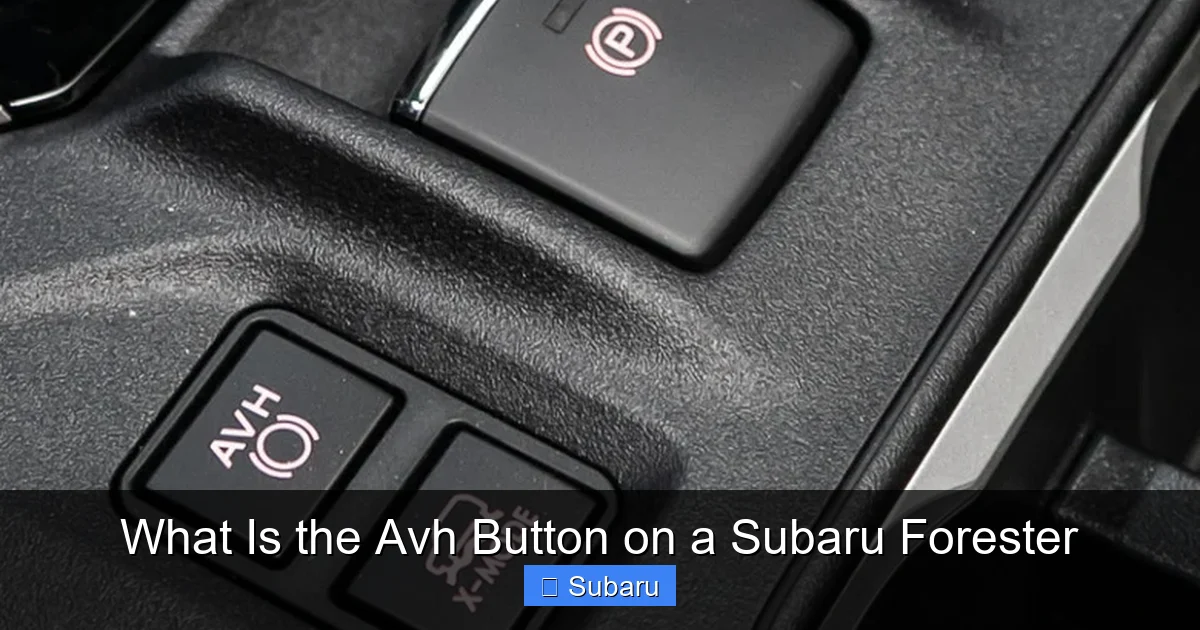
The AVH button stands for Auto Vehicle Hold. It’s an electronic brake assist feature designed to keep your Forester stationary after you’ve come to a complete stop—without you needing to keep your foot on the brake pedal or use the parking brake. Think of it as a temporary brake lock that kicks in automatically. Whether you’re stuck in traffic, waiting at a red light, or stopped on a steep hill, AVH keeps your vehicle firmly in place until you’re ready to move again.
This feature is especially helpful in modern driving conditions. With increasing traffic congestion and more frequent stops, drivers—especially those new to manual transmissions or hill driving—can benefit from the added confidence AVH provides. It’s not just a convenience; it’s a safety enhancement that reduces the risk of rollback, minimizes driver fatigue, and helps prevent accidental forward movement when you’re not ready to go.
How Does the AVH System Work?
Visual guide about What Is the Avh Button on a Subaru Forester
Image source: jalopnik.com
The Auto Vehicle Hold system in the Subaru Forester is a smart, electronically controlled feature that integrates with the vehicle’s braking and transmission systems. When activated, it uses sensors and the electronic brake control module to detect when the vehicle has stopped completely. Once that happens, the system automatically applies the brakes and holds them—even after you take your foot off the brake pedal.
Here’s a step-by-step breakdown of how it works:
1. You come to a complete stop: Whether at a stop sign, red light, or in heavy traffic, once your Forester stops moving, the system recognizes it.
2. You release the brake pedal: Normally, the vehicle might start to roll—especially on a hill. But with AVH active, the brakes stay applied.
3. The system holds the vehicle: The electronic brake system maintains pressure on the brakes, keeping the Forester stationary.
4. You press the accelerator to go: As soon as you press the gas pedal, the AVH system instantly releases the brakes, allowing smooth acceleration.
5. AVH resets for the next stop: The system is ready to activate again the next time you stop.
One of the best things about AVH is that it works seamlessly with other Subaru safety systems, such as Hill Start Assist and Electronic Brakeforce Distribution. It doesn’t interfere with normal braking—it simply adds an extra layer of control when you’re stopped.
AVH vs. Hill Start Assist: What’s the Difference?
It’s easy to confuse AVH with Hill Start Assist (HSA), another Subaru feature that helps prevent rollback on inclines. But they serve slightly different purposes.
Hill Start Assist is a temporary feature that holds the brakes for about two seconds after you release the brake pedal on a hill. It gives you time to move your foot to the accelerator without rolling backward. Once you press the gas, HSA disengages.
Auto Vehicle Hold, on the other hand, continues to hold the brakes indefinitely—until you press the accelerator. It works on flat ground, hills, and even in stop-and-go traffic. So while HSA is a short-term assist, AVH is a longer-term hold.
In short: HSA helps you get started on a hill. AVH keeps you stopped—anywhere—until you’re ready to go.
When Should You Use the AVH Button?
You don’t need to use AVH all the time, but there are several situations where it shines:
– In heavy traffic: Sitting in stop-and-go traffic? AVH lets you take your foot off the brake without worrying about creeping forward.
– On steep hills: Whether you’re parking or waiting at a hill stop sign, AVH prevents rollback.
– At long red lights: Instead of holding the brake for 60 seconds, let AVH do the work.
– When carrying heavy loads: Extra weight can make rollback more likely—AVH adds peace of mind.
– For new drivers: AVH reduces the stress of managing the brake and accelerator, especially on inclines.
Many drivers find that once they start using AVH, they leave it on most of the time. It’s that useful.
How to Use the AVH Button: A Step-by-Step Guide
Visual guide about What Is the Avh Button on a Subaru Forester
Image source: i.ytimg.com
Using the AVH button is simple, but it helps to know exactly what to expect. Here’s how to activate and use it properly.
Step 1: Locate the AVH Button
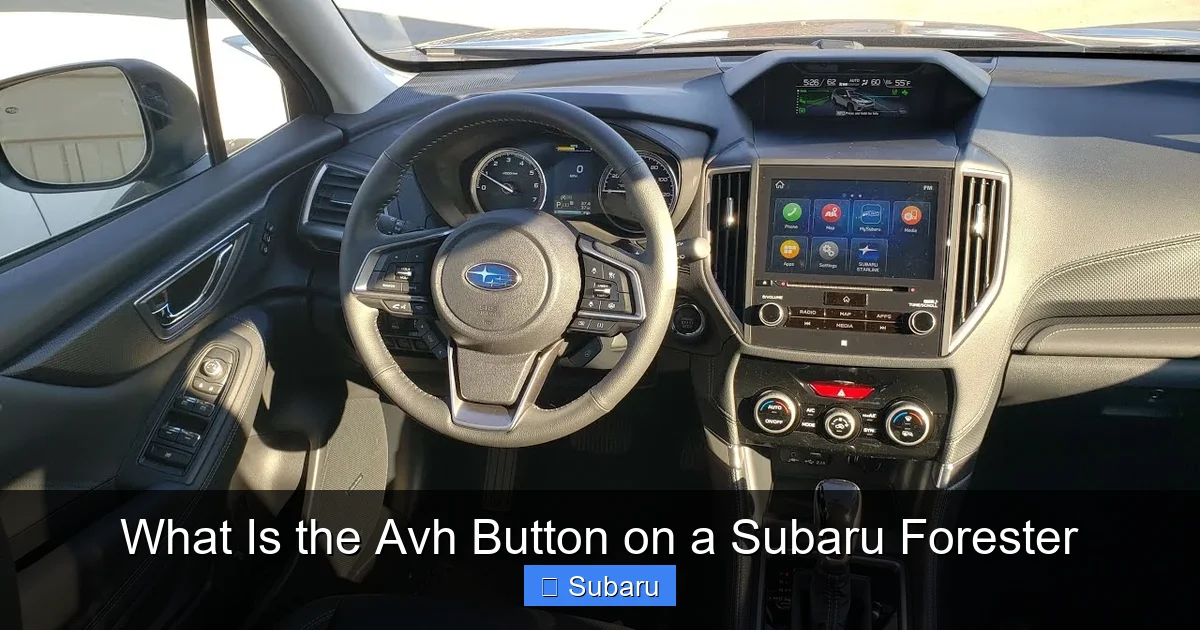
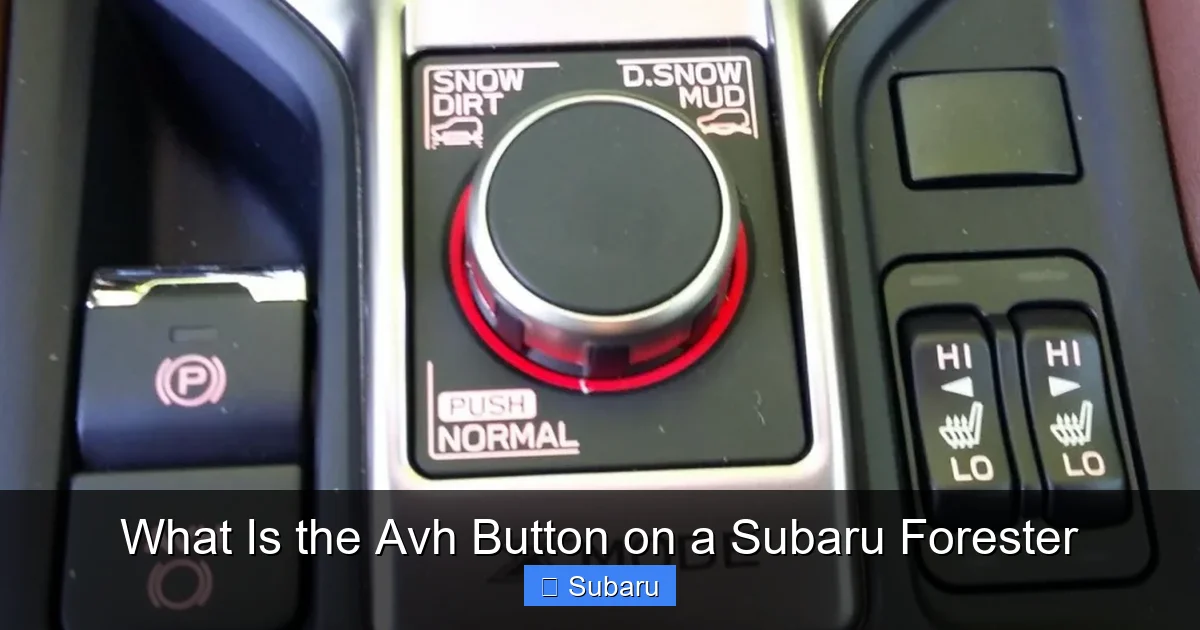
The AVH button is typically found on the center console, near the gear shifter. It’s a small, rectangular button with the letters “AVH” on it. On most Forester models, it’s illuminated when active—look for a green light.
Step 2: Turn On AVH
Press the AVH button once. You’ll see a green indicator light appear on the dashboard or near the button. This means the system is now active and ready to engage.
Step 3: Drive Normally
Drive as you normally would. When you come to a complete stop—whether on flat ground or a hill—the system will automatically detect the stop and apply the brakes.
Step 4: Release the Brake Pedal
Once stopped, you can take your foot off the brake pedal. The Forester will remain stationary thanks to AVH. You’ll feel the vehicle stay put, even if you’re on a slope.
Step 5: Press the Accelerator to Go
When you’re ready to move, simply press the accelerator. The AVH system will instantly release the brakes, and you’ll accelerate smoothly. There’s no delay or jerk—just seamless movement.
Step 6: Turn Off AVH (Optional)
If you prefer not to use AVH, press the button again to turn it off. The green light will disappear. You can toggle it on and off as needed.
Tips for Best Use
– Use it in city driving: AVH is most beneficial in urban environments with frequent stops.
– Don’t rely on it for parking: AVH is not a substitute for the parking brake. Always use the parking brake when parking, especially on hills.
– Check the indicator light: If the green light isn’t on, AVH isn’t active. Make sure it’s enabled when you want to use it.
– It works in all gears: AVH functions whether you’re in Drive, Reverse, or even Neutral (though it’s less useful in Neutral).
Benefits of Using the AVH Button
Visual guide about What Is the Avh Button on a Subaru Forester
Image source: blog.consumerguide.com
The AVH button isn’t just a gimmick—it offers real, practical benefits that improve your driving experience. Let’s look at the key advantages.
1. Prevents Rollback on Hills
One of the biggest fears for new drivers—or anyone driving on steep inclines—is rolling backward when starting from a stop. AVH eliminates this worry. Whether you’re on a driveway, a mountain road, or a parking garage ramp, the system holds your vehicle firmly in place until you’re ready to go. No more panic, no more stalling, no more rolling into the car behind you.
2. Reduces Driver Fatigue
In heavy traffic, constantly pressing the brake pedal can be tiring—especially on long commutes. AVH lets you rest your foot while keeping the vehicle stopped. This is especially helpful for drivers with knee or leg discomfort. Over time, this small relief can make a big difference in comfort and focus.
3. Improves Safety in Stop-and-Go Traffic
When traffic is moving slowly, drivers often creep forward slightly when the car ahead moves. With AVH, your Forester stays put until you intentionally press the accelerator. This reduces the risk of low-speed collisions and helps maintain a safe following distance.
4. Enhances Confidence for New Drivers
Learning to drive—especially on hills—can be stressful. AVH gives new drivers one less thing to worry about. It allows them to focus on steering, signaling, and observing traffic without the added pressure of managing the brake and accelerator simultaneously.
5. Works in All Weather Conditions
Whether it’s rain, snow, or ice, AVH functions reliably. It doesn’t depend on traction or road conditions—it uses the brake system directly. This makes it a dependable feature year-round, even in challenging weather.
6. Seamless Integration with Other Systems
AVH works hand-in-hand with other Subaru safety features like EyeSight, ABS, and traction control. It doesn’t interfere with these systems—it complements them. For example, if you brake hard, ABS will activate as usual, and AVH will still engage once the vehicle stops.
Common Misconceptions About the AVH Button
Despite its usefulness, there are some myths and misunderstandings about the AVH button. Let’s clear them up.
Myth 1: AVH Is the Same as the Parking Brake
No. The parking brake (also called the electronic parking brake or EPB) is designed to hold the vehicle when parked. AVH is a temporary hold for when you’re stopped but still in the process of driving. Always use the parking brake when you exit the vehicle—don’t rely on AVH.
Myth 2: AVH Drains the Battery
Not true. AVH uses the same brake system and electronics as normal braking. It doesn’t consume significant power. The system is designed to be energy-efficient and won’t drain your battery.
Myth 3: AVH Only Works on Hills
Actually, AVH works on any surface—flat, uphill, or downhill. It’s just as useful in city traffic as it is on mountain roads.
Myth 4: You Can’t Use AVH in Reverse
You can. AVH works in both Drive and Reverse. If you’re backing up and come to a stop, the system will hold the vehicle until you press the accelerator again.
Myth 5: AVH Slows Down Acceleration
No. The system releases the brakes instantly when you press the gas. There’s no delay or resistance. In fact, many drivers say AVH makes starting from a stop smoother and more controlled.
AVH Button: Which Subaru Forester Models Have It?
The AVH button is available on most Subaru Forester models from 2019 onward. It’s typically standard on higher trims like the Limited and Touring, and often included on the Premium and Sport trims as well. Base models (like the Forester Base) may not include it, but many do—especially in regions where hill driving is common.
To check if your Forester has AVH:
– Look for the AVH button on the center console.
– Check your owner’s manual under “Braking Systems” or “Driver Assistance Features.”
– Look for a green AVH indicator on the dashboard.
If your Forester doesn’t have AVH, don’t worry—Hill Start Assist is still standard on all models and provides similar (though shorter) rollback protection.
Maintenance and Troubleshooting
The AVH system is designed to be maintenance-free. It uses the same brake components as your regular braking system, so as long as your brakes are in good condition, AVH will work properly.
However, if you notice any issues—like the AVH light not turning on, or the system not holding the vehicle—here’s what to check:
1. Is the Button Pressed?
Make sure the AVH button is pressed and the green light is on. If the light is off, the system isn’t active.
2. Is the Vehicle Fully Stopped?
AVH only activates when the vehicle is completely stopped. If you’re still moving slightly, it won’t engage.
3. Are the Brakes Working Properly?
If your brake pedal feels soft or the brakes aren’t responding, AVH may not function correctly. Have your brakes inspected.
4. Is There a Warning Light?
If the ABS or brake warning light is on, it could affect AVH. Visit a Subaru service center for diagnosis.
5. Try Turning It Off and On
Sometimes, simply turning AVH off and back on can reset the system.
In rare cases, a software update from Subaru may be needed. Always consult your owner’s manual or a certified technician if you’re unsure.
Conclusion: Why the AVH Button Matters
The AVH button on a Subaru Forester is more than just a convenient feature—it’s a smart safety tool that makes driving easier, safer, and more enjoyable. Whether you’re navigating city streets, climbing mountain roads, or just stuck in traffic, AVH gives you one less thing to worry about.
By automatically holding the brakes when you stop, it prevents rollback, reduces fatigue, and boosts confidence—especially for new drivers or those driving in challenging conditions. It’s simple to use, reliable, and seamlessly integrated into the Forester’s existing systems.
So the next time you’re behind the wheel of your Forester, take a moment to press that AVH button. Feel the difference. Experience the peace of mind that comes from knowing your vehicle will stay put—until you’re ready to go.
It’s one of those small innovations that makes a big difference. And once you start using it, you’ll wonder how you ever drove without it.
Frequently Asked Questions
What does AVH stand for in a Subaru Forester?
AVH stands for Auto Vehicle Hold. It’s a feature that automatically holds the brakes after the vehicle comes to a complete stop, even when you release the brake pedal.
Is the AVH button the same as the parking brake?
No, they’re different. The parking brake is for when the vehicle is parked, while AVH is a temporary hold during driving. Always use the parking brake when exiting the vehicle.
Can I use AVH in reverse?
Yes, AVH works in both Drive and Reverse. It will hold the vehicle when you stop, regardless of the gear.
Does AVH work on flat roads?
Absolutely. AVH works on any surface—flat, uphill, or downhill. It’s useful in traffic, at stop signs, or anywhere you come to a stop.
Will AVH drain my car’s battery?
No, AVH uses minimal power and doesn’t drain the battery. It’s designed to be energy-efficient and safe for regular use.
What should I do if the AVH light doesn’t turn on?
First, make sure the button is pressed. If the light still doesn’t come on, check your owner’s manual or visit a Subaru service center to ensure the system is functioning properly.
