
What Is the Blue Light on My Subaru Dashboard

The blue light on your Subaru dashboard is a normal indicator that your vehicle’s headlights are in “high beam” mode. It’s a helpful safety feature designed to remind you when your high beams are active—especially useful at night or in low-visibility conditions.
Have you ever glanced at your Subaru’s dashboard at night and noticed a soft blue light glowing near your speedometer? Maybe you were driving down a dark country road, flipped on your high beams for better visibility, and suddenly saw that little blue icon light up. Or perhaps you’re new to Subarus and aren’t sure what all those dashboard symbols mean. Don’t worry—you’re not alone. Many Subaru owners have the same question: *What is the blue light on my Subaru dashboard?*
The good news? It’s not a warning. It’s not a sign of trouble. In fact, it’s one of the most helpful and underappreciated features in your vehicle. The blue light is your car’s way of saying, “Hey, your high beam headlights are on!” It’s a simple but smart reminder that helps you stay aware of your lighting settings—especially when driving at night or in fog, rain, or other low-visibility conditions. Unlike red or yellow warning lights that demand immediate attention, the blue light is purely informational. It’s there to keep you safe, not scare you.
Subaru has long been known for its commitment to safety, and this small blue indicator is part of that philosophy. Whether you’re cruising through a rural highway with no streetlights or navigating a snowy mountain pass, knowing when your high beams are active can make a big difference in your driving experience. And with features like Auto High Beam and EyeSight driver assistance, modern Subarus are smarter than ever at managing your lights—but the blue light ensures you’re always in the loop.
Key Takeaways
- Blue light = high beams on: The blue dashboard light simply means your high beam headlights are engaged and shining brightly ahead.
- Safety reminder, not a warning: Unlike red or yellow warning lights, the blue light is informational—it’s there to help you stay aware, not signal a problem.
- Automatic or manual activation: Depending on your Subaru model, high beams may turn on automatically (with Auto High Beam) or manually via the stalk control.
- Use responsibly: Always switch to low beams when other vehicles are nearby to avoid blinding other drivers.
- Location varies by model: The blue icon typically appears near the speedometer or in the instrument cluster—look for a symbol resembling a headlight with horizontal lines.
- No action needed if intentional: If you meant to use high beams, the blue light is doing its job. If it’s on unexpectedly, check your headlight settings.
- Part of Subaru’s safety suite: This feature complements other driver-assist technologies like EyeSight, enhancing nighttime visibility and awareness.
📑 Table of Contents
- Understanding Dashboard Lights: What’s Normal and What’s Not
- How High Beams Work in Your Subaru
- Common Misconceptions About the Blue Light
- Subaru’s Safety Philosophy and the Role of Dashboard Indicators
- Troubleshooting: When the Blue Light Acts Up
- Tips for Maximizing Visibility and Safety
- Conclusion
Understanding Dashboard Lights: What’s Normal and What’s Not
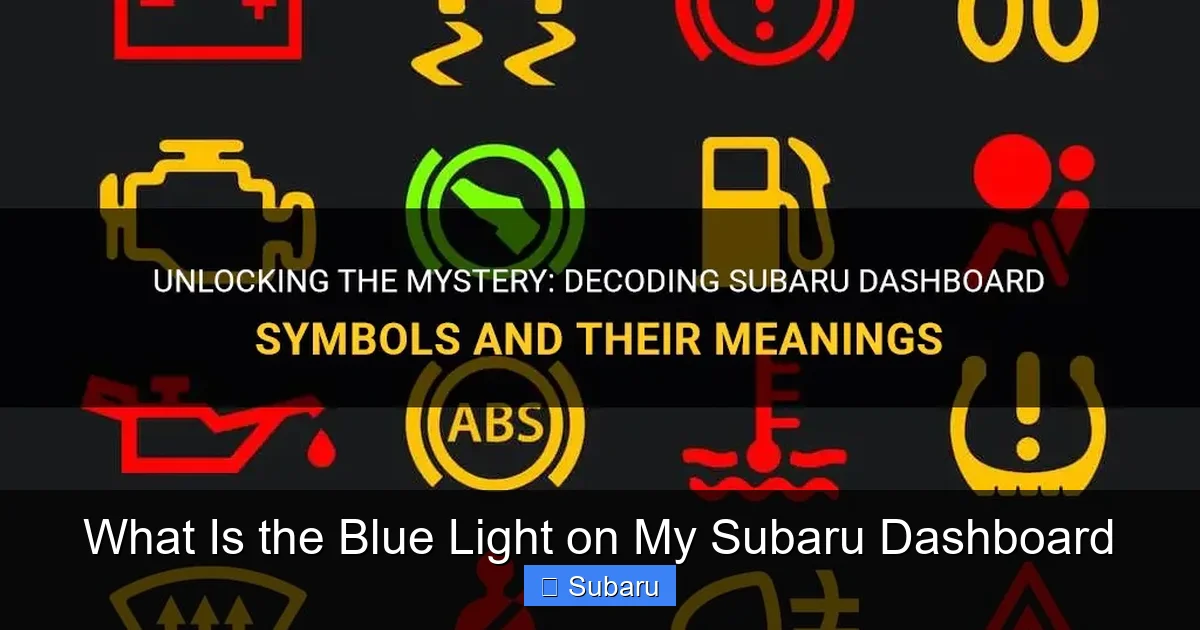
Car dashboards can look like something out of a sci-fi movie, especially at night. Dozens of symbols, colors, and icons flash, glow, or stay lit depending on what’s happening under the hood. But not all lights are created equal. Some are urgent—like the check engine light or oil pressure warning—while others are just there to inform you. The blue light falls squarely into the “informational” category.
Dashboard lights are generally color-coded to help drivers quickly assess the situation:
– Red lights mean stop or take immediate action (e.g., brake system warning, engine overheating).
– Yellow or amber lights indicate a caution or service reminder (e.g., tire pressure low, maintenance due).
– Green or blue lights are usually operational indicators—they tell you a system is active, not that there’s a problem.
The blue high beam indicator is a perfect example of a green/blue operational light. It doesn’t mean something’s wrong. It means something’s *on*. Think of it like the “caps lock” light on your keyboard—it’s just letting you know a feature is engaged.
Why Subarus Use Blue for High Beams
You might wonder why Subaru chose blue instead of green or white. While there’s no official statement from Subaru on the exact reasoning, automotive lighting standards and human perception play a big role. Blue is a cool, calming color that stands out against the darker background of the dashboard at night. It’s also less likely to be confused with warning colors like red or yellow.
Additionally, blue is commonly used across many car brands for high beam indicators. Honda, Toyota, Ford, and others use similar blue or blue-green icons. This consistency helps drivers recognize the symbol quickly, even if they switch between different vehicles.
Where to Find the Blue Light on Your Subaru
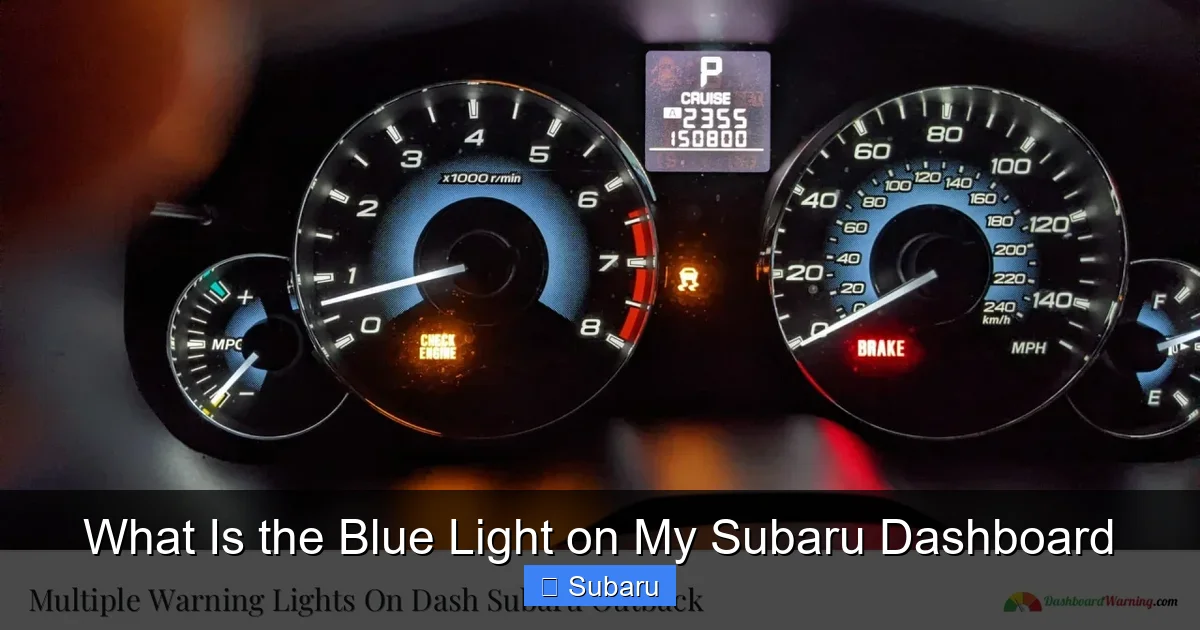
The exact location of the blue high beam indicator can vary slightly depending on your Subaru model and year. However, it’s almost always found in the instrument cluster—the panel directly behind your steering wheel that displays your speed, fuel level, and other key info.
On most models—like the Outback, Forester, Crosstrek, and Legacy—the blue light appears as a small icon near the speedometer. It looks like a headlight with several horizontal lines radiating outward, representing the bright beams of light. When your high beams are on, this icon glows a soft blue. When you switch back to low beams, it turns off.
Some newer Subarus with digital or semi-digital instrument clusters may display the icon more prominently or include it in a driver information screen. But the symbol remains consistent: a headlight with horizontal lines.
How High Beams Work in Your Subaru
Visual guide about What Is the Blue Light on My Subaru Dashboard
Image source: dashboardwarning.com
To fully understand the blue light, it helps to know how high beam headlights function—and how Subaru makes them easier to use.
High beam headlights are designed to illuminate the road much farther ahead than low beams—up to 350–400 feet or more. They’re ideal for dark, unlit roads where you need maximum visibility. However, they can be dangerously bright for other drivers if used incorrectly. That’s why it’s important to switch back to low beams when approaching or following another vehicle.
In your Subaru, you control the high beams using the stalk on the left side of the steering wheel. Here’s how it typically works:
– Low beams: The default setting when you turn on your headlights.
– High beams (manual): Pull the stalk toward you to flash the high beams once, or push it forward to lock them on.
– Auto High Beam: On models equipped with this feature, the car can automatically switch between high and low beams based on traffic and lighting conditions.
When you activate high beams—either manually or automatically—the blue light appears on the dashboard to confirm they’re on.
Manual vs. Automatic High Beam Control
Not all Subarus have the same high beam system. Older models or base trims may only offer manual control, meaning you have to remember to turn high beams on and off yourself. But many newer Subarus come with Auto High Beam (also called Automatic High Beam or AHB), a smart feature that does the work for you.
With Auto High Beam enabled, your Subaru uses a camera (usually part of the EyeSight system) to detect oncoming traffic or vehicles ahead. If the road is clear and dark, it will automatically switch to high beams for better visibility. When it detects another vehicle, it switches back to low beams to avoid blinding other drivers.
Even with Auto High Beam, the blue light still appears when high beams are active. This is crucial because it keeps you informed—even if the car is making the decision for you. You’ll always know when your high beams are on, so you can override the system if needed (for example, if you’re driving in fog, where high beams can reflect and reduce visibility).
When to Use High Beams—and When Not To
Using high beams correctly is about more than just seeing better—it’s about being a responsible driver. Here are some general guidelines:
Use high beams when:
– Driving on dark, rural roads with no streetlights.
– There are no vehicles ahead of you or coming toward you.
– You’re on a highway with minimal traffic and good visibility.
Switch to low beams when:
– You’re within 500 feet of an oncoming vehicle.
– You’re following another vehicle (within 300 feet).
– Driving in fog, rain, or snow (high beams can reflect off moisture and reduce visibility).
– You’re in a well-lit urban area.
The blue light helps you stay aware of your current setting, so you can make quick adjustments. For example, if you’re driving on a dark highway and the blue light is on, you know your high beams are active. If a car approaches, you can quickly switch to low beams—and the blue light will turn off.
Common Misconceptions About the Blue Light
Visual guide about What Is the Blue Light on My Subaru Dashboard
Image source: shunspirit.com
Despite its simplicity, the blue high beam indicator is often misunderstood. Let’s clear up some of the most common myths.
Myth 1: The Blue Light Means There’s a Problem
This is the biggest misconception. Many drivers see a new light on the dashboard and assume something’s wrong. But the blue light is not a warning—it’s a confirmation. If your high beams are on, the blue light will be on. If they’re off, it will be off. No mystery, no malfunction.
If the blue light comes on unexpectedly, it usually means you accidentally activated the high beams (maybe you bumped the stalk). Simply push the stalk back or use the Auto High Beam override to turn them off.
Myth 2: The Blue Light Is Always On
Some drivers worry that the blue light staying on means their high beams are stuck. But unless you’ve intentionally left them on, this rarely happens. Most Subarus will automatically turn off high beams when you turn off the headlights or switch to parking lights.
If the blue light remains on even with the headlights off, it could indicate a wiring issue or a stuck switch—but this is extremely rare. In such cases, a visit to a Subaru service center is recommended.
Myth 3: All Blue Lights Are the Same
Not all blue dashboard lights mean high beams. Some Subarus have other blue or blue-tinted indicators, such as:
– Adaptive Cruise Control (ACC) active: A blue car icon may appear when ACC is engaged.
– Lane Keep Assist: A blue lane line icon may show when the system is monitoring lanes.
– Blind Spot Detection: Some models use blue or green icons to indicate when the system is active.
Always check the symbol shape, not just the color. The high beam indicator is uniquely recognizable by its headlight-with-lines design.
Subaru’s Safety Philosophy and the Role of Dashboard Indicators
Subaru has built its reputation on safety, and dashboard indicators like the blue high beam light are part of that commitment. The company’s EyeSight Driver Assist Technology—available on most modern Subarus—includes features like Pre-Collision Braking, Lane Departure Warning, and Adaptive Cruise Control. Many of these systems rely on cameras and sensors mounted near the windshield, and they often use dashboard lights to communicate status.
The blue high beam indicator complements these systems by enhancing nighttime visibility. When Auto High Beam is active, it works alongside EyeSight to create a safer driving environment. For example, if EyeSight detects a pedestrian crossing a dark road, the high beams (indicated by the blue light) can help illuminate the area, giving you more time to react.
Subaru also emphasizes driver awareness. Rather than hiding information, the brand uses clear, intuitive symbols so drivers always know what’s happening. The blue light is a perfect example: it’s simple, visible, and informative—no decoding required.
How the Blue Light Enhances Night Driving
Night driving can be challenging, especially on unlit roads. The blue high beam indicator helps in several ways:
– Prevents accidental high beam use: If you forget you’re using high beams, the blue light reminds you to switch off when approaching other vehicles.
– Encourages proper use: Knowing when high beams are on encourages drivers to use them when appropriate, improving visibility and safety.
– Supports automation: With Auto High Beam, the blue light ensures you’re aware of the system’s actions, building trust in the technology.
In essence, the blue light is a small but powerful tool in Subaru’s safety toolkit.
Troubleshooting: When the Blue Light Acts Up
While the blue light is usually straightforward, there are rare instances where it might behave unexpectedly. Here’s what to do if something seems off.
The Blue Light Won’t Turn On
If you turn on your high beams but the blue light doesn’t appear, it could be a burnt-out bulb in the dashboard or a software glitch. Try turning the headlights off and on again, or restarting the car. If the issue persists, have it checked by a technician.
The Blue Light Stays On When High Beams Are Off
This could indicate a faulty switch or wiring issue. Check the headlight stalk to ensure it’s not stuck. If the problem continues, visit a Subaru service center for diagnosis.
The Blue Light Flickers
Flickering may suggest a loose connection or electrical issue. It’s usually not urgent, but it’s worth having inspected to prevent future problems.
In most cases, these issues are minor and easily resolved. But if you’re ever unsure, it’s always better to get professional help.
Tips for Maximizing Visibility and Safety
Now that you know what the blue light means, here are some practical tips to make the most of your Subaru’s lighting system:
- Enable Auto High Beam: If your Subaru has this feature, turn it on in the settings menu. It’s one of the best ways to ensure optimal visibility without manual switching.
- Clean your headlights regularly: Dirt, snow, and grime can reduce beam effectiveness. Keep them clean for maximum brightness.
- Adjust your headlights: If your beams are pointing too high or too low, they won’t work properly. Many Subarus allow manual adjustment—check your owner’s manual.
- Use fog lights in bad weather: Fog lights are designed for low visibility and work better than high beams in rain or fog.
- Stay alert at night: Even with great lights, night driving requires extra attention. Take breaks on long trips and avoid drowsy driving.
Conclusion
The blue light on your Subaru dashboard is a simple yet essential feature. It tells you when your high beam headlights are on—helping you stay safe, legal, and aware on the road. Whether you’re driving manually or relying on Auto High Beam, that soft blue glow is your car’s way of keeping you informed.
It’s not a warning. It’s not a malfunction. It’s a thoughtful design choice that reflects Subaru’s commitment to safety and driver awareness. So the next time you see that blue light, don’t panic—just smile. Your Subaru is looking out for you.
And remember: with great visibility comes great responsibility. Use your high beams wisely, switch them off when needed, and enjoy the confidence that comes from driving a vehicle designed to keep you safe—day and night.
Frequently Asked Questions
What does the blue light on my Subaru dashboard mean?
The blue light indicates that your high beam headlights are turned on. It’s an informational indicator, not a warning, designed to help you stay aware of your lighting settings.
Is the blue light a warning sign?
No, the blue light is not a warning. Unlike red or yellow dashboard lights, it simply confirms that your high beams are active. It’s safe to ignore if you intentionally turned them on.
Why is the light blue and not green?
Blue is a cool, distinct color that stands out at night and is less likely to be confused with warning colors. It’s also a standard across many car brands for high beam indicators.
Can I turn off the blue light?
You can’t disable the blue light itself, but you can turn off your high beams to make it go away. Simply switch back to low beams using the stalk control.
What if the blue light stays on when my headlights are off?
This is rare but could indicate a stuck switch or electrical issue. Try restarting the car. If the problem persists, have it inspected by a Subaru technician.
Does every Subaru have the blue high beam light?
Yes, all Subaru models with high beam headlights include the blue indicator. The exact location and design may vary slightly by year and trim level.