
How to Turn Off Subaru Daytime Running Lights

Turning off Subaru daytime running lights (DRLs) isn’t always straightforward, but it’s possible with the right approach. This guide walks you through safe methods, including using the dashboard controls, adjusting settings via the multi-function display, or consulting your owner’s manual. Always prioritize safety and legality when modifying your vehicle’s lighting system.
Key Takeaways
- Subaru DRLs are designed for safety: They improve visibility during daylight hours, reducing the risk of accidents.
- Not all Subaru models allow DRL deactivation: Some newer models have permanent DRL systems that can’t be turned off without professional tools.
- Use the dashboard or multi-function display: Many Subarus let you disable DRLs through the vehicle settings menu.
- Check your owner’s manual first: It contains model-specific instructions and warnings about modifying lighting systems.
- Avoid DIY wiring modifications: Tampering with electrical systems can void warranties or cause malfunctions.
- Consider legal requirements: In some regions, DRLs must remain active—check local laws before disabling them.
- Consult a Subaru technician if unsure: Professional help ensures safe and correct adjustments without damaging your vehicle.
📑 Table of Contents
Why Subaru Daytime Running Lights Matter
Subaru vehicles are known for their commitment to safety, and one of the key features that reflect this is the daytime running lights (DRLs). These lights automatically turn on when the engine starts, even if the headlights are off, to make your vehicle more visible to other drivers during daylight hours. Unlike traditional headlights, DRLs are typically dimmer and use less power, often drawing from LED or halogen bulbs specifically designed for this purpose.
The primary goal of DRLs is to reduce the risk of daytime collisions. Studies have shown that vehicles equipped with DRLs are less likely to be involved in certain types of accidents, especially side-impact and frontal collisions during the day. Subaru integrates DRLs into nearly all of its modern models—from the Outback and Forester to the Crosstrek and Impreza—as part of its EyeSight safety suite and overall vehicle design philosophy. While these lights are beneficial, there are times when drivers may want to turn them off—whether for personal preference, driving conditions, or maintenance reasons.
When You Might Want to Turn Off DRLs
While DRLs serve an important safety function, there are legitimate reasons why a Subaru owner might want to disable them. One common scenario is driving in low-light conditions where DRLs may not provide adequate illumination. For example, during heavy fog, rain, or early morning twilight, DRLs alone might not be bright enough, and drivers may prefer to manually control their headlights for better visibility.
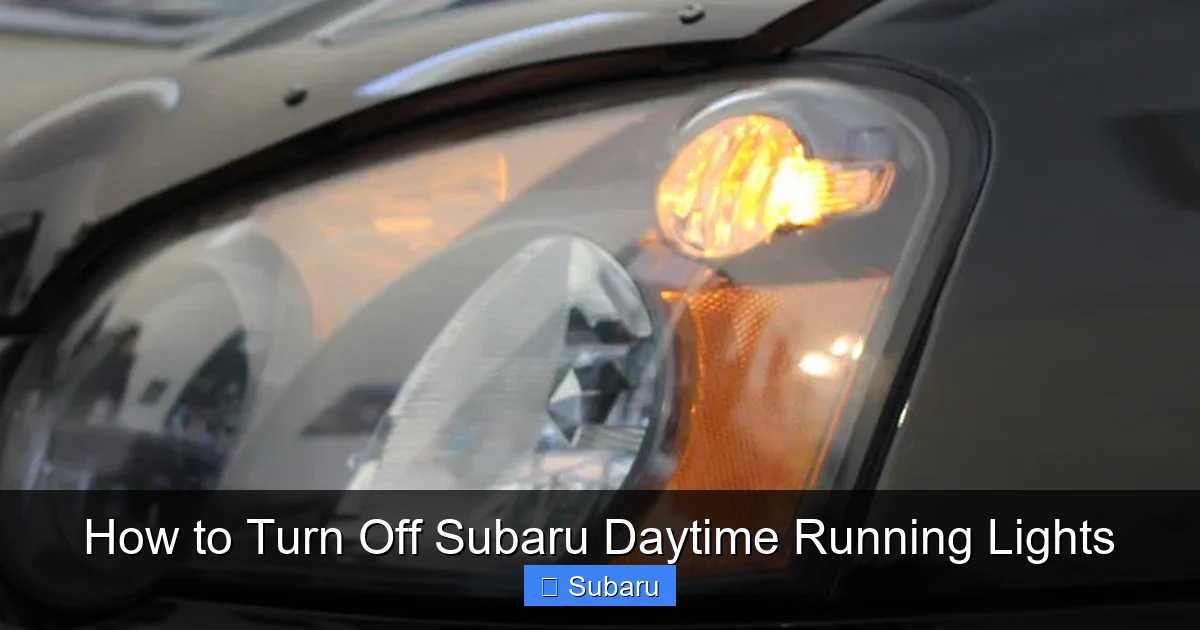
Visual guide about How to Turn Off Subaru Daytime Running Lights
Image source: assets.howtune.com
Another reason could be personal preference. Some drivers find the constant glow of DRLs distracting or unnecessary, especially during short trips or in well-lit urban areas. Additionally, if you’re performing maintenance on your vehicle—such as replacing a bulb or working near the front fascia—turning off the DRLs can prevent accidental activation and potential electrical issues.
Lastly, in rare cases, a malfunctioning DRL system might cause one side to stay on when it shouldn’t, leading to confusion or safety concerns. In such situations, temporarily disabling the DRLs while diagnosing the issue can be a practical step. However, it’s important to remember that turning off DRLs should be done thoughtfully and in compliance with local traffic laws.
Understanding How Subaru DRLs Work
Automatic Activation System
Subaru’s DRL system is designed to activate automatically when the engine is running and the parking brake is released. This means you don’t need to flip a switch—the lights come on as soon as you start driving. The system is integrated with the vehicle’s electrical network and often works in conjunction with other lighting features like automatic headlights and fog lights.
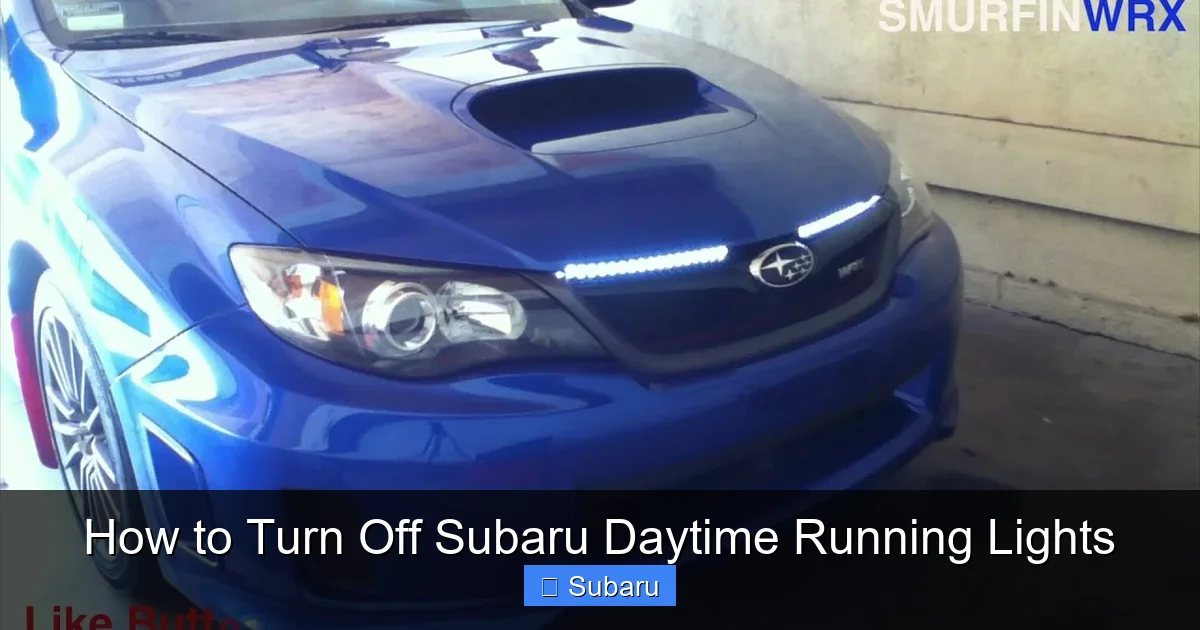
Visual guide about How to Turn Off Subaru Daytime Running Lights
Image source: i.ytimg.com
Integration with Headlight Controls
In most Subaru models, the DRLs operate independently of the headlight switch. Even if you turn the headlight knob to the “off” position, the DRLs will still illuminate. This is intentional, as the system is meant to enhance visibility without requiring driver input. However, when you manually turn on the headlights—either by switching to “auto” or “on”—the DRLs typically dim or turn off entirely, allowing the full headlights to take over.
Model-Specific Variations
It’s important to note that DRL behavior can vary slightly between Subaru models and model years. For instance, older models like the 2010–2014 Legacy or Outback may have simpler DRL systems that can be disabled more easily, while newer models (2018 and later) often feature advanced lighting controls tied to the multi-function display and driver assistance systems. Always refer to your specific vehicle’s owner’s manual for accurate information.
How to Turn Off Subaru DRLs: Step-by-Step Methods
Method 1: Using the Multi-Function Display (Most Common)
The easiest and safest way to disable DRLs on many modern Subaru models is through the vehicle’s multi-function display. This method works on models like the 2015–2023 Outback, Forester, Crosstrek, and Ascent. Here’s how to do it:
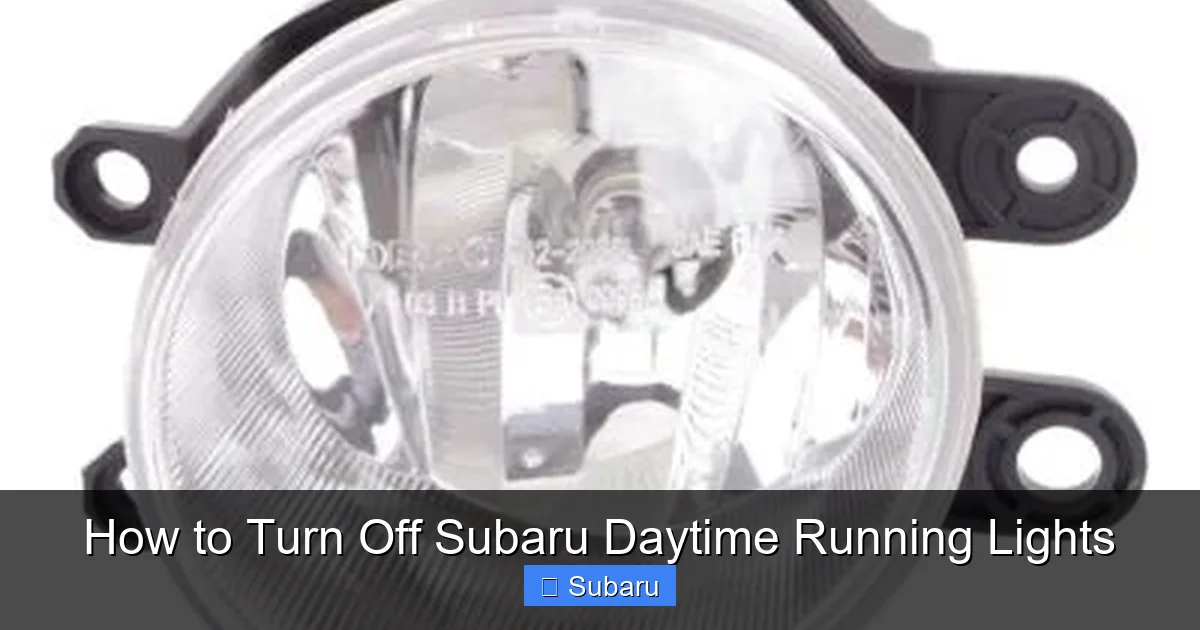
Visual guide about How to Turn Off Subaru Daytime Running Lights
Image source: subarupartsdeal.com
- Start your vehicle and allow the dashboard to fully initialize.
- Press the “Menu” or “Settings” button on your steering wheel or dashboard (location varies by model).
- Navigate to the “Vehicle Settings” or “Lighting” menu using the arrow keys.
- Look for an option labeled “Daytime Running Lights,” “DRL,” or “Auto Light Sensitivity.”
- Select the option and toggle it to “Off” or “Disabled.”
- Exit the menu—your DRLs should no longer activate when driving.
For example, on a 2020 Subaru Outback, you’d press the “Menu” button on the steering wheel, go to “Settings” > “Vehicle” > “Lighting,” and then disable “Daytime Running Lights.” The change takes effect immediately.
Method 2: Using the Headlight Switch (Limited Models)
On some older Subaru models, such as the 2012–2014 Impreza or Legacy, you may be able to disable DRLs by adjusting the headlight switch. Try turning the headlight knob to the “parking lights” or “off” position while the engine is running. In certain cases, this can prevent the DRLs from activating. However, this method is not reliable across all models and may not work on vehicles with fully automatic lighting systems.
Method 3: Disconnecting the DRL Fuse (Advanced, Not Recommended)
In rare cases, drivers may consider removing the DRL fuse from the fuse box to disable the lights. This is typically located under the dashboard or in the engine compartment. While this method physically cuts power to the DRL circuit, it’s not recommended for most users. Removing fuses can affect other systems, void warranties, and may trigger warning lights on the dashboard. Only attempt this if you’re experienced with automotive electrical systems and have consulted a repair manual.
Method 4: Professional Deactivation via Dealer or Technician
If you’re unable to disable DRLs using the built-in settings, or if your model doesn’t support user deactivation, consider visiting a Subaru dealership or certified technician. They can use diagnostic tools like Subaru’s Select Monitor to access deeper vehicle settings and disable DRLs if permitted by the vehicle’s software. This is the safest option for newer models with encrypted control modules.
Important Considerations Before Disabling DRLs
Safety Implications
Before turning off your DRLs, consider the safety trade-offs. DRLs are proven to reduce daytime accidents by making vehicles more noticeable. Disabling them may increase your risk, especially in high-traffic or low-visibility conditions. If you frequently drive in areas with poor lighting or heavy traffic, it’s wise to keep DRLs enabled.
Legal and Regulatory Compliance
In some countries and U.S. states, DRLs are required by law. For example, Canada mandates DRLs on all new vehicles, and certain states have regulations about vehicle lighting during daylight hours. Disabling DRLs could result in fines or failed inspections. Always check your local Department of Motor Vehicles (DMV) or transportation authority guidelines before making changes.
Impact on Vehicle Warranty and Resale Value
Modifying your vehicle’s lighting system—especially through electrical tampering—can affect your warranty coverage. Subaru may deny claims related to lighting or electrical issues if they determine unauthorized modifications were made. Additionally, future buyers may be wary of a vehicle with altered lighting systems, potentially lowering resale value.
Compatibility with Driver Assistance Features
Many Subaru models use DRLs in conjunction with advanced safety features like adaptive headlights, automatic high beams, and EyeSight driver assistance. Disabling DRLs could interfere with these systems, causing them to function improperly or generate error messages. Always test your vehicle’s safety features after making lighting changes.
Tips for Managing DRLs Without Disabling Them
If you’re hesitant to fully turn off your DRLs but still want more control, there are alternative approaches. One option is to use the “auto” headlight setting, which allows the vehicle to decide when to activate full headlights based on ambient light. This way, DRLs remain on during the day, but full lights come on automatically at dusk or in tunnels.
Another tip is to adjust your driving habits. For instance, if you find DRLs too bright or distracting, try wearing polarized sunglasses or adjusting your rearview mirror to reduce glare. You can also park in shaded areas when possible to minimize direct sunlight on the lights.
Regular maintenance is also key. Ensure your DRL bulbs are in good condition and replace them promptly if they fail. Faulty bulbs can cause uneven lighting or trigger warning lights, which may lead you to believe the entire system needs disabling when a simple replacement would solve the issue.
Conclusion: Make an Informed Decision
Turning off Subaru daytime running lights is possible on many models, but it’s not always simple or advisable. While the multi-function display offers a user-friendly way to disable DRLs on newer vehicles, older models may require more effort—and some simply don’t allow it without professional intervention. Always prioritize safety, legality, and vehicle integrity when considering such changes.
Before making any modifications, consult your owner’s manual, check local regulations, and consider the potential impact on your vehicle’s safety systems and warranty. When in doubt, seek help from a Subaru technician. Remember, DRLs are there for a reason—they help keep you visible and safe on the road. If you do choose to disable them, do so responsibly and only when necessary.
Frequently Asked Questions
Can I permanently turn off DRLs on my Subaru?
On many newer Subaru models, DRLs can be disabled through the vehicle settings menu, but they may reactivate after a software update or battery reset. Permanent deactivation usually requires professional tools and is not recommended for most drivers.
Will turning off DRLs affect my headlights?
No, turning off DRLs only affects the daytime running lights. Your regular headlights will still function normally when manually or automatically activated.
Are DRLs required by law in the U.S.?
There is no federal law requiring DRLs in the U.S., but some states have specific lighting regulations. Canada, however, mandates DRLs on all new vehicles.
Why won’t my Subaru DRLs turn off?
If DRLs won’t turn off, it could be due to a faulty switch, software glitch, or system design. Check your owner’s manual or consult a technician to diagnose the issue.
Can I disable DRLs on a 2022 Subaru Forester?
Yes, on the 2022 Forester, you can disable DRLs via the multi-function display: go to Settings > Vehicle > Lighting > Daytime Running Lights > Off.
Is it safe to drive without DRLs during the day?
While it’s technically safe, DRLs improve visibility and reduce accident risk. Driving without them may make your vehicle less noticeable to other drivers, especially in busy or low-light conditions.
