
How Long Should Brakes Last on a Subaru Outback?

Subaru Outback brake pads typically last between 30,000 and 70,000 miles, depending on driving habits, terrain, and maintenance. With proper care and regular inspections, you can maximize performance and safety while avoiding costly repairs.
If you’re a proud owner of a Subaru Outback, you already know it’s more than just a vehicle—it’s a trusted companion for weekend adventures, daily commutes, and everything in between. Known for its rugged capability, all-wheel drive, and safety features, the Outback is built to handle diverse conditions with confidence. But like any vehicle, it requires regular maintenance to keep running smoothly, and one of the most critical systems to monitor is the braking system.
Brakes are your first line of defense in an emergency, and their performance directly impacts your safety and the safety of others on the road. So, how long should brakes last on a Subaru Outback? The answer isn’t one-size-fits-all. While many owners expect their brakes to go the distance, the actual lifespan depends on a mix of factors including driving habits, environment, vehicle use, and maintenance routines. Understanding these variables can help you get the most out of your Outback’s braking system and avoid unexpected failures.
In this guide, we’ll dive deep into what affects brake life on your Subaru Outback, how to spot signs of wear, and practical tips to extend the life of your brakes. Whether you’re cruising city streets, tackling mountain passes, or towing a trailer, knowing when and how to maintain your brakes ensures you stay safe and save money in the long run.
Key Takeaways
- Average brake life: Subaru Outback brake pads usually last 30,000–70,000 miles, with rotors lasting 60,000–100,000 miles.
- Driving style matters: Aggressive braking, stop-and-go traffic, and towing reduce brake lifespan significantly.
- Terrain and climate impact wear: Mountain driving, snow, and salt exposure accelerate brake component deterioration.
- Maintenance is key: Regular inspections and timely fluid changes help prevent premature wear and ensure safety.
- Signs of wear: Squealing, grinding, longer stopping distances, or dashboard warnings indicate it’s time for a brake check.
- Use OEM or high-quality parts: Subaru-approved or premium aftermarket brake components offer better durability and performance.
- DIY vs. professional service: While some checks can be done at home, brake jobs are best handled by certified technicians for safety.
📑 Table of Contents
Understanding Brake Components in the Subaru Outback
Before we explore how long brakes last, it helps to understand what makes up the braking system in your Subaru Outback. Modern vehicles like the Outback use a hydraulic disc brake system, which includes several key components that work together to slow or stop your vehicle safely.
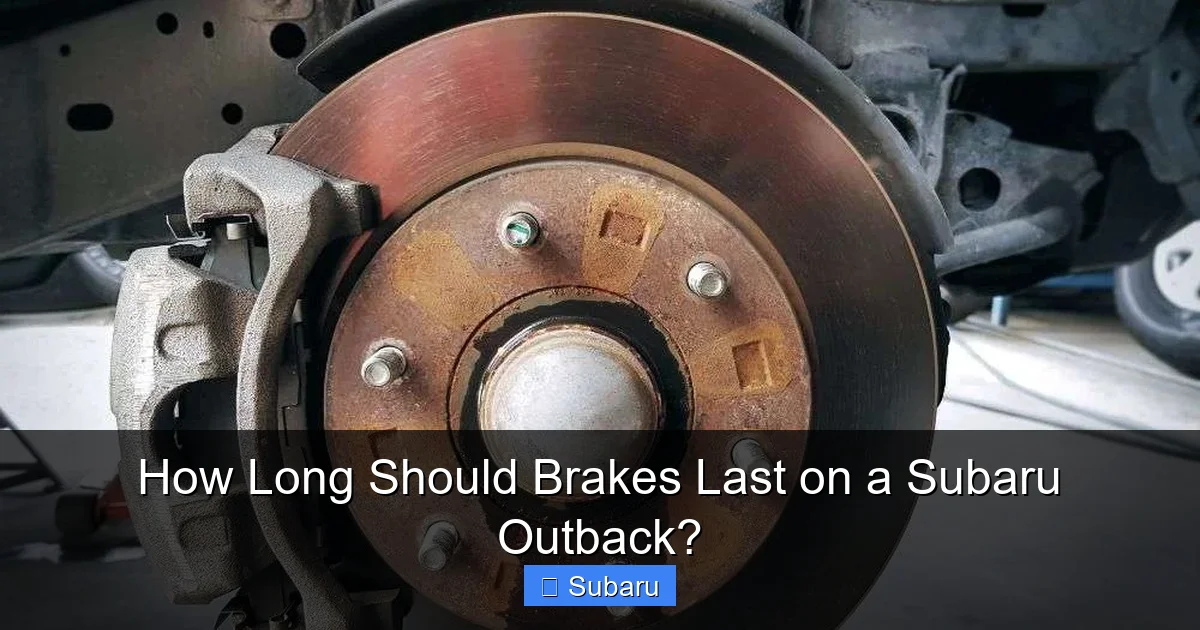
The primary parts include brake pads, brake rotors (also called discs), calipers, brake fluid, and brake lines. When you press the brake pedal, hydraulic pressure forces the calipers to squeeze the brake pads against the rotors, creating friction that slows the wheels. Over time, this friction wears down the pads and, to a lesser extent, the rotors.
Brake pads are made of friction material bonded to a metal backing plate. They’re designed to wear down gradually, which is why they need periodic replacement. Rotors, typically made of cast iron or composite materials, are more durable but can warp, crack, or wear thin over time, especially under heavy use.
The Subaru Outback, depending on the model year and trim, may come equipped with different brake setups. For example, higher trims or performance-oriented models might feature larger rotors or upgraded pad compounds for better heat dissipation and stopping power. However, the fundamental principles remain the same across all versions.
It’s also worth noting that the Outback’s standard all-wheel-drive system distributes braking force evenly across all four wheels, which can help reduce uneven wear compared to front-wheel-drive vehicles. Still, the front brakes typically handle more of the workload—especially during hard stops—so they tend to wear faster than the rear brakes.
Understanding these components helps you appreciate why brake maintenance is so important. Even small issues, like a stuck caliper or low brake fluid, can lead to uneven wear, reduced performance, or costly repairs down the line.
Average Brake Lifespan: What to Expect
Visual guide about How Long Should Brakes Last on a Subaru Outback?
Image source: evto.ca
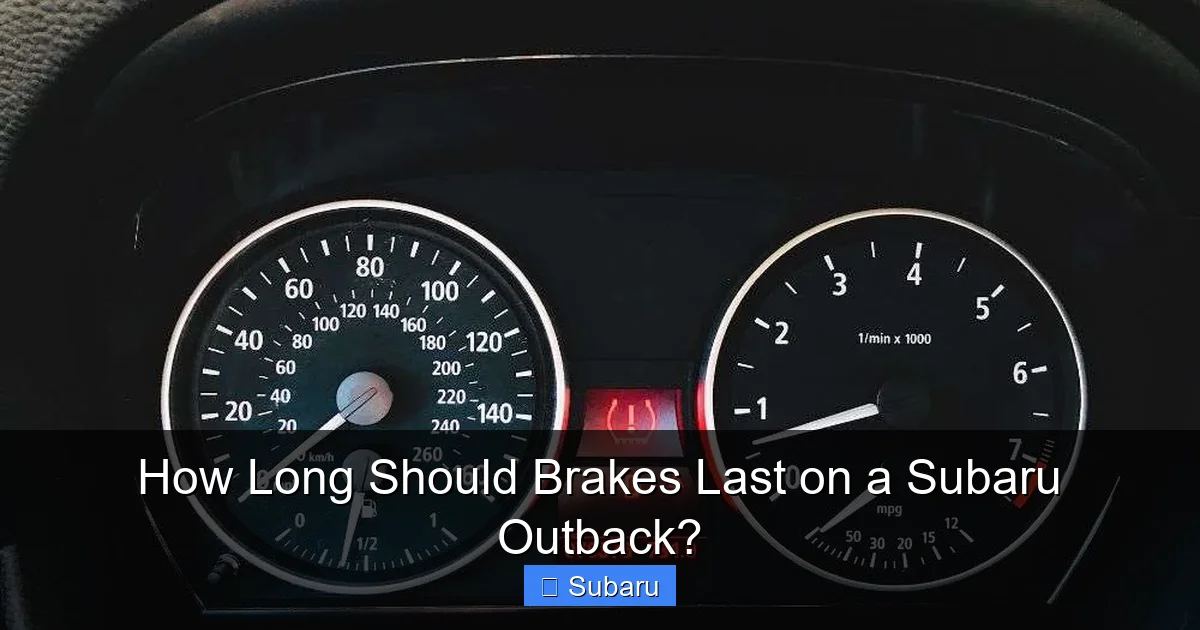
So, how long should brakes last on a Subaru Outback? The short answer is: it varies. But on average, most Outback owners can expect their brake pads to last between 30,000 and 70,000 miles. That’s a wide range, and for good reason—brake life is highly dependent on individual driving conditions and habits.
Let’s break it down. Brake pads are the most frequently replaced component, and their lifespan is influenced by how often and how hard you brake. If you do a lot of city driving—stopping at traffic lights, navigating congestion, or frequently braking for pedestrians—your pads will wear down faster. In contrast, highway driving with fewer stops allows pads to last longer.
For example, an Outback used primarily for long-distance highway commutes might see brake pads last closer to 60,000–70,000 miles. On the other hand, someone who drives in heavy urban traffic, especially in hilly areas, might need a brake job as early as 25,000–30,000 miles.
Brake rotors, which are thicker and more durable, typically last longer—anywhere from 60,000 to 100,000 miles—before needing resurfacing or replacement. However, if your pads wear down completely and begin grinding against the rotors, you could damage the rotors prematurely, leading to a more expensive repair.
It’s also important to consider the model year of your Outback. Newer models (2015 and later) often come with advanced brake systems, including electronic brake-force distribution and brake assist, which can improve efficiency and reduce wear. Additionally, some newer Outbacks feature regenerative braking in hybrid versions (like the 2023 Outback Hybrid), which uses the electric motor to slow the vehicle and reduces reliance on traditional friction brakes—potentially extending pad life.
To give you a real-world example: Sarah, a Subaru Outback owner from Denver, drives about 15,000 miles a year, mostly in the city with frequent mountain trips. She replaced her front brake pads at 38,000 miles and the rear pads at 42,000. Her mechanic noted that the rotors were still in good condition and only needed resurfacing. In contrast, Tom, who lives in rural Arizona and drives mostly on flat highways, didn’t need new pads until 68,000 miles.
These examples show that while averages are helpful, your experience may differ. The key is to stay aware of your driving patterns and monitor your brakes regularly.
Factors That Affect Brake Life on Your Outback
Visual guide about How Long Should Brakes Last on a Subaru Outback?
Image source: evto.ca
Now that you know the average lifespan, let’s explore the factors that can shorten or extend the life of your Subaru Outback’s brakes. Understanding these variables helps you make informed decisions about driving habits and maintenance.
Driving Style and Habits
How you drive has a huge impact on brake wear. Aggressive driving—frequent hard braking, rapid acceleration, and tailgating—puts extra stress on your braking system. Every time you slam on the brakes, you generate intense heat and friction, which accelerates pad wear.
On the flip side, smooth, anticipatory driving can significantly extend brake life. By maintaining a safe following distance and easing off the accelerator early when approaching stops, you reduce the need for sudden braking. This “coasting” technique not only saves brakes but also improves fuel efficiency.
For instance, if you’re driving in traffic and see brake lights ahead, start slowing down gradually instead of waiting until the last second. This simple habit can add thousands of miles to your brake pad life.
Terrain and Road Conditions
The roads you drive on play a major role in brake longevity. If you frequently drive in hilly or mountainous areas—like the Pacific Northwest or the Rockies—you’re likely using your brakes more often to control speed on descents. This constant braking generates heat and wears down pads faster.
Similarly, driving on rough or unpaved roads can introduce dirt, debris, and moisture into the brake system, potentially causing corrosion or uneven wear. The Outback’s ground clearance and all-terrain capability make it great for off-road adventures, but be mindful that rugged use may require more frequent brake checks.
Climate and Weather
Weather conditions also affect brake performance and lifespan. In snowy or icy regions, road salt and moisture can accelerate corrosion on brake components, especially rotors and calipers. Even if you don’t drive aggressively, the buildup of rust can lead to reduced braking efficiency and premature wear.
In hot climates, prolonged braking—such as when towing or driving down long mountain grades—can cause brake fade, where the pads and rotors overheat and lose effectiveness. While modern Outbacks are designed to handle heat better than older models, extreme conditions still take a toll.
Towing and Heavy Loads
The Subaru Outback is known for its towing capacity—up to 2,700 or 3,500 pounds depending on the model and engine. While it’s capable, towing puts extra strain on the braking system. The added weight increases stopping distances and forces the brakes to work harder, leading to faster wear.
If you regularly tow a trailer, boat, or camper, expect your brake pads to wear out sooner than average. It’s also a good idea to upgrade to heavy-duty brake pads or consider a brake controller if you’re towing frequently.
Maintenance and Brake Fluid
Neglecting routine maintenance can shorten brake life. Brake fluid, for example, absorbs moisture over time, which lowers its boiling point and can lead to spongy brakes or corrosion inside the system. Subaru recommends replacing brake fluid every 30,000 miles or every two years, whichever comes first.
Regular inspections are also crucial. A certified technician can check pad thickness, rotor condition, caliper function, and fluid levels during routine service. Catching issues early—like a stuck caliper or uneven wear—can prevent more serious problems and save you money.
Signs Your Subaru Outback Needs New Brakes
Visual guide about How Long Should Brakes Last on a Subaru Outback?
Image source: avbumpertobumper.com
Even with the best driving habits, brake components will eventually wear out. The good news is that your Outback gives you several warning signs before a failure occurs. Recognizing these signals early can prevent unsafe driving conditions and costly repairs.
Squealing or Screeching Noises
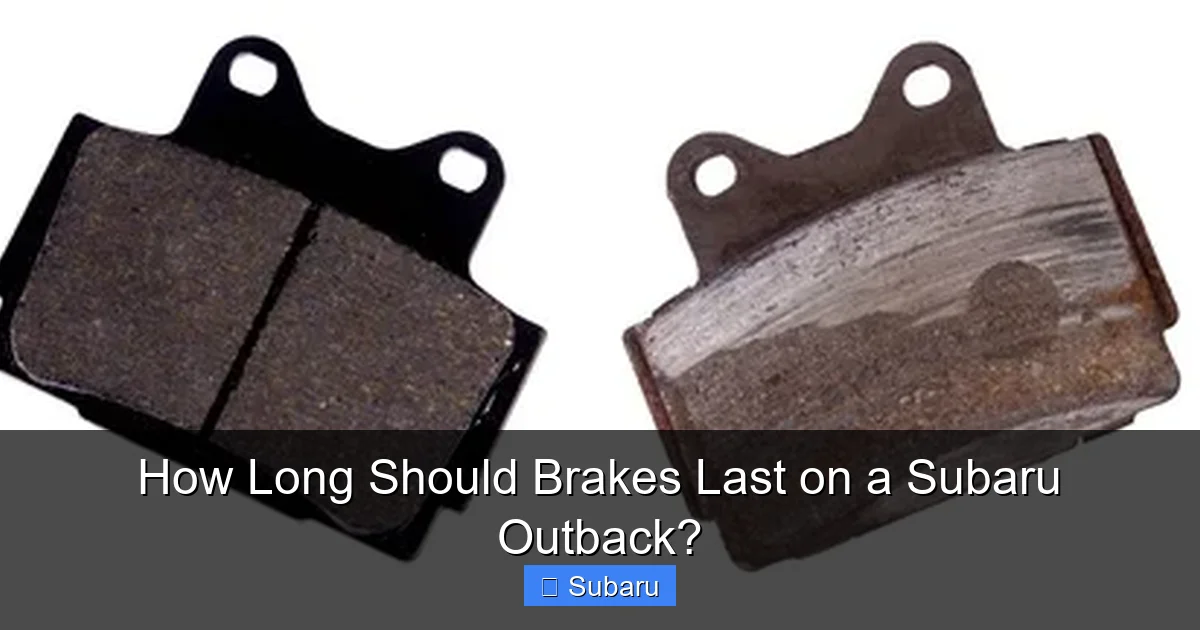
One of the most common signs of worn brake pads is a high-pitched squeal when you apply the brakes. This noise is usually caused by a small metal indicator built into the pad that contacts the rotor when the friction material is worn down. It’s designed to alert you that it’s time for a replacement.
Don’t ignore this sound—it’s your car’s way of saying, “Check my brakes!” While some noise can be normal in cold or wet conditions, persistent squealing usually means the pads are thin.
Grinding Sounds
If you hear a grinding or growling noise when braking, it’s a serious warning. This usually means the brake pads are completely worn out, and the metal backing plate is grinding against the rotor. At this point, you’re not just replacing pads—you may also need new rotors, which increases the cost significantly.
Grinding can also indicate a lack of lubrication in the caliper slide pins or a seized caliper. Either way, it requires immediate attention.
Longer Stopping Distances
If your Outback takes longer to stop than usual, it could be a sign of worn brakes. This might feel like the pedal travels farther before engaging or that the vehicle doesn’t respond as quickly.
Reduced braking performance can also be caused by low brake fluid, air in the lines, or a problem with the brake booster. But worn pads are the most common culprit.
Vibration or Pulsation in the Brake Pedal
Feeling a pulsing or vibrating sensation in the brake pedal—especially during hard stops—can indicate warped rotors. When rotors become uneven due to heat or wear, they cause the calipers to pulsate, which you feel through the pedal.
This issue is often fixable by resurfacing the rotors, but if they’re too thin or cracked, replacement is necessary.
Dashboard Warning Lights
Modern Subaru Outbacks are equipped with a brake system warning light on the dashboard. If this light comes on, it could indicate low brake fluid, a problem with the ABS system, or worn brake pads (on models with electronic pad sensors).
Don’t assume it’s a minor issue—have your vehicle inspected right away. Ignoring warning lights can lead to brake failure.
Visual Inspection Clues
If you’re comfortable looking under your vehicle, you can check brake pad thickness yourself. Most Outbacks have visible pad material through the wheel spokes. If the pad looks thinner than a quarter-inch (about 6mm), it’s time for a replacement.
You can also look for signs of uneven wear, such as one pad being much thinner than the other, which could indicate a stuck caliper.
Tips to Extend the Life of Your Outback’s Brakes
Now that you know what affects brake life and how to spot problems, let’s talk about how to make your brakes last longer. With a few smart habits and regular maintenance, you can get the most out of your Subaru Outback’s braking system.
Drive Smoothly and Anticipate Stops
As mentioned earlier, smooth driving is one of the best ways to extend brake life. Avoid sudden stops by looking ahead and slowing down gradually. This reduces wear on the pads and gives you better control.
Try to maintain a steady speed when possible, especially on highways. Using cruise control on long, flat stretches can help reduce unnecessary braking.
Use Engine Braking on Hills
When driving downhill, especially in mountainous areas, use lower gears to help slow the vehicle instead of riding the brakes. This technique, known as engine braking, reduces heat buildup in the brake system and prevents fade.
In automatic Outbacks, you can shift to a lower gear (like “L” or “S” mode) to increase engine resistance. Manual drivers can downshift to control speed.
Avoid Riding the Brake Pedal
Resting your foot on the brake pedal while driving—even lightly—can cause the brakes to stay partially engaged. This creates constant friction and heat, leading to premature wear.
Keep your foot off the pedal unless you’re actively braking. If you’re stuck in traffic, use the parking brake (if safe) or shift to neutral to give your brakes a break.
Keep Your Vehicle Light
The heavier your Outback, the harder your brakes have to work. Remove unnecessary items from your cargo area, especially heavy gear you don’t need. Every extra pound increases stopping distance and wear.
If you’re towing, make sure your trailer is properly balanced and use a brake controller if required.
Wash Your Brakes Regularly
In snowy or salty climates, rinse your wheels and brakes periodically to remove salt, dirt, and debris. Use a hose to spray the wheels, especially behind the rims where grime can accumulate.
Avoid using high-pressure washers directly on brake components, as they can force water into seals and cause corrosion.
Follow the Maintenance Schedule
Stick to Subaru’s recommended maintenance schedule, which includes brake inspections every 12,000 miles or annually. During these checks, a technician will measure pad thickness, inspect rotors, and test brake fluid.
Replacing brake fluid every two years or 30,000 miles helps maintain system performance and prevents moisture-related issues.
Use Quality Parts
When it’s time for a brake job, choose OEM (Original Equipment Manufacturer) parts or high-quality aftermarket components. Cheap pads may wear out faster or produce more dust and noise.
Look for ceramic or semi-metallic pads, which offer a good balance of durability, performance, and low noise. Avoid organic pads if you drive aggressively or tow often.
DIY vs. Professional Brake Service: What’s Best?
When your Outback needs new brakes, you might wonder whether to tackle the job yourself or take it to a professional. Both options have pros and cons, and the best choice depends on your skill level, tools, and comfort with automotive work.
DIY Brake Replacement: Pros and Cons
Replacing brake pads is one of the more accessible DIY repairs for car owners with basic mechanical skills. You’ll need a jack, jack stands, lug wrench, C-clamp, and possibly a torque wrench. Many online tutorials and Subaru-specific guides make the process straightforward.
Pros of DIY:
– Saves money on labor costs
– Gives you control over parts quality
– Builds mechanical knowledge and confidence
Cons of DIY:
– Risk of improper installation, which can lead to brake failure
– Requires proper tools and a safe workspace
– May void warranty if not done correctly
– Rotors may need resurfacing or replacement, which usually requires a shop
If you’re experienced and careful, DIY can be a great option. But if you’re unsure, it’s better to leave it to the pros.
Professional Brake Service: Why It’s Worth It
Certified Subaru technicians have the training, tools, and experience to perform brake jobs safely and efficiently. They can diagnose underlying issues, ensure proper torque specs, and test the system afterward.
Many dealerships and reputable shops offer warranties on parts and labor, giving you peace of mind. They also have access to OEM parts and can update your vehicle’s service records.
While professional service costs more upfront, it reduces the risk of mistakes and ensures your brakes perform optimally.
When to Choose Each Option
Choose DIY if:
– You’re comfortable working on cars
– You only need pad replacement (not rotors)
– You have the right tools and a safe workspace
Choose professional service if:
– You’re not confident in your mechanical skills
– The job involves rotors, calipers, or brake fluid
– Your Outback is still under warranty
– You want a thorough inspection and warranty coverage
Ultimately, your safety is the top priority. If there’s any doubt, trust a professional.
Conclusion
So, how long should brakes last on a Subaru Outback? While the average range is 30,000 to 70,000 miles for pads and 60,000 to 100,000 miles for rotors, the real answer depends on how you drive, where you drive, and how well you maintain your vehicle.
The Subaru Outback is built for adventure, but that doesn’t mean you should neglect its braking system. By understanding the factors that affect brake life—like driving style, terrain, and maintenance—you can take proactive steps to extend the lifespan of your brakes and ensure your safety on the road.
Regular inspections, smooth driving habits, and timely replacements are key. Whether you choose to do it yourself or rely on a certified technician, staying on top of brake maintenance will save you money, prevent breakdowns, and keep you confident behind the wheel.
Remember, your brakes are not just a maintenance item—they’re a critical safety feature. Treat them with care, and they’ll take care of you, mile after mile.
Frequently Asked Questions
How often should I check my Subaru Outback’s brakes?
It’s recommended to inspect your brakes every 12,000 miles or once a year, whichever comes first. If you drive in harsh conditions—like heavy traffic, mountains, or snow—consider checking them more frequently.
Can I drive with squeaking brakes?
Squeaking is often a warning that your brake pads are worn. While you may be able to drive for a short time, it’s best to have them inspected immediately to avoid damage to the rotors or unsafe braking performance.
Do I need to replace all four brake pads at once?
Not necessarily. Front pads usually wear faster than rear pads. However, it’s common practice to replace pads on both sides of the same axle to ensure even braking and prevent imbalance.
Will using aftermarket brake pads void my Subaru warranty?
Using high-quality aftermarket parts typically won’t void your warranty, as long as they meet OEM specifications. However, always check your warranty terms and consult a Subaru dealer if unsure.
How much does a brake job cost for a Subaru Outback?
The cost varies by location and shop, but a typical brake pad replacement ranges from $150 to $300 per axle. If rotors need resurfacing or replacement, the cost can increase to $300–$600 or more.
Can I replace just the brake pads and not the rotors?
Yes, if the rotors are in good condition—smooth, not warped, and above the minimum thickness—you can replace just the pads. However, if the rotors are damaged or worn, they should be resurfaced or replaced at the same time.
