
How Long Is the Cargo Space in a Subaru Forester?

The Subaru Forester offers generous cargo space, ranging from 26.9 to 76.1 cubic feet depending on seat configuration. With rear seats up, you get about 35 inches of cargo length, expanding significantly when seats are folded flat—perfect for gear, groceries, or weekend adventures.
Key Takeaways
- Cargo length behind rear seats: Approximately 35 inches, ideal for everyday items like groceries, luggage, or pet carriers.
- Maximum cargo length with seats folded: Up to 70 inches, allowing you to transport long items like camping gear, furniture, or sports equipment.
- Total cargo volume: Ranges from 26.9 cubic feet (rear seats up) to 76.1 cubic feet (seats down), one of the best in its class.
- Flat-folding rear seats: Enable a nearly level load floor, making it easy to slide in heavy or bulky items.
- Roof rails and cargo management: Optional roof racks and built-in tie-down hooks enhance storage flexibility for outdoor adventures.
- Wide rear opening: The large liftgate and low load floor make loading and unloading cargo simple and safe.
- Year-to-year consistency: Cargo dimensions have remained stable across recent model years, ensuring reliability for long-term owners.
📑 Table of Contents
- How Long Is the Cargo Space in a Subaru Forester?
- Understanding Cargo Space: Length vs. Volume
- Cargo Volume: From 26.9 to 76.1 Cubic Feet
- Design Features That Maximize Cargo Utility
- Real-World Examples: How Owners Use the Cargo Space
- Comparing the Forester to Competitors
- Tips for Maximizing Your Forester’s Cargo Space
- Conclusion: A Cargo Space Built for Real Life
How Long Is the Cargo Space in a Subaru Forester?
If you’re considering a Subaru Forester—or already own one—you’ve probably wondered: *How long is the cargo space, really?* Whether you’re packing for a family road trip, loading up camping gear, or just hauling weekly groceries, knowing the exact dimensions of your vehicle’s cargo area can make a big difference. The Subaru Forester has long been praised for its practicality, safety, and all-around versatility, and its cargo space is a major reason why.
Unlike some compact SUVs that sacrifice interior room for style, the Forester prioritizes function without giving up on comfort. It’s designed with real-world usability in mind, offering a spacious interior that adapts to your needs. From parents shuttling kids to school to outdoor enthusiasts heading into the wilderness, the Forester’s cargo area is built to handle it all.
In this guide, we’ll break down the exact cargo space length in the Subaru Forester, explore how it changes with different seating configurations, and share practical tips to help you make the most of every inch. Whether you’re comparing models or just trying to figure out if your new kayak will fit, we’ve got you covered.
Understanding Cargo Space: Length vs. Volume
Visual guide about How Long Is the Cargo Space in a Subaru Forester?
Image source: i.pinimg.com
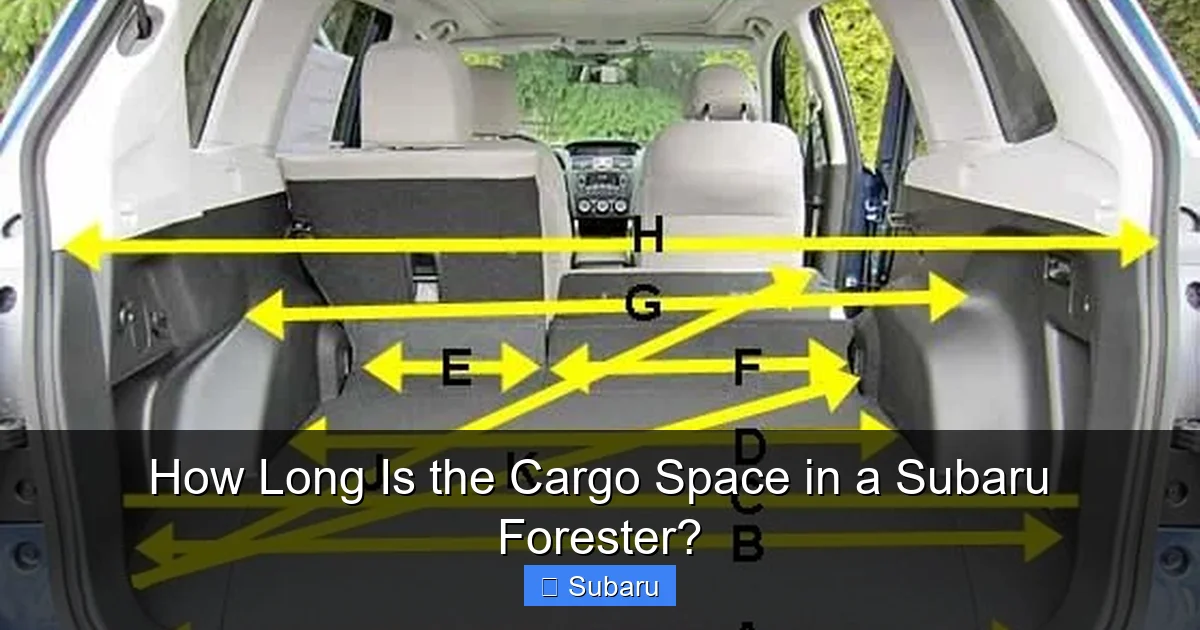
Before diving into numbers, it’s important to understand the difference between cargo *length* and cargo *volume*. While volume (measured in cubic feet) tells you how much stuff can fit overall, length (measured in inches) gives you a sense of how far back the space extends—especially useful when you’re trying to fit long items like a suitcase, a dog crate, or a set of skis.
The Subaru Forester offers both generous volume and impressive length, but the actual measurements depend on whether the rear seats are up or folded down. Let’s look at both scenarios.
Cargo Length with Rear Seats Up
With the rear seats in their standard upright position, the cargo area in the Subaru Forester measures approximately **35 inches** from the back of the seats to the liftgate. This is the space you’ll use for everyday tasks—loading groceries, placing a stroller, or storing luggage for a short trip.
This 35-inch depth is more than enough for most daily needs. For example, a standard suitcase is about 24–28 inches long, so you can easily fit two or three along the width of the cargo floor. A medium-sized dog carrier (around 30 inches) will also fit comfortably, with room to spare.
Keep in mind that this measurement is from the seatback to the rear door, so actual usable length may vary slightly depending on how far forward or back the seats are adjusted. The Forester’s rear seats slide and recline, which means you can fine-tune the balance between passenger comfort and cargo space.
Cargo Length with Rear Seats Folded
Now, here’s where the Forester really shines. When you fold down the 60/40 split rear seats, the cargo length increases dramatically—up to **70 inches** from the front edge of the front seats to the liftgate. That’s nearly six feet of flat, uninterrupted space.
This extended length opens up a world of possibilities. You can lay a full-sized air mattress flat for car camping, transport a bicycle (wheels removed), or even fit a small piece of furniture like a coffee table or bookshelf. For outdoor lovers, this means you can pack a tent, sleeping bags, coolers, and cooking gear without a struggle.
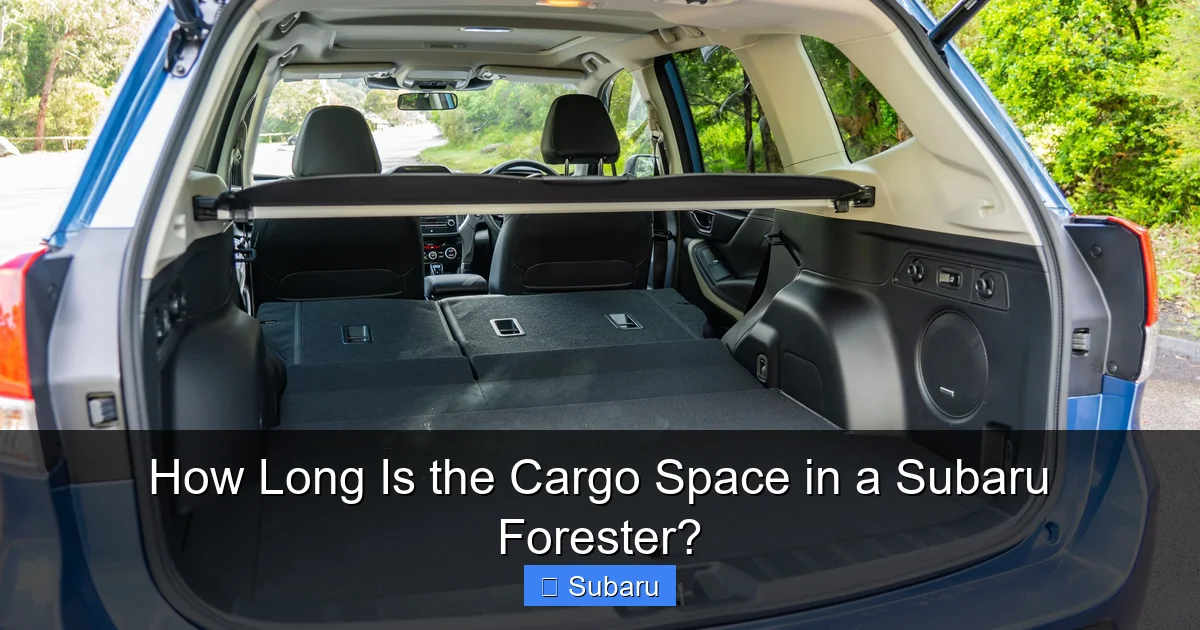
The seats fold nearly flat, creating a level surface that makes sliding heavy items in and out much easier. There’s a slight lip where the seats meet the floor, but it’s minimal and rarely an issue for most cargo.
Cargo Volume: From 26.9 to 76.1 Cubic Feet
Visual guide about How Long Is the Cargo Space in a Subaru Forester?
Image source: images.carexpert.com.au
While length is important, cargo volume gives you the full picture of how much the Forester can hold. Subaru officially lists the cargo volume as:
– **26.9 cubic feet** behind the rear seats (seats up)
– **76.1 cubic feet** with rear seats folded down
These numbers place the Forester among the top contenders in the compact SUV segment. For comparison, rivals like the Honda CR-V offer 39.2 cubic feet behind the rear seats and 75.8 cubic feet with seats down—very close, but the Forester still holds a slight edge in maximum volume.
Let’s put these numbers into real-world context.
What Can You Fit in 26.9 Cubic Feet?
With the rear seats up, 26.9 cubic feet is more than enough for daily errands. Here’s what that space can handle:
– **Groceries:** A full shopping trip for a family of four—canned goods, produce, dairy, and frozen items—will fit comfortably.
– **Luggage:** Two large suitcases (28–32 inches) plus two carry-ons can be loaded with ease.
– **Baby gear:** A stroller, diaper bag, and portable crib can all fit without rearranging.
– **Sports equipment:** A set of golf clubs, a tennis racket bag, or a soccer gear bag will take up only a fraction of the space.
This volume also allows for vertical stacking. The Forester’s cargo area is tall—about 30 inches from floor to ceiling—so you can stack boxes or bags without worrying about hitting the roof.
What Can You Fit in 76.1 Cubic Feet?
With the rear seats down, the Forester transforms into a mini moving van. Here’s what 76.1 cubic feet can accommodate:
– **Camping gear:** A full camping setup—tent, sleeping bags, air mattress, cooler, and cooking stove—can be loaded in one trip.
– **Furniture:** A small loveseat, a coffee table, or a bookshelf can be transported with room to spare.
– **Bicycles:** Two adult bikes (with front wheels removed) can fit side by side.
– **Large pets:** A large dog crate or even a small kennel for multiple pets can be accommodated.
This level of space is especially valuable for weekend warriors, DIYers, or anyone who needs to haul more than the average SUV can handle.
Design Features That Maximize Cargo Utility
Visual guide about How Long Is the Cargo Space in a Subaru Forester?
Image source: cars101.com
The Subaru Forester isn’t just about raw space—it’s about smart design that makes that space easier to use. Several features enhance the cargo area’s functionality and convenience.
Flat-Folding Rear Seats
One of the Forester’s standout features is its flat-folding rear seats. Unlike some SUVs where the seats leave a steep ramp or uneven surface when folded, the Forester’s seats lay nearly level with the cargo floor. This creates a smooth, continuous surface that’s ideal for sliding in heavy or awkward items.
The 60/40 split allows you to fold just one side, leaving the other side available for passengers. This is perfect for trips where you need to carry both people and gear—like taking a friend to the airport with their luggage, or heading to a soccer game with equipment.
Low Load Floor and Wide Liftgate
The Forester’s cargo floor sits low to the ground, making it easier to lift heavy items in and out. This is especially helpful for older drivers or those with mobility concerns. The wide, power-operated liftgate (available on higher trims) opens high enough for most people to stand under comfortably, and the opening is wide enough to accommodate large boxes or long items.
The liftgate also features a handy integrated handle and optional foot-activated sensor (on Limited and Touring trims), allowing you to open the door hands-free—perfect when your arms are full.
Cargo Management System
Subaru includes several built-in features to help you organize and secure your cargo:
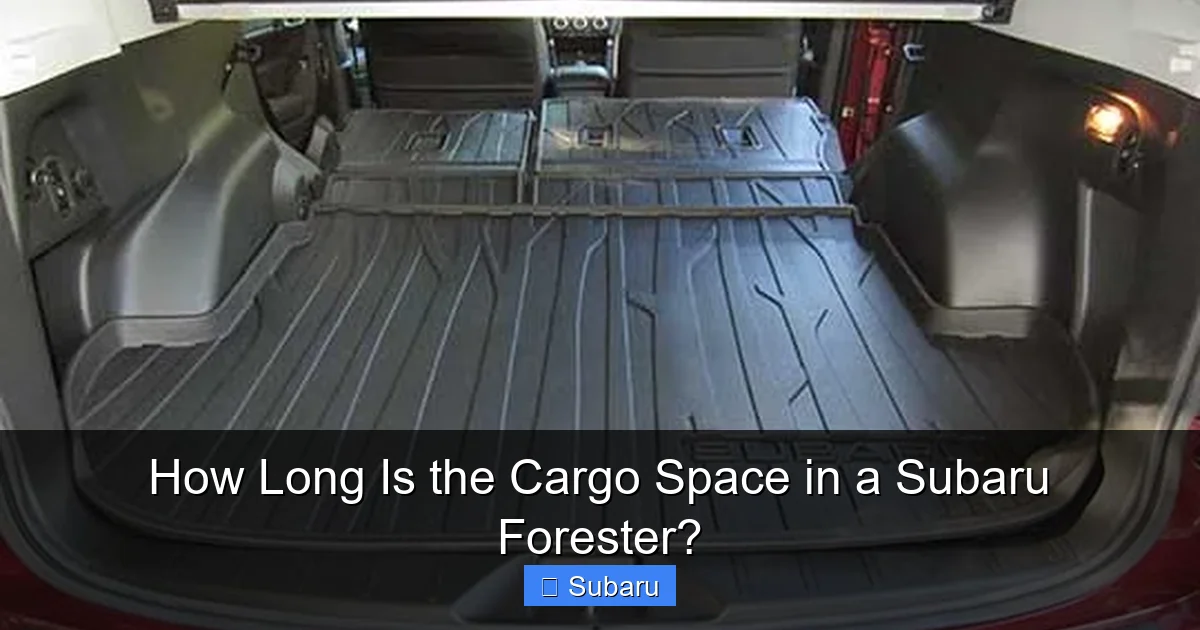
– **Tie-down hooks:** Four sturdy hooks are located in the corners of the cargo area, allowing you to strap down bags, coolers, or gear.
– **Cargo cover:** A retractable cover hides your belongings from view and protects them from sunlight. It’s removable if you need extra height.
– **Under-floor storage:** Some trims include a hidden compartment under the cargo floor for storing small items like tools, jumper cables, or emergency supplies.
These small touches make a big difference in daily usability, especially for families or frequent travelers.
Roof Rails and Crossbars
For even more storage, the Forester comes standard with roof rails. You can add crossbars (either from Subaru or third-party brands) to mount a roof box, cargo basket, or bike rack. This is ideal for long trips where you’ve maxed out the interior space.
A typical roof box can add 10–15 cubic feet of storage, perfect for bulky but lightweight items like sleeping bags, clothing, or camping chairs. Just remember that adding weight to the roof raises the vehicle’s center of gravity, so drive carefully in windy conditions.
Real-World Examples: How Owners Use the Cargo Space
To truly understand the Forester’s cargo capabilities, it helps to hear from real owners. Here are a few common scenarios where the cargo space makes a difference.
Family Road Trips
The Johnsons, a family of four from Colorado, use their Forester for annual summer trips to the mountains. “We pack two large suitcases, a cooler, a stroller, and all the kids’ toys,” says mom Lisa. “With the rear seats up, everything fits perfectly. When we get to the cabin, we fold the seats down and load up firewood and extra supplies.”
Their secret? Using soft-sided duffel bags instead of hard-shell suitcases. “They compress better and fit into tighter spaces,” Lisa explains. “And we always put the heaviest items low and toward the front.”
Weekend Camping Adventures
Outdoor enthusiast Mark uses his Forester for weekend camping trips. “I can fit my two-person tent, sleeping bags, air mattress, cooking gear, and a 48-quart cooler with the seats down,” he says. “I even mounted a cargo barrier behind the front seats so my dog can ride safely in the back.”
Mark also uses a roof box for extra clothing and electronics. “It’s great for keeping the interior clean and dry,” he adds.
Moving Day Helper
When Sarah moved into her first apartment, she borrowed her brother’s Forester to help transport her belongings. “We fit a small couch, a bookshelf, and several boxes with the seats folded,” she recalls. “It wasn’t a full moving truck, but it saved us a rental fee and made the process much easier.”
Sarah’s tip? Use moving blankets to protect the interior and prevent scratches. “And always secure everything with straps—don’t rely on just stacking.”
Comparing the Forester to Competitors
How does the Forester stack up against other popular compact SUVs? Let’s look at a few key rivals.
Honda CR-V
The CR-V offers slightly more cargo space behind the rear seats (39.2 cubic feet vs. the Forester’s 26.9), but the Forester wins in maximum volume (76.1 vs. 75.8). The CR-V’s cargo floor is also higher, making loading a bit more difficult.
Toyota RAV4
The RAV4 provides 37.5 cubic feet behind the rear seats and 69.8 cubic feet with seats down. While it has more space with seats up, the Forester’s flat-folding seats and lower load floor give it an edge in usability.
Mazda CX-5
The CX-5 is more stylish but sacrifices cargo space: 30.9 cubic feet behind the rear seats and 59.6 cubic feet maximum. It’s a great choice for drivers who prioritize driving dynamics over utility.
Overall, the Forester strikes a balance between space, usability, and everyday practicality. It may not have the most cargo room in every category, but it excels in real-world functionality.
Tips for Maximizing Your Forester’s Cargo Space
Even with all this space, smart packing can make a big difference. Here are some tips to help you get the most out of your Forester’s cargo area.
Use Vertical Space
Don’t just fill the floor—stack items vertically. Use collapsible bins or soft bags that can be compressed. Place heavier items on the bottom and lighter ones on top.
Organize with Dividers
Consider a cargo organizer or divider to keep items from shifting during transit. This is especially useful for groceries or fragile items.
Fold Seats Strategically
If you only need to carry one passenger, fold down the larger 60% side of the rear seat. This gives you more space while still leaving room for a friend.
Remove the Cargo Cover
If you need extra height, the retractable cargo cover can be removed in seconds. This is helpful for tall items like plants or large boxes.
Use the Roof
For long trips, a roof box or cargo basket can free up interior space for passengers and comfort items. Just remember to check height restrictions in parking garages.
Conclusion: A Cargo Space Built for Real Life
The Subaru Forester’s cargo space is more than just a number—it’s a reflection of the vehicle’s commitment to practicality, versatility, and everyday usability. With up to 35 inches of length behind the rear seats and 70 inches with the seats folded, it handles everything from daily commutes to cross-country adventures.
Whether you’re a parent, an outdoor enthusiast, or just someone who values space and flexibility, the Forester delivers. Its flat-folding seats, low load floor, and smart storage features make it one of the most user-friendly SUVs in its class.
So, how long is the cargo space in a Subaru Forester? Long enough to fit your life—whatever that looks like.
Frequently Asked Questions
How much cargo space does the Subaru Forester have with the rear seats up?
The Subaru Forester offers 26.9 cubic feet of cargo space behind the rear seats when they are in the upright position. This is ideal for everyday use like grocery shopping or carrying luggage.
What is the maximum cargo length in a Subaru Forester?
With the rear seats folded flat, the cargo length in a Subaru Forester can reach up to 70 inches from the front seats to the liftgate, providing ample room for long items like camping gear or furniture.
Can you fit a bicycle in a Subaru Forester?
Yes, you can fit a bicycle in a Subaru Forester by removing the front wheel and folding down the rear seats. Two bikes can typically fit side by side with the seats down.
Does the cargo space change between Forester model years?
The cargo dimensions have remained consistent across recent model years (2019–2024), so you can expect similar space regardless of the specific year or trim level.
Is the cargo floor in the Forester flat when the seats are folded?
Yes, the rear seats fold nearly flat, creating a level surface with the cargo floor. This makes it easy to slide in heavy or bulky items without ramps or gaps.
Can I add more storage to my Subaru Forester?
Absolutely. You can install roof crossbars and a cargo box or basket to increase storage capacity. Subaru also offers optional accessories like cargo nets and organizers.
