
Does Subaru Crosstrek Have Blind Spot Monitoring?

The Subaru Crosstrek offers blind spot monitoring (BSM) on most trims starting from 2018 onward, especially in higher-level packages like Limited and Touring. While base models may not include it standard, many Crosstreks come equipped with BSM as part of Subaru’s EyeSight or optional safety packages, making it a reliable choice for drivers prioritizing safety.
If you’re considering a Subaru Crosstrek, you’re likely drawn to its rugged design, all-wheel-drive capability, and reputation for safety. But one question that often comes up—especially for city drivers and highway commuters—is: Does the Subaru Crosstrek have blind spot monitoring? The short answer is yes, but with some important nuances depending on the year, trim level, and optional packages. In this guide, we’ll dive deep into how blind spot monitoring works in the Crosstrek, which models include it, and why it matters for your daily drive.
Blind spot monitoring (BSM) is a critical safety feature that helps prevent lane-change accidents by alerting drivers to vehicles they can’t see in their side mirrors. With more cars on the road than ever, and distractions like smartphones pulling our attention away, having an extra set of electronic eyes can make a real difference. Subaru has long prioritized safety, earning top marks from organizations like the IIHS (Insurance Institute for Highway Safety) and NHTSA (National Highway Traffic Safety Administration). The Crosstrek, as one of Subaru’s most popular compact SUVs, reflects this commitment—especially when equipped with advanced driver-assist technologies like BSM.
But not every Crosstrek comes with blind spot monitoring out of the box. Understanding when and how this feature is included can save you from an unpleasant surprise at the dealership or during your test drive. Whether you’re buying new, used, or leasing, knowing what to look for ensures you get the safest version of this versatile vehicle. Let’s break it down by model year, trim, and package so you can drive with confidence.
Key Takeaways
- Blind Spot Monitoring is available on most Subaru Crosstrek trims from 2018 onward. It’s standard on higher trims like Limited and Touring, and optional on others.
- BSM works by using radar sensors to detect vehicles in adjacent lanes. Visual and audible alerts warn drivers before changing lanes.
- The feature is often bundled with other safety tech like Rear Cross-Traffic Alert (RCTA). This combo is especially helpful when reversing out of parking spots.
- Base models (e.g., Base and Premium) may not include BSM standard. Check trim details or add the optional Safety Package for inclusion.
- Subaru’s EyeSight suite enhances BSM effectiveness. When equipped, it adds adaptive cruise control, lane departure warning, and pre-collision braking.
- BSM performance is reliable in most driving conditions. However, heavy rain, snow, or dirt on sensors may reduce accuracy.
- Always verify features by model year and trim before purchasing. Use Subaru’s VIN decoder or consult a dealer for exact specs.
📑 Table of Contents
What Is Blind Spot Monitoring and Why Does It Matter?
Blind spot monitoring is an advanced driver-assistance system (ADAS) designed to detect vehicles in your vehicle’s blind spots—those areas alongside and slightly behind your car that aren’t visible through the side mirrors or rearview mirror. When another vehicle enters this zone, the system alerts the driver, typically through a visual warning on the side mirror or an audible beep. Some systems even provide haptic feedback, like a vibration in the steering wheel or seat.
The importance of BSM cannot be overstated. According to the NHTSA, lane-change crashes account for thousands of injuries and hundreds of fatalities each year. Many of these occur because drivers simply don’t see another vehicle in their blind spot. BSM acts as a second pair of eyes, especially useful in heavy traffic, on highways, or when merging. It’s particularly helpful for newer drivers, older drivers with reduced neck mobility, or anyone driving a vehicle with larger blind spots—like SUVs and crossovers.
In the context of the Subaru Crosstrek, blind spot monitoring adds another layer of safety to an already well-regarded vehicle. The Crosstrek’s elevated ride height and boxy design offer great visibility forward and to the sides, but like all vehicles, it has blind spots—especially directly behind and along the rear quarters. BSM helps fill those gaps, making lane changes safer and reducing driver stress.
How Blind Spot Monitoring Works in the Crosstrek
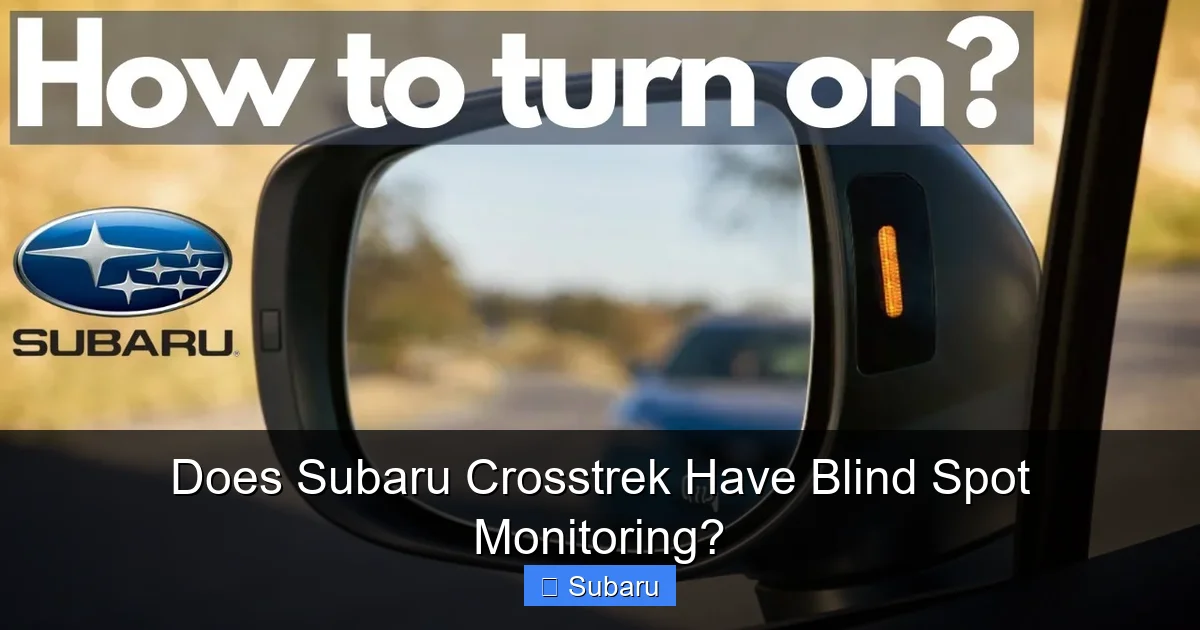
Subaru’s blind spot monitoring system uses radar sensors mounted in the rear bumper, typically on both the left and right sides. These sensors continuously scan the areas beside and slightly behind the vehicle, monitoring for other cars, motorcycles, or large objects. When a vehicle is detected in the blind spot, a yellow warning light illuminates on the corresponding side mirror. If the driver activates the turn signal while a vehicle is in the blind spot, the system may emit an audible alert or flash the warning light more intensely.
This technology is passive but highly effective. It doesn’t require driver input—once activated, it works automatically whenever the vehicle is in motion above a certain speed (usually around 20 mph). The system is designed to minimize false alerts, so it won’t trigger for parked cars, guardrails, or small objects. However, it’s not foolproof. Heavy rain, snow, or dirt covering the sensors can reduce accuracy, which is why Subaru recommends keeping the rear bumper clean.
One of the strengths of Subaru’s BSM is its integration with other safety features. For example, when combined with Rear Cross-Traffic Alert (RCTA), the system can also warn you of approaching vehicles when backing out of a parking spot. This dual functionality makes the Crosstrek especially useful in busy parking lots or tight urban environments.
Real-World Benefits of BSM in Daily Driving
Imagine you’re driving on a busy highway during rush hour. Traffic is heavy, and you need to change lanes to exit. You check your mirrors and glance over your shoulder—but in the split second you look away, a motorcycle zips into your blind spot. Without BSM, you might not notice it until it’s too late. With BSM, a warning light flashes on your mirror, giving you time to wait or adjust your speed.
Or consider a rainy evening in the city. Visibility is low, and the Crosstrek’s side mirrors are slightly obscured by water droplets. You’re about to merge into the left lane, but the BSM system detects a car approaching quickly from behind. The audible alert gives you a crucial heads-up, preventing a potential sideswipe.
These scenarios aren’t hypothetical—they’re common occurrences that BSM helps mitigate. For families, commuters, or anyone who drives regularly, this feature adds peace of mind. It’s not a replacement for checking mirrors and shoulder checks, but it’s a valuable backup that enhances overall situational awareness.
Which Subaru Crosstrek Models Have Blind Spot Monitoring?
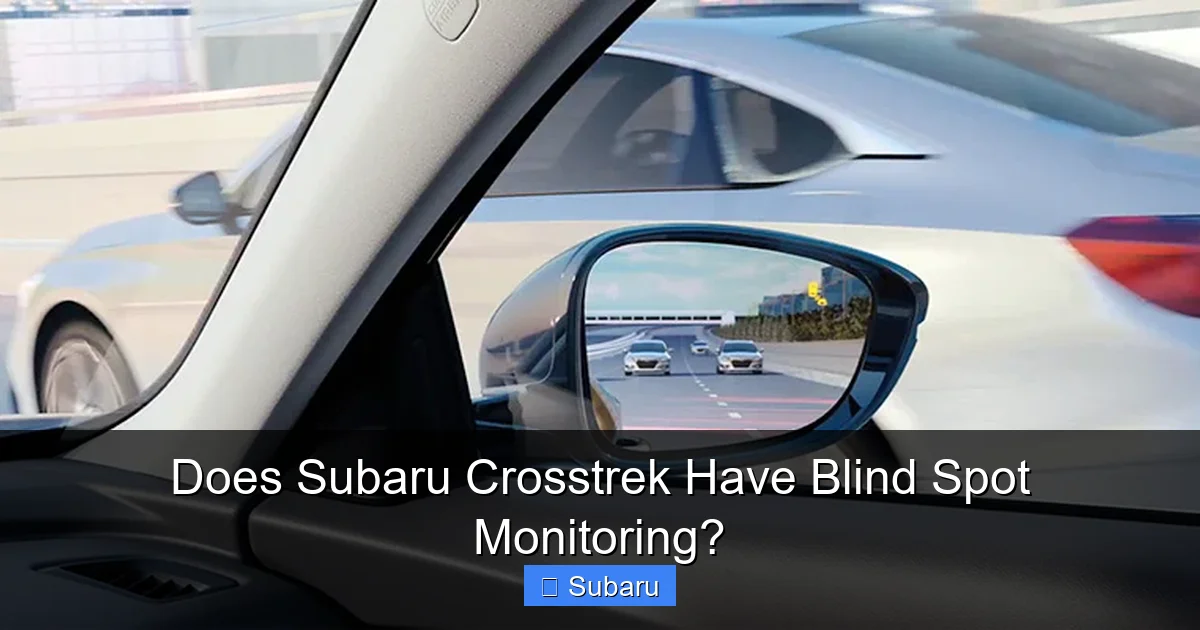
Visual guide about Does Subaru Crosstrek Have Blind Spot Monitoring?
Image source: hondatheotherside.com
Now that we understand what BSM is and why it’s useful, let’s answer the core question: which Subaru Crosstreks actually come with it? The availability of blind spot monitoring varies significantly by model year and trim level. Here’s a detailed breakdown to help you navigate your options.
2018–2020 Subaru Crosstrek: The Introduction of BSM
The 2018 model year marked a major update for the Crosstrek, including the introduction of Subaru’s next-generation EyeSight driver-assist suite. This was also when blind spot monitoring began appearing as a standard or optional feature on most trims. However, it wasn’t universally included.
– Base and Premium trims: BSM was not standard. It was available as part of the optional “Safety Package” or “Driver Assistance Package,” which also included features like rear cross-traffic alert and lane change assist.
– Limited and Touring trims: BSM came standard, along with other advanced safety features.
For example, a 2019 Crosstrek Premium without the optional package would not have BSM, while a 2019 Crosstrek Limited would include it automatically. This distinction is crucial for used car buyers—always check the window sticker or vehicle history report to confirm.
2021–2023 Subaru Crosstrek: Broader Standardization
Starting in 2021, Subaru expanded the availability of blind spot monitoring across more trims. While still not standard on the base model, it became more accessible through optional packages and higher trims.
– Base trim: BSM remains optional, typically included in the “Convenience Package” or “Safety Package.”
– Premium trim: BSM is often included in the optional “All-Weather Package” or “Technology Package.”
– Limited and Touring trims: BSM is standard, along with additional features like adaptive headlights and upgraded audio systems.
For instance, a 2022 Crosstrek Premium with the Technology Package would include BSM, RCTA, and lane departure warning. Meanwhile, a base model without any packages would lack these features.
2024 Subaru Crosstrek: The Latest Updates
The 2024 Crosstrek continues this trend, with blind spot monitoring becoming even more widespread. While the base trim still doesn’t include it standard, most buyers opt for at least the Premium trim, where BSM is commonly bundled with other safety tech.
Subaru has also improved the system’s sensitivity and reduced false alerts in newer models. The 2024 Crosstrek also benefits from updated radar sensors and better integration with the EyeSight system, making BSM more reliable than ever.
How to Check If a Specific Crosstrek Has BSM
If you’re shopping for a used or new Crosstrek, here’s how to verify whether it has blind spot monitoring:
1. Check the window sticker (Monroney label): This is the most reliable source. Look for “Blind Spot Detection” or “Blind Spot Monitoring” in the features list.
2. Use Subaru’s VIN decoder: Enter the vehicle identification number on Subaru’s official website to see the original factory specs.
3. Look for mirror indicators: If the side mirrors have small yellow lights, that’s a strong sign BSM is installed.
4. Ask the dealer or seller: Reputable dealers should be able to confirm features and provide documentation.
Never assume—always verify. A Crosstrek without BSM can still be a great vehicle, but you’ll want to know what you’re getting.
Blind Spot Monitoring vs. Other Safety Features in the Crosstrek
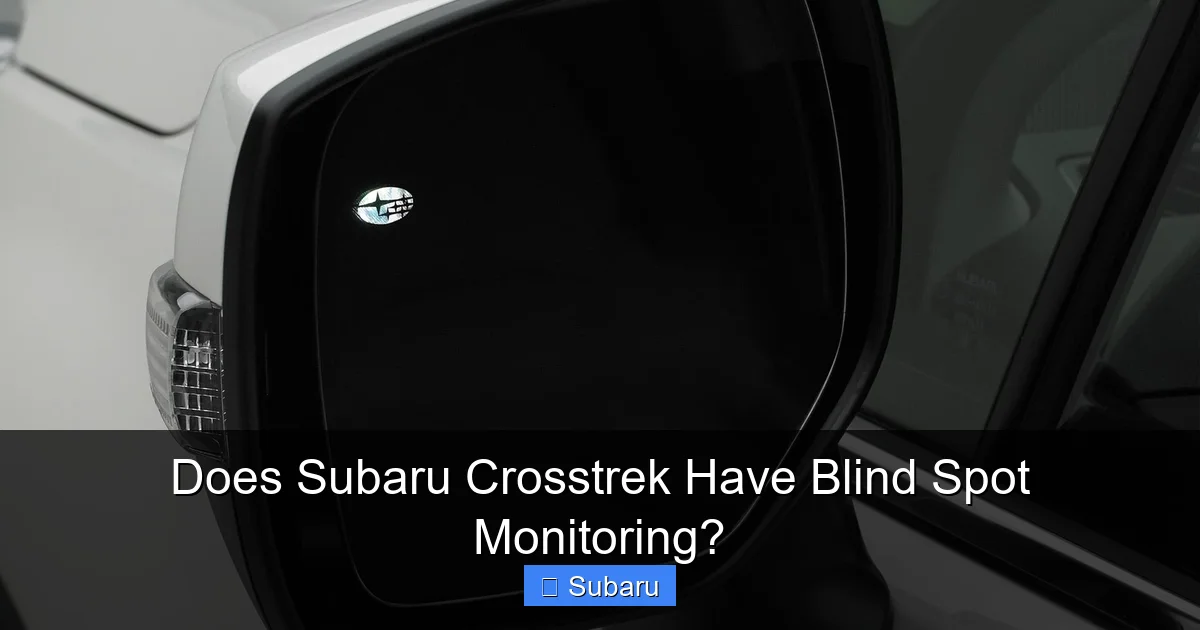
Visual guide about Does Subaru Crosstrek Have Blind Spot Monitoring?
Image source: images.simplepart.com
Blind spot monitoring doesn’t work in isolation. In the Subaru Crosstrek, it’s often part of a broader suite of safety technologies designed to protect drivers, passengers, and pedestrians. Understanding how BSM fits into this ecosystem helps you appreciate its value.
EyeSight Driver Assist Technology
EyeSight is Subaru’s flagship safety system, using dual forward-facing cameras to monitor traffic conditions. It includes features like:
– Adaptive Cruise Control
– Pre-Collision Braking
– Lane Departure and Sway Warning
– Lane Keep Assist
While EyeSight focuses on forward-facing safety, BSM handles side and rear detection. When both systems are equipped, they create a 360-degree safety net. For example, EyeSight might prevent a front-end collision, while BSM stops you from merging into another car.
Rear Cross-Traffic Alert (RCTA)
RCTA is closely related to BSM and often included in the same package. It uses the same rear radar sensors to detect vehicles approaching from the side when reversing. This is especially helpful in parking lots where visibility is limited.
In the Crosstrek, BSM and RCTA are frequently bundled together. If a vehicle is approaching from the left while you’re backing out, RCTA will alert you with a beep and a warning light on the left mirror. This dual functionality makes parking safer and less stressful.
Lane Change Assist (LCA)
Some Crosstrek models include Lane Change Assist, which is essentially an enhanced version of BSM. LCA not only detects vehicles in the blind spot but also monitors faster-approaching vehicles from behind. If a car is approaching quickly in the next lane, LCA may delay the warning until it’s safer to change lanes.
This feature is particularly useful on highways, where vehicles can close distances rapidly. While not all Crosstreks have LCA, it’s often included in higher trims or optional packages.
Other Safety Tech to Consider
Beyond BSM, the Crosstrek offers additional safety features that complement its design:
– Automatic Emergency Braking: Stops the car if a collision is imminent.
– High Beam Assist: Automatically switches between high and low beams.
– DriverFocus Distraction Mitigation: Monitors driver attention and alerts if drowsiness is detected (available on select trims).
These features, combined with BSM, make the Crosstrek one of the safest compact SUVs in its class.
Pros and Cons of Blind Spot Monitoring in the Crosstrek
Visual guide about Does Subaru Crosstrek Have Blind Spot Monitoring?
Image source: i.ytimg.com
Like any technology, blind spot monitoring has its strengths and limitations. Here’s a balanced look at what to expect.
Advantages of BSM in the Crosstrek
– Enhanced Safety: Reduces the risk of side collisions and lane-change accidents.
– Peace of Mind: Especially helpful for new drivers or those with limited mobility.
– Easy to Use: Works automatically—no setup required.
– Integrated Design: Seamlessly blends with other Subaru safety systems.
– Useful in All Conditions: Effective in rain, fog, and nighttime driving.
Limitations and Considerations
– Not Standard on Base Models: You may need to upgrade trims or add packages.
– Sensor Sensitivity: Can be affected by dirt, snow, or heavy rain.
– False Alerts Possible: May trigger near large trucks or in complex traffic situations.
– Doesn’t Replace Driver Vigilance: Always check mirrors and shoulder before changing lanes.
– Cost: Optional packages can add $1,000–$2,000 to the price.
Despite these limitations, the benefits far outweigh the drawbacks for most drivers. BSM is a proven safety tool that can prevent accidents and save lives.
Tips for Getting the Most Out of Blind Spot Monitoring
If your Crosstrek has BSM, here are some practical tips to maximize its effectiveness:
1. Keep Sensors Clean: Regularly wash the rear bumper to prevent dirt or snow buildup.
2. Understand the Alerts: Familiarize yourself with the warning lights and sounds.
3. Don’t Rely Solely on BSM: Always perform shoulder checks—technology is a backup, not a replacement.
4. Test the System: Have a friend drive beside you at highway speed to see if the alert triggers.
5. Check for Updates: Some features may improve with software updates from Subaru dealers.
By using BSM wisely, you’ll get the most out of this valuable safety feature.
Conclusion
So, does the Subaru Crosstrek have blind spot monitoring? The answer is a qualified yes. While not standard on every trim, BSM is widely available across the lineup, especially in higher trims and optional packages. From 2018 onward, Subaru has steadily increased the inclusion of this life-saving technology, making the Crosstrek a safer choice for families, commuters, and adventurers alike.
Whether you’re navigating city streets, cruising the highway, or backing out of a tight parking spot, blind spot monitoring adds an essential layer of protection. When combined with EyeSight, RCTA, and other safety features, the Crosstrek becomes one of the most well-rounded compact SUVs on the market.
If safety is a priority—and it should be—make sure to choose a Crosstrek trim or package that includes blind spot monitoring. A few hundred dollars more could make all the difference when it matters most. Drive smart, stay alert, and let Subaru’s technology help you get there safely.
Frequently Asked Questions
Does every Subaru Crosstrek have blind spot monitoring?
No, not every Crosstrek has blind spot monitoring standard. It’s typically included on higher trims like Limited and Touring, or available as part of optional safety packages on Base and Premium models.
Can I add blind spot monitoring to a Crosstrek that doesn’t have it?
Unfortunately, blind spot monitoring cannot be easily added after purchase. It requires factory-installed radar sensors and wiring, so it’s best to choose a model that includes it from the start.
How do I know if my Crosstrek has blind spot monitoring?
Check the side mirrors for yellow warning lights, review the window sticker, or use Subaru’s VIN decoder online. You can also ask your dealer for a features list.
Does blind spot monitoring work in the rain or snow?
Yes, but heavy rain, snow, or dirt on the sensors can reduce accuracy. Keep the rear bumper clean for optimal performance.
Is blind spot monitoring the same as rear cross-traffic alert?
No, but they’re related. BSM detects vehicles in your blind spots while driving forward, while RCTA warns of approaching traffic when reversing. They often come together.
Does the 2024 Subaru Crosstrek have blind spot monitoring standard?
Not on the base trim, but it’s standard on Limited and Touring trims, and available in optional packages on Premium models. Always confirm by trim and package.
