
How to Change Kpa to Psi on a 2018 Subaru Crosstrek

Changing kPa to PSI on a 2018 Subaru Crosstrek is simple and ensures accurate tire pressure readings. This guide walks you through the process using the vehicle’s infotainment system, explains why the conversion matters, and offers practical tips for safe driving.
Key Takeaways
- Understanding Units: kPa (kilopascals) and PSI (pounds per square inch) are both units of pressure, but PSI is more commonly used in the U.S. for tire inflation.
- Factory Default Setting: The 2018 Subaru Crosstrek displays tire pressure in kPa by default, which can confuse drivers accustomed to PSI.
- Easy Conversion via Infotainment: You can switch from kPa to PSI directly through the vehicle’s Multi-Function Display (MFD) settings.
- Why It Matters: Proper tire pressure improves fuel efficiency, handling, tire lifespan, and overall safety.
- Manual Conversion Formula: If needed, use the formula: PSI = kPa × 0.145038 to convert readings manually.
- Regular Checks Recommended: Check tire pressure monthly and before long trips—always when tires are cold.
- Use a Reliable Gauge: For best results, use a digital tire pressure gauge that displays in PSI to cross-check your vehicle’s readings.
📑 Table of Contents
- Why Tire Pressure Matters in Your 2018 Subaru Crosstrek
- Understanding kPa vs. PSI: What’s the Difference?
- How to Change kPa to PSI on a 2018 Subaru Crosstrek
- Why You Should Switch to PSI
- Manual Conversion: kPa to PSI Formula
- Tips for Maintaining Proper Tire Pressure
- Troubleshooting Common Issues
- Conclusion
Why Tire Pressure Matters in Your 2018 Subaru Crosstrek
Maintaining the correct tire pressure in your 2018 Subaru Crosstrek isn’t just a good habit—it’s essential for safety, performance, and efficiency. Your Crosstrek is designed to handle a variety of road conditions, from city streets to rugged trails, and proper tire inflation plays a critical role in how well it performs. Underinflated tires can lead to poor handling, increased rolling resistance, and even tire blowouts. Overinflated tires, on the other hand, reduce traction and can cause uneven wear, especially in the center of the tread.
But here’s a common frustration many Crosstrek owners face: the vehicle’s tire pressure monitoring system (TPMS) displays readings in kilopascals (kPa), not pounds per square inch (PSI)—the unit most American drivers are familiar with. If you’ve ever glanced at your dashboard and seen numbers like “220 kPa” and wondered what that means in real-world terms, you’re not alone. This can make it difficult to know whether your tires are properly inflated, especially if you’re using a standard PSI-based tire gauge.
The good news? You don’t have to guess. Your 2018 Subaru Crosstrek allows you to change the display unit from kPa to PSI directly through the infotainment system. This simple adjustment makes it easier to monitor your tire pressure accurately and confidently. In this guide, we’ll walk you through the exact steps to make that change, explain why it matters, and offer tips to keep your Crosstrek running smoothly.
Understanding kPa vs. PSI: What’s the Difference?
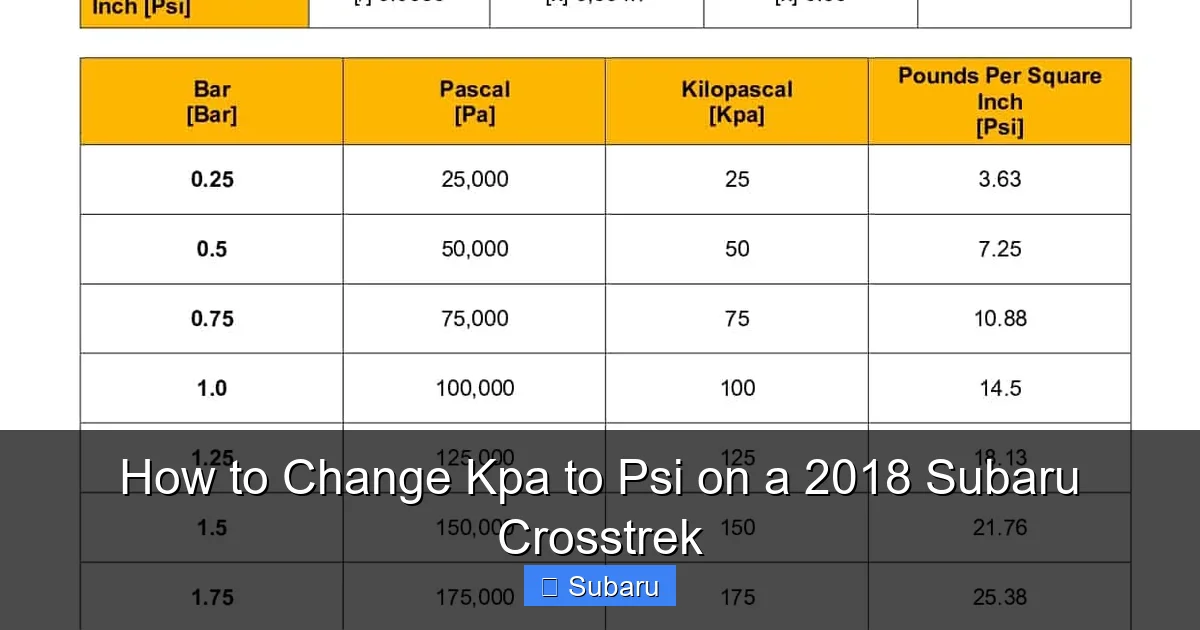
Visual guide about How to Change Kpa to Psi on a 2018 Subaru Crosstrek
Image source: constructandcommission.com
Before diving into the how-to, let’s clarify what kPa and PSI actually mean—and why the distinction matters.
PSI (Pounds per Square Inch) is the standard unit of pressure used in the United States for measuring tire inflation. It tells you how many pounds of force are pressing on one square inch of surface area. Most tire manufacturers, gas station air pumps, and personal tire gauges in the U.S. use PSI. For example, your Crosstrek’s recommended tire pressure might be listed as 33 PSI on the door jamb sticker.
kPa (Kilopascals), on the other hand, is a metric unit of pressure commonly used in many other parts of the world. One kPa equals approximately 0.145 PSI. So, 220 kPa is roughly equivalent to 32 PSI. While kPa is scientifically precise and widely used in engineering and automotive systems globally, it’s less intuitive for American drivers who are accustomed to PSI.
The 2018 Subaru Crosstrek, like many modern vehicles, uses kPa as the default unit for its TPMS display. This is likely due to Subaru’s global manufacturing and design standards. However, this can create confusion when you’re trying to match your vehicle’s readings with the PSI values recommended by tire manufacturers or found on air pumps.
Understanding the difference helps you avoid over- or underinflating your tires. For instance, if your Crosstrek shows 200 kPa and you assume that’s close enough to 33 PSI, you might be underinflating by about 4 PSI—enough to affect fuel economy and tire wear over time.
How to Change kPa to PSI on a 2018 Subaru Crosstrek
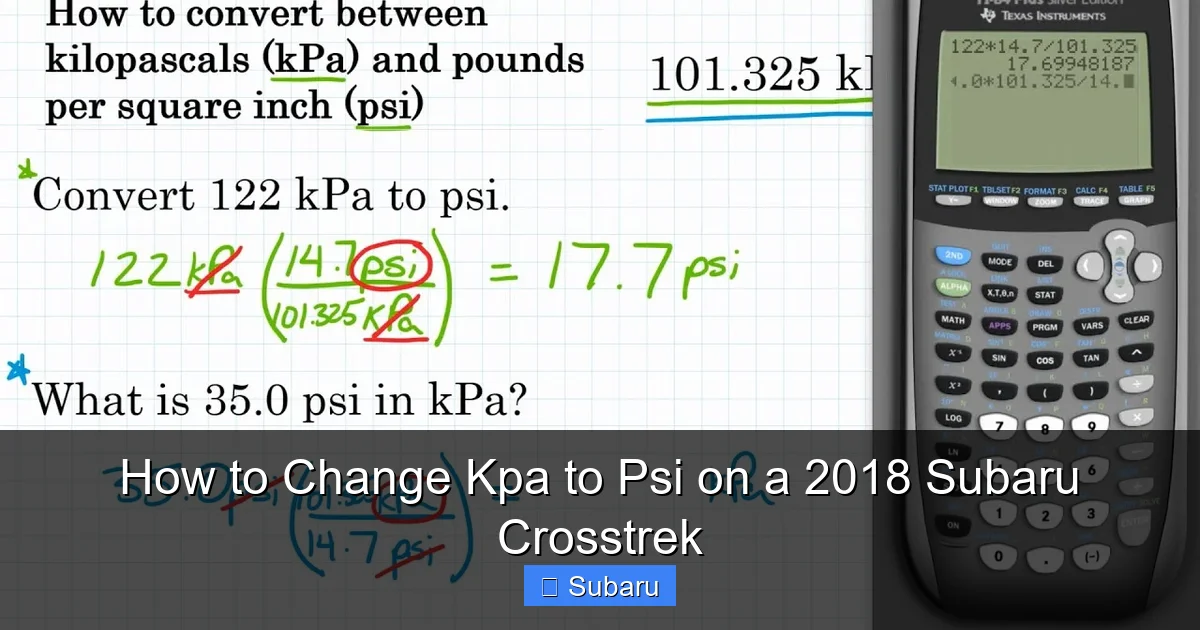
Visual guide about How to Change Kpa to Psi on a 2018 Subaru Crosstrek
Image source: i.ytimg.com
Switching your 2018 Subaru Crosstrek from kPa to PSI is a straightforward process that takes less than two minutes. The setting is located within the vehicle’s Multi-Function Display (MFD), which is part of the infotainment system. Here’s a step-by-step guide to help you make the change:
Step 1: Start Your Vehicle
Turn the ignition to the “ON” position. You don’t need to drive the car—just ensure the electronics are powered up. The dashboard and infotainment screen should light up.
Step 2: Access the Multi-Function Display (MFD)
Look for the MFD screen, typically located in the center of the dashboard above the climate controls. Use the “MFD” button on the steering wheel or the touchscreen (depending on your trim level) to navigate to the main menu.
Step 3: Navigate to “Settings”
Once in the MFD menu, use the arrow buttons or touchscreen to select “Settings.” This may be labeled as “Vehicle Settings” or “System Settings” depending on your Crosstrek’s software version.
Step 4: Select “Units” or “Display Units”
Scroll through the settings menu until you find an option labeled “Units,” “Measurement Units,” or “Display Units.” This is where you can change the units for speed, temperature, and—most importantly—tire pressure.
Step 5: Change Tire Pressure Unit to PSI
Highlight the “Tire Pressure” or “Pressure Unit” option. You’ll likely see a toggle between “kPa” and “PSI.” Select “PSI” using the arrow buttons or touchscreen, then confirm your choice.
Step 6: Exit and Verify
Once you’ve made the change, exit the menu. The TPMS display on your dashboard should now show tire pressure readings in PSI instead of kPa. To verify, check the readings the next time you start your car or drive over a bump (which may trigger the TPMS to update).
Pro Tip: If you don’t see the “Units” option, your Crosstrek may require a software update. Visit a Subaru dealership or check the owner’s manual for guidance.
Why You Should Switch to PSI

Visual guide about How to Change Kpa to Psi on a 2018 Subaru Crosstrek
Image source: images.simplepart.com
You might be wondering: “Is this really necessary? Can’t I just learn what 220 kPa means?” While it’s possible to memorize common conversions, switching to PSI offers several practical advantages—especially for daily drivers in the U.S.
Consistency with Tire Recommendations
The tire pressure recommendation sticker on your Crosstrek’s driver-side door jamb lists values in PSI. For example, it might say “Front: 33 PSI, Rear: 33 PSI.” If your dashboard shows kPa, you’ll need to convert those numbers every time you check your tires. By switching to PSI, you can read the values directly and match them to the manufacturer’s guidelines without mental math.
Easier Use of External Tools
Most tire pressure gauges, air compressors at gas stations, and portable inflators use PSI. If you’re checking your tires at home or on the road, you’ll want your vehicle’s display to match the tool you’re using. This reduces the risk of errors and ensures accurate inflation.
Improved Safety and Performance
Correct tire pressure is critical for safe handling, especially in adverse weather. Underinflated tires can overheat and fail, while overinflated tires reduce grip and increase stopping distances. By using PSI, you eliminate confusion and make it easier to maintain optimal pressure.
Better Fuel Efficiency
Properly inflated tires reduce rolling resistance, which improves fuel economy. Studies show that underinflated tires can reduce gas mileage by up to 0.2% for every 1 PSI drop in pressure across all four tires. Over time, that adds up—especially for a vehicle like the Crosstrek, which is often used for commuting and road trips.
Longer Tire Life
Tires wear unevenly when they’re not inflated correctly. Underinflation causes the sidewalls to flex excessively, leading to shoulder wear. Overinflation wears down the center of the tread. Maintaining the correct PSI helps your tires wear evenly, extending their lifespan and saving you money on replacements.
Manual Conversion: kPa to PSI Formula
Even after switching your Crosstrek to PSI, you might occasionally encounter kPa readings—on a repair shop’s equipment, in a foreign country, or in technical documentation. Knowing how to convert kPa to PSI manually can be helpful.
The formula is simple:
PSI = kPa × 0.145038
For example:
– 220 kPa × 0.145038 = 31.9 PSI (approximately 32 PSI)
– 230 kPa × 0.145038 = 33.4 PSI
– 210 kPa × 0.145038 = 30.5 PSI
You can also use approximate conversions for quick reference:
– 200 kPa ≈ 29 PSI
– 210 kPa ≈ 30.5 PSI
– 220 kPa ≈ 32 PSI
– 230 kPa ≈ 33.5 PSI
– 240 kPa ≈ 35 PSI
Keep in mind that tire pressure should always be checked when the tires are “cold”—meaning the vehicle hasn’t been driven for at least three hours or driven less than 1 mile at moderate speed. Driving heats up the tires, increasing pressure and giving a false reading.
Tips for Maintaining Proper Tire Pressure
Changing the display unit is just the first step. To get the most out of your Crosstrek, follow these best practices for tire maintenance:
Check Tire Pressure Monthly
Make it a habit to check your tire pressure at least once a month. Seasonal temperature changes can cause pressure to drop—tires lose about 1 PSI for every 10°F drop in temperature. Winter months are especially critical.
Use a Quality Tire Gauge
Digital tire pressure gauges are more accurate than analog ones and often display in both PSI and kPa. Keep one in your glove compartment for quick checks.
Don’t Rely Solely on the TPMS Warning Light
The TPMS light only activates when pressure drops significantly (usually 25% below recommended levels). By then, your tires may already be underinflated. Regular manual checks are essential.
Adjust for Load and Driving Conditions
If you’re carrying heavy cargo or towing, you may need to increase tire pressure slightly. Refer to your owner’s manual for load-adjusted recommendations.
Inspect Tires for Damage
While checking pressure, look for signs of wear, cracks, bulges, or embedded objects. Address any issues promptly to avoid blowouts.
Rotate Tires Regularly
Subaru recommends rotating your tires every 6,000 to 8,000 miles to ensure even wear. This is also a good time to check pressure and alignment.
Troubleshooting Common Issues
Even with the correct settings, you might encounter a few hiccups. Here’s how to handle common problems:
TPMS Light Won’t Turn Off
If the TPMS warning light stays on after inflating your tires, the system may need to be reset. Drive the vehicle for 10–15 minutes at speeds above 20 mph to allow the sensors to recalibrate. If the light persists, visit a Subaru service center.
Settings Keep Reverting to kPa
This could indicate a software glitch or a weak battery. Try disconnecting the car battery for 10 minutes to reset the system. If the issue continues, consult your dealer.
Inconsistent Readings
If your dashboard shows different pressures than your handheld gauge, one of them may be inaccurate. Test your gauge on a known-good tire or have it calibrated.
Conclusion
Changing kPa to PSI on your 2018 Subaru Crosstrek is a small adjustment that makes a big difference. It simplifies tire maintenance, improves safety, and helps you get the most out of your vehicle. With just a few taps on the infotainment screen, you can switch to the unit you’re most comfortable with and ensure your tires are always properly inflated.
Remember, proper tire pressure isn’t just about avoiding a warning light—it’s about protecting your investment, enhancing performance, and keeping you safe on the road. Whether you’re commuting to work or exploring the great outdoors, your Crosstrek deserves the best care. So take a few minutes today to change that setting, check your tires, and enjoy the peace of mind that comes with knowing your vehicle is ready for anything.
Frequently Asked Questions
Can I change the tire pressure unit on a 2018 Subaru Crosstrek?
Yes, you can easily change the tire pressure display from kPa to PSI using the Multi-Function Display (MFD) settings in your vehicle’s infotainment system.
Where is the tire pressure setting located?
The setting is found under “Settings” > “Units” or “Display Units” in the MFD menu. Use the steering wheel buttons or touchscreen to navigate.
What is the recommended tire pressure for a 2018 Subaru Crosstrek?
The recommended pressure is typically 33 PSI for both front and rear tires, as listed on the driver-side door jamb sticker. Always check when tires are cold.
How do I convert kPa to PSI manually?
Use the formula: PSI = kPa × 0.145038. For example, 220 kPa equals approximately 32 PSI.
Why does my Crosstrek show kPa instead of PSI?
Subaru uses kPa as the default unit due to global design standards. However, you can change it to PSI in the settings for easier reading.
Should I check tire pressure when tires are hot or cold?
Always check tire pressure when the tires are cold—before driving or after the vehicle has been parked for at least three hours—for the most accurate reading.
