
How Much Can a 2015 Gmc 5.3l Tow?

The 2015 GMC Sierra with a 5.3L V8 engine can tow between 7,600 and 9,400 pounds, depending on configuration. This makes it ideal for trailers, boats, campers, and work equipment when properly equipped.
If you’re considering buying or already own a 2015 GMC Sierra with the 5.3L V8 engine, you’re probably wondering: How much can this truck really tow? Whether you’re hauling a camper across the country, pulling a boat to the lake, or transporting equipment for work, knowing your truck’s towing limits is crucial for safety and performance.
The good news? The 2015 GMC Sierra 1500 with the 5.3L EcoTec3 V8 is a capable and reliable workhorse. It’s designed to handle serious loads, but like any vehicle, its towing capacity isn’t one-size-fits-all. Several factors—like cab configuration, drivetrain, axle ratio, and optional packages—play a big role in determining how much weight your truck can safely pull.
In this guide, we’ll break down everything you need to know about towing with a 2015 GMC 5.3L. From understanding the numbers to real-world tips, we’ll help you make the most of your truck’s capabilities without pushing it beyond its limits.
Key Takeaways
- Understanding How Much Can a 2015 GMC 5.3L Tow?: Provides essential knowledge
📑 Table of Contents
- Understanding Towing Capacity Basics
- 2015 GMC 5.3L Engine Specs and Performance
- Official Towing Capacity Breakdown
- Payload, GVWR, and Weight Distribution
- Fuel Economy and Towing Efficiency
- Safety Tips for Towing with a 2015 GMC 5.3L
- Maintenance for Towing Longevity
- Upgrades and Modifications
- Conclusion
Understanding Towing Capacity Basics
Before diving into the specifics of the 2015 GMC 5.3L, it’s important to understand what “towing capacity” actually means. Towing capacity is the maximum weight your truck can safely pull behind it, including the trailer, cargo, passengers, and any additional gear. This number is determined by the manufacturer based on engineering tests and safety standards.
It’s not just about engine power—though that helps. The frame, suspension, brakes, cooling system, and transmission all contribute to how much a vehicle can tow. Exceeding the rated towing capacity can lead to overheating, brake failure, loss of control, and even structural damage to your truck.
For the 2015 GMC Sierra 1500 with the 5.3L V8, the towing capacity varies significantly based on how the truck is configured. A regular cab with rear-wheel drive and a high axle ratio will tow more than a crew cab with four-wheel drive and a lower ratio. That’s why it’s essential to check your specific truck’s build and options.
What Affects Towing Capacity?
Several key factors influence how much your 2015 GMC 5.3L can tow:
- Cab Style: Regular cab trucks are lighter and often have higher towing ratings than crew cabs, which carry more passengers and weight.
- Drivetrain: Rear-wheel drive (RWD) typically allows for higher towing than four-wheel drive (4WD), which adds weight and complexity.
- Axle Ratio: A higher numeric axle ratio (like 3.73 or 4.10) provides more torque to the wheels, improving towing ability.
- Wheelbase: Longer wheelbases (like on a long-bed truck) offer better stability when towing heavy loads.
- Optional Packages: The Max Trailering Package and other towing enhancements can significantly boost capacity.
Understanding these variables helps you make informed decisions when buying or modifying your truck for towing.
2015 GMC 5.3L Engine Specs and Performance
Visual guide about How Much Can a 2015 Gmc 5.3l Tow?
Image source: tailoredtrucks.com
At the heart of the 2015 GMC Sierra 1500 is the 5.3L EcoTec3 V8 engine. This engine was a major upgrade over previous generations, featuring direct fuel injection, variable valve timing, and cylinder deactivation for improved efficiency.
With 355 horsepower and 383 lb-ft of torque, the 5.3L V8 delivers strong, responsive power across a wide range of speeds. That torque is especially important for towing—it’s what helps your truck get a heavy trailer moving from a stop and maintain speed up hills.
The EcoTec3 technology also helps manage engine load. When you’re not towing, the engine can deactivate four cylinders to save fuel. But when you hook up a trailer and hit the gas, all eight cylinders fire up to deliver maximum power.
Transmission and Drivetrain
The 2015 GMC 5.3L comes standard with a 6-speed automatic transmission. While not as advanced as newer 8- or 10-speed units, this transmission is robust and well-suited for towing. It includes a tow/haul mode that adjusts shift points to reduce gear hunting and improve engine braking.
For drivers who frequently tow in hilly or mountainous terrain, the tow/haul mode is a lifesaver. It keeps the transmission in lower gears longer, preventing overheating and giving you better control on descents.
The drivetrain options include rear-wheel drive (2WD) and four-wheel drive (4WD). While 4WD adds traction in off-road or slippery conditions, it also adds weight and reduces fuel economy. For pure towing on paved roads, 2WD often provides better capacity and efficiency.
Cooling and Durability
Towing puts extra strain on your engine and transmission. The 2015 GMC 5.3L includes enhanced cooling systems to handle the heat. The radiator, transmission cooler, and engine oil cooler all work together to keep temperatures in check.
If you plan to tow regularly or in hot climates, consider adding an auxiliary transmission cooler. This aftermarket upgrade can extend the life of your transmission and reduce the risk of overheating during long hauls.
Official Towing Capacity Breakdown
Visual guide about How Much Can a 2015 Gmc 5.3l Tow?
Image source: i0.wp.com
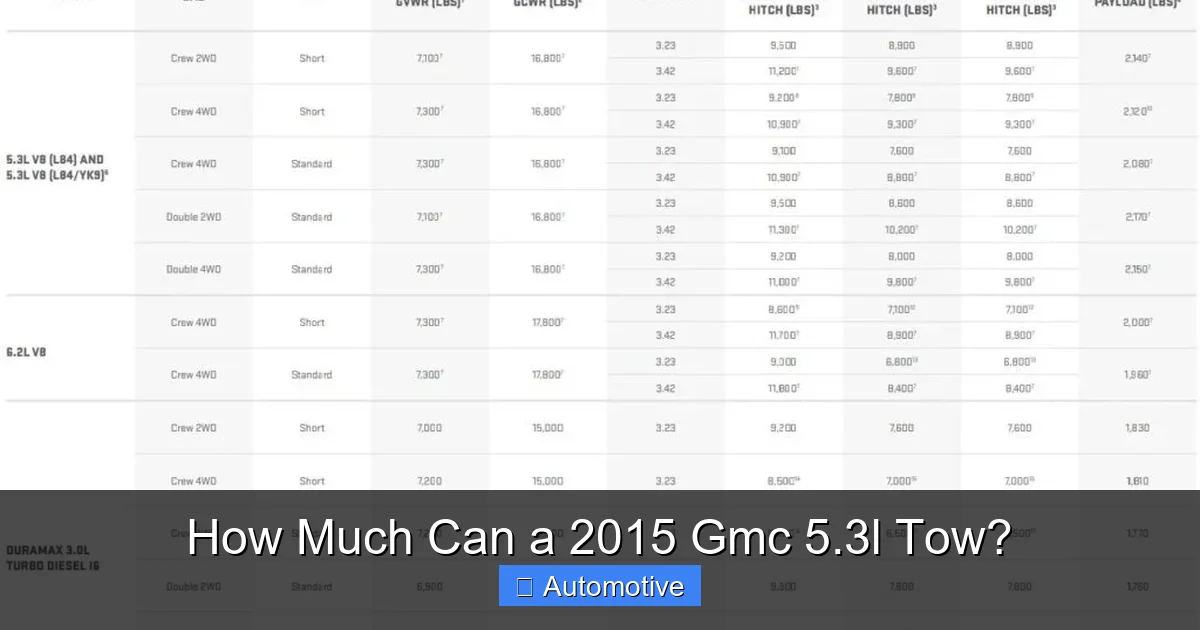
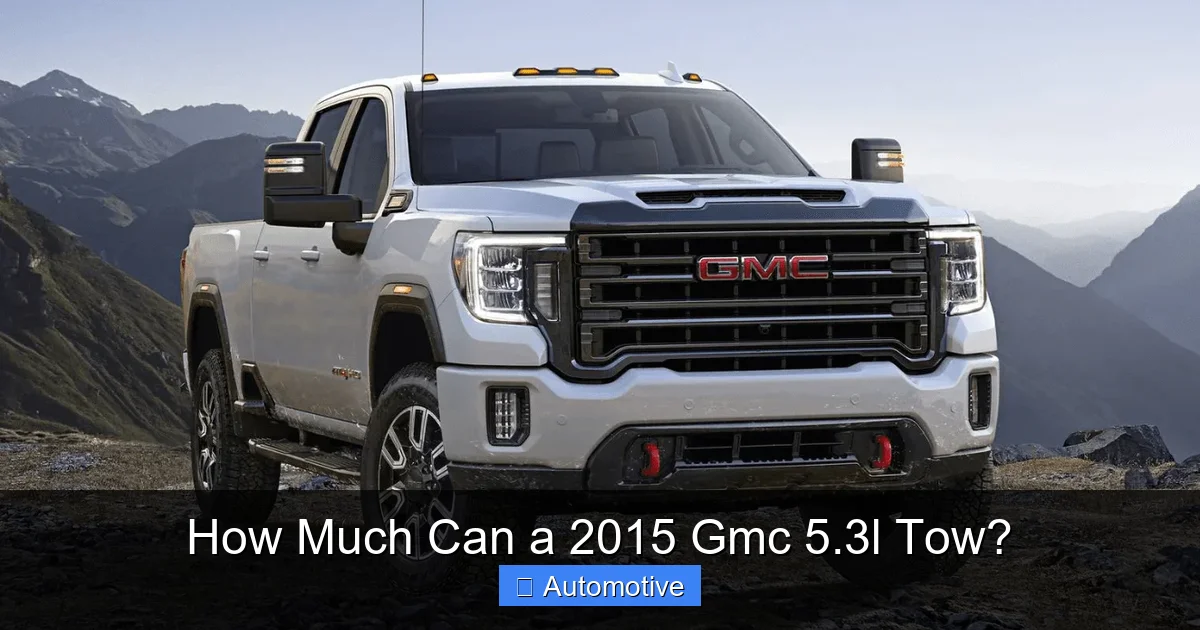
So, how much can a 2015 GMC 5.3L actually tow? According to GMC’s official specifications, the towing capacity ranges from 7,600 to 9,400 pounds, depending on configuration.
Here’s a breakdown of typical towing capacities based on common setups:
- Regular Cab, 2WD, 3.73 axle ratio: Up to 9,400 lbs
- Crew Cab, 2WD, 3.42 axle ratio: Around 8,200 lbs
- Crew Cab, 4WD, 3.42 axle ratio: Approximately 7,600 lbs
- With Max Trailering Package: Can reach 9,400 lbs even on some crew cab models
These numbers assume the truck is properly equipped and not overloaded with passengers or cargo. Always check your owner’s manual or the door jamb sticker for your specific truck’s ratings.
Max Trailering Package: A Game Changer
The Max Trailering Package is one of the best upgrades you can make for towing. Available on most 2015 GMC Sierra 1500 models with the 5.3L engine, this package includes:
- Enhanced cooling systems (engine and transmission)
- Trailer brake controller (integrated into the dashboard)
- Heavy-duty battery and alternator
- Upgraded suspension components
- Hitch guidance system (helps with backing up to a trailer)
- Higher-capacity rear axle
With this package, even a crew cab 4WD model can approach 9,000 lbs of towing capacity. It’s highly recommended if you plan to tow near the upper limits.
Real-World Towing Examples
Let’s put these numbers into perspective with some common towing scenarios:
- Travel Trailer: A 25-foot travel trailer with amenities can weigh 6,000–7,500 lbs. Your 2015 GMC 5.3L can handle this easily, even with a full load of gear.
- Boat and Trailer: A mid-sized fishing boat with trailer typically weighs 4,000–6,000 lbs. Plenty of room to spare.
- Utility Trailer with Equipment: A 6×12 enclosed trailer loaded with tools, ATVs, or landscaping materials might weigh 5,000–7,000 lbs.
- Fifth Wheel or Gooseneck: These require a special hitch and are heavier, often 8,000–10,000+ lbs. Only trucks with the Max Trailering Package and proper setup should attempt this.
Always weigh your loaded trailer at a certified scale to ensure you’re within limits.
Payload, GVWR, and Weight Distribution
Visual guide about How Much Can a 2015 Gmc 5.3l Tow?
Image source: i.ytimg.com
Towing isn’t just about the trailer—it’s also about how weight is distributed in and on your truck. Two critical numbers to know are payload capacity and gross vehicle weight rating (GVWR).
Payload Capacity
Payload is the total weight your truck can carry, including passengers, cargo, and the tongue weight of a trailer. For the 2015 GMC 5.3L, payload typically ranges from 1,500 to 2,000 lbs, depending on cab and bed configuration.
For example, if your truck has a 1,800-lb payload and you have four passengers (600 lbs), a full tank of gas (100 lbs), and gear in the bed (300 lbs), you’ve already used 1,000 lbs. That leaves 800 lbs for trailer tongue weight.
Most travel trailers have a tongue weight of 10–15% of the total trailer weight. A 7,000-lb trailer would have 700–1,050 lbs of tongue weight—so you’d need a truck with high payload to stay safe.
Gross Vehicle Weight Rating (GVWR)
GVWR is the maximum total weight your truck can safely handle, including the vehicle itself, passengers, cargo, and trailer tongue weight. Exceeding GVWR is dangerous and can void your warranty.
Always check the sticker on your driver’s side door jamb for your truck’s exact GVWR and payload. Don’t rely on general estimates.
Weight Distribution and Hitch Setup
Proper hitch setup is essential for safe towing. A weight-distributing hitch helps balance the load between the truck and trailer, improving stability and braking.
For trailers over 5,000 lbs, a weight-distributing hitch is strongly recommended. It uses spring bars to transfer some of the tongue weight to the trailer’s axles and the truck’s front wheels, reducing sag and sway.
Also, ensure your trailer is loaded correctly: 60% of the weight should be in front of the trailer axles, and the load should be secured to prevent shifting.
Fuel Economy and Towing Efficiency
Towing heavy loads significantly reduces fuel economy. While the 2015 GMC 5.3L gets around 16–18 mpg in mixed driving when unloaded, expect that number to drop to 10–14 mpg when towing near capacity.
Several factors affect fuel efficiency while towing:
- Speed: Driving at 65 mph uses more fuel than 55 mph due to increased wind resistance.
- Terrain: Hills and mountains drastically reduce mileage.
- Trailer Aerodynamics: Boxy trailers create more drag than streamlined ones.
- Truck Load: Extra passengers or cargo in the truck add weight and reduce efficiency.
To maximize fuel economy while towing:
- Use cruise control on flat highways
- Avoid rapid acceleration and hard braking
- Remove unnecessary weight from the truck
- Keep tires properly inflated
- Use the tow/haul mode appropriately
While you won’t win any eco-friendly awards while towing, the 5.3L’s cylinder deactivation helps a bit by shutting down four cylinders when possible—even under load, if conditions allow.
Safety Tips for Towing with a 2015 GMC 5.3L
Towing safely requires more than just knowing your truck’s limits. Here are essential tips to keep you and others safe on the road.
Pre-Tow Inspection
Before every tow, perform a thorough check:
- Inspect tires for wear, cracks, and proper inflation
- Check brake fluid, engine oil, and transmission fluid
- Test trailer lights and brakes
- Ensure hitch and safety chains are secure
- Verify trailer weight and balance
A few minutes of prep can prevent a costly or dangerous breakdown.
Driving Techniques
Towing changes how your truck handles. Remember:
- Allow extra stopping distance: A loaded trailer increases braking distance by 20–40%.
- Take turns wider: Trailers can “cut” corners, so swing wide to avoid curbs or obstacles.
- Use lower gears on hills: Downshift early to avoid over-revving the engine.
- Watch for sway: If the trailer starts to fishtail, ease off the gas and gently apply the trailer brakes (if equipped).
Practice backing up in an empty parking lot before hitting the road. It’s one of the hardest skills to master but essential for safe towing.
Emergency Preparedness
Always carry:
- Spare tire and jack (for both truck and trailer)
- Reflective triangles or flares
- First aid kit
- Basic tools and duct tape
- Phone charger and emergency contacts
If you experience trailer sway or mechanical issues, pull over safely and assess the situation. Don’t ignore warning signs like overheating or unusual noises.
Maintenance for Towing Longevity
Regular maintenance is even more important when you use your truck for towing. The extra stress on the engine, transmission, and brakes means components wear faster.
Key Maintenance Tasks
- Change transmission fluid every 30,000–50,000 miles: Towing generates heat, which breaks down fluid faster.
- Inspect brakes every 10,000 miles: Towing wears brake pads and rotors quicker.
- Check suspension components: Shocks, springs, and bushings take a beating when towing.
- Monitor engine coolant: Overheating is a common towing issue—keep the system clean and full.
- Rotate tires regularly: Uneven wear is common when towing, especially on the rear axle.
Consider using synthetic oils for better performance under high temperatures. They resist breakdown and provide superior lubrication.
After Towing Care
After a long tow, especially in dusty or muddy conditions:
- Rinse off the undercarriage to remove salt, dirt, and debris
- Check for loose bolts or damaged components
- Let the engine idle for a few minutes before shutting off to cool the turbo (if equipped)
- Inspect trailer hitch and electrical connections
Taking care of your truck after towing helps prevent long-term damage and keeps it ready for the next adventure.
Upgrades and Modifications
While the 2015 GMC 5.3L is capable out of the box, some upgrades can improve towing performance and safety.
Aftermarket Add-Ons
- Transmission cooler: Reduces heat buildup during long tows.
- Air suspension or helper springs: Helps level the truck when towing heavy loads.
- Upgraded shocks: Improves ride quality and control.
- Trailer brake controller (if not factory-equipped): Allows you to adjust trailer brake force.
- LED light bars: Improve visibility when backing up at night.
Avoid overloading your truck with unnecessary modifications. Focus on safety and reliability.
Towing Accessories
Invest in quality towing gear:
- Weight-distributing hitch with sway control
- Trailer hitch lock
- Backup camera or trailer camera system
- Trailer tire pressure monitoring system (TPMS)
- Load-leveling bars
These tools make towing easier and safer, especially for beginners.
Conclusion
The 2015 GMC Sierra 1500 with the 5.3L V8 engine is a solid, dependable truck for towing. With a capacity ranging from 7,600 to 9,400 pounds, it can handle most recreational and light commercial towing needs—whether you’re pulling a camper, boat, or work trailer.
But remember: towing capacity isn’t just a number on a brochure. It depends on your truck’s specific configuration, equipment, and how you load it. Always check your owner’s manual, door jamb sticker, and trailer weight before hitting the road.
By understanding your truck’s limits, using the right equipment, and practicing safe driving habits, you can enjoy years of reliable towing with your 2015 GMC 5.3L. Whether you’re heading to the mountains or the job site, this truck has the power and capability to get you there—safely and confidently.
Frequently Asked Questions
What is the maximum towing capacity of a 2015 GMC 5.3L?
The maximum towing capacity is 9,400 pounds, but only when the truck is properly equipped with the Max Trailering Package, rear-wheel drive, and a high axle ratio. Most configurations fall between 7,600 and 9,400 lbs.
Can a 2015 GMC 5.3L tow a travel trailer?
Yes, it can easily tow a travel trailer up to 7,500–8,000 pounds. Just ensure the trailer’s weight, including cargo, doesn’t exceed your truck’s specific towing and payload ratings.
Do I need a special hitch for towing with a 2015 GMC 5.3L?
For trailers over 5,000 lbs, a weight-distributing hitch is recommended. It improves stability and reduces sway. Always use safety chains and ensure the hitch matches your trailer’s coupler size.
Does towing reduce fuel economy in a 2015 GMC 5.3L?
Yes, towing can reduce fuel economy to 10–14 mpg, depending on load, speed, and terrain. Driving slower and maintaining proper tire pressure can help improve efficiency.
Can I tow a fifth wheel with a 2015 GMC 5.3L?
Yes, but only if your truck has the Max Trailering Package, a compatible fifth wheel hitch, and sufficient payload capacity. Fifth wheels are heavy—often 8,000+ lbs—so check your ratings carefully.
How often should I service my 2015 GMC 5.3L when towing frequently?
If you tow regularly, service the transmission every 30,000 miles, inspect brakes every 10,000 miles, and check fluids before each long trip. Frequent towing accelerates wear on key components.
