
What Are Toyota Trim Levels?

Understanding Toyota trim levels helps you choose the right vehicle for your lifestyle and budget. Each trim adds unique features, from basic essentials to luxury upgrades, so knowing the differences ensures you get the best value.
Key Takeaways
- Trim levels define feature packages: Each Toyota trim builds on the previous one, adding more comfort, tech, and safety features.
- They impact pricing significantly: Higher trims cost more but include premium amenities like leather seats, advanced infotainment, and driver-assist tech.
- Engine and drivetrain options vary: Some trims offer upgraded engines or all-wheel drive, especially in SUVs and trucks.
- Target different lifestyles: From budget-friendly L models to luxury Limited trims, there’s a Toyota for every driver.
- Resale value is affected: Popular mid-to-high trims often hold their value better over time.
- Customization increases with trim: Higher trims allow more personalization, including color, interior materials, and tech bundles.
- Always compare trims side-by-side: Use Toyota’s online configurator to see exact differences before buying.
📑 Table of Contents
What Are Toyota Trim Levels?
When you start shopping for a new Toyota—whether it’s a fuel-efficient Corolla, a rugged Tacoma, or a family-friendly Highlander—you’ll quickly notice that each model comes in multiple versions. These versions are called trim levels, and they play a huge role in determining what features your car has, how it performs, and how much it costs.
Think of trim levels like layers of an onion. The base trim is the core—reliable, functional, and affordable. As you move up the trim ladder, each layer adds more comfort, technology, performance, and style. For example, a Toyota Camry LE might get you safely from point A to point B with standard safety features, while a Camry XSE V6 offers sport-tuned suspension, a powerful engine, and premium interior finishes.
But trim levels aren’t just about luxury. They also reflect different driving needs. A college student might prioritize affordability and fuel economy, making the base trim ideal. A growing family might want extra safety tech and cargo space, pushing them toward a mid-level trim like the XLE. And someone who loves road trips and outdoor adventures might go for the top-tier Limited or TRD Off-Road trim for maximum capability and comfort.
Understanding these differences is key to making a smart purchase. Without knowing what each trim includes, you might end up paying for features you don’t need—or worse, missing out on must-have options. That’s why we’re breaking down everything you need to know about Toyota trim levels, from how they work to how to pick the right one for you.
Why Do Trim Levels Matter?
Visual guide about What Are Toyota Trim Levels?
Image source: 355toyota.com
Trim levels matter because they directly affect your driving experience, budget, and long-term satisfaction with your vehicle. They’re not just marketing labels—they represent real differences in equipment, performance, and design.
For starters, trim levels determine your car’s feature set. A base trim might include essentials like air conditioning, a basic audio system, and Toyota Safety Sense (TSS), the brand’s suite of driver-assist technologies. But as you climb the trim ladder, you’ll find upgrades like heated and ventilated seats, wireless charging, a premium JBL sound system, panoramic sunroofs, and advanced navigation.
Then there’s the performance aspect. While most Toyota models share the same engine across trims, some higher trims offer more powerful options. For instance, the RAV4 comes with a standard 2.5-liter four-cylinder engine, but the RAV4 Hybrid and RAV4 Prime plug-in hybrid trims deliver significantly more horsepower and better fuel efficiency. Similarly, the Tacoma offers a TRD Pro trim with off-road enhancements like upgraded suspension, all-terrain tires, and skid plates—features not available on lower trims.
Trim levels also influence interior and exterior styling. Lower trims often have cloth seats, smaller wheels, and simpler dashboards. Higher trims might feature leather upholstery, ambient lighting, larger alloy wheels, and unique badging or paint options. These details might seem cosmetic, but they contribute to the overall feel of the vehicle and can enhance resale value.
Finally, trim levels affect pricing and financing. A base Toyota Corolla starts around $22,000, while a fully loaded Corolla XSE can exceed $28,000. That’s a big difference for a compact car. Knowing which features are worth the upgrade—and which you can live without—helps you stay within budget without sacrificing what matters most.
How Toyota Trim Levels Are Structured
Visual guide about What Are Toyota Trim Levels?
Image source: evto.ca
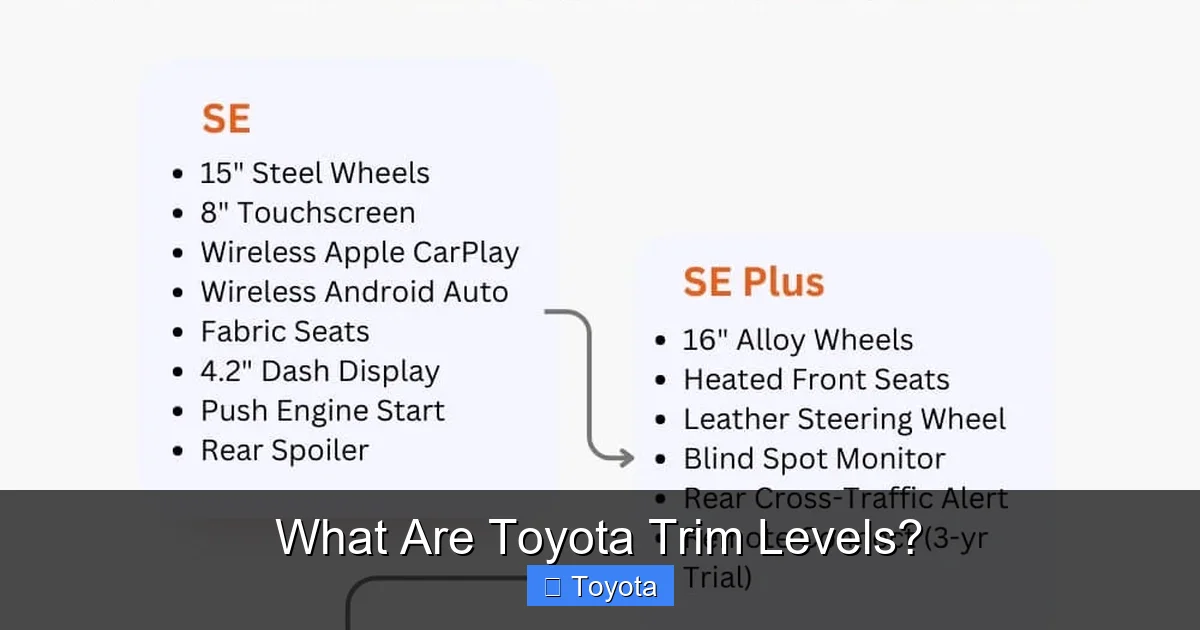
Toyota uses a consistent naming system across most of its lineup, making it easier to understand what each trim offers. While there are some variations by model, the general structure follows a logical progression from basic to premium.
Base Trims: L, LE, and L Eco
The starting point for most Toyota vehicles is the base trim, often labeled L or LE. These trims are designed for affordability and practicality. They include the essentials: a reliable engine, standard safety features, and basic infotainment.
For example, the Toyota Camry LE comes with a 2.5-liter four-cylinder engine, 17-inch wheels, a 7-inch touchscreen, Apple CarPlay, Android Auto, and Toyota Safety Sense 3.0. It’s a great choice if you want a dependable sedan without frills.
Some models, like the Corolla, offer an L Eco trim, which focuses on maximum fuel efficiency. It includes a more aerodynamic design and engine tuning optimized for highway driving, delivering up to 40 mpg on the highway.
Mid-Level Trims: SE, XLE, and XSE
Mid-level trims strike a balance between value and features. They’re popular among buyers who want more comfort and tech without paying top dollar.
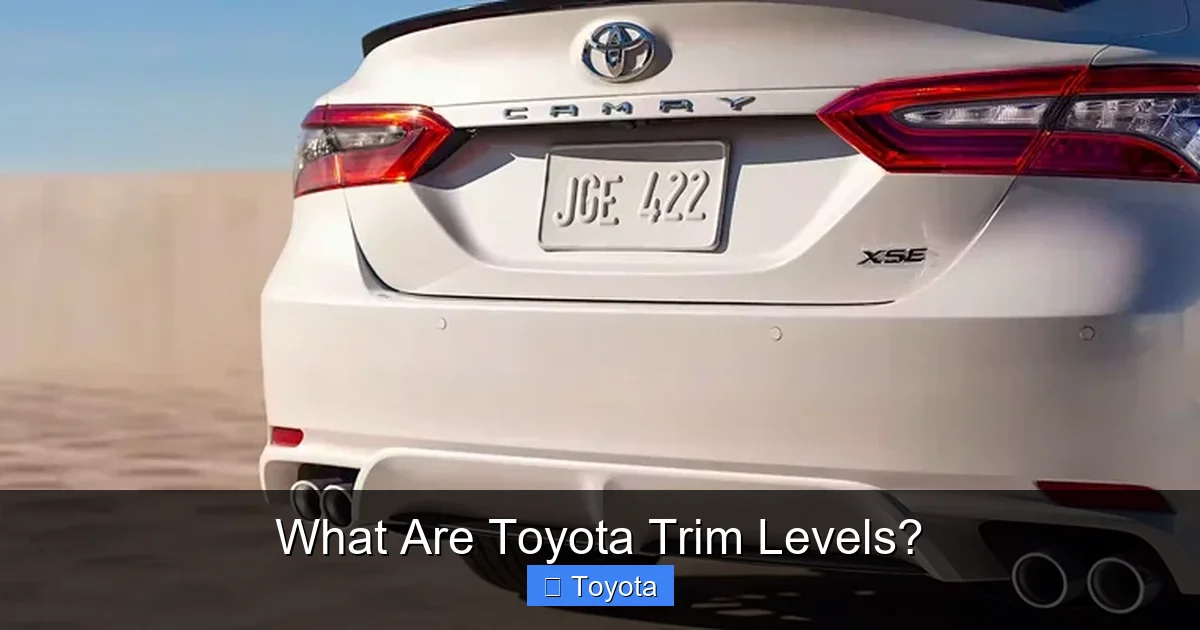
The SE and XSE trims often emphasize sporty styling. You’ll find features like sport-tuned suspension, paddle shifters, blacked-out exterior accents, and sport seats. The Camry XSE, for instance, adds a sportier look with a rear spoiler, dual exhaust, and 19-inch wheels.
The XLE trim, on the other hand, leans toward comfort and refinement. It typically includes upgrades like leather-trimmed seats, dual-zone automatic climate control, a power-adjustable driver’s seat, and a larger touchscreen. The RAV4 XLE, for example, adds synthetic leather seating, a power liftgate, and additional USB ports.
Top-Tier Trims: Limited, Platinum, and TRD
At the top of the range, you’ll find premium trims like Limited, Platinum, and TRD (Toyota Racing Development). These are for drivers who want the best of everything.
The Limited trim is Toyota’s flagship luxury option. It often includes features like genuine leather seats, heated and ventilated front and rear seats, a premium audio system, a heads-up display, and advanced driver-assist tech like adaptive cruise control and lane-keeping assist. The Highlander Limited, for example, offers a 12.3-inch touchscreen, panoramic sunroof, and a 360-degree camera.
The Platinum trim is similar but sometimes includes even more exclusivity, such as unique interior finishes, upgraded materials, and additional safety features. It’s available on models like the Sequoia and Tundra.
The TRD trims—like TRD Sport, TRD Off-Road, and TRD Pro—are performance-focused. They’re designed for enthusiasts who want enhanced handling, off-road capability, or track-ready dynamics. The Tacoma TRD Pro, for instance, includes Fox shocks, all-terrain tires, crawl control, and a locking rear differential.
Trim Levels Across Popular Toyota Models
Visual guide about What Are Toyota Trim Levels?
Image source: pictures.dealer.com
To better understand how trim levels work, let’s look at how they apply to some of Toyota’s most popular vehicles.
Toyota Corolla
The Corolla offers four main trims: L, LE, SE, and XSE.
– L: Starting at around $22,000, this trim includes a 2.0-liter engine, 15-inch wheels, and a 7-inch display with Apple CarPlay and Android Auto.
– LE: Adds 16-inch wheels, automatic climate control, and more USB ports.
– SE: Features sportier styling, 18-inch wheels, and a sport-tuned suspension.
– XSE: Includes a sunroof, wireless charging, and a larger 8-inch touchscreen.
The Corolla Hybrid also has its own trim structure, with LE Hybrid and XLE Hybrid options that prioritize fuel efficiency.
Toyota RAV4
The RAV4 has one of the most extensive trim lineups, with up to seven options depending on the year.
– LE: Base model with 17-inch wheels, a 7-inch display, and standard AWD on some trims.
– XLE: Adds synthetic leather, dual-zone climate control, and a power liftgate.
– XLE Premium: Includes a sunroof, heated front seats, and a larger touchscreen.
– Adventure: Designed for outdoor enthusiasts, with unique styling and increased ground clearance.
– TRD Off-Road: Adds off-road tires, skid plates, and multi-terrain select.
– Limited: Top-tier with leather seats, JBL audio, and a 360-degree camera.
– Prime: Plug-in hybrid version with over 40 miles of electric range.
Toyota Camry
The Camry offers a smooth progression from practical to luxurious.
– LE: Starts around $26,000 with a 2.5-liter engine and standard safety tech.
– SE: Adds sport styling, 18-inch wheels, and a sport-tuned suspension.
– XLE: Features leather-trimmed seats, a power moonroof, and wireless charging.
– XSE: Combines sport and luxury with a blacked-out grille and dual exhaust.
– TRD: Performance-focused with a sport suspension and red stitching.
– Limited: Includes premium audio, heated rear seats, and a heads-up display.
Toyota Tacoma
As a midsize truck, the Tacoma’s trims reflect work and play versatility.
– SR: Base model with a 2.7-liter engine and basic features.
– SR5: Adds a larger touchscreen, alloy wheels, and more storage.
– TRD Sport: Includes sport suspension, 17-inch wheels, and a sport-tuned exhaust.
– TRD Off-Road: Designed for trails with crawl control and locking rear differential.
– Limited: Luxury trim with leather seats, a sunroof, and premium audio.
– TRD Pro: Top off-road performer with Fox shocks and all-terrain tires.
How to Choose the Right Trim Level
Choosing the right trim level comes down to your priorities: budget, lifestyle, and must-have features.
Assess Your Budget
Start by determining how much you’re willing to spend. Base trims are the most affordable, but higher trims offer better value over time due to added features and stronger resale value. Use Toyota’s online pricing tool to compare trims and see the exact price difference.
Identify Your Needs
Ask yourself:
– Do you need all-wheel drive? (Available on higher trims in some models.)
– Will you drive in harsh weather? (Heated seats and remote start help.)
– Do you carry passengers often? (Rear-seat USB ports and climate controls matter.)
– Are you tech-savvy? (Larger screens and wireless charging are worth it.)
Test Drive Multiple Trims
Nothing beats a test drive. Visit a Toyota dealership and try out different trims. Pay attention to seat comfort, noise levels, and how the car feels on the road. You might find that a mid-level trim gives you everything you want without the premium price.
Consider Long-Term Value
Higher trims often hold their value better, especially in popular models like the RAV4 and Tacoma. If you plan to sell or trade in your car in a few years, investing in a mid-to-high trim could pay off.
Use Toyota’s Configurator
Toyota’s website has a powerful vehicle configurator that lets you build your ideal car. You can compare trims side-by-side, add options, and see the total price in real time. It’s a great way to avoid surprises at the dealership.
Common Misconceptions About Trim Levels
There are a few myths about trim levels that can lead to confusion.
“Higher Trim = Better Engine”
Not always. While some trims offer upgraded engines (like the Camry TRD with a V6), many models use the same engine across all trims. The difference is in features, not performance.
“Base Trims Are Unsafe”
False. All new Toyotas come with Toyota Safety Sense, including automatic emergency braking, lane departure warning, and adaptive cruise control—even on base trims.
“You Can Add Any Feature Later”
Some features, like all-wheel drive or certain safety systems, can’t be added after purchase. Choose your trim wisely to get the features you want.
Final Thoughts: Making the Smart Choice
Toyota trim levels are more than just names—they’re a roadmap to finding the perfect vehicle for your life. Whether you’re looking for affordability, adventure, or luxury, there’s a trim that fits.
Take the time to research, compare, and test drive. Don’t rush into a decision based on price alone. A slightly higher trim might include features that improve your daily drive, from heated seats on cold mornings to a premium sound system for long trips.
And remember: the best trim isn’t necessarily the most expensive one. It’s the one that matches your needs, your budget, and your lifestyle. With Toyota’s wide range of options, you’re sure to find a trim that feels just right.
Frequently Asked Questions
What is the difference between LE and XLE trims?
The LE is a base or mid-level trim with standard features like cloth seats and a basic infotainment system. The XLE adds upgrades such as leather-trimmed seats, dual-zone climate control, and often a power moonroof.
Do all Toyota trims come with Toyota Safety Sense?
Yes, all new Toyota vehicles come standard with Toyota Safety Sense (TSS), including features like pre-collision braking and lane departure alert, regardless of trim level.
Can I upgrade my trim level after purchase?
No, trim levels are set at the factory and cannot be changed. However, some features like floor mats or cargo organizers can be added later.
Which Toyota trim holds its value best?
Mid-to-high trims like XLE, Limited, and TRD models typically hold their value better due to their popularity and premium features.
Is the TRD trim only for off-roading?
Not necessarily. TRD Sport trims focus on on-road performance, while TRD Off-Road and TRD Pro are built for trails and rugged terrain.
Are hybrid trims more expensive than gas-only trims?
Yes, hybrid versions usually cost more upfront but offer better fuel economy and may qualify for tax incentives, which can offset the initial price difference.
