
Toyota Trim Levels Explained

Understanding Toyota trim levels can help you choose the right vehicle for your lifestyle and budget. From base models to luxury packages, each trim adds unique features, technology, and comfort options.
Key Takeaways
- Trim levels define features and price: Each Toyota trim builds on the previous one, adding more comfort, tech, and performance options.
- Start with the base model: The L or LE trim offers essential features at an affordable price, ideal for budget-conscious buyers.
- Mid-level trims add convenience: Trims like SE, XLE, and XSE include upgraded interiors, better infotainment, and driver-assist tech.
- Top trims deliver luxury: Limited, Platinum, and TRD Pro trims offer premium materials, advanced safety, and off-road or performance enhancements.
- Performance trims focus on driving dynamics: TRD and GR models are tuned for sportier handling, power, and aggressive styling.
- Hybrid options vary by trim: Hybrid versions of popular models often mirror gas trims but add efficiency-focused features.
- Always compare trims side by side: Use Toyota’s configurator to see exact differences in features, pricing, and availability.
📑 Table of Contents
What Are Toyota Trim Levels?
When you start shopping for a new Toyota, you’ll quickly notice that most models come in several versions—like the Camry LE, Camry XSE, or RAV4 Limited. These versions are called trim levels, and they help you choose the right balance of features, comfort, and price. Think of trim levels as different packages that build on each other, starting with the basics and adding more as you go up.
Each trim level includes a specific set of standard features. For example, the base trim might have cloth seats and a basic audio system, while a higher trim could include leather upholstery, a premium sound system, and advanced safety tech. Understanding these differences helps you avoid paying for features you don’t need—or missing out on ones you really want.
Why Trim Levels Matter
Trim levels matter because they directly affect your driving experience. A lower trim might save you money upfront, but it could lack features like adaptive cruise control, heated seats, or a sunroof. On the other hand, a top-tier trim might include extras you’ll never use, like a premium audio system or massaging seats. The key is finding the sweet spot that matches your needs and budget.
For instance, if you live in a cold climate, heated seats and a heated steering wheel (often found in mid-to-high trims) could be worth the extra cost. If you’re a tech lover, you might prioritize trims with larger touchscreens, wireless charging, or smartphone integration. Trim levels let you customize your Toyota without buying a completely different model.
How Toyota Names Its Trim Levels
Toyota uses a consistent naming system across its lineup, though some models have unique trims. Most trims follow a pattern: a letter or combination of letters that hint at the features or style. Here’s a quick breakdown of the most common ones:
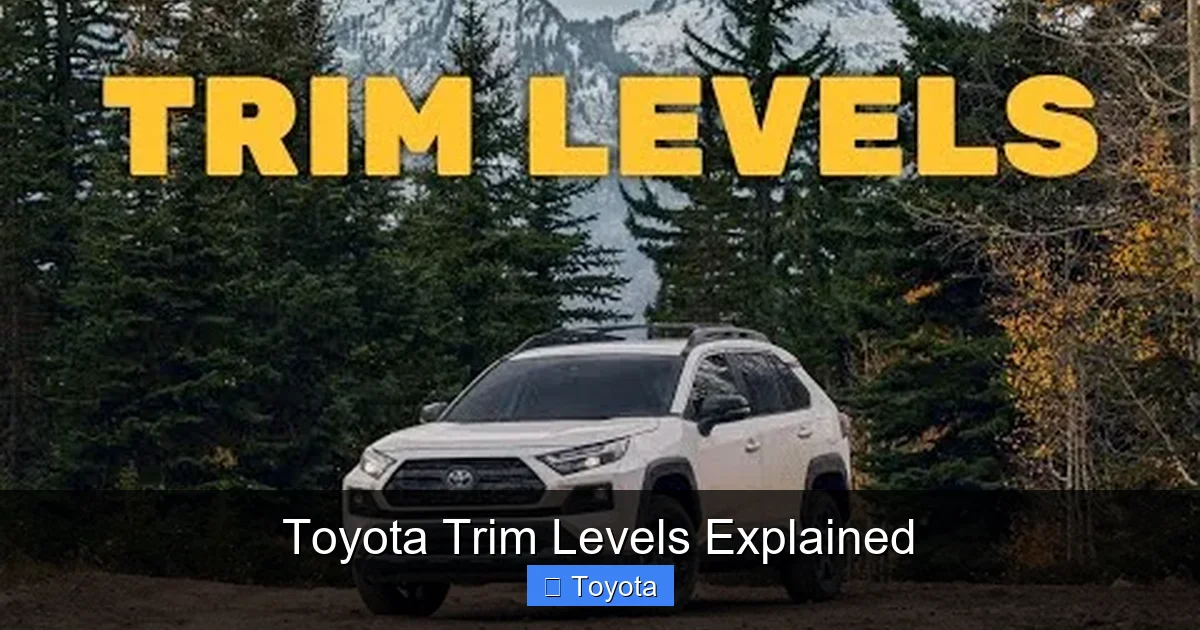
Visual guide about Toyota Trim Levels Explained
Image source: i.ytimg.com
- L or LE: The base trim. Offers essential features at the lowest price.
- SE: Sport Edition. Adds sporty styling and sometimes suspension tweaks.
- XLE: A mid-to-high trim with upgraded interiors and more tech.
- XSE: Combines XLE comfort with SE sportiness—best of both worlds.
- Limited: The top luxury trim with premium materials and advanced features.
- TRD: Toyota Racing Development. Focused on performance and off-road capability.
- Platinum: Found on SUVs like the Highlander. Offers luxury-level comfort and tech.
- Hybrid: Available on many models, with trims that mirror gas versions but add efficiency features.
Model-Specific Trims
Some Toyota models have unique trim names. For example, the Tacoma offers trims like SR, SR5, TRD Sport, TRD Off-Road, and Limited. The 4Runner has SR5, TRD Sport, TRD Off-Road, Limited, and TRD Pro. These names often reflect the vehicle’s purpose—like off-road readiness or towing capacity.
The Prius, Toyota’s iconic hybrid, uses trims like LE, XLE, and Limited, but also includes special editions like the Prime (plug-in hybrid). Meanwhile, the GR Supra has trims focused on performance, such as 3.0 and 3.0 Premium, which differ in horsepower and interior tech.
Even within the same model, trim names can vary by region. In the U.S., you’ll see L, LE, and XLE on the Corolla, while in other markets, names like “Active” or “Executive” might appear. Always check your local Toyota website for the most accurate trim options.
Base Trims: L and LE
The L and LE trims are the starting point for most Toyota vehicles. These are designed to be affordable, reliable, and practical. If you’re looking for a no-frills ride that still delivers Toyota’s legendary dependability, these trims are a great choice.

Visual guide about Toyota Trim Levels Explained
Image source: i.ytimg.com
The L trim is the most basic. It includes essential features like air conditioning, power windows, a basic audio system, and Toyota Safety Sense (TSS), which is standard on nearly all new Toyotas. TSS includes features like automatic emergency braking, lane departure warning, and adaptive cruise control—even on the base model.
The LE trim builds slightly on the L, often adding nicer interior materials, better upholstery, and sometimes a larger touchscreen. For example, the Corolla LE might have cloth seats with contrast stitching, while the L has standard cloth. The LE may also include keyless entry or a rearview camera with dynamic guidelines.
Who Should Choose Base Trims?
Base trims are ideal for first-time car buyers, students, or anyone on a tight budget. They’re also great for drivers who prioritize reliability and fuel efficiency over luxury. If you mainly use your car for commuting or running errands, the L or LE trim gives you everything you need without the extra cost.
For example, the 2024 Toyota Corolla LE starts around $22,000 and gets up to 35 mpg combined. It’s a smart pick if you want a new car that’s affordable to buy and cheap to maintain. Just remember: you won’t get heated seats, a sunroof, or premium audio—but you also won’t pay for them.
Mid-Level Trims: SE, XLE, and XSE
Mid-level trims like SE, XLE, and XSE offer a big step up in comfort, style, and technology. These are the most popular choices for buyers who want more than the basics but don’t need top-tier luxury.
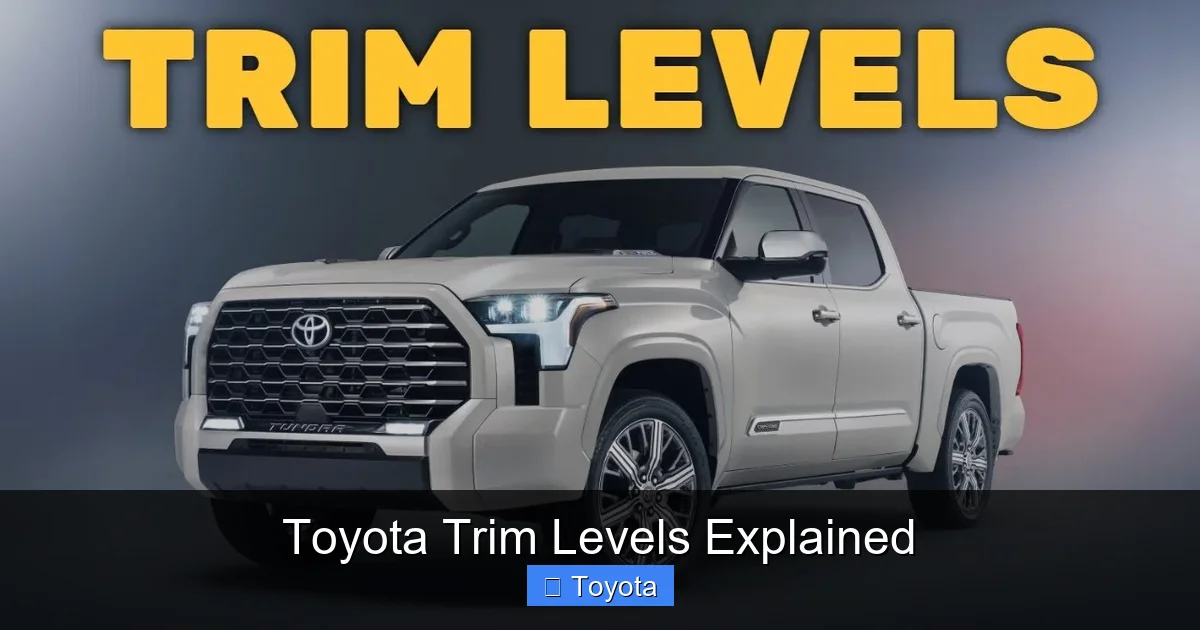
Visual guide about Toyota Trim Levels Explained
Image source: i.ytimg.com
The SE trim stands for “Sport Edition.” It adds sporty styling cues like a rear spoiler, unique wheels, and sometimes a sport-tuned suspension. Inside, you might find sport seats with better bolstering, a leather-wrapped steering wheel, and paddle shifters. The SE is perfect if you enjoy a more engaging drive.
The XLE trim focuses on comfort and convenience. It often includes upgraded upholstery (like SofTex, Toyota’s synthetic leather), dual-zone climate control, a larger infotainment screen, and more USB ports. The XLE is ideal for families or commuters who spend a lot of time in the car.
The XSE trim combines the best of SE and XLE. You get the sporty look and feel of the SE with the comfort and tech of the XLE. For example, the Camry XSE has a blacked-out grille, 19-inch wheels, and a sport suspension, but also includes heated front seats, a power driver’s seat, and a 9-inch touchscreen.
Practical Example: RAV4 Trims
Let’s look at the 2024 Toyota RAV4 to see how these trims differ:
- LE: Starts around $28,000. Includes 17-inch wheels, 7-inch touchscreen, and Toyota Safety Sense.
- XLE: Around $30,500. Adds 18-inch wheels, dual-zone climate control, and a power driver’s seat.
- XSE Hybrid: About $36,000. Combines hybrid efficiency with sporty styling and a 9-inch screen.
- Limited: Priced near $38,000. Offers leather-trimmed seats, a panoramic sunroof, and a premium JBL audio system.
As you can see, each trim adds meaningful upgrades. The XLE gives you more comfort for a modest price jump, while the XSE Hybrid adds efficiency and style. The Limited is for those who want a near-luxury experience.
Top-Tier Trims: Limited, Platinum, and TRD Pro
If you want the best Toyota has to offer, top-tier trims like Limited, Platinum, and TRD Pro deliver premium features and standout styling. These trims are designed for buyers who want maximum comfort, advanced tech, and a sense of exclusivity.
The Limited trim is the flagship for most Toyota models. It includes high-end materials like real or simulated leather, wood or metal trim, and premium audio systems. You’ll also find features like a panoramic sunroof, ventilated seats, and advanced driver-assist tech like blind-spot monitoring with rear cross-traffic alert.
The Platinum trim is found on larger SUVs like the Highlander and Sequoia. It goes beyond Limited with even more luxury—think quilted leather seats, a head-up display, and a 12.3-inch touchscreen. The Platinum trim is Toyota’s answer to luxury SUVs from brands like Lexus.
The TRD Pro trim is different. It’s not about luxury—it’s about performance and off-road capability. Available on trucks and SUVs like the Tacoma, 4Runner, and Tundra, TRD Pro models come with upgraded suspensions, all-terrain tires, skid plates, and unique exterior styling. They’re built for adventurers who need a rugged, capable vehicle.
Is a Top Trim Worth It?
Top trims are worth it if you value comfort, technology, and resale value. Features like leather seats, advanced safety systems, and premium audio can make daily driving more enjoyable. They also tend to hold their value better than base models.
However, they come at a higher price. The 2024 Toyota Highlander Limited starts around $48,000—nearly $15,000 more than the base L trim. Ask yourself: will you actually use the panoramic sunroof and massaging seats? If not, a mid-level trim might be a smarter choice.
Performance and Specialty Trims: TRD, GR, and Hybrid
Toyota offers several specialty trims for drivers who want more than just transportation. These include TRD (Toyota Racing Development), GR (Gazoo Racing), and Hybrid versions of popular models.
TRD trims are all about performance. The TRD Sport focuses on on-road handling with sport-tuned suspensions and aggressive styling. The TRD Off-Road is built for trails, with features like crawl control, multi-terrain select, and locking rear differentials. The TRD Pro is the ultimate off-road package, with Fox shocks, reinforced suspensions, and unique badging.
GR models are Toyota’s performance halo cars. The GR Supra is a rear-wheel-drive sports car with up to 382 horsepower. The GR Corolla is a hot hatch with all-wheel drive and 300 horsepower. These aren’t just trims—they’re entirely different vehicles designed for driving enthusiasts.
Hybrid trims mirror their gas counterparts but add electric motors for better fuel economy. For example, the Camry Hybrid LE has the same features as the gas LE but gets up to 52 mpg combined. Hybrid trims often include eco-driving modes and regenerative braking.
Choosing the Right Specialty Trim
If you love off-roading, a TRD Off-Road or TRD Pro trim is a must. For daily driving with a sporty feel, TRD Sport or XSE trims offer a great balance. If you’re passionate about performance, the GR Supra or GR Corolla will thrill you on twisty roads.
Hybrid trims are perfect for eco-conscious drivers or those with long commutes. They offer the same comfort and features as gas models but with significantly better fuel economy. Just remember: hybrid batteries may need replacement after 10–15 years, though Toyota’s are known for longevity.
How to Choose the Right Trim for You
Choosing the right Toyota trim level doesn’t have to be overwhelming. Start by asking yourself a few key questions:
- What’s my budget?
- How will I use the vehicle? (Commuting, family trips, off-roading?)
- Which features are must-haves? (Heated seats, sunroof, advanced safety?)
- Do I care about fuel efficiency or performance?
- How long do I plan to keep the car?
Next, use Toyota’s online configurator to compare trims side by side. You can see exact pricing, available colors, and standard features. Visit a dealership to test drive different trims—sometimes the feel of the seats or the responsiveness of the suspension makes all the difference.
Pro Tips for Trim Shopping
- Look for package deals: Some trims offer optional packages that bundle popular features at a discount.
- Check for incentives: Toyota often offers rebates or low APR financing on certain trims.
- Consider resale value: Higher trims with popular features tend to hold value better.
- Don’t overlook certified pre-owned: You can get a higher trim at a lower price with a CPO vehicle.
Conclusion
Understanding Toyota trim levels is the key to finding the perfect vehicle for your lifestyle. Whether you’re looking for an affordable commuter car, a comfortable family SUV, or a high-performance machine, there’s a trim that fits. Start with the basics, compare your options, and don’t be afraid to test drive a few different versions.
Remember, the best trim isn’t always the most expensive one—it’s the one that gives you the features you’ll actually use. With Toyota’s wide range of trims, you’re sure to find a model that feels just right. Happy driving!
Frequently Asked Questions
What is the difference between LE and XLE trims?
The LE is a base trim with essential features, while the XLE adds upgraded interiors, better tech, and comfort options like dual-zone climate control and SofTex upholstery. The XLE is a step up in luxury and convenience.
Is the TRD Pro worth the extra cost?
The TRD Pro is worth it if you plan to go off-roading. It includes advanced suspension, skid plates, and all-terrain tires. If you only drive on pavement, a TRD Sport or XSE may be a better value.
Do all Toyota models have the same trim levels?
No, trim names vary by model. For example, the Camry uses LE, SE, XLE, and XSE, while the Tacoma uses SR, SR5, TRD Sport, and Limited. Always check the specific model’s trim options.
Are hybrid trims more expensive than gas trims?
Yes, hybrid versions usually cost $2,000–$4,000 more than their gas counterparts. However, they offer better fuel economy and may qualify for tax incentives, which can offset the higher price over time.
Can I add features from higher trims to a lower trim?
Some features can be added as options or through dealer-installed accessories, but core features like leather seats or advanced safety systems are usually only available on higher trims.
Which Toyota trim has the best resale value?
Mid-to-high trims like XLE, Limited, and TRD Off-Road tend to hold their value best due to their popularity and desirable features. Base trims depreciate faster but are cheaper to buy upfront.
