
Who Makes Toyota Oil Filters

Toyota oil filters are manufactured by high-quality suppliers like Denso and ACDelco under strict OEM standards. These filters are engineered specifically for Toyota engines, ensuring optimal oil flow, filtration efficiency, and long-term reliability.
Key Takeaways
- Toyota oil filters are made by trusted OEM suppliers: Denso and ACDelco produce most genuine Toyota oil filters to meet exact specifications.
- OEM filters ensure superior performance: They are designed specifically for Toyota engines, offering better filtration and durability than many aftermarket options.
- Using genuine filters protects your warranty: Installing non-OEM parts may void your vehicle’s powertrain warranty in some cases.
- Oil filters play a critical role in engine health: They remove contaminants, regulate oil flow, and help prevent engine wear.
- Regular oil and filter changes are essential: Experts recommend changing both every 5,000 to 10,000 miles, depending on driving conditions.
- You can identify genuine Toyota filters by packaging and markings: Look for the Toyota logo, part number, and tamper-proof seals.
- Aftermarket filters vary in quality: While some are reliable, others may compromise engine protection—choose wisely.
📑 Table of Contents
- Who Makes Toyota Oil Filters? A Deep Dive into the Brands Behind the Parts
- The OEM Suppliers Behind Toyota Oil Filters
- How Toyota Oil Filters Are Designed and Tested
- Genuine vs. Aftermarket: What’s the Difference?
- How to Identify a Genuine Toyota Oil Filter
- When and How to Change Your Toyota Oil Filter
- Conclusion: Protect Your Toyota with the Right Oil Filter
Who Makes Toyota Oil Filters? A Deep Dive into the Brands Behind the Parts
When it comes to maintaining your Toyota, few components are as vital—and often overlooked—as the oil filter. While many drivers focus on oil type and change intervals, the filter plays an equally important role in keeping your engine clean, cool, and running smoothly. But have you ever wondered: who actually makes Toyota oil filters?
The short answer is that Toyota doesn’t manufacture oil filters in-house. Instead, the company partners with world-class automotive suppliers to produce genuine OEM (Original Equipment Manufacturer) oil filters that meet Toyota’s rigorous engineering standards. These filters are designed specifically for Toyota engines and are built to deliver consistent performance, durability, and reliability.
Understanding who makes these filters—and why it matters—can help you make smarter maintenance decisions. Whether you’re a DIY mechanic or rely on a trusted service center, knowing the source of your oil filter ensures you’re giving your Toyota the care it deserves. In this article, we’ll explore the manufacturers behind Toyota oil filters, how they’re made, what sets them apart from aftermarket alternatives, and why choosing the right filter is crucial for your vehicle’s long-term health.
The OEM Suppliers Behind Toyota Oil Filters
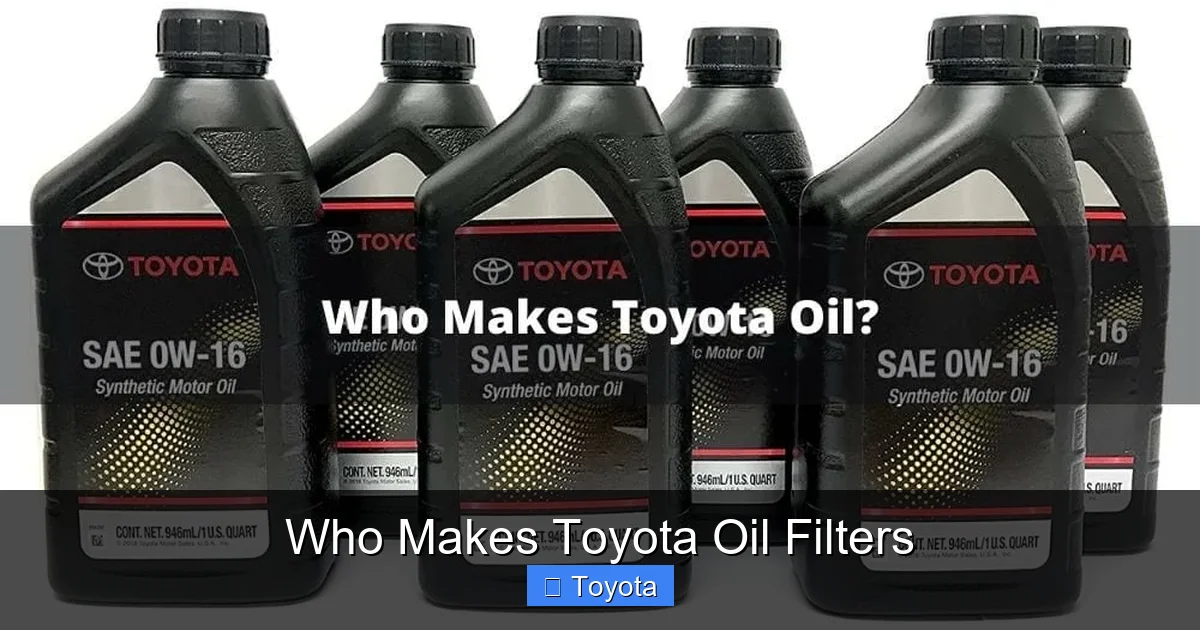
Visual guide about Who Makes Toyota Oil Filters
Image source: vehiclefreak.com
Toyota’s approach to parts manufacturing is rooted in quality, precision, and long-term reliability. Rather than building every component from scratch, Toyota collaborates with top-tier global suppliers who specialize in specific automotive systems. When it comes to oil filters, two companies stand out as the primary manufacturers: Denso and ACDelco.
Denso: A Japanese Powerhouse in Automotive Components
Denso Corporation, headquartered in Kariya, Japan, is one of the largest automotive parts manufacturers in the world and a long-standing partner of Toyota. In fact, Denso was originally established as a division of Toyota in 1949 before becoming an independent company. Today, it remains closely tied to the Toyota Group and supplies a wide range of components—including fuel systems, air conditioning units, and, of course, oil filters.
Denso produces many of the genuine Toyota oil filters you’ll find at dealerships and authorized parts retailers. These filters are engineered to meet or exceed Toyota’s exact specifications, ensuring compatibility with Toyota’s unique engine designs. For example, Denso filters used in Toyota vehicles often feature advanced synthetic media that captures microscopic contaminants while maintaining optimal oil flow—even under extreme temperatures.
One of the key advantages of Denso-made filters is their precision engineering. Each filter is tested for burst strength, flow rate, and filtration efficiency. This attention to detail means that when you install a Denso-manufactured Toyota oil filter, you’re getting a part that’s been rigorously validated for your specific engine model.
ACDelco: General Motors’ Premium Parts Division
While Denso handles much of the production for Toyota’s oil filters, ACDelco—a subsidiary of General Motors—also plays a role, particularly in certain regions and vehicle models. ACDelco is known for producing high-quality OEM and aftermarket parts, and its filters are often used in Toyota vehicles sold in North America and other global markets.
ACDelco’s involvement with Toyota stems from supply chain partnerships and regional manufacturing agreements. In some cases, Toyota sources oil filters from ACDelco facilities that are certified to meet Toyota’s quality standards. These filters are labeled as “genuine Toyota” parts and are sold through Toyota dealerships, even though they’re manufactured by ACDelco.
What sets ACDelco filters apart is their use of multi-pass filtration technology and durable construction materials. Like Denso, ACDelco ensures that its filters can withstand high oil pressures and temperature fluctuations, which is especially important in turbocharged or high-performance Toyota engines.
Why OEM Matters: The Toyota Engineering Standard
So why does it matter that Toyota relies on suppliers like Denso and ACDelco? The answer lies in the concept of OEM engineering. When Toyota designs a new engine, every component—from the pistons to the oil pump to the filter—is tested as a complete system. This means that the oil filter isn’t just a generic part; it’s an integral piece of the engine’s lubrication system.
OEM filters are built to precise tolerances and undergo extensive testing to ensure they perform under real-world conditions. For instance, a genuine Toyota oil filter must be able to:
– Filter out particles as small as 20 microns (that’s about one-third the width of a human hair)
– Maintain consistent oil flow at both cold start and high-temperature operation
– Prevent bypass valve failure under extreme pressure
– Fit perfectly without leaks or thread damage
These standards aren’t just about performance—they’re about protecting your engine from premature wear, sludge buildup, and costly repairs down the line.
How Toyota Oil Filters Are Designed and Tested
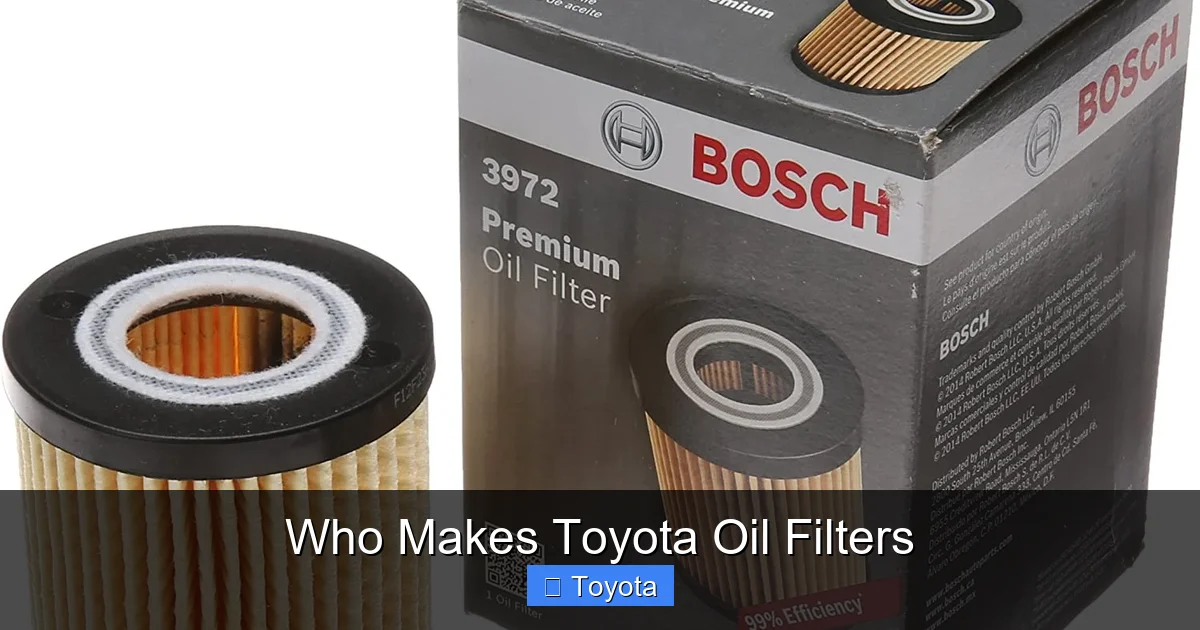
Visual guide about Who Makes Toyota Oil Filters
Image source: wonderfulengineering.com
You might be wondering: what goes into making a Toyota oil filter? The process is far more complex than simply assembling a housing and a filter element. It involves advanced materials science, precision manufacturing, and rigorous quality control.
Materials and Construction
Genuine Toyota oil filters are built using high-grade materials designed to endure the harsh environment inside an engine. The outer casing is typically made from stamped steel or aluminum, providing strength and resistance to corrosion. The internal filter media is often a blend of synthetic fibers and cellulose, which offers superior dirt-holding capacity and longevity compared to paper-only media.
One of the most critical components is the anti-drain back valve. This small but vital part prevents oil from draining out of the filter when the engine is off. Without it, your engine would experience a dry start the next time you turn the key—leading to increased wear on critical components like camshafts and lifters. Toyota’s filters use high-quality rubber compounds for this valve, ensuring it remains flexible and effective over thousands of miles.
Another key feature is the bypass valve. If the filter becomes clogged due to extreme contamination or cold oil, the bypass valve opens to allow oil to flow around the filter media. This prevents oil starvation, which could cause catastrophic engine damage. However, the valve is calibrated to open only when necessary, ensuring that unfiltered oil isn’t circulated under normal conditions.
Testing and Validation
Before a Toyota oil filter reaches your vehicle, it undergoes a battery of tests to ensure it meets Toyota’s standards. These tests include:
– **Flow rate testing:** Measures how much oil passes through the filter under various pressures and temperatures.
– **Burst pressure testing:** Determines the maximum pressure the filter can withstand before failing.
– **Filtration efficiency testing:** Uses standardized contaminants to evaluate how well the filter captures particles of different sizes.
– **Thermal cycling:** Exposes the filter to repeated heating and cooling to simulate real-world driving conditions.
– **Vibration and durability testing:** Ensures the filter can withstand engine vibrations and road shocks over time.
These tests are conducted in Toyota’s own laboratories as well as at supplier facilities like Denso and ACDelco. Only filters that pass all tests are approved for use in Toyota vehicles.
Model-Specific Engineering
Not all Toyota oil filters are the same. In fact, each filter is designed for a specific engine family. For example, a filter for a 2.5L four-cylinder engine in a Toyota Camry will differ from one used in a 3.5L V6 in a Toyota Highlander. Differences may include:
– Thread size and pitch
– Gasket diameter
– Filter height and diameter
– Internal media density
Using the correct filter is essential. Installing the wrong one—even if it fits—can lead to poor oil flow, leaks, or even engine damage. That’s why it’s always best to use the part number specified in your owner’s manual or by a Toyota dealer.
Genuine vs. Aftermarket: What’s the Difference?
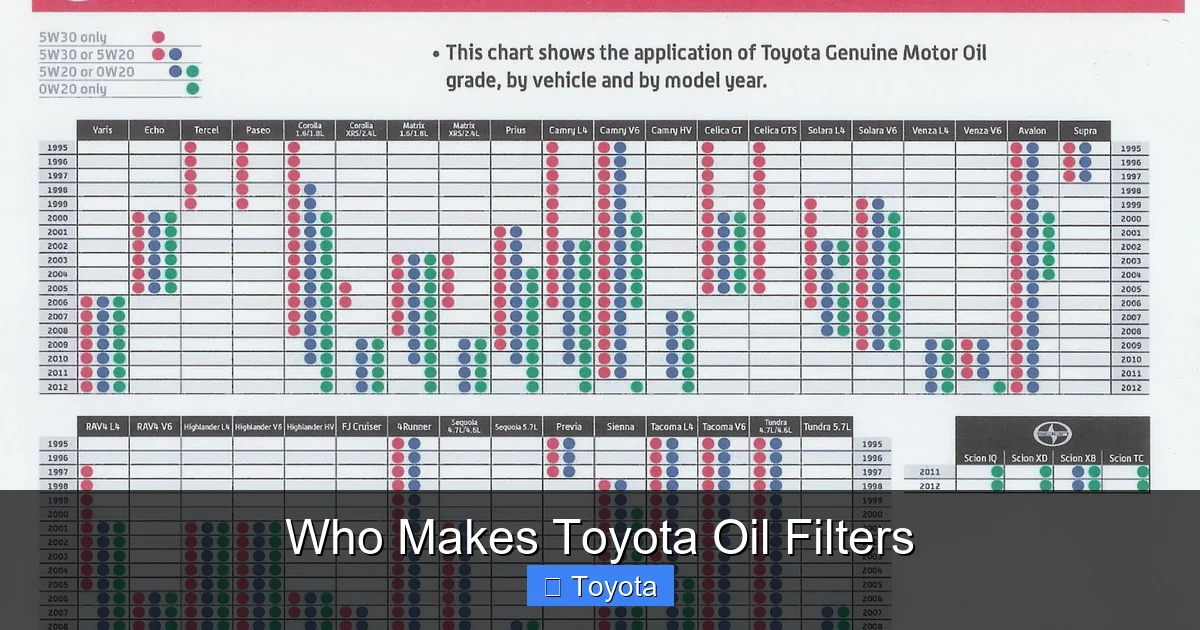
Visual guide about Who Makes Toyota Oil Filters
Image source: positivespin.us
When it’s time for an oil change, you’ll likely face a choice: stick with a genuine Toyota oil filter or go with a cheaper aftermarket alternative. While the price difference might be tempting, it’s important to understand the trade-offs.
Quality and Consistency
Genuine Toyota oil filters are built to exact specifications and undergo rigorous testing. Aftermarket filters, on the other hand, vary widely in quality. Some are made by reputable manufacturers and perform just as well as OEM parts. Others are produced with inferior materials and may fail prematurely.
For example, a low-quality aftermarket filter might use a thinner casing that could rupture under high pressure. Or it might have a poorly designed bypass valve that opens too easily, allowing unfiltered oil to circulate. These issues can lead to increased engine wear, reduced fuel efficiency, and even engine failure in extreme cases.
Warranty and Reliability
Using non-OEM parts can also affect your vehicle’s warranty. While the Magnuson-Moss Warranty Act protects consumers from automatic warranty voiding simply for using aftermarket parts, manufacturers can deny coverage if they prove the aftermarket part caused the damage. In practice, this means that if an engine fails and you’ve been using cheap oil filters, Toyota could argue that the filters contributed to the problem.
Additionally, genuine Toyota filters are designed to work seamlessly with Toyota’s recommended oil types and change intervals. Aftermarket filters may not be optimized for the same conditions, potentially reducing their effectiveness.
Cost vs. Value
It’s true that genuine Toyota oil filters cost more than many aftermarket options—often $10 to $15 more per filter. But consider this: the average cost of an engine rebuild can exceed $5,000. Spending a little extra on a high-quality filter is a small price to pay for peace of mind and long-term protection.
Moreover, many Toyota dealerships and service centers offer filter-and-oil-change packages that include genuine parts at competitive prices. Some even provide lifetime warranties on parts and labor, further increasing the value of choosing OEM.
How to Identify a Genuine Toyota Oil Filter
With counterfeit parts becoming more common, it’s important to know how to spot a genuine Toyota oil filter. Here are some tips to help you verify authenticity:
Check the Packaging
Genuine Toyota oil filters come in branded packaging with the Toyota logo, part number, and barcode. The box should also include information about the filter’s compatibility and installation instructions. Be wary of filters sold in plain or generic packaging, especially if they’re significantly cheaper than retail price.
Look for the Toyota Logo and Part Number
The filter itself should have the Toyota logo and part number stamped or printed on the housing. You can cross-reference this number with Toyota’s official parts catalog or ask a dealer to verify it. Common Toyota oil filter part numbers include 04152-YZZA1, 04152-YZZA3, and 04152-YZZA5, depending on the model.
Inspect the Build Quality
Genuine filters have a solid, well-finished appearance. The threads should be clean and precise, the gasket should be smooth and properly seated, and the housing should feel sturdy. Counterfeit filters often have rough edges, misaligned gaskets, or flimsy construction.
Buy from Authorized Retailers
To ensure you’re getting a genuine part, purchase your oil filter from a Toyota dealership, authorized parts distributor, or reputable online retailer like ToyotaPartsDeal.com or OEM parts specialists. Avoid third-party sellers on auction sites unless they have verified reviews and a history of selling genuine parts.
When and How to Change Your Toyota Oil Filter
Knowing who makes your oil filter is only half the battle—knowing when and how to change it is just as important.
Recommended Change Intervals
Toyota recommends changing your oil and filter every 5,000 to 10,000 miles, depending on your driving conditions. If you frequently drive in stop-and-go traffic, extreme temperatures, or dusty environments, you may need to change it more often—every 5,000 miles or sooner.
Always refer to your owner’s manual for the specific interval for your vehicle. Some newer Toyota models with synthetic oil can go up to 10,000 miles between changes, but the filter should still be replaced at each oil change to ensure maximum protection.
DIY Oil Filter Replacement Tips
If you’re changing your oil filter yourself, follow these steps:
1. **Warm up the engine** for a few minutes to help the oil flow more easily.
2. **Place a drain pan** under the oil filter and oil drain plug.
3. **Remove the old filter** using an oil filter wrench if necessary. Be prepared for some oil to spill.
4. **Lightly coat the new filter’s gasket** with fresh oil to ensure a proper seal.
5. **Hand-tighten the new filter**—do not over-tighten, as this can damage the gasket or housing.
6. **Replace the drain plug** and refill with the recommended oil type and amount.
7. **Start the engine** and check for leaks. Turn off the engine and recheck the oil level.
Always dispose of used oil and filters at a recycling center or auto parts store. Never pour oil down the drain or throw filters in the trash.
Professional Service Options
If you prefer to leave it to the experts, most Toyota service centers offer quick and reliable oil change services using genuine parts. Many also provide digital service records, so you can track your maintenance history and ensure your vehicle stays in top condition.
Conclusion: Protect Your Toyota with the Right Oil Filter
So, who makes Toyota oil filters? The answer is clear: trusted OEM suppliers like Denso and ACDelco, working under Toyota’s strict engineering and quality standards. These filters are not generic parts—they’re precision-engineered components designed to protect your engine, optimize performance, and extend the life of your vehicle.
While aftermarket filters may seem like a cost-saving option, the risks often outweigh the benefits. Genuine Toyota oil filters offer superior filtration, durability, and peace of mind, especially when it comes to warranty protection and long-term reliability.
By choosing the right filter, following recommended change intervals, and sourcing parts from authorized retailers, you’re investing in the health of your Toyota. After all, your vehicle is more than just a mode of transportation—it’s a trusted companion on every journey. Treat it well, and it will return the favor for years to come.
Frequently Asked Questions
Are Toyota oil filters made by Toyota?
No, Toyota does not manufacture oil filters in-house. Instead, they partner with OEM suppliers like Denso and ACDelco to produce genuine filters that meet Toyota’s exact specifications.
Can I use an aftermarket oil filter in my Toyota?
Yes, but quality varies widely. While some aftermarket filters perform well, others may compromise engine protection. For best results, use a genuine Toyota filter or a high-quality aftermarket brand with proven reliability.
How often should I change my Toyota oil filter?
Toyota recommends changing the oil filter every time you change the oil, typically every 5,000 to 10,000 miles depending on driving conditions and oil type.
What happens if I use the wrong oil filter?
Using the wrong filter can lead to poor oil flow, leaks, or engine damage. Always use the part number specified for your vehicle model and engine type.
How can I tell if an oil filter is genuine?
Look for the Toyota logo, correct part number, and high-quality packaging. Buy from authorized dealers or reputable retailers to avoid counterfeit parts.
Do genuine Toyota oil filters cost more?
Yes, they are typically more expensive than aftermarket options, but they offer better performance, reliability, and warranty protection, making them a worthwhile investment.
