
Who Makes Toyota Brake Rotors?

Ever wondered who actually makes the brake rotors in your Toyota? While Toyota designs and specifies its braking systems, the physical rotors are manufactured by a mix of in-house divisions and trusted third-party suppliers. Understanding who makes these critical safety components can help you make smarter maintenance and replacement decisions.
Key Takeaways
- Toyota uses both in-house and third-party manufacturers: Some brake rotors are made by Toyota’s own subsidiaries, while others are produced by leading global automotive suppliers.
- ADVICS and Akebono are key OEM partners: These Japanese companies are major suppliers of brake components, including rotors, for Toyota vehicles.
- Aftermarket brands offer quality alternatives: Companies like Brembo, Power Stop, and Centric provide reliable aftermarket rotors that meet or exceed OEM standards.
- Material matters: Toyota brake rotors are typically made from cast iron, with some performance models using ventilated or slotted designs for better heat dissipation.
- OEM vs. aftermarket: know the difference: OEM rotors match factory specs exactly, while aftermarket options may offer improved performance or cost savings.
- Regular inspection is crucial: Worn or warped rotors can reduce braking efficiency and safety—check them during routine maintenance.
- Always match rotor type to your driving needs: Choose standard, drilled, slotted, or performance rotors based on your vehicle use and driving style.
📑 Table of Contents
- Who Makes Toyota Brake Rotors? A Deep Dive into the Supply Chain
- Toyota’s In-House Brake Manufacturing: The Role of ADVICS
- Third-Party OEM Suppliers: Akebono, Brembo, and More
- Aftermarket Brake Rotors: Who Makes Them and Are They Worth It?
- Materials and Design: What Makes a Toyota Brake Rotor?
- How to Identify and Choose the Right Brake Rotors for Your Toyota
- The Future of Toyota Brake Rotors: Innovation and Sustainability
- Conclusion: Knowledge Is Your Best Brake
Who Makes Toyota Brake Rotors? A Deep Dive into the Supply Chain
When you press the brake pedal in your Toyota, a complex system springs into action—calipers squeeze brake pads against spinning rotors, creating friction that slows your vehicle. But have you ever stopped to wonder: who actually makes those rotors? It’s not as simple as it seems. While Toyota is the brand you see on the grille, the components under the hood—and under the wheels—are often the work of a global network of specialized manufacturers.
Toyota doesn’t operate like some automakers that build every part in-house. Instead, it relies on a blend of internal production and partnerships with world-class suppliers. This approach allows Toyota to maintain high quality while leveraging the expertise of companies that specialize in braking technology. So, when it comes to brake rotors—those circular metal discs that play a vital role in stopping your car—the answer to “who makes them?” involves a mix of Toyota’s own engineering teams and trusted third-party manufacturers.
Understanding this supply chain isn’t just trivia. It matters when you’re replacing worn rotors, upgrading for performance, or simply trying to make informed decisions about your vehicle’s maintenance. Whether you drive a compact Corolla, a rugged Tacoma, or a luxurious Lexus (which shares many components with Toyota), knowing the origins of your brake rotors can help you choose the right parts, avoid counterfeit components, and ensure your safety on the road.
Toyota’s In-House Brake Manufacturing: The Role of ADVICS
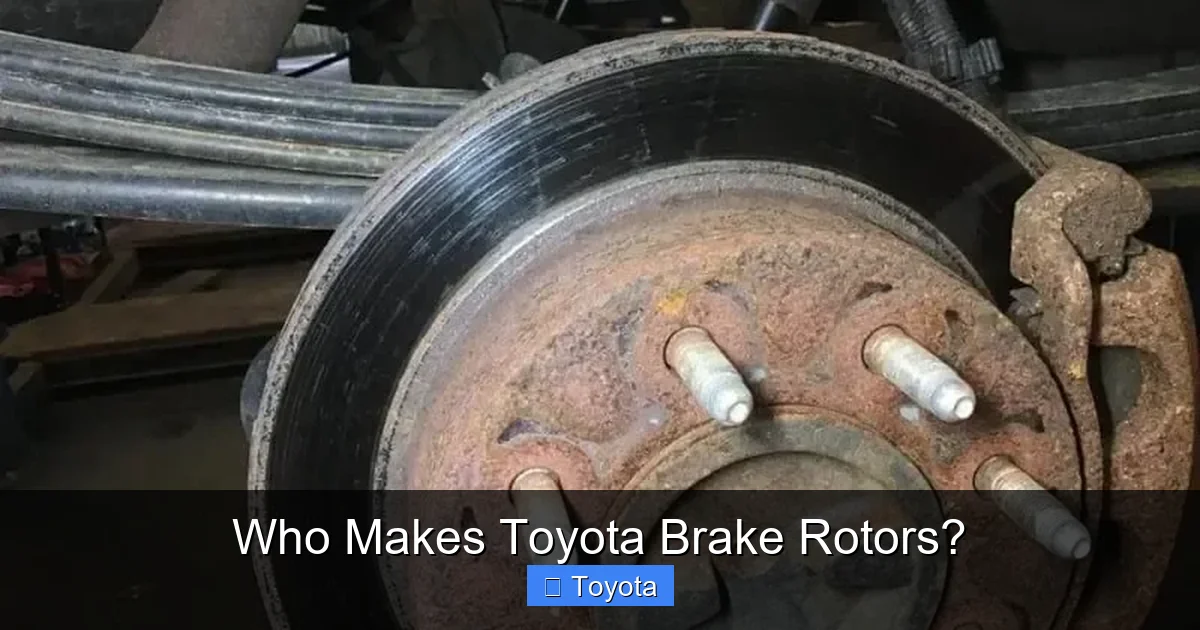
Visual guide about Who Makes Toyota Brake Rotors?
Image source: askcarmechanic.com
One of the most important players in Toyota’s brake system production is ADVICS, a company that might not be a household name but is deeply embedded in Toyota’s engineering ecosystem. ADVICS was formed in 2019 as a spin-off from Aisin Seiki, one of Toyota’s oldest and most trusted suppliers. But its roots go back even further—ADVICS evolved from the brake divisions of Aisin and other Toyota Group companies, giving it decades of experience in braking technology.
ADVICS doesn’t just make brake rotors—it designs and manufactures a full range of braking components, including calipers, master cylinders, and electronic brake control systems. For Toyota, ADVICS is a key OEM (Original Equipment Manufacturer) partner, supplying rotors that meet Toyota’s strict performance, durability, and safety standards. These rotors are installed on new Toyota vehicles straight from the factory, meaning if you bought a brand-new Camry or RAV4, there’s a strong chance its rotors were made by ADVICS.
What sets ADVICS apart is its integration with Toyota’s engineering process. The company works closely with Toyota’s R&D teams to develop rotors that are optimized for specific models. For example, a high-performance GR Supra will have different rotor requirements than a fuel-efficient Prius. ADVICS uses advanced metallurgy and precision machining to ensure each rotor delivers consistent braking performance, resists warping under heat, and lasts for tens of thousands of miles.
Why ADVICS Matters for Toyota Owners
For Toyota owners, ADVICS represents quality and reliability. Because these rotors are designed specifically for Toyota vehicles, they offer a perfect fit and function right out of the box. They’re also built to withstand the rigors of daily driving, from stop-and-go traffic to highway cruising. If you’re looking for OEM-equivalent performance without the dealership price tag, ADVICS-branded rotors (often sold under Toyota’s genuine parts program) are a smart choice.
It’s also worth noting that ADVICS supplies braking components to other automakers, including Honda and Subaru. This cross-brand expertise means the company is constantly refining its technology, which benefits Toyota drivers through improved designs and materials. So even though you might not see the ADVICS logo on your rotor, its influence is there every time you hit the brakes.
Third-Party OEM Suppliers: Akebono, Brembo, and More
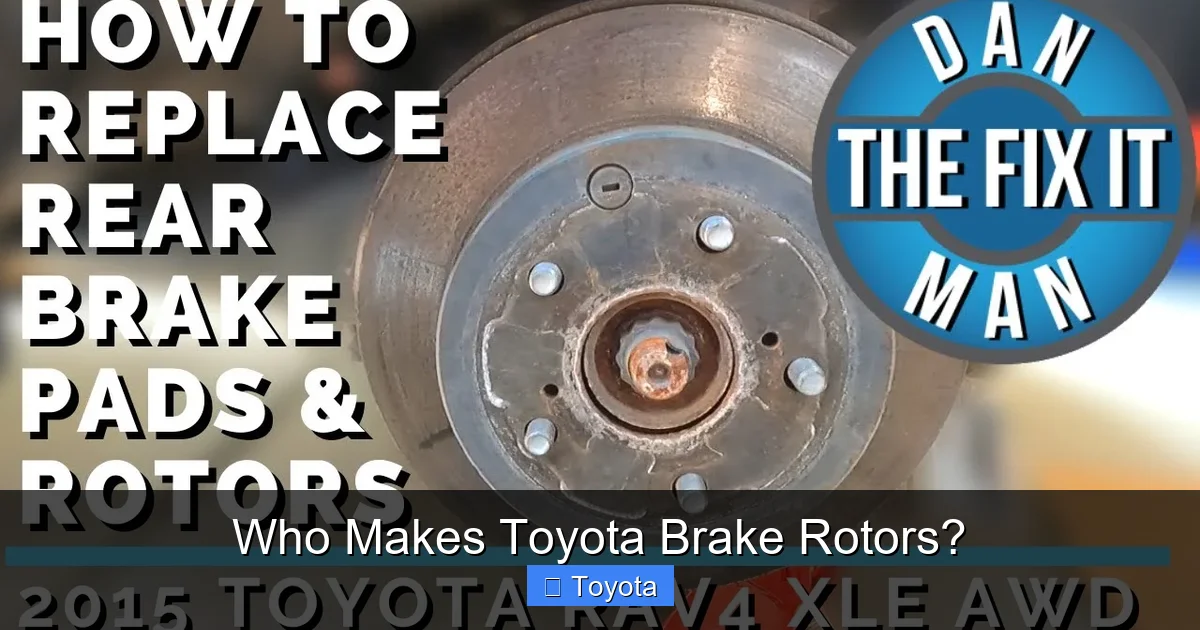
Visual guide about Who Makes Toyota Brake Rotors?
Image source: i.ytimg.com
While ADVICS handles a significant portion of Toyota’s brake rotor production, Toyota also partners with other leading automotive suppliers to meet its global demand. One of the most prominent is Akebono Brake Industry Co., Ltd., a Japanese company with a reputation for excellence in braking technology. Akebono is known for its advanced ceramic brake pad formulations, but it also manufactures high-quality brake rotors for Toyota and other automakers.
Akebono’s rotors are engineered to deliver smooth, quiet braking with minimal dust and wear. They often feature precision-machined surfaces and optimized cooling vanes (in ventilated designs) to reduce heat buildup. For Toyota models that require enhanced braking performance—such as the Tundra pickup or the Highlander SUV—Akebono supplies rotors that can handle heavier loads and more demanding driving conditions.
Another notable supplier is Brembo, an Italian company famous for its high-performance braking systems. While Brembo is more commonly associated with European sports cars, it also supplies components to Toyota, especially for performance-oriented models or special editions. For example, certain Toyota GR (Gazoo Racing) models may feature Brembo-designed rotors as part of their upgraded brake packages. These rotors often include drilled or slotted patterns to improve heat dissipation and wet-weather performance.
How Third-Party Suppliers Ensure Quality
You might wonder: if these aren’t Toyota-branded parts, how do we know they’re good? The answer lies in Toyota’s rigorous supplier qualification process. Every third-party manufacturer must meet Toyota’s Global Quality Standards, which include extensive testing for durability, corrosion resistance, and braking performance. Suppliers are audited regularly, and their parts must pass real-world simulations before they’re approved for use.
This means that whether your Toyota’s rotor was made by ADVICS, Akebono, or Brembo, it has undergone the same level of scrutiny. The difference often comes down to design philosophy—Akebono might prioritize quiet operation, while Brembo focuses on high-speed performance. But in all cases, the end result is a rotor that meets or exceeds Toyota’s expectations.
Aftermarket Brake Rotors: Who Makes Them and Are They Worth It?
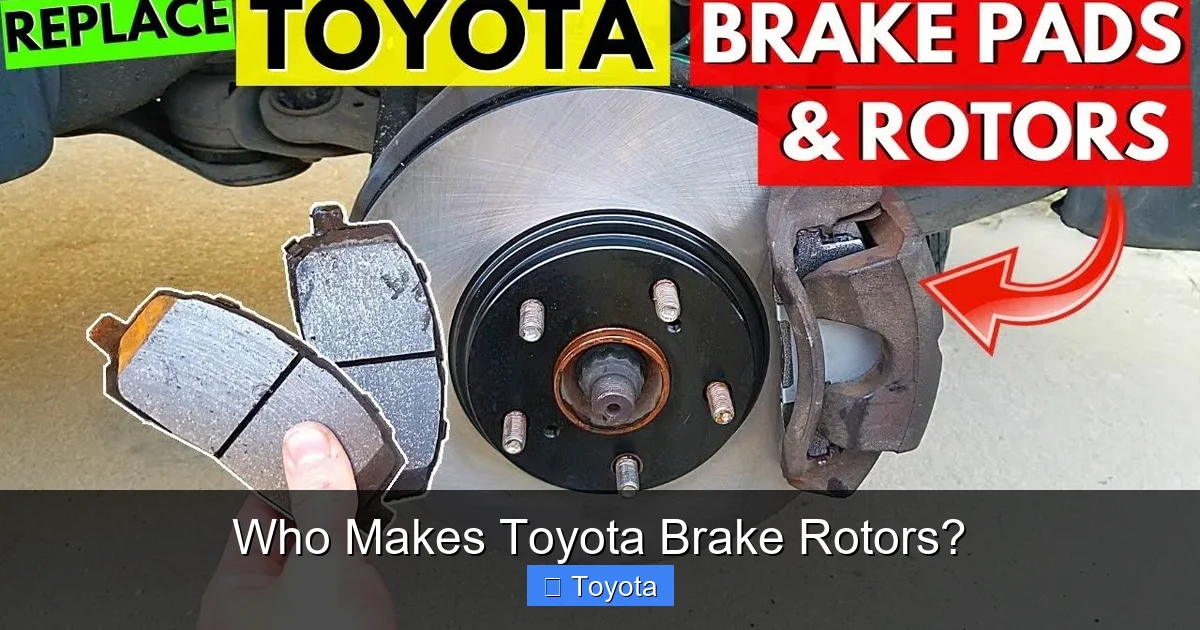
Visual guide about Who Makes Toyota Brake Rotors?
Image source: i.pinimg.com
When it’s time to replace your Toyota’s brake rotors, you’ll likely face a choice: go with genuine Toyota parts or opt for aftermarket alternatives. Aftermarket rotors are made by independent companies and sold through auto parts stores, online retailers, and repair shops. While they’re not installed at the factory, many aftermarket brands offer excellent quality—sometimes even better than OEM.
Some of the most respected aftermarket brake rotor manufacturers include:
– **Power Stop**: Known for its drilled and slotted rotors, Power Stop offers enhanced cooling and bite for aggressive driving. Their Zinc-plated rotors also resist corrosion, making them a popular choice for drivers in snowy or salty climates.
– **Centric Parts**: A leading supplier of replacement brake components, Centric offers a wide range of rotors for Toyota vehicles. Their Premium and Posi-Quiet lines are designed to match or exceed OEM specifications.
– **Brembo (Aftermarket Division)**: Yes, Brembo makes aftermarket rotors too. These are often used by enthusiasts looking to upgrade their braking performance without modifying the entire system.
– **EBC Brakes**: A UK-based company that produces high-performance rotors and pads. EBC’s Yellowstuff and Redstuff rotors are popular among Toyota truck and SUV owners who tow or drive off-road.
OEM vs. Aftermarket: Making the Right Choice
So, should you choose OEM or aftermarket? It depends on your needs. OEM rotors (whether made by ADVICS or another Toyota-approved supplier) offer guaranteed compatibility and peace of mind. They’re ideal if you want a direct replacement that behaves exactly like the original.
Aftermarket rotors, on the other hand, can offer better performance, longer life, or lower cost. For example, a Power Stop rotor might last longer than a stock Toyota rotor due to improved metallurgy. Or a Centric rotor might cost 30% less while delivering similar performance. Just be sure to choose a reputable brand and verify that the rotor is designed for your specific Toyota model and year.
One tip: always replace rotors in pairs (both front or both rear) and consider resurfacing or replacing brake pads at the same time. Mismatched components can lead to uneven wear and reduced braking efficiency.
Materials and Design: What Makes a Toyota Brake Rotor?
Not all brake rotors are created equal—and the materials and design play a huge role in how they perform. Toyota brake rotors are typically made from cast iron, a material chosen for its excellent heat absorption, durability, and cost-effectiveness. However, not all cast iron is the same. Toyota uses high-grade gray cast iron with specific carbon and silicon content to ensure consistent hardness and wear resistance.
Types of Toyota Brake Rotors
Toyota uses several types of rotors depending on the vehicle and its intended use:
– **Solid Rotors**: Found on smaller, lighter vehicles like the Corolla or Yaris. These are simple, flat discs with no internal vanes. They’re cost-effective and sufficient for everyday driving.
– **Ventilated Rotors**: Used on most mid-size and larger Toyotas, including the Camry, RAV4, and Tacoma. These rotors have internal vanes that allow air to flow through, helping to dissipate heat and prevent brake fade during repeated use.
– **Drilled Rotors**: Feature holes drilled through the surface to improve heat dissipation and water evacuation. Common on performance models or in wet climates, but can be prone to cracking under extreme stress.
– **Slotted Rotors**: Have grooves cut into the surface to expel gas and debris. Often used in towing or off-road applications, as they maintain bite under heavy loads.
– **Drilled and Slotted Rotors**: Combine both features for maximum performance. Popular among enthusiasts, but may produce more noise and wear on brake pads.
Coatings and Finishes
Many Toyota rotors—especially aftermarket ones—come with protective coatings to prevent rust. Zinc plating is common, as it resists corrosion without affecting braking performance. Some high-end rotors use e-coating (electroplating) for even better protection. While these coatings don’t impact braking, they can extend the rotor’s life, especially in harsh environments.
How to Identify and Choose the Right Brake Rotors for Your Toyota
Choosing the right brake rotor starts with knowing your vehicle. Check your owner’s manual or look up your Toyota’s specifications online. Key factors include:
– **Model and Year**: Rotors are not universal. A 2020 RAV4 rotor won’t fit a 2015 model, even if they look similar.
– **Trim Level**: Higher trims may come with larger or performance-oriented rotors.
– **Driving Conditions**: If you frequently drive in mountains, tow a trailer, or live in a rainy area, consider upgraded rotors with better heat or water management.
– **Budget**: OEM rotors are more expensive but offer guaranteed fit. Aftermarket options can save money or improve performance.
Practical Tips for Buying Brake Rotors
– Always buy from reputable sources—avoid no-name brands or suspiciously cheap parts.
– Look for rotors that meet or exceed OEM specifications (check for SAE or ISO certifications).
– Consider upgrading to slotted or drilled rotors if you drive aggressively or in challenging conditions.
– Pair new rotors with high-quality brake pads for optimal performance.
– Have rotors installed by a professional if you’re not experienced with brake work—improper installation can lead to safety issues.
The Future of Toyota Brake Rotors: Innovation and Sustainability
As Toyota moves toward electrification and autonomous driving, brake rotor technology is evolving. Hybrid and electric Toyotas like the Prius and bZ4X use regenerative braking, which reduces wear on traditional friction brakes. This means rotors may last longer, but they still need to be reliable when called upon.
Future developments may include:
– **Lightweight Materials**: Aluminum or composite rotors to reduce unsprung weight and improve fuel efficiency.
– **Smart Rotors**: Integrated sensors to monitor wear, temperature, and performance in real time.
– **Sustainable Manufacturing**: Recycled materials and eco-friendly coatings to reduce environmental impact.
Toyota is also investing in brake-by-wire systems, where electronic signals replace hydraulic pressure. While these systems still use physical rotors, the way they’re controlled will change, requiring new designs and materials.
Conclusion: Knowledge Is Your Best Brake
So, who makes Toyota brake rotors? The answer is a blend of in-house expertise and global partnerships. Companies like ADVICS and Akebono work hand-in-hand with Toyota to produce rotors that meet exacting standards, while aftermarket brands offer innovative alternatives for drivers seeking performance or value.
Understanding who makes these components empowers you to make better decisions about your vehicle’s maintenance. Whether you choose OEM or aftermarket, prioritize quality, compatibility, and safety. After all, your brakes are your first line of defense on the road—and knowing what’s behind them is just as important as knowing how to use them.
Frequently Asked Questions
Are Toyota brake rotors made by Toyota?
Not entirely. While Toyota designs and specifies its brake rotors, they are manufactured by a mix of in-house divisions like ADVICS and third-party suppliers such as Akebono and Brembo. These partners produce rotors to Toyota’s exact standards.
Can I use aftermarket brake rotors on my Toyota?
Yes, you can use aftermarket rotors as long as they are designed for your specific Toyota model and meet OEM specifications. Reputable brands like Power Stop and Centric offer high-quality alternatives.
How often should I replace my Toyota brake rotors?
Most Toyota rotors last between 50,000 and 70,000 miles, but this varies based on driving habits, climate, and vehicle use. Inspect them during brake pad replacements or if you notice vibration or noise.
What’s the difference between drilled and slotted rotors?
Drilled rotors have holes to release heat and water, improving wet-weather performance. Slotted rotors have grooves to expel gas and debris, offering better bite under heavy loads. Both can enhance performance but may wear pads faster.
Do I need to replace brake pads when changing rotors?
It’s highly recommended. New rotors should be paired with new pads to ensure even wear and optimal braking performance. Mixing old pads with new rotors can lead to noise and reduced efficiency.
Are genuine Toyota brake rotors worth the extra cost?
Genuine Toyota rotors offer guaranteed fit and performance, making them ideal for peace of mind. However, high-quality aftermarket rotors can provide similar or better performance at a lower price, especially for older vehicles.
