
How Much Is Insurance for a Sports Car?

Insurance for a sports car typically costs significantly more than standard vehicles due to higher repair costs, theft rates, and performance risks. Premiums vary widely based on the car model, driver profile, location, and coverage level—but smart choices can help reduce costs without sacrificing protection.
So, you’ve got your eyes on that sleek, roaring beast—a Ferrari, a Mustang GT, or maybe a brand-new Audi R8. It turns heads, delivers heart-pounding acceleration, and makes every drive feel like a scene from a movie. But before you hit the open road, there’s one crucial detail you can’t ignore: how much is insurance for a sports car?
Let’s be honest—sports cars aren’t just fun to drive; they’re also expensive to insure. Unlike your average family sedan, high-performance vehicles come with a unique set of risks that insurers take very seriously. From higher speeds and increased accident severity to costly repairs and theft vulnerability, every factor adds up. And while the thrill of owning a sports car is undeniable, the insurance bill can be a real wake-up call.
But don’t let that scare you off just yet. With the right knowledge and strategy, you can still enjoy your dream car without going broke on premiums. In this guide, we’ll break down everything you need to know about sports car insurance—what it costs, why it’s so high, and how you can keep your rates as low as possible. Whether you’re a first-time buyer or upgrading from a previous model, this article will help you make informed decisions and drive with confidence.
Key Takeaways
- Sports car insurance is expensive: On average, premiums range from $1,500 to over $4,000 annually—often double or triple that of a regular sedan.
- Vehicle type matters most: High-performance models like the Chevrolet Corvette, Porsche 911, or Nissan GT-R attract the highest rates due to speed, value, and repair complexity.
- Driver profile impacts cost: Younger drivers, those with traffic violations, or a history of claims will pay significantly more—even for the same car.
- Location plays a big role: Urban areas with high traffic density, theft rates, and accident frequency lead to higher premiums than rural zones.
- Coverage level affects price: Comprehensive and collision coverage are essential for sports cars, but liability-only policies are cheaper (though not recommended).
- Discounts can help lower costs: Safe driver programs, multi-policy bundles, anti-theft devices, and low-mileage discounts may reduce premiums by 10–25%.
- Shopping around pays off: Comparing quotes from at least 5 insurers can save hundreds—or even thousands—of dollars per year.
📑 Table of Contents
Why Is Sports Car Insurance So Expensive?
If you’ve ever gotten a quote for a sports car and nearly dropped your phone, you’re not alone. The numbers can be shocking—especially if you’re used to insuring a Honda Civic or Toyota Camry. But why exactly does insurance for a sports car cost so much more?
It all comes down to risk. Insurance companies base their premiums on statistical data about how likely a vehicle is to be involved in an accident, how expensive it is to repair, and how attractive it is to thieves. Sports cars score high on all three counts.
For starters, sports cars are designed for speed. Many can go from 0 to 60 mph in under 4 seconds. That kind of power increases the likelihood of high-speed accidents, which tend to be more severe and costly. According to the Insurance Institute for Highway Safety (IIHS), high-performance vehicles are involved in a disproportionate number of fatal crashes, especially among younger drivers.
Then there’s the repair factor. Sports cars often use specialized parts, lightweight materials like carbon fiber, and advanced electronics that aren’t found in everyday vehicles. If you get into an accident, even a minor fender bender can result in a five-figure repair bill. For example, replacing a carbon fiber hood on a Lamborghini can cost over $20,000—and that’s before labor.
Theft is another major concern. Sports cars are prime targets for car thieves due to their high resale value and desirability. Models like the Dodge Challenger SRT Hellcat and Ford Shelby GT500 frequently appear on lists of most-stolen vehicles. Insurers know this, so they charge more to offset the risk of a total loss.
Finally, sports cars are often driven by younger, less experienced drivers—or by enthusiasts who push their vehicles to the limit on weekends. Both behaviors increase the likelihood of claims, which drives up premiums across the board.
The Role of Performance and Engine Power
One of the biggest red flags for insurers is engine power. The more horsepower a car has, the higher the insurance cost—usually. Vehicles with engines over 300 horsepower are typically classified as high-risk, especially if they’re rear-wheel drive and lightweight.
For example, a 2023 Chevrolet Corvette Stingray with a 495-horsepower V8 engine will cost significantly more to insure than a base-model Corvette with less power. Similarly, a Tesla Model S Plaid, with over 1,000 horsepower, falls into the highest insurance tier—even though it’s electric and has advanced safety features.
Insurers use a system called “vehicle identification number (VIN) rating” to assess risk. This system analyzes the car’s make, model, year, engine size, safety features, and theft rate. High-performance engines automatically bump a vehicle into a higher rating group, which translates to higher premiums.
Repair and Replacement Costs
Let’s talk money. If you’re driving a $100,000 sports car, you’re not just paying for the vehicle—you’re also paying for the privilege of insuring it. And when something goes wrong, the costs add up fast.
Take the Porsche 911, for instance. A minor collision that might cost $3,000 to fix on a Toyota Camry could run $15,000 or more on a 911 due to specialized parts and labor. Even routine maintenance is more expensive. Brake pads, tires, and suspension components are all custom-designed and pricier than standard parts.
Insurance companies know this. They factor in the average cost of repairs when setting rates. So, if your car is expensive to fix, your premium will reflect that. Comprehensive and collision coverage—which are almost always required for financed or leased sports cars—will be particularly costly.
Theft and Vandalism Risks
Sports cars are magnets for thieves. Their high value, limited production numbers, and strong resale market make them attractive targets. According to the National Insurance Crime Bureau (NICB), sports cars are stolen at a rate nearly three times higher than the average vehicle.
Models like the Ford Mustang GT, Dodge Charger SRT, and Nissan GT-R are frequently stolen, often for parts or to be shipped overseas. Even if your car is equipped with an alarm and GPS tracker, insurers still consider it a high-risk asset.
This increased theft risk directly impacts your premium. Comprehensive coverage, which includes theft protection, will be more expensive for a sports car than for a minivan or compact SUV.
Average Insurance Costs for Popular Sports Cars
Visual guide about How Much Is Insurance for a Sports Car?
Image source: d2tez01fe91909.cloudfront.net
Now that we’ve covered the “why,” let’s look at the “how much.” While exact numbers vary by driver, location, and insurer, we can get a good sense of average annual premiums for some of the most popular sports cars on the market.
Keep in mind that these are estimates based on a 35-year-old male with a clean driving record, living in a suburban area, and carrying full coverage (liability, collision, and comprehensive). Your actual rate could be higher or lower depending on your profile.
Entry-Level Sports Cars
If you’re looking for a balance between performance and affordability, entry-level sports cars like the Mazda MX-5 Miata, Subaru BRZ, or Toyota GR86 are great options. These vehicles offer fun driving dynamics without the extreme power or price tag of supercars.
– **Mazda MX-5 Miata**: Average annual premium: $1,200–$1,800
The Miata is one of the most affordable sports cars to insure. Its modest engine (around 181 horsepower), strong safety ratings, and low theft rate help keep premiums down.
– **Subaru BRZ / Toyota GR86**: Average annual premium: $1,400–$2,000
These twins share a platform and engine (228 horsepower), and both are reasonably priced to insure. They’re popular among enthusiasts but don’t raise too many red flags for insurers.
Mid-Range Performance Cars
Stepping up in power and price, mid-range sports cars like the Ford Mustang GT, Chevrolet Camaro SS, and Dodge Challenger R/T offer serious performance with more aggressive styling.
– **Ford Mustang GT**: Average annual premium: $2,000–$3,000
With a 450-horsepower V8, the Mustang GT is a favorite among muscle car fans. However, its high power and popularity with younger drivers make it expensive to insure.
– **Chevrolet Camaro SS**: Average annual premium: $2,100–$3,200
Similar to the Mustang, the Camaro SS has a powerful engine and a sporty image that insurers view as risky.
– **Dodge Challenger R/T**: Average annual premium: $2,200–$3,500
The Challenger is known for its retro styling and brute force. Its high theft rate and association with street racing contribute to higher premiums.
High-End Supercars and Exotics
Now we’re in the big leagues. Supercars like the Porsche 911, Audi R8, and Chevrolet Corvette Z06 are engineering marvels—but they come with supercar insurance prices.
– **Porsche 911**: Average annual premium: $3,000–$5,000
The 911 is a benchmark for sports cars, but its high value, advanced technology, and performance capabilities make it costly to insure. A 911 Turbo S can push premiums even higher.
– **Audi R8**: Average annual premium: $4,000–$6,000
With a V10 engine and exotic design, the R8 is a dream car for many. But its $150,000+ price tag and limited repair network mean insurance is steep.
– **Chevrolet Corvette Z06**: Average annual premium: $3,500–$5,500
The Z06 is a track-focused beast with over 600 horsepower. While it’s more affordable than European exotics, its performance still commands high insurance rates.
Luxury and Electric Sports Cars
Electric performance cars like the Tesla Model S Plaid and Porsche Taycan Turbo are redefining what a sports car can be—but they’re not cheap to insure.
– **Tesla Model S Plaid**: Average annual premium: $3,500–$6,000
Despite having advanced safety features and autopilot, the Plaid’s 1,020 horsepower and high repair costs (especially for battery damage) make it expensive to insure.
– **Porsche Taycan Turbo**: Average annual premium: $3,800–$6,500
The Taycan combines luxury and performance, but its high price and complex electronics lead to steep insurance premiums.
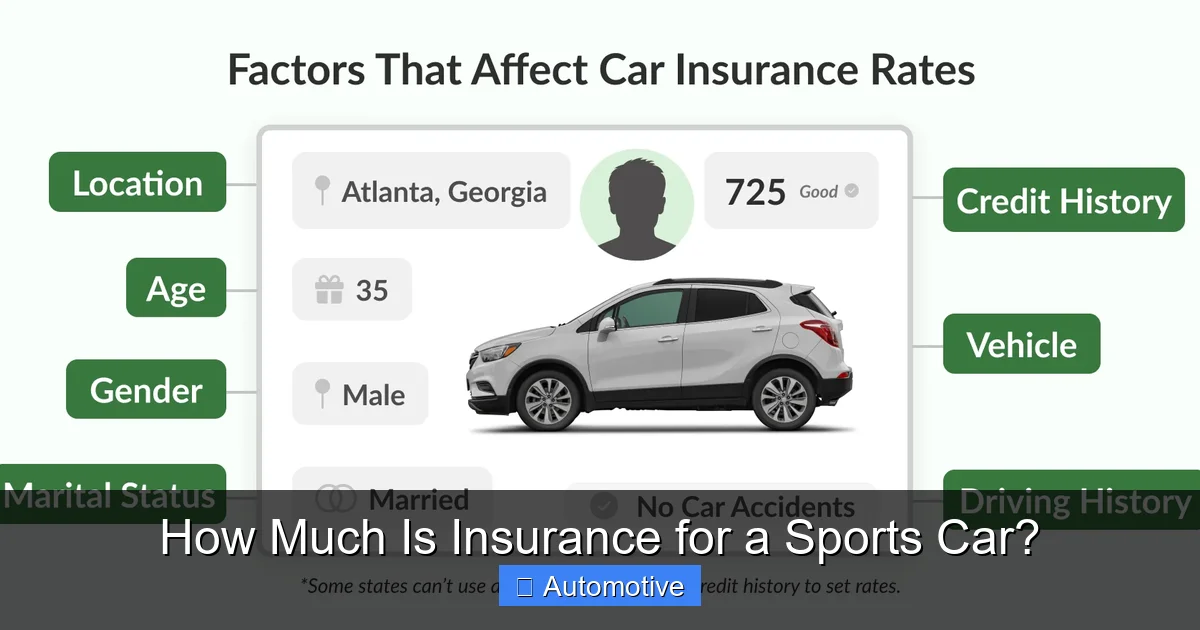
Factors That Influence Sports Car Insurance Rates

Visual guide about How Much Is Insurance for a Sports Car?
Image source: i4.ytimg.com
While the car itself is a major factor, it’s not the only one. Insurance companies use a complex algorithm to determine your premium, and several personal and external factors can push your rate up or down.
Driver Age and Experience
Age is one of the biggest predictors of risk. Drivers under 25—especially males—are considered high-risk due to inexperience and a tendency to speed. If you’re a 22-year-old buying your first Corvette, expect to pay a small fortune for insurance.
For example, a 25-year-old male with a clean record might pay $3,000 a year to insure a Mustang GT. That same car could cost $6,000 or more for an 18-year-old driver.
As you age and build a clean driving history, your rates will gradually decrease. Drivers over 30 with no accidents or tickets typically see the most favorable premiums.
Driving Record and Claims History
Your past behavior behind the wheel matters—a lot. A single speeding ticket can increase your premium by 10–20%. A DUI? That could double or even triple your rate.
Insurers also look at your claims history. If you’ve filed multiple claims in the past three to five years, you’ll be labeled a high-risk driver, which means higher premiums across the board.
The good news? Some insurers offer accident forgiveness programs, which prevent your first at-fault accident from affecting your rate. Be sure to ask about this when shopping for coverage.
Location and Usage
Where you live plays a huge role in your insurance cost. Urban areas with heavy traffic, high crime rates, and frequent accidents—like Los Angeles, New York, or Chicago—have much higher premiums than rural areas.
For example, insuring a Porsche 911 in downtown Miami might cost $5,000 a year, while the same car in a small town in Wyoming could be under $2,500.
How you use your car also matters. If you drive your sports car daily for commuting, you’ll pay more than someone who only takes it out on weekends. Higher mileage increases exposure to risk, so insurers charge accordingly.
Coverage Level and Deductibles
The type of coverage you choose directly affects your premium. Here’s a quick breakdown:
– **Liability-only**: Covers damage you cause to others. Cheapest option, but not recommended for a valuable sports car.
– **Collision**: Covers damage to your car from accidents. Essential for sports cars.
– **Comprehensive**: Covers theft, vandalism, weather damage, and more. Also highly recommended.
– **Uninsured/underinsured motorist**: Protects you if you’re hit by a driver with no or insufficient insurance.
Most lenders require full coverage (collision + comprehensive) if you’re financing or leasing your sports car. While this increases your premium, it’s necessary to protect your investment.
You can also adjust your deductible—the amount you pay out of pocket before insurance kicks in. A higher deductible (e.g., $1,000 vs. $500) lowers your premium, but make sure you can afford to pay it if you need to file a claim.
Credit Score and Marital Status
Believe it or not, your credit score can affect your insurance rate—in most states. Insurers use credit-based insurance scores to predict risk. People with poor credit are statistically more likely to file claims, so they pay more.
Marital status also plays a role. Married drivers tend to have lower accident rates, so they often receive discounts. Single drivers, especially young ones, pay more.
How to Reduce Sports Car Insurance Costs

Visual guide about How Much Is Insurance for a Sports Car?
Image source: thumbs.dreamstime.com
Okay, so sports car insurance is expensive—but that doesn’t mean you’re stuck with sky-high premiums. With a few smart strategies, you can significantly reduce your costs without sacrificing coverage.
Shop Around and Compare Quotes
This is the #1 way to save money. Every insurer uses a different formula to calculate rates, so the same car can have wildly different quotes from different companies.
Get quotes from at least 5 insurers, including national brands (like Geico, State Farm, and Progressive) and regional or specialty carriers (like Hagerty or Grundy, which specialize in classic and high-performance cars).
Use online comparison tools or work with an independent agent who can access multiple quotes at once. Don’t just go with the first offer—take your time and compare apples to apples.
Take Advantage of Discounts
Most insurers offer a variety of discounts that can add up to big savings. Here are some common ones:
– **Multi-policy discount**: Bundle your auto insurance with home or renters insurance.
– **Safe driver discount**: Maintain a clean record for 3–5 years.
– **Low-mileage discount**: Drive fewer than 7,500–10,000 miles per year.
– **Anti-theft device discount**: Install a GPS tracker, immobilizer, or alarm system.
– **Defensive driving course**: Some insurers offer discounts for completing an approved course.
– **Pay-in-full discount**: Pay your annual premium upfront instead of monthly.
Ask your insurer about all available discounts—you might be surprised how much you can save.
Consider Usage-Based Insurance
Also known as telematics, usage-based insurance programs track your driving habits through a mobile app or plug-in device. If you drive safely—avoiding hard braking, speeding, and late-night trips—you can earn significant discounts.
Programs like Progressive’s Snapshot, Allstate’s Drivewise, and State Farm’s Drive Safe & Save are great options for responsible drivers. Just be aware that your data is being monitored, so only sign up if you’re confident in your driving.
Choose a Less Risky Sports Car
If you’re flexible on the model, consider a sports car with better insurance ratings. For example, the Mazda MX-5 Miata and Subaru BRZ are cheaper to insure than the Mustang or Camaro.
You can also look for models with strong safety ratings, advanced driver-assistance systems (ADAS), and lower theft rates. Features like automatic emergency braking, lane departure warning, and adaptive cruise control can sometimes qualify for discounts.
Increase Your Deductible
Raising your deductible from $500 to $1,000 can lower your premium by 10–20%. Just make sure you have enough savings to cover the higher out-of-pocket cost if you need to file a claim.
This strategy works best for drivers with a clean record and a reliable emergency fund.
Park in a Garage and Use Anti-Theft Devices
Where you park your car matters. Insurers often offer discounts if you park in a locked garage rather than on the street. This reduces the risk of theft, vandalism, and weather damage.
Installing anti-theft devices like a steering wheel lock, GPS tracker, or immobilizer can also lower your premium. Some insurers even offer specific discounts for vehicles equipped with factory-installed security systems.
Specialty Insurance for Classic and Collector Sports Cars
If you’re driving a classic Corvette, a vintage Porsche, or a rare Ferrari, standard auto insurance might not be the best fit. That’s where specialty insurers come in.
Companies like Hagerty, Grundy, and American Collectors Insurance specialize in classic and collector cars. They understand the unique needs of enthusiasts and offer tailored policies that reflect the true value of your vehicle.
Agreed Value vs. Actual Cash Value
Most standard policies use “actual cash value” (ACV), which factors in depreciation. So if your 1967 Mustang is worth $80,000 today but was worth $100,000 new, you’ll only get $80,000 if it’s totaled.
Specialty insurers use “agreed value” policies. You and the insurer agree on the car’s value upfront, and that’s what you’ll receive in the event of a total loss—no depreciation.
Flexible Usage and Mileage Limits
Classic car insurers often allow limited annual mileage (e.g., 2,500–5,000 miles) and restrict usage to pleasure driving, car shows, and parades—not daily commuting. This lowers risk and keeps premiums manageable.
Some policies also offer roadside assistance, spare parts coverage, and even coverage for car show appearances.
Lower Premiums for Enthusiasts
Because collector cars are typically well-maintained, driven responsibly, and stored securely, specialty insurers often offer lower rates than standard carriers—even for high-value vehicles.
For example, a 1970 Dodge Challenger R/T might cost $1,500–$2,500 annually with Hagerty, compared to $3,000+ with a standard insurer.
Final Thoughts: Is Sports Car Insurance Worth It?
So, after all this, you might be wondering: is it even worth it to insure a sports car? The short answer is yes—especially if you’ve invested tens or hundreds of thousands of dollars into your vehicle.
While the premiums are high, the peace of mind that comes with comprehensive coverage is invaluable. A single accident, theft, or weather event could total your car, and without insurance, you’d be out of luck.
The key is to be smart about your choices. Shop around, take advantage of discounts, drive safely, and consider your usage and storage habits. With the right strategy, you can enjoy the thrill of owning a sports car without the financial stress of excessive insurance costs.
Remember, how much is insurance for a sports car? The answer depends on many factors—but with the right approach, you can keep that number as low as possible while still protecting your prized possession.
Frequently Asked Questions
Why is sports car insurance so expensive?
Sports car insurance is costly due to higher risks: faster speeds increase accident severity, repairs are more expensive, and these vehicles are often targeted by thieves. Insurers charge more to offset these elevated risks.
Can I get cheap insurance for a sports car?
Yes, you can reduce costs by shopping around, maintaining a clean driving record, using anti-theft devices, and choosing a model with lower insurance ratings. Bundling policies and increasing your deductible also helps.
Do electric sports cars cost more to insure?
Yes, electric sports cars like the Tesla Model S Plaid often have high insurance premiums due to their high value, expensive battery repairs, and powerful performance—even with advanced safety features.
Does my credit score affect my sports car insurance rate?
In most states, yes. Insurers use credit-based scores to assess risk. Drivers with lower credit scores typically pay higher premiums, as they’re statistically more likely to file claims.
Is liability-only coverage enough for a sports car?
No, liability-only coverage is not recommended for a valuable sports car. It only covers damage you cause to others, leaving your vehicle unprotected. Full coverage (collision and comprehensive) is strongly advised.
Can I insure a classic sports car with regular auto insurance?
You can, but it’s not ideal. Standard policies use actual cash value, which factors in depreciation. Specialty insurers offer agreed value policies that better protect the true worth of classic and collector cars.
