
What Erp System Does Toyota Use?

Toyota uses a highly customized, in-house ERP system built on SAP S/4HANA, integrated with its proprietary Toyota Production System (TPS). This powerful combination enables real-time data flow, lean manufacturing, and seamless global operations across thousands of suppliers and plants.
Key Takeaways
- Toyota uses SAP S/4HANA as the core of its ERP system: The company migrated from older SAP ERP systems to the next-generation S/4HANA platform to improve speed, analytics, and cloud readiness.
- Integration with the Toyota Production System (TPS): Toyota’s ERP is deeply customized to support lean manufacturing, just-in-time (JIT) inventory, and continuous improvement (kaizen) principles.
- Global scalability and real-time data: The ERP system connects over 60 manufacturing plants and 170+ countries, enabling instant visibility into production, supply chain, and financial data.
- Custom modules for automotive needs: Toyota developed specialized modules for vehicle lifecycle management, supplier collaboration, and quality control that go beyond standard ERP features.
- Cloud and hybrid deployment strategy: While some systems remain on-premise for security, Toyota is gradually moving toward cloud-based SAP solutions for greater flexibility.
- Strong focus on cybersecurity and data integrity: Given the scale of operations, Toyota invests heavily in protecting its ERP infrastructure from cyber threats and ensuring compliance.
- Continuous evolution and digital transformation: Toyota regularly updates its ERP to incorporate AI, IoT, and machine learning for predictive maintenance and smarter decision-making.
📑 Table of Contents
- Introduction: The Engine Behind Toyota’s Global Operations
- Why ERP Matters in Automotive Manufacturing
- Toyota’s ERP Journey: From Legacy Systems to SAP S/4HANA
- Customization: How Toyota Tailors SAP to Its Needs
- Global Reach: How Toyota’s ERP Powers Worldwide Operations
- Security and Compliance: Protecting Toyota’s Digital Assets
- The Future: AI, IoT, and the Next Generation of ERP
- Conclusion: The Secret to Toyota’s Operational Excellence
Introduction: The Engine Behind Toyota’s Global Operations
When you think of Toyota, you probably picture reliable cars, hybrid technology, or maybe even the famous Prius. But behind every smoothly running vehicle and efficient factory is a powerful, behind-the-scenes system that keeps everything moving—Toyota’s enterprise resource planning (ERP) system. This digital backbone manages everything from parts ordering and production scheduling to payroll and financial reporting across the globe.
But what ERP system does Toyota actually use? The answer isn’t as simple as naming a single software package. Toyota’s ERP setup is a sophisticated blend of industry-standard platforms and highly customized internal tools, all designed to support its unique manufacturing philosophy. At the heart of it is SAP S/4HANA, the latest generation of SAP’s ERP software. However, Toyota doesn’t just use SAP “out of the box.” Instead, it has tailored the system to align perfectly with its world-renowned Toyota Production System (TPS), which emphasizes efficiency, waste reduction, and continuous improvement.
Why ERP Matters in Automotive Manufacturing
Visual guide about What Erp System Does Toyota Use?
Image source: odoocdn.com
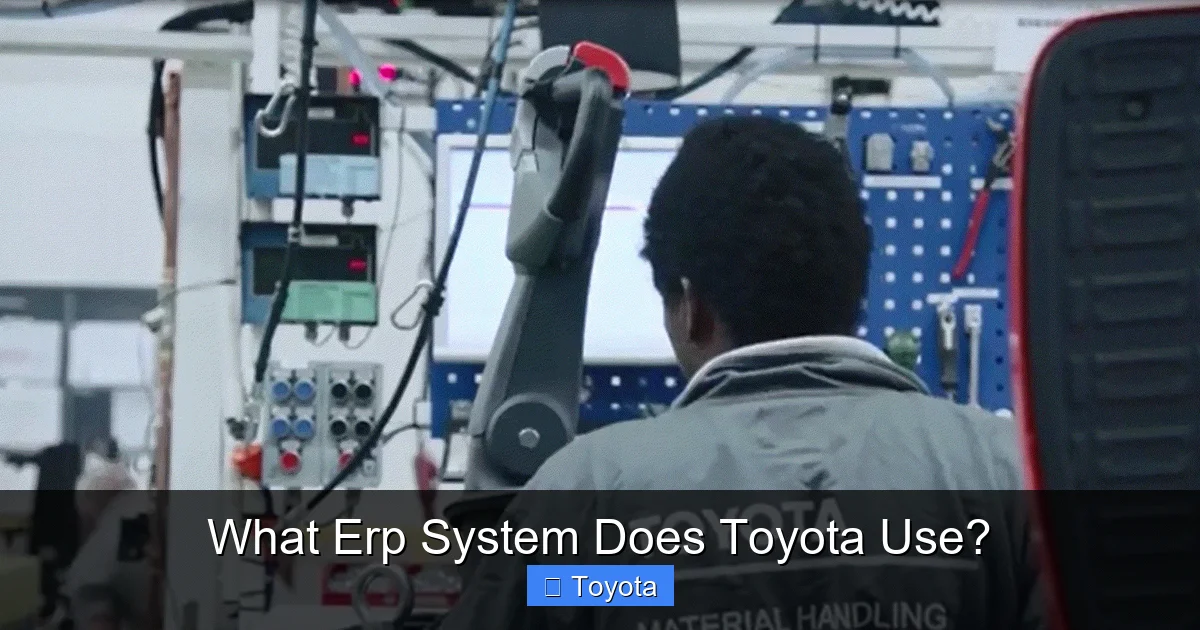
Before diving into the specifics of Toyota’s ERP, it’s important to understand why such a system is so critical in the automotive industry. Car manufacturing is one of the most complex supply chain operations on the planet. A single vehicle can contain over 30,000 parts sourced from hundreds of suppliers across multiple countries. Coordinating all these moving parts—literally and figuratively—requires precision, speed, and real-time visibility.
An ERP system acts as the central nervous system for a company like Toyota. It integrates data from finance, human resources, procurement, production, logistics, and sales into one unified platform. This allows decision-makers to see what’s happening across the organization at any given moment. For example, if a supplier in Thailand delays a shipment of brake components, the ERP system can instantly alert production planners in Japan, who can then adjust schedules or source alternatives to avoid downtime.
Without a robust ERP, Toyota would struggle to maintain its reputation for quality and on-time delivery. The system enables the company to respond quickly to market changes, manage inventory efficiently, and maintain tight control over costs—all while producing millions of vehicles each year.
Toyota’s ERP Journey: From Legacy Systems to SAP S/4HANA
Visual guide about What Erp System Does Toyota Use?
Image source: cartireinflator.com
Toyota’s relationship with ERP systems dates back decades. In the 1990s and early 2000s, the company relied on older versions of SAP ERP, such as SAP R/3, which were powerful for their time but limited in speed and scalability. As global demand grew and technology evolved, Toyota recognized the need for a more agile and intelligent system.
In the 2010s, the company began a major digital transformation initiative. The goal was to modernize its IT infrastructure, improve data analytics, and support future innovations like connected vehicles and smart factories. This led to the adoption of SAP S/4HANA, which launched in 2015 and quickly became the ERP platform of choice for large enterprises worldwide.
What Is SAP S/4HANA?
SAP S/4HANA is the next-generation ERP suite from SAP, built on the in-memory HANA database. Unlike traditional ERP systems that rely on disk-based storage, S/4HANA processes data in real time, enabling faster reporting, better analytics, and improved decision-making. It also supports cloud deployment, mobile access, and integration with emerging technologies like artificial intelligence and the Internet of Things (IoT).
For Toyota, S/4HANA offered several key advantages:
– Real-time financial and operational reporting
– Simplified data model with fewer tables and faster queries
– Enhanced user experience with intuitive interfaces
– Better support for global compliance and multi-currency transactions
The Migration Process
Migrating from legacy SAP systems to S/4HANA was no small feat. Toyota had to upgrade hardware, reconfigure business processes, and train thousands of employees. The migration was rolled out in phases across different regions and business units to minimize disruption.
One of the biggest challenges was data migration. Toyota had decades of historical data stored in various formats. The company used automated tools and data cleansing techniques to ensure accuracy and consistency during the transition. They also took the opportunity to standardize processes across regions, reducing complexity and improving efficiency.
Customization: How Toyota Tailors SAP to Its Needs
Visual guide about What Erp System Does Toyota Use?
Image source: toyota.ro
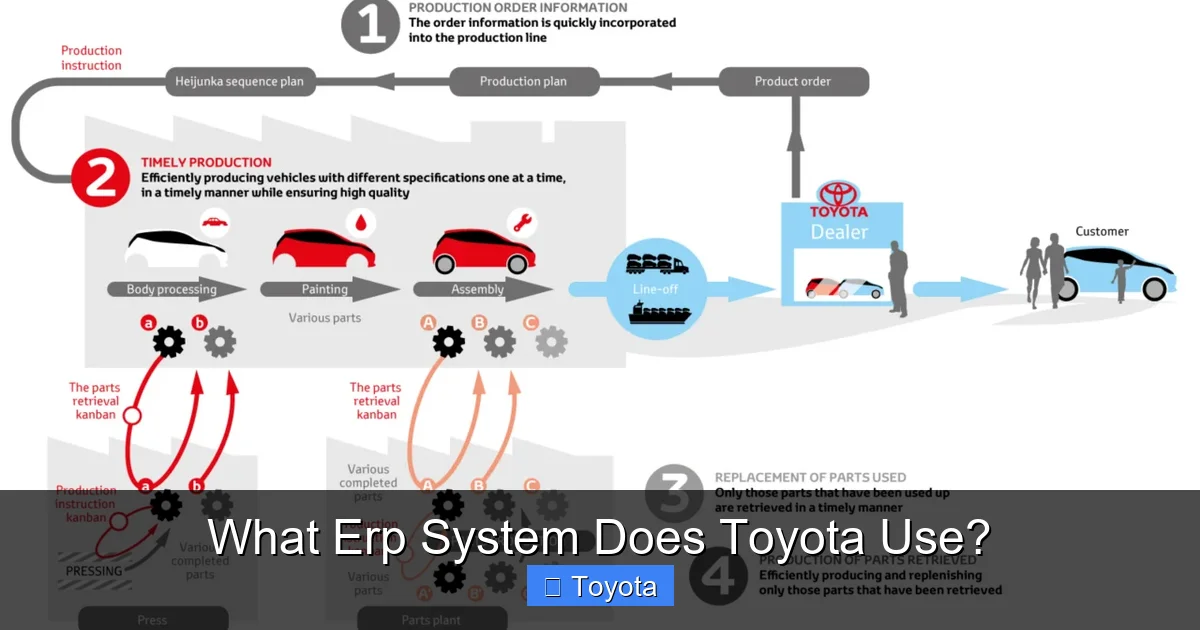
While SAP S/4HANA provides a strong foundation, Toyota doesn’t use it as a one-size-fits-all solution. The company has invested heavily in customizing the system to support its unique operational model, especially the Toyota Production System (TPS).
Integration with the Toyota Production System (TPS)
TPS is Toyota’s proprietary manufacturing philosophy, often referred to as “lean manufacturing.” It focuses on eliminating waste (muda), continuous improvement (kaizen), and just-in-time (JIT) production. To make TPS work at scale, Toyota needed an ERP system that could support these principles in real time.
For example, the ERP system is configured to trigger automatic reorders when inventory levels drop below a certain threshold—ensuring parts arrive exactly when needed, without excess stock. It also tracks production line performance, identifying bottlenecks and suggesting improvements based on real-time data.
Custom Modules for Automotive Excellence
Beyond standard ERP functions, Toyota has developed specialized modules that address the unique needs of automotive manufacturing. These include:
– **Vehicle Lifecycle Management (VLM):** Tracks each vehicle from design and prototyping through production, delivery, and after-sales service.
– **Supplier Collaboration Portal:** Allows suppliers to view demand forecasts, submit invoices, and track delivery status in real time.
– **Quality Control Dashboard:** Monitors defect rates, inspection results, and corrective actions across all plants.
– **Predictive Maintenance System:** Uses IoT sensors and machine learning to predict equipment failures before they happen, reducing downtime.
These custom tools are tightly integrated with SAP S/4HANA, ensuring seamless data flow between departments and external partners.
User Experience and Training
Toyota places a strong emphasis on user adoption. The company redesigned its ERP interface to be more intuitive, with role-based dashboards that show only relevant information. For example, a production supervisor sees machine status and worker schedules, while a finance manager views budget reports and cost variances.
Training programs were rolled out globally, with localized content in multiple languages. Toyota also created a network of “ERP champions” within each plant—employees who are experts in the system and can assist their colleagues.
Global Reach: How Toyota’s ERP Powers Worldwide Operations
Toyota operates in over 170 countries and manufactures vehicles in more than 60 plants across six continents. Managing such a vast network requires an ERP system that can scale effortlessly and adapt to local regulations.
Multi-Country and Multi-Currency Support
SAP S/4HANA supports multiple languages, currencies, and tax regimes, making it ideal for global companies like Toyota. The system automatically converts financial data into local currencies and ensures compliance with regional accounting standards.
For example, a plant in Mexico can report in Mexican pesos, while headquarters in Japan views consolidated results in Japanese yen. The ERP handles the conversion seamlessly, eliminating manual errors and saving time.
Real-Time Visibility Across the Supply Chain
One of the biggest benefits of Toyota’s ERP is real-time visibility. Managers can see inventory levels, production schedules, and shipment statuses from any location. This is especially important for managing just-in-time delivery, where parts must arrive at the assembly line within minutes of being needed.
The system also integrates with transportation management software, allowing Toyota to track shipments from suppliers and optimize delivery routes. If a truck is delayed due to weather, the ERP can automatically adjust production schedules to avoid disruptions.
Disaster Recovery and Business Continuity
Given the critical nature of its operations, Toyota has implemented robust disaster recovery plans for its ERP system. Data is backed up in multiple locations, and failover systems ensure minimal downtime in case of outages.
During the 2011 earthquake and tsunami in Japan, Toyota’s ERP played a key role in restoring operations. The system helped identify which suppliers were affected, reroute production, and communicate with stakeholders—demonstrating the resilience of its digital infrastructure.
Security and Compliance: Protecting Toyota’s Digital Assets
With so much sensitive data flowing through its ERP system, Toyota takes cybersecurity very seriously. The company faces constant threats from hackers, industrial spies, and insider risks.
Cybersecurity Measures
Toyota employs a multi-layered security strategy that includes:
– Firewalls and intrusion detection systems
– End-to-end encryption for data in transit and at rest
– Multi-factor authentication (MFA) for user access
– Regular security audits and penetration testing
– Employee training on phishing and social engineering
Access to the ERP system is tightly controlled. Employees only see data relevant to their role, and all actions are logged for audit purposes.
Regulatory Compliance
Toyota must comply with a wide range of regulations, including GDPR in Europe, CCPA in California, and local data protection laws in Asia. The ERP system is configured to support these requirements, with features like data anonymization, consent management, and automated reporting.
The company also undergoes regular audits by third parties to ensure compliance with industry standards such as ISO 27001 (information security) and SOX (financial reporting).
The Future: AI, IoT, and the Next Generation of ERP
Toyota isn’t resting on its laurels. The company is continuously evolving its ERP system to incorporate new technologies and stay ahead of the competition.
Artificial Intelligence and Machine Learning
AI is being used to enhance decision-making across the organization. For example, machine learning algorithms analyze historical sales data to predict future demand, helping Toyota optimize production schedules and inventory levels.
In quality control, AI-powered image recognition systems inspect vehicles on the assembly line, detecting defects that might be missed by the human eye. These systems feed data directly into the ERP, enabling immediate corrective actions.
Internet of Things (IoT) Integration
Toyota is connecting its factories with IoT sensors that monitor equipment performance, energy usage, and environmental conditions. This data is fed into the ERP system, where it’s used for predictive maintenance and energy optimization.
For instance, if a sensor detects abnormal vibrations in a robotic arm, the ERP can automatically schedule maintenance before a breakdown occurs—reducing downtime and repair costs.
Cloud and Hybrid Deployment
While some of Toyota’s ERP systems remain on-premise for security reasons, the company is gradually moving toward cloud-based solutions. SAP offers cloud versions of S/4HANA, which provide greater scalability, faster updates, and lower infrastructure costs.
Toyota is also exploring hybrid models, where critical data stays on-premise while less sensitive functions run in the cloud. This approach balances security with flexibility.
Conclusion: The Secret to Toyota’s Operational Excellence
So, what ERP system does Toyota use? The answer is SAP S/4HANA—but that’s only part of the story. What truly sets Toyota apart is how it customizes and integrates this platform with its own manufacturing philosophy, global supply chain, and cutting-edge technologies.
Toyota’s ERP system is more than just software; it’s a strategic asset that enables lean operations, real-time decision-making, and continuous innovation. By combining the power of SAP with the principles of the Toyota Production System, the company has built a digital foundation that supports its mission of delivering high-quality vehicles to customers around the world.
As the automotive industry evolves—with trends like electric vehicles, autonomous driving, and smart factories—Toyota’s ERP will continue to play a central role in shaping its future. The company’s commitment to digital transformation ensures that it remains a leader not just in manufacturing, but in technology as well.
Frequently Asked Questions
What ERP system does Toyota use?
Toyota primarily uses SAP S/4HANA as its core ERP system, customized to support its global operations and manufacturing processes. The system is integrated with Toyota’s proprietary production methods for maximum efficiency.
Is Toyota’s ERP system built entirely on SAP?
While SAP S/4HANA forms the foundation, Toyota has developed custom modules and integrations to align with its unique needs, such as just-in-time production and quality control.
Does Toyota use cloud-based ERP?
Toyota is gradually adopting cloud-based SAP solutions, but many systems remain on-premise for security and compliance reasons. A hybrid approach is currently in use.
How does Toyota’s ERP support lean manufacturing?
The ERP system is tailored to support Toyota Production System (TPS) principles, enabling real-time inventory tracking, automated reordering, and continuous improvement workflows.
Can other car manufacturers use the same ERP as Toyota?
While other automakers can use SAP S/4HANA, Toyota’s success comes from deep customization and integration with its own operational philosophy, which is difficult to replicate.
How does Toyota ensure data security in its ERP system?
Toyota uses multi-layered cybersecurity measures, including encryption, access controls, regular audits, and employee training to protect its ERP data from threats.
