
How Much Is a Starter for a Honda Civic

Replacing a starter in a Honda Civic typically costs between $200 and $600, including parts and labor. The final price depends on your model year, location, and whether you choose OEM or aftermarket parts. Understanding these factors helps you budget wisely and avoid overpaying.
Key Takeaways
- Average cost: A new starter for a Honda Civic ranges from $100 to $400 for the part alone, with labor adding $100–$200.
- Model year matters: Older Civics (1990s–2000s) often have cheaper starters, while newer models (2016+) may cost more due to advanced electronics.
- OEM vs. aftermarket: OEM (original equipment manufacturer) parts are more reliable but pricier; aftermarket options save money but vary in quality.
- Labor costs vary: Dealerships charge more than independent mechanics—shop around for the best rate.
- DIY can save money: If you’re handy, replacing the starter yourself can cut labor costs by 50% or more.
- Signs of failure: Clicking noises, slow cranking, or no response when turning the key often mean the starter is going bad.
- Warranty considerations: Some aftermarket starters come with 1–3 year warranties—always check before buying.
📑 Table of Contents
- Understanding the Honda Civic Starter: What It Does and Why It Matters
- How Much Is a Starter for a Honda Civic? Breaking Down the Costs
- Factors That Influence the Price of a Honda Civic Starter
- Signs Your Honda Civic Starter Is Failing
- DIY vs. Professional Installation: Should You Do It Yourself?
- Tips to Save Money on a Honda Civic Starter Replacement
- Conclusion: Making the Smart Choice for Your Honda Civic
Understanding the Honda Civic Starter: What It Does and Why It Matters
The starter is one of the most critical components in your Honda Civic’s engine system. Without it, your car simply won’t start—no matter how much you turn the key or press the start button. Think of it as the spark that ignites your morning commute. When you turn the ignition, the starter motor engages the engine’s flywheel, spinning it fast enough for the fuel and air mixture to ignite and get the engine running.
Over time, like any mechanical part, the starter can wear out. It’s not something that fails suddenly every time—sometimes it gives you warning signs. You might hear a clicking sound when you try to start the car, or the engine might crank slowly before finally turning over. In some cases, the car won’t respond at all. Ignoring these symptoms can leave you stranded, especially if the starter fails completely.
Knowing how much a starter for a Honda Civic costs helps you plan ahead. Whether you’re facing an emergency repair or just doing routine maintenance, understanding the price range and what influences it can save you stress and money. Let’s break down everything you need to know about starter replacement costs, from parts to labor, and how to make the best decision for your vehicle.
How Much Is a Starter for a Honda Civic? Breaking Down the Costs
So, how much is a starter for a Honda Civic? The short answer: it depends. But on average, you can expect to pay between $200 and $600 for a complete starter replacement, including both the part and labor. This range covers most model years from the 1990s up to the current generation. Let’s look at the two main cost components: the starter itself and the labor to install it.
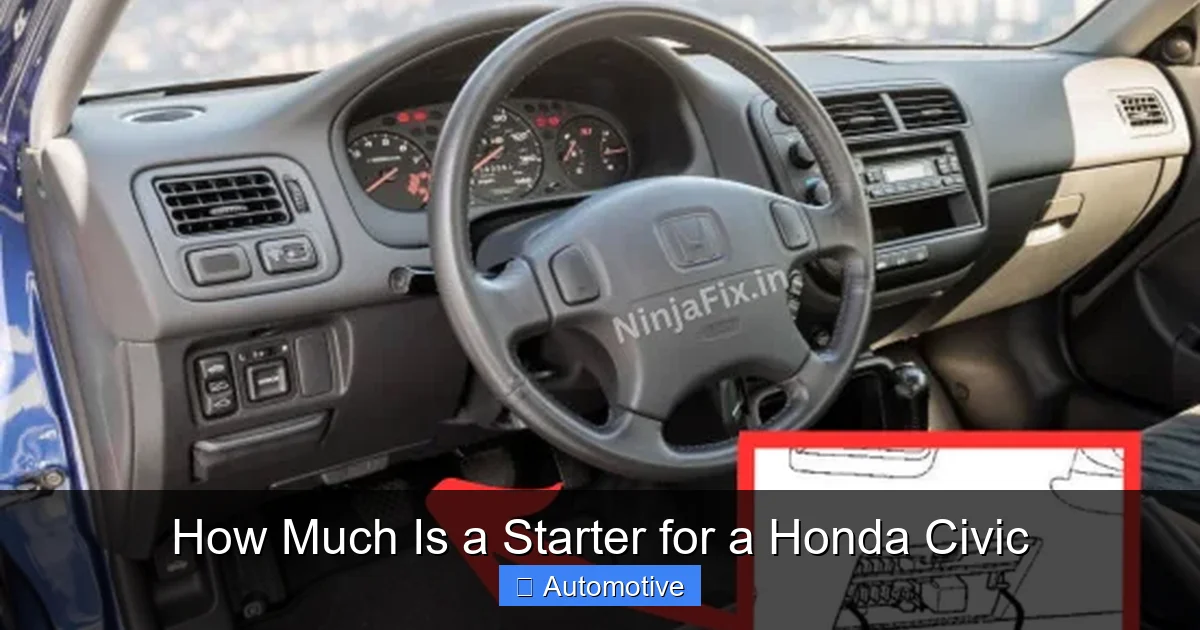
Visual guide about How Much Is a Starter for a Honda Civic
Image source: ninjafix.in
Cost of the Starter Part
The price of the starter motor varies widely based on quality, brand, and whether it’s OEM (original equipment manufacturer) or aftermarket. Here’s a general breakdown:
- Aftermarket starters: $80–$200. These are made by third-party manufacturers and are often cheaper. Brands like Denso, Bosch, and ACDelco offer reliable options. While they may not carry the Honda logo, many meet or exceed OEM standards.
- OEM starters: $200–$400. These are made by Honda or their official suppliers and are identical to the original part in your car. They come with a Honda warranty and are the safest bet for long-term reliability.
- Rebuilt or remanufactured starters: $100–$250. These are used starters that have been refurbished with new internal components. They’re a good middle ground between cost and quality, especially if you’re on a budget.
For example, a 2006 Honda Civic DX with a 1.8L engine might use an aftermarket starter from Denso for around $120, while the same part from Honda could cost $280. A 2020 Honda Civic EX with a turbocharged engine might require a more complex starter, pushing the OEM price closer to $350.
Labor Costs: Who’s Doing the Work?
Labor is the second major expense. Replacing a starter isn’t the easiest job—it usually requires lifting the car, removing parts like the air intake or battery, and accessing the starter mounted near the transmission. Because of this, most mechanics charge between $100 and $200 for labor, depending on location and shop rates.
- Independent mechanics: Typically charge $80–$150 per hour. In most cases, a starter replacement takes 1–2 hours, so you’re looking at $100–$200 total.
- Dealerships: Often charge $120–$200 per hour. They may also add shop fees or diagnostic charges, pushing the total labor cost higher.
- Chain repair shops (like Midas or Firestone): Usually fall in the middle, with hourly rates around $100–$160.
Let’s say you take your 2012 Honda Civic to a local mechanic. They quote $130 for a quality aftermarket starter and $120 for labor (1.5 hours at $80/hour). Your total comes to $250. The same job at a Honda dealership might cost $380—$280 for the OEM starter and $100 for labor (even if it takes less time, dealerships often have minimum charges).
Total Cost Examples by Model Year
To give you a clearer picture, here are estimated total costs for common Honda Civic models:
- 1996 Honda Civic (D16Y7 engine): $180–$300 (aftermarket starter + labor)
- 2001 Honda Civic (D17A1 engine): $200–$350
- 2006 Honda Civic (R18A1 engine): $220–$400
- 2012 Honda Civic (R18Z1 engine): $250–$450
- 2016 Honda Civic (L15B7 turbo): $300–$550 (due to tighter engine bay and electronic components)
- 2020 Honda Civic (L15B7 or L15BE): $350–$600
As you can see, newer models tend to be more expensive. This is partly because of tighter engine packaging and the increasing use of electronic control modules that integrate with the starter system. Also, labor can take longer on newer cars due to limited access.
Factors That Influence the Price of a Honda Civic Starter
Now that you know the average cost, let’s explore the factors that can push that price up or down. Understanding these variables helps you make smarter decisions and avoid surprise charges.
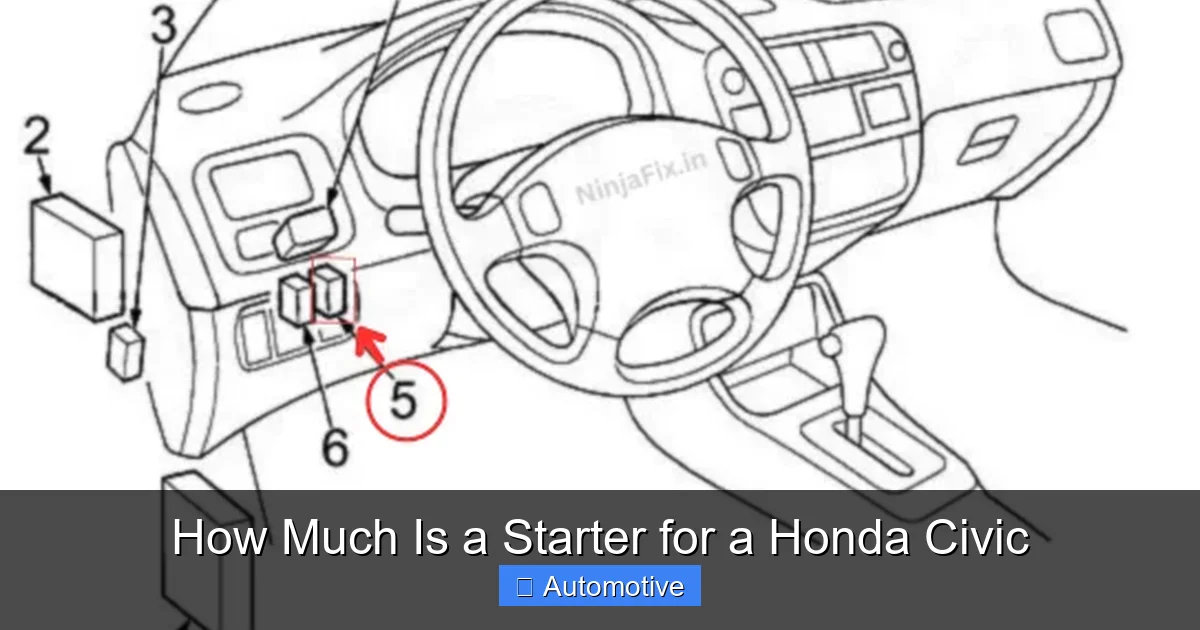
Visual guide about How Much Is a Starter for a Honda Civic
Image source: ninjafix.in
Model Year and Engine Type
The year your Honda Civic was made plays a big role in starter cost. Older models (pre-2006) often have simpler starters that are easier to access and cheaper to replace. Newer Civics, especially those with turbocharged engines (like the 1.5L in the 2016+ models), may require more complex starters with integrated sensors or solenoids.
For instance, the 2016–2021 Honda Civic Si and EX trims use a direct-injection turbo engine. These starters are more expensive because they’re designed to handle higher cranking loads and often include anti-drainback valves to prevent oil from leaking into the combustion chamber when the engine is off. This added complexity increases both part and labor costs.
OEM vs. Aftermarket: Which Should You Choose?
This is one of the most common questions when replacing a starter. OEM parts are made by Honda and guaranteed to fit and function exactly like the original. They come with a Honda warranty (usually 12 months or 12,000 miles) and are the best choice if you plan to keep your car long-term or are concerned about reliability.
Aftermarket parts, on the other hand, are made by companies like Denso, Bosch, or ACDelco. Many of these brands actually supply parts to Honda, so the quality can be just as good—sometimes even better. The main advantage is cost. You can save $50–$150 by choosing a reputable aftermarket starter. Just be sure to buy from a trusted seller and check reviews. Avoid ultra-cheap no-name brands—they may fail prematurely.
Remanufactured starters are another option. These are used starters that have been disassembled, cleaned, and rebuilt with new brushes, bearings, and solenoids. They’re often 30–50% cheaper than new OEM parts and come with a 1–2 year warranty. For older Civics, this can be a smart, eco-friendly choice.
Location and Labor Rates
Where you live affects how much you’ll pay for labor. Mechanics in urban areas like Los Angeles, New York, or Chicago charge more due to higher overhead and demand. In rural areas or smaller towns, labor rates can be significantly lower.
For example, a starter replacement in Austin, Texas, might cost $220 total, while the same job in San Francisco could run $350 or more. Always get at least two quotes before committing. Some shops offer free diagnostics, which can help confirm the starter is the real issue.
Additional Repairs and Access Difficulty
Sometimes, replacing the starter isn’t straightforward. On some Honda Civic models, especially those with transverse-mounted engines, the starter is tucked behind the transmission or under the intake manifold. This can require removing other components, adding time and cost.
For example, on a 2006–2011 Honda Civic, the starter is accessible from underneath the car but may require lowering the exhaust or removing the air intake box. On a 2016+ Civic, the tighter engine bay might mean removing the battery, air filter housing, and even the coolant reservoir. This can add 30–60 minutes to the job, increasing labor costs.
Also, if the starter failure caused other issues—like a drained battery or damaged flywheel teeth—you may need additional repairs. A mechanic might recommend replacing the battery or inspecting the flywheel, which adds to the total bill.
Signs Your Honda Civic Starter Is Failing
Knowing the symptoms of a bad starter can help you catch the problem early and avoid being stranded. Here are the most common signs to watch for:
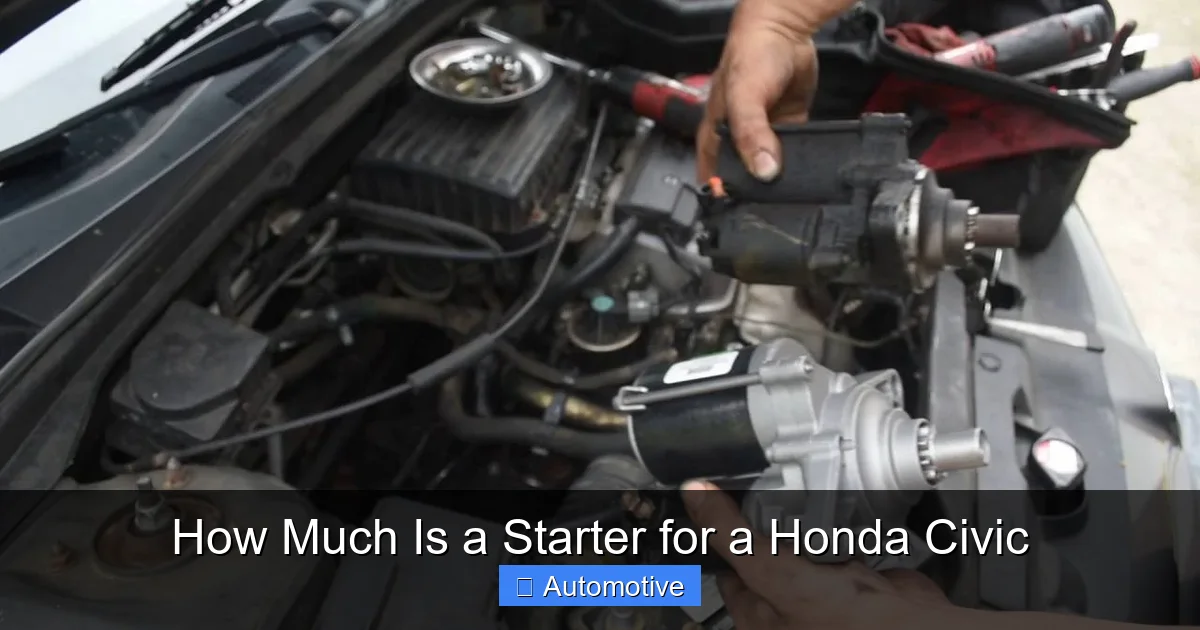
Visual guide about How Much Is a Starter for a Honda Civic
Image source: i.ytimg.com
Clicking Noise When Turning the Key
This is the classic sign of a failing starter. You turn the key, and instead of the engine cranking, you hear a rapid clicking sound. This usually means the starter solenoid is trying to engage but doesn’t have enough power to turn the motor. It could also indicate a weak battery, so always check the battery voltage first (should be 12.6V or higher when off).
Engine Cranks Slowly or Struggles to Start
If your Civic takes longer than usual to start—especially in cold weather—it could be the starter drawing too much current or the brushes wearing out. A healthy starter should crank the engine quickly and smoothly. Slow cranking might also point to a bad battery or alternator, so get a full electrical system check.
No Response When Turning the Key
If you turn the key and nothing happens—no sound, no crank—the starter may have completely failed. This could also be due to a blown fuse, faulty ignition switch, or bad wiring. A mechanic can test the starter directly by bypassing the ignition circuit.
Grinding Noise During Startup
A grinding sound when starting usually means the starter gear isn’t engaging properly with the flywheel. This can happen if the starter is misaligned or the flywheel teeth are damaged. Ignoring this can lead to costly transmission or engine damage.
Starter Stays Engaged After Engine Starts
In rare cases, the starter might continue to spin even after the engine is running. This is dangerous and can destroy the starter and flywheel. If you hear a high-pitched whine after the engine starts, turn off the car immediately and have it inspected.
If you notice any of these symptoms, don’t wait. A failing starter can leave you stuck at the worst possible time—like in a parking lot or on a busy highway. Early diagnosis and replacement can save you from more expensive repairs down the road.
DIY vs. Professional Installation: Should You Do It Yourself?
One of the biggest ways to save money on a starter replacement is by doing it yourself. But is it worth it? Let’s look at the pros and cons.
Pros of DIY Starter Replacement
- Save on labor: You can cut $100–$200 from the total cost.
- Learn about your car: Working on your Civic builds mechanical knowledge and confidence.
- Control over parts: You choose the brand and quality of the starter.
- Flexible timing: Work at your own pace, without shop schedules.
Cons of DIY Starter Replacement
- Time and effort: It can take 2–4 hours for a first-timer.
- Special tools needed: You may need a jack, jack stands, socket set, and torque wrench.
- Risk of damage: Dropping a tool or misaligning the starter can cause further issues.
- No warranty on labor: If something goes wrong, you’re responsible.
Step-by-Step DIY Guide (Simplified)
If you decide to go the DIY route, here’s a basic outline:
- Disconnect the battery: Always start by disconnecting the negative terminal to prevent electrical shocks.
- Locate the starter: On most Civics, it’s mounted on the transmission bell housing, near the engine block.
- Remove electrical connections: Disconnect the main power cable and the smaller solenoid wire.
- Unbolt the starter: Use a socket wrench to remove the mounting bolts (usually two or three).
- Install the new starter: Position the new unit, bolt it in, and reconnect the wires.
- Reconnect the battery and test: Turn the key to see if the engine starts smoothly.
Always consult your Honda Civic service manual for torque specs and exact procedures. YouTube tutorials for your specific model year can also be very helpful.
Tips to Save Money on a Honda Civic Starter Replacement
Replacing a starter doesn’t have to break the bank. Here are some practical tips to keep costs down:
Shop Around for Quotes
Don’t go with the first estimate you get. Call at least three shops—dealership, independent mechanic, and a chain store—and compare prices. Mention you’re getting multiple quotes; some shops may offer a discount to win your business.
Choose the Right Part
You don’t always need an OEM starter. A high-quality aftermarket or remanufactured part from a trusted brand can save you $50–$150 with little difference in performance.
Time Your Repair Wisely
If your starter is showing early signs of failure but still works, plan the replacement during a slow week or when you have time. Avoid emergency repairs, which often come with rush fees.
Check for Warranties
Some auto parts stores (like AutoZone or O’Reilly) offer lifetime warranties on starters. If the part fails within the warranty period, you can get a free replacement—just pay for labor again.
Consider a Used Starter (With Caution)
For older Civics, a used starter from a junkyard or online marketplace can cost as little as $50. However, there’s no warranty, and the part could fail soon after installation. Only consider this if you’re experienced and can inspect the part thoroughly.
Maintain Your Electrical System
A weak battery or corroded terminals can strain the starter. Regularly clean battery terminals and test the battery and alternator. A healthy electrical system extends starter life.
Conclusion: Making the Smart Choice for Your Honda Civic
So, how much is a starter for a Honda Civic? As we’ve seen, the answer ranges from $200 to $600, depending on your model, location, and choices. While it’s not the cheapest repair, it’s essential for keeping your car running. By understanding the factors that affect cost—like OEM vs. aftermarket parts, labor rates, and access difficulty—you can make an informed decision that fits your budget and needs.
Whether you choose to tackle the job yourself or hire a professional, the key is acting early. Ignoring starter problems can lead to more serious issues and higher costs down the road. With the right knowledge and a little planning, you can replace your Honda Civic’s starter confidently and get back on the road without overspending.
Frequently Asked Questions
How long does a Honda Civic starter last?
A starter in a Honda Civic typically lasts 100,000 to 150,000 miles, or about 7–10 years. However, driving conditions, electrical system health, and maintenance can affect its lifespan.
Can I drive with a bad starter?
No, you cannot drive if the starter fails completely. The car won’t start at all. If it’s intermittently failing, you risk being stranded, so it’s best to replace it as soon as possible.
Is it worth rebuilding a starter instead of replacing it?
Rebuilding is usually not cost-effective for most drivers. Remanufactured starters are affordable and reliable, making full replacement the better option in most cases.
Will a bad starter drain my battery?
A failing starter can draw excessive current, which may drain the battery over time. However, a completely dead battery is more likely due to a bad alternator or parasitic drain.
Can I replace the starter myself?
Yes, if you have basic mechanical skills and tools. It’s a moderate DIY job that takes 2–4 hours. Always consult a service manual and take safety precautions.
Does insurance cover starter replacement?
No, standard auto insurance does not cover mechanical failures like a bad starter. However, some extended warranties or mechanical breakdown insurance plans may include it.