
How Much Is Insurance for a Honda Civic?

Insurance for a Honda Civic typically ranges from $1,200 to $2,500 annually, depending on your age, location, driving history, and coverage level. While the Civic is known for affordability and safety, your personal profile plays a major role in determining your exact premium.
Key Takeaways
- Average annual insurance cost: Most Honda Civic owners pay between $1,200 and $2,500 per year for full coverage, with liability-only plans starting around $600.
- Age and driving history matter: Younger drivers, especially teens, may pay significantly more due to higher risk, while experienced drivers with clean records enjoy lower rates.
- Location impacts premiums: Urban areas with high traffic and theft rates (like Los Angeles or New York) often have higher insurance costs than rural regions.
- Model year and trim level affect pricing: Newer or higher-trim Civics (like the Sport or Touring) cost more to insure than older or base models due to higher repair and replacement costs.
- Safety features lower risk: The Civic’s advanced safety tech (like automatic emergency braking and lane-keeping assist) can qualify you for discounts with many insurers.
- Shop around and compare quotes: Rates vary widely between providers—getting at least three quotes can save you hundreds per year.
- Maintain a good credit score: In most states, insurers use credit-based insurance scores to set rates, so better credit often means lower premiums.
📑 Table of Contents
- How Much Is Insurance for a Honda Civic? A Complete Guide
- Why the Honda Civic Is a Popular Choice for Drivers
- Average Insurance Costs for the Honda Civic
- Factors That Affect Your Honda Civic Insurance Premium
- How to Lower Your Honda Civic Insurance Cost
- Real-World Tips from Honda Civic Owners
- Conclusion: Is the Honda Civic Affordable to Insure?
How Much Is Insurance for a Honda Civic? A Complete Guide
So, you’ve got your eyes on a Honda Civic—or maybe you already own one. It’s a smart choice. Known for reliability, fuel efficiency, and strong safety ratings, the Civic has been a favorite among drivers for decades. But before you hit the road, there’s one big question you need answered: How much is insurance for a Honda Civic?
The short answer? It depends. A lot. While the Civic is generally cheaper to insure than many other vehicles, your personal circumstances play a huge role in determining your premium. Factors like your age, where you live, your driving record, and even your credit score can push your rate up or down. On average, though, most drivers can expect to pay between $1,200 and $2,500 per year for full coverage. If you’re opting for the minimum required liability coverage, you might pay closer to $600 to $900 annually.
But don’t just take our word for it. In this guide, we’ll break down everything you need to know about insuring your Honda Civic—from average costs and influencing factors to money-saving tips and real-world examples. Whether you’re a first-time buyer, a young driver, or just looking to lower your current premium, this article will help you understand what to expect and how to get the best deal.
Why the Honda Civic Is a Popular Choice for Drivers

Visual guide about How Much Is Insurance for a Honda Civic?
Image source: insurance-edge.net
Before diving into insurance costs, it’s worth understanding why the Honda Civic is such a standout in the compact car segment. First introduced in 1972, the Civic has evolved into one of the most trusted and widely driven vehicles in the world. It’s not just about style—though the latest models boast sleek designs and modern interiors. It’s about value.
The Civic consistently earns top marks for reliability from organizations like J.D. Power and Consumer Reports. It’s also fuel-efficient, with many models achieving over 30 miles per gallon in the city and 40+ on the highway. For commuters and budget-conscious drivers, that’s a huge win. Plus, Honda equips the Civic with a suite of advanced safety features, even on base trims. Think automatic emergency braking, adaptive cruise control, lane departure warning, and a rearview camera—all standard on most recent models.
These features don’t just make driving safer—they can also help lower your insurance premiums. Insurers love cars with strong safety ratings and low theft rates, and the Civic checks both boxes. According to the National Highway Traffic Safety Administration (NHTSA), the 2023 Honda Civic earned a 5-star overall safety rating. That’s a big deal when it comes to insurance pricing.
Another reason the Civic is insurance-friendly? It’s not typically seen as a “high-performance” vehicle. Unlike sports cars or luxury sedans, the Civic isn’t a magnet for speeding tickets or aggressive driving—two things that can spike your rates. It’s practical, dependable, and designed for everyday use. That makes it a low-risk choice in the eyes of insurers.
Average Insurance Costs for the Honda Civic

Visual guide about How Much Is Insurance for a Honda Civic?
Image source: thinkinsure.ca
Now, let’s get to the numbers. How much is insurance for a Honda Civic, really? The answer varies, but we can look at national averages and real-world data to get a clear picture.
According to recent data from sources like the Insurance Information Institute (III) and major insurers, the average annual cost for full coverage on a Honda Civic is around $1,600 to $1,800. That includes liability, collision, comprehensive, and uninsured motorist coverage. For minimum liability coverage—just what’s required by law in most states—the average drops to about $650 to $850 per year.
To put that in perspective, the national average for all vehicles is roughly $1,700 for full coverage. So the Civic is right in line with the average, sometimes even slightly below it. That’s impressive for a car that’s so popular and widely driven.
But here’s where it gets interesting: your personal rate could be much higher or lower than the average. Let’s look at some real examples.
Example 1: A 35-Year-Old Driver in Texas
Sarah, a 35-year-old teacher with a clean driving record, lives in Austin, Texas. She drives a 2022 Honda Civic LX and has full coverage. Her annual premium? About $1,450. That’s below the national average, thanks to her good credit, low annual mileage (under 10,000 miles), and the car’s safety features.
Example 2: A 19-Year-Old Driver in California
Jake, a college student, just bought a used 2018 Honda Civic Sport. He lives in Los Angeles and is listed as the primary driver. Even with a clean record, his annual premium is $2,900—well above average. Why? Young male drivers are statistically more likely to be in accidents, and LA has high traffic density and theft rates. Plus, the Sport trim has a slightly more powerful engine, which can increase risk in the eyes of insurers.
Example 3: A 50-Year-Old Driver in Ohio
Maria, a 50-year-old nurse, drives a 2020 Honda Civic EX. She lives in Columbus, Ohio, and has a spotless record. Her full coverage premium is $1,300 per year. She also qualifies for a multi-car discount because she insures her husband’s SUV on the same policy.
These examples show how much personal factors influence your rate. The same car can cost drastically different amounts to insure based on who’s driving it and where.
Factors That Affect Your Honda Civic Insurance Premium
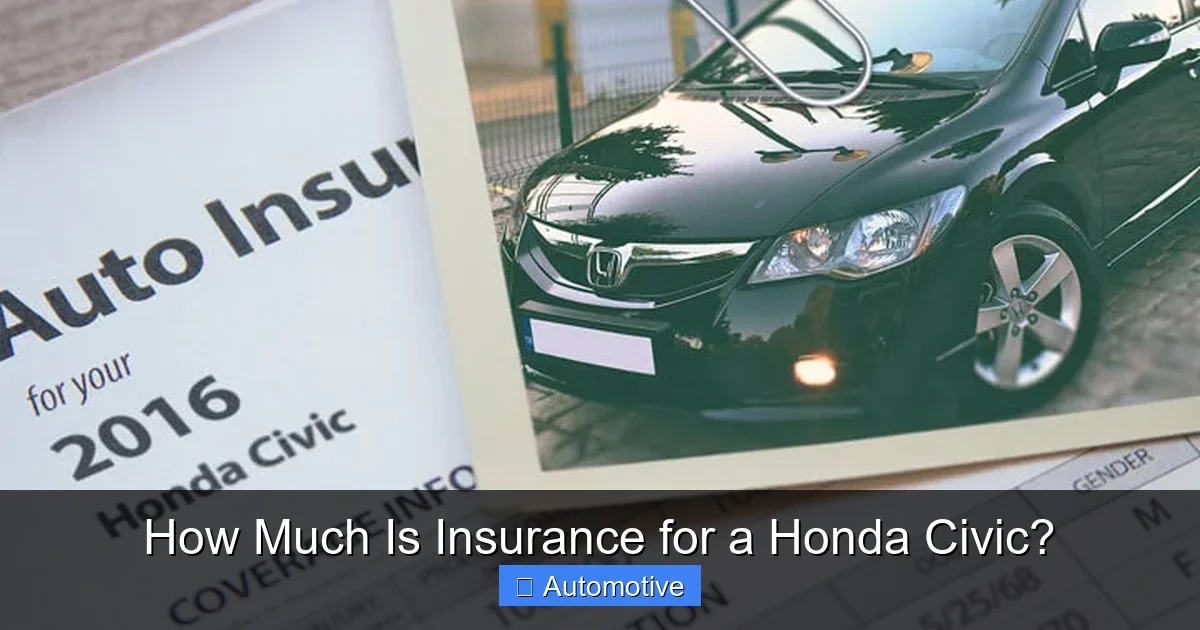
Visual guide about How Much Is Insurance for a Honda Civic?
Image source: quoteinspector.com
So what exactly determines how much you’ll pay to insure your Honda Civic? Let’s break down the key factors insurers consider when calculating your premium.
1. Your Age and Driving Experience
Age is one of the biggest predictors of risk. Teen drivers (16–19) pay the highest premiums because they’re statistically more likely to be involved in accidents. According to the III, drivers under 25 pay nearly twice as much as those over 30 for the same coverage.
For example, a 17-year-old driver might pay $3,500 or more annually for a Civic, while a 40-year-old with a clean record could pay half that. The good news? Rates tend to drop significantly after age 25, especially if you maintain a clean driving record.
2. Your Driving History
A clean driving record is your best friend when it comes to insurance. No accidents, tickets, or DUIs? You’re in a great position for low rates. But even one speeding ticket can increase your premium by 10–20%, and a DUI can double it.
Let’s say you get a ticket for going 15 mph over the limit. That could add $200–$400 to your annual premium. If you’re involved in an at-fault accident, the increase could be even higher—especially if there’s significant damage or injuries.
3. Where You Live
Your location plays a massive role in your insurance cost. Urban areas with high population density, traffic congestion, and crime rates tend to have higher premiums. For example, drivers in Detroit, Michigan, or Miami, Florida, often pay more than those in rural Nebraska or Vermont.
Why? More cars on the road mean a higher chance of accidents. Higher theft and vandalism rates also increase the risk of comprehensive claims. Even weather matters—areas prone to hail, flooding, or heavy snow may see higher comprehensive claims, which can drive up rates.
4. The Model Year and Trim Level
Newer Civics cost more to insure than older ones. A 2023 Honda Civic will have a higher premium than a 2015 model, even if both are in good condition. Why? Newer cars have higher replacement costs, and repairs often require specialized parts and labor.
Trim level also matters. The base LX model is cheaper to insure than the Sport, EX, or Touring trims. Higher trims often come with larger engines, premium audio systems, and advanced tech—all of which can increase repair costs and theft risk.
For example, a 2022 Civic LX might cost $1,500 per year to insure, while a 2022 Civic Touring with a turbocharged engine could cost $1,800 or more.
5. Your Coverage Level
The type and amount of coverage you choose directly impact your premium. Minimum liability coverage is the cheapest but offers the least protection. Full coverage—including collision and comprehensive—is more expensive but provides peace of mind.
Here’s a quick breakdown:
– Liability-only: Covers damage and injuries you cause to others. Average cost: $600–$900/year.
– Full coverage: Includes liability, collision (covers your car in an accident), and comprehensive (covers theft, vandalism, weather damage). Average cost: $1,200–$2,500/year.
You can also add extras like roadside assistance, rental reimbursement, or gap insurance—but each will increase your premium.
6. Your Credit Score
In most states (except California, Hawaii, and Massachusetts), insurers use credit-based insurance scores to help set rates. The logic? Studies show a correlation between credit history and claim frequency.
If you have excellent credit (750+), you could save hundreds per year. If your score is below 600, expect to pay more. Improving your credit by paying bills on time and reducing debt can lead to lower premiums over time.
7. Annual Mileage and Usage
The more you drive, the higher your risk of an accident. Insurers often ask for your annual mileage, and driving over 12,000–15,000 miles per year can increase your rate.
If you work from home or only use your Civic for weekend errands, you might qualify for a low-mileage discount. Some insurers even offer usage-based programs (like Progressive’s Snapshot or Allstate’s Drivewise) that track your driving habits and reward safe behavior with discounts.
How to Lower Your Honda Civic Insurance Cost
Now that you know what affects your premium, let’s talk about how to reduce it. Here are proven strategies to save money on your Honda Civic insurance.
1. Shop Around and Compare Quotes
This is the #1 way to save. Insurance companies use different formulas to calculate risk, so rates can vary by hundreds of dollars between providers.
Get quotes from at least three insurers—like GEICO, State Farm, Progressive, or USAA (if you’re eligible). Use online comparison tools or work with an independent agent who can check multiple companies at once.
Pro tip: Don’t just look at the price. Check customer service ratings, claims satisfaction, and financial stability. A cheap policy isn’t worth it if the company drags its feet when you need help.
2. Take Advantage of Discounts
Most insurers offer a range of discounts. Common ones include:
– Safe driver discount: For accident- and violation-free records.
– Good student discount: For full-time students with a B average or higher.
– Multi-car discount: When you insure more than one vehicle.
– Bundle discount: For combining auto and home or renters insurance.
– Anti-theft device discount: If your Civic has an alarm or tracking system.
– Low-mileage discount: For driving under a certain number of miles per year.
Ask your insurer about all available discounts—you might be surprised how much you qualify for.
3. Increase Your Deductible
Your deductible is what you pay out of pocket before insurance kicks in after a claim. Raising your deductible from $500 to $1,000 can lower your premium by 10–20%.
Just make sure you can afford the higher deductible if you ever need to file a claim. It’s a trade-off: lower monthly payments now, but more expense later.
4. Maintain a Clean Driving Record
This one’s simple: drive safely. Avoid speeding, distracted driving, and aggressive maneuvers. Even small violations can increase your rate, and accidents can stay on your record for 3–5 years.
Consider taking a defensive driving course. Some insurers offer discounts for completing approved programs, and it’s a great way to refresh your skills.
5. Improve Your Credit Score
Since credit affects your rate in most states, boosting your score can lead to savings. Pay bills on time, keep credit card balances low, and check your credit report for errors.
Even a 50-point increase can make a difference. Over time, good credit habits can save you hundreds.
6. Consider Usage-Based Insurance
If you’re a safe, low-mileage driver, usage-based programs can reward you. These programs use a mobile app or plug-in device to monitor your driving habits—like speed, braking, and mileage.
If you drive safely and don’t drive much, you could earn discounts of 10–30%. Just be aware that aggressive driving or late-night trips could hurt your score.
7. Reassess Your Coverage Annually
Your needs change over time. If your Civic is older and has low market value, you might not need collision or comprehensive coverage. Dropping unnecessary coverage can save you $200–$500 per year.
Use online tools like Kelley Blue Book to check your car’s current value. If repairs would cost more than the car is worth, it might be time to adjust your policy.
Real-World Tips from Honda Civic Owners
We talked to real Honda Civic owners to get their insights on insurance costs and savings. Here’s what they shared:
“I saved $300 a year by switching to GEICO.” – Lisa, 42, from Denver
Lisa compared quotes after her renewal notice came in. She found GEICO offered the same coverage for $25 less per month. “It took 10 minutes online,” she said. “Totally worth it.”
“My son’s rate dropped $1,000 when he turned 25.” – Robert, 58, from Atlanta
Robert added his son to his policy when he got his license. The rate was high at first, but dropped significantly after his son turned 25 and maintained a clean record.
“I got a discount for my anti-theft system.” – Jasmine, 29, from Seattle
Jasmine installed a GPS tracker in her Civic after a friend’s car was stolen. Her insurer gave her a 10% discount for the added security.
“I lowered my mileage and saved $150.” – Tom, 36, from Phoenix
Tom started working remotely and drives less than 6,000 miles a year. He updated his insurer and qualified for a low-mileage discount.
These stories show that small changes can lead to big savings. Don’t assume your rate is fixed—there’s almost always room to negotiate or adjust.
Conclusion: Is the Honda Civic Affordable to Insure?
So, how much is insurance for a Honda Civic? On average, you’re looking at $1,200 to $2,500 per year for full coverage, with liability-only plans starting around $600. That’s competitive with other compact cars and reflects the Civic’s strong safety record, reliability, and low theft rates.
But remember: your personal rate depends on many factors—your age, location, driving history, credit score, and coverage choices. A teen driver in a high-risk area will pay far more than a middle-aged driver with a clean record in a rural town.
The good news? There are plenty of ways to lower your premium. Shop around, take advantage of discounts, maintain a clean record, and reassess your coverage regularly. With a little effort, you can enjoy the reliability and efficiency of a Honda Civic without breaking the bank on insurance.
Whether you’re buying your first car or upgrading to a newer model, understanding insurance costs upfront helps you make smarter financial decisions. The Civic remains one of the most affordable and practical choices on the road—and with the right insurance strategy, it can be even more budget-friendly.
Frequently Asked Questions
How much is insurance for a Honda Civic per month?
The average monthly cost for Honda Civic insurance ranges from $100 to $200 for full coverage, depending on your profile. Liability-only plans may cost as little as $50 to $75 per month.
Is the Honda Civic expensive to insure compared to other cars?
No, the Honda Civic is generally affordable to insure. It’s often cheaper than luxury sedans, SUVs, and sports cars due to its safety ratings, reliability, and low theft rates.
Why is my Honda Civic insurance so high?
High premiums may be due to factors like young age, poor credit, traffic violations, or living in a high-risk area. Newer or higher-trim models also cost more to insure.
Can I lower my Honda Civic insurance cost?
Yes! Shop around for quotes, ask about discounts, raise your deductible, maintain a clean driving record, and consider usage-based insurance programs.
Does the model year affect Honda Civic insurance rates?
Yes. Newer models cost more to insure due to higher replacement and repair costs. Older Civics typically have lower premiums, especially if they’re paid off.
Do safety features on the Honda Civic reduce insurance costs?
Yes. Features like automatic emergency braking, lane-keeping assist, and adaptive cruise control can qualify you for safety discounts with many insurers.
