
How Much Is It to Lease a Jeep Wrangler?

Leasing a Jeep Wrangler typically costs between $300 and $600 per month, depending on the model, trim, down payment, and location. With low mileage limits and wear-and-tear guidelines, it’s important to understand all terms before signing. This guide breaks down everything you need to know to make an informed leasing decision.
[FEATURED_IMAGE_PLACEOLDER]
If you’ve ever dreamed of cruising down the highway with the top down, wind in your hair, and the unmistakable rugged charm of a Jeep Wrangler, you’re not alone. The Wrangler has long been a symbol of adventure, freedom, and off-road capability. But before you hit the trails or city streets, one of the first questions that comes to mind is: How much is it to lease a Jeep Wrangler?
Leasing a Jeep Wrangler can be an attractive option for drivers who want the thrill of driving this iconic SUV without the long-term commitment of ownership. Unlike buying, leasing allows you to enjoy a new vehicle every few years with lower monthly payments, minimal maintenance concerns, and the latest tech and safety features. But like any financial decision, it’s important to understand the full picture—what affects the cost, what you’re really paying for, and how to get the best deal.
In this comprehensive guide, we’ll walk you through everything you need to know about leasing a Jeep Wrangler. From average monthly payments and key cost factors to tips for negotiating a better deal, we’ll help you make an informed choice. Whether you’re eyeing the classic two-door Sport, the capable Rubicon, or the eco-friendly 4xe plug-in hybrid, this article will give you the clarity and confidence to move forward.
Key Takeaways
- Monthly lease payments for a Jeep Wrangler range from $300 to $600: The exact amount depends on the trim level, down payment, credit score, and lease terms.
- Newer models and higher trims cost more to lease: A Wrangler Rubicon or 4xe plug-in hybrid will have higher monthly payments than a base Sport model.
- Down payments significantly affect monthly costs: Putting more money down upfront reduces your monthly payment but increases initial out-of-pocket expenses.
- Mileage limits and excess fees apply: Most leases allow 10,000 to 15,000 miles per year; exceeding this can result in charges of $0.15 to $0.25 per mile.
- Credit score impacts lease approval and rates: Borrowers with excellent credit (720+) typically qualify for the best lease deals and incentives.
- Leasing offers lower monthly payments than buying: You’re only paying for the vehicle’s depreciation during the lease term, not the full value.
- End-of-lease options include buying, returning, or leasing a new Jeep: At the end of your lease, you can return the vehicle, purchase it, or start a new lease.
📑 Table of Contents
Understanding Jeep Wrangler Lease Basics
Before diving into numbers, it’s essential to understand what a lease actually is—and how it works with a vehicle as unique as the Jeep Wrangler. A lease is essentially a long-term rental agreement. You’re paying to use the vehicle for a set period, typically 24 to 36 months, and a predetermined number of miles. At the end of the lease, you return the vehicle to the dealership, though you usually have the option to buy it.
One of the biggest advantages of leasing is that your monthly payments are generally lower than if you were financing the purchase of the same vehicle. That’s because you’re only paying for the car’s depreciation during the lease term, plus interest (called the “money factor” in leasing), taxes, and fees—not the entire value of the vehicle. For a vehicle like the Wrangler, which holds its value well, this can be a smart financial move.
Jeep Wranglers are known for their durability and strong resale value, which actually benefits lessees. Because the vehicle doesn’t lose value as quickly as some other SUVs, the depreciation cost—your main lease expense—is lower. This contributes to more affordable monthly payments.
Another perk? Most leases come with a manufacturer’s warranty that covers repairs and maintenance during the lease term. That means fewer out-of-pocket expenses for things like brake pads, tires, or engine issues. Plus, you’ll always be driving a relatively new vehicle with the latest features, from advanced infotainment systems to improved off-road tech.
But leasing isn’t for everyone. You don’t build equity in the vehicle, and you’re restricted by mileage limits and wear-and-tear guidelines. If you’re someone who drives a lot, modifies your vehicle, or tends to put a lot of miles on the odometer, leasing might not be the best fit. However, for drivers who want a new Jeep every few years with minimal hassle, it’s a compelling option.
Average Lease Costs for a Jeep Wrangler
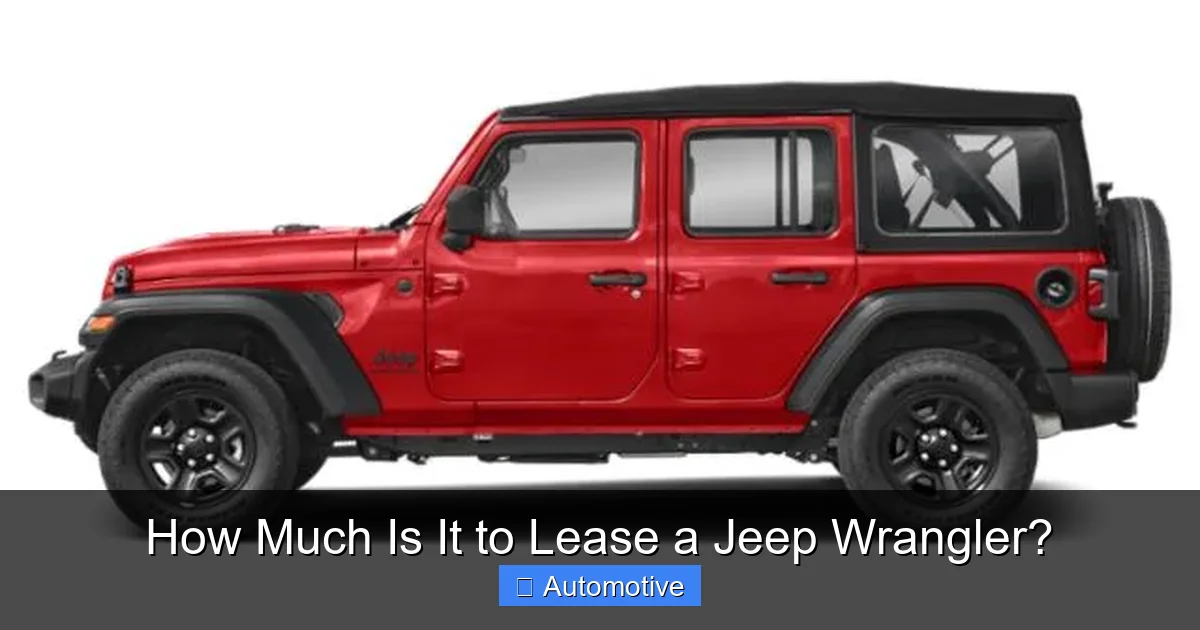
Visual guide about How Much Is It to Lease a Jeep Wrangler?
Image source: vipautopa.com
So, how much is it to lease a Jeep Wrangler in real-world terms? The answer isn’t one-size-fits-all, but we can give you a solid range based on current market data and dealership offers.
As of 2024, the average monthly lease payment for a new Jeep Wrangler falls between $300 and $600. This wide range reflects differences in trim levels, down payments, credit scores, and lease terms. Let’s break it down.
For a base-model Wrangler Sport with minimal options, you might see lease offers starting around $300 to $350 per month with a $2,000 to $4,000 down payment and a 36-month term. These deals often require excellent credit and may include manufacturer incentives or dealer discounts.
On the higher end, leasing a fully loaded Wrangler Rubicon or a Wrangler 4xe plug-in hybrid can push your monthly payment to $500 to $600 or more. These models come with advanced off-road features, luxury interiors, and hybrid technology—all of which increase the vehicle’s value and, consequently, the lease cost.
Let’s look at a few real-world examples:
– 2024 Jeep Wrangler Sport (2-door): $329/month for 36 months, $3,999 due at signing (includes $2,500 down + first month’s payment + fees). This deal assumes 10,000 miles per year and excellent credit.
– 2024 Jeep Wrangler Sahara (4-door): $429/month for 36 months, $4,499 due at signing. Includes more standard features like leather seats, upgraded audio, and advanced safety tech.
– 2024 Jeep Wrangler Rubicon 4xe: $579/month for 36 months, $5,999 due at signing. This plug-in hybrid model offers electric-only driving for short trips and serious off-road capability.
Keep in mind that these numbers can vary by region. Dealerships in high-cost areas like California or New York may have slightly higher lease rates due to taxes, registration fees, and demand. Conversely, some Midwest or Southern states may offer more competitive pricing.
It’s also important to note that “due at signing” includes more than just the down payment. It typically covers the first month’s payment, acquisition fee (around $600–$800), security deposit (sometimes waived), and taxes. Always ask for a full breakdown so you know exactly what you’re paying.
Factors That Influence Lease Payments
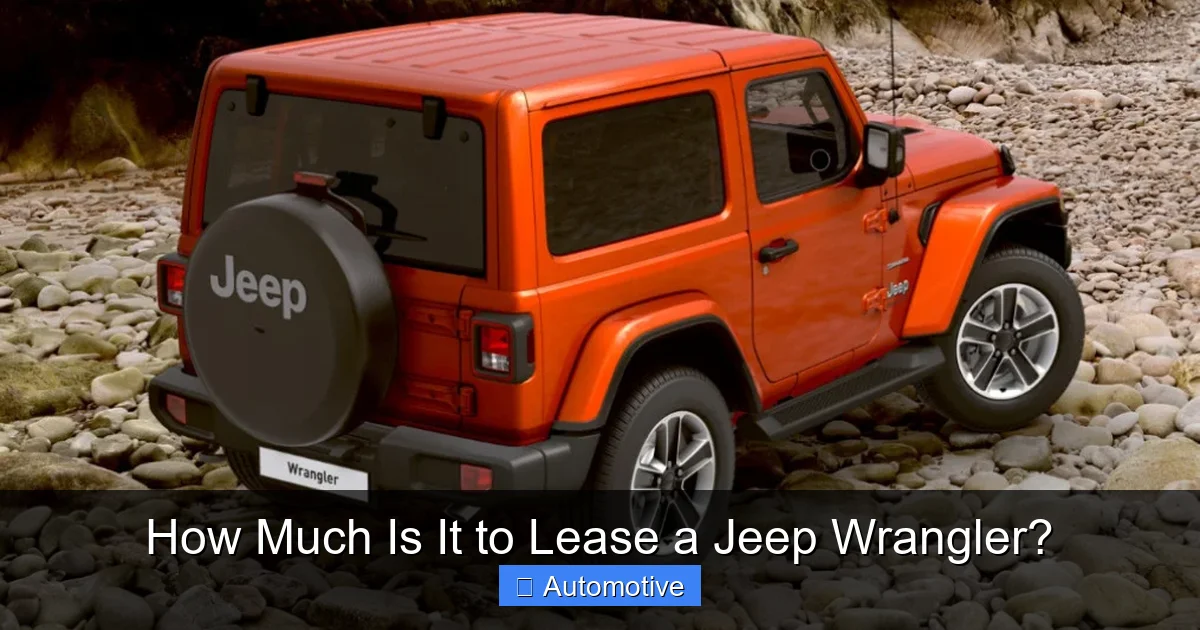
Visual guide about How Much Is It to Lease a Jeep Wrangler?
Image source: operationalleaseautozakelijk.nl
Now that you have a general idea of the cost, let’s explore the key factors that determine how much you’ll actually pay to lease a Jeep Wrangler. Understanding these elements will help you compare offers and negotiate a better deal.
Trim Level and Options
The trim level is one of the biggest drivers of lease cost. Jeep offers several Wrangler trims, each with increasing levels of features and capability:
– Sport: The base model with essential features, manual windows, and basic infotainment. Least expensive to lease.
– Sahara: Adds comfort and convenience features like power windows, premium audio, and optional 4×4 systems.
– Rubicon: Built for serious off-roading with locking differentials, heavy-duty suspension, and rock rails. Higher lease cost.
– 4xe Plug-in Hybrid: Combines a gasoline engine with electric motors for improved fuel economy and low-emission driving. Premium pricing.
Each step up in trim adds cost not just to the vehicle’s price, but also to its depreciation—which directly affects your lease payment.
Down Payment (Cap Cost Reduction)
The amount you pay upfront—known as the capitalized cost reduction—has a direct impact on your monthly payment. Putting more money down reduces the amount you’re financing, which lowers your monthly cost.
For example, leasing a Wrangler Sahara for $429/month with a $4,000 down payment might drop to $379/month if you increase the down payment to $6,000. That’s a $50 monthly savings—$1,800 over a 36-month lease.
However, a larger down payment means more cash out of pocket upfront. Some drivers prefer to keep their initial costs low and pay slightly more each month. It’s a trade-off between short-term liquidity and long-term savings.
Lease Term Length
Most Wrangler leases are 24, 36, or 48 months. Shorter terms (24 months) often have higher monthly payments but lower total interest costs. Longer terms (48 months) spread the cost over more months, reducing the monthly payment but increasing the total amount paid over time.
A 36-month lease is the most common and often offers the best balance of affordability and flexibility.
Mileage Allowance
Leases come with an annual mileage limit, typically 10,000, 12,000, or 15,000 miles. Choosing a lower mileage limit reduces your monthly payment because the vehicle is expected to depreciate less.
However, if you exceed your mileage limit, you’ll be charged an excess mileage fee—usually $0.15 to $0.25 per mile. For example, driving 18,000 miles in a year on a 10,000-mile lease could cost you an extra $1,200 in fees.
If you know you’ll drive more than average, consider paying a little more upfront for a higher mileage allowance to avoid surprise charges.
Credit Score and Financial Profile
Your credit score plays a major role in lease approval and pricing. Lessees with excellent credit (720 or higher) typically qualify for the lowest money factors (interest rates) and best promotional offers.
Those with fair or poor credit may face higher rates or be required to make a larger down payment. Some dealerships may even decline lease applications from buyers with very low credit scores.
Improving your credit before leasing can save you hundreds of dollars over the life of the lease.
Residual Value
The residual value is the estimated value of the vehicle at the end of the lease. It’s expressed as a percentage of the car’s MSRP. The higher the residual value, the lower your monthly payment.
Jeep Wranglers have strong residual values—often 55% to 65% after 36 months—thanks to their popularity and durability. This is a key reason why leasing a Wrangler can be more affordable than other SUVs.
Jeep Wrangler Lease Deals and Incentives
Visual guide about How Much Is It to Lease a Jeep Wrangler?
Image source: vehiclebright.com
One of the best ways to reduce your lease cost is to take advantage of manufacturer incentives and special offers. Jeep frequently runs lease promotions, especially at the end of the model year or during holiday sales events.
These deals can include:
– Low or $0 down payment offers: Some promotions allow you to lease with little or no money down, though monthly payments may be slightly higher.
– Reduced money factor: Jeep may offer a lower interest rate (e.g., 0.00100 instead of 0.00250), which directly lowers your monthly cost.
– Cash rebates or lease cash: You might receive $1,000 to $3,000 in incentives that reduce the capitalized cost of the vehicle.
– Free maintenance or roadside assistance: Some leases include complimentary services for the duration of the term.
For example, in early 2024, Jeep offered a national lease promotion on the Wrangler Sport: $299/month for 36 months with $2,999 due at signing—including a $2,500 down payment and $499 first payment. This deal also included a $1,000 lease cash incentive.
To find current offers, check Jeep’s official website, visit local dealerships, or use third-party leasing comparison tools. Be sure to compare the total cost of the lease (monthly payment × term + down payment) rather than just focusing on the monthly number.
Pros and Cons of Leasing a Jeep Wrangler
Like any financial decision, leasing a Jeep Wrangler has its advantages and drawbacks. Let’s weigh them so you can decide if it’s the right choice for your lifestyle and budget.
Pros
– Lower monthly payments: Compared to buying, leasing typically costs less per month.
– Drive a new vehicle every few years: Enjoy the latest features, tech, and safety upgrades.
– Warranty coverage: Most repairs are covered during the lease term.
– No long-term commitment: Return the vehicle at the end of the lease with no obligation.
– Strong resale value: Wranglers hold their value well, which helps keep lease costs down.
Cons
– No equity buildup: You don’t own the vehicle and can’t sell it or use it as trade-in.
– Mileage restrictions: Exceeding the limit results in costly fees.
– Wear and tear charges: You may be charged for excessive damage beyond “normal use.”
– Early termination fees: Ending the lease early can be expensive.
– Customization limits: Modifying the vehicle (e.g., lift kits, aftermarket parts) may violate lease terms.
For many drivers, the pros outweigh the cons—especially if they value flexibility and enjoy driving new vehicles. But if you plan to keep a car long-term or drive a lot, buying might be a better fit.
Tips for Getting the Best Lease Deal
Ready to lease your dream Jeep Wrangler? Here are some practical tips to help you secure the best possible deal:
1. Check your credit score: Aim for a score of 720 or higher to qualify for the best rates. If your score is low, consider improving it before applying.
2. Shop around: Get quotes from multiple dealerships. Use online tools to compare offers side by side.
3. Negotiate the capitalized cost: Just like when buying, you can negotiate the vehicle’s price. A lower price means lower lease payments.
4. Ask about incentives: Always ask if there are current lease promotions, rebates, or loyalty offers.
5. Consider a higher mileage lease: If you drive more than 12,000 miles a year, paying a little extra upfront can save you money in the long run.
6. Read the fine print: Understand all fees, penalties, and end-of-lease options before signing.
7. Time your lease: End-of-year sales and new model launches often bring the best deals.
What Happens at the End of Your Lease?
When your lease term ends, you have three main options:
1. Return the vehicle: Schedule an inspection, pay any excess wear or mileage fees, and walk away. You can then lease a new Jeep or choose a different vehicle.
2. Buy the vehicle: You can purchase the Wrangler at its residual value. This is a good option if you love the car and want to keep it.
3. Lease a new Jeep: Many lessees choose to lease another Wrangler, taking advantage of new models and updated features.
Before returning the vehicle, clean it thoroughly and address any minor damage to avoid unnecessary charges.
Conclusion
So, how much is it to lease a Jeep Wrangler? The answer depends on several factors, but you can expect to pay between $300 and $600 per month for a new model, with most drivers landing somewhere in the middle. By understanding the key cost drivers—trim level, down payment, credit score, and lease terms—you can make a smart, informed decision.
Leasing offers a fantastic way to enjoy the rugged charm and capability of a Jeep Wrangler without the long-term financial commitment of ownership. With strong residual values, frequent incentives, and lower monthly payments, it’s no wonder so many drivers choose to lease.
Whether you’re drawn to the open-air freedom of the Sport, the luxury of the Sahara, or the eco-performance of the 4xe, there’s a Wrangler lease that fits your lifestyle and budget. Just remember to shop around, read the fine print, and plan for the end of your lease.
With the right approach, leasing a Jeep Wrangler can be a rewarding and affordable way to hit the road—or the trail—in style.
Frequently Asked Questions
How much is it to lease a Jeep Wrangler per month?
The average monthly lease payment for a Jeep Wrangler ranges from $300 to $600, depending on the trim, down payment, credit score, and lease terms. Base models like the Sport are on the lower end, while Rubicon and 4xe trims cost more.
Is it better to lease or buy a Jeep Wrangler?
Leasing offers lower monthly payments and the chance to drive a new vehicle every few years, while buying builds equity and allows unlimited mileage. The best choice depends on your driving habits, budget, and long-term goals.
Can I negotiate a Jeep Wrangler lease?
Yes, you can negotiate the capitalized cost (vehicle price), down payment, and even the money factor. Shopping around and knowing current incentives gives you leverage to get a better deal.
What happens if I go over my mileage limit?
If you exceed your annual mileage limit, you’ll be charged an excess mileage fee, typically $0.15 to $0.25 per mile. To avoid this, consider leasing with a higher mileage allowance if you drive frequently.
Can I lease a used Jeep Wrangler?
Most leases are for new vehicles, but some dealerships offer certified pre-owned (CPO) lease programs. These may have higher rates and limited availability, so check with local dealers.
What are the best times to lease a Jeep Wrangler?
The best times to lease are at the end of the model year (late summer to fall), during holiday sales events, or when new models are released. These periods often feature the strongest incentives and promotions.