
What Is Auto Lsd on Toyota Tundra?

The Auto LSD (Limited Slip Differential) on the Toyota Tundra is an advanced traction control system that automatically sends power to the wheel with the most grip when one wheel starts to slip. This feature enhances off-road capability, improves towing stability, and boosts everyday driving confidence—especially on wet, muddy, or uneven terrain—without requiring driver input.
If you’ve ever driven a Toyota Tundra—especially on a rainy day, a muddy trail, or while towing a heavy trailer—you’ve probably noticed how confidently it handles slippery conditions. Part of that confidence comes from a clever piece of engineering called Auto LSD. But what exactly is Auto LSD on the Toyota Tundra? And why should you care about it?
Auto LSD stands for Automatic Limited Slip Differential. It’s a traction-enhancing feature designed to help your Tundra maintain grip when one of the rear wheels starts to lose traction. Unlike older mechanical limited-slip differentials that required manual engagement or were always active, Auto LSD is electronic, smart, and completely automatic. It uses sensors and the vehicle’s onboard computer to detect wheel slip and instantly redirect power to the wheel that still has grip.
This system is especially useful for drivers who frequently drive in challenging conditions—whether that’s hauling a boat up a wet ramp, driving through snow-covered backroads, or exploring off-the-beaten-path trails. And the best part? You don’t have to flip a switch or press a button. Auto LSD works quietly in the background, stepping in only when needed. It’s like having a co-pilot dedicated solely to keeping your wheels on the ground.
Key Takeaways
- Auto LSD stands for Automatic Limited Slip Differential: It’s a smart system that improves traction by automatically sending power to the wheel with the most grip when slippage is detected.
- No driver intervention needed: Unlike manual locking differentials, Auto LSD works seamlessly in the background, activating only when necessary.
- Enhances off-road and towing performance: Ideal for muddy trails, snowy roads, or hauling heavy loads, it keeps the Tundra moving forward confidently.
- Works with rear-wheel drive systems: Primarily found on 2WD Tundra models, it compensates for the lack of a front differential by managing rear-wheel power distribution.
- Complements other traction systems: Auto LSD often works alongside VSC (Vehicle Stability Control) and TRAC (Traction Control) for maximum safety and control.
- Not a replacement for 4WD: While helpful, Auto LSD doesn’t provide the same level of off-road capability as a full-time or part-time four-wheel-drive system.
- Available on select Tundra trims: Commonly included on SR5 and TRD Off-Road packages, especially in 2WD configurations.
📑 Table of Contents
How Does Auto LSD Work?
At its core, Auto LSD is all about balance and control. To understand how it works, let’s break it down into simple terms.
In a typical rear-wheel-drive vehicle like the Toyota Tundra, power from the engine is sent to the rear wheels via the driveshaft and differential. The differential allows the wheels to rotate at different speeds—important when turning, since the outer wheel travels a longer path. However, in slippery conditions, this same feature can cause problems. If one wheel loses traction (say, it’s on ice or mud), it can spin freely while the other wheel—still gripping the road—gets little to no power. This is known as “wheel spin,” and it can leave you stuck.
That’s where Auto LSD comes in. Instead of letting one wheel spin uselessly, the system detects the imbalance and applies brake pressure to the slipping wheel. This creates resistance, which tricks the differential into sending more torque to the wheel with better traction. Think of it like gently tapping the brake on the spinning wheel to “trick” the system into balancing power delivery.
The Role of Sensors and Electronics
Auto LSD relies on a network of wheel speed sensors located at each wheel. These sensors constantly monitor how fast each wheel is rotating. If one rear wheel suddenly starts spinning much faster than the other—indicating loss of traction—the vehicle’s electronic control unit (ECU) recognizes the discrepancy.
Once slip is detected, the ECU signals the brake system to apply a small amount of pressure to the slipping wheel. This braking action creates drag, which increases the resistance in that wheel. Because the differential tries to send equal torque to both wheels, the increased resistance on the slipping side forces more power to the wheel that’s still gripping the road.
This entire process happens in milliseconds—so fast that most drivers don’t even notice it. There’s no jerking, no noise, and no need to intervene. It’s seamless, smooth, and highly effective.
When Does Auto LSD Activate?
Auto LSD doesn’t run all the time. It only activates under specific conditions where wheel slip is likely. These include:
– Driving on wet or icy roads
– Accelerating from a stop on loose gravel or mud
– Towing a heavy trailer up an incline
– Driving off-road on uneven or slippery terrain
– Making sharp turns on low-traction surfaces
Importantly, Auto LSD is most effective at lower speeds—typically under 30 mph. At higher speeds, other systems like Vehicle Stability Control (VSC) and Traction Control (TRAC) take over to maintain overall vehicle stability.
It’s also worth noting that Auto LSD only affects the rear wheels. Since it’s designed for rear-wheel-drive (2WD) Tundra models, it doesn’t manage front-wheel power. That’s one reason why 4WD models often have additional features like a locking rear differential or electronic front differential control.
Auto LSD vs. Other Traction Systems
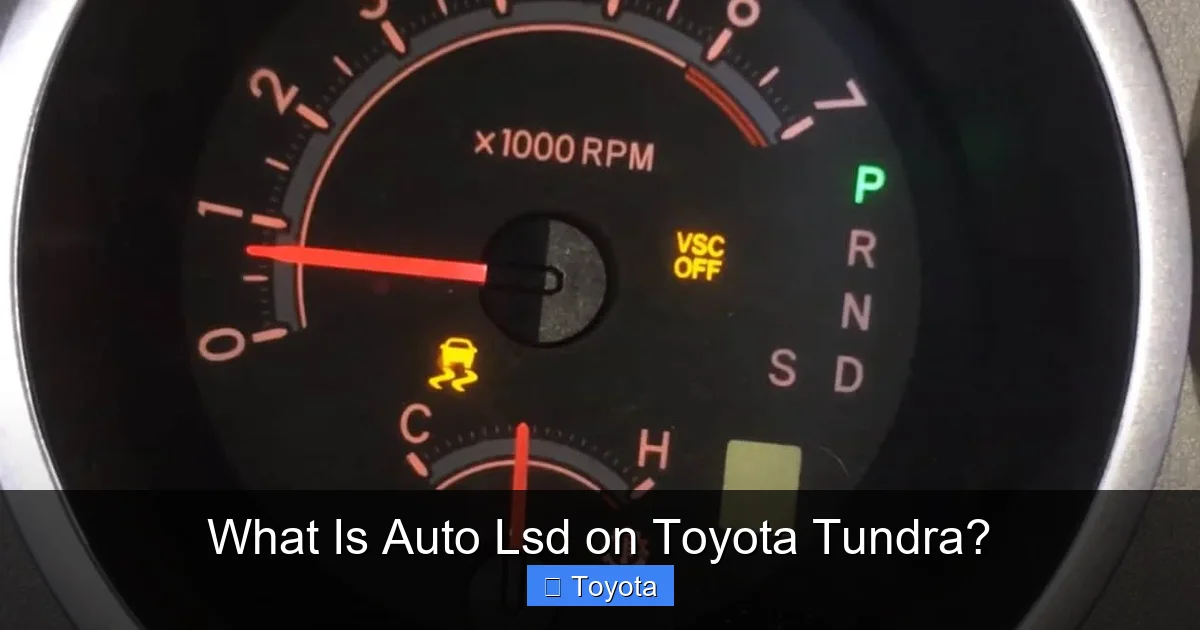
Visual guide about What Is Auto Lsd on Toyota Tundra?
Image source: richsautobodyshop.com
If you’re familiar with Toyota’s suite of safety and performance features, you might be wondering how Auto LSD fits in with systems like TRAC (Traction Control), VSC (Vehicle Stability Control), and A-TRAC (Active Traction Control). Let’s clear up the confusion.
Auto LSD vs. TRAC (Traction Control)
TRAC is a broader system that monitors all four wheels for slip and can reduce engine power or apply brakes to regain traction. It’s active at all times and works across the entire speed range. Auto LSD, on the other hand, is more targeted. It focuses specifically on rear-wheel slip in 2WD models and uses brake-based intervention to simulate a limited-slip effect.
In short: TRAC is like a general traction manager, while Auto LSD is a specialist for rear-wheel drive scenarios.
Auto LSD vs. VSC (Vehicle Stability Control)
VSC is designed to prevent skidding and loss of control during sudden maneuvers—like swerving to avoid an obstacle. It uses steering angle, yaw rate, and lateral acceleration sensors to detect when the vehicle is not following the driver’s intended path. If it senses oversteer or understeer, it can brake individual wheels and reduce engine power to help correct the trajectory.
Auto LSD doesn’t manage vehicle direction—it only deals with wheel slip. So while VSC keeps you on your intended path, Auto LSD keeps your wheels from spinning out in the first place.
Auto LSD vs. A-TRAC (Active Traction Control)
A-TRAC is found on 4WD Tundra models and is essentially an off-road version of traction control. It uses the same brake-based principles as Auto LSD but applies them to all four wheels. When a wheel slips, A-TRAC can brake it and redirect torque to the wheels with grip—even if that means sending power to just one wheel.
So, Auto LSD is like a simplified version of A-TRAC, but only for the rear wheels and only in 2WD mode. If you’re driving a 4WD Tundra, you’ll likely have A-TRAC instead of (or in addition to) Auto LSD.
Auto LSD vs. Locking Differential
A mechanical locking differential physically locks both rear wheels together, forcing them to rotate at the same speed. This is extremely effective off-road but can make turning difficult on pavement. Locking differentials usually require manual engagement via a button or lever.
Auto LSD, by contrast, is fully automatic and doesn’t lock the wheels. It only simulates limited-slip behavior when needed, making it safer and more convenient for everyday driving. It’s not as aggressive as a true locker, but it’s far more user-friendly.
Benefits of Auto LSD on the Toyota Tundra
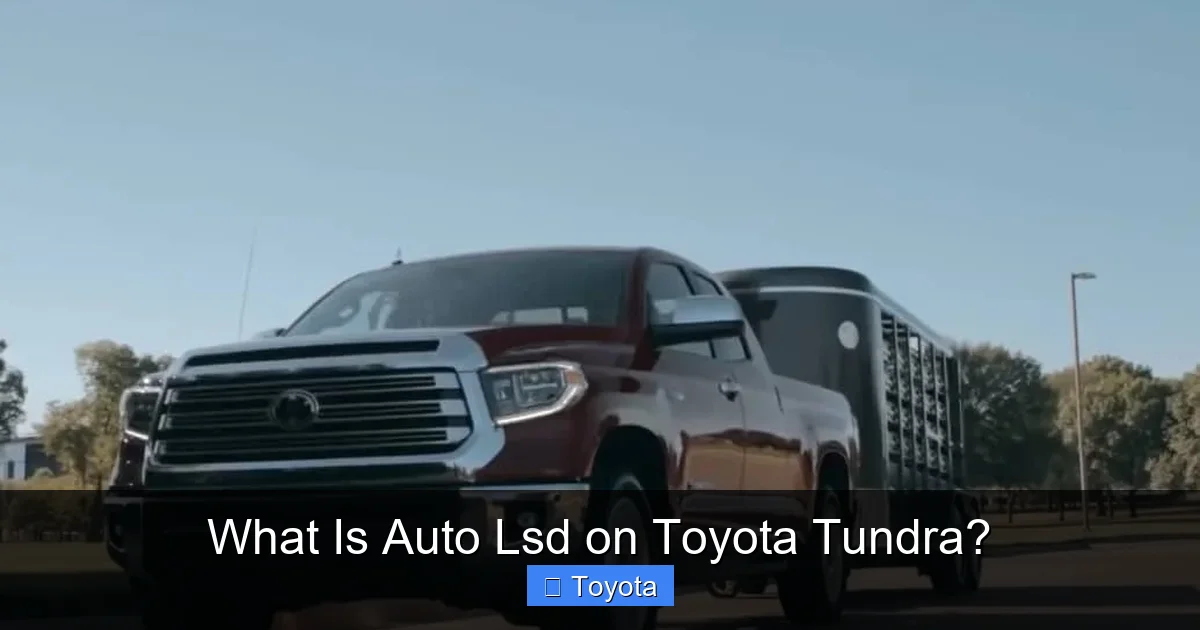
Visual guide about What Is Auto Lsd on Toyota Tundra?
Image source: richsautobodyshop.com
So why does Auto LSD matter? What real-world advantages does it offer Tundra owners? Let’s explore the key benefits.
Improved Off-Road Capability
Even if you’re not a hardcore off-roader, you’ve probably encountered rough terrain—whether it’s a gravel driveway, a muddy campsite, or a snowy forest road. Auto LSD gives your Tundra a significant advantage in these situations.
Imagine you’re driving up a muddy hill, and your right rear wheel starts to spin because it’s on a patch of loose dirt. Without Auto LSD, that wheel would keep spinning, and your Tundra might not make it up the hill. But with Auto LSD, the system detects the slip and applies brake pressure to the spinning wheel. This redirects power to the left rear wheel, which still has traction, allowing you to continue forward.
This kind of intervention can mean the difference between getting stuck and getting through. And because it works automatically, you don’t need to be an off-road expert to benefit from it.
Enhanced Towing Performance
Towing puts extra strain on your vehicle, especially when starting from a stop or climbing hills. If one rear wheel loses grip—say, on a wet boat ramp—it can cause sway, instability, or even prevent you from moving forward.
Auto LSD helps maintain traction during towing by ensuring both rear wheels contribute to propulsion. This is especially helpful when launching a boat, pulling a trailer up a steep incline, or driving on uneven surfaces with a heavy load.
Many Tundra owners report smoother, more confident towing experiences thanks to Auto LSD. It reduces the risk of wheel spin and helps maintain control, even under heavy loads.
Better Performance in Adverse Weather
Rain, snow, ice, and mud are common challenges for truck drivers. Auto LSD improves grip in these conditions by preventing one wheel from spinning out.
For example, if you’re driving on a snowy road and your right rear wheel hits a patch of ice, it might start to slip. Auto LSD detects this and applies brake pressure to that wheel, sending more power to the left rear wheel. This helps maintain forward momentum and reduces the chance of getting stuck.
It’s not a substitute for winter tires or 4WD, but it’s a valuable layer of protection that works quietly in the background.
Increased Confidence for Everyday Driving
You don’t need to be off-roading or towing to benefit from Auto LSD. Even in everyday situations—like accelerating from a stoplight on a wet road or driving through a puddle—Auto LSD can make a difference.
It gives drivers peace of mind, knowing their Tundra can handle slippery conditions without drama. And because it’s automatic, there’s no learning curve or extra steps required.
No Driver Input Required
One of the biggest advantages of Auto LSD is that it’s completely hands-off. You don’t need to press a button, flip a switch, or remember to engage it. It’s always ready, always watching, and always prepared to help.
This makes it ideal for drivers who want enhanced performance without added complexity. Whether you’re a seasoned truck owner or a first-time Tundra buyer, Auto LSD works the same way—automatically and effectively.
When to Use (and Not Use) Auto LSD
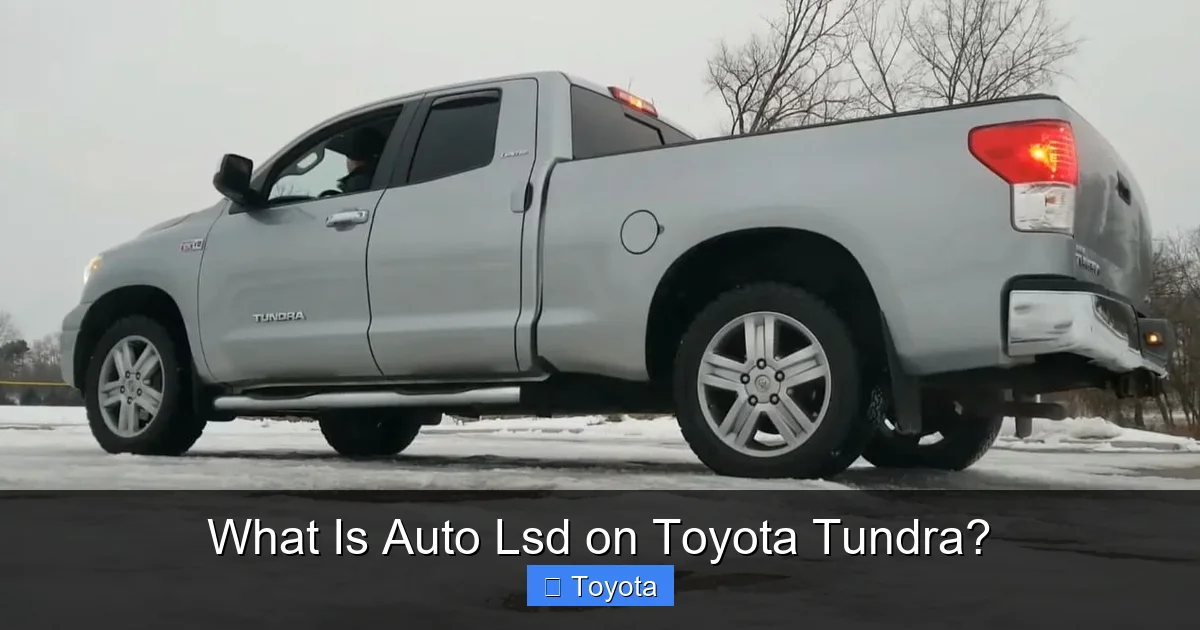
Visual guide about What Is Auto Lsd on Toyota Tundra?
Image source: richsautobodyshop.com
Auto LSD is designed to activate only when needed, so you don’t have to worry about turning it on or off. However, there are a few things to keep in mind about when it’s most useful—and when it might not be enough.
Best Use Cases
Auto LSD shines in the following scenarios:
– **Off-road driving:** Trails, mud, sand, and gravel where one wheel might lose traction.
– **Towing:** Especially on inclines or slippery surfaces.
– **Wet or icy roads:** Helps prevent wheel spin during acceleration.
– **Snowy conditions:** Improves grip when starting from a stop.
– **Loose surfaces:** Dirt, gravel, or sand where traction is inconsistent.
In these situations, Auto LSD can significantly improve your Tundra’s ability to move forward confidently.
Limitations to Be Aware Of
While Auto LSD is helpful, it’s not a magic solution. Here are some limitations:
– **Not a replacement for 4WD:** If you frequently drive in deep snow, mud, or extreme off-road conditions, a 4WD Tundra with A-TRAC or a locking differential will perform better.
– **Limited to rear wheels:** Auto LSD only affects the rear wheels, so it can’t help if a front wheel loses traction.
– **Less effective at high speeds:** It’s most useful under 30 mph. At highway speeds, other systems take over.
– **Doesn’t prevent all slip:** In extreme conditions, even Auto LSD may not be enough to maintain traction.
In short, Auto LSD is a great tool—but it’s not the only tool you should rely on for challenging driving conditions.
Which Toyota Tundra Models Have Auto LSD?
Auto LSD is not standard on all Tundra models. It’s typically included on rear-wheel-drive (2WD) versions, especially those equipped with the SR5 or TRD Off-Road packages.
Here’s a quick breakdown:
– **2WD SR5:** Often includes Auto LSD, especially in higher trims or with optional packages.
– **2WD TRD Off-Road:** Frequently equipped with Auto LSD to enhance off-road capability.
– **4WD Models:** Usually come with A-TRAC instead of Auto LSD, though some may have both.
– **Limited and Platinum Trims:** May or may not include Auto LSD, depending on drivetrain and options.
If you’re shopping for a used or new Tundra, check the window sticker or ask the dealer about Auto LSD availability. It’s often listed under “traction control” or “off-road features.”
Tips for Getting the Most Out of Auto LSD
To make the most of your Tundra’s Auto LSD, keep these tips in mind:
– **Keep your tires in good condition:** Worn or mismatched tires reduce traction and limit Auto LSD’s effectiveness.
– **Use appropriate tires for the season:** Winter tires, all-terrain tires, or mud-terrain tires can enhance performance in specific conditions.
– **Don’t rely on it alone:** In extreme off-road or winter conditions, consider upgrading to 4WD or adding recovery gear.
– **Understand your vehicle’s limits:** Auto LSD helps, but it won’t make your Tundra invincible. Drive according to conditions.
– **Maintain your brake system:** Since Auto LSD uses the brakes to control wheel slip, ensure your brake pads and rotors are in good shape.
Conclusion
The Auto LSD on the Toyota Tundra is a smart, seamless, and highly effective traction control feature that enhances performance in slippery or challenging conditions. By automatically detecting wheel slip and redirecting power to the wheel with the most grip, it helps drivers maintain control—whether they’re towing, off-roading, or just navigating a rainy commute.
While it’s not a replacement for 4WD or a locking differential, Auto LSD is a valuable asset for 2WD Tundra owners who want improved confidence and capability. It works quietly in the background, requiring no input from the driver, and complements other safety systems like TRAC and VSC.
If you’re considering a Toyota Tundra—or already own one—understanding Auto LSD can help you appreciate just how capable this truck really is. It’s one of those features you might not notice until you need it… and when you do, you’ll be glad it’s there.
Frequently Asked Questions
What does Auto LSD stand for?
Auto LSD stands for Automatic Limited Slip Differential. It’s a traction control system that automatically sends power to the wheel with the most grip when one wheel starts to slip.
Is Auto LSD the same as 4WD?
No, Auto LSD is not the same as 4WD. Auto LSD only manages rear-wheel traction in 2WD models, while 4WD sends power to all four wheels for better off-road performance.
Can I turn Auto LSD on or off?
Auto LSD is fully automatic and cannot be manually turned on or off. It activates only when wheel slip is detected and deactivates when conditions normalize.
Does Auto LSD work on all Toyota Tundra models?
No, Auto LSD is typically found on 2WD Tundra models, especially SR5 and TRD Off-Road trims. 4WD models usually have A-TRAC instead.
Will Auto LSD help me get unstuck in deep mud?
Auto LSD can help in mild to moderate off-road conditions, but it may not be enough for deep mud or extreme terrain. A 4WD Tundra with a locking differential is better suited for those situations.
Does Auto LSD affect fuel economy?
No, Auto LSD does not negatively impact fuel economy. It only activates briefly when needed and uses the existing brake and engine systems, so there’s no extra fuel consumption.
