
How Much Is a 2016 Hyundai Sonata Worth?

The 2016 Hyundai Sonata offers strong value in the used car market, with prices typically ranging from $10,000 to $16,000 depending on trim, mileage, and condition. Known for its spacious interior, smooth ride, and solid reliability, this midsize sedan remains a smart choice for budget-conscious buyers seeking comfort and features without breaking the bank.
[FEATURED_IMAGE_PLACEHolder]
If you’re in the market for a dependable, feature-packed midsize sedan that won’t drain your wallet, the 2016 Hyundai Sonata deserves a serious look. Once a top contender in its class, this model year still holds up well in 2024—offering a blend of comfort, technology, and fuel efficiency that many newer cars struggle to match at a similar price. Whether you’re a daily commuter, a family driver, or someone just looking for a reliable second car, the Sonata checks a lot of boxes.
But here’s the big question: How much is a 2016 Hyundai Sonata worth today? The answer isn’t one-size-fits-all. Like any used vehicle, its value depends on a mix of factors—mileage, trim level, condition, location, and even the time of year you’re buying. While you might see listings ranging from $9,000 to over $17,000, the realistic sweet spot for most buyers falls between $11,500 and $15,000. That’s for a well-maintained, mid-mileage example with a clean history.
In this guide, we’ll break down everything you need to know to determine the true value of a 2016 Hyundai Sonata. We’ll explore pricing trends, compare trims, discuss what affects resale value, and give you practical tips to help you buy—or sell—with confidence. Whether you’re shopping privately, at a dealership, or considering a certified pre-owned option, this article will arm you with the knowledge to make a smart decision.
Key Takeaways
- Price Range: Most 2016 Hyundai Sonatas sell between $10,000 and $16,000, with higher trims and lower mileage commanding premium prices.
- Mileage Matters: Vehicles under 70,000 miles hold significantly more value than those with over 100,000 miles.
- Trim Level Impact: The Limited and Sport 2.0T trims are the most valuable, often priced $2,000–$3,000 above base SE models.
- Certified Pre-Owned (CPO) Advantage: CPO Sonatas include extended warranties and inspections, adding $1,000–$1,500 to the price but offering peace of mind.
- Regional Pricing Differences: Prices can vary by up to 15% based on local demand, climate, and inventory levels.
- Maintenance History Counts: Well-documented service records can increase resale value by 5–10%.
- Market Trends: As of 2024, used sedan demand remains steady, keeping Sonata values stable despite the rise of SUVs.
📑 Table of Contents
Understanding the 2016 Hyundai Sonata’s Market Position
The 2016 Hyundai Sonata arrived at a pivotal moment for the brand. Hyundai was pushing hard to compete with Toyota Camry and Honda Accord dominance, and this generation Sonata was a major step forward in design, technology, and refinement. With a sleek, modern exterior, a spacious cabin, and a long list of standard features, it quickly became a favorite among value-minded buyers.
One of the Sonata’s biggest selling points was its generous standard equipment. Even the base SE trim came with a 7-inch touchscreen, Bluetooth, USB ports, and a rearview camera—features that were often optional on competitors. Higher trims added leather seats, heated front seats, a sunroof, and advanced safety tech like blind-spot monitoring and lane departure warning.
Under the hood, the 2016 Sonata offered two engine options: a 2.4-liter four-cylinder producing 185 horsepower (standard on SE, Eco, and Sport trims) and a turbocharged 2.0-liter four-cylinder with 245 horsepower (available on the Sport 2.0T and Limited trims). Both engines were paired with a smooth-shifting six-speed automatic transmission. Fuel economy was also a strong point, with the base engine achieving up to 25 mpg city and 37 mpg highway.
Because of its balanced mix of comfort, features, and affordability, the 2016 Sonata has aged gracefully. It hasn’t become a collector’s item, but it remains a practical, reliable choice in the used car market. As of 2024, it’s no longer the newest kid on the block, but its reputation for durability and low ownership costs keeps demand steady.
Why the 2016 Model Year Stands Out
Not every model year is created equal, and the 2016 Sonata benefits from being part of a well-received generation that launched in 2015. Hyundai made several improvements over the previous generation, including a more rigid chassis, better noise insulation, and upgraded interior materials. The 2016 model also introduced minor refinements, such as revised suspension tuning and enhanced infotainment responsiveness.
Another reason the 2016 year is desirable? It avoided some of the early teething issues that occasionally plague first-year redesigns. By 2016, Hyundai had ironed out most of the kinks, making it a more reliable bet for used car shoppers. Additionally, this model year came with a strong warranty—5 years/60,000 miles basic and 10 years/100,000 miles powertrain—which still offers peace of mind for buyers, especially if the car is under 100,000 miles.
How It Compares to Competitors
When stacked against rivals like the 2016 Toyota Camry, Honda Accord, and Nissan Altima, the Sonata holds its own—especially in terms of value. While the Camry and Accord may edge out the Sonata in long-term resale value and brand perception, the Hyundai often offers more standard features for the price. For example, the base Sonata SE includes a rearview camera and touchscreen infotainment, while the base Camry LE of the same year lacked both.
The Sonata also offers more rear legroom than many competitors, making it a better choice for families or frequent backseat passengers. Its ride quality is notably smooth, with well-tuned suspension that absorbs bumps without feeling floaty. However, it’s worth noting that the Sonata’s handling isn’t as sporty as the Mazda6 or as refined as the Accord, so driving enthusiasts might look elsewhere.
Factors That Determine a 2016 Sonata’s Value
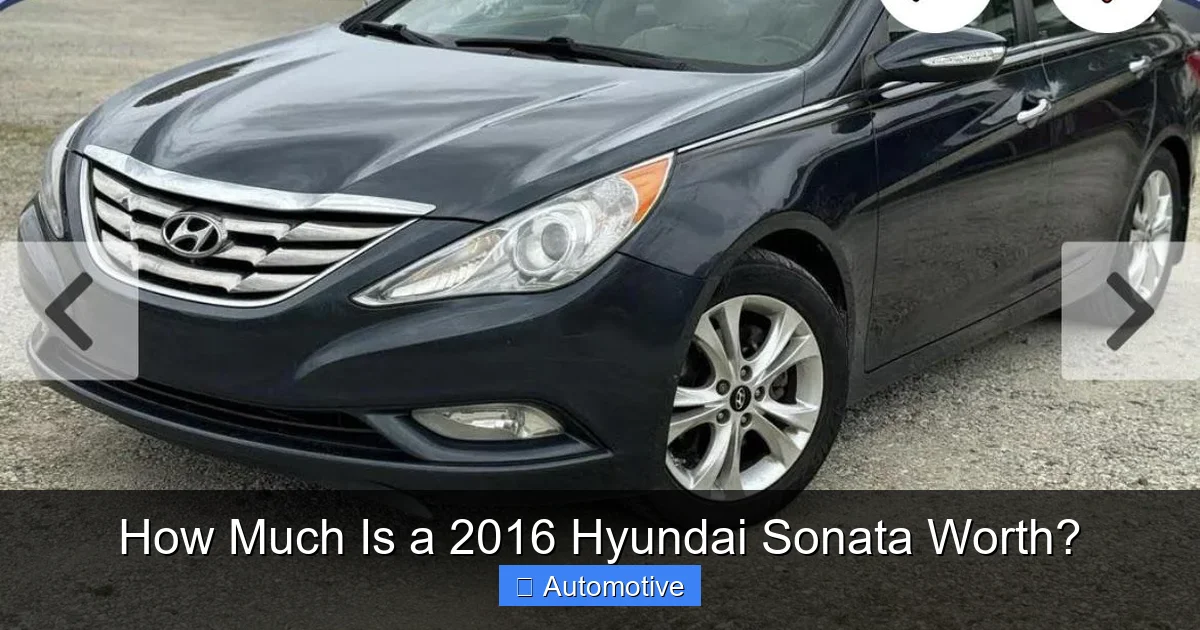
Visual guide about How Much Is a 2016 Hyundai Sonata Worth?
Image source: i.redd.it
So, how much is a 2016 Hyundai Sonata worth? The short answer: it depends. But understanding the key factors that influence pricing will help you spot a fair deal—or avoid an overpriced lemon.
Mileage: The Single Biggest Factor
Mileage is the most significant determinant of a used car’s value, and the Sonata is no exception. As a general rule, lower mileage equals higher value. A 2016 Sonata with 50,000 miles will typically command $2,000–$3,000 more than one with 100,000 miles, all else being equal.
Here’s a rough breakdown based on current market data:
– Under 60,000 miles: $14,000–$16,000
– 60,000–80,000 miles: $12,000–$14,000
– 80,000–100,000 miles: $10,500–$12,500
– Over 100,000 miles: $9,000–$11,000
Keep in mind that these are averages. A well-maintained, high-mileage Sonata with full service records might still fetch a premium, while a low-mileage example with accident history could sell for less.
Trim Level and Features
The 2016 Sonata came in several trims: SE, Eco, Sport, Sport 2.0T, Limited, and Limited 2.0T. Each adds more features and, consequently, a higher price tag.
– SE: The base model. Still well-equipped, but lacks leather, sunroof, and advanced safety features. Expect to pay $10,000–$13,000.
– Eco: Features a fuel-efficient 1.6L turbo engine (178 hp) and better fuel economy (up to 28/38 mpg). Priced similarly to the SE, around $10,500–$13,500.
– Sport: Adds sport-tuned suspension, 18-inch wheels, and upgraded interior trim. Typically $11,500–$14,500.
– Sport 2.0T: Includes the turbocharged 2.0L engine, dual exhaust, and more aggressive styling. A favorite among performance-minded buyers. Priced at $13,000–$16,000.
– Limited: The luxury-oriented trim with leather seats, heated front seats, sunroof, and premium audio. Often the most sought-after non-turbo version. Expect $12,500–$15,500.
– Limited 2.0T: Combines the turbo engine with all the Limited features. The top-tier model, usually $14,000–$17,000.
When comparing trims, consider what features matter most to you. If you prioritize fuel economy, the Eco might be ideal. If you want a more engaging drive, the Sport 2.0T is worth the extra cost.
Vehicle Condition and History
A clean title, no accidents, and a well-documented maintenance history can significantly boost a Sonata’s value. Buyers are willing to pay more for a car that’s been cared for—especially one with records showing regular oil changes, tire rotations, and brake inspections.
On the flip side, a car with a salvage title, flood damage, or a history of major repairs (like engine or transmission work) will sell for much less—often 20–30% below market value. Always run a vehicle history report (like Carfax or AutoCheck) before buying.
Certified Pre-Owned (CPO) vs. Private Sale
Certified Pre-Owned Sonatas from Hyundai dealerships typically cost $1,000–$1,500 more than similar private-sale vehicles. But that premium comes with benefits: a rigorous 150-point inspection, extended warranty coverage (often up to 10 years/100,000 miles), and roadside assistance.
For buyers who value peace of mind and don’t want to deal with the hassle of inspections and negotiations, CPO can be worth the extra cost. However, if you’re comfortable doing your own research and inspections, buying privately can save you money.
Geographic Location and Market Demand
Used car prices aren’t uniform across the country. In regions with harsh winters (like the Northeast or Midwest), rust and salt damage can reduce a Sonata’s value. Conversely, in warmer climates like Arizona or California, well-preserved examples may command higher prices.
Urban areas with high demand for reliable commuter cars (like Atlanta, Dallas, or Phoenix) often see stronger pricing than rural markets. Additionally, inventory levels play a role—when supply is low, prices rise.
How to Check the Value of a Specific 2016 Sonata
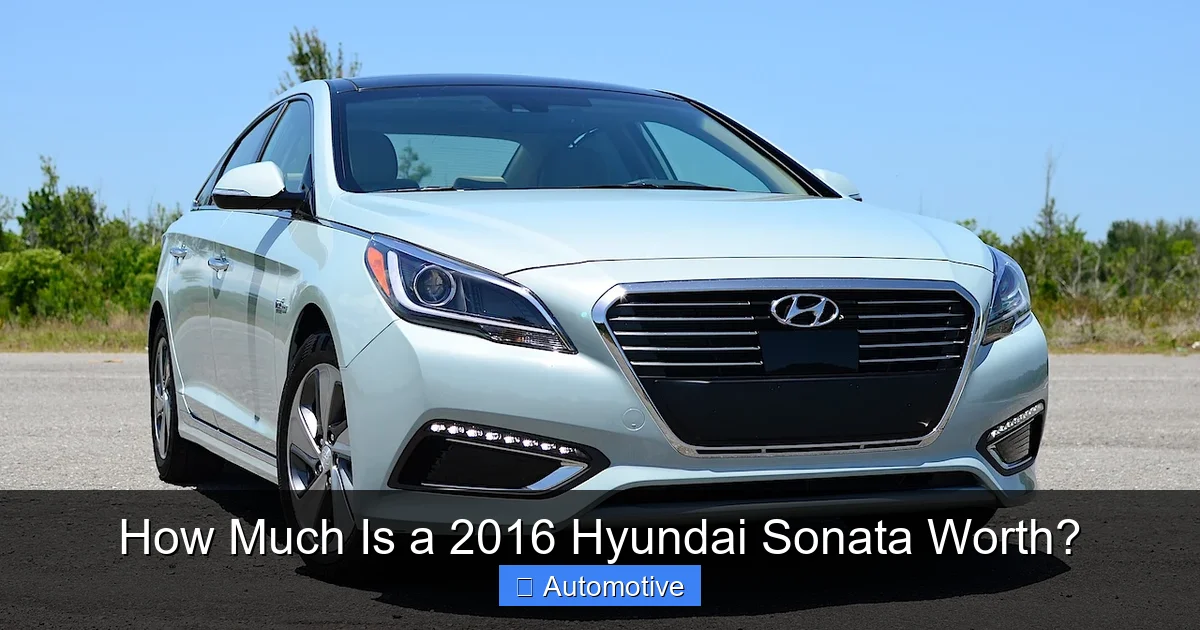
Visual guide about How Much Is a 2016 Hyundai Sonata Worth?
Image source: automotiveaddicts.com
Now that you know the factors that affect pricing, how do you find the fair market value of a specific vehicle? Here are the best tools and methods:
Use Online Valuation Tools
Start with trusted resources like Kelley Blue Book (KBB), Edmunds, and NADA Guides. Enter the VIN, trim, mileage, condition, and location to get a personalized estimate. These tools analyze recent sales data to provide a range—typically “Trade-In,” “Private Party,” and “Dealer Retail” values.
For example, a 2016 Sonata Limited with 75,000 miles in good condition might show:
– Trade-In Value: $11,200
– Private Party Value: $12,800
– Dealer Retail Value: $14,000
Use these as benchmarks, but remember they’re estimates. Actual prices may vary based on local market conditions.
Check Recent Sales Data
Websites like Autotrader, Cars.com, and CarGurus allow you to filter listings by year, make, model, and location. Look at recently sold vehicles (not just active listings) to see what similar Sonatas actually sold for.
Pay attention to:
– How long the car was listed before selling (a quick sale may indicate a good price)
– Whether it was sold privately or through a dealer
– Any noted issues or upgrades
Get a Pre-Purchase Inspection
Even if a car looks clean and runs well, hidden issues can lurk beneath the surface. A pre-purchase inspection (PPI) by a trusted mechanic can uncover problems with the engine, transmission, suspension, or electrical system.
A PPI typically costs $100–$150 but can save you thousands in repairs. If the inspection reveals issues, use it as leverage to negotiate a lower price—or walk away.
Negotiate Based on Market Data
Armed with valuation tools and inspection results, you’re ready to negotiate. Start by offering 5–10% below the asking price, especially if the car has been listed for a while or has minor flaws.
Be polite but firm. Sellers are more likely to accept a reasonable offer than a lowball one. If they refuse, ask what it would take to close the deal—sometimes they’re willing to include extras like new tires or a full tank of gas.
Common Issues to Watch For in the 2016 Sonata
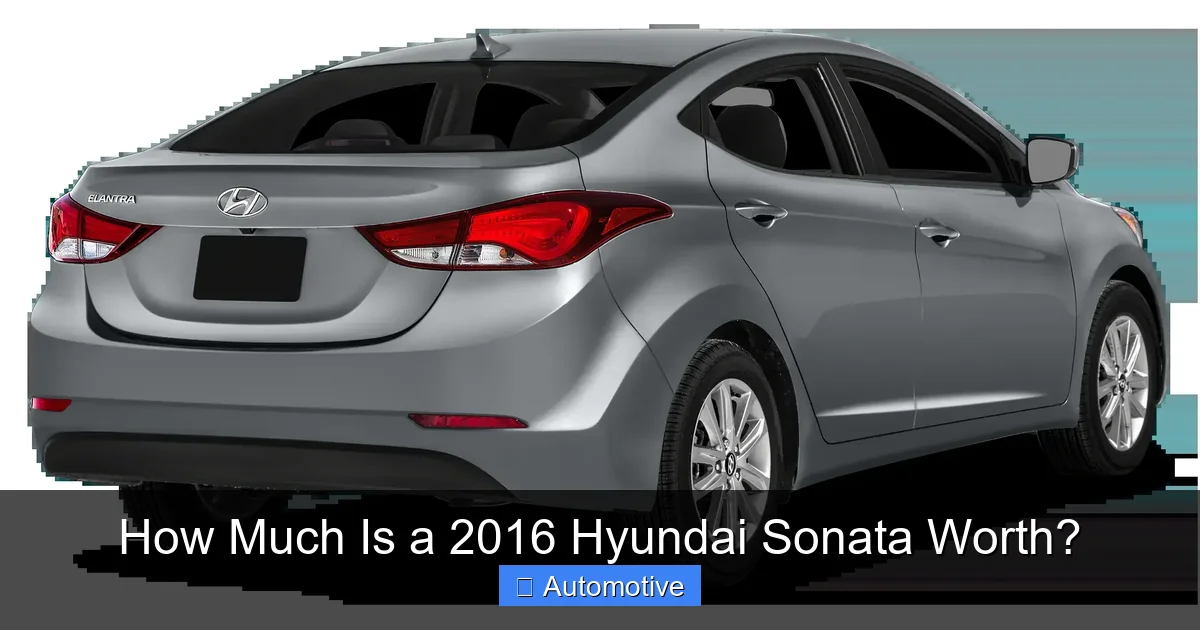
Visual guide about How Much Is a 2016 Hyundai Sonata Worth?
Image source: platform.cstatic-images.com
While the 2016 Sonata is generally reliable, it’s not without its quirks. Being aware of common problems can help you avoid costly repairs down the road.
Engine and Transmission Concerns
The 2.4L engine is known for its durability, but some owners have reported issues with the timing chain tensioner, which can cause a rattling noise at startup. This is usually fixable with a tensioner replacement, but it’s worth checking service records.
The 2.0T turbo engine is more powerful but can be prone to carbon buildup on intake valves (a common issue with direct-injection engines). Regular maintenance, including fuel system cleanings, can help prevent this.
The six-speed automatic transmission is generally smooth, but a few owners have reported rough shifting or hesitation. Most cases are resolved with a software update or fluid change.
Suspension and Steering
Some 2016 Sonatas have experienced premature wear in the front struts or sway bar links, leading to a clunking noise over bumps. This is often due to worn bushings or mounts. Replacing these components typically costs $300–$600.
Power steering issues are rare but have been reported in isolated cases. If the steering feels stiff or unresponsive, have it checked immediately.
Electrical and Infotainment Glitches
The touchscreen infotainment system can occasionally freeze or reboot unexpectedly. A software update from a Hyundai dealer usually resolves this. Also, some owners have reported issues with the backup camera display or Bluetooth connectivity.
Recalls and Service Campaigns
Hyundai issued several recalls for the 2016 Sonata, including:
– A recall for potential engine seizure due to manufacturing defects (affecting some 2.4L engines)
– A software update for the electronic stability control system
– A recall for faulty airbag sensors
Always check the NHTSA website or contact a Hyundai dealer to see if a specific vehicle has any open recalls. Most can be repaired for free.
Tips for Buying or Selling a 2016 Sonata
Whether you’re in the market to buy or sell, these tips will help you get the best deal.
For Buyers: How to Get the Best Value
– Shop in the off-season: Demand for sedans dips in spring and summer when SUVs and convertibles are more popular. You may find better deals in fall or winter.
– Expand your search radius: Don’t limit yourself to local listings. A 200-mile drive could save you $1,000.
– Consider higher-mileage examples: A well-maintained Sonata with 90,000 miles can still have plenty of life left—especially if it’s been driven mostly on highways.
– Test drive multiple trims: The difference between the SE and Limited is significant. Make sure you’re getting the features you want.
For Sellers: How to Maximize Your Return
– Clean and detail the car: A spotless interior and shiny exterior can increase perceived value.
– Gather service records: Organize receipts and maintenance logs to show the car has been well cared for.
– Fix minor issues: Replace burnt-out bulbs, fix scratches, and top off fluids. Small fixes make a big difference.
– Price competitively: Use KBB or Edmunds to set a fair price. Overpricing leads to longer listing times.
Final Thoughts: Is the 2016 Sonata Still a Good Buy?
So, how much is a 2016 Hyundai Sonata worth? In 2024, the answer is: a lot—if you find the right one. With prices ranging from $10,000 to $16,000, it remains one of the most affordable ways to get a spacious, well-equipped midsize sedan with a strong reliability record.
While it may not have the brand cachet of a Toyota or Honda, the Sonata delivers exceptional value for the money. It’s comfortable, fuel-efficient, and packed with features that still feel modern. And with proper maintenance, many examples are easily hitting 150,000 miles—or more.
Whether you’re buying for daily commuting, family use, or as a reliable backup car, the 2016 Sonata is a smart, practical choice. Just be sure to do your homework: check the history, inspect the car, and compare prices. With a little patience, you can find a great deal on a sedan that will serve you well for years to come.
Frequently Asked Questions
What is the average price of a 2016 Hyundai Sonata?
The average price of a 2016 Hyundai Sonata in 2024 ranges from $11,500 to $15,000, depending on trim, mileage, and condition. Lower-mileage, higher-trim models can reach up to $16,000, while high-mileage base models may sell for under $10,000.
Is the 2016 Sonata reliable?
Yes, the 2016 Hyundai Sonata is generally considered reliable, with strong ratings from owners and experts. It benefits from Hyundai’s 10-year/100,000-mile powertrain warranty and has a reputation for longevity when properly maintained.
Which trim of the 2016 Sonata is the best value?
The Limited trim offers the best balance of features and value, including leather seats, a sunroof, and premium audio. For performance seekers, the Sport 2.0T adds a turbocharged engine and sport-tuned suspension for a more engaging drive.
How many miles can a 2016 Sonata last?
With proper maintenance, a 2016 Hyundai Sonata can easily last 150,000 to 200,000 miles. Many owners report trouble-free driving well beyond 100,000 miles, especially with regular oil changes and timely repairs.
Should I buy a CPO 2016 Sonata?
A Certified Pre-Owned 2016 Sonata is a great option if you want peace of mind, as it includes a thorough inspection and extended warranty. However, it costs $1,000–$1,500 more than a private sale, so weigh the benefits against your budget.
What are common problems with the 2016 Sonata?
Common issues include timing chain tensioner noise, carbon buildup on turbo engines, and occasional infotainment glitches. Most problems are fixable and don’t affect overall reliability if addressed early.
