
Does a Lift Kit Void Toyota Warranty?

Adding a lift kit to your Toyota doesn’t automatically void your warranty—but it can if the modification causes damage. Under federal law, dealerships must prove the lift kit directly caused the issue before denying coverage. Knowing your rights and choosing quality parts helps protect your warranty.
So, you’ve just bought a brand-new Toyota Tacoma or 4Runner, and you’re already dreaming of off-road adventures. You’ve seen those lifted trucks cruising down the trail with massive tires and serious ground clearance—and you want in. But then comes the big question: Does a lift kit void Toyota warranty?
It’s a valid concern. You’ve invested in a reliable, well-built vehicle, and the last thing you want is to lose your warranty protection because you wanted a little more height. The good news? Installing a lift kit doesn’t automatically cancel your warranty. But there are important nuances to understand.
Many Toyota owners worry that any modification—especially something as noticeable as a lift kit—will give the dealership an excuse to deny warranty claims. And while some dealers may push back, federal law is on your side. The Magnuson-Moss Warranty Act protects consumers from unfair warranty practices, meaning a dealer can’t just say “you modified it, so no coverage” without solid proof.
In this guide, we’ll break down exactly how lift kits interact with your Toyota warranty, what your rights are, and how to modify your vehicle safely without risking your coverage. Whether you’re lifting a Tundra for towing stability or upgrading your Sequoia for mountain roads, knowing the rules helps you make smart decisions.
Key Takeaways
- A lift kit alone does not void your Toyota warranty. Federal law protects consumers from blanket warranty denials due to aftermarket modifications.
- Dealerships must prove causation. If a repair claim is denied, the dealer must show the lift kit directly caused the problem—not just that it’s installed.
- Warranty coverage may be limited on affected parts. Components like suspension, drivetrain, or steering may be excluded if damaged by the lift.
- Document everything. Keep receipts, installation records, and photos to support your case if a dispute arises.
- Use reputable brands and professional installation. High-quality lift kits and certified installers reduce the risk of damage and strengthen your warranty defense.
- Factory warranty vs. extended warranty matters. Extended plans may have stricter rules about modifications than Toyota’s factory warranty.
- Communicate with your dealer. Being transparent about modifications can help maintain a good relationship and avoid surprises during service.
📑 Table of Contents
Understanding Your Toyota Warranty
Before diving into lift kits, it’s important to understand what your Toyota warranty actually covers. Toyota offers one of the most comprehensive factory warranties in the industry, which gives owners peace of mind—especially when considering modifications.
Toyota’s basic new vehicle warranty includes:
– 3 years or 36,000 miles of bumper-to-bumper coverage
– 5 years or 60,000 miles on the powertrain (engine, transmission, drivetrain)
– 7 years or 100,000 miles on hybrid components (for hybrid models)
– Rust perforation coverage for 5 years, unlimited miles
This warranty covers defects in materials and workmanship. That means if something breaks because it was poorly made or installed at the factory, Toyota will fix it—no questions asked.
But here’s the catch: the warranty does not cover damage caused by misuse, neglect, or modifications. So if you install a lift kit and it leads to a suspension failure, Toyota isn’t obligated to pay for repairs—unless they can’t prove the lift caused the issue.
What the Warranty Covers
Your Toyota warranty is designed to protect you from unexpected mechanical failures. This includes things like:
– Engine problems
– Transmission issues
– Electrical system faults
– Brake system defects
– Air conditioning and heating malfunctions
However, wear-and-tear items like brake pads, tires, and wiper blades are not covered. Similarly, damage from accidents, weather, or improper maintenance isn’t included.
What the Warranty Doesn’t Cover
The warranty explicitly excludes:
– Damage from aftermarket parts or modifications
– Wear from off-road use (unless the vehicle is rated for it, like the TRD Pro models)
– Cosmetic damage
– Damage from lack of maintenance
This is where lift kits come into play. While the lift itself isn’t automatically excluded, any damage directly linked to it may not be covered.
The Magnuson-Moss Warranty Act: Your Legal Protection
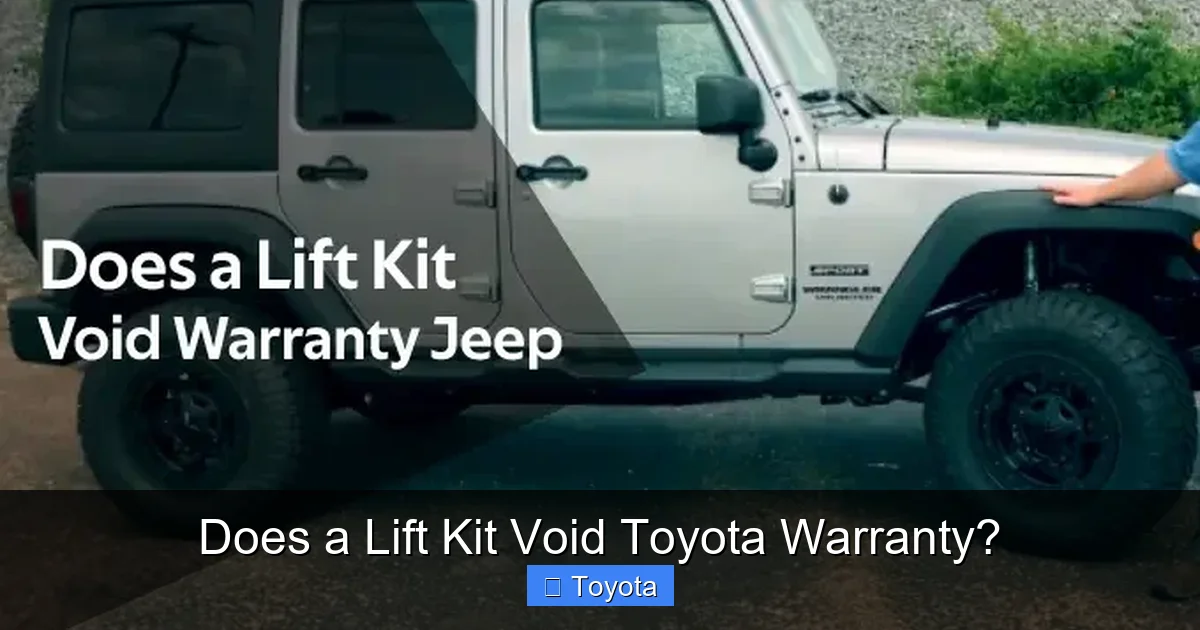
Visual guide about Does a Lift Kit Void Toyota Warranty?
Image source: gigawheels.com
If you’re worried about losing your warranty after installing a lift kit, the Magnuson-Moss Warranty Act is your best friend. This federal law, passed in 1975, protects consumers from unfair warranty practices and ensures that manufacturers can’t arbitrarily deny claims.
The key principle of the Magnuson-Moss Act is that a dealer or manufacturer must prove that an aftermarket part caused the damage before denying warranty coverage. In other words, just because you have a lift kit doesn’t mean your entire warranty is void.
How the Law Works in Practice
Let’s say you install a 3-inch lift kit on your Toyota Tacoma. A few months later, your front differential fails. You take it to the dealership for a warranty repair.
The dealer inspects the vehicle and sees the lift kit. They might suspect the modification caused extra stress on the drivetrain. But under the Magnuson-Moss Act, they can’t deny the claim unless they can prove—with evidence—that the lift kit directly caused the failure.
This might involve:
– Technical analysis of the failed part
– Review of installation records
– Comparison with known failure modes
If the dealer can’t provide that proof, they must honor the warranty.
Real-World Example
Imagine a 2022 Toyota 4Runner owner installs a high-quality lift kit and larger tires. After 10,000 miles, the transmission starts slipping. The dealer claims the lift caused the issue and denies the claim.
But the owner has documentation showing:
– The lift was installed by a certified mechanic
– All components were within Toyota’s recommended specifications
– The transmission fluid was changed regularly
– No signs of overloading or extreme off-road abuse
In this case, the dealer would struggle to prove causation. Without clear evidence, the warranty claim should be honored.
How Lift Kits Can Affect Your Warranty
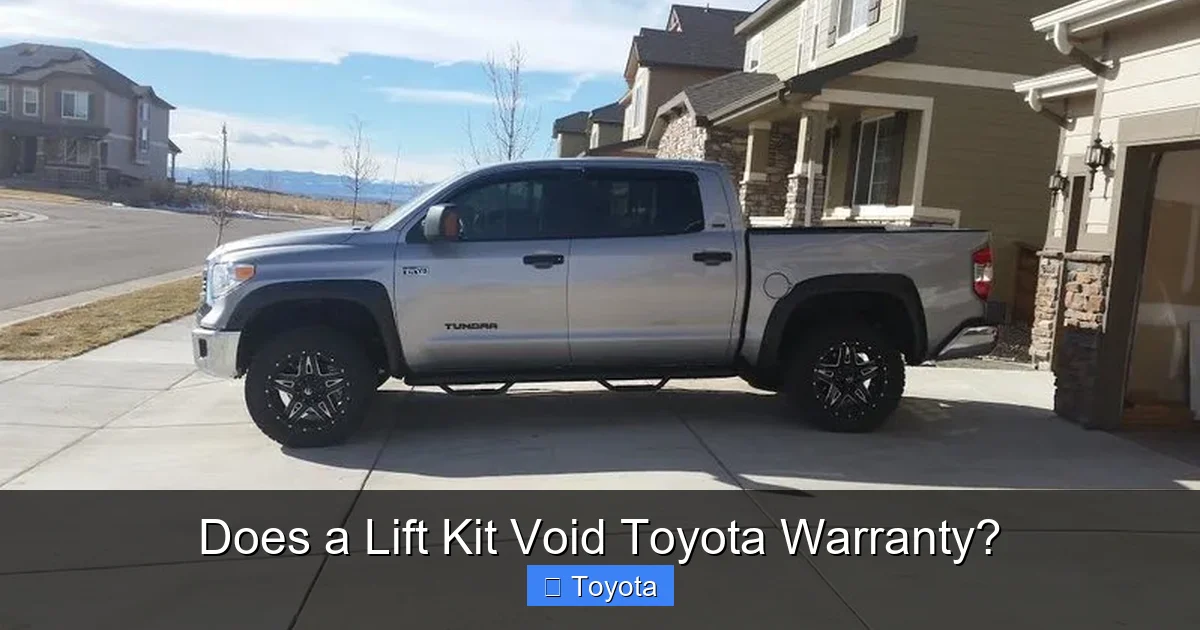
Visual guide about Does a Lift Kit Void Toyota Warranty?
Image source: tnstatic.net
Now, let’s get into the specifics: how exactly can a lift kit impact your Toyota warranty?
The short answer is: it depends on the type of lift, how it’s installed, and what part fails.
Lift kits change the geometry of your suspension, increase stress on drivetrain components, and can alter handling. While many lifts are safe when done correctly, they do introduce new variables that can affect vehicle performance.
Types of Lift Kits and Their Impact
There are two main types of lift kits: body lifts and suspension lifts.
Body lifts use spacers to raise the body of the vehicle off the frame. They’re less expensive and easier to install, but they don’t improve off-road performance. Because they don’t alter suspension geometry, they’re less likely to cause mechanical issues. However, they can still affect things like steering linkage and brake lines if not installed properly.
Suspension lifts replace or modify the suspension components (shocks, springs, control arms) to raise the entire vehicle. These provide better ground clearance and off-road capability but can increase stress on:
– CV joints
– Driveshafts
– Steering components
– Differential
Because suspension lifts change how the vehicle handles and distributes weight, they’re more likely to be scrutinized during warranty claims.
Common Warranty Concerns with Lift Kits
Here are some areas where lift kits can raise red flags:
Suspension and Steering: If your lift kit alters suspension angles, it can cause premature wear on ball joints, tie rods, or steering racks. If these parts fail, the dealer may argue the lift caused the damage.
Drivetrain: Larger tires and altered suspension can increase strain on the transmission, transfer case, and differential. For example, a lifted truck with 35-inch tires may put more torque on the rear differential, potentially leading to failure.
ABS and Stability Control: Some lift kits can affect wheel speed sensors or alter the vehicle’s center of gravity, triggering warning lights or reducing the effectiveness of electronic safety systems.
Warranty Language: Toyota’s warranty booklet states that damage caused by “alterations or modifications” is not covered. But again, the burden of proof is on the dealer.
When a Warranty Claim Might Be Denied
A warranty claim related to a lift kit might be denied if:
– The lift kit was poorly installed (e.g., incorrect torque specs, damaged components)
– The vehicle was used in extreme conditions beyond its design (e.g., rock crawling with a mild lift)
– The failure is clearly linked to the modification (e.g., a broken axle due to oversized tires)
But even in these cases, the dealer must provide documentation. You have the right to request a detailed explanation and, if needed, escalate the issue.
How to Protect Your Warranty When Installing a Lift Kit
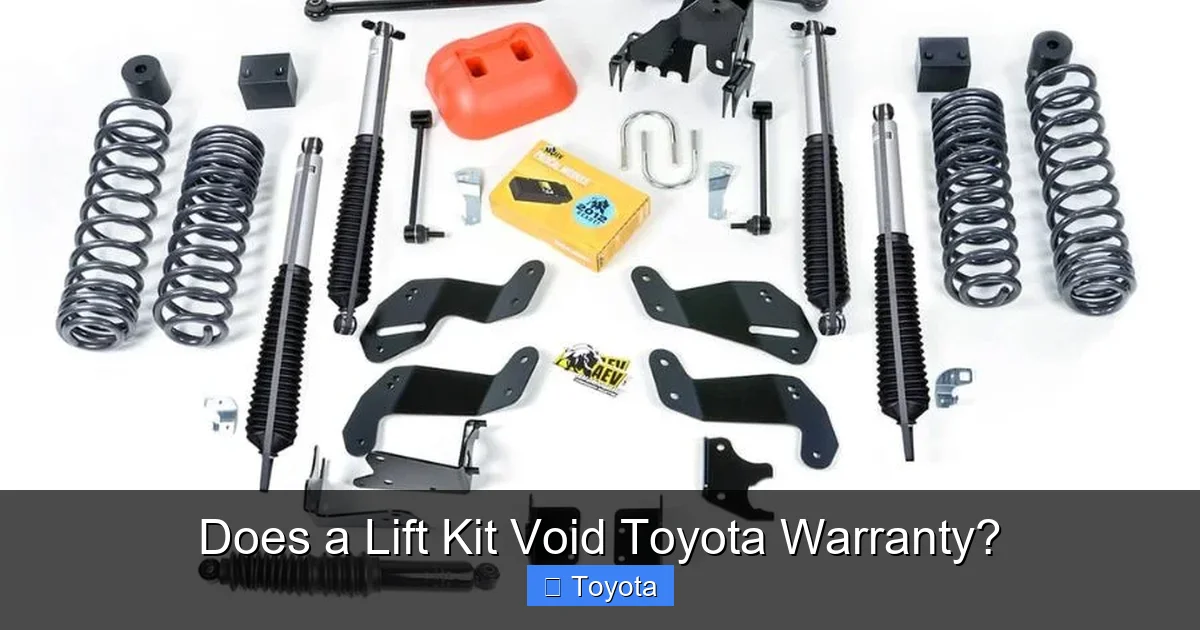
Visual guide about Does a Lift Kit Void Toyota Warranty?
Image source: storage.googleapis.com
You don’t have to avoid lift kits to keep your warranty intact. With the right approach, you can modify your Toyota and still maintain coverage.
Here’s how to do it safely and smartly.
Choose a Reputable Lift Kit Brand
Not all lift kits are created equal. Cheap, low-quality kits may use substandard materials or incorrect designs that can damage your vehicle.
Stick with well-known brands like:
– Rough Country
– Skyjacker
– Pro Comp
– Old Man Emu (OME)
– Icon Vehicle Dynamics
These companies design kits specifically for Toyota models and often provide detailed installation guides and customer support.
Use a Certified Installer
Even the best lift kit can cause problems if installed incorrectly. Always have your lift kit installed by a certified mechanic or off-road shop with experience in Toyota vehicles.
Ask for:
– Proof of certification (ASE, manufacturer training)
– Before-and-after photos
– A detailed invoice listing all parts and labor
This documentation can be crucial if you ever need to defend a warranty claim.
Stay Within Reasonable Limits
Lifting your Toyota by 2–3 inches is generally considered safe and less likely to cause issues. Going beyond 4 inches increases stress on components and may require additional modifications (like extended brake lines or driveshaft upgrades).
Also, avoid combining a lift with excessively large tires unless your vehicle is built to handle it. A 3-inch lift with 33-inch tires is usually fine, but 37-inch tires may require regearing and other upgrades.
Maintain Regular Service
Keep up with your Toyota’s recommended maintenance schedule. This includes:
– Oil changes
– Transmission fluid flushes
– Differential fluid changes
– Suspension inspections
Regular maintenance shows you’re taking care of your vehicle—and it makes it harder for a dealer to claim neglect.
Document Everything
Keep a modification file with:
– Receipts for the lift kit and installation
– Photos of the installation process
– Service records
– Any communication with the dealer
If a warranty issue arises, this documentation can help prove that the lift wasn’t the cause of the problem.
Communicate with Your Dealer
Some dealers are more modification-friendly than others. If you’re planning a lift, consider talking to your service advisor beforehand. A good dealer will appreciate your transparency and may even offer guidance.
Avoid hiding modifications. If the dealer discovers a lift during a service visit and you didn’t disclose it, they may be less willing to help.
Extended Warranties and Lift Kits
If you’ve purchased an extended warranty (also called a vehicle service contract), the rules may be different.
Extended warranties are sold by third parties, not Toyota, and they often have stricter terms. Some may exclude coverage for modified vehicles altogether, while others may require pre-approval for certain modifications.
Read the Fine Print
Before installing a lift kit, review your extended warranty agreement. Look for clauses about:
– Aftermarket parts
– Suspension modifications
– Off-road use
Some plans may allow lifts under 3 inches but deny coverage for larger lifts. Others may require you to use approved parts or installers.
Contact the Provider
If you’re unsure, call the extended warranty company and ask directly: “Will installing a lift kit void my coverage?” Get the answer in writing if possible.
This step can save you from unexpected denials down the road.
What to Do If Your Warranty Claim Is Denied
Even with precautions, you might still face a denied claim. Here’s what to do.
Ask for a Detailed Explanation
Request a written explanation of why the claim was denied. The dealer must specify which part failed and how the lift kit caused it.
If the explanation is vague (e.g., “modifications void warranty”), it may not hold up under the Magnuson-Moss Act.
Get a Second Opinion
Take your vehicle to an independent mechanic or another Toyota dealer for inspection. They may provide a different assessment.
Sometimes, dealers are overly cautious or unfamiliar with modified vehicles. A second opinion can support your case.
File a Complaint
If the dealer refuses to honor the warranty without proof, you can:
– File a complaint with the Better Business Bureau (BBB)
– Contact the Federal Trade Commission (FTC)
– Reach out to Toyota Motor North America directly
Toyota values customer satisfaction and may intervene if a dealer is acting unfairly.
Consider Legal Action
In rare cases, you may need to consult a consumer protection attorney. The Magnuson-Moss Act allows you to recover legal fees if you win, making it easier to fight unfair denials.
Conclusion
So, does a lift kit void Toyota warranty? The answer is clear: No, not automatically.
A lift kit alone doesn’t cancel your warranty. Under federal law, dealerships must prove that the modification directly caused the damage before denying coverage. With proper installation, quality parts, and good documentation, you can enjoy a lifted Toyota without sacrificing warranty protection.
The key is to be informed, prepared, and proactive. Choose reputable brands, use certified installers, maintain your vehicle, and keep detailed records. And if a dealer tries to deny a claim unfairly, know your rights and don’t be afraid to push back.
Modifying your Toyota should be about enhancing your driving experience—not risking your investment. With the right approach, you can have both: a capable, lifted truck and peace of mind on the road.
Frequently Asked Questions
Does installing a lift kit automatically void my Toyota warranty?
No, installing a lift kit does not automatically void your Toyota warranty. Under the Magnuson-Moss Warranty Act, dealerships must prove the lift kit caused the damage before denying coverage.
Can a Toyota dealer refuse warranty service just because I have a lift kit?
No, a dealer cannot refuse service solely because you have a lift kit. They must show that the modification directly caused the issue, not just that it’s present.
Will a body lift affect my warranty differently than a suspension lift?
Body lifts are less likely to affect warranty coverage because they don’t alter suspension geometry. Suspension lifts have a higher risk of impacting drivetrain and steering components.
What should I do if my warranty claim is denied due to a lift kit?
Ask for a detailed explanation in writing, get a second opinion from another mechanic, and consider filing a complaint with Toyota or the FTC if the denial seems unfair.
Can I install a lift kit myself without voiding the warranty?
Yes, you can install it yourself, but professional installation with documentation is strongly recommended. Poor DIY work could make it easier for a dealer to deny claims.
Do extended warranties cover vehicles with lift kits?
It depends on the provider. Some extended warranties exclude modified vehicles, while others allow lifts under certain conditions. Always check the terms before modifying.
