
How Much Does It Cost to Get a Jeep Lifted?

Getting a Jeep lifted can cost anywhere from $500 to over $5,000, depending on the type of lift, parts, and labor. Whether you’re aiming for better off-road performance or a bold new look, understanding the costs helps you plan your upgrade wisely.
If you’ve ever stood next to a lifted Jeep—towering over traffic with massive tires and a rugged stance—you know it’s more than just a vehicle. It’s a statement. A lifted Jeep turns heads, conquers trails, and gives you that unbeatable sense of freedom. But behind that bold look lies a question every Jeep owner asks: *How much does it cost to get a Jeep lifted?*
The truth is, there’s no one-size-fits-all answer. The cost to lift a Jeep depends on several factors, including the type of lift kit, your Jeep model, whether you install it yourself or hire a professional, and what additional upgrades you might need. Some lifts are simple and affordable, while others are complex systems designed for extreme off-roading. Whether you’re a weekend warrior or a daily driver looking for a little extra height, understanding the full scope of costs will help you make a smart, informed decision.
In this guide, we’ll break down everything you need to know about lifting your Jeep—from the basics of lift kits to real-world pricing examples. We’ll cover the different types of lifts, what affects the price, installation options, and tips to get the most value for your money. By the end, you’ll have a clear picture of what it really takes—and costs—to lift your Jeep and hit the trails with confidence.
Key Takeaways
- Lift kits range from $500 to $5,000+: Budget-friendly spacer lifts start low, while high-end long-arm systems can exceed $5,000.
- Labor adds $300–$1,500: Professional installation is recommended for complex lifts to ensure safety and performance.
- Jeep model matters: Wrangler JK, JL, and Gladiator lifts vary in price due to suspension design and availability.
- Additional parts increase cost: Upgraded shocks, brakes, and steering components may be needed for taller lifts.
- DIY vs. professional installation: DIY saves money but requires tools and mechanical skill; pros ensure proper alignment and safety.
- Off-road use justifies higher investment: Serious trail riders benefit from premium lifts, while casual users may prefer budget options.
- Long-term maintenance costs: Lifted Jeeps may need more frequent alignments and part replacements.
📑 Table of Contents
What Is a Jeep Lift Kit?
Before diving into costs, it’s important to understand what a lift kit actually does. At its core, a lift kit raises your Jeep’s suspension or body to increase ground clearance, allowing for larger tires and improved off-road capability. But not all lifts are created equal.
There are two main categories: **body lifts** and **suspension lifts**. Body lifts use spacers to raise the body of the Jeep off the frame, typically by 1 to 3 inches. They’re cheaper and easier to install but don’t improve suspension travel or performance. Suspension lifts, on the other hand, replace or modify the suspension components—like springs, shocks, and control arms—to lift the entire vehicle. These offer better ride quality, more wheel travel, and are ideal for serious off-roading.
Within suspension lifts, you’ll find subcategories like **spacer lifts**, **coil spring lifts**, **long-arm lifts**, and **complete suspension systems**. Each serves a different purpose and comes with its own price tag. For example, a 2-inch spacer lift might cost under $300, while a full long-arm suspension system can run over $4,000.
Understanding these options helps you match the right lift to your needs. Are you just looking for a little extra height for aesthetics? A body lift or small spacer lift might do the trick. Do you plan to tackle rocky trails and deep mud? Then investing in a quality suspension lift is worth every penny.
Types of Jeep Lift Kits and Their Costs

Visual guide about How Much Does It Cost to Get a Jeep Lifted?
Image source: motorverso.com
Now let’s get into the nitty-gritty: the different types of lift kits and how much they cost. Prices vary widely based on complexity, brand, and performance level. Here’s a breakdown of the most common options.
Spacer Lifts ($100–$500)
Spacer lifts are the most budget-friendly option. They use polyurethane or metal spacers placed between the suspension components and the frame to lift the Jeep by 1 to 3 inches. These are often used on Jeeps with coil spring suspensions, like the Wrangler JK or JL.
Pros: Inexpensive, easy to install, minimal modification required.
Cons: Limited lift height, can affect ride quality, not ideal for serious off-roading.
A typical 2-inch spacer lift kit costs between $150 and $400. Installation can often be done at home with basic tools, making it a popular DIY project. However, spacer lifts don’t improve suspension performance—they just raise the vehicle. If you’re looking for better articulation or handling, you’ll need to look elsewhere.
Coil Spring Lifts ($500–$1,500)
Coil spring lifts replace your Jeep’s factory springs with taller, stronger ones. These are true suspension lifts that improve ride height and off-road capability. Most 2- to 4-inch lifts fall into this category.
For example, a 3-inch coil spring lift for a Jeep Wrangler JL might cost around $800 for the kit. This includes new front and rear springs, shocks, and sometimes extended brake lines. Brands like Rough Country, Skyjacker, and Teraflex offer reliable options in this range.
These lifts provide better ground clearance and allow for larger tires (up to 35 inches). They also maintain or improve suspension travel, making them a solid choice for moderate off-roading. However, they may require additional components like adjustable control arms or track bar relocation brackets to maintain proper alignment.
Long-Arm Suspension Lifts ($2,000–$5,000+)
Long-arm lifts are the gold standard for serious off-road enthusiasts. They replace the factory short control arms with longer ones, allowing for greater suspension travel and improved articulation over rough terrain. These systems often include upgraded shocks, springs, track bars, and steering components.
A complete long-arm lift for a Jeep Gladiator or Wrangler JK can cost between $2,500 and $5,000, depending on the brand and features. High-end kits from companies like Rock Krawler, Savvy Off-Road, or MetalCloak offer premium materials, custom tuning, and bolt-on or weld-on options.
While expensive, long-arm lifts dramatically improve off-road performance. They’re ideal for rock crawling, overlanding, or anyone who pushes their Jeep to the limit. The added cost comes from engineering, materials, and the complexity of installation—often requiring professional help.
Body Lifts ($200–$600)
Body lifts raise only the body of the Jeep, not the suspension. They use polymer spacers between the body and frame to create 1 to 3 inches of additional height. This allows for slightly larger tires and a more aggressive look without major mechanical changes.
Body lifts are popular for cosmetic upgrades or when combined with a small suspension lift. A 2-inch body lift kit typically costs $200 to $500. Installation is relatively simple, but you may need to extend fuel lines, brake lines, and electrical connections.
The downside? Body lifts don’t improve off-road performance. In fact, they can make the Jeep less stable at high speeds due to the higher center of gravity. They’re best for drivers who want a lifted appearance without the cost or complexity of a full suspension upgrade.
Complete Suspension Systems ($3,000–$7,000)
For the ultimate off-road machine, some Jeep owners opt for complete suspension overhauls. These systems replace nearly every suspension component—springs, shocks, control arms, track bars, steering stabilizers, and more—with high-performance parts designed for extreme conditions.
Prices start around $3,000 and can exceed $7,000 for top-tier setups. These are often custom-built or tailored to specific Jeep models and intended uses. For example, a desert racing setup will differ from a rock-crawling configuration.
While the cost is high, the performance gains are unmatched. These systems offer maximum wheel travel, superior damping, and the ability to run 37-inch or larger tires. They’re typically installed by professionals and require ongoing maintenance, but for serious adventurers, it’s a worthy investment.
Factors That Affect the Cost to Lift a Jeep
Visual guide about How Much Does It Cost to Get a Jeep Lifted?
Image source: ik.imagekit.io
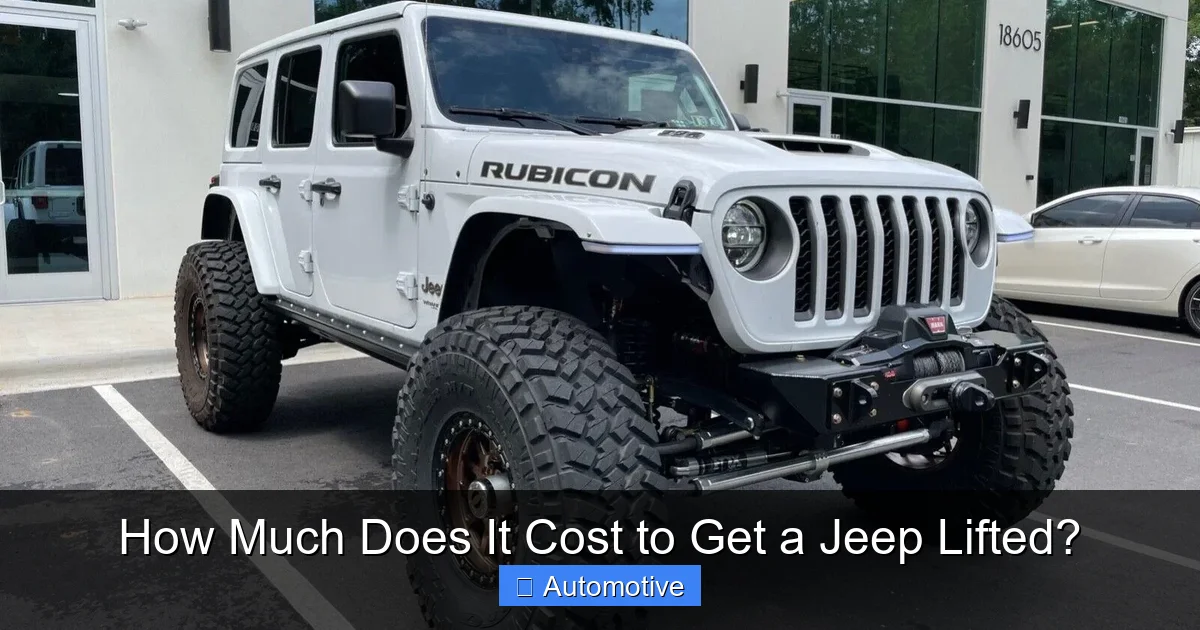
So, why do lift kit prices vary so much? Several key factors influence the final cost of lifting your Jeep. Understanding these can help you budget wisely and avoid surprises.
Jeep Model and Year
Not all Jeeps are built the same. The cost to lift a Wrangler JK (2007–2018) will differ from a newer JL (2018–present) or a Gladiator pickup. Newer models often have more complex suspension designs, which can affect kit availability and price.
For example, JL Wranglers use a different coil spring setup than JKs, so lift kits are not interchangeable. Kits for JLs may be slightly more expensive due to newer engineering and demand. Similarly, the Gladiator’s longer wheelbase and truck-based design can increase the cost of compatible lifts.
Older Jeeps (like YJ or TJ models) may have fewer modern lift options, but they’re often easier and cheaper to modify due to simpler suspension systems.
Lift Height
The taller you want to lift your Jeep, the more it will cost. A 2-inch lift is relatively simple and affordable. But once you go beyond 4 inches, you’ll likely need additional components like extended brake lines, adjustable control arms, slip yoke eliminators (SYE), and CV axle upgrades.
For example, a 6-inch lift on a Wrangler JK might require a SYE kit ($300–$600) and a new driveshaft ($400–$800) to prevent driveline vibration. These add-ons can quickly push the total cost over $2,000, even if the base lift kit is only $1,200.
Brand and Quality
Like any automotive part, lift kits vary in quality. Budget brands like Rough Country or Rugged Ridge offer affordable options, but may use lower-grade materials or less precise engineering. Premium brands like Teraflex, Fox, or ARB invest in research, testing, and high-quality components.
A $600 lift from a budget brand might perform well initially, but could wear out faster or require more maintenance. A $1,500 kit from a top brand may last longer, ride smoother, and come with better warranties. It’s often worth spending more for reliability, especially if you plan to use your Jeep off-road.
Installation Method
Are you doing it yourself or hiring a shop? Labor costs can add $300 to $1,500 to your total, depending on the complexity of the lift and local rates.
A simple 2-inch spacer lift might take 2–4 hours to install, costing $200–$400 in labor. A full long-arm suspension system could take 8–12 hours, pushing labor costs to $800–$1,500. Some shops also charge extra for alignment, brake line extensions, or additional parts.
DIY installation saves money but requires tools, mechanical knowledge, and time. If you’re not confident in your skills, professional installation is safer and ensures everything is done correctly.
Additional Upgrades
Lifting your Jeep often reveals the need for other upgrades. Larger tires, for instance, may require a regear of the differentials to maintain performance and fuel economy. A 35-inch tire setup might need 4.10 or 4.56 gear ratios, adding $800–$1,500 to your budget.
Other common add-ons include:
– Upgraded shocks ($200–$600)
– Steering stabilizers ($50–$150)
– Extended brake lines ($100–$300)
– Adjustable track bars ($150–$400)
– Skid plates or rock sliders ($300–$800)
These aren’t always required, but they improve safety, performance, and longevity. Factor them into your total cost to avoid sticker shock later.
DIY vs. Professional Installation: What’s the Difference?
Visual guide about How Much Does It Cost to Get a Jeep Lifted?
Image source: sherry4x4.com
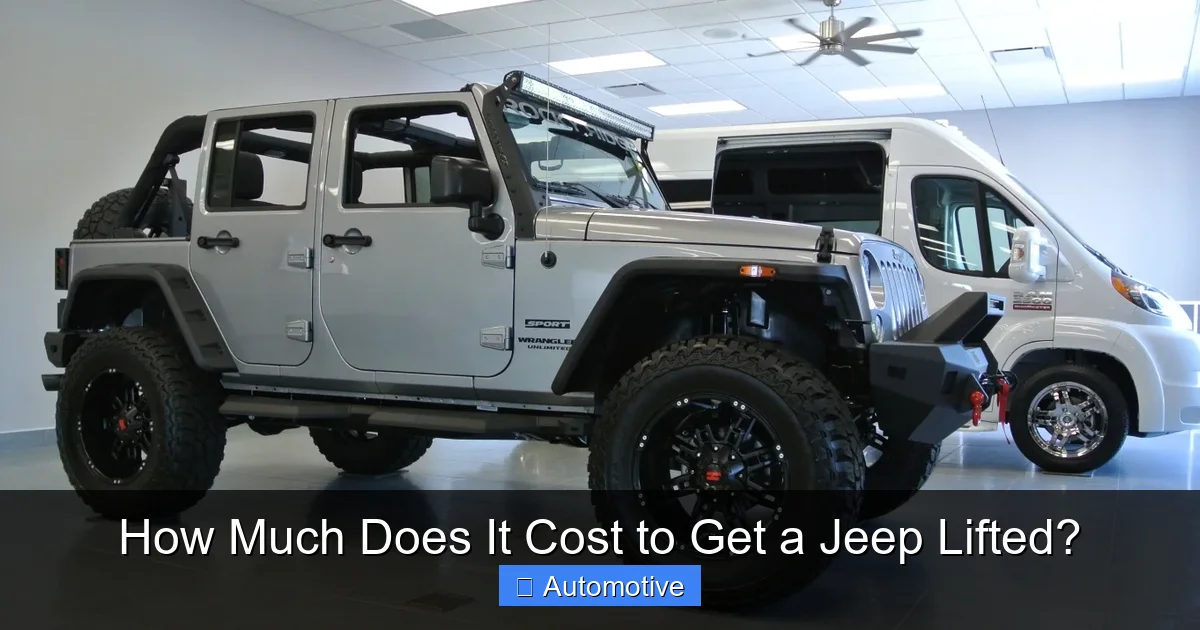
One of the biggest decisions you’ll make is whether to install the lift kit yourself or pay a professional. Both options have pros and cons, and the right choice depends on your skills, tools, and confidence.
DIY Installation: Save Money, Invest Time
Installing a lift kit yourself can save you hundreds—or even over a thousand—dollars in labor costs. Many Jeep owners take pride in doing their own mods, and with the right guidance, it’s totally doable.
For a 2- to 3-inch coil spring lift, you’ll need basic tools like a jack, jack stands, socket set, torque wrench, and spring compressors. Most kits come with detailed instructions, and online forums like JeepForum or YouTube tutorials offer step-by-step videos.
However, DIY isn’t without risks. Improper installation can lead to poor alignment, driveline vibration, or even safety issues. If you’re not experienced with suspension work, it’s easy to make mistakes—like over-tightening bolts or misaligning control arms.
Tip: Start with a simpler lift, like a spacer or small coil spring kit, to build confidence. Always torque bolts to spec and get a professional alignment afterward.
Professional Installation: Pay More, Gain Peace of Mind
Hiring a certified mechanic or off-road shop ensures the job is done right. Professionals have the tools, experience, and knowledge to handle complex lifts, especially long-arm or full suspension systems.
They’ll also check for compatibility issues, perform a post-install alignment, and may offer warranties on their work. This is especially important for taller lifts that affect steering, braking, and driveline angles.
The downside? Labor costs. Expect to pay $50–$120 per hour, depending on your location. A 6-hour job could cost $300–$700 in labor alone.
Tip: Get quotes from multiple shops and ask about their experience with your Jeep model. Some shops specialize in Jeeps and off-road mods, which can make a big difference in quality.
Hybrid Approach: Buy the Kit, Hire for Labor
Many Jeep owners buy the lift kit themselves (often cheaper online) and hire a shop just for installation. This gives you the best of both worlds: lower parts cost and professional labor.
Just make sure the shop is willing to install customer-provided parts. Some shops charge a markup or refuse outside kits due to liability concerns.
Real-World Cost Examples
To give you a clearer picture, here are a few real-world examples of lifting different Jeep models.
Example 1: 2018 Jeep Wrangler JL – 3-Inch Coil Spring Lift
– Lift Kit: Teraflex 3″ Coil Spring Lift – $1,100
– Shocks: Fox 2.0 Performance Series – $400
– Installation (DIY): $0
– Alignment: $100
– **Total: $1,600**
This setup gives you 35-inch tire clearance, improved off-road performance, and a smooth ride. Ideal for weekend trail rides and daily driving.
Example 2: 2012 Jeep Wrangler JK – 4-Inch Long-Arm Lift
– Lift Kit: Rock Krawler 4″ Long-Arm System – $3,200
– Shocks: King 2.5 Remote Reservoir – $1,000
– SYE Kit & Driveshaft: $700
– Professional Installation: $1,200
– **Total: $6,100**
This is a serious off-road build for rock crawling and overlanding. The long arms provide maximum articulation, and the King shocks handle rough terrain with ease.
Example 3: 2000 Jeep Wrangler TJ – 2-Inch Spacer Lift
– Lift Kit: Rough Country 2″ Spacer Lift – $250
– Installation (DIY): $0
– Larger Tires (33″): $600
– **Total: $850**
A budget-friendly option for a classic TJ. Great for mild trails and a lifted look without major investment.
Tips to Save Money When Lifting Your Jeep
Lifting your Jeep doesn’t have to break the bank. With smart planning, you can get the lift you want at a price you can afford.
Buy During Sales or Promotions
Many off-road retailers run sales around holidays like Black Friday, Memorial Day, or Jeep Jamborees. You can save 10–20% on lift kits and accessories during these events. Sign up for newsletters from brands like 4WP, ExtremeTerrain, or Quadratec to get alerts.
Consider Used or Reconditioned Parts
Check forums, Facebook groups, or Craigslist for used lift kits. Many Jeep owners upgrade and sell their old systems in good condition. Just inspect carefully and avoid worn or damaged parts.
Bundle Upgrades
Some shops offer package deals that include lift kits, shocks, and installation at a discounted rate. Bundling can save you 10–15% compared to buying separately.
Do What You Can Yourself
Even if you hire a shop for the main install, you can save by doing prep work—like removing wheels, disconnecting brakes, or cleaning components. Just don’t tackle anything you’re not comfortable with.
Plan Ahead for Additional Costs
Don’t forget tires, alignment, and possible gear changes. Budget an extra $500–$1,500 for these items to avoid financial stress later.
Conclusion
So, how much does it cost to get a Jeep lifted? The answer ranges from under $500 for a simple spacer lift to over $6,000 for a full long-arm suspension system with professional installation. The final price depends on your Jeep model, desired lift height, kit quality, and whether you DIY or hire a pro.
For casual drivers, a 2- to 3-inch coil spring lift offers a great balance of cost and performance. For serious off-roaders, investing in a premium long-arm system is worth every penny. And for those on a tight budget, a spacer or body lift can still give your Jeep that lifted look.
No matter your choice, remember that lifting your Jeep is more than just a mod—it’s an investment in adventure. With the right setup, your Jeep will be ready to conquer trails, turn heads, and deliver years of off-road excitement. Just plan your budget, do your research, and enjoy the ride.
Frequently Asked Questions
How much does it cost to lift a Jeep Wrangler?
The cost to lift a Jeep Wrangler ranges from $500 for a basic spacer lift to over $5,000 for a full long-arm suspension system. Most 3-inch coil spring lifts cost between $800 and $1,500 for parts, plus $300–$800 for professional installation.
Can I install a lift kit myself?
Yes, many Jeep owners install lift kits themselves, especially simpler 2- to 3-inch lifts. However, complex systems like long-arm suspensions are best left to professionals due to the technical skill and tools required.
Do I need new tires after lifting my Jeep?
Not always, but lifting your Jeep often allows for larger tires, which improve off-road performance. A 3- to 4-inch lift typically supports 35-inch tires, while taller lifts can handle 37 inches or more.
Will lifting my Jeep affect gas mileage?
Yes, lifting your Jeep and installing larger tires can reduce fuel efficiency due to increased weight and rolling resistance. Regearing the differentials can help restore performance and improve mileage.
How long does it take to install a lift kit?
Installation time varies: a 2-inch spacer lift may take 2–4 hours, while a full long-arm system can take 8–12 hours. Professional shops often complete complex lifts in 1–2 days.
Is a lifted Jeep harder to drive?
A properly installed lift shouldn’t make your Jeep harder to drive. However, taller lifts can raise the center of gravity, affecting handling. Upgraded shocks, steering stabilizers, and proper alignment help maintain stability and safety.
