
How Much Is a Bmw Catalytic Converter Worth?

The value of a BMW catalytic converter depends on model, engine size, and precious metal content. On average, they range from $150 to over $1,200 when sold for scrap, with high-end models like the M5 or X5 commanding premium prices due to higher platinum, palladium, and rhodium levels.
Key Takeaways
- BMW catalytic converters are valuable due to high precious metal content: They contain platinum, palladium, and rhodium—metals that drive up scrap value significantly.
- Prices vary widely by model and year: A 2020 BMW M5 converter may fetch over $1,000, while older 3-Series models might only bring $150–$300.
- Engine size and configuration matter: V8 and turbocharged engines often have larger or dual catalytic converters, increasing total worth.
- Condition and location impact payout: Clean, undamaged converters with intact honeycomb structures get higher prices at scrap yards.
- Selling to certified recyclers ensures fair value: Avoid lowball offers by working with reputable buyers who test metal content accurately.
- Stolen converters are a growing issue: Protect your BMW with etching, shielding, or parking in secure areas to deter theft.
- Legal and environmental considerations apply: Always follow local regulations when removing or selling catalytic converters.
📑 Table of Contents
- Understanding the Value of a BMW Catalytic Converter
- What Makes BMW Catalytic Converters So Valuable?
- Average Prices by BMW Model and Year
- How to Determine the Value of Your BMW Catalytic Converter
- Selling Your BMW Catalytic Converter: Tips and Warnings
- Protecting Your BMW from Catalytic Converter Theft
- Conclusion: Knowing the True Value of Your BMW Catalytic Converter
Understanding the Value of a BMW Catalytic Converter
If you’ve ever wondered, “How much is a BMW catalytic converter worth?” you’re not alone. These small but critical components play a major role in reducing harmful emissions from your vehicle. But beyond their environmental function, they’re also packed with precious metals that make them surprisingly valuable—especially when it comes time to recycle or replace them.
BMW vehicles are known for their performance, luxury, and engineering precision. That same attention to detail extends to their emissions systems. BMW catalytic converters are designed to meet strict European and U.S. emissions standards, which means they often contain higher concentrations of precious metals compared to average vehicles. This makes them a prime target for scrap metal dealers—and unfortunately, for thieves as well.
The value of a BMW catalytic converter isn’t fixed. It fluctuates based on several factors, including the specific model, engine type, year of manufacture, and current market prices for metals like platinum, palladium, and rhodium. For example, a catalytic converter from a 2022 BMW M4 Competition might be worth three to four times more than one from a 2010 BMW 328i. Understanding these variables can help you make informed decisions—whether you’re selling a used converter, replacing a damaged one, or simply curious about your car’s hidden value.
What Makes BMW Catalytic Converters So Valuable?
Visual guide about How Much Is a Bmw Catalytic Converter Worth?
Image source: maritimeherald.com
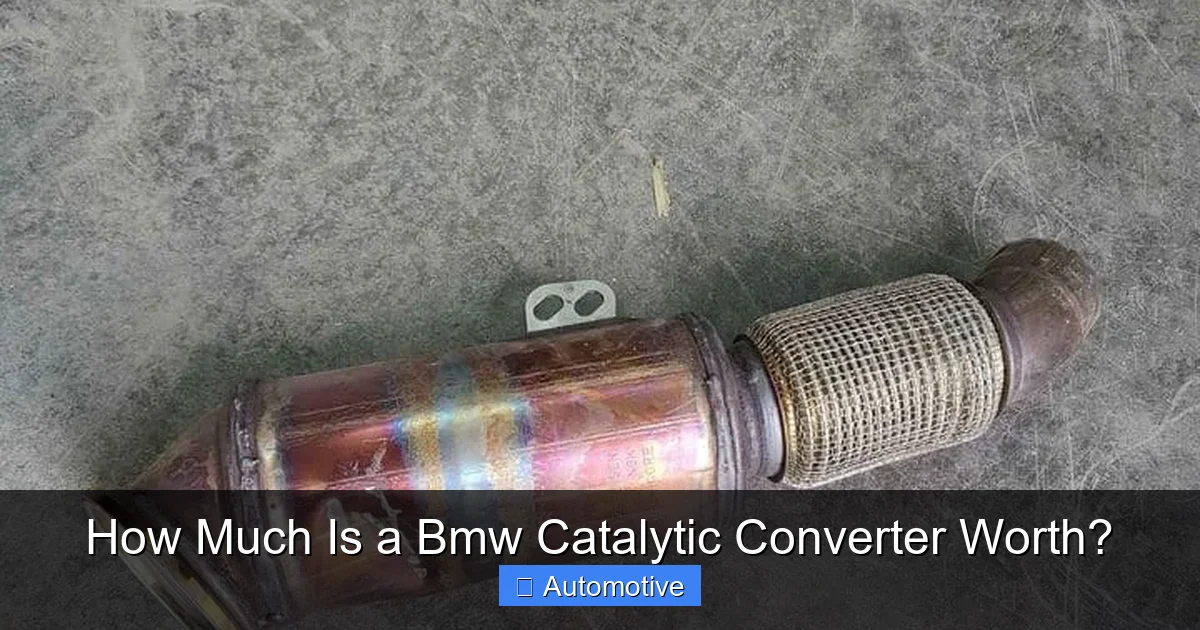
At the heart of every catalytic converter is a ceramic or metallic honeycomb structure coated with precious metals. These metals act as catalysts, converting harmful gases like carbon monoxide, nitrogen oxides, and hydrocarbons into less harmful substances such as carbon dioxide, nitrogen, and water vapor. In BMW vehicles, this process is optimized for high performance and efficiency, which often requires more—and higher-grade—precious metals.
The three key metals found in BMW catalytic converters are:
– Platinum: Known for its durability and effectiveness in reducing emissions, platinum is one of the most valuable components. It’s especially common in older BMW models.
– Palladium: Used extensively in gasoline engines, palladium has seen skyrocketing prices in recent years due to supply shortages and high demand.
– Rhodium: The rarest and most expensive of the three, rhodium is used in smaller amounts but can dramatically increase a converter’s value. A single gram of rhodium can cost over $10,000 at peak market prices.
Because BMW engines—particularly those in performance models like the M Series—run hotter and produce more exhaust flow, they require more robust catalytic converters. This often means larger substrates and higher metal loading. For instance, a BMW M5 with a twin-turbo V8 engine may have two or even three catalytic converters, each packed with premium materials. That’s why a full set from such a vehicle can be worth well over $1,000 when recycled.
Why Precious Metals Drive the Price
The value of a catalytic converter is directly tied to the global market prices of platinum, palladium, and rhodium. These metals are not only rare but also essential in industries beyond automotive, including electronics, jewelry, and renewable energy. When demand surges—such as during supply chain disruptions or increased production of hybrid and gasoline vehicles—prices can spike dramatically.
For example, in 2021 and 2022, palladium prices reached record highs, exceeding $2,500 per troy ounce. During that time, a single BMW catalytic converter from a high-performance model could easily fetch $800–$1,200 at a reputable scrap yard. Even as prices stabilize, the baseline value remains strong due to ongoing demand.
It’s also worth noting that newer BMW models (especially those with gasoline direct injection and turbocharging) tend to use more palladium and rhodium than older models, which relied more on platinum. This shift reflects advancements in emissions technology and regulatory requirements. As a result, a 2023 BMW X7 converter may be worth significantly more than a 2008 BMW 550i converter, even if both are in similar condition.
How BMW’s Engineering Affects Converter Value
BMW doesn’t just use more precious metals—it also designs its catalytic converters for maximum efficiency and longevity. Many BMW models feature close-coupled converters, which are mounted close to the engine for faster warm-up and better emission control. These converters often have higher metal loading because they must handle extreme temperatures and exhaust flow rates.
Additionally, BMW’s use of lightweight materials and advanced manufacturing techniques means their converters are often more compact yet more effective. This precision engineering translates into higher scrap value, as recyclers can extract more usable metal per unit weight.
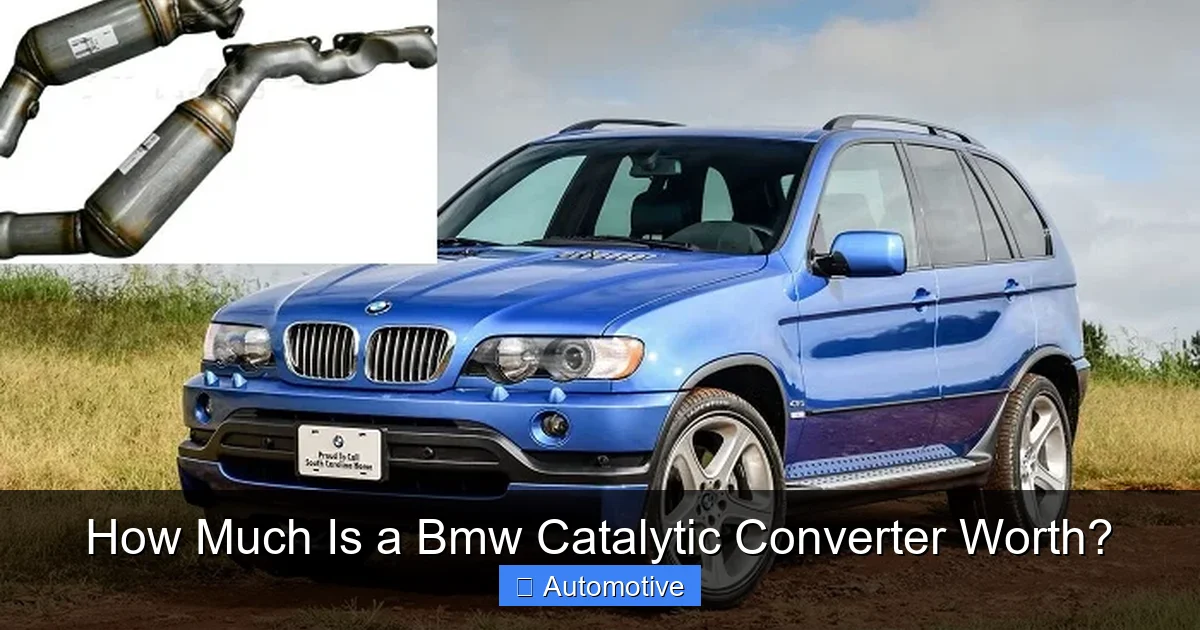
Another factor is the use of dual catalytic converters in many BMW models. Vehicles like the BMW M3, M4, and X5 often have two converters—one for each exhaust bank—doubling the potential scrap value. Even non-M models like the 5 Series or 7 Series may have dual setups depending on the engine configuration.
Average Prices by BMW Model and Year
Visual guide about How Much Is a Bmw Catalytic Converter Worth?
Image source: cararac.com
So, how much is a BMW catalytic converter worth in real-world terms? While prices fluctuate, we can break down average values based on common models and years. Keep in mind that these are estimates for clean, intact converters sold to certified recyclers. Damaged or contaminated units will fetch less.
Entry-Level and Mid-Range Models
For older or smaller BMW models, catalytic converter values tend to be on the lower end—but still substantial compared to economy cars.
– BMW 3 Series (E90, F30, 2006–2015): $150–$350 per converter. The 328i and 335i models with inline-6 engines typically have one or two converters. The 335i, with its turbocharged engine, often has higher metal content and may reach the upper end of this range.
– BMW 5 Series (E60, F10, 2004–2016): $200–$450. The 535i and 550i models with V8 engines usually have dual converters, increasing total value.
– BMW X3 (E83, F25, 2004–2017): $180–$380. Similar to the 3 Series, but slightly higher due to SUV demand and larger engine options.
These models are popular among recyclers because they’re common on the road and often reach the end of their life around the same time, creating steady supply. However, their lower metal loading means they won’t command top dollar unless market prices for palladium or rhodium are unusually high.
High-Performance and Luxury Models
When it comes to high-end BMWs, the value jumps significantly. Performance models like the M Series and luxury SUVs like the X7 are designed for power and efficiency, which requires more advanced—and expensive—emissions systems.
– BMW M3/M4 (F80/F82, 2014–2020): $600–$1,000 per converter. These models often have dual high-flow converters with elevated palladium and rhodium content. A full set can exceed $1,800.
– BMW M5 (F10, 2012–2016): $700–$1,200 per converter. The twin-turbo V8 produces intense exhaust flow, requiring robust converters with premium metal loading.
– BMW X5/X6 (F15/F16, 2014–2019): $400–$800. These SUVs often have dual converters and larger substrates, especially in the xDrive50i trim with the V8 engine.
– BMW 7 Series (G11/G12, 2016–2022): $500–$900. The 750i and 760i models with V8 and V12 engines have high-value converters due to their size and metal content.
Newer models, such as the 2023 BMW M5 CS or the 2024 BMW iX, may have even higher values due to increased use of rhodium and advanced catalyst formulations. As emissions standards tighten, automakers are packing more precious metals into smaller spaces, boosting scrap potential.
Factors That Can Increase or Decrease Value
Even within the same model, the value of a catalytic converter can vary. Here are key factors that influence price:
– Year of Manufacture: Newer models (2018–2024) generally have higher metal content due to stricter emissions laws.
– Engine Type: V8, V12, and turbocharged engines typically have more valuable converters than 4-cylinder or naturally aspirated engines.
– Converter Condition: Intact, uncut converters with clean honeycomb structures are worth more. Crushed, melted, or contaminated units may be rejected or paid at a discount.
– Geographic Location: Scrap prices vary by region due to local demand, regulations, and transportation costs. Urban areas with more recycling centers often offer better rates.
– Market Timing: Prices for palladium and rhodium can swing wildly. Selling during a market peak can double your payout.
For example, a 2020 BMW M5 converter sold in early 2022—when rhodium prices were near all-time highs—might have fetched $1,300. The same converter in 2024, with lower metal prices, might only bring $800–$900.
How to Determine the Value of Your BMW Catalytic Converter
Visual guide about How Much Is a Bmw Catalytic Converter Worth?
Image source: rockawayrecycling.com
If you’re considering selling your BMW catalytic converter, the first step is to assess its potential value. Here’s a practical guide to help you get an accurate estimate.
Step 1: Identify Your BMW Model and Engine
Start by checking your vehicle’s VIN or owner’s manual to confirm the model, year, and engine type. This information is crucial because even small differences—like a 328i vs. a 335i—can significantly affect converter value.
You can also look under your car (safely, with proper support) to locate the catalytic converter. BMWs typically have one or two converters mounted near the engine or under the front passenger area. Count them and note their size and condition.
Step 2: Check the Converter Stamp
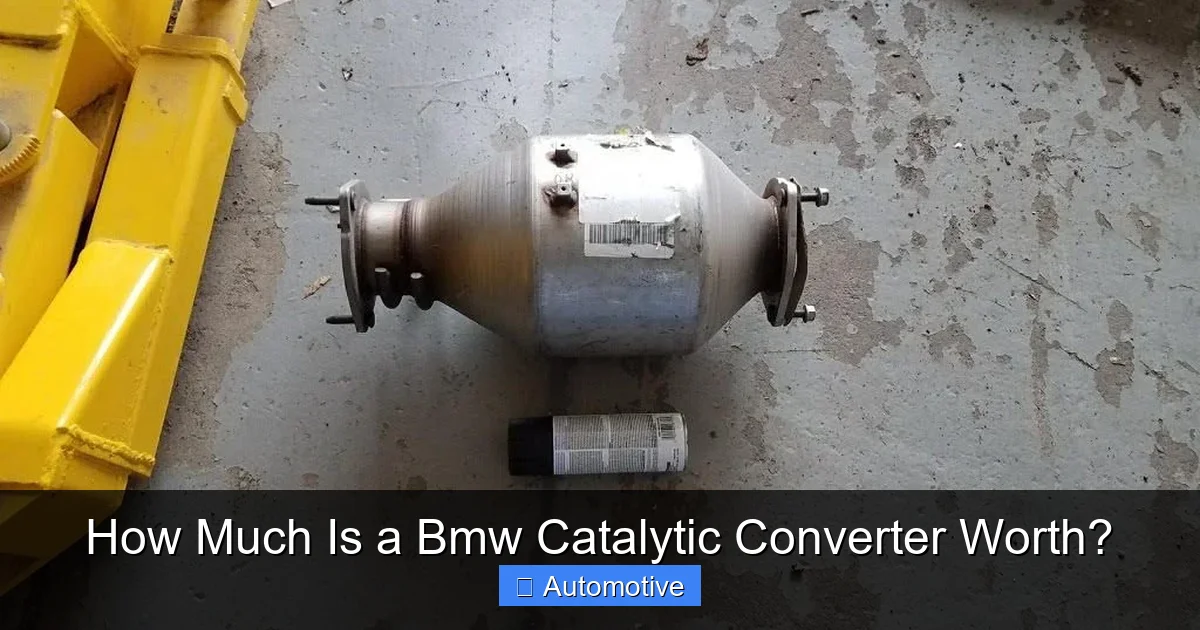
Most catalytic converters have a stamp or label with a serial number, manufacturer code, or part number. This can help identify the specific type and metal content. For example, converters from OEM suppliers like Eberspächer, HJS, or MagnaFlow often have higher value due to quality and metal loading.
You can use online databases or contact a scrap yard to look up the stamp. Some recyclers offer free identification services—just be cautious about sharing photos that could reveal your location or vehicle details.
Step 3: Get Quotes from Multiple Buyers
Don’t settle for the first offer. Contact at least three reputable catalytic converter buyers or scrap yards in your area. Provide them with your BMW’s details and the converter’s condition. Many buyers now use XRF (X-ray fluorescence) analyzers to test metal content on the spot, ensuring fair pricing.
Online platforms like Converter King, Catalytic Converter Buyers, or local metal recyclers often post current price lists. Some even offer mail-in services, though shipping can reduce your net payout.
Step 4: Consider Timing and Market Conditions
If you’re not in a rush, monitor precious metal prices using resources like Kitco or Bloomberg. Palladium and rhodium prices tend to peak during supply shortages or increased automotive production. Selling during a high-price window can boost your return by 20–50%.
However, don’t wait too long—converters degrade over time, and damaged units lose value quickly.
Selling Your BMW Catalytic Converter: Tips and Warnings
Selling a catalytic converter isn’t as simple as dropping it off at a scrap yard. There are legal, safety, and financial considerations to keep in mind.
Legal Requirements
In the U.S., it’s illegal to remove and sell a catalytic converter from a vehicle that’s still in use—unless it’s being replaced due to damage or failure. Most states require proof of ownership and a valid reason for removal. Selling a converter from a stolen or scrapped vehicle without documentation can lead to fines or legal trouble.
Always obtain a bill of sale or scrap receipt when selling. Reputable buyers will ask for your ID and vehicle registration to comply with anti-theft laws.
Avoiding Scams and Lowball Offers
Unfortunately, the high value of catalytic converters has led to a rise in scams. Some buyers offer flat rates (e.g., “$200 per converter”) without testing metal content. Others may claim your converter is “low grade” to justify a low offer.
To protect yourself:
– Only deal with certified recyclers or licensed scrap yards.
– Ask for a written quote based on metal content, not just model.
– Avoid cash-only transactions with no receipt.
– Never sell to someone who refuses to test the converter on-site.
Environmental and Ethical Considerations
Catalytic converters contain hazardous materials and should never be discarded in regular trash. Recycling ensures that precious metals are recovered and reused, reducing the need for mining and environmental damage.
Choose recyclers who follow EPA guidelines and provide documentation of proper handling. Some companies even offer carbon offset programs or donate a portion of profits to environmental causes.
Protecting Your BMW from Catalytic Converter Theft
With values ranging from hundreds to over a thousand dollars, BMW catalytic converters are prime targets for thieves. In fact, thefts have increased by over 300% in some areas in recent years.
Why Are BMW Converters So Targeted?
BMW vehicles are popular, widely owned, and often parked in residential areas—making them easy targets. Their converters are also known for high metal content, especially in performance models. Thieves can remove a converter in under two minutes using basic tools, then sell it for quick cash.
Practical Anti-Theft Measures
You can reduce the risk of theft with these proven strategies:
– Etch Your VIN on the Converter: Many police departments offer free etching services. This makes the converter traceable and less attractive to buyers.
– Install a Catalytic Converter Shield: Aftermarket shields (like those from Cat Security or CatClamp) make removal much harder and take longer.
– Park in Well-Lit, Secure Areas: Garages, monitored lots, or areas with security cameras deter thieves.
– Use a Vehicle Alarm with Tilt Sensors: These detect when your car is lifted or jacked up.
– Engrave or Paint the Converter: Bright paint or permanent markers make stolen converters easier to identify.
Some insurance companies offer discounts for anti-theft devices, so check with your provider.
Conclusion: Knowing the True Value of Your BMW Catalytic Converter
So, how much is a BMW catalytic converter worth? The answer isn’t one-size-fits-all. It depends on your specific model, engine, year, and the current market for precious metals. But one thing is clear: BMW catalytic converters are among the most valuable in the automotive world, thanks to their high content of platinum, palladium, and rhodium.
Whether you’re selling a used converter, replacing a damaged one, or simply protecting your investment, understanding its worth empowers you to make smarter decisions. By knowing what drives value, how to assess your converter, and how to sell it safely, you can turn a hidden component into real financial benefit.
And with theft on the rise, taking proactive steps to secure your converter is just as important as knowing its price. A little knowledge and preparation can save you thousands—and keep your BMW running clean and legal for years to come.
Frequently Asked Questions
How much is a BMW catalytic converter worth on average?
The average value ranges from $150 to over $1,200, depending on the model, engine, and metal content. High-performance models like the M5 or X5 typically fetch the highest prices.
Why are BMW catalytic converters so expensive?
They contain high levels of precious metals like platinum, palladium, and rhodium, which are essential for reducing emissions and are in high demand globally.
Can I sell a catalytic converter from my BMW?
Yes, but only if it’s removed legally—such as during a repair or after the vehicle is scrapped. You’ll need proof of ownership and may need to comply with local regulations.
How do I find out the value of my specific BMW converter?
Identify your model, engine, and converter stamp, then get quotes from multiple certified recyclers who test metal content using XRF analyzers.
Are newer BMW models worth more for catalytic converter scrap?
Generally, yes. Newer models (2018–2024) often have higher rhodium and palladium content due to stricter emissions standards, increasing their scrap value.
What should I do if my BMW catalytic converter is stolen?
Report the theft to police immediately, contact your insurance company, and consider installing anti-theft devices like shields or VIN etching to prevent future incidents.