
Is Toyota Prepaid Maintenance Worth It?

Deciding whether Toyota prepaid maintenance is worth it depends on your driving habits, budget, and long-term ownership plans. This comprehensive guide breaks down the costs, benefits, and alternatives so you can choose what’s best for your Toyota.
Key Takeaways
- Predictable Costs: Prepaid maintenance locks in service prices, protecting you from future rate increases and making budgeting easier.
- Convenience and Peace of Mind: Scheduled services are pre-paid and often include reminders, reducing the hassle of remembering maintenance intervals.
- Potential Savings: For high-mileage drivers or those planning to keep their Toyota long-term, the plan can offer significant savings over pay-as-you-go servicing.
- Coverage Limitations: The plan typically covers only routine maintenance—oil changes, tire rotations, inspections—not repairs or unexpected issues.
- Transferability and Resale Value: Some plans are transferable to a new owner, which can increase your vehicle’s resale appeal.
- Not Ideal for Low-Mileage Drivers: If you drive less than 10,000 miles per year, you may not use all the services, making the plan less cost-effective.
- Shop Around: Compare the prepaid plan cost with local dealership and independent shop pricing to determine true value.
📑 Table of Contents
- Is Toyota Prepaid Maintenance Worth It?
- What Is Toyota Prepaid Maintenance?
- Cost Breakdown: How Much Does It Really Cost?
- Who Benefits Most from Toyota Prepaid Maintenance?
- Pros and Cons of Toyota Prepaid Maintenance
- Alternatives to Prepaid Maintenance
- Real-World Example: Sarah’s Story
- Tips for Getting the Most Value
- Final Verdict: Is It Worth It?
Is Toyota Prepaid Maintenance Worth It?
So, you’ve just driven off the lot in a shiny new Toyota—or maybe you’re thinking about buying one. Congratulations! You’ve chosen a brand known for reliability, longevity, and low ownership costs. But now comes a decision that many Toyota owners face: Should you sign up for Toyota’s prepaid maintenance plan?
It’s a question that pops up at the dealership, usually right after you’ve signed the paperwork and before you’ve even had your first cup of coffee in the new ride. The salesperson makes it sound like a no-brainer: “Pay now, save later,” they say. “Never worry about oil changes again!” But is it really that simple?
The truth is, whether Toyota prepaid maintenance is worth it depends on a mix of factors—your driving habits, how long you plan to keep the car, your budget, and even your tolerance for planning ahead. In this guide, we’ll walk you through everything you need to know to make an informed decision. We’ll break down what the plan covers, how much it costs, who benefits most, and what alternatives exist. By the end, you’ll have a clear picture of whether this prepaid plan is a smart investment or just another upsell.
Let’s dive in.
What Is Toyota Prepaid Maintenance?
Visual guide about Is Toyota Prepaid Maintenance Worth It?
Image source: rochestertoyota.com
Before we can decide if it’s worth it, we need to understand exactly what Toyota’s prepaid maintenance plan is—and what it isn’t.
Toyota’s prepaid maintenance plan, often called the Toyota Care Plus or Toyota Maintenance Plan, is a service contract that covers scheduled maintenance for your vehicle over a set period. You pay a lump sum upfront (or sometimes finance it), and in return, Toyota handles all your routine maintenance services at no additional cost during the coverage period.
These plans are typically offered at the time of purchase or lease and can cover anywhere from 2 years/25,000 miles up to 5 years/60,000 miles, depending on the package. The most common option is the 2-year/25,000-mile plan, which aligns with Toyota’s complimentary maintenance offer on new vehicles.
What’s Included in the Plan?
The prepaid plan covers a range of standard maintenance tasks that are part of Toyota’s recommended service schedule. These typically include:
– Oil and filter changes (using Toyota Genuine Motor Oil)
– Tire rotations
– Multi-point inspections
– Fluid top-offs (washer fluid, coolant, brake fluid)
– Brake inspections
– Air filter replacements
– Cabin air filter replacements
– Spark plug replacements (at specified intervals)
All services are performed at authorized Toyota dealerships using genuine Toyota parts and factory-trained technicians. This ensures consistency and quality, which is a big plus for many owners.
What’s NOT Covered?
It’s important to note that the prepaid plan does not cover repairs due to wear and tear, accidents, or mechanical failures. So if your alternator dies or your transmission starts acting up, that’s not included. Also, things like tire replacements (beyond rotation), wiper blades, battery replacements, and brake pad or rotor replacements are usually not covered unless they’re part of a scheduled service.
In short: routine maintenance = covered. Repairs and unexpected issues = not covered.
How Does It Work?
Once you purchase the plan, your vehicle is enrolled in Toyota’s system. When it’s time for service, you simply schedule an appointment at any Toyota dealership. The service department pulls up your plan, performs the required maintenance, and bills Toyota directly—no out-of-pocket cost to you.
Some plans also include service reminders via email or text, so you don’t have to keep track of mileage or service intervals. It’s a hands-off approach that many drivers appreciate.
Cost Breakdown: How Much Does It Really Cost?

Visual guide about Is Toyota Prepaid Maintenance Worth It?
Image source: toyotaeastern.com
Now let’s talk money—because that’s usually the deciding factor.
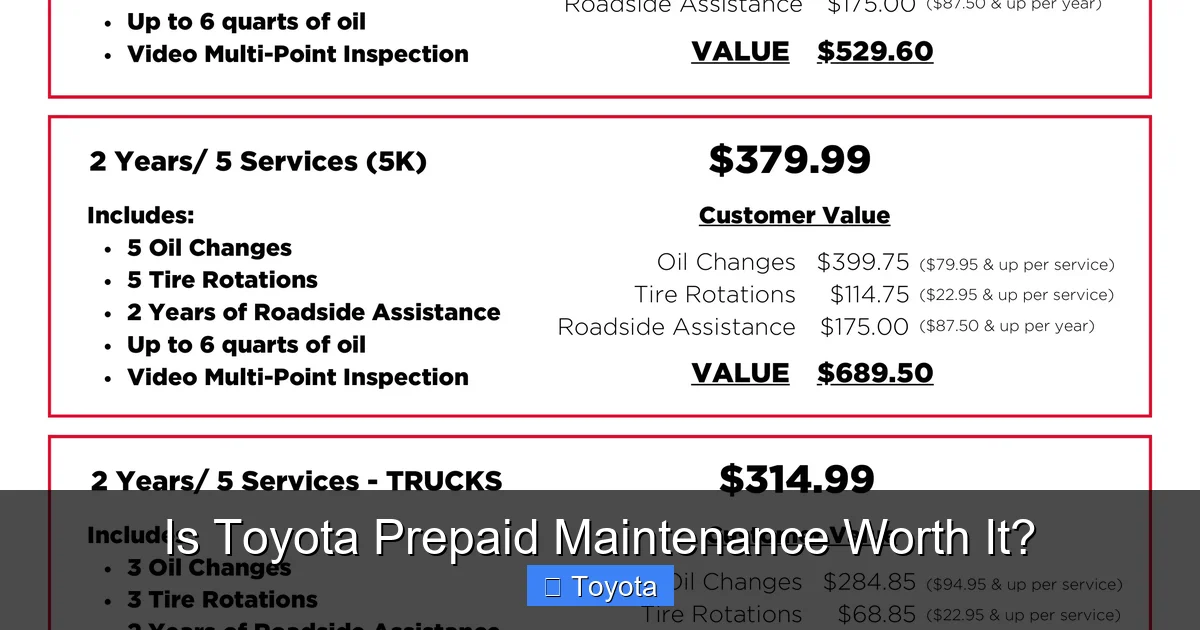
The cost of a Toyota prepaid maintenance plan varies based on the model, coverage length, and dealership. On average, here’s what you can expect:
– 2-year/25,000-mile plan: $300–$500
– 3-year/35,000-mile plan: $500–$700
– 4-year/50,000-mile plan: $700–$900
– 5-year/60,000-mile plan: $900–$1,200
These are ballpark figures. Some dealerships may offer discounts, bundle the plan with other services, or include it for free with certain promotions. Always ask for a detailed quote.
Comparing to Pay-As-You-Go Costs
To determine if the plan is worth it, let’s compare the upfront cost to what you’d pay if you serviced your Toyota out of pocket.
Let’s take a typical 2-year/25,000-mile scenario:
– Oil change (every 5,000 miles): 5 changes × $50 = $250
– Tire rotation (every 5,000 miles): 5 rotations × $30 = $150
– Multi-point inspection (included with oil change): $0
– Air filter replacement (once): $40
– Cabin air filter (once): $35
– Brake inspection (twice): $0 (usually included)
Total estimated pay-as-you-go cost: ~$475
Now, if the prepaid plan costs $400, you’re saving $75. But if it costs $500, you’re paying $25 more.
However, this is a simplified example. Prices vary by region and dealership. In high-cost areas, oil changes can run $70–$90, and labor rates can be higher. In those cases, the prepaid plan starts to look more attractive.
Inflation and Future Price Increases
One of the biggest advantages of prepaid maintenance is that it locks in today’s prices. Over time, labor and parts costs tend to rise. By paying upfront, you avoid future price hikes.
For example, if oil changes increase by 10% per year, a $50 oil change could cost $60.50 in two years. Over five years, that adds up. The prepaid plan shields you from that inflation.
Financing the Plan
Many dealerships allow you to roll the cost of the prepaid plan into your auto loan. This spreads the cost over several years, making it more manageable. However, you’ll pay interest on that amount, so the total cost increases.
For instance, adding a $500 plan to a 5-year loan at 4% interest could cost an extra $50–$60 in interest. It’s still often cheaper than paying out of pocket over time, but it’s something to consider.
Who Benefits Most from Toyota Prepaid Maintenance?

Visual guide about Is Toyota Prepaid Maintenance Worth It?
Image source: passporttoyota.com
Not every driver will get equal value from a prepaid maintenance plan. Let’s look at who benefits the most—and who might want to skip it.
High-Mileage Drivers
If you drive 15,000 miles or more per year, you’ll hit service intervals quickly. For example, oil changes every 5,000 miles mean three changes per year. Over three years, that’s nine oil changes, multiple tire rotations, and several inspections.
In this case, the prepaid plan can save you hundreds of dollars. Plus, you’ll never forget a service—your car stays in top shape, which can extend its lifespan and resale value.
Long-Term Owners
If you plan to keep your Toyota for 5–10 years, a longer prepaid plan (like 4 or 5 years) can be a smart move. You’ll cover the most critical early maintenance years, when wear and tear start to accumulate. This helps maintain performance and reliability.
Long-term ownership also means more exposure to rising service costs. Locking in prices early protects your budget.
Busy Professionals and Families
Life gets busy. Between work, kids, and errands, it’s easy to let maintenance slide. A prepaid plan removes the mental load. You don’t have to remember when the last oil change was or worry about missing a service. Just schedule and go.
For families with multiple vehicles, this convenience multiplies. One plan per car means less to track.
People Who Prefer Dealership Service
Some drivers prefer the consistency and expertise of Toyota dealerships. They trust factory-trained technicians and genuine parts. If you’re one of them, the prepaid plan ensures you’ll always get that level of service without paying extra.
It also builds a service history with the dealership, which can be helpful if you ever need warranty work or trade-in evaluations.
Who Should Think Twice?
On the flip side, the plan may not be worth it if:
– You drive less than 10,000 miles per year
– You plan to sell or trade in your Toyota within 2–3 years
– You’re comfortable handling maintenance yourself or using independent shops
– You’re on a tight budget and can’t afford the upfront cost
Low-mileage drivers, for example, might only need two oil changes in two years. Paying $400 for a plan that covers five changes is overkill.
Similarly, if you’re leasing or flipping cars every few years, you may not use all the services. And if you’re handy with a wrench, you could save even more by doing basic maintenance yourself.
Pros and Cons of Toyota Prepaid Maintenance
Let’s summarize the key advantages and disadvantages to help you weigh your options.
Pros
- Cost Predictability: You know exactly what you’re paying upfront. No surprise bills for routine services.
- Inflation Protection: Locks in current prices, shielding you from future increases.
- Convenience: No need to track service intervals or shop around for deals. Just schedule and go.
- Peace of Mind: Regular maintenance helps prevent breakdowns and keeps your Toyota running smoothly.
- Transferability: Some plans can be transferred to a new owner, which may increase resale value.
- Dealership Quality: Services performed by certified technicians using genuine parts.
Cons
- Upfront Cost: Requires a lump-sum payment, which may strain your budget.
- Overpaying for Low Use: If you don’t drive much, you may not use all the services.
- Dealership-Only: Must be used at Toyota dealerships—no independent shops or DIY.
- No Repair Coverage: Only covers scheduled maintenance, not repairs or unexpected issues.
- Non-Refundable: If you sell the car early, you usually can’t get a refund for unused services.
- Potential for Upselling: Some dealerships may push unnecessary add-ons during service visits.
Alternatives to Prepaid Maintenance
If the prepaid plan doesn’t feel right, you have other options.
Pay-As-You-Go at Dealerships
You can simply pay for each service as it’s needed. This gives you flexibility and control. You can shop around, compare prices, and choose when to service your vehicle.
The downside? You’re exposed to price increases, and it’s easy to forget or delay services.
Independent Mechanics
Many independent shops offer quality service at lower prices than dealerships. They often use OEM-equivalent parts and can perform the same maintenance tasks.
Just make sure they follow Toyota’s service schedule and keep records—this helps maintain your warranty and resale value.
DIY Maintenance
If you’re mechanically inclined, you can save even more by doing basic tasks yourself: oil changes, air filter replacements, wiper blade swaps, etc.
YouTube tutorials and Toyota service manuals make it easier than ever. Just be sure to use the correct oil and parts to avoid voiding your warranty.
Extended Warranties with Maintenance
Some extended warranty plans include maintenance coverage. These are more comprehensive but also more expensive. They’re best for drivers who want full protection beyond routine service.
Real-World Example: Sarah’s Story
Let’s look at a real-life scenario to illustrate the value.
Sarah buys a new Toyota RAV4 and drives 18,000 miles per year for work. She plans to keep the car for at least 6 years. At her dealership, she’s offered a 3-year/35,000-mile prepaid maintenance plan for $600.
Over three years, she’ll need:
– 7 oil changes (every 5,000 miles)
– 7 tire rotations
– 2 air filter replacements
– 2 cabin air filter replacements
– Multiple inspections
If she pays out of pocket at $60 per oil change and $35 per rotation, her total cost would be around $700–$750. Plus, she’d have to remember to schedule each service.
By paying $600 upfront, Sarah saves $100–$150 and avoids the hassle. She also locks in prices, so even if costs rise, she’s protected.
For Sarah, the plan is clearly worth it.
Now consider Mike, who drives only 7,000 miles per year and plans to trade in his Camry after 2 years. He’s offered a 2-year/25,000-mile plan for $400.
In two years, he’ll likely only need 3 oil changes and 3 tire rotations—total pay-as-you-go cost: ~$270. Paying $400 for the plan means he overpays by $130.
For Mike, the plan isn’t worth it.
Tips for Getting the Most Value
If you decide to go with a prepaid plan, here are some tips to maximize its value:
– Compare Quotes: Get pricing from multiple dealerships. Some may offer better deals.
– Ask About Discounts: Mention you’re comparing options—dealers may lower the price to win your business.
– Check Transferability: If you might sell the car, choose a plan that’s transferable.
– Keep Records: Even though it’s prepaid, keep service receipts and records for your files.
– Use It: Don’t let services go unused. Schedule appointments on time to get full value.
– Combine with Other Offers: Sometimes dealers bundle prepaid maintenance with free inspections or tire rotations.
Final Verdict: Is It Worth It?
So, is Toyota prepaid maintenance worth it?
The answer is: it depends—but for many drivers, yes.
If you’re a high-mileage driver, plan to keep your Toyota long-term, or simply value convenience and peace of mind, the plan can save you money and hassle. It’s especially valuable in areas with high labor rates or for those who want to avoid the mental load of tracking maintenance.
However, if you drive very little, plan to sell soon, or prefer to handle maintenance on your own terms, paying as you go—or using independent shops—might be the better choice.
Ultimately, the best decision is an informed one. Do the math for your specific situation. Compare the plan cost to estimated out-of-pocket expenses. Consider your lifestyle and driving habits.
And remember: regular maintenance is non-negotiable for keeping your Toyota reliable and valuable. Whether you prepay or pay as you go, staying on top of service is the real key to long-term satisfaction.
Drive safe, and enjoy your Toyota!
Frequently Asked Questions
Can I use the prepaid maintenance plan at any Toyota dealership?
Yes, Toyota prepaid maintenance plans are accepted at any authorized Toyota dealership in the U.S. You don’t have to return to the dealership where you purchased the vehicle.
What happens if I sell my Toyota before the plan expires?
Some prepaid plans are transferable to a new owner, which can increase your car’s resale value. Check the terms of your specific plan—most allow transfer for a small fee.
Does the plan cover tire replacements or brake pads?
No, the plan only covers routine maintenance like oil changes and inspections. Tire replacements, brake pads, and other wear items are not included unless part of a scheduled service.
Can I cancel the plan and get a refund?
Generally, prepaid maintenance plans are non-refundable. However, some dealerships may offer partial refunds if you sell the vehicle early—ask about cancellation policies before purchasing.
Is the plan worth it for a used Toyota?
Prepaid plans are typically only offered on new or certified pre-owned vehicles. For older used Toyotas, pay-as-you-go or independent shop service is usually more cost-effective.
Do I still need to follow the maintenance schedule if I have the plan?
Yes, you should still follow Toyota’s recommended maintenance schedule. The plan covers the services, but you’re responsible for scheduling them on time to keep your warranty valid and your car in good condition.
