
What Is Eco Heat/cool on Toyota Corolla?

The Eco Heat/Cool feature on the Toyota Corolla is an intelligent climate control system designed to optimize cabin comfort while reducing fuel consumption. It works by adjusting heating and cooling based on driving conditions, outside temperature, and engine load, helping drivers save fuel without sacrificing comfort.
Key Takeaways
- Eco Heat/Cool enhances fuel efficiency: By minimizing unnecessary HVAC system strain, it reduces engine load and improves gas mileage.
- It uses smart climate algorithms: The system adjusts heating and cooling based on real-time data like outdoor temperature and engine performance.
- Improves cabin comfort gradually: Instead of blasting heat or cold, it warms or cools the cabin efficiently over time.
- Works seamlessly with hybrid models: In Corolla Hybrid versions, it leverages electric power to reduce reliance on the gasoline engine.
- User-friendly and automatic: Once activated, it operates in the background, requiring no manual adjustments from the driver.
- Supports eco-driving habits: Encourages sustainable driving by promoting energy-conscious climate control use.
- Available on most modern Corolla trims: Found in models from 2019 onward, especially in higher trims and hybrid variants.
📑 Table of Contents
What Is Eco Heat/Cool on Toyota Corolla?
If you’ve ever driven a Toyota Corolla—especially a newer model—you may have noticed a button or setting labeled “Eco Heat/Cool” or seen it referenced in your climate control menu. At first glance, it might seem like just another tech buzzword, but this feature is actually a smart, fuel-saving innovation designed to make your daily drives more efficient and comfortable.
The Eco Heat/Cool system on the Toyota Corolla is an advanced climate control mode that intelligently manages how your car heats or cools the cabin. Unlike traditional HVAC systems that blast air at full power to reach a desired temperature quickly, Eco Heat/Cool takes a more measured, energy-conscious approach. It balances passenger comfort with fuel efficiency by adjusting fan speed, temperature output, and even engine load based on real-time driving conditions.
Think of it as your car’s way of saying, “I’ll keep you comfortable, but I’m not going to waste gas doing it.” Whether you’re stuck in stop-and-go traffic or cruising down the highway, this system works quietly in the background to optimize performance. It’s especially useful in extreme weather—whether it’s a sweltering summer afternoon or a freezing winter morning—because it prevents your engine from being overworked just to keep the cabin at a pleasant temperature.
How Does Eco Heat/Cool Work?
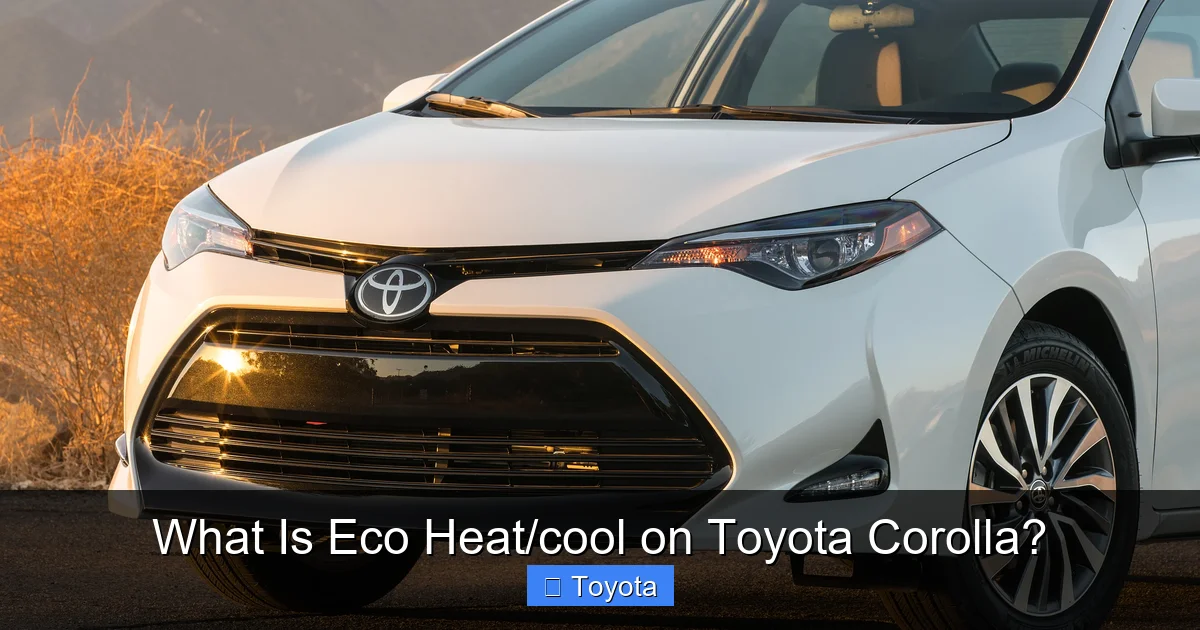
Visual guide about What Is Eco Heat/cool on Toyota Corolla?
Image source: images.caricos.com
At its core, the Eco Heat/Cool system is all about smart energy management. It doesn’t just turn the heater or air conditioner on and off like a basic thermostat. Instead, it uses a combination of sensors, software algorithms, and integration with the vehicle’s engine control unit (ECU) to make real-time decisions about how much heating or cooling is actually needed.
When you activate Eco Heat/Cool—either by pressing a dedicated button or selecting it through the climate menu—the system begins monitoring several key factors. These include the outside air temperature, cabin temperature, engine coolant temperature, and even the current load on the engine. For example, if you’re idling at a red light on a cold morning, the system might reduce the intensity of the heater to avoid putting extra strain on the engine. Conversely, if you’re driving at highway speeds and the engine is already working hard, it might delay aggressive cooling to prevent overloading the system.
One of the smartest aspects of Eco Heat/Cool is its ability to “pre-condition” the cabin. On particularly hot or cold days, the system can begin warming or cooling the interior gradually as soon as you start the car. This avoids the need for a sudden, power-hungry blast of air. Instead, it uses just enough energy to bring the cabin to a comfortable temperature over a few minutes, which is easier on both the engine and your fuel economy.
In hybrid versions of the Corolla, the system gets even smarter. Because hybrid models have an electric motor and battery, Eco Heat/Cool can draw power from the battery to run the climate system when the engine isn’t running. This is especially helpful during short stops or when parked, as it keeps the cabin comfortable without idling the engine.
Benefits of Using Eco Heat/Cool
Visual guide about What Is Eco Heat/cool on Toyota Corolla?
Image source: images.caricos.com
So why should you care about this feature? After all, isn’t the main job of your car’s climate system just to keep you comfortable? While comfort is important, Eco Heat/Cool offers several tangible benefits that go beyond just feeling cozy.
First and foremost, it improves fuel efficiency. Heating and cooling systems draw power from the engine, especially in gasoline-powered vehicles. When the A/C compressor kicks in or the heater core demands hot coolant, it creates additional load on the engine, which means it burns more fuel. By optimizing how and when these systems operate, Eco Heat/Cool reduces that load, helping your Corolla sip gas more slowly.
For example, imagine you’re driving in mild weather—say, 70°F (21°C)—and you have the A/C set to 68°F. Without Eco mode, the system might run the compressor at full blast to reach that temperature quickly. But with Eco Heat/Cool, it might only run the compressor intermittently or use a lower fan speed, achieving the same comfort level over a slightly longer period—but with less fuel consumption.
Another major benefit is reduced engine wear. Every time your engine has to power the A/C compressor or circulate hot coolant through the heater core, it experiences additional stress. Over time, this can contribute to wear and tear on engine components. By minimizing unnecessary HVAC activity, Eco Heat/Cool helps extend the life of your engine and related systems.
Comfort is also improved in a subtle way. Instead of sudden blasts of hot or cold air, the system delivers a more consistent, gradual temperature change. This is especially noticeable on long drives, where you’re less likely to feel overheated or chilled due to abrupt climate shifts.
For hybrid Corolla owners, the benefits are even greater. The system can use battery power to run the climate controls when the engine is off, which means you can stay comfortable during short stops without wasting fuel. This is a big win for city driving, where frequent stops are common.
Eco Heat/Cool vs. Regular Climate Control
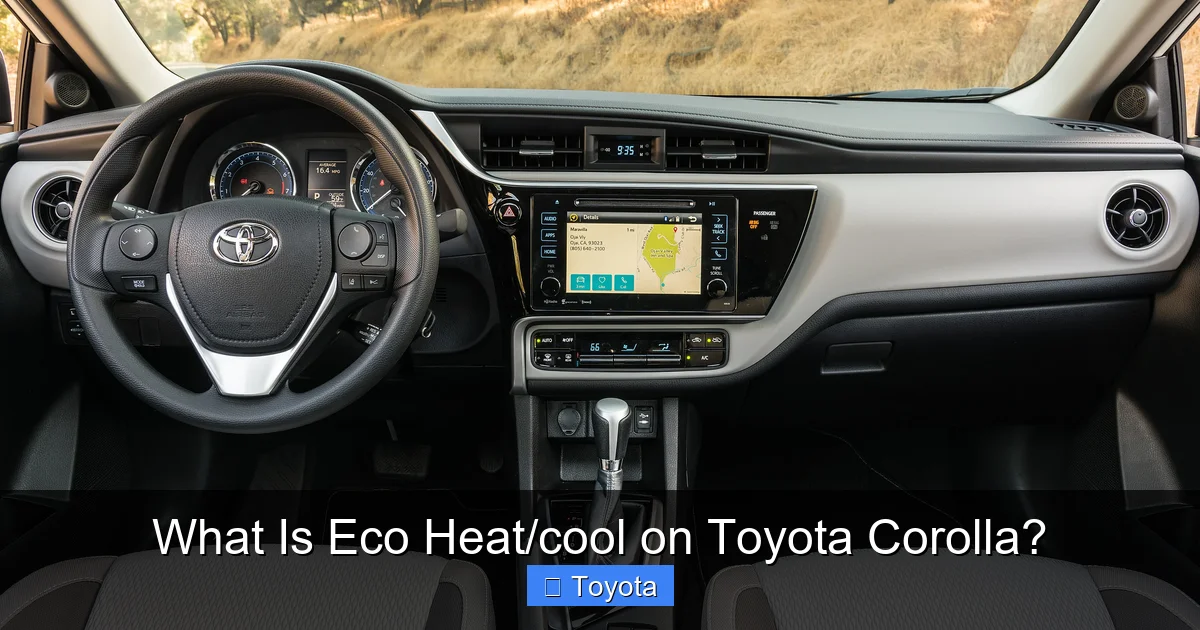
Visual guide about What Is Eco Heat/cool on Toyota Corolla?
Image source: images.caricos.com
You might be wondering: how different is Eco Heat/Cool from the standard climate control mode? The answer lies in how each system prioritizes performance and efficiency.
Regular climate control—often just called “Auto” or “Manual” mode—focuses primarily on reaching your desired cabin temperature as quickly as possible. It doesn’t consider fuel economy or engine load. If you set the temperature to 72°F on a hot day, the system will run the A/C compressor at full capacity, crank the fan to high, and keep going until the cabin hits that target. It’s effective, but it’s not efficient.
Eco Heat/Cool, on the other hand, takes a more holistic approach. It still aims to reach your target temperature, but it does so in a way that minimizes energy use. It might take a few extra minutes to cool the cabin, but it does so by using lower fan speeds, cycling the compressor more efficiently, and even adjusting the blend of fresh and recirculated air.
Let’s look at a real-world example. Say you’re parked in a hot parking lot on a 95°F (35°C) day. You get in, start the car, and set the temperature to 70°F. In regular mode, the A/C might blast cold air immediately, and the compressor runs continuously for several minutes. Your engine works harder, and your fuel economy drops.
With Eco Heat/Cool, the system might start by recirculating the air inside the car to remove some of the heat, then gradually introduce cooler air from the A/C. It might also delay full compressor engagement until the engine has warmed up or until you’re actually driving. The result? A slightly slower cooldown, but significantly less strain on the engine and better fuel efficiency.
Another key difference is responsiveness. Regular climate control reacts instantly to temperature changes—turn the dial, and the system responds right away. Eco Heat/Cool is more deliberate. It might take a moment to adjust, but that’s by design. It’s not lagging; it’s thinking.
For drivers who prioritize performance over efficiency—like those who want instant cold air on a hot day—regular mode might feel more satisfying. But for the majority of drivers, especially those who drive in moderate conditions or are conscious about fuel costs, Eco Heat/Cool offers a smarter, more sustainable option.
Eco Heat/Cool in the Corolla Hybrid
The Toyota Corolla Hybrid takes the Eco Heat/Cool concept to the next level. Thanks to its hybrid powertrain—which includes both a gasoline engine and an electric motor—the system can operate more efficiently and with greater flexibility.
One of the biggest advantages in hybrid models is the ability to run the climate system using electric power alone. When the car is stopped—say, at a traffic light or in a drive-thru—the gasoline engine can shut off completely. In a traditional car, this would mean the A/C or heater stops working. But in the Corolla Hybrid, the electric motor can continue powering the climate controls, keeping the cabin comfortable without burning a drop of gas.
This is especially useful in city driving, where frequent stops are common. You can stay cool in summer or warm in winter without idling the engine, which not only saves fuel but also reduces emissions.
Additionally, the hybrid system allows for more precise control over heating. In cold weather, the engine takes time to warm up, which means the heater core doesn’t produce hot air right away. In a conventional car, you might sit in a cold cabin for several minutes before feeling any warmth. But in the Corolla Hybrid, the system can use waste heat from the electric motor or even pre-heat the cabin using battery power, reducing the wait time.
The integration with the hybrid battery also means the system can “pre-condition” the cabin while the car is still plugged in (if equipped with a plug-in option or remote start). This means you can start your drive with a perfectly comfortable interior, having used grid electricity instead of gasoline.
Toyota has also designed the Eco Heat/Cool system in hybrid models to work seamlessly with other eco-driving features, like Eco Drive Mode and regenerative braking. When all these systems work together, they create a driving experience that’s not just efficient, but genuinely sustainable.
Tips for Getting the Most Out of Eco Heat/Cool
Now that you understand how Eco Heat/Cool works, here are some practical tips to help you get the most out of this feature:
Use it in moderate weather. Eco Heat/Cool works best when the temperature difference between inside and outside isn’t extreme. On mild days, it can maintain comfort with minimal energy use. Save regular mode for scorching summers or freezing winters when you need rapid temperature changes.
Pre-cool or pre-heat when parked. If your Corolla has remote start or a connected app, use it to activate the climate system before you get in. This allows the car to begin adjusting the cabin temperature while it’s still parked, so you start your drive in comfort without overworking the system.
Keep windows and sunroof closed. Open windows let hot or cold air escape, forcing the climate system to work harder. For maximum efficiency, keep them closed and rely on the HVAC system to maintain comfort.
Use recirculation mode wisely. Recirculating cabin air reduces the load on the A/C by reusing already-cooled air. Use it when driving in hot weather, but switch back to fresh air periodically to avoid stale air buildup.
Combine with other eco-driving habits. Eco Heat/Cool works best when paired with smooth acceleration, steady speeds, and reduced idling. The more you drive efficiently, the more you’ll benefit from this feature.
Don’t disable it unnecessarily. Some drivers turn off Eco mode when they want faster cooling, but remember: the difference is usually just a minute or two. Unless you’re in a hurry, leave it on for better fuel economy.
Common Misconceptions About Eco Heat/Cool
Despite its benefits, there are a few myths and misunderstandings about Eco Heat/Cool that are worth clearing up.
One common belief is that Eco mode makes the car slower or less responsive. This isn’t true. Eco Heat/Cool only affects the climate system—it doesn’t change engine performance, throttle response, or transmission behavior. Your Corolla will still accelerate and drive the same way; only the HVAC system operates more efficiently.
Another misconception is that Eco mode doesn’t work as well in extreme temperatures. While it’s true that the system prioritizes efficiency over speed, it’s still fully capable of heating or cooling the cabin effectively. It might just take a little longer, which is a small trade-off for better fuel economy.
Some drivers also worry that using Eco mode will reduce comfort. In reality, most people don’t notice a significant difference in comfort—only in how quickly the cabin reaches the desired temperature. And because the system avoids sudden temperature swings, many find the experience more pleasant overall.
Finally, there’s a myth that Eco Heat/Cool is only for hybrid models. While it’s especially effective in hybrids, it’s also available on gasoline-powered Corollas. The core functionality is the same: smarter, more efficient climate control.
Conclusion
The Eco Heat/Cool feature on the Toyota Corolla is more than just a fancy button—it’s a thoughtful integration of technology, efficiency, and comfort. By intelligently managing how your car heats and cools the cabin, it helps you save fuel, reduce engine wear, and enjoy a smoother, more consistent climate experience.
Whether you drive a gasoline or hybrid Corolla, this feature is designed to work seamlessly in the background, making your daily commute a little greener and a lot more comfortable. It’s a great example of how modern vehicles are using smart engineering to balance performance with sustainability.
So the next time you start your Corolla on a chilly morning or a hot afternoon, consider giving Eco Heat/Cool a try. You might be surprised at how much you appreciate the quieter, more efficient way it keeps you comfortable—without costing you extra at the pump.
Frequently Asked Questions
What does Eco Heat/Cool do on a Toyota Corolla?
Eco Heat/Cool is a smart climate control feature that optimizes heating and cooling to improve fuel efficiency while maintaining cabin comfort. It adjusts fan speed, compressor use, and air circulation based on driving conditions and outside temperature.
Does Eco Heat/Cool save gas?
Yes, it can improve fuel economy by reducing the load on the engine. By avoiding aggressive HVAC use, it helps the engine burn less fuel, especially during short trips or in moderate weather.
Can I use Eco Heat/Cool in extreme temperatures?
Absolutely. While it may take slightly longer to heat or cool the cabin in extreme heat or cold, it still works effectively. It’s designed to balance comfort and efficiency in all conditions.
Is Eco Heat/Cool only for hybrid Corollas?
No, it’s available on both gasoline and hybrid models. However, hybrid versions benefit more because they can use electric power to run the climate system when the engine is off.
Does Eco mode affect engine performance?
No, Eco Heat/Cool only affects the climate system. It doesn’t change how the engine or transmission performs. Your car will still accelerate and drive normally.
How do I activate Eco Heat/Cool?
Look for the “Eco” or “Eco Heat/Cool” button on your climate control panel, or select it through the touchscreen menu. Once activated, it works automatically in the background.
