
How to Open the Hood on a Toyota Corolla

Opening the hood on a Toyota Corolla is a simple but essential skill every owner should know. Whether you’re checking oil, topping off fluids, or inspecting the engine, this guide walks you through the process for every Corolla model year—from older classics to the latest hybrids—with clear steps and safety tips.
Opening the hood on a Toyota Corolla might seem like a basic task, but for new drivers or first-time Corolla owners, it can be surprisingly confusing. Unlike some cars with exterior hood releases or push-button systems, the Corolla uses a two-step internal mechanism that’s reliable but not always intuitive. Whether you’re performing routine maintenance, troubleshooting an issue, or simply checking fluid levels, knowing how to safely and correctly open the hood is a must-have skill.
The Toyota Corolla has been one of the world’s best-selling cars for decades, praised for its reliability, fuel efficiency, and ease of maintenance. But even the most dependable vehicles require regular attention under the hood. From checking engine oil to inspecting belts and hoses, accessing the engine compartment is part of responsible car ownership. Fortunately, Toyota designed the Corolla with practicality in mind—its hood release system is straightforward once you know where to look and what to do.
In this comprehensive guide, we’ll walk you through every step of opening the hood on a Toyota Corolla, covering models from the 1990s to the latest 2024 versions. We’ll explain the location of the release lever, how to engage the secondary latch, and how to safely support the hood once it’s open. You’ll also learn tips for troubleshooting common issues, such as a stuck latch or a hood that won’t stay up. Plus, we’ll share maintenance best practices to keep your Corolla running smoothly for years to come.
Key Takeaways
- Locate the interior hood release lever: Found under the dashboard on the driver’s side, usually marked with a hood icon.
- Pull the lever firmly: A single, steady pull activates the primary latch; you’ll hear a click when the hood pops slightly.
- Find the secondary safety latch: Located under the front edge of the hood, requiring you to slide your fingers beneath the hood to release.
- Use the hood prop rod: Most Corollas use a manual prop rod to hold the hood open—never rely on the gas struts alone.
- Check for model-specific differences: Older models (pre-2000) may have slightly different mechanisms than newer ones (2020+).
- Always ensure the car is parked and off: Never open the hood while the engine is running or the vehicle is in motion.
- Regular maintenance access: Knowing how to open the hood helps with routine checks like oil level, coolant, and battery inspection.
📑 Table of Contents
Understanding the Toyota Corolla Hood Release System
The hood release system in a Toyota Corolla is a two-stage mechanical design that prioritizes safety and reliability. Unlike some modern vehicles that use electronic hood releases or exterior buttons, the Corolla relies on a simple cable-operated mechanism activated from inside the cabin. This design has remained largely consistent across generations, making it easy for owners to learn and remember.
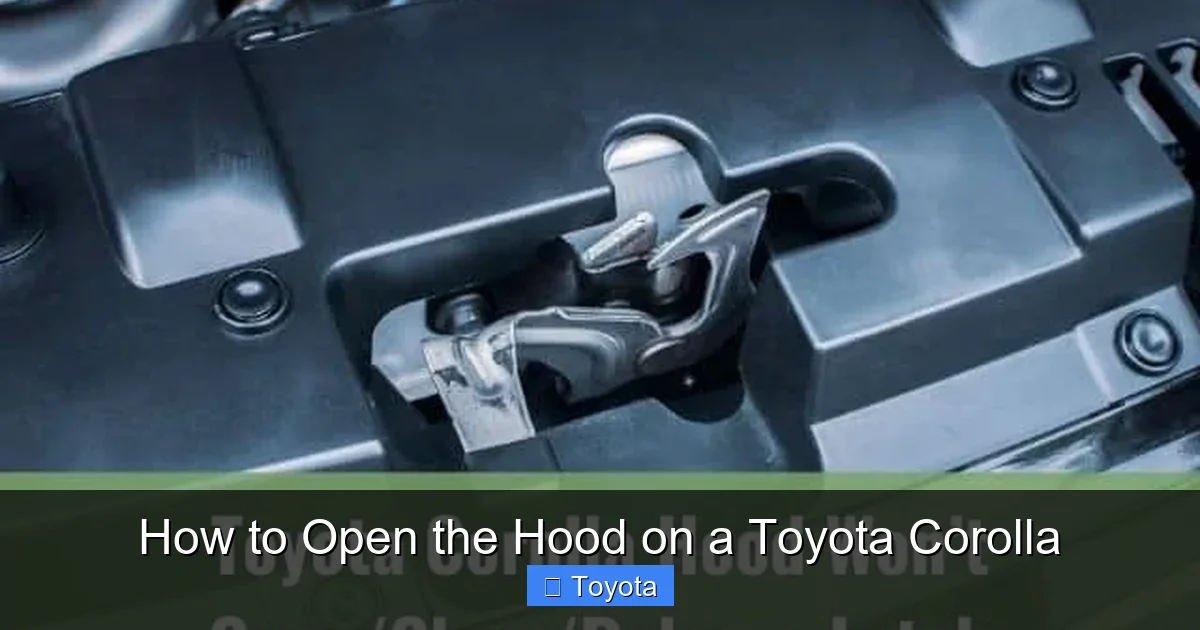
The system consists of two main components: the interior release lever and the exterior safety latch. The interior lever, located under the dashboard on the driver’s side, pulls a cable that disengages the primary hood latch. Once pulled, the hood pops open slightly—just enough to allow access to the secondary latch underneath. This secondary latch, often called the “safety catch,” prevents the hood from flying open accidentally while driving.
This dual-latch system is a safety feature required by automotive regulations. It ensures that even if the primary latch fails or is accidentally triggered, the secondary latch will keep the hood securely closed. For Corolla owners, this means you’ll always need to perform two actions: pull the interior lever and then release the safety latch by hand.
It’s worth noting that while the basic mechanism is consistent, the exact location of the release lever and the design of the safety latch can vary slightly between model years. For example, older Corollas (1990s–early 2000s) often have a more exposed lever near the footwell, while newer models (2014–2024) integrate the lever into the dashboard trim for a cleaner look. However, the function remains the same.
Understanding this system is the first step to confidently accessing your engine bay. Whether you’re a seasoned mechanic or a first-time car owner, knowing how the hood release works helps prevent frustration and ensures you can perform essential maintenance tasks without hesitation.
Step-by-Step Guide: How to Open the Hood on a Toyota Corolla
Visual guide about How to Open the Hood on a Toyota Corolla
Image source: knowmyauto.com
Opening the hood on a Toyota Corolla is a simple process, but it requires attention to detail to avoid mistakes. Follow these step-by-step instructions to safely and correctly access your engine compartment.
Step 1: Park the Vehicle Safely
Before attempting to open the hood, make sure your Corolla is parked on a level surface and the engine is completely off. Engage the parking brake to prevent the car from rolling. This is especially important if you’re working on a slight incline. Never open the hood while the engine is running—this can lead to serious injury or damage.
Step 2: Locate the Interior Hood Release Lever
Sit in the driver’s seat and look under the dashboard on the left side (driver’s side). You’re looking for a small lever, usually made of plastic, with a hood icon or the word “HOOD” printed on it. On most Corolla models from 2000 onward, this lever is positioned near the footwell, just to the left of the steering column. In older models (1990s), it may be slightly higher or more exposed.
If you can’t see the lever immediately, don’t worry—it’s often tucked behind a panel or integrated into the dashboard trim. Gently feel around the area with your hand. The lever is typically about 3–4 inches long and pivots downward when pulled.
Step 3: Pull the Hood Release Lever
Once you’ve located the lever, pull it firmly toward you in a single, smooth motion. You should hear a distinct “click” as the primary latch releases. The hood will pop open slightly—usually about half an inch—indicating that the first stage is complete.
Do not yank or jerk the lever. A steady pull is all that’s needed. If nothing happens, try pulling again with a bit more force. In rare cases, the cable may be stiff due to cold weather or lack of use, but it should still respond.
Step 4: Exit the Vehicle and Approach the Hood
After pulling the lever, exit the car and walk to the front of the vehicle. Look at the gap between the hood and the grille. You should see a small space where the hood has lifted. This is your access point to the secondary latch.
Step 5: Locate and Release the Secondary Safety Latch
Slide your fingers under the front edge of the hood, right in the center. You’re feeling for a small metal lever or button—this is the secondary safety latch. On most Corollas, it’s a horizontal lever that you push to the side (usually to the left) while lifting the hood.
Apply gentle upward pressure on the hood while simultaneously pushing the safety latch. Once released, the hood will lift freely. Be careful not to force it—if it doesn’t open easily, double-check that you’ve fully disengaged the safety latch.
Step 6: Secure the Hood with the Prop Rod
Once the hood is open, locate the hood prop rod. On most Toyota Corollas, this is a metal rod stored in a clip on the underside of the hood. Pull it out and insert the end into the designated slot on the radiator support or hood hinge.
Never rely on the gas struts (the hydraulic arms that assist in lifting the hood) to hold the hood open by themselves. Over time, these struts can weaken and fail, causing the hood to slam down unexpectedly. Always use the prop rod for safety.
Step 7: Perform Your Inspection or Maintenance
With the hood securely propped open, you can now safely inspect the engine, check fluid levels, or perform maintenance. Common tasks include checking the engine oil dipstick, inspecting the coolant reservoir, topping off windshield washer fluid, and examining the battery terminals.
When you’re finished, carefully remove the prop rod and return it to its clip. Lower the hood slowly until it’s about 6–8 inches from closing, then let it drop the rest of the way. Do not slam it—this can damage the latch or hinges. The hood should close with a firm but gentle thud.
Model-Specific Variations Across Corolla Generations

Visual guide about How to Open the Hood on a Toyota Corolla
Image source: i.pinimg.com
While the basic hood release mechanism remains consistent, there are subtle differences between Toyota Corolla models depending on the year and generation. Understanding these variations can help you avoid confusion, especially if you own an older Corolla or are helping someone with a different model.
1990s to Early 2000s Corollas (E100 and E110 Series)
Older Corollas, such as the 1993–2002 models, feature a more utilitarian design. The interior hood release lever is often a simple metal or plastic rod located low on the driver’s side, sometimes near the brake pedal. It may not have a hood icon, so look for a lever that pulls downward.
The secondary latch is typically a metal lever that you push to the left. These models almost always use a manual prop rod, and the hood is heavier due to less use of lightweight materials.
2003–2008 Corollas (E140 Series)
The E140 generation introduced a more modern interior design. The hood release lever is now integrated into the dashboard trim, usually just below the steering wheel. It’s often marked with a hood symbol and may be slightly recessed.
The safety latch remains under the hood, but the mechanism is more refined. Some models in this range began using slightly stronger gas struts, though the prop rod is still recommended.
2009–2013 Corollas (E140 Facelift)
This facelifted version kept the same basic layout but improved ergonomics. The release lever is easier to locate and pull, and the safety latch is more accessible. The hood itself is lighter, making it easier to lift.
2014–2018 Corollas (E170 Series)
The E170 generation brought a complete redesign, including a more aerodynamic hood and updated interior. The release lever is now positioned higher on the dashboard, often near the door panel. It’s clearly marked and easy to operate.
The safety latch is still center-mounted, but the hood prop rod is sometimes stored in a different location—check the underside of the hood near the windshield.
2019–2024 Corollas (E210 Series)
The latest Corolla models feature a sleek, modern design with improved safety and efficiency. The hood release lever is integrated into the lower dashboard, often with backlighting for visibility at night.
The secondary latch is more concealed but still functional. Some hybrid models have slightly different hood designs due to the placement of the hybrid battery and cooling systems, but the release mechanism remains the same.
Despite these variations, the core steps—pull the interior lever, release the safety latch, and use the prop rod—apply to all Corolla models. If you’re unsure about your specific year, consult your owner’s manual or look for visual cues like the hood icon.
Troubleshooting Common Hood Release Issues
Visual guide about How to Open the Hood on a Toyota Corolla
Image source: i.redd.it
Even with a reliable design, the hood release system on a Toyota Corolla can occasionally present problems. Here are some common issues and how to resolve them.
The Hood Won’t Pop After Pulling the Lever
If you pull the interior lever and nothing happens, the cable may be disconnected, stretched, or broken. This is rare but possible, especially in older vehicles. Try pulling the lever multiple times with firm pressure. If it still doesn’t work, you may need to inspect the cable behind the dashboard or seek professional help.
Another possibility is that the primary latch is frozen due to dirt, rust, or cold weather. Spray a small amount of silicone lubricant into the latch mechanism (accessible once the hood is slightly open) and try again.
The Safety Latch Is Stuck
If the hood pops but won’t open fully, the secondary latch may be stuck. This often happens if the latch is corroded or jammed with debris. Use a flashlight to inspect the area under the hood. Gently wiggle the latch while applying upward pressure. If needed, use a flathead screwdriver to carefully pry it loose—be gentle to avoid damaging the mechanism.
The Hood Won’t Stay Open
If the hood keeps falling after you release the prop rod, the gas struts may be worn out. These hydraulic arms lose pressure over time and need replacement. You can test them by lifting the hood manually—if it doesn’t stay up on its own, the struts are likely failing. Replacement struts are inexpensive and can be installed in under 30 minutes.
The Prop Rod Is Missing or Broken
Some owners accidentally lose the prop rod or find it broken. Never work under the hood without a secure support. If your prop rod is missing, you can temporarily use a sturdy stick or rod—but only as a last resort. Replace the prop rod as soon as possible.
Cold Weather Stiffness
In freezing temperatures, the hood release cable and latch can become stiff. Apply a small amount of WD-40 or silicone spray to the latch and cable housing. Avoid using excessive force, as this can damage components.
Safety Tips and Best Practices
Opening the hood is a routine task, but safety should always come first. Follow these best practices to protect yourself and your vehicle.
Always Turn Off the Engine
Never open the hood while the engine is running. Moving belts, fans, and electrical components can cause serious injury. Even if you’re just checking the oil, make sure the engine is off and cool.
Use the Prop Rod Every Time
Gas struts can fail without warning. Always use the manual prop rod to support the hood, even if the struts seem strong. This prevents accidents and gives you peace of mind.
Inspect the Hood and Latch Regularly
Check the hood hinges, latch, and prop rod during routine maintenance. Look for signs of rust, wear, or damage. Clean and lubricate the latch mechanism with a light oil or silicone spray every six months.
Work in a Well-Lit Area
Good lighting helps you see the release lever, safety latch, and engine components clearly. Use a flashlight if needed, especially when working at night or in a dim garage.
Keep the Area Clean
Dirt and debris can jam the latch or damage the hood seals. Wipe down the front of the engine bay periodically to prevent buildup.
Teach Other Drivers
If others drive your Corolla—such as family members or valets—make sure they know how to open the hood safely. A quick demonstration can prevent mistakes and damage.
Why Knowing How to Open the Hood Matters
At first glance, opening the hood might seem like a trivial skill. But for Toyota Corolla owners, it’s a gateway to vehicle health and longevity. Regular under-hood inspections can help you catch problems early, from low oil levels to leaking fluids or worn belts.
For example, checking the engine oil every few weeks can prevent engine damage. A simple glance at the coolant reservoir can alert you to a potential overheating issue. Inspecting the battery terminals can prevent starting problems in cold weather.
Moreover, knowing how to access the engine bay empowers you to perform basic maintenance tasks yourself, saving time and money. Instead of visiting a mechanic for every fluid check, you can handle it in your driveway.
In emergency situations—such as a warning light on the dashboard—being able to quickly open the hood could help you identify the issue before it worsens. Whether it’s a loose cap or a visible leak, early detection makes a big difference.
Finally, this knowledge builds confidence. The more familiar you are with your Corolla, the more comfortable you’ll feel driving and maintaining it. It’s a small skill with big benefits.
Conclusion
Opening the hood on a Toyota Corolla is a simple yet essential task that every owner should master. With a two-step release system—interior lever and exterior safety latch—the process is designed for safety and reliability. Whether you drive a classic 1995 Corolla or a brand-new 2024 hybrid, the steps remain consistent: pull the lever, release the latch, and secure the hood with the prop rod.
By following this guide, you’ll be able to access your engine bay with confidence, perform routine maintenance, and troubleshoot common issues. Remember to prioritize safety, use the prop rod, and keep the latch mechanism clean and lubricated.
Your Toyota Corolla is built to last, and a little knowledge goes a long way in keeping it running smoothly. So the next time you need to check the oil or inspect the battery, you’ll know exactly what to do—no hesitation, no confusion.
Frequently Asked Questions
Where is the hood release lever on a Toyota Corolla?
The hood release lever is located under the dashboard on the driver’s side, usually near the footwell or integrated into the lower dashboard trim. It’s marked with a hood icon or the word “HOOD.”
Why won’t my Corolla’s hood open after pulling the lever?
If the hood doesn’t pop after pulling the lever, the cable may be disconnected, frozen, or damaged. Try pulling it multiple times with firm pressure, or inspect the latch for debris or rust.
Do I need to use the prop rod every time?
Yes, always use the prop rod to support the hood. Gas struts can fail unexpectedly, and relying on them alone is unsafe.
Can I open the hood while the engine is running?
No, never open the hood while the engine is running. Moving parts and hot components can cause serious injury.
What if the safety latch is stuck?
Gently wiggle the latch while lifting the hood. If needed, use a flathead screwdriver to carefully release it, but avoid forcing it to prevent damage.
Are there differences between Corolla model years?
Yes, the location of the release lever and design of the safety latch may vary slightly, but the two-step process remains the same across all generations.