
What Does Auto Lsd Mean on a Toyota Tundra

Auto LSD on a Toyota Tundra stands for Automatic Limited Slip Differential, a smart traction system that improves grip on slippery or uneven terrain. It automatically sends power to the wheel with the most traction, helping you maintain control during off-roading, towing, or driving in rain, snow, or mud—without needing manual intervention.
Key Takeaways
- Auto LSD enhances traction: It automatically detects wheel slip and redirects power to wheels with better grip, improving stability on loose or slippery surfaces.
- No driver input required: Unlike manual locking differentials, Auto LSD works seamlessly in the background, activating only when needed.
- Improves off-road performance: Ideal for trails, mud, snow, and sand, Auto LSD helps the Tundra maintain momentum and control in challenging conditions.
- Works with other safety systems: Auto LSD integrates with Toyota’s Vehicle Stability Control (VSC) and traction control for a balanced driving experience.
- Not a full locking differential: While helpful, Auto LSD is not as strong as a mechanical locker and is best used for light to moderate off-roading.
- Available on select Tundra trims: Typically found on higher-end models like the TRD Off-Road and TRD Pro, but check your vehicle’s specs to confirm.
- Great for towing and hauling: Helps maintain traction when pulling heavy loads on uneven or wet roads.
📑 Table of Contents
- What Does Auto LSD Mean on a Toyota Tundra?
- How Does Auto LSD Work on the Toyota Tundra?
- When Should You Use Auto LSD on Your Tundra?
- Auto LSD vs. Other Traction Systems: What’s the Difference?
- Which Toyota Tundra Models Come with Auto LSD?
- Tips for Getting the Most Out of Auto LSD
- Conclusion: Why Auto LSD Matters for Tundra Owners
What Does Auto LSD Mean on a Toyota Tundra?
If you’ve ever looked at your Toyota Tundra’s dashboard or owner’s manual and seen the term “Auto LSD,” you might have wondered what it means and why it matters. Simply put, Auto LSD stands for Automatic Limited Slip Differential—a smart, driver-friendly feature designed to improve your truck’s traction and stability, especially when the going gets tough.
Unlike older mechanical limited-slip differentials that required manual engagement or were always active, Auto LSD uses electronic sensors and the truck’s onboard computer to monitor wheel speed and slip in real time. When one wheel starts spinning faster than the others—like when you’re stuck in mud or driving on icy pavement—the system automatically applies brake pressure to the slipping wheel. This redirects power to the wheel (or wheels) with better grip, helping you keep moving forward without getting stuck.
This system is especially useful for Tundra owners who enjoy off-roading, towing heavy loads, or driving in areas with unpredictable weather. Whether you’re navigating a muddy trail, pulling a trailer up a snowy hill, or just dealing with a rainy commute, Auto LSD gives you an extra layer of confidence and control.
But it’s not just for extreme conditions. Even in everyday driving, Auto LSD can make a noticeable difference. Imagine accelerating from a stoplight on a wet road—without Auto LSD, one rear wheel might spin while the other doesn’t move, causing a jerky start or even a loss of control. With Auto LSD, the system detects the imbalance and corrects it instantly, giving you a smoother, safer drive.
In this article, we’ll dive deep into how Auto LSD works, when and why you’d use it, how it compares to other traction systems, and what Tundra models come equipped with it. Whether you’re a seasoned off-roader or a daily driver who just wants to understand your truck better, this guide will help you get the most out of your Tundra’s capabilities.
How Does Auto LSD Work on the Toyota Tundra?
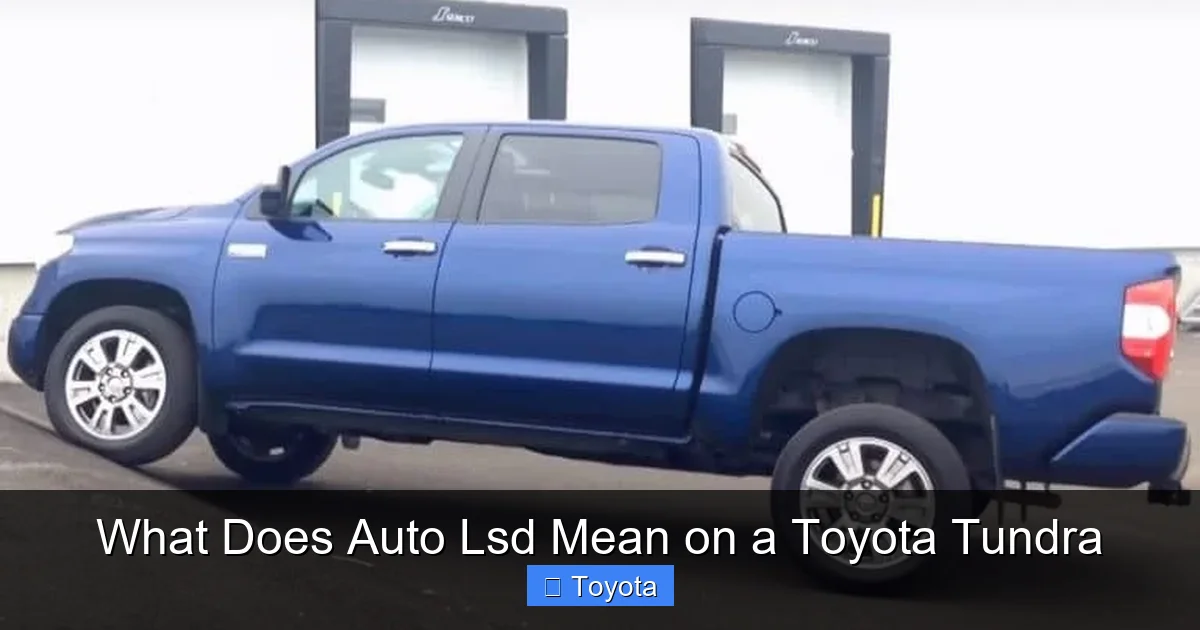
Visual guide about What Does Auto Lsd Mean on a Toyota Tundra
Image source: richsautobodyshop.com
To truly understand the value of Auto LSD, it helps to know how it functions under the hood—or more accurately, under the chassis. The system is part of Toyota’s broader suite of electronic traction and stability controls, and it relies on a combination of sensors, software, and hydraulic braking to keep your wheels gripping the road.
At the heart of Auto LSD is the differential, a mechanical component that allows the rear wheels to rotate at different speeds when turning. This is necessary because the inside wheel travels a shorter distance than the outside wheel during a turn. However, in slippery conditions, this same design can cause problems: if one wheel loses traction, the differential sends most or all of the power to that slipping wheel, leaving the other wheel with little to no power.
Auto LSD solves this problem electronically. Here’s how it works:
When the Tundra’s onboard computer detects that one rear wheel is spinning significantly faster than the other—indicating a loss of traction—it triggers the Auto LSD system. The system then applies the brake to the slipping wheel. This braking action creates resistance, which tricks the differential into sending more power to the wheel with better grip. It’s a clever workaround that mimics the effect of a mechanical limited-slip differential, but without the complexity or wear.
For example, imagine you’re driving through a muddy patch on a trail. Your right rear wheel hits a slick spot and starts spinning, while the left rear wheel is still gripping the ground. Without Auto LSD, your truck might stall or get stuck. But with Auto LSD, the system detects the spin, applies the brake to the right wheel, and redirects torque to the left wheel—helping you power through the obstacle.
The entire process happens in milliseconds and is completely automatic. You don’t need to flip a switch or press a button. The system is always monitoring wheel speed and only activates when needed. This makes it ideal for drivers who want enhanced traction without having to think about it.
It’s also worth noting that Auto LSD works in conjunction with other safety systems like Traction Control (TRAC) and Vehicle Stability Control (VSC). These systems share the same sensors and often work together to keep the truck stable. However, Auto LSD is specifically focused on rear-wheel traction, making it especially useful for rear-wheel-drive vehicles like the Tundra.
When Should You Use Auto LSD on Your Tundra?
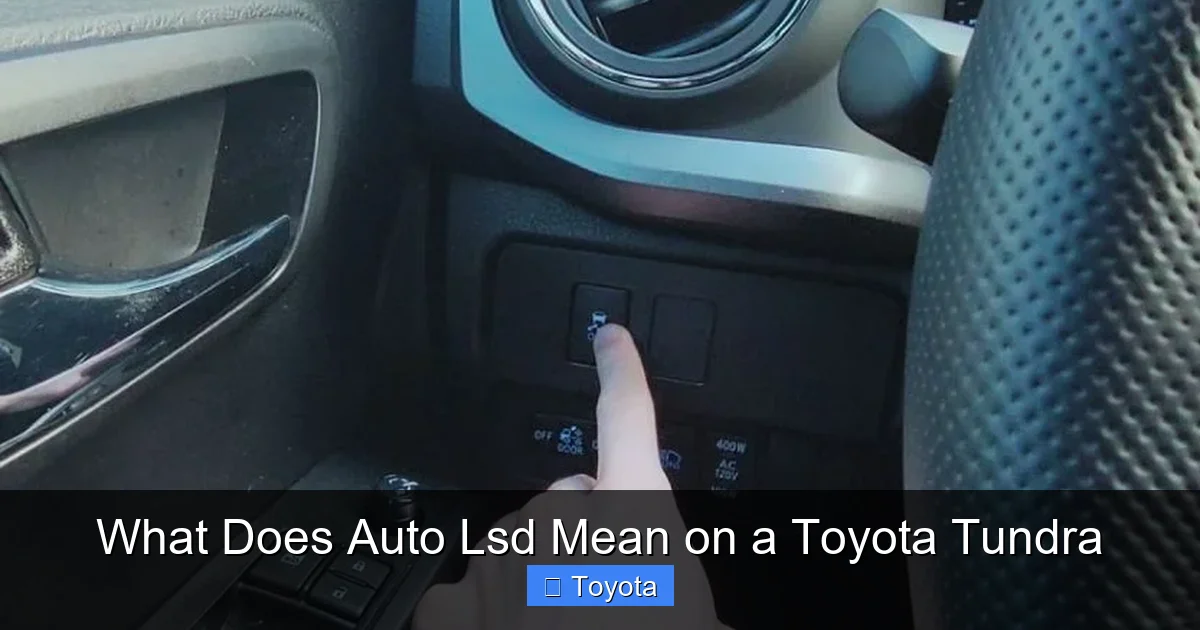
Visual guide about What Does Auto Lsd Mean on a Toyota Tundra
Image source: roadsumo.com
One of the best things about Auto LSD is that it’s always on—there’s no need to manually activate it. But understanding when it’s most beneficial can help you appreciate its value and drive more confidently in challenging conditions.
Off-Roading and Trail Driving
If you take your Tundra off the beaten path, Auto LSD is a game-changer. Trails often feature loose gravel, mud, sand, or uneven terrain—conditions where one wheel can easily lose grip. Auto LSD helps maintain forward momentum by ensuring that power goes to the wheels that can actually push the truck forward.
For instance, if you’re climbing a rocky incline and one rear wheel lifts off the ground, Auto LSD will detect the slip and apply brake pressure to that wheel, sending torque to the grounded wheel. This prevents you from spinning your wheels and getting stuck.
Driving in Snow or Ice
Winter driving can be nerve-wracking, especially in regions with heavy snowfall or icy roads. Auto LSD helps improve traction during acceleration, reducing the chance of wheel spin when starting from a stop or climbing a snowy hill. It’s not a substitute for winter tires, but it adds an extra layer of safety.
Imagine pulling out of a snow-covered driveway. Without Auto LSD, your truck might struggle to gain traction, especially if one wheel is on ice and the other on packed snow. With Auto LSD, the system balances the power delivery, helping you move smoothly and safely.
Towing and Hauling
The Tundra is known for its impressive towing capacity—up to 12,000 pounds on some models. But towing heavy loads can put extra stress on your drivetrain and reduce traction, especially on wet or uneven roads. Auto LSD helps maintain stability by preventing wheel slip when you’re pulling a trailer or carrying a heavy payload.
For example, if you’re towing a boat up a steep, gravel-covered ramp, Auto LSD ensures that both rear wheels contribute to the effort, reducing strain on the engine and transmission.
Rainy or Wet Conditions
Even everyday driving in the rain can benefit from Auto LSD. Wet roads reduce tire grip, and sudden acceleration can cause wheel spin. The system helps maintain control during quick starts or lane changes, giving you more confidence behind the wheel.
Unpaved or Gravel Roads
Gravel roads are common in rural areas and can be tricky to navigate. Loose stones reduce traction, and one wheel can easily slip. Auto LSD helps keep both rear wheels engaged, improving handling and reducing the risk of sliding.
In short, Auto LSD is most useful whenever traction is compromised—whether due to weather, terrain, or load. And because it works automatically, you don’t have to worry about when to use it. It’s always ready.
Auto LSD vs. Other Traction Systems: What’s the Difference?
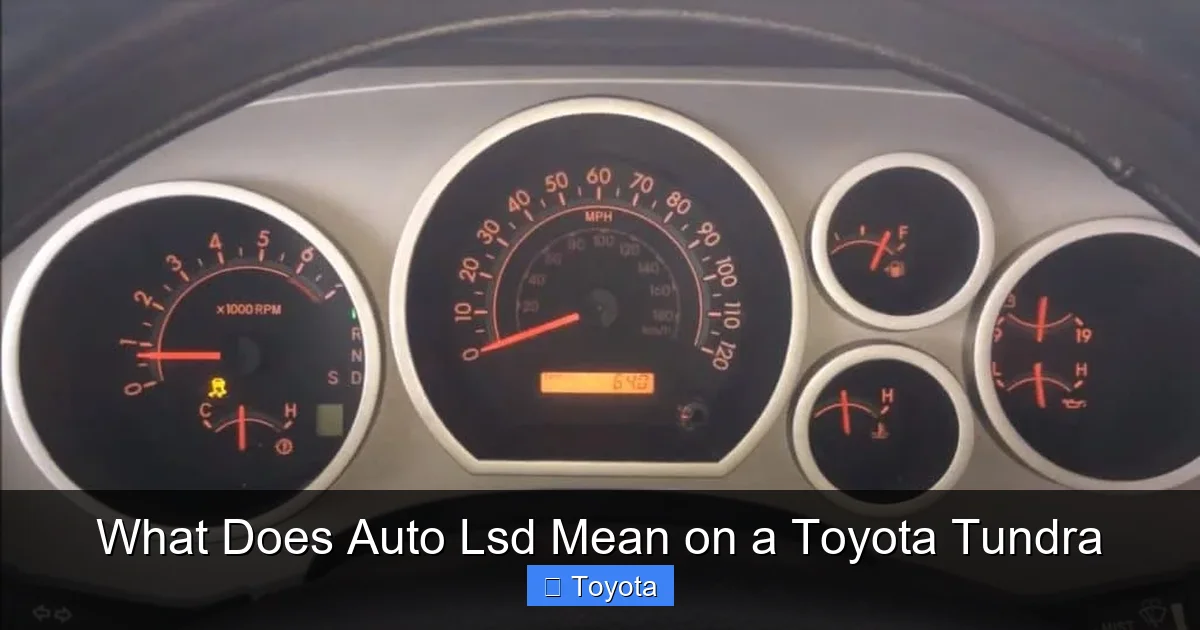
Visual guide about What Does Auto Lsd Mean on a Toyota Tundra
Image source: richsautobodyshop.com
The Toyota Tundra comes with several traction and stability systems, and it’s easy to get them confused. Let’s break down how Auto LSD compares to other common features like Traction Control (TRAC), Vehicle Stability Control (VSC), and mechanical locking differentials.
Auto LSD vs. Traction Control (TRAC)
Traction Control is designed to prevent wheel spin during acceleration. It uses the same wheel speed sensors as Auto LSD but focuses on reducing engine power or applying brakes to individual wheels when slip is detected. While TRAC is great for maintaining grip during hard acceleration, it doesn’t actively redistribute torque between the rear wheels like Auto LSD does.
In other words, TRAC says, “Slow down the engine or brake the spinning wheel,” while Auto LSD says, “Send more power to the wheel that’s gripping.” They often work together, but Auto LSD provides a more targeted solution for rear-wheel traction.
Auto LSD vs. Vehicle Stability Control (VSC)
VSC is a broader system that helps prevent skidding and loss of control during cornering or sudden maneuvers. It can apply brakes to individual wheels and reduce engine power to keep the truck on its intended path. While VSC is crucial for handling and safety, it’s not specifically designed to improve traction in low-grip situations like Auto LSD.
Think of VSC as your truck’s “balance coach” and Auto LSD as its “traction assistant.” Both are important, but they serve different purposes.
Auto LSD vs. Mechanical Locking Differential
A mechanical locking differential physically locks the two rear wheels together, forcing them to rotate at the same speed. This provides maximum traction in extreme off-road conditions but can make turning difficult on paved roads and may cause drivetrain stress.
Auto LSD, on the other hand, is electronic and only activates when needed. It doesn’t lock the wheels permanently, so it’s safer for everyday driving. However, it’s not as strong as a true locker and may not be sufficient for rock crawling or deep mud.
For most Tundra owners, Auto LSD offers the perfect balance of performance and practicality. It’s strong enough for moderate off-roading and towing, yet gentle enough for daily use.
Auto LSD vs. 4WD Systems
Many Tundras come with part-time or full-time four-wheel drive (4WD). These systems send power to all four wheels, improving traction in slippery conditions. However, 4WD doesn’t solve the problem of one wheel slipping on an axle—that’s where Auto LSD comes in.
In fact, Auto LSD works best when combined with 4WD. While 4WD distributes power front to rear, Auto LSD ensures that power is shared evenly side to side on the rear axle. Together, they provide comprehensive traction control.
Which Toyota Tundra Models Come with Auto LSD?
Not every Toyota Tundra comes equipped with Auto LSD, so it’s important to check your specific model and trim level. Generally, Auto LSD is available on trims that emphasize off-road capability or towing performance.
TRD Off-Road and TRD Pro Trims
The TRD Off-Road and TRD Pro trims are the most likely to include Auto LSD. These models are designed for adventure, with features like skid plates, upgraded suspension, and enhanced traction systems. Auto LSD is a standard or available feature on these trims, depending on the model year and drivetrain configuration.
For example, the 2023 Tundra TRD Pro comes standard with Auto LSD, along with a locking rear differential on some versions. This makes it a top choice for serious off-roaders.
SR5 and Limited Trims
On lower trims like the SR5 or Limited, Auto LSD may be optional or included only with certain packages. The Tow Package or Off-Road Package often adds Auto LSD as part of a broader suite of features.
If you’re unsure whether your Tundra has Auto LSD, check the owner’s manual or look for a dashboard indicator light labeled “LSD” or “Auto LSD.” You can also contact a Toyota dealer with your VIN to confirm.
Model Year Variations
Auto LSD has been available on the Tundra for many years, but its availability has changed over time. Earlier models (pre-2022) often included it on TRD trims, while newer models (2022 and later) may integrate it into broader safety packages.
Always verify your vehicle’s specs, as features can vary by region and production date.
Tips for Getting the Most Out of Auto LSD
Now that you know what Auto LSD is and how it works, here are some practical tips to help you make the most of this feature:
Don’t Rely on It Alone
Auto LSD is a helpful tool, but it’s not a magic solution. Always drive according to conditions. Use winter tires in snow, reduce speed on wet roads, and avoid overloading your truck beyond its rated capacity.
Combine with 4WD When Needed
For maximum traction, engage 4WD when driving off-road or in deep snow. Auto LSD works best when paired with four-wheel drive, as it handles side-to-side power distribution while 4WD manages front-to-rear.
Monitor Dashboard Lights
If the Auto LSD light flashes or stays on, it means the system is actively working. This is normal in slippery conditions. However, if the light stays on under normal driving, have your truck inspected—there may be a sensor or system issue.
Maintain Your Brakes and Tires
Since Auto LSD uses the braking system to control wheel slip, well-maintained brakes are essential. Also, ensure your tires are in good condition and properly inflated. Worn or mismatched tires can reduce the system’s effectiveness.
Use It for Towing
When towing, especially on hills or in bad weather, Auto LSD helps maintain stability. Make sure your trailer is properly loaded and balanced to maximize traction.
Understand Its Limits
Auto LSD is not a substitute for a locking differential in extreme off-roading. If you frequently tackle rock crawling or deep mud, consider upgrading to a model with a mechanical locker or adding an aftermarket solution.
Conclusion: Why Auto LSD Matters for Tundra Owners
Auto LSD on the Toyota Tundra is more than just a fancy acronym—it’s a smart, reliable system that enhances your truck’s performance in real-world conditions. Whether you’re navigating a muddy trail, towing a heavy load, or simply driving in the rain, Auto LSD helps keep your wheels gripping the road.
It works quietly in the background, using sensors and brakes to redirect power where it’s needed most. It’s not as aggressive as a locking differential, but it’s far more user-friendly and suitable for everyday driving. And when combined with other systems like 4WD, TRAC, and VSC, it forms a comprehensive safety net that gives you confidence behind the wheel.
For Tundra owners who value capability, safety, and peace of mind, Auto LSD is a feature worth understanding and appreciating. It’s one of the many reasons the Tundra remains a top choice for truck enthusiasts across the country.
So the next time you see that “Auto LSD” light flicker on your dashboard, don’t worry—it’s just your truck looking out for you.
Frequently Asked Questions
What does Auto LSD stand for on a Toyota Tundra?
Auto LSD stands for Automatic Limited Slip Differential. It’s an electronic system that improves traction by redirecting power to the rear wheel with better grip when one wheel starts to slip.
Is Auto LSD the same as a locking differential?
No, Auto LSD is not the same as a mechanical locking differential. It uses brakes to simulate limited slip, while a locker physically connects the wheels. Auto LSD is less aggressive but better for daily driving.
Can I turn off Auto LSD on my Tundra?
Yes, in most models, you can temporarily disable Auto LSD by pressing the VSC/TRAC off button. However, it will automatically reactivate when you restart the vehicle or under certain conditions.
Does Auto LSD work in 2WD or only in 4WD?
Auto LSD works in both 2WD and 4WD modes. It specifically manages rear-wheel traction, regardless of whether the front wheels are engaged.
Will Auto LSD help me get unstuck in deep mud?
Auto LSD can help in light to moderate mud by improving traction, but it may not be enough for extreme conditions. For deep mud, a locking differential or winch may be more effective.
Do all Toyota Tundras come with Auto LSD?
No, Auto LSD is typically found on higher trims like the TRD Off-Road and TRD Pro, or as part of optional packages. Check your owner’s manual or vehicle specs to confirm.
