
How Much Does It Cost to Fix the Vsa System on an Acura?

Repairing the VSA system on an Acura typically costs between $150 and $1,200, depending on the issue and labor rates. While minor fixes like sensor cleaning may be affordable, replacing the VSA modulator or control unit can get pricey. Regular maintenance and early diagnosis help prevent costly repairs.
If you own an Acura, you’re likely familiar with the Vehicle Stability Assist (VSA) system—a critical safety feature designed to help maintain control during slippery or sudden driving conditions. But what happens when that little VSA warning light pops up on your dashboard? Suddenly, your smooth ride feels a bit uncertain, and you start wondering: *How much does it cost to fix the VSA system on an Acura?* You’re not alone. Many Acura owners face this concern, and the answer isn’t always straightforward.
The VSA system is part of your car’s broader electronic stability control (ESC) network. It works alongside your anti-lock braking system (ABS) and traction control to detect and reduce loss of traction. When sensors detect wheel slip or instability, the VSA can automatically apply brakes to individual wheels and reduce engine power to help you stay on course. It’s especially helpful in rain, snow, or during sharp turns. But like any complex system, it can malfunction—and when it does, the dashboard light comes on, often accompanied by a loss of traction control and ABS functionality.
So, why does the VSA light come on? And more importantly, how much will it cost to get it fixed? The truth is, the price can vary widely. Some fixes are quick and inexpensive—like topping off brake fluid or cleaning a dirty sensor. Others, such as replacing the VSA modulator or control unit, can cost over a thousand dollars. In this guide, we’ll break down the typical costs, common causes, and what you can do to minimize expenses. Whether you drive a sleek Acura TLX, a rugged MDX, or a sporty RDX, understanding your VSA system is key to staying safe and saving money.
Key Takeaways
- Average VSA repair costs range from $150 to $1,200: The final price depends on the root cause, vehicle model, and whether parts need replacement.
- Common causes include faulty wheel speed sensors, low brake fluid, or a failing VSA modulator: Diagnosing the exact issue early can save time and money.
- DIY diagnostics are possible with an OBD2 scanner: Many VSA warning lights can be read at home, but professional tools may be needed for deeper analysis.
- Labor costs vary by location and shop type: Dealerships charge more than independent mechanics, but may offer better warranties on parts.
- Regular brake and sensor maintenance prevents VSA issues: Keeping your braking system in top shape reduces the risk of VSA malfunctions.
- Resetting the VSA light doesn’t fix the problem: Simply clearing the code without repairs can lead to unsafe driving conditions.
- Extended warranties or service plans may cover VSA repairs: Check your coverage before paying out of pocket.
📑 Table of Contents
What Is the VSA System and Why Does It Matter?
Before diving into repair costs, it’s important to understand what the VSA system actually does. Think of it as your car’s digital co-pilot for stability. The VSA system monitors your vehicle’s speed, steering angle, lateral G-forces, and wheel rotation using a network of sensors. If it detects that your car is starting to skid or lose grip—say, during a sudden swerve or on icy pavement—it intervenes automatically.
For example, if your front wheels start to slide during a turn, the VSA might apply the brake to the inside rear wheel to help rotate the car back on track. It can also reduce engine power to prevent over-acceleration. This technology has been standard on Acuras since the early 2000s and is now mandated on all new vehicles in the U.S. due to its proven safety benefits.
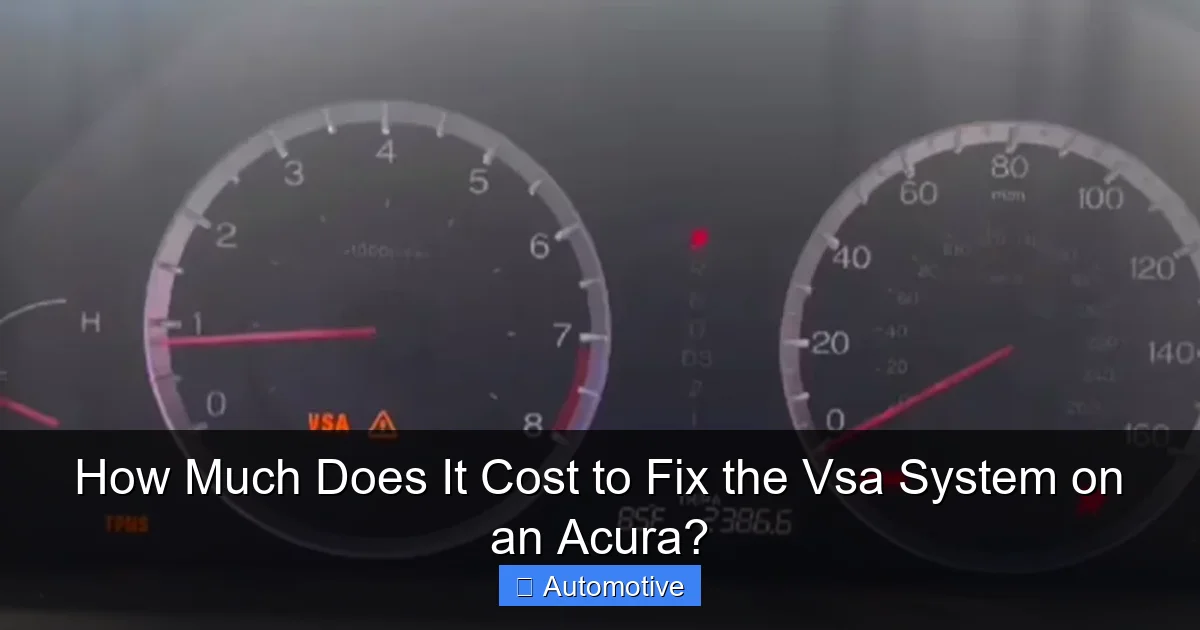
But here’s the catch: the VSA system relies on precise data from multiple components. If one sensor sends incorrect information—or if the system’s control module glitches—the entire network can go haywire. That’s when the dreaded VSA warning light appears. And while it might seem like a minor annoyance, ignoring it can compromise your vehicle’s safety systems. Without VSA, you lose traction control and ABS functionality, which are crucial in emergency braking or slippery conditions.
How the VSA System Works
The VSA system is made up of several key components:
– Wheel speed sensors: Located at each wheel, these detect how fast each wheel is spinning. If one wheel slows down unexpectedly (like during a skid), the system takes action.
– Steering angle sensor: Tells the system which way the driver is turning the wheel.
– Yaw rate and lateral G-force sensors: Measure the car’s rotation and side-to-side movement.
– VSA control module: The brain of the system. It processes data from all sensors and decides when to activate brakes or reduce engine power.
– VSA modulator (hydraulic unit): Contains valves and pumps that control brake pressure to individual wheels.
All these parts must work in harmony. Even a small issue—like a dirty sensor or low brake fluid—can trigger a warning light.
Why the VSA Light Comes On
The VSA warning light can illuminate for many reasons, ranging from trivial to serious. Some common triggers include:
– A faulty wheel speed sensor
– Low brake fluid levels
– A malfunctioning steering angle sensor
– Electrical issues or loose wiring
– A failing VSA control module
– Problems with the ABS system (since VSA relies on it)
In some cases, the light may come on temporarily—like after driving through deep snow or mud—and turn off once the system resets. But if it stays on, it’s a sign that something needs attention.
Common Causes of VSA System Failures
Visual guide about How Much Does It Cost to Fix the Vsa System on an Acura?
Image source: getcostidea.com
Understanding what can go wrong with your VSA system is the first step toward getting an accurate repair estimate. Let’s look at the most frequent culprits behind VSA malfunctions in Acuras.
Faulty Wheel Speed Sensors
Wheel speed sensors are among the most common causes of VSA issues. These small devices sit near each wheel and monitor rotation speed. Over time, they can get dirty, corroded, or damaged—especially if you drive on rough roads or in harsh weather.
For example, if the sensor on your front right wheel fails, the VSA system might think that wheel is locking up or spinning too fast. This false data can cause the system to activate unnecessarily or fail to engage when needed. Replacing a single wheel speed sensor typically costs between $100 and $300, including parts and labor.
Low or Contaminated Brake Fluid
The VSA system relies on hydraulic pressure to apply brakes selectively. If your brake fluid is low or contaminated with moisture, it can affect the system’s performance. Low fluid levels might trigger a warning light, even if the sensors are working fine.
Brake fluid should be flushed every 2–3 years, according to most manufacturers. A brake fluid flush costs around $100 to $150 at a shop, but it’s a simple preventive measure that can avoid bigger problems.
Malfunctioning Steering Angle Sensor
The steering angle sensor tells the VSA system how sharply you’re turning. If it’s misaligned or faulty, the system might misinterpret your driving intentions. For instance, it could think you’re making a sharp turn when you’re driving straight, leading to unnecessary brake intervention.
Replacing a steering angle sensor can cost $200 to $500, depending on the model. Some Acuras require a special calibration process after replacement, which adds to the labor cost.
VSA Control Module Failure
The VSA control module is the brain of the system. If it fails, the entire VSA network can go down. This is a more serious—and expensive—issue. Symptoms include persistent warning lights, loss of ABS and traction control, and sometimes even engine performance issues.
Replacing the VSA control module can cost anywhere from $600 to $1,200 or more. The part itself is expensive, and installation often requires specialized diagnostic tools and software updates.
Electrical or Wiring Problems
Loose connections, corroded wiring, or blown fuses can also disrupt the VSA system. These issues might not always trigger a specific code, making them harder to diagnose. A mechanic may need to inspect the wiring harness and connectors around the ABS and VSA components.
Electrical repairs vary in cost. A simple fuse replacement might be under $50, while rewiring or harness repair could run $200 to $400.
ABS System Malfunctions
Since the VSA system works closely with the ABS, any problem with the anti-lock brakes can affect VSA performance. For example, a failing ABS pump or a clogged valve in the hydraulic unit can prevent the VSA from functioning properly.
ABS repairs can range from $200 for a sensor replacement to over $1,000 for a new hydraulic unit.
Average Cost to Fix the VSA System on an Acura
Visual guide about How Much Does It Cost to Fix the Vsa System on an Acura?
Image source: getcostidea.com
Now for the big question: *How much does it cost to fix the VSA system on an Acura?* The answer depends on several factors, including the root cause, your vehicle’s model and year, and where you get the repair done.
On average, VSA system repairs on Acuras range from $150 to $1,200. Here’s a breakdown of typical costs based on common issues:
– Wheel speed sensor replacement: $100–$300
– Brake fluid flush: $100–$150
– Steering angle sensor replacement: $200–$500
– VSA control module replacement: $600–$1,200+
– Electrical/wiring repair: $100–$400
– ABS hydraulic unit replacement: $800–$1,500
Keep in mind that labor rates vary by location. In major cities like Los Angeles or New York, labor can cost $120–$180 per hour. In smaller towns, it might be closer to $80–$100. Dealerships tend to charge more than independent mechanics, but they often use OEM (original equipment manufacturer) parts and have factory-trained technicians.
Cost Comparison: Dealership vs. Independent Shop
Let’s say your Acura MDX has a faulty wheel speed sensor. At a dealership, you might pay $250 for the part and $150 for labor—totaling $400. At an independent shop, the same repair could cost $180 for the part and $100 for labor—just $280. That’s a $120 difference.
However, dealerships may offer better warranties on parts and labor, and they have access to the latest diagnostic software. Independent shops can be more affordable and just as skilled, especially if they specialize in Japanese imports.
DIY vs. Professional Repair
Some VSA issues can be tackled at home—especially if you’re comfortable with basic car maintenance. For example, checking brake fluid levels or cleaning wheel speed sensors is relatively simple. You can buy an OBD2 scanner for under $50 to read VSA trouble codes and reset the light.
But for more complex problems—like replacing the VSA control module or calibrating the steering angle sensor—professional help is usually needed. These tasks require specialized tools and knowledge. Attempting a DIY fix without proper experience could make the problem worse or even disable safety systems.
Factors That Influence Repair Costs
Several factors can affect how much you’ll pay to fix your VSA system:
– Vehicle age and model: Older Acuras may have harder-to-find parts, increasing costs. Luxury models like the RLX or NSX may use more advanced systems.
– Geographic location: Labor rates vary widely by region.
– Shop type: Dealerships charge more than independent mechanics.
– Extent of damage: A simple sensor replacement is cheaper than a full module swap.
– Diagnostic fees: Some shops charge $100–$150 just to run a diagnostic scan.
How to Diagnose VSA Problems at Home
Visual guide about How Much Does It Cost to Fix the Vsa System on an Acura?
Image source: getcostidea.com
Before spending money on repairs, it’s smart to do some basic troubleshooting. Many VSA issues can be identified with a few simple steps.
Check the Brake Fluid Level
Open the hood and locate the brake fluid reservoir (usually near the firewall on the driver’s side). The fluid should be between the “MIN” and “MAX” marks. If it’s low, top it off with the correct type of brake fluid (usually DOT 3 or DOT 4). Be careful not to overfill.
Low fluid can trigger the VSA light, especially if the system detects a pressure drop. After topping off, drive the car for a few miles and see if the light turns off.
Inspect the Wheel Speed Sensors
Look at each wheel for signs of damage or dirt buildup around the sensor area. If you see mud, rust, or physical damage, the sensor may be compromised. You can gently clean it with a soft brush and brake cleaner, but avoid touching the sensor tip.
If one sensor looks significantly dirtier than the others, it might be the culprit.
Use an OBD2 Scanner
An OBD2 scanner can read trouble codes from your car’s computer, including VSA-related codes. Plug the scanner into the OBD2 port (usually under the dashboard near the steering wheel) and turn the ignition to “ON.”
Common VSA codes include:
– C1241: Wheel speed sensor malfunction
– C1242: Steering angle sensor issue
– C1243: VSA control module fault
– C1244: Low brake fluid pressure
Once you have the code, you can research the likely cause or take it to a mechanic for confirmation.
Reset the VSA Light
After addressing the issue, you can try resetting the VSA light. Some scanners have a “reset” function. Alternatively, you can disconnect the battery for 10–15 minutes, but this may also reset other systems like your radio presets.
Note: Resetting the light without fixing the problem won’t help. The light will likely come back on if the underlying issue remains.
Preventing Future VSA System Issues
The best way to avoid costly VSA repairs is through regular maintenance. Here are some tips to keep your system running smoothly:
Follow the Maintenance Schedule
Acura recommends specific service intervals for brakes, fluids, and sensors. Stick to the schedule in your owner’s manual. For example, brake fluid should be flushed every 2–3 years, and wheel bearings should be inspected during tire rotations.
Keep Sensors Clean
Dirt, snow, and road salt can clog wheel speed sensors. After driving in harsh conditions, give your wheels a good rinse. Avoid using high-pressure washers directly on sensors, as they can force water into the housing.
Address Warning Lights Promptly
Don’t ignore the VSA light. The sooner you diagnose and fix the problem, the less damage it can cause. A small issue like a loose wire can escalate into a major failure if left unchecked.
Use Quality Parts
If you need replacements, opt for OEM or high-quality aftermarket parts. Cheap sensors or modules may fail prematurely, leading to repeat repairs.
Drive Safely
Aggressive driving, hard braking, and off-roading can stress the VSA and ABS systems. Smooth, defensive driving reduces wear and tear.
When to See a Professional
While some VSA issues can be handled at home, others require expert attention. See a mechanic if:
– The VSA light stays on after basic troubleshooting
– You notice braking problems, such as pulsing or reduced stopping power
– The ABS light is also on
– You’re getting multiple trouble codes
– You’re unsure about the diagnosis
A certified Acura technician has the tools and expertise to perform advanced diagnostics and repairs. They can also update your vehicle’s software if needed.
Conclusion
So, how much does it cost to fix the VSA system on an Acura? The answer isn’t one-size-fits-all, but most repairs fall between $150 and $1,200. Simple fixes like topping off brake fluid or replacing a sensor are affordable, while module replacements can be pricey. The key is early diagnosis and regular maintenance.
Don’t ignore the VSA warning light. It’s there to protect you. By understanding the system, knowing the common causes, and taking preventive steps, you can keep your Acura safe and avoid unnecessary expenses. Whether you visit a dealership or a trusted independent shop, make sure the repair is done right—your safety depends on it.
Frequently Asked Questions
How much does it cost to fix the VSA system on an Acura?
The cost to fix the VSA system on an Acura typically ranges from $150 to $1,200, depending on the issue. Simple repairs like sensor cleaning or brake fluid top-offs are on the lower end, while replacing the VSA control module can cost over $1,000.
Can I drive my Acura with the VSA light on?
You can drive short distances with the VSA light on, but it’s not recommended. The system helps maintain stability and control, so driving without it increases the risk of skidding or losing traction, especially in bad weather.
Will resetting the VSA light fix the problem?
No, resetting the light only clears the warning—it doesn’t repair the underlying issue. The light will likely return if the problem isn’t fixed. Always diagnose and address the root cause.
How long does it take to fix a VSA system?
Most VSA repairs take 1–3 hours, depending on the issue. Sensor replacements are quick, while module replacements or calibrations may take longer and require specialized tools.
Can a bad battery cause VSA problems?
Yes, a weak or failing battery can cause electrical glitches that affect the VSA system. Low voltage may trigger false warnings or prevent the system from initializing properly.
Does insurance cover VSA system repairs?
Standard auto insurance doesn’t cover mechanical repairs like VSA issues. However, extended warranties, service contracts, or certain maintenance plans may include coverage—check your policy details.
