
Do Toyota Dealerships Replace Windshields?

Yes, Toyota dealerships do replace windshields using genuine OEM glass and factory-trained technicians. While not always the cheapest option, dealership service ensures proper calibration of advanced safety systems like lane departure warning and automatic emergency braking.
If you’ve ever cracked your windshield—whether from a rogue pebble on the highway or an unexpected hailstorm—you know how quickly a small chip can turn into a major headache. Suddenly, you’re faced with questions about safety, cost, and where to get it fixed. One common question among Toyota owners is: *Do Toyota dealerships replace windshields?* The short answer is yes—but there’s much more to the story than just swapping out glass.
Windshield replacement isn’t just about visibility anymore. In today’s vehicles, especially modern Toyotas equipped with advanced safety features, the windshield plays a critical role in how your car perceives the world around it. From lane-keeping assist to adaptive cruise control, many of these systems rely on cameras and sensors mounted directly behind the glass. That means replacing a windshield isn’t as simple as it used to be—it requires precision, specialized tools, and certified expertise.
So, while you *can* go to an independent auto glass shop, choosing a Toyota dealership offers unique advantages that go beyond convenience. In this article, we’ll explore everything you need to know about windshield replacement at Toyota dealerships, including what they offer, how it compares to other options, why ADAS calibration matters, and what you can expect in terms of cost, quality, and peace of mind.
Whether you’re driving a rugged Tacoma, a fuel-efficient Prius, or a family-friendly Highlander, understanding your windshield replacement options ensures you make the safest, smartest choice for your vehicle—and your wallet.
Key Takeaways
- Dealerships offer OEM windshield replacements: Toyota dealerships use original equipment manufacturer (OEM) glass designed specifically for your vehicle model, ensuring a perfect fit and optimal performance.
- Advanced driver assistance systems (ADAS) require recalibration: Modern Toyotas rely on cameras and sensors mounted behind the windshield; after replacement, these systems must be recalibrated to function correctly.
- Certified technicians ensure quality installation: Dealership technicians undergo Toyota-specific training and follow strict procedures to maintain vehicle integrity and safety standards.
- Warranty and peace of mind included: Most dealership windshield replacements come with a warranty on both parts and labor, offering protection against defects or installation issues.
- Cost may be higher than independent shops: While dealerships often charge more than local auto glass specialists, the added value comes from OEM parts, proper ADAS calibration, and brand-backed service.
- Insurance partnerships simplify claims: Many Toyota dealerships work directly with major insurance companies, allowing for seamless claims processing and reduced out-of-pocket costs.
- Convenience and trust factor: For owners who prefer one-stop service and confidence in brand expertise, dealerships provide a reliable, hassle-free experience.
📑 Table of Contents
- Why Windshield Replacement Matters More Than Ever
- What Toyota Dealerships Offer for Windshield Replacement
- Cost Comparison: Dealership vs. Independent Shops
- The Importance of Proper Installation and Calibration
- Warranty, Insurance, and Peace of Mind
- When to Choose a Dealership vs. an Independent Shop
- Tips for a Smooth Windshield Replacement Experience
- Conclusion
Why Windshield Replacement Matters More Than Ever
Your windshield is far more than just a piece of glass that keeps rain and bugs out of your face. It’s a structural component of your vehicle, contributing to the overall strength of the cabin during a collision. In fact, during a rollover accident, the windshield can support up to 30% of the vehicle’s roof strength. That’s why even a small crack or chip shouldn’t be ignored—it can compromise the integrity of the entire structure.
But beyond structural safety, today’s windshields are high-tech hubs for vehicle intelligence. Many Toyota models come equipped with Toyota Safety Sense (TSS), a suite of driver assistance features that includes pre-collision systems, lane departure alerts, automatic high beams, and dynamic radar cruise control. These systems depend on forward-facing cameras mounted near the rearview mirror, right behind the windshield.
When the glass is replaced, even the slightest misalignment can throw off these sensors. Imagine your lane departure warning failing to alert you when you drift—or worse, your automatic emergency braking system not engaging when needed. That’s why proper installation and calibration aren’t just recommended—they’re essential.
This is where Toyota dealerships shine. They don’t just replace glass; they restore your vehicle’s full safety functionality. With access to factory-trained technicians, OEM parts, and advanced diagnostic tools, dealerships ensure that every replacement meets Toyota’s rigorous standards.
What Toyota Dealerships Offer for Windshield Replacement

Visual guide about Do Toyota Dealerships Replace Windshields?
Image source: omniautoglass.com
When you bring your Toyota to a dealership for a windshield replacement, you’re not just getting a new piece of glass—you’re getting a comprehensive service designed to maintain your vehicle’s performance, safety, and value.
OEM Glass: The Gold Standard
One of the biggest advantages of choosing a dealership is access to Original Equipment Manufacturer (OEM) glass. Unlike aftermarket glass, which may vary in thickness, curvature, or optical clarity, OEM windshields are made by the same suppliers Toyota uses during vehicle assembly. This means they match the exact specifications of your original windshield, including tint, acoustic layers (for noise reduction), and hydrophobic coatings.
For example, if you drive a Toyota Camry with a rain-sensing wiper system, the OEM windshield includes a special sensor pad that communicates with the wipers. An aftermarket glass might not have this feature, rendering the system ineffective. Similarly, hybrid models like the Prius often have solar-absorbing glass to reduce cabin heat—something only OEM glass can replicate accurately.
Factory-Trained Technicians
Dealership technicians undergo rigorous training specific to Toyota vehicles. They understand not just how to install glass, but how to handle the delicate electronics integrated into modern windshields. This includes knowing which models require camera recalibration, how to safely disconnect and reconnect sensors, and how to test systems post-installation.
These technicians also follow Toyota’s detailed service procedures, which include cleaning the bonding surface with approved cleaners, using OEM urethane adhesives, and allowing proper cure time before driving. This attention to detail ensures a secure, long-lasting seal that prevents leaks and maintains structural integrity.
ADAS Calibration: The Hidden Hero
Perhaps the most critical aspect of modern windshield replacement is Advanced Driver Assistance Systems (ADAS) calibration. After the new glass is installed, the forward-facing camera must be precisely aligned so it can accurately detect lane markings, traffic signs, and potential collision threats.
Toyota dealerships use specialized calibration tools and software to perform this task. The process typically involves driving the vehicle on a test route or using a static calibration setup with targets placed at exact distances. Once calibrated, the system is tested to ensure all features—like lane departure warning and adaptive cruise control—are functioning correctly.
Without proper calibration, these systems may give false alerts, fail to activate, or even disable themselves entirely. That’s why skipping this step—common at some independent shops—can put you and your passengers at risk.
Cost Comparison: Dealership vs. Independent Shops
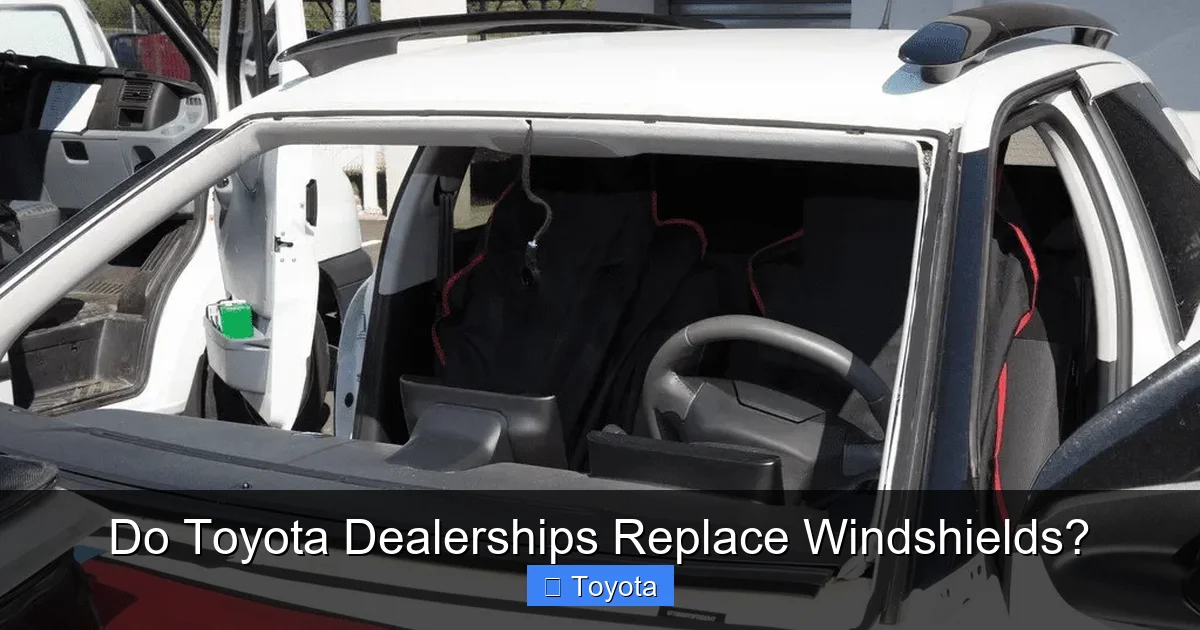
Visual guide about Do Toyota Dealerships Replace Windshields?
Image source: omniautoglass.com
One of the most common concerns about dealership windshield replacement is cost. It’s true—dealerships often charge more than local auto glass shops. But understanding what you’re paying for can help you decide if the extra expense is worth it.
Typical Pricing Breakdown
On average, a windshield replacement at a Toyota dealership can range from $400 to $1,200, depending on the model, glass type, and whether ADAS calibration is required. For example:
– A standard Corolla with basic glass might cost around $450.
– A RAV4 with rain-sensing wipers and acoustic glass could be closer to $700.
– A luxury model like a Land Cruiser with heated, tinted, and sensor-equipped glass might exceed $1,000.
In contrast, independent auto glass shops may offer similar replacements for $200 to $600. However, these lower prices often come with trade-offs: aftermarket glass, limited warranty coverage, and—most importantly—no guarantee of proper ADAS calibration.
Insurance Can Bridge the Gap
The good news? Most comprehensive auto insurance policies cover windshield replacement with little or no deductible, especially if you have full glass coverage. Many Toyota dealerships are also authorized repair centers for major insurers like State Farm, Geico, and Allstate. This means they can handle the claim directly, so you don’t have to pay upfront and wait for reimbursement.
When you file a claim, the insurance company will often approve the dealership’s estimate, especially if OEM glass and calibration are required. In some cases, insurers even prefer dealership service because it reduces the risk of future claims due to improper installation.
Long-Term Value Over Short-Term Savings
While saving $200–$300 at an independent shop might seem appealing, consider the long-term implications. A poorly installed windshield can lead to water leaks, wind noise, or even airbag deployment issues in a crash. And if your ADAS systems aren’t calibrated, you could face costly repairs down the road—or worse, a safety incident.
Dealership service, while pricier upfront, offers peace of mind. You’re investing in quality parts, expert labor, and a warranty that protects your investment. For many Toyota owners, that’s worth the extra cost.
The Importance of Proper Installation and Calibration

Visual guide about Do Toyota Dealerships Replace Windshields?
Image source: theacegrp.com
You might think all windshield replacements are the same—remove the old glass, clean the frame, apply adhesive, and install the new one. But in reality, the process is far more complex, especially for modern vehicles.
The Risks of Improper Installation
A windshield is held in place by a high-strength urethane adhesive that cures over several hours. If the adhesive isn’t applied correctly, or if the vehicle is driven too soon, the glass can shift or even detach in a crash. This not only compromises safety but can also affect the deployment of side airbags, which rely on the windshield for structural support.
Additionally, improper cleaning of the bonding surface can lead to adhesion failure. Dealerships use Toyota-approved cleaners and primers to ensure maximum bond strength, something not all independent shops prioritize.
Why Calibration Can’t Be Skipped
Let’s say you replace your windshield at a local shop that doesn’t offer ADAS calibration. You drive away thinking everything is fine—until your lane departure warning starts beeping randomly, or your adaptive cruise control disengages for no reason. These aren’t minor annoyances; they’re signs that your safety systems aren’t working as intended.
Toyota’s technical service bulletins explicitly state that any windshield replacement involving the forward-facing camera requires calibration. Skipping this step can void your vehicle’s safety warranty and may even affect your insurance coverage in the event of an accident.
Real-World Example: The 2022 Toyota Highlander
Consider a 2022 Toyota Highlander with Toyota Safety Sense 2.5+. This system includes lane tracing assist, which uses the camera to keep the vehicle centered in its lane. After a windshield replacement, if the camera isn’t calibrated, the system may overcorrect or fail to engage, especially on curved roads.
A dealership technician would perform a static calibration using a target board, followed by a dynamic drive test to verify accuracy. An independent shop without the right tools might skip this step entirely, leaving the driver unaware of the risk.
Warranty, Insurance, and Peace of Mind
One of the biggest advantages of choosing a Toyota dealership for windshield replacement is the added layer of protection that comes with professional service.
Parts and Labor Warranty
Most dealerships offer a warranty on both the glass and the installation. This typically covers defects in materials, workmanship, and leaks for a period of 12 to 24 months. If something goes wrong—like a crack appearing shortly after replacement or water seeping in—you can return to the dealership for a free repair or replacement.
Independent shops may offer warranties too, but they’re often shorter and may not cover labor or calibration issues.
Insurance Claims Made Easy
As mentioned earlier, many dealerships work directly with insurance providers. When you call your insurer, they can often schedule the replacement at a preferred dealership, handle the paperwork, and even arrange a rental car if needed.
This streamlined process saves time and reduces stress. You don’t have to worry about submitting receipts or waiting for reimbursement. Plus, insurers often trust dealerships to use the right parts and procedures, reducing the chance of claim disputes.
Resale Value and Vehicle History
If you plan to sell or trade in your Toyota someday, having a dealership service record can boost your vehicle’s value. Buyers and appraisers appreciate knowing that major repairs—like windshield replacement—were done by certified professionals using OEM parts.
An aftermarket replacement with no calibration record, on the other hand, might raise red flags during inspection.
When to Choose a Dealership vs. an Independent Shop
So, should you always go to a Toyota dealership for windshield replacement? Not necessarily—but it depends on your priorities.
Choose a Dealership If:
– Your vehicle has ADAS features (lane departure, adaptive cruise, etc.)
– You want OEM glass for perfect fit and function
– You value peace of mind and a strong warranty
– Your insurance covers dealership service
– You drive a newer or higher-end Toyota model
Consider an Independent Shop If:
– Your vehicle is older and lacks advanced safety systems
– You’re on a tight budget and insurance won’t cover the difference
– The shop is certified by the Auto Glass Safety Council (AGSC) and offers calibration
– You’ve had good experiences with the shop in the past
The key is to ask questions. Before choosing any provider, ask:
– Do you use OEM or aftermarket glass?
– Do you perform ADAS calibration?
– What warranty do you offer?
– Are your technicians certified?
Tips for a Smooth Windshield Replacement Experience
No matter where you go, a few simple steps can help ensure a successful windshield replacement:
1. **Act quickly:** Small chips can spread, especially in extreme temperatures. Get it assessed within 24–48 hours.
2. **Check your insurance:** Call your provider to understand your coverage and preferred repair network.
3. **Schedule in advance:** Dealerships can get busy, so book your appointment early.
4. **Ask about calibration:** Confirm that ADAS recalibration is included if your vehicle has safety features.
5. **Avoid driving immediately:** Most installations require 1–6 hours of cure time before driving. Follow the technician’s instructions.
6. **Test your systems:** After replacement, drive in a safe area and test features like lane departure and cruise control.
Conclusion
So, do Toyota dealerships replace windshields? Absolutely—and they do it with a level of expertise and attention to detail that’s hard to match. From OEM glass to certified technicians and precise ADAS calibration, dealership service ensures your Toyota remains safe, reliable, and true to its design.
While the cost may be higher than some alternatives, the value comes in peace of mind, warranty protection, and the assurance that your vehicle’s advanced safety systems will work exactly as intended. For Toyota owners who prioritize quality, safety, and long-term performance, the dealership is often the best choice.
Next time you spot a crack in your windshield, don’t just think about getting it fixed—think about getting it fixed *right*. Your safety, your vehicle, and your future self will thank you.
Frequently Asked Questions
Do Toyota dealerships use OEM windshields?
Yes, Toyota dealerships use Original Equipment Manufacturer (OEM) windshields designed specifically for your vehicle model. This ensures a perfect fit, proper function of sensors, and compatibility with features like rain-sensing wipers and acoustic glass.
Is ADAS calibration required after windshield replacement?
Yes, if your Toyota has advanced safety features like lane departure warning or adaptive cruise control, the forward-facing camera must be recalibrated after windshield replacement. Dealerships perform this calibration using specialized tools to ensure accuracy.
How much does it cost to replace a windshield at a Toyota dealership?
Costs typically range from $400 to $1,200, depending on the model, glass type, and whether ADAS calibration is needed. Insurance often covers the cost, especially with full glass coverage.
Can I drive my car immediately after windshield replacement?
No, you should wait 1–6 hours before driving, depending on the adhesive used. Dealerships will provide specific instructions to ensure the urethane cures properly and the windshield is securely bonded.
Do dealerships offer warranties on windshield replacement?
Yes, most Toyota dealerships offer a warranty on both the glass and the installation, typically covering defects, leaks, and workmanship for 12 to 24 months.
Can I use my insurance at a Toyota dealership?
Yes, many Toyota dealerships are authorized repair centers for major insurance companies and can handle claims directly, making the process seamless and often requiring little to no out-of-pocket cost.
